



1577 products
Sort by:
1577 products
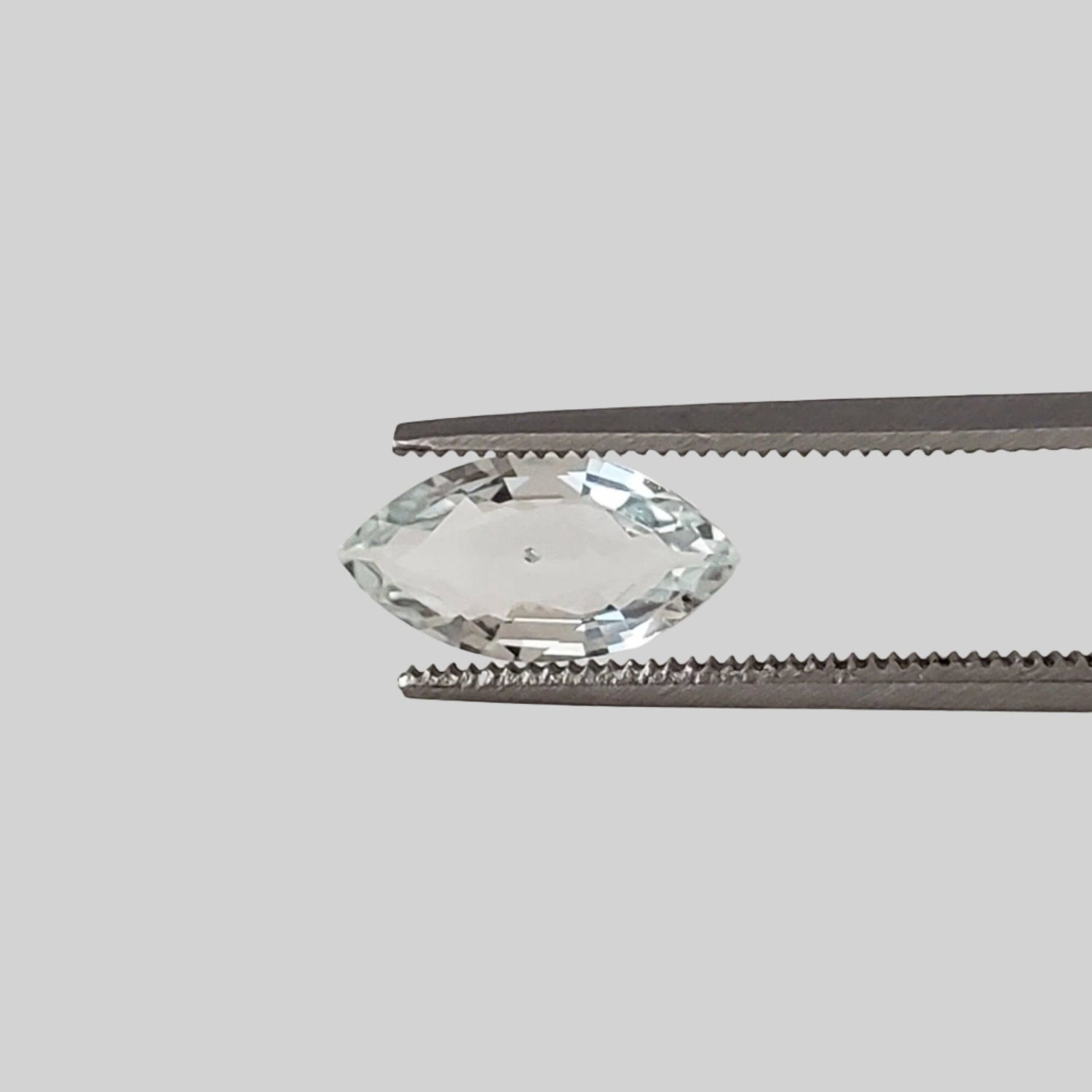

Product Type: Aquamarine
Approx Weight (per piece): 0.94ct
Size: 10.5x5.5mm
Shape: Marquise Cut
Color: Pale Aqua Blue
Clarity: Included
Origin: Africa


Product Type: Aquamarine
Product ID: AQGB9481
Approx Weight (per Piece): 4.85ct
Size: 11.3x9.1mm
Shape: Oval Cabochon
Color: Light Grayish Blue
Clarity: Transparent
Origin: Russia


At the War Eagle Mine near Creede, Colorado, argentiferous tetrahedrite is a silver-bearing copper-antimony sulfide mineral found in polymetallic vein deposits. Its presence underscores the mine’s polymetallic character and its potential interest for both mineral collectors and exploration geologists.
The War Eagle Mine is a notable but inactive gold mine in Gilpin County, Colorado, with a rich geological setting and historical ties to the region’s mining heritage. It is located in a remote, forested area and is not accessible to visitors.
This specimen is in very good condition. Would be a beautiful addition to any new or existing collection.
Name: Argentiferous Tetrahedrite Crystal
Specimen Size: Miniature-Sized
Dimensions: 36x24x21 mm / 1.4x0.9x0.8 inches
Weight: 26.12 Grams / 0.9 oz
Origin: Mined in Creede Colorado


This is a superb looking Arroyo Aguiar meteorite full slice weighing 11.69 grams and measuring 51x40x3 mm. This H5 chondrite classified meteorite fell in the summer of 1950. The total weight of the single stone is 7.45 Kg.
The meteorite was seen to fall by a rancher who found it soon after. It had penetrated some 50 cm into the soil. The meteorite fell near the railway Station Arroyo Aguiar, La Capital Department, Santa Fe Province, Argentina.
Would be a beautiful addition to any new or existing collection. Will come with a Canagem Collection and a Naturalia specimen card.


This is a superb looking Arroyo Aguiar meteorite part slice weighing 1.57 grams and measuring 16x8x3 mm. This H5 chondrite classified meteorite fell in the summer of 1950. The total weight of the single stone is 7.45 Kg.
The meteorite was seen to fall by a rancher who found it soon after. It had penetrated some 50 cm into the soil. The meteorite fell near the railway Station Arroyo Aguiar, La Capital Department, Santa Fe Province, Argentina.
Would be a beautiful addition to any new or existing collection. Will come with a Canagem Collection and a Naturalia specimen card.


This is a great looking part slice of the Ashmore Olivine-Bronzite H5 Chondrite classified meteorite. The part slice weighs 0.4 grams.
A mass of 55.4 kg was found in 1969 by Paul Caughron during deep plowing. It lay at a depth of approximately 18 inches within the soil, with its large side down and its nose up.
The specimen comes with a BA-Meteorites.de.vu and a Canagem specimen card. Would be a beautiful addition to any new or existing collection.


Astrophyllite is a striking and rare mineral known for its bronze to golden-bladed crystals that radiate like starbursts, often embedded in a dark matrix of other minerals. The name comes from Greek, meaning “star leaf,” referring to its star-like crystal formations. It is found in locations such as Russia, Norway, Greenland, and Canada. This specimen of Astrophyllite and Natrolite crystals originates from the world famous site of Mont-Saint-Hilaire, Québec.
Astrophyllite is often seen as a stone of inner illumination and self-discovery. Some believe it helps reveal hidden potential and encourages personal truth, making it a supportive companion during times of change or reflection. It’s sometimes associated with letting go of the past and embracing a more authentic path forward.
Natrolite is an uncommon zeolite mineral, often found in opaque white crystal clusters as seen on this great specimen. There are other traces of minerals such as aegirine in this complex matrix in a spectacular shape.
This specimen is in very good condition and displays very well. Make this a special specimen in your collection.
Name: Astrophyllite and Natrolite Cluster
Specimen Size: Cabinet-Sized
Dimensions: 77x56x53 mm / 3.0x2.2x2.1 inches
Weight: 149.2 Grams / 5.3 Ounces
Origin: Mont-Saint-Hilaire, Québec, Canada


Astrophyllite is a striking and rare mineral known for its bronze to golden-bladed crystals that radiate like starbursts, often embedded in a dark matrix of other minerals. The name comes from Greek, meaning “star leaf,” referring to its star-like crystal formations. It is found in locations such as Russia, Norway, Greenland, and Canada. This specimen of Astrophyllite crystals originates from the world famous site of Mont-Saint-Hilaire, Québec.
Astrophyllite is often seen as a stone of inner illumination and self-discovery. Some believe it helps reveal hidden potential and encourages personal truth, making it a supportive companion during times of change or reflection. It’s sometimes associated with letting go of the past and embracing a more authentic path forward.
This specimen is in very good condition and displays very well. Make this a special specimen in your collection.
Name: Astrophyllite cluster
Specimen Size: Miniature-Sized
Dimensions: Specimen 38x29 mm / 1.5x1.1 inches
Specimen Box 54x54 mm / 2.1x2.1 inches
Weight: 36.6 Grams / 1.3 Ounces
Origin: Mined in Poudrette Quarry, Mont-Saint-Hilaire, Québec, Canada


Product Type: Moldavite (Impactite Green Melt Glass)
Approx Weight (per piece): 2.15ct
Size: 14x7mm
Shape: Marquise Cut
Color: Rich Green
Clarity: VSI (Very Slightly Included)
Origin: Chlum Region, Czech Republic
Moldavite is a rare, greenish gemstone formed by the impact of a meteorite. It is a type of tektite, which is a natural glass created from terrestrial material that melted during the intense heat of meteor impacts. Moldavite is believed to have been formed around 15 million years ago when a massive meteorite hit what is now the southern Germany and Czech Republic region, forming the Ries Impact Structure. The impact ejected material into the atmosphere, which later cooled and fell back to Earth as moldavite, primarily in the region of the Czech Republic. The most well-known deposits are located near the Moldau River, from which it gets its name. It is found in small quantities, making it relatively rare.
Moldavite has a distinct green color, ranging from pale olive green to deep forest green. Some specimens even have a slight brownish tint. It often has a wrinkled or pitted surface, a characteristic of its formation process.

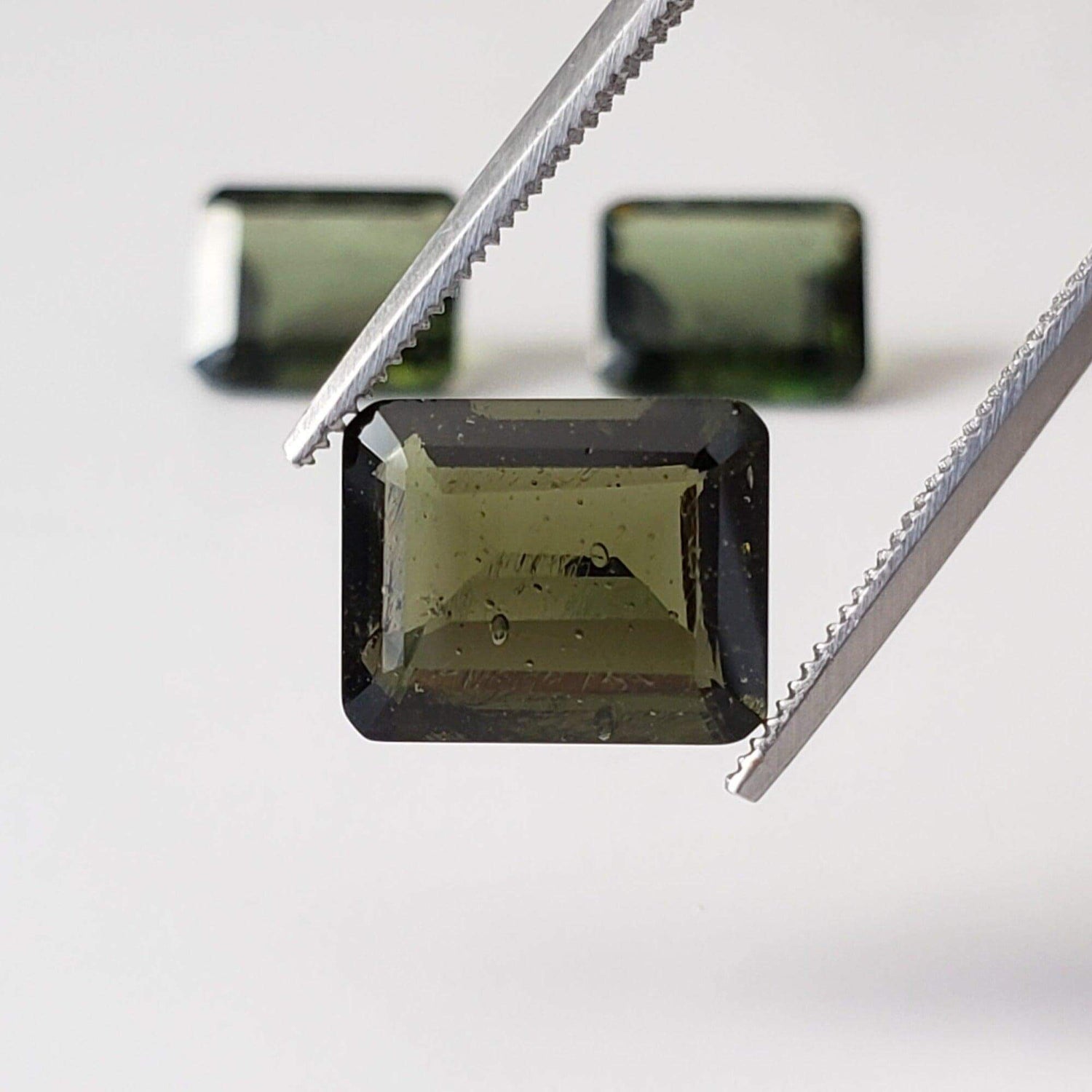
Product Type: Moldavite (Impactite Green Melt Glass)
Approx Weight (per piece): 2.88ct
Size: 10x8mm
Shape: Octagon Cut
Color: Rich Green
Clarity: VSI (Very Slightly Included)
Origin: Chlum Region, Czech Republic
Moldavite is a rare, greenish gemstone formed by the impact of a meteorite. It is a type of tektite, which is a natural glass created from terrestrial material that melted during the intense heat of meteor impacts. Moldavite is believed to have been formed around 15 million years ago when a massive meteorite hit what is now the southern Germany and Czech Republic region, forming the Ries Impact Structure. The impact ejected material into the atmosphere, which later cooled and fell back to Earth as moldavite, primarily in the region of the Czech Republic. The most well-known deposits are located near the Moldau River, from which it gets its name. It is found in small quantities, making it relatively rare.
Moldavite has a distinct green color, ranging from pale olive green to deep forest green. Some specimens even have a slight brownish tint. It often has a wrinkled or pitted surface, a characteristic of its formation process.

Canagem is proud to be professional member of The International Gem Society(IGS) the world's top resource for gem professionals, enthusiasts, and industry content.