



226 products
Sort by:
226 products


Large and bright purple amethyst cluster on agate that has been polished on all 4 sides. This is a self standing specimen that will add beauty to any room. Super bright and shows large complete crystals.
Amethyst is believed to enhance spiritual awareness, ward off negative energies, promote balance and relaxation, and improve intuitive and psychic abilities. Amethyst is also thought to enhance mental clarity and focus.
Name: Amethyst Crystal with Polished Agate
Specimen Size: Large Cabinet-Sized
Dimensions: 115x102x67mm / 4.5x4x2.6 inches
Weight: 1.4 kg / 3.1 lb
Origin: Mined in Brazil


Calcite is found throughout the world in sedimentary, metamorphic, and igneous rocks. Some geologists consider it to be a "ubiquitous mineral" - one that is found everywhere. Calcite is the principal constituent of limestone and marble. Laumontite is a member of the zeolite group, and occurs in many of the zeolite deposits.
Quartz crystals are among the most abundant and well-known minerals on Earth. It belongs to the hexagonal crystal system, and typically forms six-sided prismatic crystals with a pointed termination. Its crystals can be colorless or exhibit a wide range of colors. The color variations are often due to the presence of impurities or trace elements during the crystal's formation. Quartz is transparent to translucent.
Name: Calcite, Quartz and Laumontite in Geode
Specimen Size: Large Cabinet-Sized
Dimensions: 152x121x89 mm / 6x4.75x3.5 inches
Weight: 1.34 KG / 2 lbs 15 ounces
Origin: Mined in Dindoshi, India


Stilbite is a zeolite mineral appreciated for its delicate crystal formations and pastel hues, ranging from colorless to white, yellow, pink, and peach. It forms distinctive tabular crystals with a bowtie or butterfly shape and exhibits a vitreous to pearly luster. Commonly found in cavities in volcanic rocks, stilbite is associated with other zeolite minerals. It is valued for its aesthetic appeal and is believed by some to have calming energy, supporting spiritual growth and emotional healing.
Name: Stilbite Crystals
Specimen Size: Large Cabinet-Sized
Dimensions: 165x140x102mm / 6.5x5.5x4 inches
Weight: 1.17 KG / 2 Lbs 9 Ounces
Origin: Mined in Jalgaon, India


This is a beautiful sample of the famous iron meteorite Campo del Cielo (Heaven’s Field in Spanish) that was found in Chaco Province, Argentina, in 1576 by Spanish explorers. This is a solid iron individual meteorite classified as IAB Silicated. This incredible specimen has many large regmaglypts and scoops (or thumb prints).
This meteorite is classified as an Iron polycrystalline coarse octahedrite (IAB). It weighs 7.4 Kg (16.4 Lbs) and measures 19x14x11 cm (7.5x5.5x4.3 inches).
This piece displays extremely well and is a very desirable size. It is a great example of this iron type meteorite. Comes with a Canagem Collection specimen card. Would make a beautiful addition to any collection.


Here we have for you a nice looking end cut of a Sahara Desert NWA unclassified meteorite weighing 164.9 grams. Its dimensions are 70x51x23mm. This never classified North West Africa stone was found in the Sahara desert around 2000.
It's a good quality cut NWA meteorite specimens showing interesting internal structure (L5?) and somewhat attractive with a mottled interior with chondrules and metallic flakes. Some weathering shows the meteorite's time spent aging in the desert. Displays nicely with a ground and rough polished without a mirror finish.
Would be a beautiful addition to any new or existing collection. Comes with a Canagem Collection specimen card.
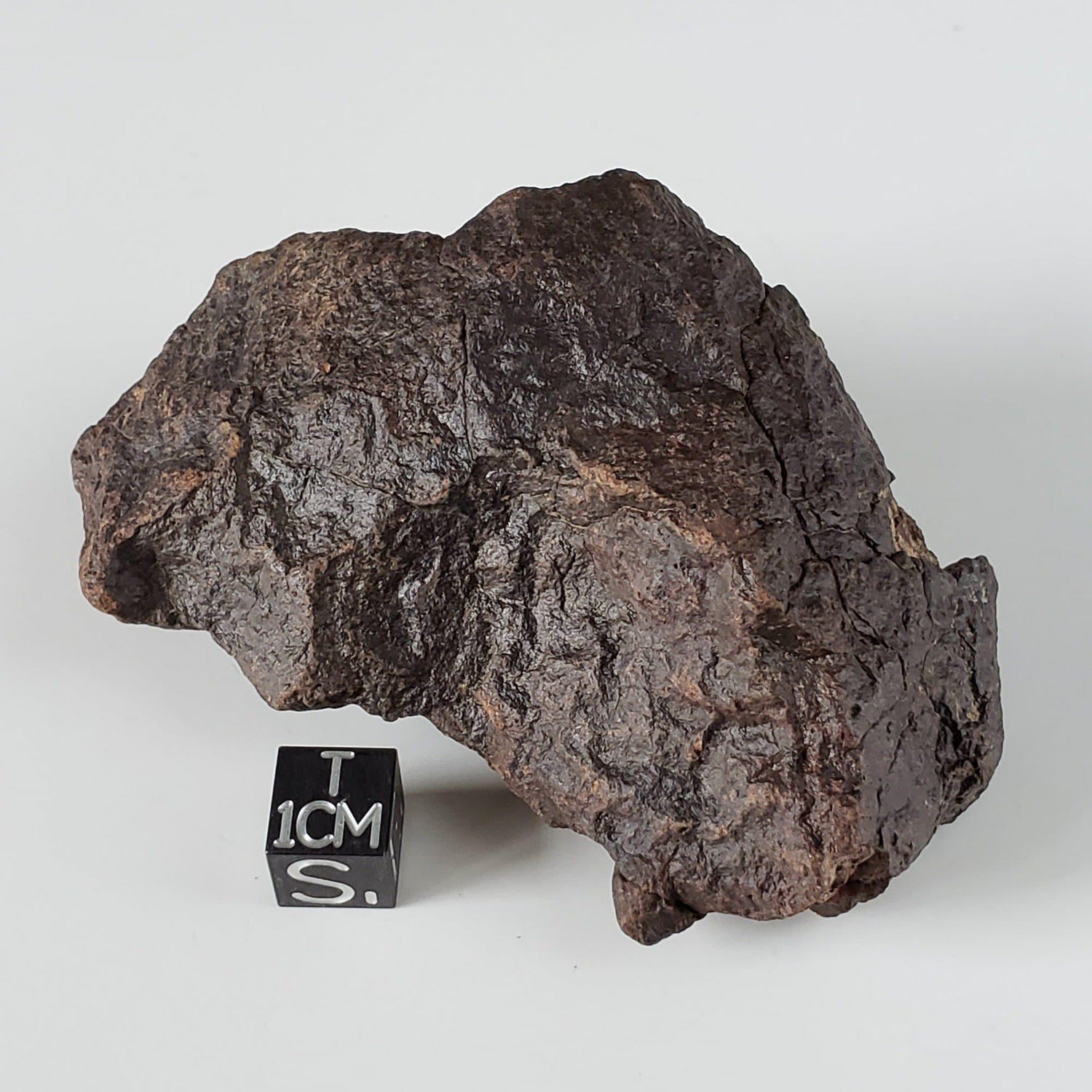
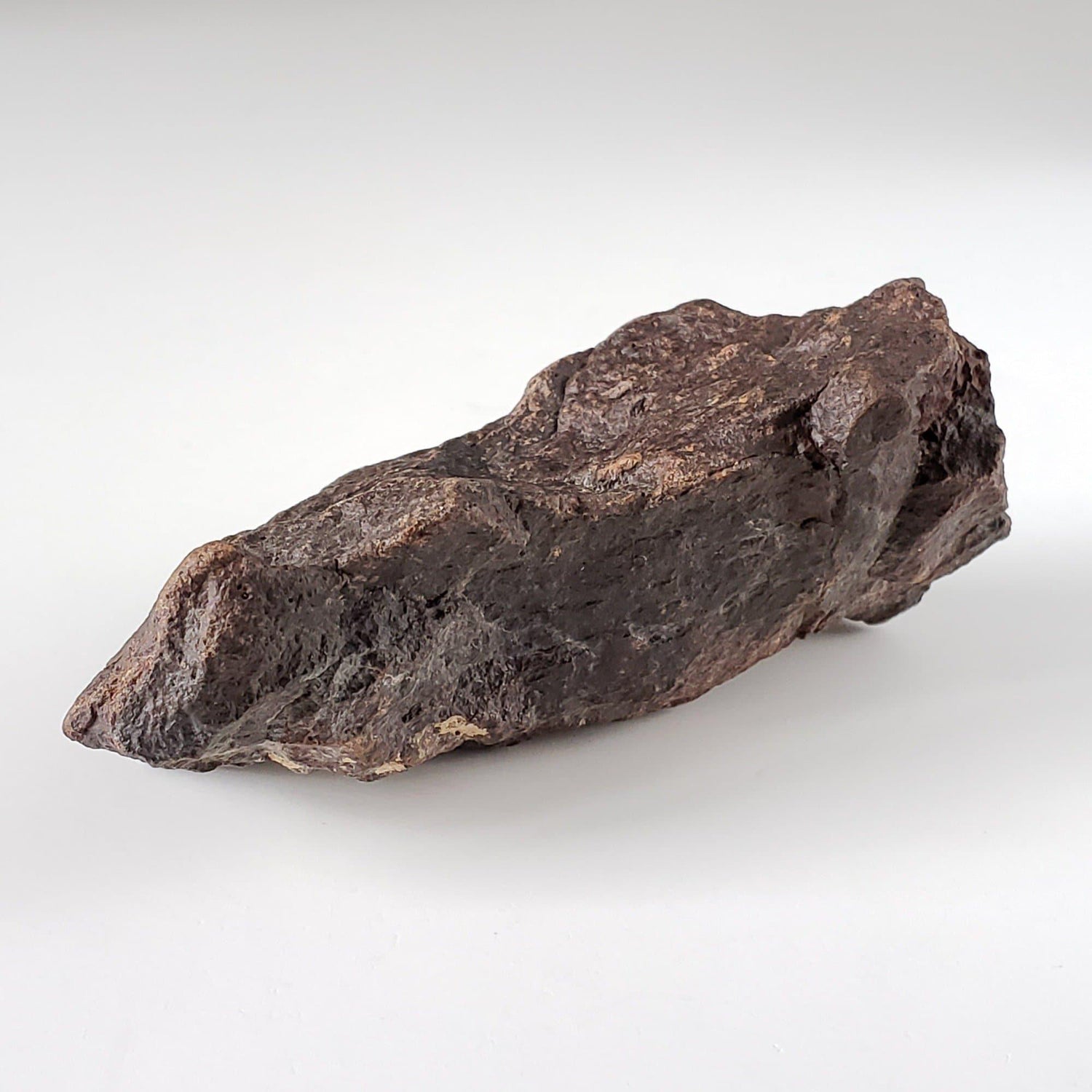
This is a superb looking Dhofar 221 classified meteorite weighing 170.5 grams. Its dimensions are 87x49x30 mm. This L5 classified meteorite was found in Zufar, Oman in 2000 and is 1 of 3003 approved meteorites classified as such. The total weight of the 100's of pieces recovered is recorded as a low 3.54 kg and the meteorite has a shock stage of 3 and weathering grade of 3.
This piece displays extremely well because of its beautiful crust, superb shape and is a good size. Would be a beautiful addition to any new or existing collection. Comes with a Canagem Collection specimen card.
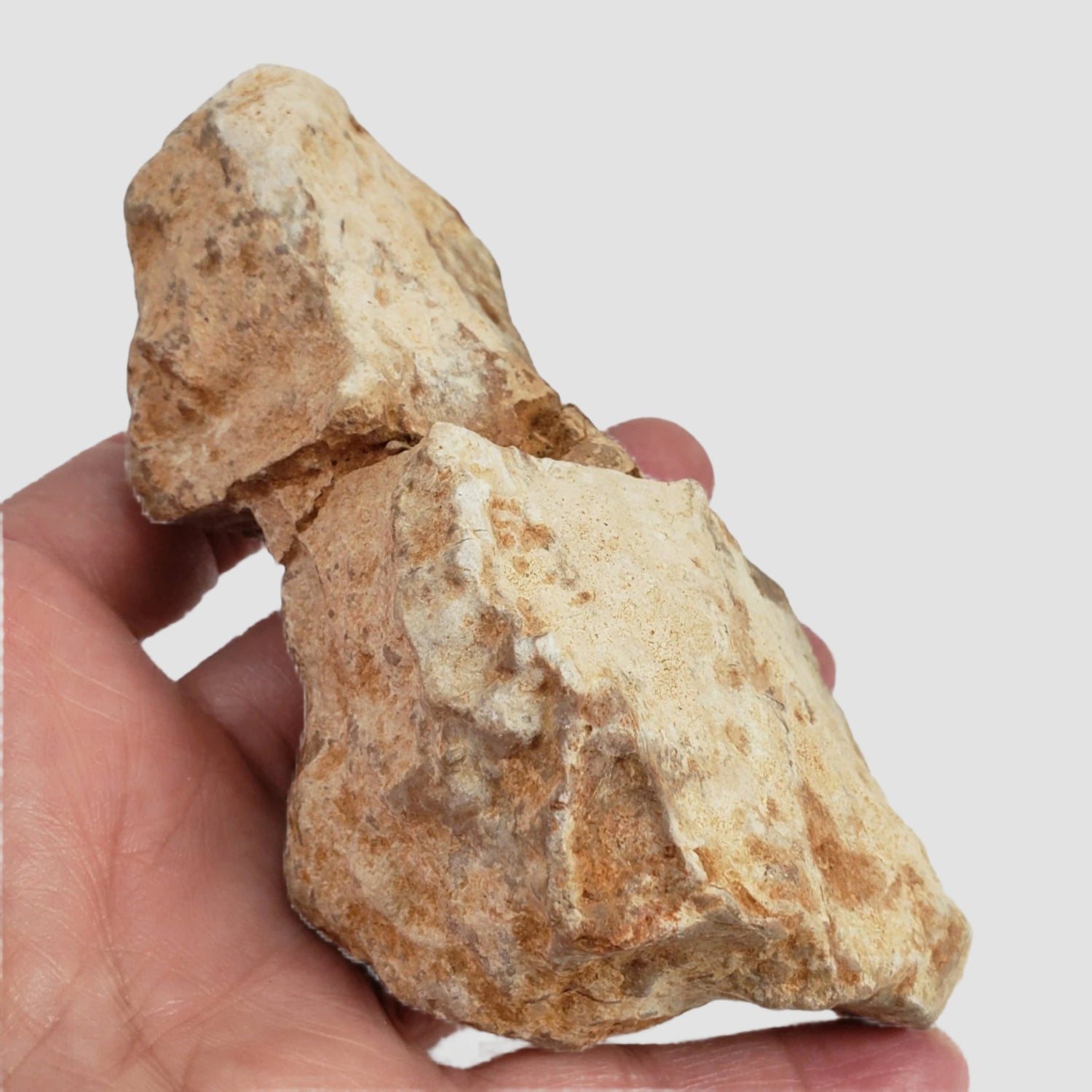
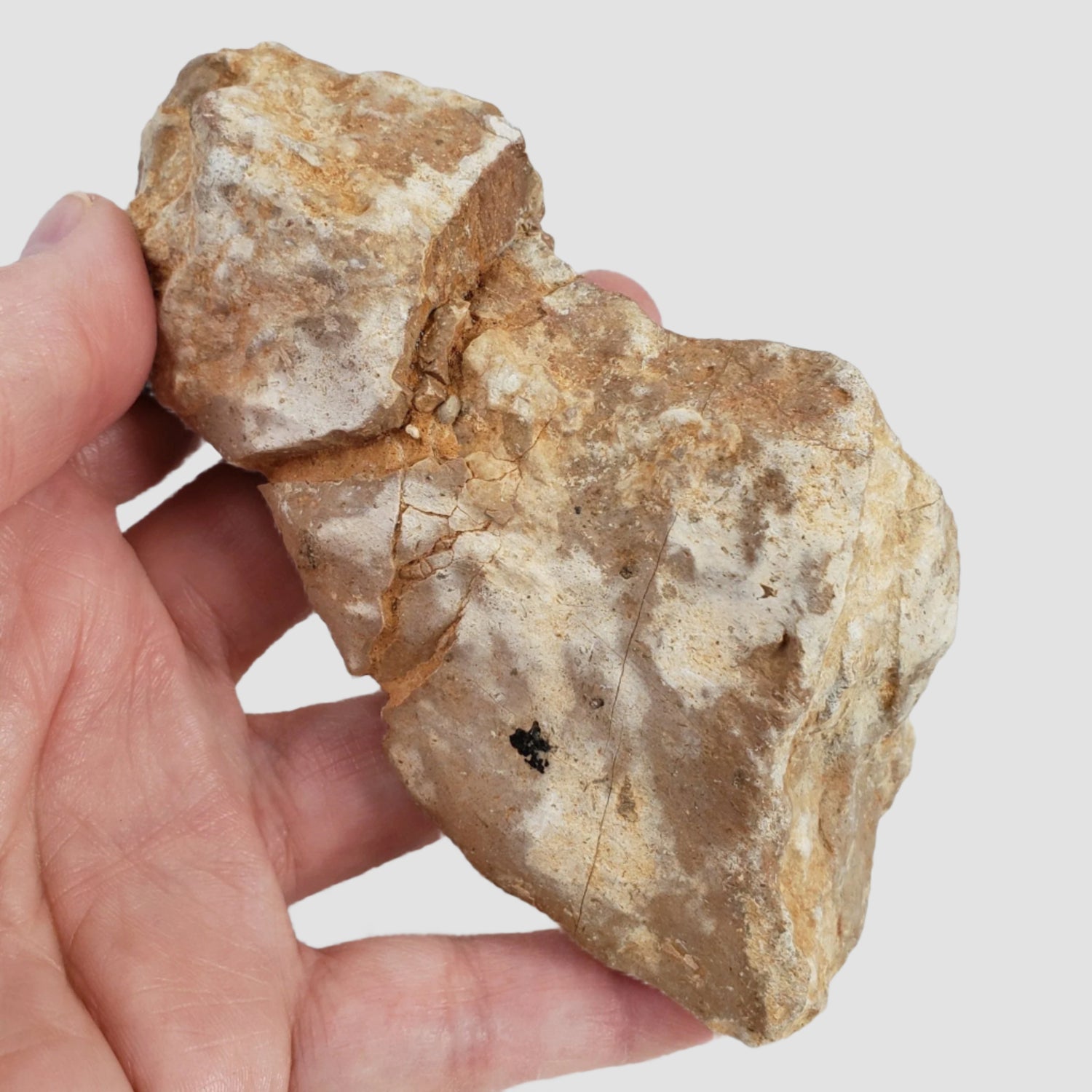
The Puerto Minguez ejecta refers to the impact ejecta from the 38 million years old twin (multiple) impact structure Azuara / Rubielos de la Cerida in Northern Spain, originating from the nearby Rubielos de la Cerida impact structure.
This is a strongly deformed limestone component (seldom different rock types) with significant displacements. Typical clast deformation looks looking like a loaf cut into slices but not fully broken into pieces. This is typical of a short-time dynamic deformation under high confining pressure.
The similar deformations are well known from the Ries crater impact ejecta that occurred in carbonate concretions and in the famous Ries Belemnites both embedded within soft Jurassic claystone. This sample shows a limestone clast partially sliced / fractured with prominent displacements in the range of up to 12 mm. The over all dimensions of this sample is 40x60x125 mm and weighs 365 grams.
Would be a beautiful addition to any new or existing collection. Comes with a Canagem Collection specimen card.
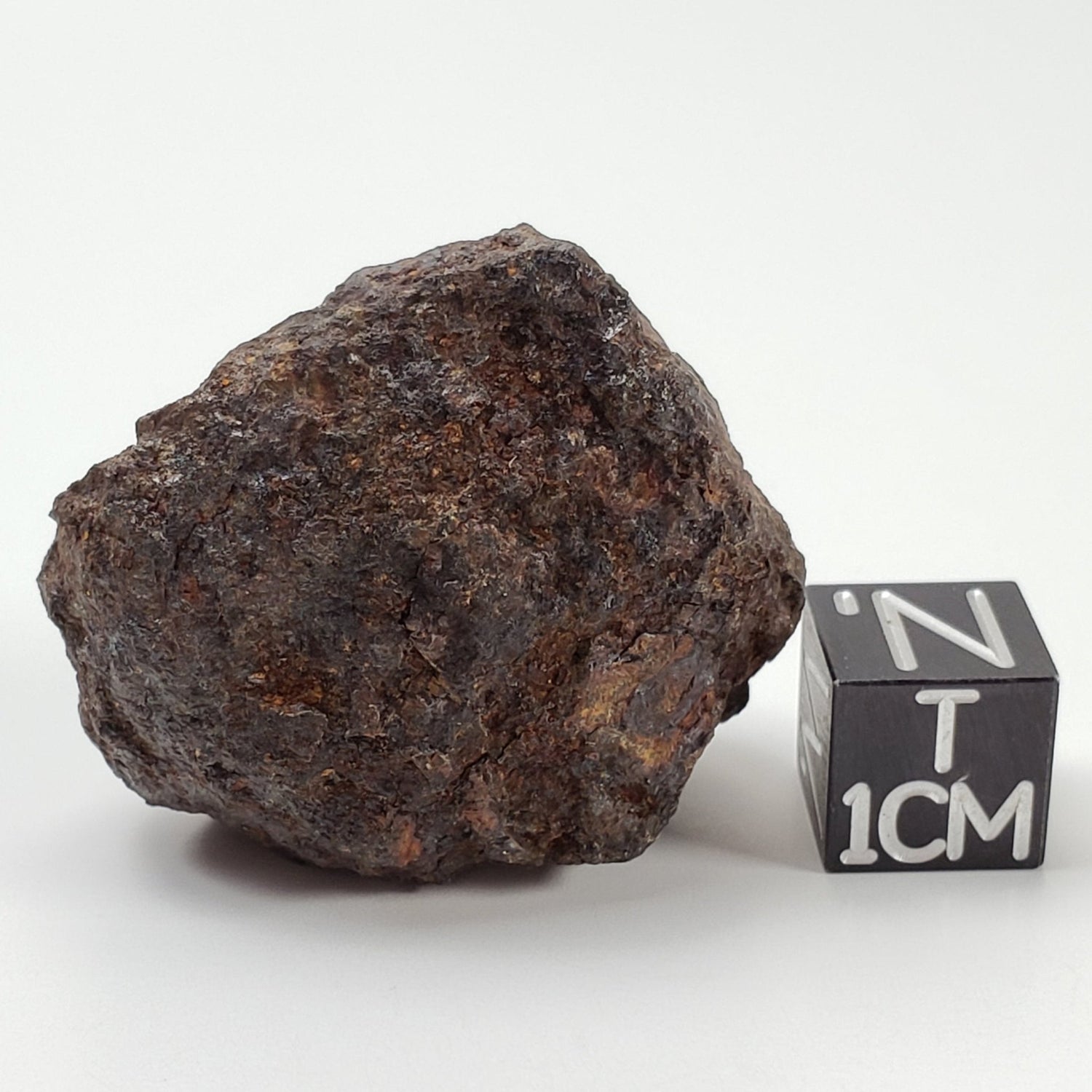
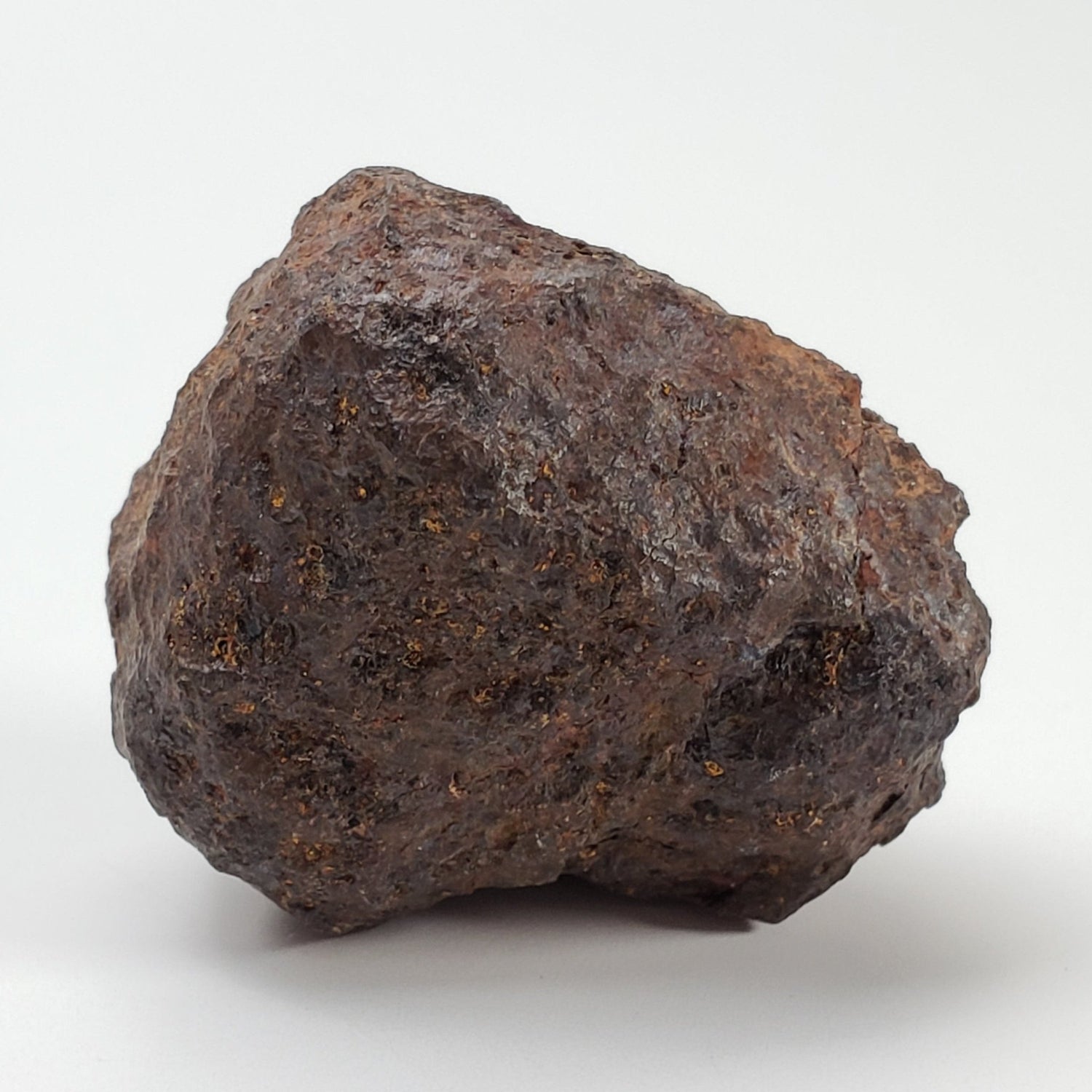
This is a superb looking Stony-iron or Mesosiderite Vaca Muerta (Dead Cow) classified meteorite weighing 40.52 grams. Its dimensions are 32x28x18 mm.
This classified meteorite was found in 1861 in the driest desert of the world called the Atacama, in Chile. Mesosiderites are formed on the surface of a parent body as a result of impacts with another body. The impact mixed broken fragments of surface eucrites with iron and olivine from deep within the body. Eucrites are believed to have come from the asteroid Vesta. Analysis has shown, however, that the Vaca Muerta eucrite inclusions are not consistent with other eucrites and possibly originated on a different parent body. Although most have a weathered exterior, they also have lots of metal inside and can be prepared and cut to show this.
This piece displays extremely well and would be a beautiful addition to any new or existing collection. Comes with a Canagem Collection specimen card.


Another beautiful specimen featuring large cubic green apophyllite with delicate scolecite.
Stilbite is a zeolite mineral appreciated for its delicate crystal formations and pastel hues, ranging from colorless to white, yellow, pink, and peach. It forms distinctive tabular crystals with a bowtie or butterfly shape and exhibits a vitreous to pearly luster. Commonly found in cavities in volcanic rocks, stilbite is associated with other zeolite minerals. It is valued for its aesthetic appeal and is believed by some to have calming energy, supporting spiritual growth and emotional healing.
One of the distinguishing features of apophyllite is its ability to form well-defined crystals with a pyramid-like shape. These crystals often exhibit a prismatic or pseudo-cubic habit and have a vitreous luster. Apophyllite is transparent to translucent and is commonly found in colorless or white varieties, although it can also occur in shades of green, pink, yellow, or brown.
Scolecite forms as vertically striated, thin, prismatic crystals. Scolecite may also occur as radiating fibrous masses. The colour may be white, yellowish, or colourless. It is a transparent to translucent mineral, and it has a vitreous to silky luster.
Name: Apophyllite, Stilbite, Scolecite Crystals
Specimen Size: Large Cabinet-Sized
Dimensions: 171x108x101 mm / 6.75x4.25x4 inches
Weight: 812 grams / 12.6 oz
Details: Mined in Nasik, India

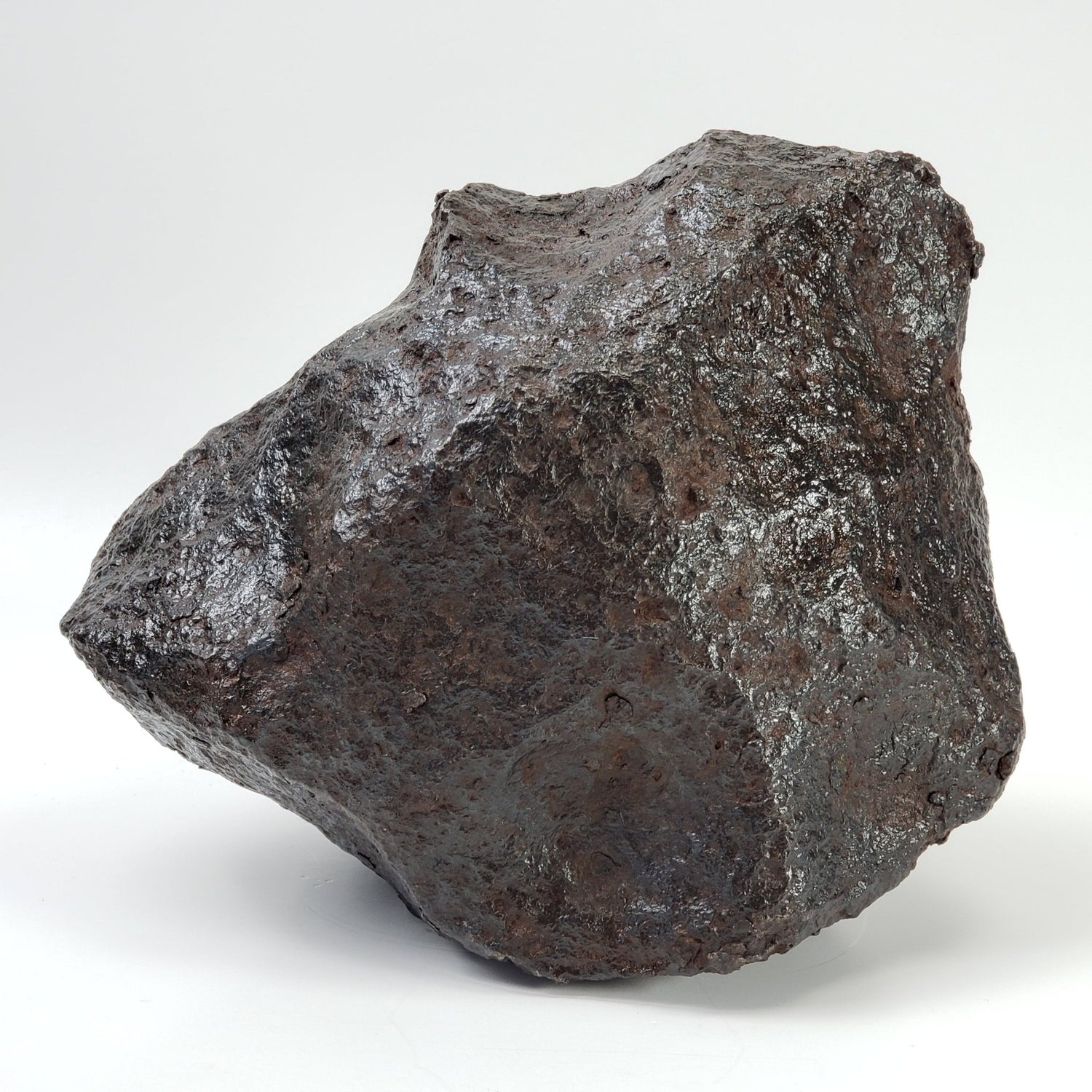
Campo del Cielo Meteorite | Massive 11.7 KG | Iron IAB-MG | Regmaglypts
This is a beautiful sample of the famous iron meteorite Campo del Cielo (Heaven’s Field in Spanish) that was found in Chaco Province, Argentina, in 1576 by Spanish explorers. This is an outstanding specimen with many nice large regmaglypts and scoops – great “thumb prints” complete individual solid iron classified as IAB Silicated.
This meteorite is classified as an Iron polycrystalline coarse octahedrite (IAB). This piece weighs 11.7 Kg (25.8 Lbs) and measures approximately 19x15x15 cm (7.5x6x6 inches).
This piece displays extremely well and is a very desirable size. It is a great example of this iron type meteorite. Comes with a Canagem Collection specimen card. Would make a beautiful addition to any collection.

Canagem is proud to be professional member of The International Gem Society(IGS) the world's top resource for gem professionals, enthusiasts, and industry content.