



216 products
Sort by:
216 products


This is a perfect rosette of metallic molybdenite, almost completely exposed in a glassy quartz matrix crystal from Moly Hill, Abitibi-Temiscamingue, Québec, Canada. The molybdenite rosette measures 12.5 mm across.
Molybdenite is commonly found as foliated masses meaning the mineral forms folia or layers, like the mineral mica. It is metallic gray, has a greasy feel, and is very soft at only 1 on Mohs' hardness scale. Its softness, metallic luster and gray color led scientists to mistakenly believe it was a lead mineral. This specimen shows the typical hexagonal layered structure of the crystal.
Some believe molybdenite is linked to intuition, transformation, and problem-solving, helping with mental clarity and adaptability. It is sometimes associated with the third eye chakra, thought to enhance insight and creative thinking.
Name: Molybdenite Crystals
Specimen Size: Miniature-Sized
Dimensions: 37x27x27 mm / 1.5x1.1x1.1 inches
Weight: 37.5 Grams / 1.3 ounces
Origin: Mined in Moly Hill, La Motte, Abitibi-Temiscamingue, Québec, Canada


Large crystal of Fluor-Richterite and ivory colored calcite. Fluor-Richterite is a rare mineral found only in the Wilberforce area in a skarn formation from the intrusion of magma into limestone with various impurities. Would be a nice addition to any new or existing collection.
Name: Fluor-Richterite with Calcite Crystal
Specimen Size: Miniature-Sized
Dimensions: 35x24x16 mm / 1.4x0.9x0.6 inches
Weight: 14.1 grams / 0.5 ounces
Origin: Mined in Wilberforce, Ontario, Canada


Aegirine, also known as acmite, is a rare and stunning black mineral. It is found in many locations around the world, and this outstanding specimen comes from the Poudrette Quarry at Mount Saint Hilaire, where it is often found in association with Microcline.
Aegirine is usually black, greenish-black, or brownish-black in color and has a glassy or vitreous luster. It has a hardness of 6 to 6.5 on the Mohs scale, which means it is relatively hard and durable. Aegirine is also known for its straight, needle-like crystals that can grow up to several centimeters in length.
Microcline, a member of the feldspar mineral family, is known for its beautiful color variations and distinctive twinning patterns. When paired with Aegirine, the result is a striking and eye-catching contrast of colors.
Aegirine is believed to have properties associated with protection, energy balancing, and spiritual growth. Microcline, being a feldspar, is often linked to creativity and intuition. The combination of these minerals is thought to enhance their individual metaphysical properties.
This Aegirine on Microcline crystal is the perfect combination for those looking for a unique and beautiful addition to their mineral collection!
Name: Aegirine on Microcline
Specimen Size: Miniature-Sized
Dimensions: 55x47x37 mm / 2.2x1.8x1.5 inches
Weight: 80.4 Grams / 2.8 Ounces
Origin: Mined in Poudrette Quarry, Mont-Saint-Hilaire, Québec, Canada

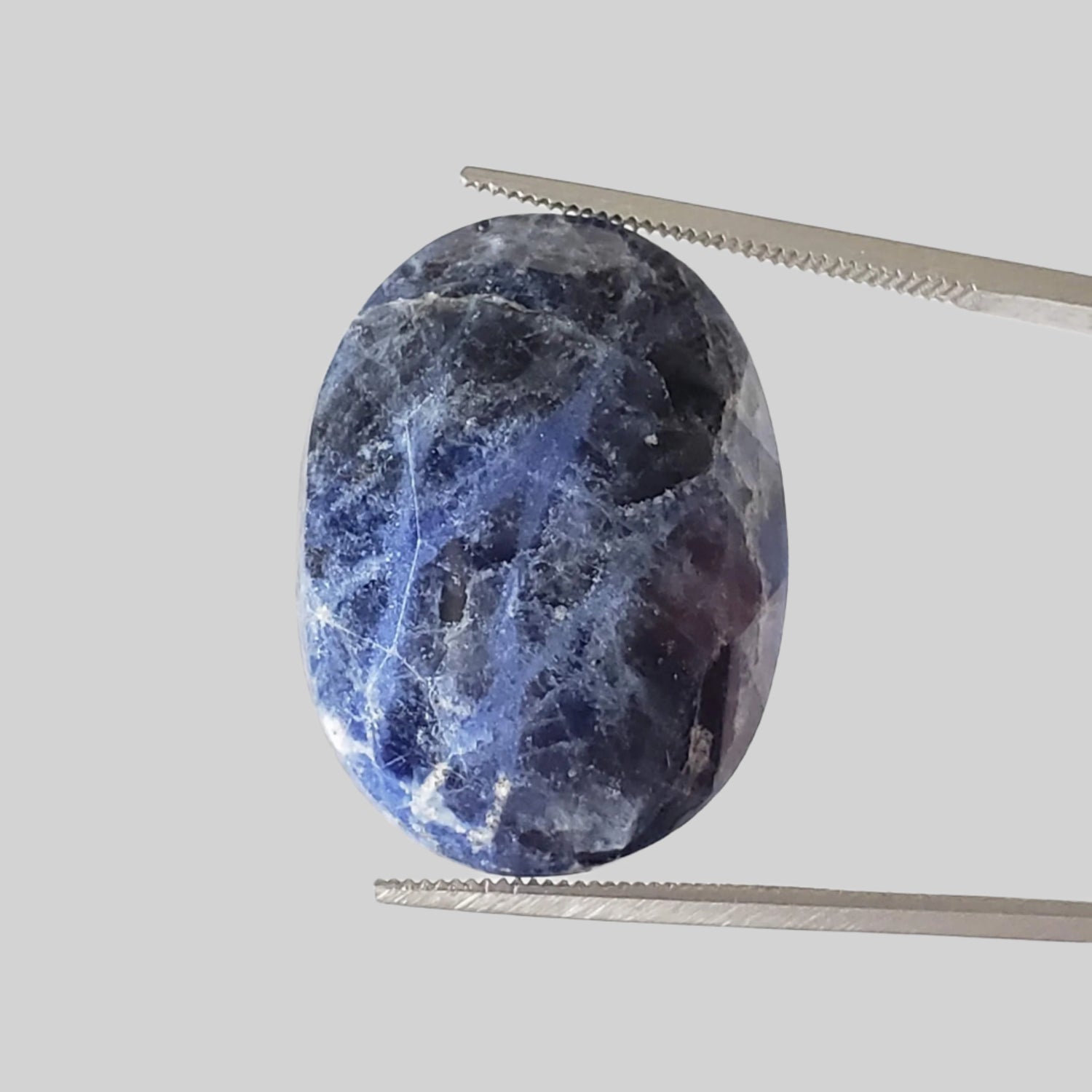
Product Type: Sodalite
Approx Weight (per piece): 16.2ct
Size: 23.3x17.3mm
Shape: Oval Facet Cabochon
Color: Navy Blue with White Patterns
Clarity: Opaque
Origin: Canada


Product Type: Idocrase | Vesuvianite
Approx Weight (per piece): 0.85ct
Size: 7x5mm
Shape: Oval Cut
Color: Amazing Green
Clarity: Clean
Treatment: None
Origin: Canada


Carletonite is a rare and visually delicate mineral best known for its soft blue color, though it may also appear in pink, white, or colorless forms. It crystallizes in the tetragonal system and has a Mohs hardness of 4 to 4.5, which makes it too soft for most jewelry applications but highly prized by collectors. It displays a vitreous luster and is usually transparent to translucent.
Carletonite was first discovered in the Mont-Saint-Hilaire alkaline complex in Quebec, Canada, which remains the only location where well-formed, high-quality specimens have been found. The mineral was named in honor of Carleton University in Ottawa. Although Mont-Saint-Hilaire is the only confirmed and significant source, there have been occasional reports of possible carletonite occurrences in Russia and the United States. These findings are extremely limited and typically lack the clarity and crystal quality seen in the Canadian material.
Name: Carletonite
Specimen Size: Miniature-Sized
Dimensions: 58x34x39 mm / 2.3x1.3x1.5 inches
Weight: 88.8 Grams / 3.1 Ounces
Origin: Mined in Mont-Saint-Hilaire, Québec, Canada


Astrophyllite is a striking and rare mineral known for its bronze to golden-bladed crystals that radiate like starbursts, often embedded in a dark matrix of other minerals. The name comes from Greek, meaning “star leaf,” referring to its star-like crystal formations. It is found in locations such as Russia, Norway, Greenland, and Canada. This specimen of Astrophyllite crystals originates from the world famous site of Mont-Saint-Hilaire, Québec.
There are other traces of minerals such as pink albite, analcime and microcline in a complex matrix in a spectacular shape.
Astrophyllite is often seen as a stone of inner illumination and self-discovery. Some believe it helps reveal hidden potential and encourages personal truth, making it a supportive companion during times of change or reflection. It’s sometimes associated with letting go of the past and embracing a more authentic path forward.
This specimen is in very good condition and displays very well. Make this a special specimen in your collection.
Name: Astrophyllite Cluster
Specimen Size: Cabinet-Sized
Dimensions: 70x44x37 mm / 2.7x1.7x1.5 inches
Weight: 70.7 Grams / 2.5 Ounces
Origin: Mont-Saint-Hilaire, Québec, Canada
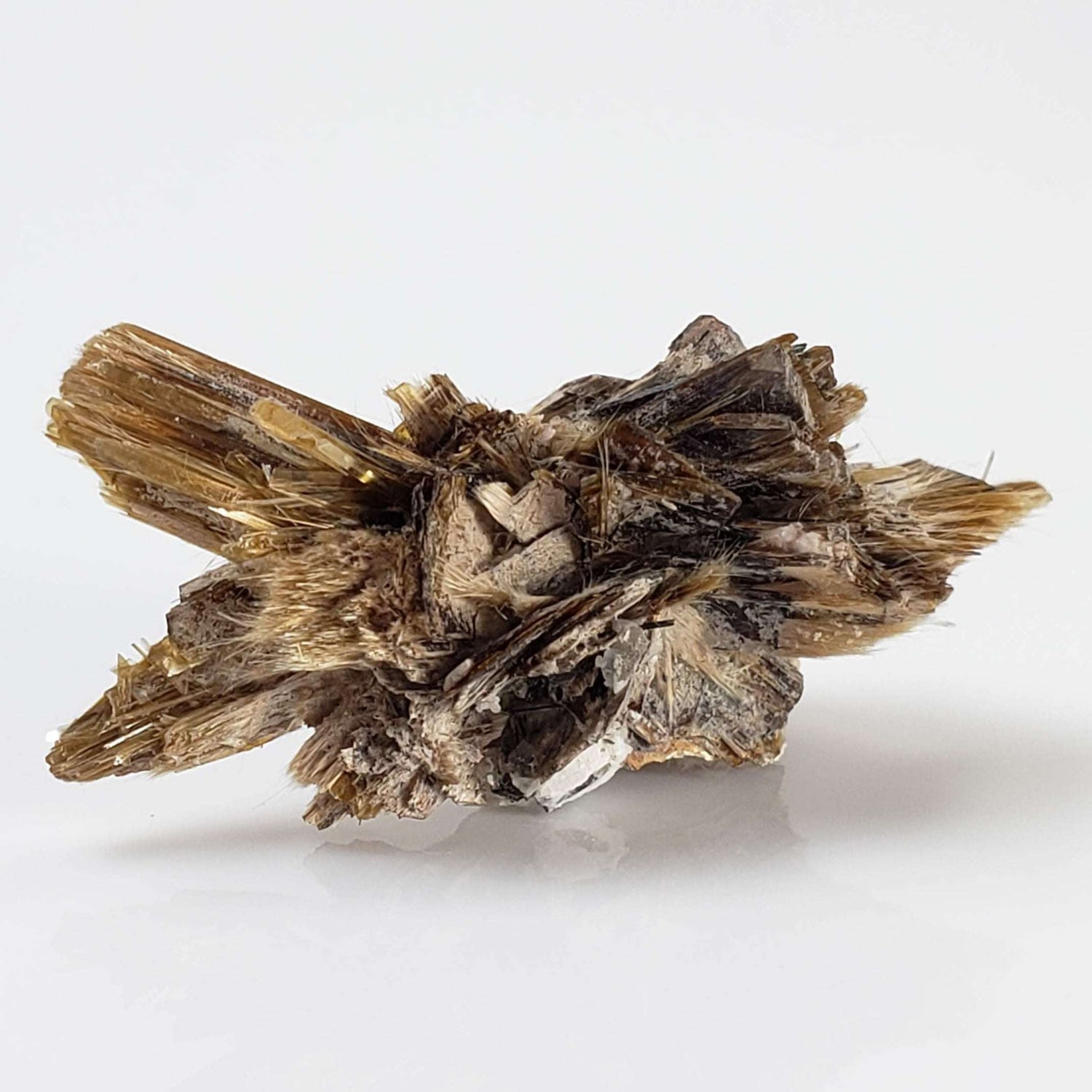
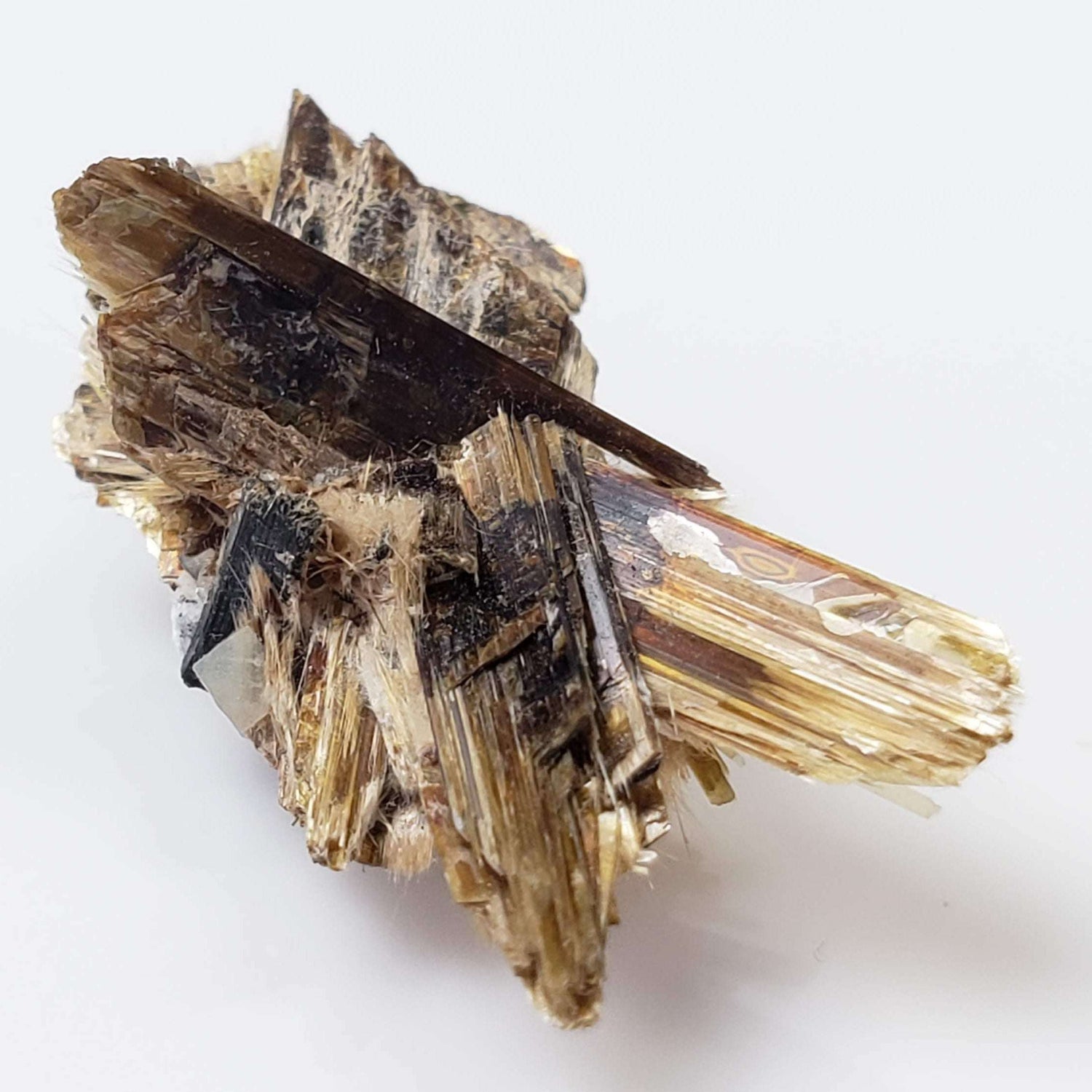
Kupletskite is a rare and complex titanium-bearing silicate mineral most famously found at Mont-Saint-Hilaire in Québec, Canada. It typically appears as tiny brown to reddish-brown crystals, often with a glassy or resinous luster. The crystals are usually slender and prismatic and may occur alongside other rare minerals that Mont-Saint-Hilaire is known for.
Due to its rarity and specific geological conditions needed for formation, kupletskite is primarily of interest to serious collectors and mineralogists, especially those focused on rare earth or alkaline complex minerals. It’s not commonly available in large or showy specimens, so even small, well-formed crystals are considered notable.
This beautiful and rare specimen of Kupletskite from world famous Mont-Saint-Hilaire, Québec, would be a great addition to any collection.
Name: Kupletskite
Specimen Size: Miniature-Sized
Dimensions: 30x15x15 mm / 1.2x0.6x0.6 inches
Weight: 1.63 grams / .057 oz
Origin: Mont Saint-Hilaire, Québec, Canada


At this famous Canadian site, siderite typically forms as small, brown to tan crystals, often rhombohedral in shape, growing over or alongside white to gray albite. Scattered among them, tiny, sharp zircon crystals can appear — often reddish-brown, yellow, or even colorless depending on the exact specimen.
Mont-Saint-Hilaire is renowned for producing rare and unusual mineral combinations, and specimens like this highlight the diversity and richness of the location. While each mineral is interesting on its own, having siderite, albite, and zircon together in one piece makes it a well-balanced and attractive collector’s specimen, especially for those who appreciate the geology of the region
This is a very typical specimen of MSH and is in very good condition. Would be a beautiful addition to any new or existing collection.
Name: Siderite in Albite with Zircon
Specimen Size: Miniature-Sized
Dimensions: 37x36x24 mm / 1.5x1.5x0.9 inches
Weight: 32 Grams / 1.0 Ounces
Origin: Mined in Poudrette Quarry, Mont-Saint-Hilaire, La Vallée-du-Richelieu RCM, Montérégie, Québec, Canada


Astrophyllite is a striking and rare mineral known for its bronze to golden-bladed crystals that radiate like starbursts, often embedded in a dark matrix of other minerals. The name comes from Greek, meaning “star leaf,” referring to its star-like crystal formations. It is found in locations such as Russia, Norway, Greenland, and Canada. This specimen of Astrophyllite crystals originates from the world famous site of Mont-Saint-Hilaire, Québec.
Astrophyllite is often seen as a stone of inner illumination and self-discovery. Some believe it helps reveal hidden potential and encourages personal truth, making it a supportive companion during times of change or reflection. It’s sometimes associated with letting go of the past and embracing a more authentic path forward.
This specimen is in very good condition and displays very well. Make this a special specimen in your collection.
Name: Astrophyllite cluster
Specimen Size: Miniature-Sized
Dimensions: Specimen 38x29 mm / 1.5x1.1 inches
Specimen Box 54x54 mm / 2.1x2.1 inches
Weight: 36.6 Grams / 1.3 Ounces
Origin: Mined in Poudrette Quarry, Mont-Saint-Hilaire, Québec, Canada

Canagem is proud to be professional member of The International Gem Society(IGS) the world's top resource for gem professionals, enthusiasts, and industry content.