



216 products
Sort by:
216 products


This specimen features beautiful brown Phlogopite crystals on matrix, from the Earl's Farm, Wilberforce, Ontario, Canada.
Phlogopite is a fascinating mineral belonging to the mica group, recognized for its distinctive layered structure and glossy appearance. Its color typically ranges from light brown to dark brown, and it can sometimes display a golden hue. Phlogopite is notable for its excellent cleavage, allowing it to be split into thin, flexible sheets, much like other mica varieties.
Phlogopite is typically found in metamorphic rocks, especially in areas where there has been significant heat and pressure, such as around granite intrusions. It is commonly located in places like Madagascar, Russia, and parts of North America, often forming alongside other minerals, such as biotite and garnet.
Phlogopite is believed to promote inner strength and self-confidence. It is often associated with grounding energy, helping individuals remain centered and calm amid chaos.
Name: Phlogopite on Matrix
Specimen Size: Miniature-Sized
Dimensions: 51x42x23 mm / 2.0x1.6x0.9 inches
Weight: 42.6 Grams / 1.5 Ounces
Origin: Earl's Farm, Wilberforce, Ontario, Canada


This is an incredibly beautiful and flashy piece of Canadian Labradorite. Labradorite is an unusual mineral. It can display a beautiful iridescent play of colors, caused by internal fractures in the mineral that reflect light back and forth, dispersing it into different colors. This effect, known as labradorescence, gives Labradorite its appeal and fame.
Product Type: Labradorite
Specimen Size: Miniature-Sized
Dimensions: 52x31x20 mm / 2.0x1.2x0.8 inches
Weight: 39.6 grams / 1.4 ounces
Origin: Quebec, Canada


This is a lovely raw garnet are from Ontario, Canada. Garnet is a stunning gemstone known for its rich color, primarily deriving its vibrant hues from the presence of iron and manganese. The name "garnet" is believed to come from the Latin word "granatum," meaning pomegranate, due to its resemblance to the fruit's seeds. Historically, garnets have been used since the Bronze Age, prized not only for their beauty but also for their protective qualities.
Garnets are believed to enhance self-confidence and inspire love and passion. They are thought to ground energy and bring balance, promoting a sense of stability and security.
Name: Garnet Crystal
Specimen Size: Miniature-Sized
Dimensions: 50x50x46 mm / 2.0x2.0x1.8 inches
Weight: 221 grams / 7.8 Ounces
Origin: Ontario, Canada


This amazing specimen of Vesuvianite was collected in the now closed Jeffery Mine, Asbestos, Quebec, Canada. The specimen is made up of a combination of green and mauve vesuvianite crystals. It is a large specimen in good condition. A great addition to any collection!
Vesuvianite was first discovered on Mount Vesuvius in Italy in the 18th century, hence its name. It typically occurs as a green, brown, yellow, or blue-green crystal, and is often found in metamorphic and igneous rocks. The alternate name, Idocrase, is from the Greek eidos “form”, and krasis “mixture”, because Vesuvianite often appears to combine the crystal forms of other minerals. It is used as a gemstone.
Name: Vesuvianite Crystal
Specimen Size: Miniature-Sized
Dimensions: 56x31x22 mm / 2.2x1.2x0.9 inches
Weight: 41 grams / 1.4 ounces
Origin: Mined in Jeffery Mine, Asbestos, Quebec, Canada


Ammolite is an opal-like organic gemstone found primarily along the eastern slopes of the Rocky Mountains of North America. It is made of the fossilized shells of ammonites, which in turn are composed primarily of aragonite, the same mineral contained in nacre, with a microstructure inherited from the shell. It is one of few biogenic gemstones; others include amber and pearl. In 1981, the year commercial mining of ammolite began, ammolite was given official gemstone status by the World Jewellery Confederation.
Product Type: Ammolite (Ammonite)
Approx Weight (per piece): 1.6ct
Size: 10x8mm
Shape: Oval Cabochon
Color: Fantastic Rainbow Color
Clarity: Opaque
Origin: Canada


We have for you a large Duckbill style gypsum var Selenite from world famous Red River Floodway in Winnipeg, Manitoba Canada. This is a large floater gypsum crystal cluster that occurred in the Pleistocene Age in Lake Agassiz clay. The distribution of the gypsum covers a 20 kilometer wide area, but the Floodway is one of the few excavations in the very flat terrain deep enough to intersect the gypsum layer.
The Red River Floodway has become famous, not only for its engineering marvel but also for the extremely unusual selenite specimens that were discovered during excavations. The formation is due to two generations of growth with the first growth forming near-spherical rosettes of stout intergrown crystals and the second growth, that made them famous, grew large golden crystals with a unique twinning shape that resembled a duck’s bill. These “duckbill” selenites are famous the world over and have found nowhere else in the world to date and collecting is now carefully controlled. Specimens range from having a single crystal, to having many radiating from the rosette. Some rare examples have two rosettes conjoined in striking formations. This specimen is in excellent condition.
Name: Gypsum var. Selenite
Specimen Size: Miniature-Size
Dimensions: 51x36X39 mm / 2.0x1.4X1.5 inches
Weight: 55.3 grams / 1.9 oz
Origin: Red River Floodway, Winnipeg, Manitoba, Canada


This specimen of Vesuvianite was collected in the now closed Jeffery Mine, Asbestos, Québec, Canada. The specimen is made up of a combination of green and mauve vesuvianite crystals also named violet manganoan vesuvianite. It is in good condition. A great addition to any collection!
Vesuvianite was first discovered on Mount Vesuvius in Italy in the 18th century, hence its name. It typically occurs as a green, brown, yellow, or blue-green crystal, and is often found in metamorphic and igneous rocks. The alternate name, Idocrase, is from the Greek eidos “form”, and krasis “mixture”, because Vesuvianite often appears to combine the crystal forms of other minerals. It is used as a gemstone.
Name: Vesuvianite Crystal
Specimen Size: Miniature-Sized
Dimensions: 41x18x14 mm / 1.6x0.7x0.5 inches
Weight: 14.8 grams / 0.5 ounces
Origin: Mined in Jeffery Mine, Asbestos, Québec, Canada


We have for you a large Duckbill style gypsum var Selenite from world famous Red River Floodway in Winnipeg, Manitoba Canada. This is a large floater gypsum crystal cluster that occurred in the Pleistocene Age in Lake Agassiz clay. The distribution of the gypsum covers a 20 kilometer wide area, but the Floodway is one of the few excavations in the very flat terrain deep enough to intersect the gypsum layer.
The Red River Floodway has become famous, not only for its engineering marvel but also for the extremely unusual selenite specimens that were discovered during excavations. The formation is due to two generations of growth with the first growth forming near-spherical rosettes of stout intergrown crystals and the second growth, that made them famous, grew large golden crystals with a unique twinning shape that resembled a duck’s bill. These “duckbill” selenites are famous the world over and have found nowhere else in the world to date and collecting is now carefully controlled. Specimens range from having a single crystal, to having many radiating from the rosette. Some rare examples have two rosettes conjoined in striking formations. This specimen is in excellent condition.
Name: Gypsum var. Selenite
Specimen Size: Miniature-Size
Dimensions: 55x48X42 mm / 2.2x1.9X1.6 inches
Weight: 87.7 grams / 3.1 oz
Origin: Red River Floodway, Winnipeg, Manitoba, Canada


This is an excellent specimen from the world renowned location that is Mount-Saint Hilaire. This beautiful crystal would be a great addition to any new or existing collection.
Name: Rhodochrosite
Specimen Size: Thumbnail-Sized
Dimensions: Specimen 14x9x7 mm
Box 33x33
Weight: 2.5 Grams / 12.7ct
Origin: Mined in Poudrette Quarry, Mont-Saint-Hilaire, Québec, Canada
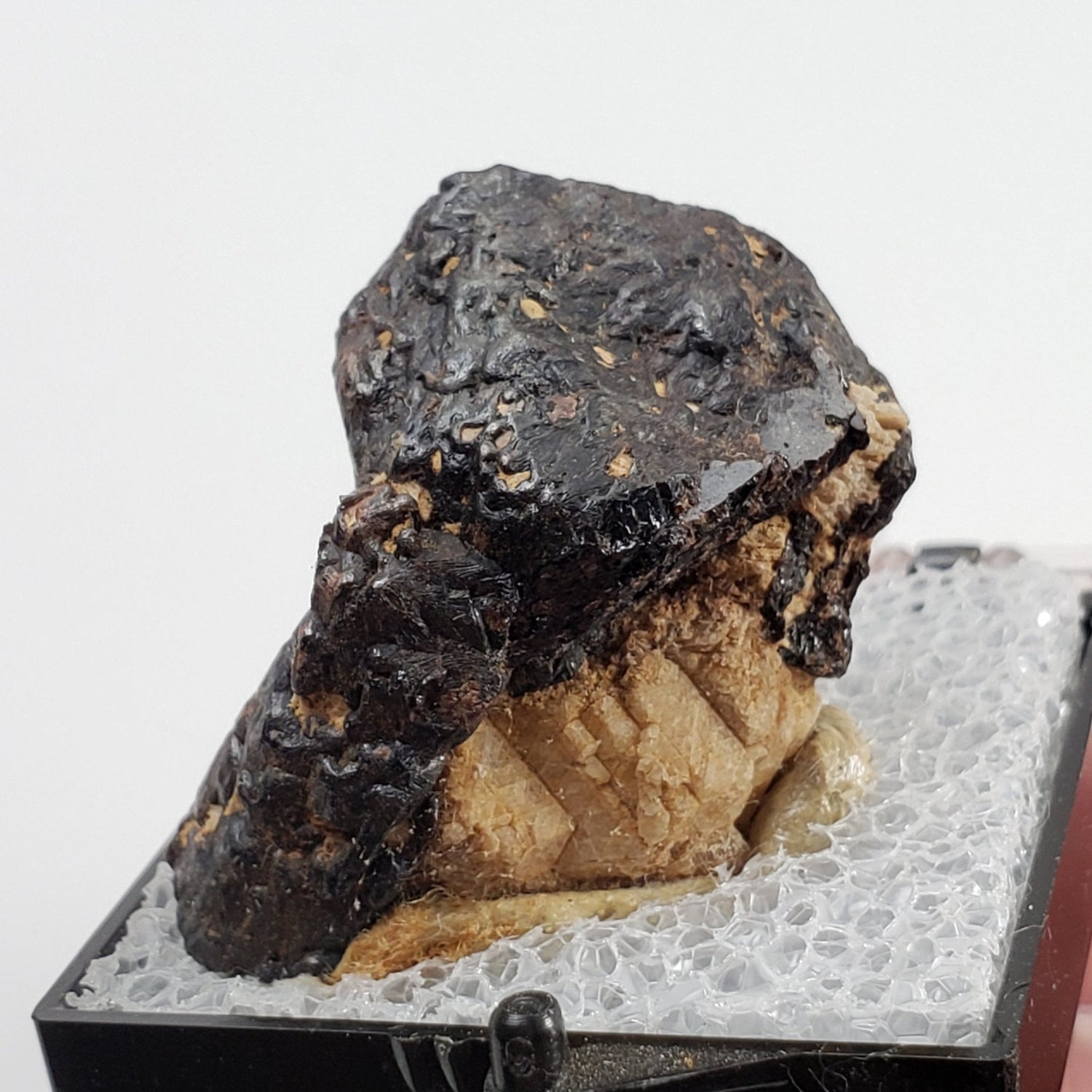
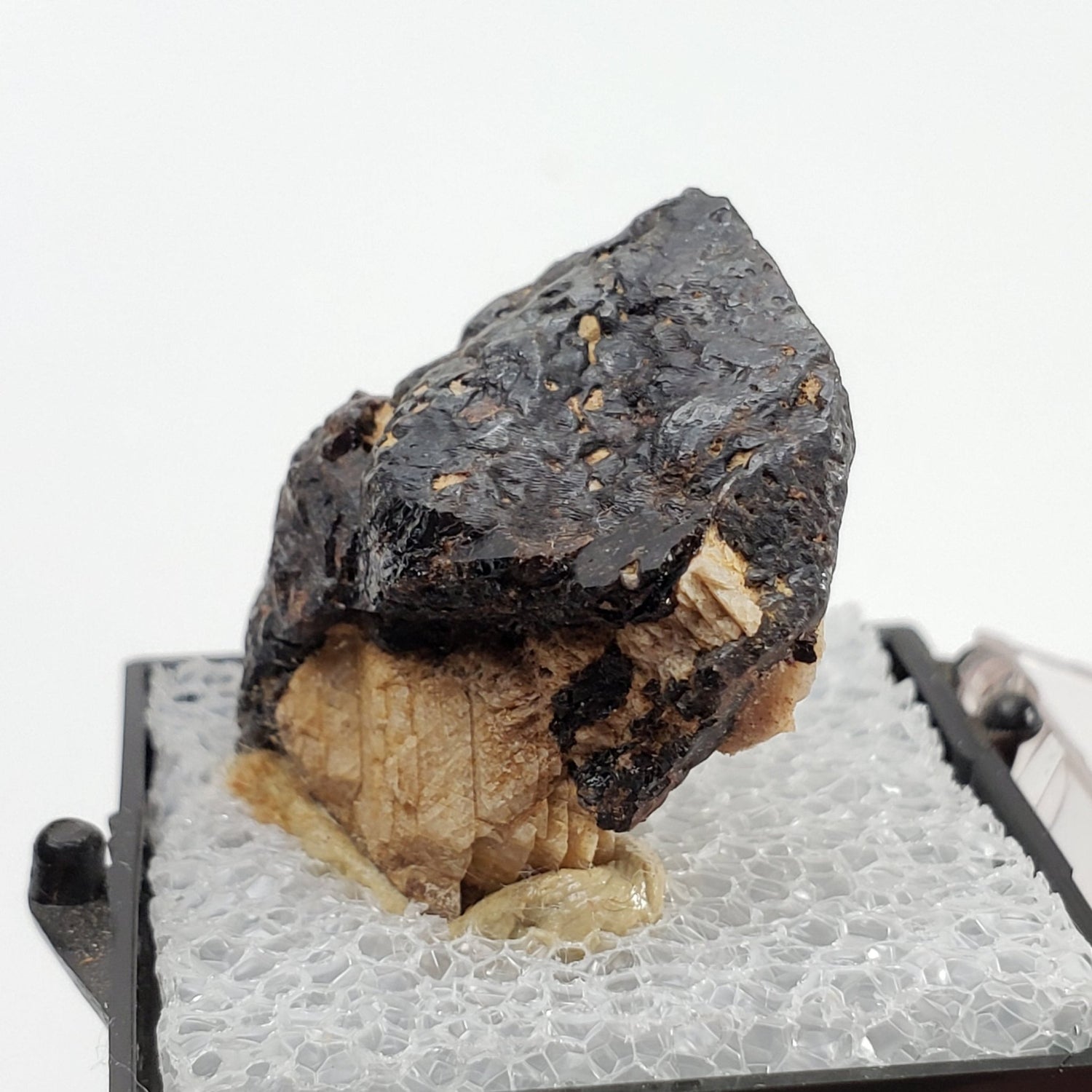
Name: Titanite var. Sphene
Specimen Size: Thumbnail-Sized
Dimensions: Specimen 28x14 mm / 1.1x0.5 inches
Specimen Box 33x33 mm / 1.3x1.3 inches
Weight: 20.9 Grams / 0.7 Ounces (including box)
Origin: Mined in Faraday Twp, Bancroft, Ontario, Canada

Canagem is proud to be professional member of The International Gem Society(IGS) the world's top resource for gem professionals, enthusiasts, and industry content.