



95 products
Sort by:
95 products

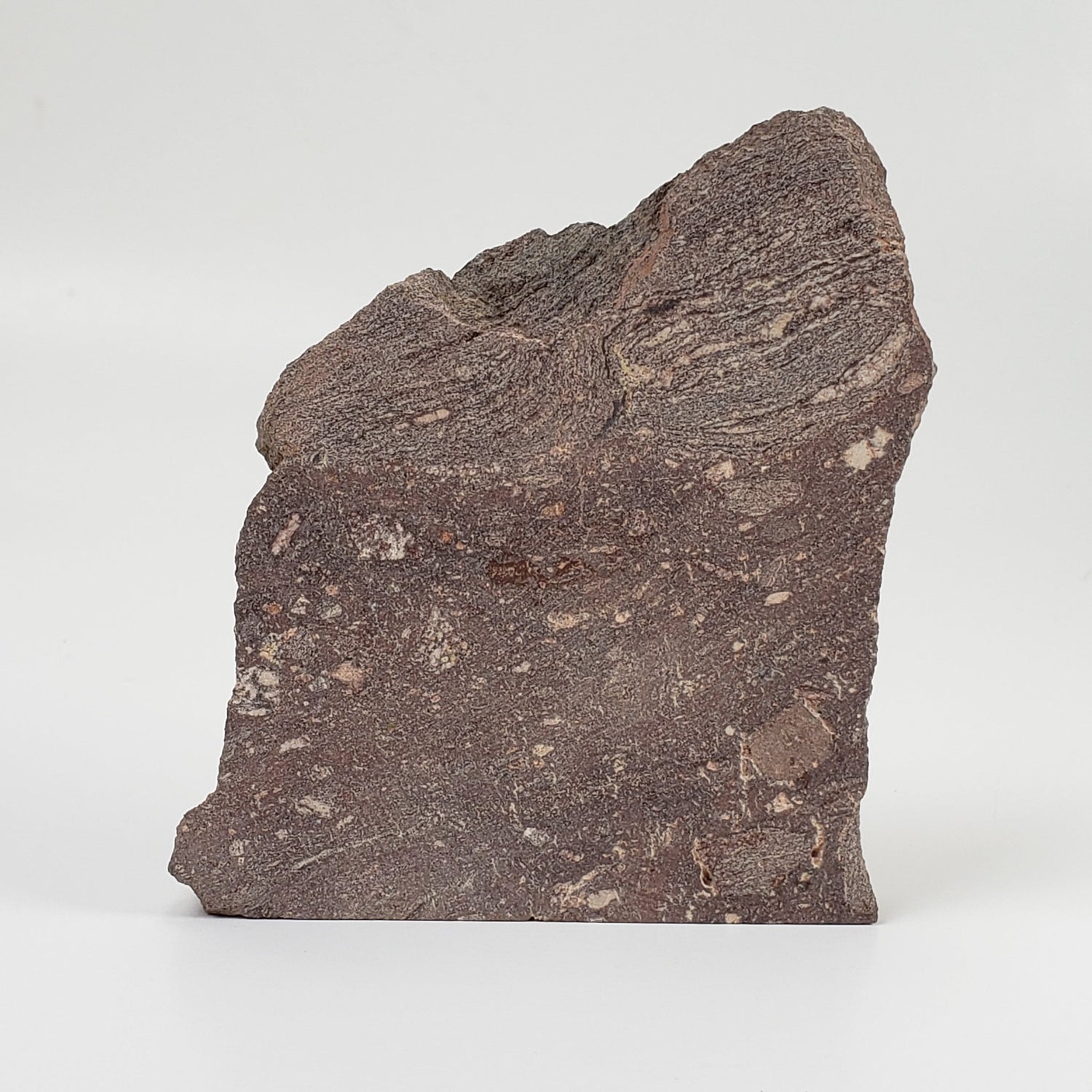
This is a must have 130 gram Impact Breccia also referred to as Suevite coming from the famous Rochechouart impact structure in South Western France,. Although not a meteorite, impactites are directly linked to them and their impacts and are probably going to be one of the rarest collection items you'll ever own. Impactite is a slag-like glassy object found on the surface of the earth, formed from rock melted by the impact of a meteorite.
Named after the town of Rochechouart, the Rochechouart impact structure is located on the western margin of the French Massif Central near the city of Limoges, approximately 350 km (220 mi) south of Paris. Rochechouart (population about 3800) is built with rocks created or modified by the impact (impactites).
The term impactite encompasses shock-metamorphosed target rocks, melts or suevites and mixtures of the two, as well as sedimentary rocks with significant impact-derived components and shocked mineral grains, tektites, anomalous geochemical signatures, etc. This impactite was formed 186 million years ago. This deformed rock fragments and partly molten are imbedded in a melt matrix showing typical flow structures from former melt.
This gorgeous slice displays very well with a mass of 90x77x10 mm. Would be a beautiful addition to any new or existing collection. Comes with a Canagem Collection specimen card.


This is a must have 209 gram polymict impact breccia from the Lockne Crater located approximately 21 km south of the city of Östersund in northern Sweden. It is amazingly light considering its mass of 132x63x23 mm. Although not a meteorite, impactites are directly linked to them and their impacts and are probably going to be one of the rarest collection items you'll ever own. Impactite is a slag-like glassy object found on the surface of the earth, formed from rock melted by the impact of a meteorite.
The term impactite encompasses shock-metamorphosed target rocks, melts or suevites and mixtures of the two, as well as sedimentary rocks with significant impact-derived components and shocked mineral grains, tektites, anomalous geochemical signatures, etc.
Lockne is a 7.5km-wide impact structure that formed circa 455 Ma when an L-chondritic asteroid impacted mixed sedimentary and crystalline target rocks that were under a shallow epicontinental sea (500m deep) at the time. The feature and its surrounding impactite deposits were covered by Caledonian thrust nappes that also partly folded them.
Erosion has breached much of the overthrust rocks to show the impact site. Impactites include the Loftarstone (graywacke-like arenite with carbonate grains), Lockne Breccia (polymictic but mostly limestone clasts), Resurge deposits, Ynntjämen Breccia (monomictic, matrix-supported with calcareous-argillaceous matrix) and the Tandsbyn Breccia (monomictic crystalline ejecta). This crater has been suggested to be a doublet with the nearby smaller Målingen Crater, 16 km apart.
This gorgeous large slice displays very well. It would be a beautiful addition to any new or existing collection. Comes with a Canagem Collection specimen card.
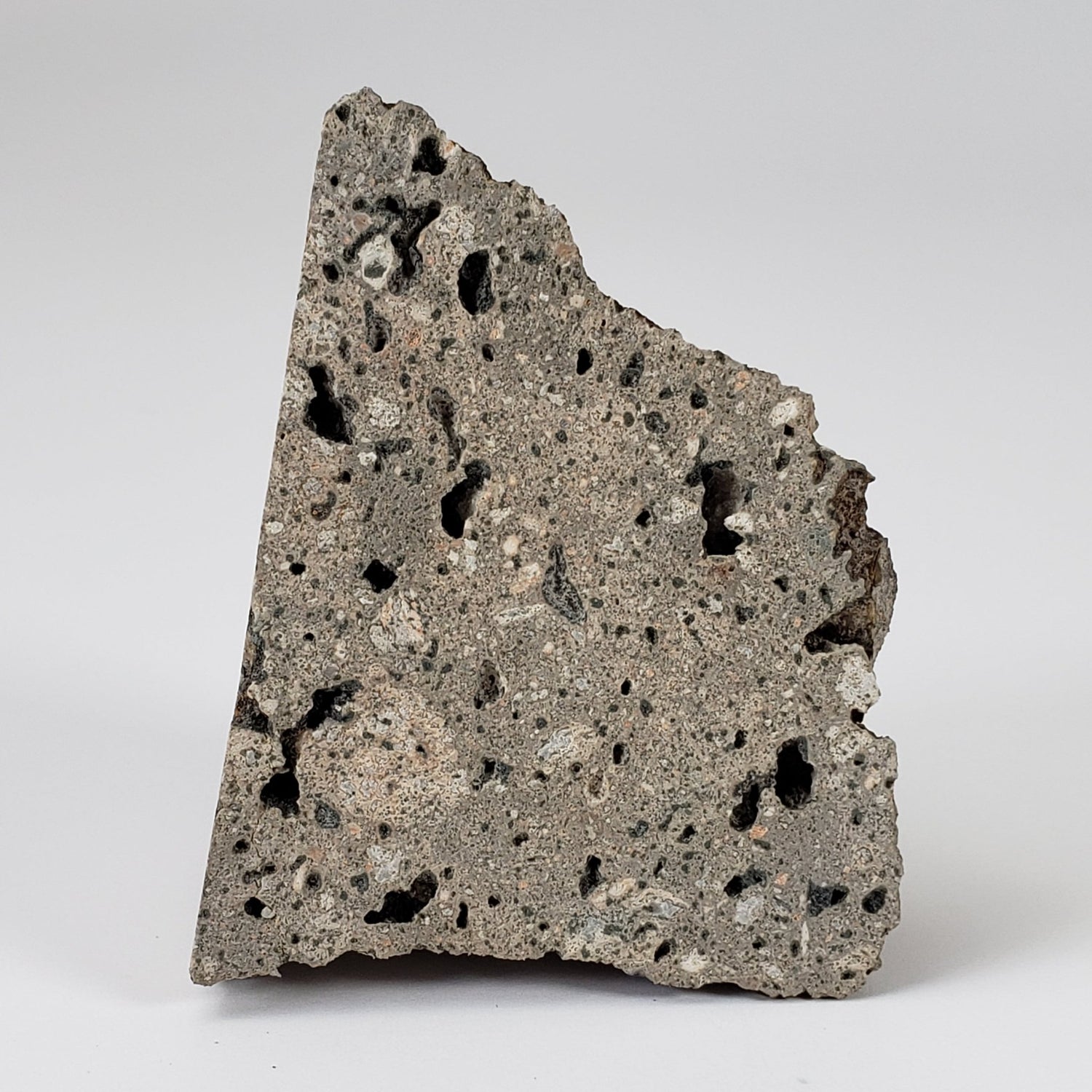
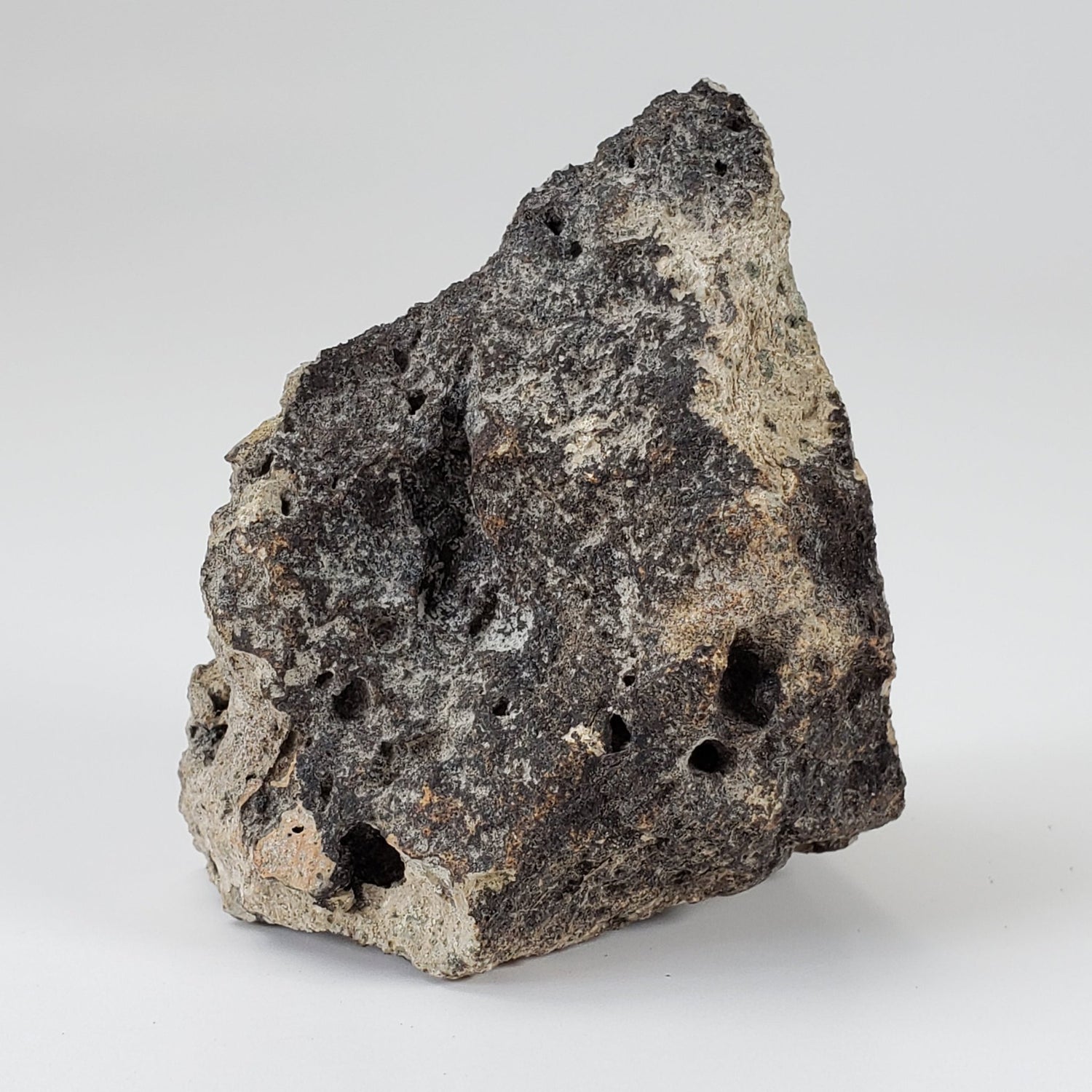
This is a great 50.7 gram Impact Melt Breccia from the Sääksjärvi crater in Finland. It is amazingly light considering its mass of 54x42x25 mm. Although not a meteorite, impactites are directly linked to them and their impacts and are probably going to be one of the rarest collection item you'll ever own. Impactite is a slag-like glassy object found on the surface of the earth, formed from rock melted by the impact of a meteorite.
The term impactite encompasses shock-metamorphosed target rocks, melts or suevites and mixtures of the two, as well as sedimentary rocks with significant impact-derived components and shocked mineral grains, tektites, anomalous geochemical signatures, etc.
Sääksjärvi is a lake in Kokemäki, Satakunta, western Finland, east of the town of Pori. The lake is notable because it overlies an impact crater. The crater is 5 kilometres (3 mi) in diameter and is completely buried under the lake and is not visible at the surface. The age of the impact structure is estimated to be about 543 ± 12 Ma (million years ago), at the boundary between the Ediacaran and Cambrian periods. There are impactite rocks in the southwestern region from the crater confirming its extraterrestrial origin. At the time of its discovery, only one impact crater (Lappajärvi) was known in Finland.
Would be a beautiful addition to any new or existing collection. Comes with a Canagem Collection specimen card.


This is a large Monturaqui Impactite specimen weighing 17.24 grams. It measures 41x23x19 mm. Although not a meteorite, impactites are directly linked to them and their impacts.
Some of the recovered pieces of this impactite show tiny bits of the original iron meteorite. There is very little of the original meteorite left at this impact site, but sometimes when these Impactites are sliced you can find small fragments of metal in them. This specimen was collected by Michael Cottingham during an excursion to the Impactite Site.
The Monturaqui Crater is located in a very remote part of North Chile's Atacama Desert. This crater measures about 370 meters in diameter. Less than 4 kilos of Iron Shale fragments and about 50kg of Impactites have been found so far. This crater was made over 100,000 years ago. The only evidence remaining of the original meteorite is seen in the shale and impactite.
Impactite is a slag-like glassy object found on the surface of the earth, formed from rock melted by the impact of a meteorite. The term encompasses shock-metamorphosed target rocks, melts or suevites and mixtures of the two, as well as sedimentary rocks with significant impact-derived components and shocked mineral grains, tektites, anomalous geochemical signatures, etc.
This piece displays extremely well. It is amazingly light considering its mass. It has a unique hollow sound when you tap it. This Chilean find is very well shaped and preserved. These impactites are becoming more difficult to acquire so this is a good time to get a fine specimen. Would be a beautiful addition to any new or existing collection.
This specimen originates from the Michael Cottingham Meteorite Collection and is guaranteed to be authentic. The specimen will come with a Michael Cottingham and a Canagem specimen card.
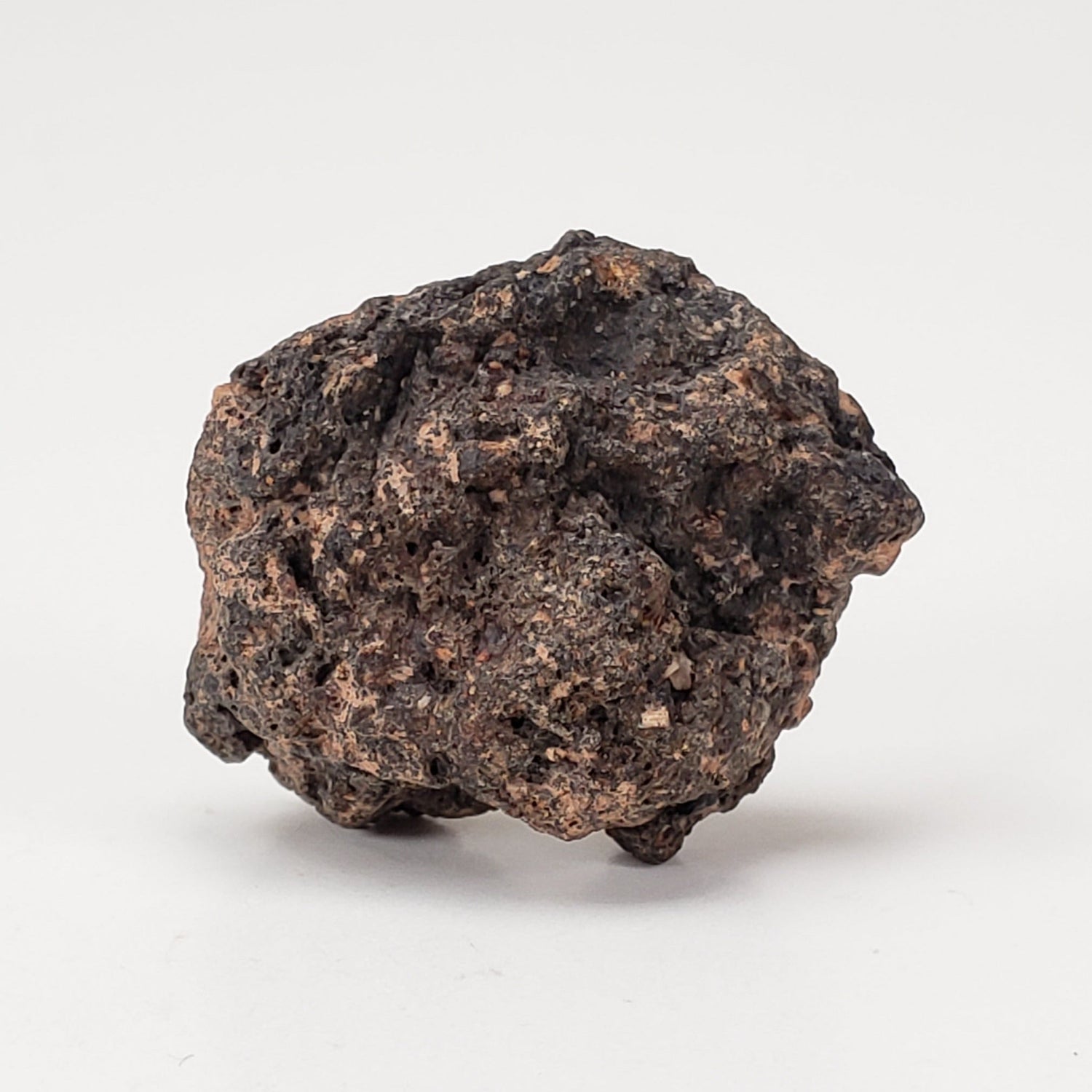
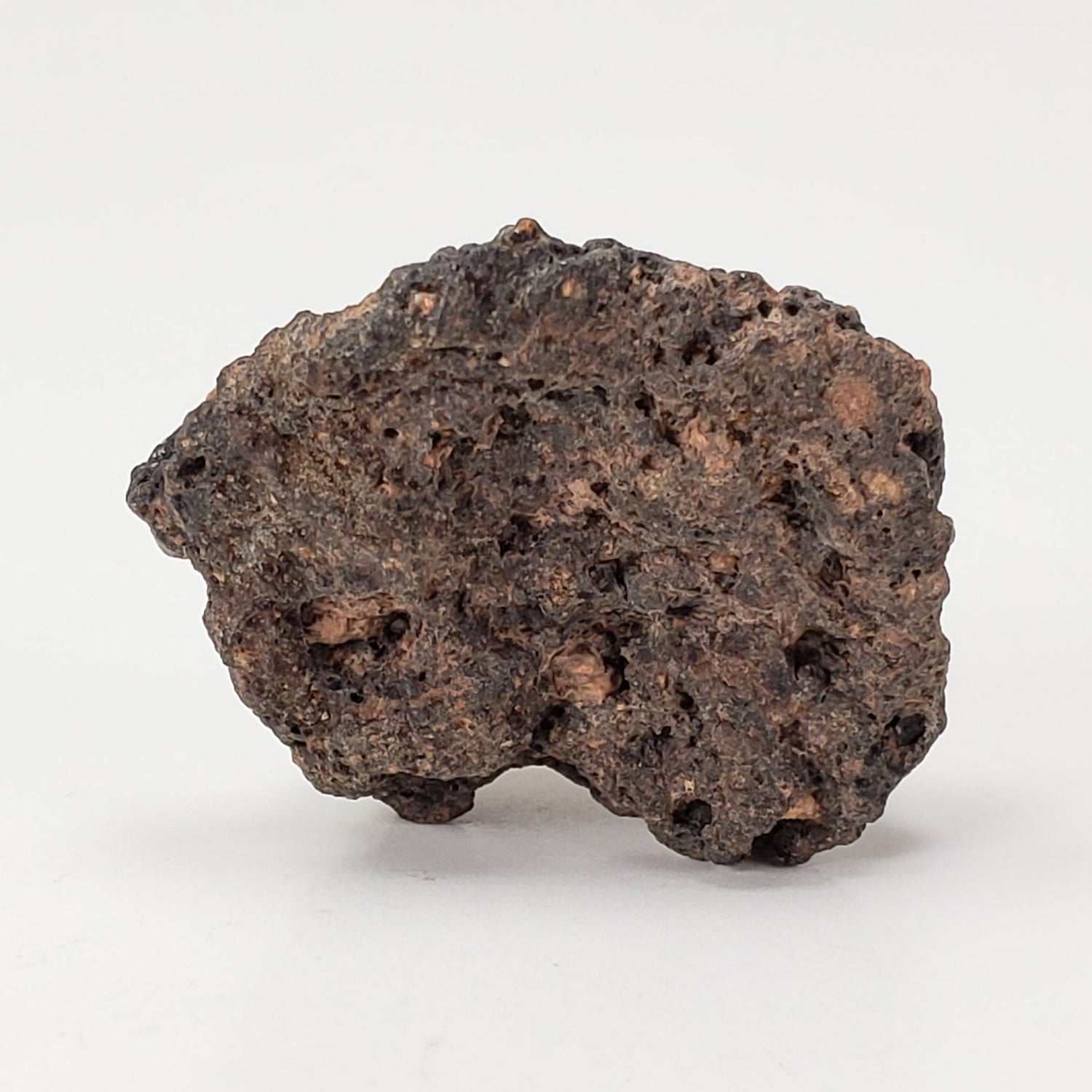
This is an outstanding Monturaqui Impactite specimen weighing 5.66 grams. It measures 26x20x11 mm. Although not a meteorite, impactites are directly linked to them and their impacts.
Some of the recovered pieces of this impactite show tiny bits of the original iron meteorite. There is very little of the original meteorite left at this impact site, but sometimes when these Impactites are sliced you can find small fragments of metal in them. This specimen was collected by Michael Cottingham during an excursion to the Impactite Site.
The Monturaqui Crater is located in a very remote part of North Chile's Atacama Desert. This crater measures about 370 meters in diameter. Less than 4 kilos of Iron Shale fragments and about 50kg of Impactites have been found so far. This crater was made over 100,000 years ago. The only evidence remaining of the original meteorite is seen in the shale and impactite.
Impactite is a slag-like glassy object found on the surface of the earth, formed from rock melted by the impact of a meteorite. The term encompasses shock-metamorphosed target rocks, melts or suevites and mixtures of the two, as well as sedimentary rocks with significant impact-derived components and shocked mineral grains, tektites, anomalous geochemical signatures, etc.
This piece displays extremely well. It is amazingly light considering its mass. It has a unique hollow sound when you tap it. This Chilean find is very well shaped and preserved. These impactites are becoming more difficult to acquire so this is a good time to get a fine specimen. Would be a beautiful addition to any new or existing collection.
This specimen originates from the Michael Cottingham Meteorite Collection and is guaranteed to be authentic. The specimen will come with a Michael Cottingham and a Canagem specimen card.


This is a must have 59.5 gram Metal Ore Copper rich Impact Breccia from the famous Sudbury Astrobleme Impact Structure in Ontario Canada. Its dimensions are 52x31x13 mm. Although not a meteorite, impactites are directly linked to them and their impacts and are probably going to be one of the rarest collection pieces you'll ever own.
Mark Bostick wrote "About 1.87 billion years ago, an object from space nine kilometers in diameter slammed into Canada, a little north of Sudbury, Ontario creating the second largest impact structure on the earth. This impact was equivalent to a billion tons of TNT. An impact so big it cracked the earth, and in fact there are still earthquakes because of that event today! The many mineral rich deposits and strange rock formations in such close proximity has attracted attention for 100's of years, long before its impact origin was known.
Note that this is not a meteorite but a slice of Earth rock, altered by the impact of a very large meteorite. This came from the ring of the impact and is the harder to find gold-copper-bronze colored impactite described as a metal-rich breccia and sulfides composed chiefly of some amount of iridium, cobalt & selenium. In addition, most of these specimens will contain nickel, iron, sperrylite and pentlandite as well as minor amounts of other metals, metallic & silicate minerals."
Note that this is a very fragile material so it will be packed with attention. Would be a beautiful addition to any new or existing collection. Comes with a copy of a signed Mark Bostick Collection and a Canagem Collection specimen card.


This is a must have 81.85-gram Impact Melt Breccia also referred to as Suevite coming from the famous Ries crater Germany. Although not a meteorite, impactites are directly linked to them and their impacts and are probably going to be one of the rarest collection items you'll ever own. Impactite is a slag-like glassy object found on the surface of the earth, formed from rock melted by the impact of a meteorite.
The term impactite encompasses shock-metamorphosed target rocks, melts or suevites and mixtures of the two, as well as sedimentary rocks with significant impact-derived components and shocked mineral grains, tektites, anomalous geochemical signatures, etc. This impactite was formed 14.5 million years ago in Malmian or Jurassic limestone when a meteorite crashed into the earth making a ~10 miles wide crater named the Ries crater in Germany. This gorgeous end piece displays very well and shows typical inclusions of glass bomb as the dark material and crystalline fragments visible throughout the specimen showing the stages of shock metamorphism.
It is amazingly light considering its mass of 113x78x8 mm. Would be a beautiful addition to any new or existing collection. Comes with a Canagem Collection specimen card.


Here we have for you a large 40.22 grams superbly shaped Indochinite Tektite from Maoming City, Guangdong Province, China. It measures 44x31x32 mm. Although not a meteorite, tektite is directly linked to them or their impacts, just consider its age of around 780,000 years old.
Tektite can still be interesting because of the persistent mystery which has resisted clear explanation of their creation for generations of geologists.
These specimen are sometimes found with chips, which is normal since they are glass objects of great age. This is the case with this specimen, as you can see in the photos, there are minor chips. As a result, we are offering this great specimen at a reduced price. This piece still displays very well and is a nice size showing multiple characteristics of its origin. Would be a beautiful addition to any new or existing collection. Comes with a Canagem Collection specimen card.

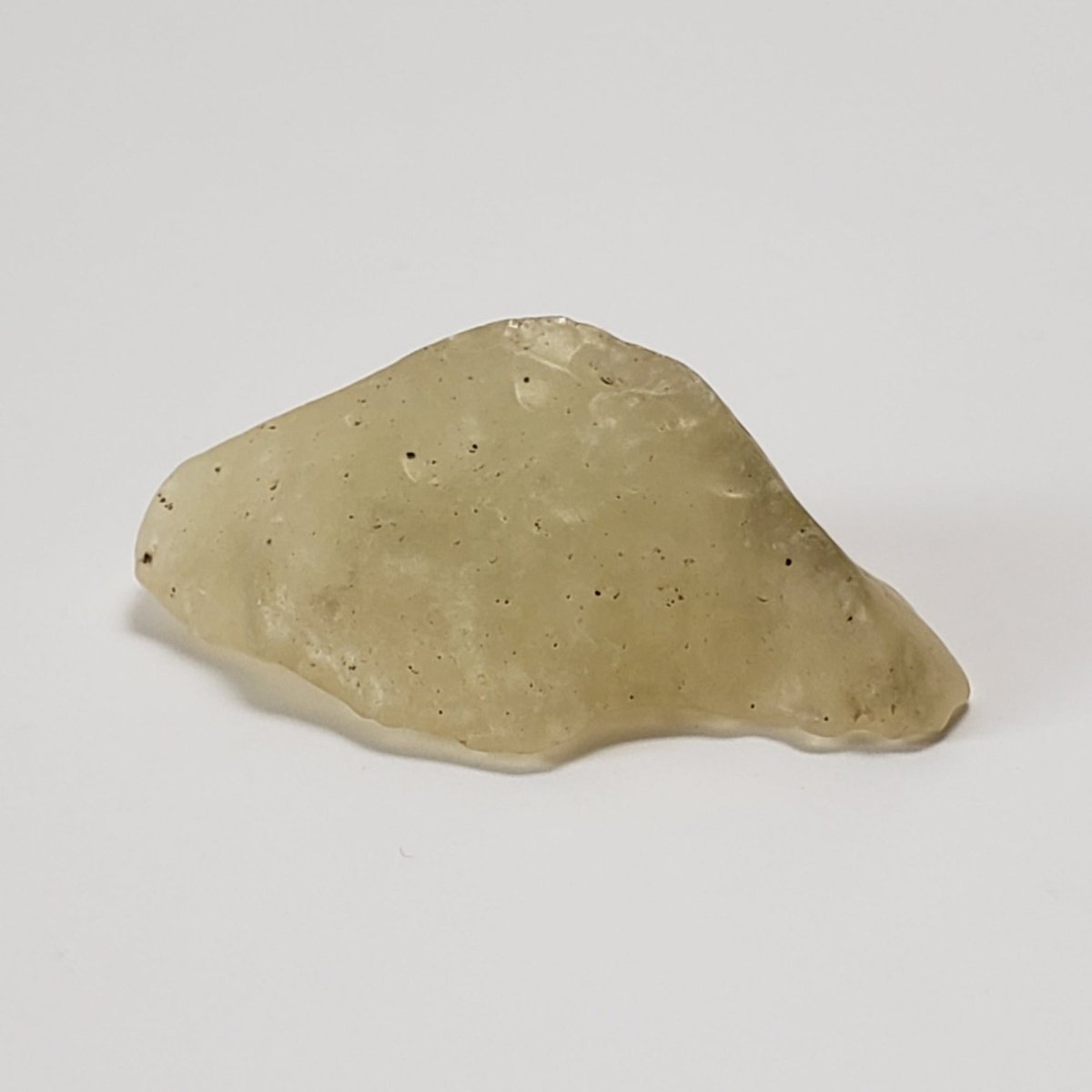
This is a rare and fantastic 7.2 gram Libyan Desert Glass from Kuffra, Libya, with dimensions of 36x12x23 mm.
Although its exact origin is still debated, the leading theory suggests it was formed by a high-energy event, such as a meteoric impact or airburst, that melted the desert sand directly where it lay, without being ejected into the atmosphere and re-entering. This results in different physical characteristics compared to tektites. Libyan Desert Glass is found specifically in the Great Sand Sea of the Eastern Sahara, within a more localized area spanning parts of western Egypt and eastern Libya.
This piece displays extremely well and is a quality translucent specimen. It has an aesthetic shape with a beautiful wind eroded body from the years spent in the Desert. Would be a beautiful addition to any new or existing collection. Comes with a Canagem Collection specimen card.

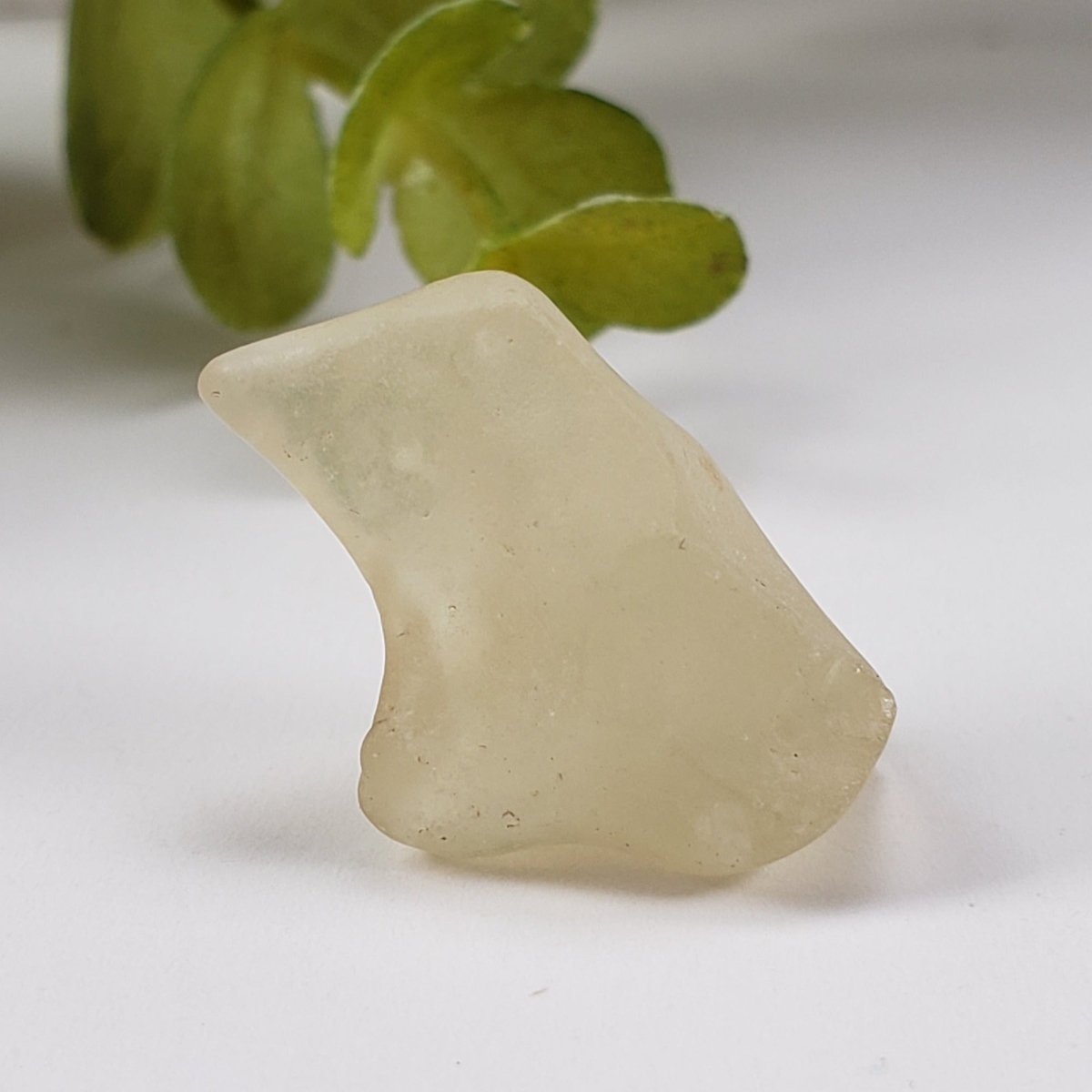
This is a rare and fantastic 5 gram Libyan Desert Glass from Kuffra, Libya, with dimensions of 28x16x13 mm.
Although its exact origin is still debated, the leading theory suggests it was formed by a high-energy event, such as a meteoric impact or airburst, that melted the desert sand directly where it lay, without being ejected into the atmosphere and re-entering. This results in different physical characteristics compared to tektites. Libyan Desert Glass is found specifically in the Great Sand Sea of the Eastern Sahara, within a more localized area spanning parts of western Egypt and eastern Libya.
This piece displays extremely well and is a quality translucent specimen. It has an aesthetic shape with a beautiful wind eroded body from the years spent in the Desert. Would be a beautiful addition to any new or existing collection. Comes with a Canagem Collection specimen card.

Canagem is proud to be professional member of The International Gem Society(IGS) the world's top resource for gem professionals, enthusiasts, and industry content.