



51 products
Sort by:
51 products


This is a rare and fantastic 97.3 gram Libyan Desert Glass from Kuffra, Libya, with dimensions of 56x42x47 mm.
Although its exact origin is still debated, the leading theory suggests it was formed by a high-energy event, such as a meteoric impact or airburst, that melted the desert sand directly where it lay, without being ejected into the atmosphere and re-entering. This results in different physical characteristics compared to tektites. Libyan Desert Glass is found specifically in the Great Sand Sea of the Eastern Sahara, within a more localized area spanning parts of western Egypt and eastern Libya.
This piece displays extremely well and is a quality translucent specimen. It has an aesthetic shape with a beautiful wind eroded body from the years spent in the Desert. Would be a beautiful addition to any new or existing collection. Comes with a Canagem Collection specimen card.
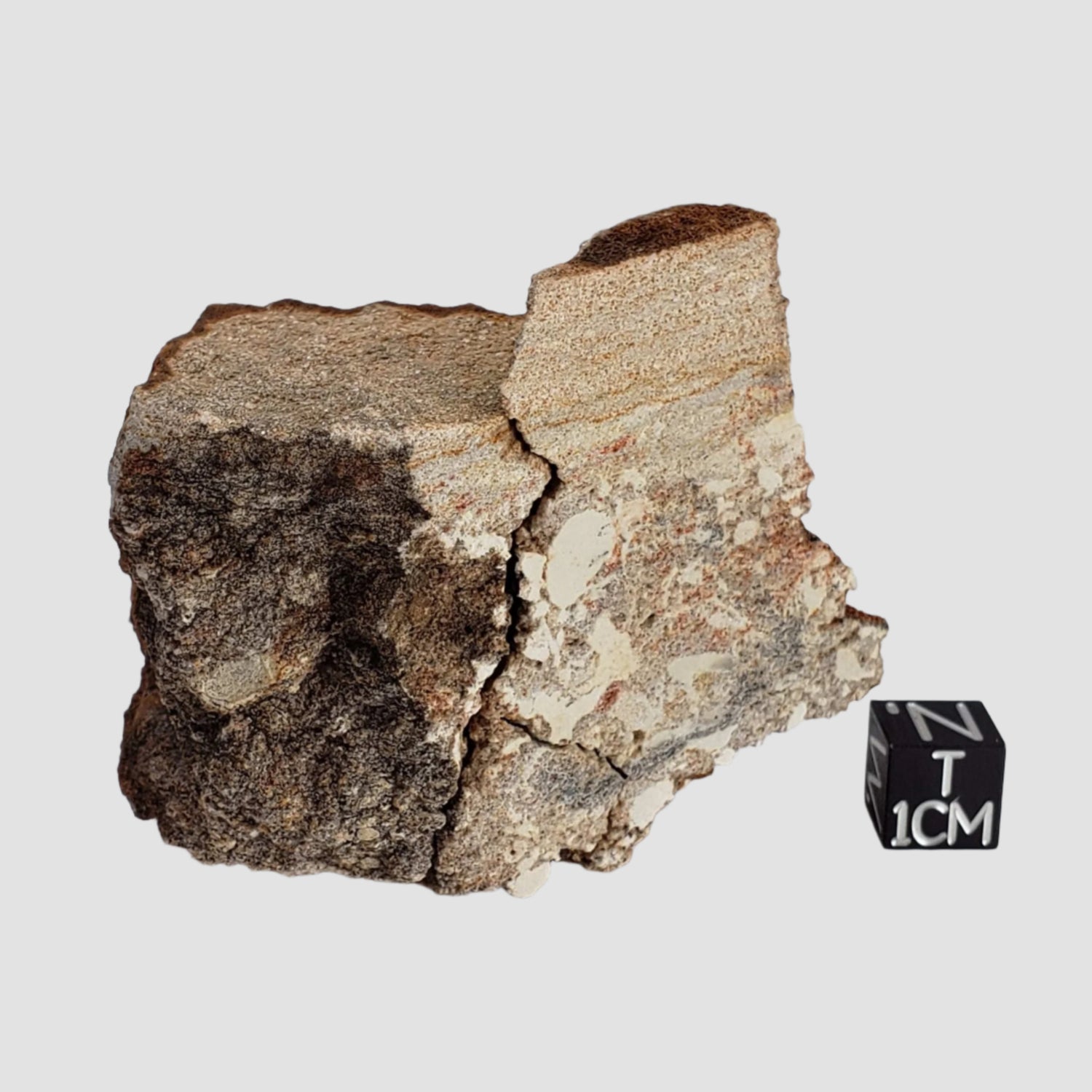
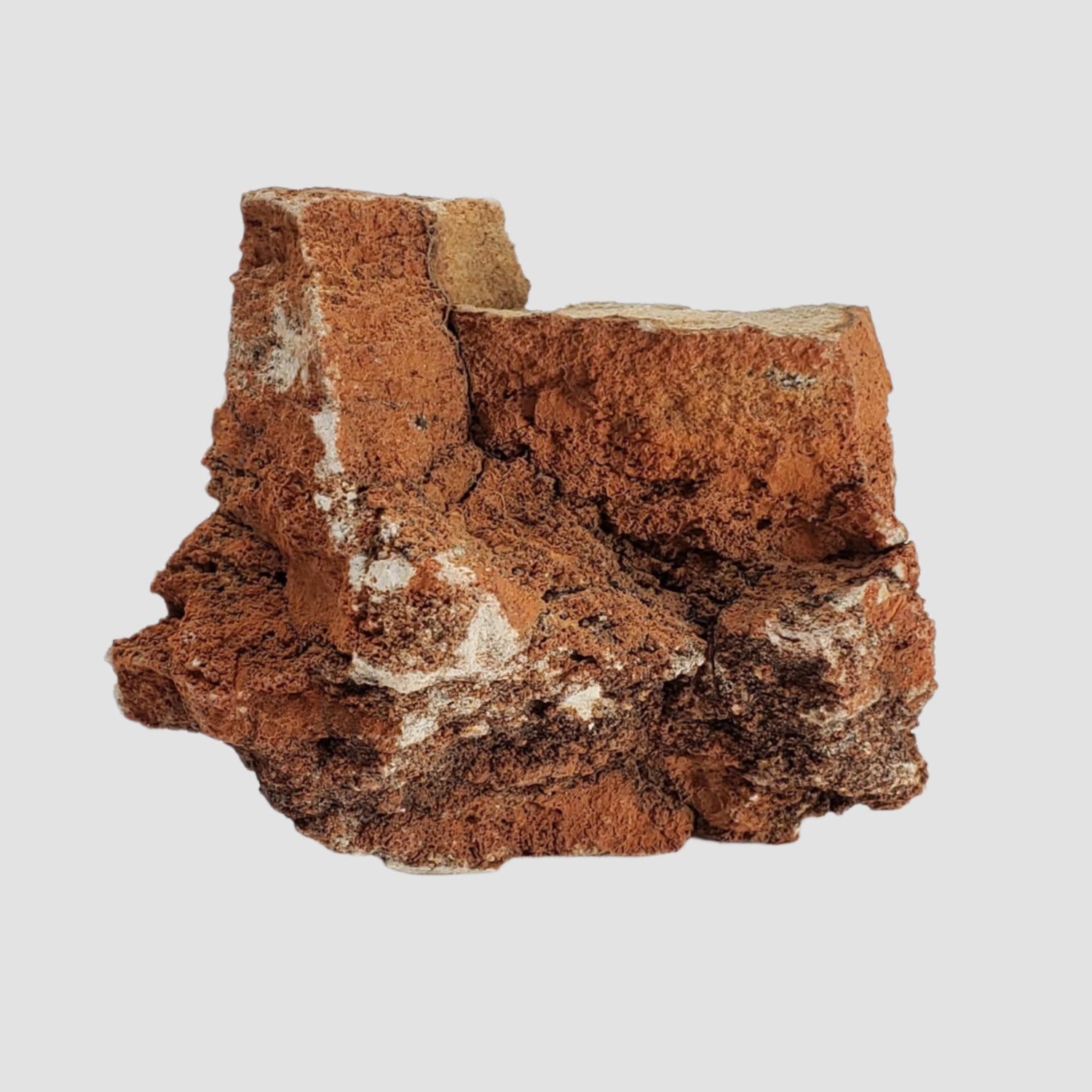
Wolfe Creek Impactite | 104.88 Grams | Impact Breccia | Closed Site | Australia
Name: Wolfe Creek [crater] This is a recognized impact crater name.
Observed fall: No
Age: <0.3 Ma
Diameter: 0.875 km
Country: Australia
Note: There is a natural fracture in the middle of the specimen which comes from the event that created it. Two parts move slightly so handle with care. Displays very well.
Here we have for you a Wolfe Creek impactite breccia specimen weighing 104.88 grams. Its dimensions are 67x53x42 mm. The exposed crater is located in Western Australia, Australia with an estimated age of < 0.3 Ma.
The impact crater is cited in the Earth Impact Database maintained by the Planetary and Space Science Centre at the University of New Brunswick, Canada. For photographs, maps, references, and other information, see the entry on the PASSC Website
These pieces are becoming difficult to acquire as the site is closed for collecting. This is a good time to get a fine specimen. Would be a beautiful addition to any new or existing collection. Comes with 2 specimen cards including a Canagem® Collection specimen card.


NWA 1879 Meteorite | 4.16 Gr | Part Slice | Found 2003 | Stony Iron Mesosiderite | Morocco
This is a superb looking Stony-iron or Mesosiderite class C classified meteorite named Northwest Africa NWA 1879 . This specimen is a part slice weighing 4.16 grams with dimensions of 22x17x4 mm.
This is a quote from Mr Hupé : "This is the NWA 1879, a rare C type Mesosiderite found in 2003 in Northwest Africa. This stony-iron type meteorite is beautiful because it is very fresh, has crystal clusters scattered throughout its matrix and has a great deal of elemental metal. NWA 1879 weighed 1,624 grams before preparation. About 31% was lost during cutting and polishing. There are several pairings to this meteorite in existence so the Total Known Weight (TKW) is unknown.
No expense was spared in the preparation of this meteorite. It was cut using a diamond blade in oil so that the silicates would not be plucked. When cutting this way the blade had to be redressed constantly to prevent the iron from loading up the cutting medium. It was coarse polished using a diamond lap, which needed the same treatment as the blade. It was then soaked in pure ethyl alcohol for days to extract the oil introduced during the cutting and polishing phases. A final dry polish was applied by hand, a very time consuming process. The final step was to clean it again with pure ethyl alcohol and dry it under a heat lamp providing great looking and stable specimens. This specimen comes with an identification card from The Hupé Collection."
This part slice displays extremely well and would be a beautiful addition to any new or existing collection. Comes protected in a gem jar with both a Canagem Collection and a The Hupé Collection specimen card.


This Calcite Crystal sphere has a very desirable golden color with great definition and an outstanding pattern. The Septarians were formed during the Cretaceous period, 50 to 70 million years ago when the Gulf of Mexico reached what is now Southern Utah.
Decomposing sea life killed by volcanic eruptions were chemically attracted to the sediment around them and formed mud balls. As the ocean receded, the balls were left to dry and crack, trapping decomposed calcite from the shells and crystals formed. A thin wall of calcite was transformed into aragonite separating the bentonite heavy clay exteriors from the calcite centers.
Because of this phenomenon, the nodules are called septarians. The name Septarian is derived from the Latin name, Septem, meaning seven. The fact is that the mud balls cracked with 7 points in every direction, thereby creating this beautiful design. Septarians are composed of Calcite (The Yellow Centers), Aragonite (The Brown Lines) and the Outer Grey Rock is Limestone. Occasionally the fossil or some of the fossils which started the formation of the rock is noticeable in the rock.
Would be a beautiful addition to any new or existing collection.
Name: Septarian Calcite Sphere
Dimensions: 92 mm - 3.6 inches
Weight: 1.09 kg - 2.4 lbs
Origin: China


This is a superb looking part slice of Sahara Desert NWA 2663 meteorite. It weighs 5.1 grams and measures 28x24x3 mm. Although still considered unclassified, this meteorite was given the provisional class of CO3.1.
This is a great specimen with many multicolored chondrules and CAIs. It's a Ted Bunch meteorite but unfortunately this find was never fully submitted for analysis. It is a shame for this particular specimen, as it is just special.
This piece displays extremely well with its professionally finished cut face. Would be a beautiful addition to any new or existing collection. Comes with a Canagem Collection specimen card.


The principal member of the Aragonite Group, aragonite is the second most common polymorph of natural calcium carbonate (the most common is calcite). It is significantly less widespread and abundant than calcite and is formed under a much narrower range of physiochemical conditions. It is metastable relative to calcite and often converts to calcite accompanying changes in the environment. It is nearly always a low-temperature, near surface mineral.
Name: Aragonite Sphere
Dimensions: 107 mm - 4.2 in
Weight: 1.9 kg - 4.2 lbs
Origin: China


The principal member of the Aragonite Group, aragonite is the second most common polymorph of natural calcium carbonate (the most common is calcite). It is significantly less widespread and abundant than calcite and is formed under a much narrower range of physiochemical conditions. It is metastable relative to calcite and often converts to calcite accompanying changes in the environment. It is nearly always a low-temperature, near surface mineral.
Name: Aragonite Sphere
Dimensions: 104 mm - 4.1 inches
Weight: 1.71 kg - 3 lbs 23 oz
Origin: China


Thuathe Meteorite | 8.29 gr | Full Slice | H4-5 Chondrite | Observed Fall | Lesotho
This is a great looking complete slice of the Thuathe H4-5 classified meteorite. It weighs 8.29 grams and measures 36x30x4 mm.
A meteorite travelling east to west exploded over Lesotho producing an elliptical strewn field extending 7.4 by 1.9 km (bearing: ~276°) on the westernmost lobe of the Thuathe (or Berea) Plateau, ~12 km east of the capital city of Maseru.
The explosion was accompanied by an extraordinarily loud, 15 s long noise which was heard over a large (100 km radius) area of Lesotho; the fall was eye-witnessed by several people who reported sightings of dust trails of “sparkling objects” over Lesotho and the southern part of the Free State Province of South Africa. Many villagers of Ha Ralimo, Boqate Ha Majara, and Boqate Ha Sofonia reported falls of stones close to themselves and onto their homes. The estimated total mass of recovered material is ~30 kg, including 418 stones in the 2 g to 2.4 kg mass range for a total of 24.673 kg which were collected and catalogued by A. Ashworth and David P. Ambrose
Most freshly cut slices from several stones show a homogeneous beige to light-grey lithology speckled with abundant and heterogeneously distributed (20% to, in exceptional cases, >50 vol%) metal particles; some are crosscut by dark shock veinlets and show brecciated structure with light grey matrix surrounding lighter colored, well-rounded inclusions; chondrules distinctly recognizable.
Would be a beautiful addition to any new or existing collection. Comes in a protective case, and includes a Mark Bostick Collection and a Canagem® Collection specimen card.


The principal member of the Aragonite Group, aragonite is the second most common polymorph of natural calcium carbonate (the most common is calcite). It is significantly less widespread and abundant than calcite and is formed under a much narrower range of physiochemical conditions. It is metastable relative to calcite and often converts to calcite accompanying changes in the environment. It is nearly always a low-temperature, near surface mineral.
Name: Aragonite Sphere
Dimensions: 99 mm - 3.9 inches
Weight: 1.4 kg - 3.1 lbs
Origin: China


Product Type: Tourmaline
Approx Weight (per piece): 5.1ct
Size: 12x7.3mm
Shape: Baguette Cut
Color: Purple
Clarity: SI (Slightly Included)
Origin: Africa

Canagem is proud to be professional member of The International Gem Society(IGS) the world's top resource for gem professionals, enthusiasts, and industry content.