



1573 products
Sort by:
1573 products
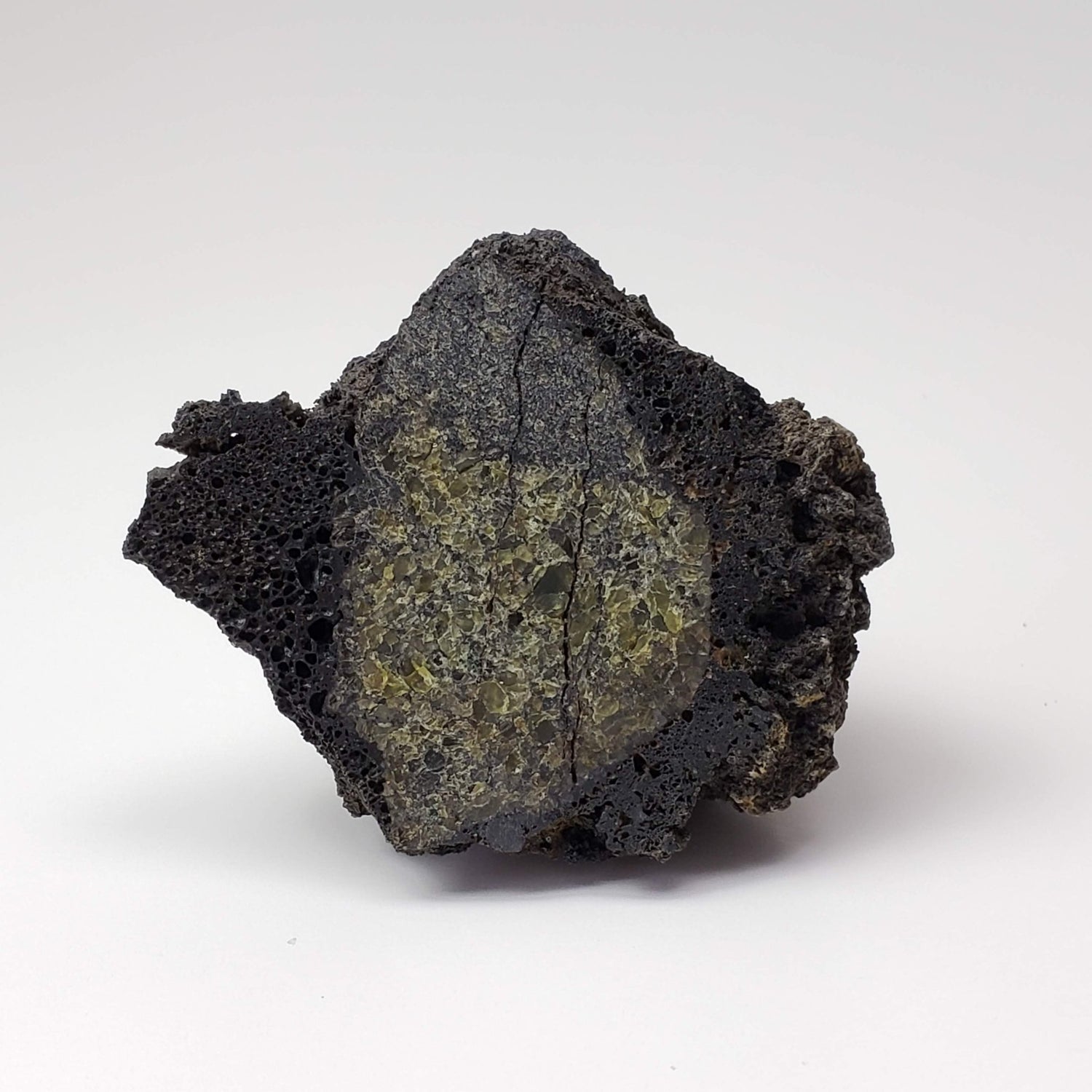
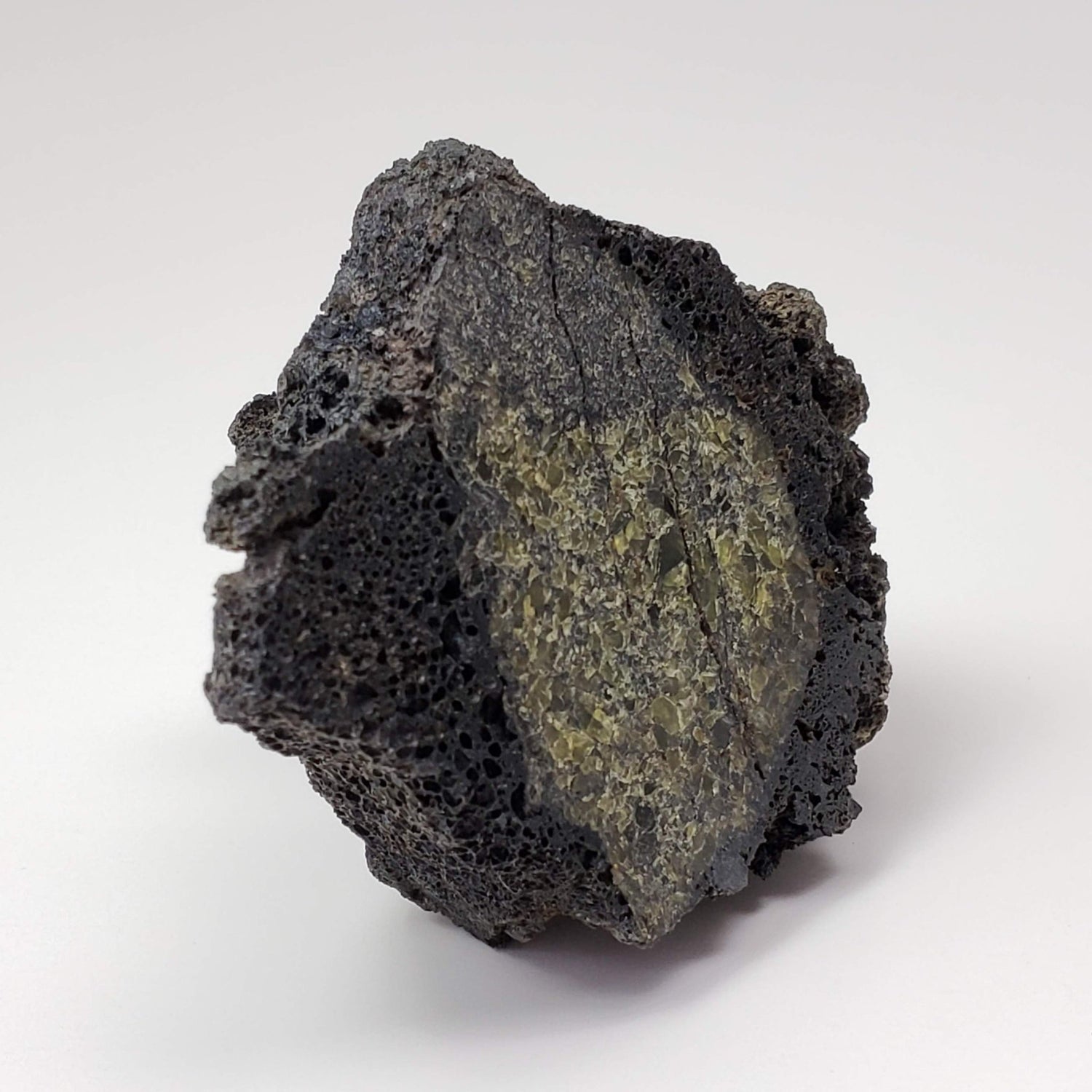
An olivine volcanic bomb is a type of volcanic rock that contains olivine crystals and has been ejected during a volcanic eruption. Olivine is a mineral that is commonly found in the Earth's mantle and is one of the first minerals to crystallize as magma cools.
Volcanic bombs are large clots of lava that are ejected from a volcano during an explosive eruption. They can vary in size, and their shapes are often streamlined due to their molten nature as they are thrown through the air. When these volcanic bombs contain olivine crystals, they are referred to as olivine volcanic bombs.
This piece has been cut to show the green olivine crystals which are showcased beautifully against the surrounding black lava crust.
Would be a beautiful addition to any new or existing collection. Comes with a Canagem Collection specimen card.
Name: Olivine Crystal Bomb
Specimen Size: Cabinet-Sized
Dimensions: 62x54x35 mm / 2.4x2.1x1.4 Inches
Weight: 91 Grams / 3.2 Ounces
Details: Volcanic activity Mortlake, Victoria, Australia

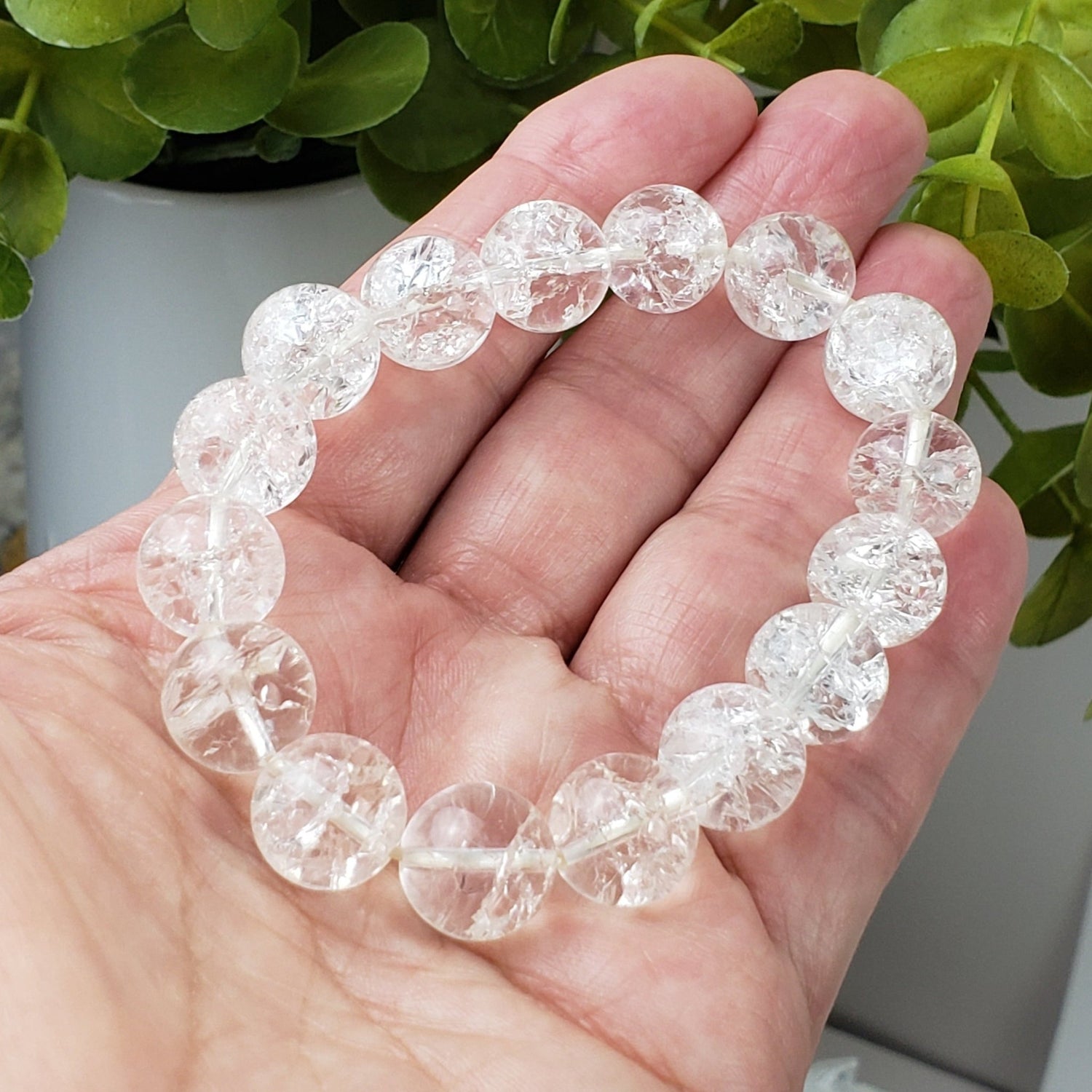
Crackle quartz, also known as fire quartz or ice quartz, is a type of quartz that has been treated to create a distinctive cracked or shattered appearance within the crystal. This treatment is done by heating the quartz crystals and then rapidly cooling them, which results in the development of internal fissures. The cracks within the quartz can vary in size and pattern, creating a shattered or broken appearance. The fractures often resemble ice or fire, giving rise to the alternative names ice quartz and fire quartz.
Crackle quartz is available in various colors, and the treatment process can enhance or alter the natural color of the quartz. Common colors include clear, white, smoky, or even vibrant hues like pink, blue, or green.
Product Type: Crackle Quartz Bracelet
Gem Type: Natural Quartz
Net Weight: 43g / 1.5 oz
Bead Diameter: 12.5 mm / 0.5 inches
Bracelet Diameter: 177 mm / 7 inches


This beautiful Apophyllite specimen is of significant size and will include the stand seen in the photos.
Apophyllite is a mineral belonging to the phyllosilicate group. It is known for its distinctive crystal formations, often occurring in clusters with a unique beauty. Apophyllite crystals are usually colorless or white, allowing them to be transparent or translucent. Although, some specimens may exhibit a greenish, yellowish, or pinkish tint due to the presence of impurities.
Apophyllite often forms as prismatic crystals with a square or rectangular cross-section. It frequently occurs in distinctive pyramid-like structures, and its crystals can be large and well-formed. Apophyllite is found in various locations around the world. Notable occurrences include India, Brazil, Mexico, Germany, and the United States.
Apophyllite is believed to have a calming effect, and to effectively reduce stress, releasing mental blockages and negative thought patterns. Apophyllite is also said to release suppressed emotion, to overcome anxiety, worries and fears. It calms apprehensions and allows uncertainty to be tolerated.
Name: Apophyllite Crystal Cluster
Specimen Size: Large Cabinet-Sized
Dimensions: 151x102x 67 mm / 5.9x4.0x2.6 inches
Weight: 1.04 Kg / 2 Lbs 5 Ounces
Origin: Mined in India


Product Type: Chrysoberyl Cats Eye
Approx Weight (per piece): 2.2ct
Size: 7.5x6mm
Shape: Oval Cabochon
Color: Fine Green Sharp Cats Eye
Clarity: Top crystal
Origin: Madagascar
The distinctive "cat's eye" effect in this Chrysoberyl is caused by the reflection of light off parallel needle-like inclusions within the crystal. When the gem is cut en cabochon, a concentrated, bright band of light appears to move across the surface as the stone is rotated.
Cat's Eye Chrysoberyl comes in various colors, with green, yellow, and golden-brown being common. The most valuable specimens often exhibit a honey or honey-green color. It is a durable gemstone, scoring 8.5 on the Mohs scale of hardness, making it suitable for various types of jewelry.
Significant sources of Cat's Eye Chrysoberyl include Sri Lanka, Brazil, India, Myanmar, and Madagascar. Sri Lankan stones, in particular, are renowned for their exceptional cat's eye effects.
Cat's Eye Chrysoberyl is believed to possess metaphysical properties associated with protection, intuition, and good fortune. Some traditions consider it a talisman for enhancing insight and awareness.
Treatment:
- Cat's Eye Chrysoberyl is typically untreated. The chatoyancy is a natural occurrence caused by inclusions within the crystal.


An olivine volcanic bomb is a type of volcanic rock that contains olivine crystals and has been ejected during a volcanic eruption. Olivine is a mineral that is commonly found in the Earth's mantle and is one of the first minerals to crystallize as magma cools.
Volcanic bombs are large clots of lava that are ejected from a volcano during an explosive eruption. They can vary in size, and their shapes are often streamlined due to their molten nature as they are thrown through the air. When these volcanic bombs contain olivine crystals, they are referred to as olivine volcanic bombs.
The crystal face has been left raw on this piece to show the red and green olivine crystals which are showcased beautifully against the surrounding black lava crust.
Would be a beautiful addition to any new or existing collection. Comes with a Canagem Collection specimen card.
Name: Red Olivine Crystal Bomb
Specimen Size: Large Cabinet-Sized
Dimensions: 102x67x38 mm / 4.0x2.6x1.5 Inches
Weight: 409.8 Grams / 14.5 Ounces
Details: Volcanic activity Mortlake, Victoria, Australia


Product Type: Tanzanite - 10 Piece Lot
Approx Weight (per lot): 1.7tcw
Size: 3.4-3.5mm
Shape: Trilliant Cut (or Trillion Cut)
Color: purple and pale green
Clarity: SI (Slightly Included)
Origin: Tanzania
Tanzanite is renowned for its intense blue and violet colors, but can also be golden, green, lilac and peacock (blue and green). The sole source of tanzanite is the Merelani Hills in northern Tanzania. Discovered in the 1960s, tanzanite is considered rarer than diamonds due to its single-source origin. The mines in Tanzania are exhaustible, adding to the gemstone's allure.
With a hardness of 6.5 to 7 on the Mohs scale, tanzanite is relatively soft compared to some other gemstones. As a result, it requires gentle care to prevent scratches or damage.
Tanzanite is believed to aide with spiritual awareness, insight, and communication. Some attribute it with calming energies and the ability to enhance psychic abilities.
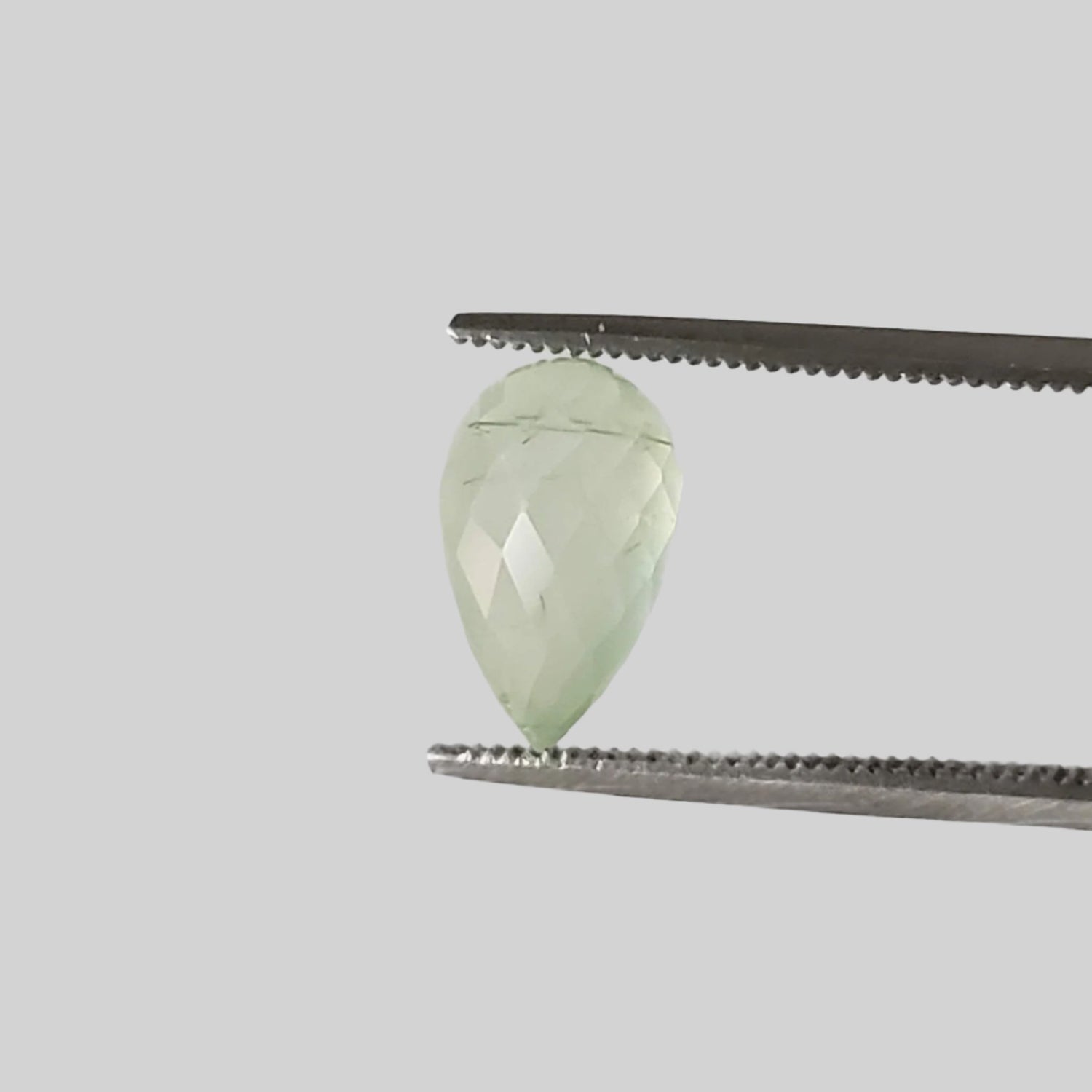
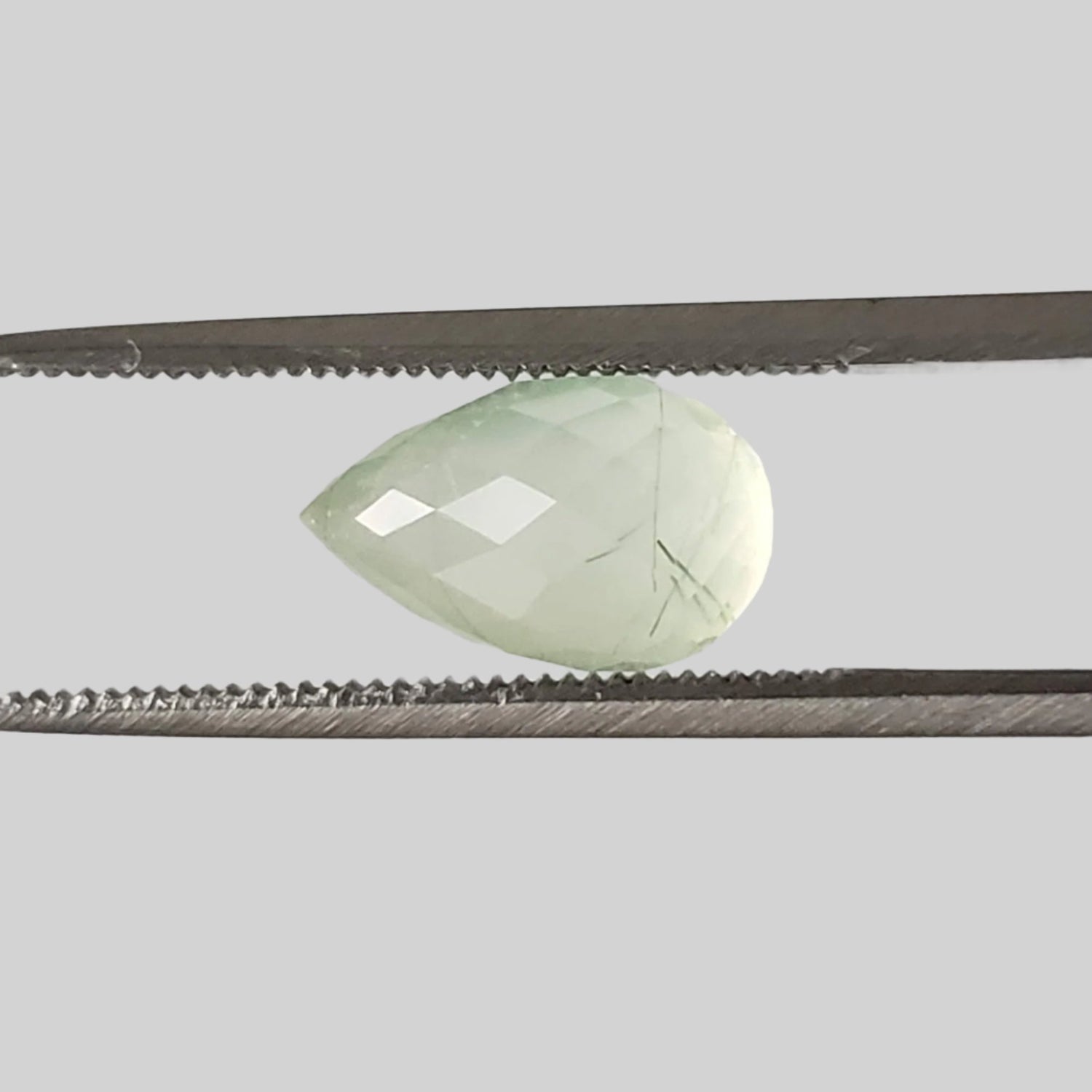
Product Type: Green Garnet
Approx Weight (per piece): 3.0ct
Size: 10.5x6.5mm
Shape: Briolette
Color: Light Green
Clarity: Transparent
Origin: Africa


Lapis lazuli is a vivid blue metamorphic rock and a gemstone that has been prized for its intense color and historical significance for thousands of years. It's composed of lazurite (for the blue color), calcite, sodalite, and pyrite. It is the presence of pyrite that causes the gold-colored flecks or veins in the stone. Lapis lazuli has a moderate hardness, typically ranging from 5 to 5.5 on the Mohs scale. High-quality lapis lazuli has been historically sourced from mines in Afghanistan; however, other deposits are found in countries such as Russia, Chile, Italy, and the United States.
Lapis lazuli has been used for various purposes throughout history. It has been highly prized for ornamental and decorative purposes, including as a gemstone in jewelry and art. The ancient Egyptians used lapis lazuli in the creation of jewelry, amulets, and cosmetics. The pigment ultramarine, derived from lapis lazuli, was highly valued by Renaissance painters.
Lapis lazuli is believed to promote self-awareness and mental clarity.
Product Type: Pendant 925 Sterling SilverGem Type: Natural Lapis Lazuli
Metal Type: 925 stamped Silver
Dimensions:


This is a cute Lapis Lazuli carved elephant pendant with gold plated accents. The elephant trunk is upward-pointed which is said to bring energy, luck, prosperity and kindness.
Lapis lazuli is a vivid blue metamorphic rock and a gemstone that has been prized for its intense color and historical significance for thousands of years. It's composed of lazurite (for the blue color), calcite, sodalite, and pyrite. It is the presence of pyrite that causes the gold-colored flecks or veins in the stone. Lapis lazuli has a moderate hardness, typically ranging from 5 to 5.5 on the Mohs scale. High-quality lapis lazuli has been historically sourced from mines in Afghanistan; however, other deposits are found in countries such as Russia, Chile, Italy, and the United States.
Lapis lazuli has been used for various purposes throughout history. It has been highly prized for ornamental and decorative purposes, including as a gemstone in jewelry and art. The ancient Egyptians used lapis lazuli in the creation of jewelry, amulets, and cosmetics. The pigment ultramarine, derived from lapis lazuli, was highly valued by Renaissance painters.
Lapis lazuli is believed to promote self-awareness and mental clarity.
Product Type: Lapis Lazuli Pendant
Weight : 35.8ct
Size: 31x26mm
Origin: Afghanistan


Product Type: Sky Blue Topaz
Approx Weight (per piece): 3.0ct
Size: 10x8mm
Shape: Oval Cut
Color: Fine Sky Blue
Clarity: Clean
Origin: Africa

Canagem is proud to be professional member of The International Gem Society(IGS) the world's top resource for gem professionals, enthusiasts, and industry content.