



1508 products
Sort by:
1508 products
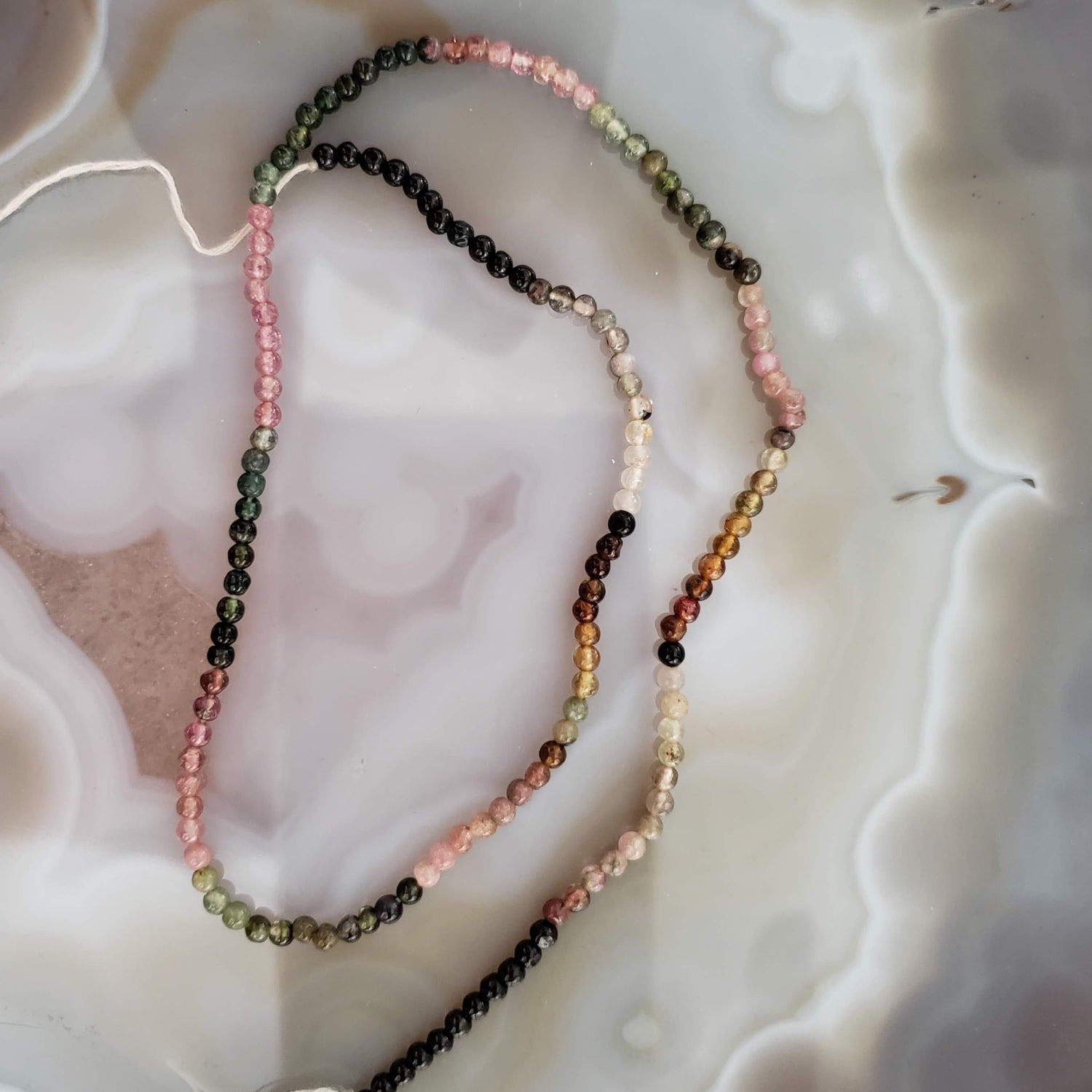
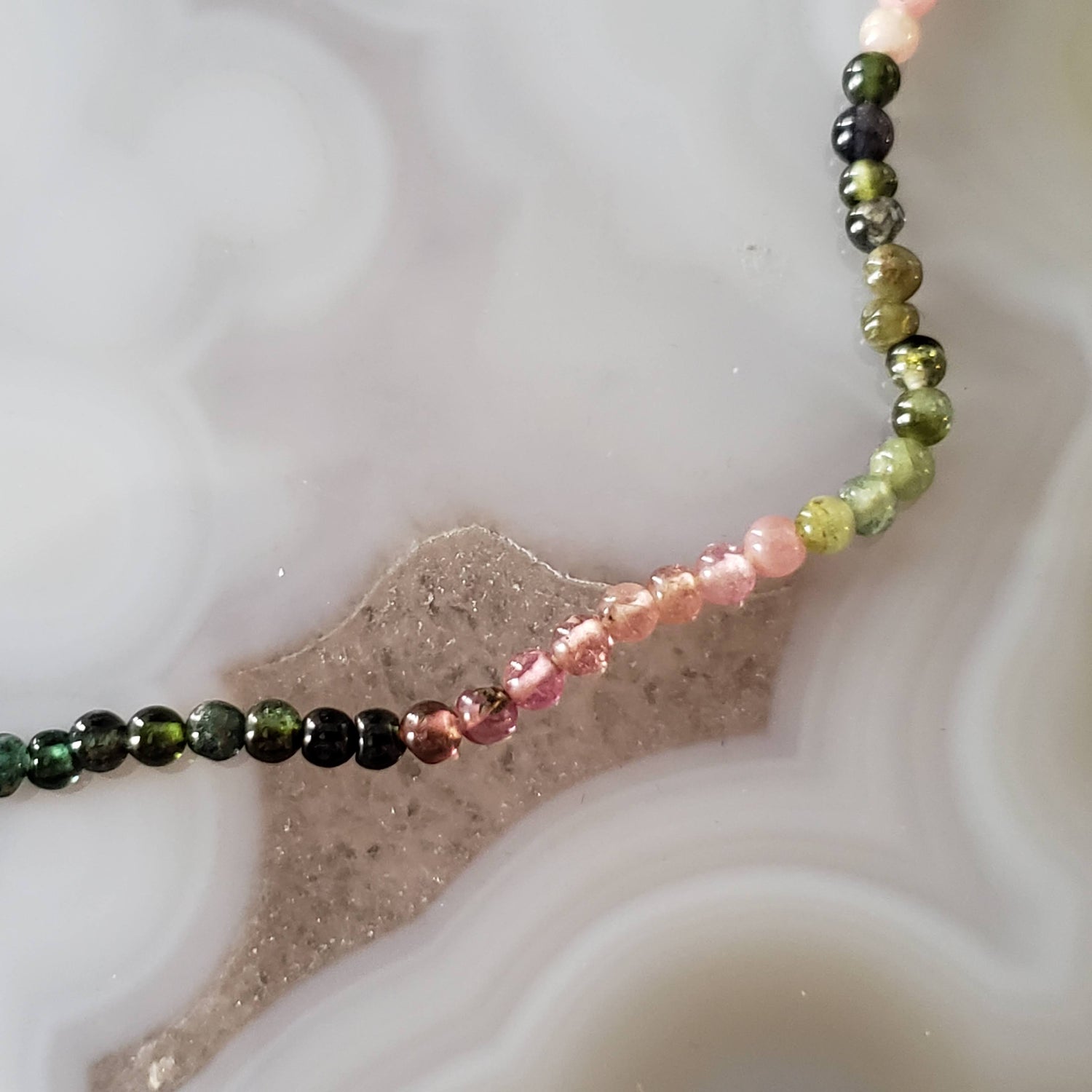
Product Type: Tourmaline Beads
Approx Weight (per piece): 22.2 CT.
Size: 2 to 2.5 mm - 37 cm Total
Shape: Round
Color: Green, Pink, Orange, Yellow


Product Type: Onyx Beads
Approx Weight (per piece): 27.9 CT.
Size: 3.5 to 4.5 mm - 38 cm Total
Shape: Round
Color: Green
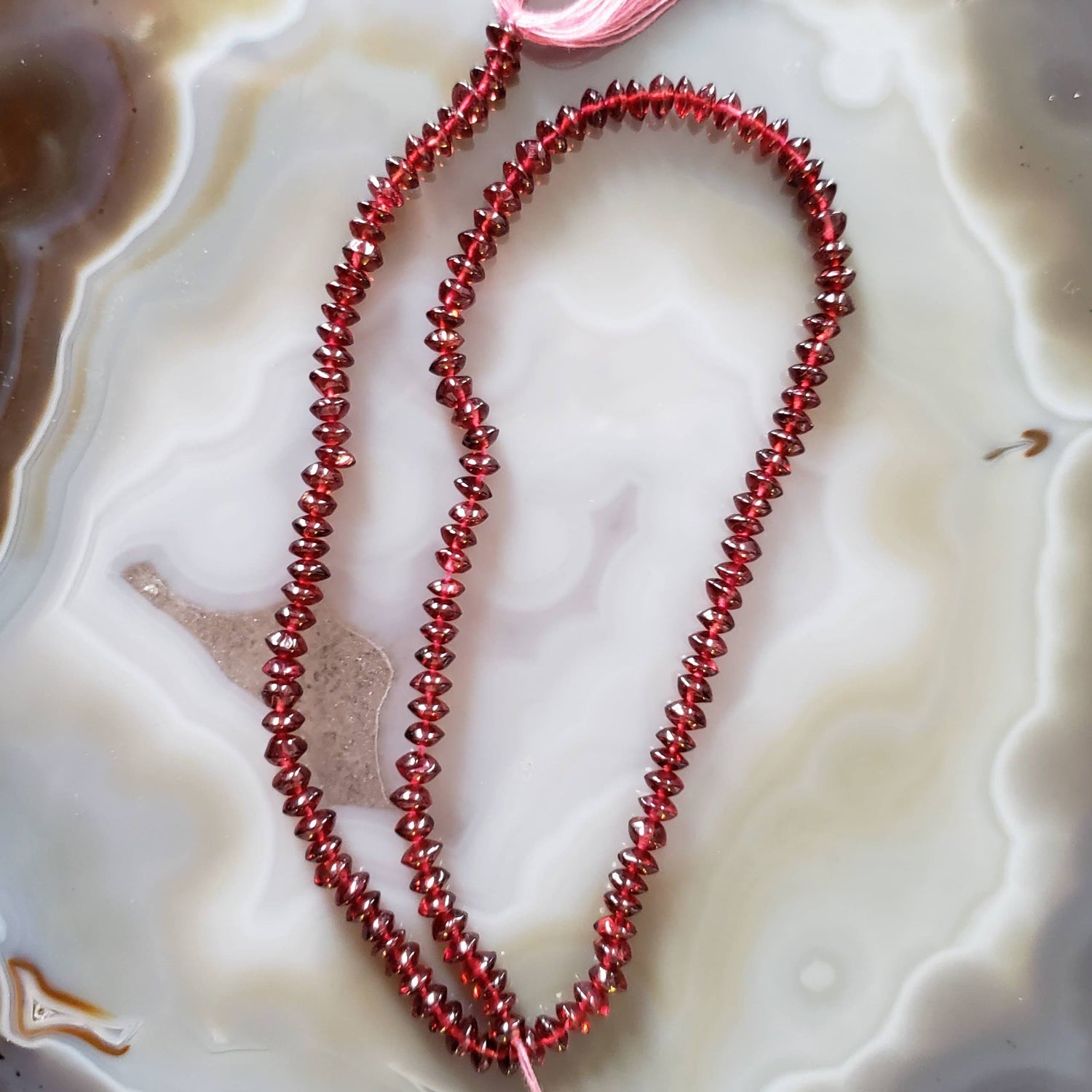
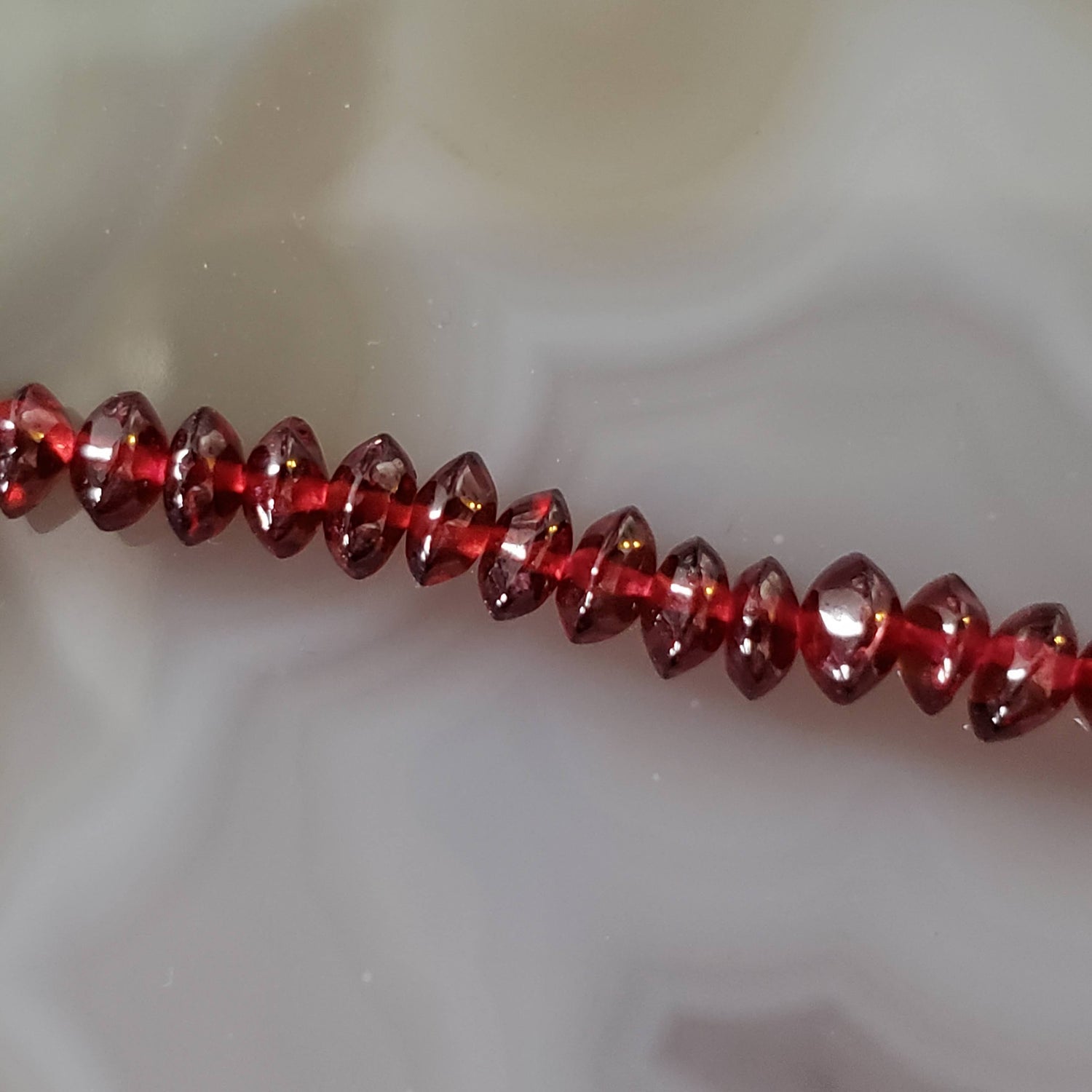
Product Type: Garnet Beads
Approx Weight (per piece): 67 CT.
Size: 3.5 to 4 mm - 37 cm Total
Shape: Round button
Color: Orange Red
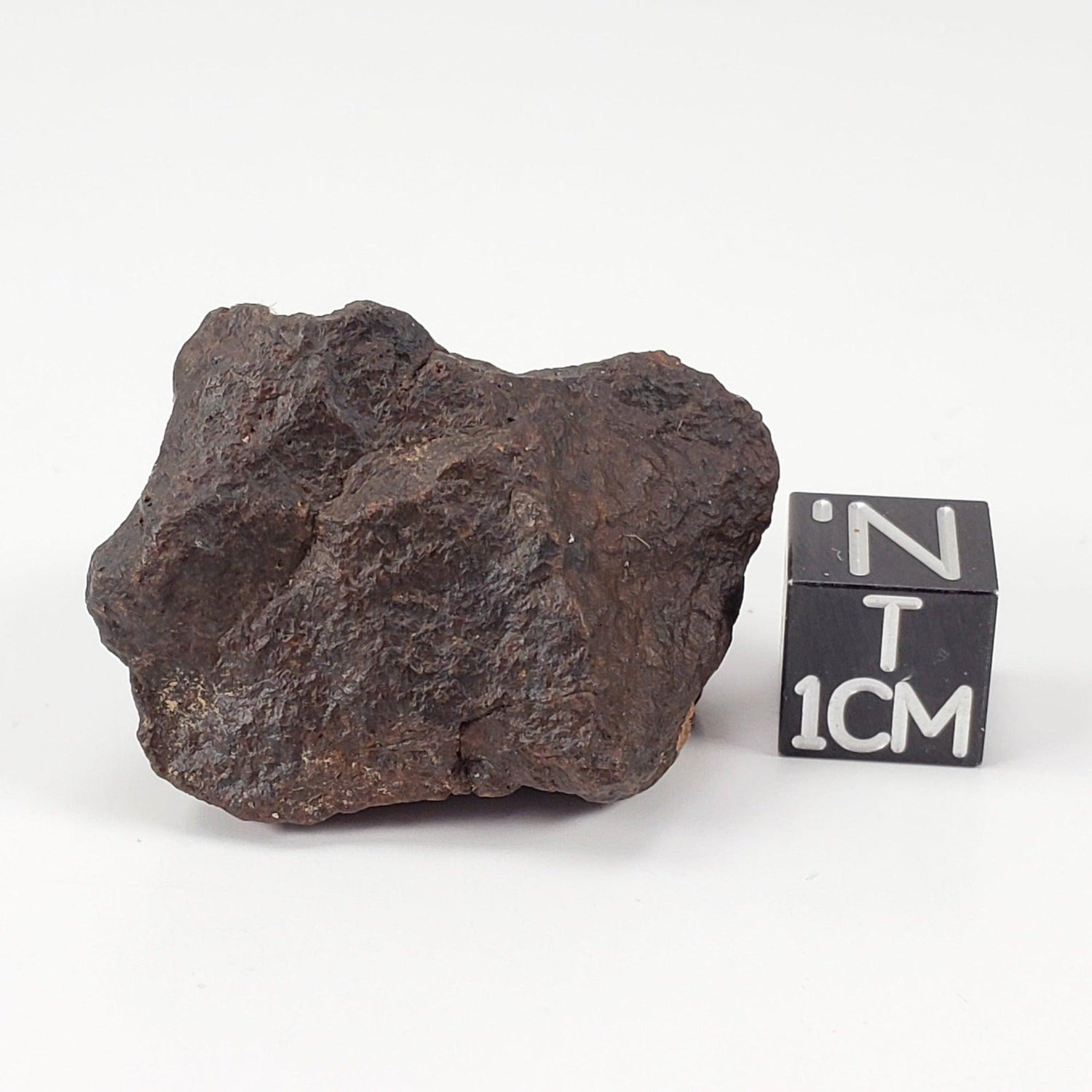
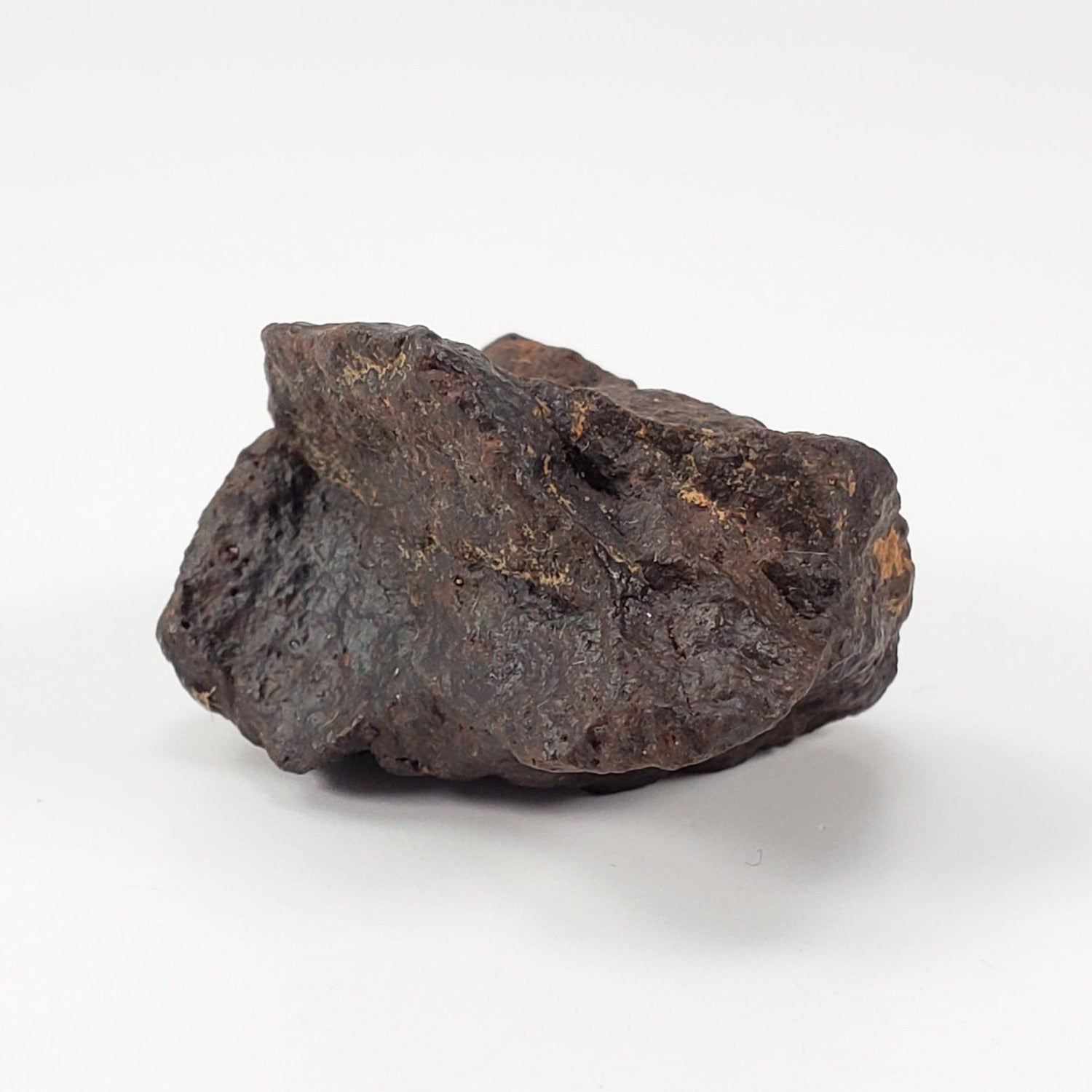
This is a superb looking Dhofar 221 classified meteorite weighing 20.87 grams. Its dimensions are 35x27x25 mm. This L5 classified meteorite was found in Zufar, Oman in 2000 and is 1 of 3003 approved meteorites classified as such. The total weight of the 100's of pieces recovered is recorded as a low 3.54 kg and the meteorite has a shock stage of 3 and weathering grade of 3.
This piece displays extremely well because of its beautiful crust, superb shape and is a good size. Would be a beautiful addition to any new or existing collection. Comes with a Canagem Collection specimen card.


The NWA 267 meteorite fragment offered here is in as found condition. It weighs 10.8 grams, with dimensions of 31x22x16 mm. The meteorite will come with two specimen description cards including a signed "The Mark Bostick Collection" card.
This meteorite was once a pile of weathered unclassified meteorite fragments brought to the 2000 Denver show by a Moroccan fossil dealer. These fragments, 73.9 kg. worth, where purchased by Canadian meteorite dealer Dean Bessey, who was told the following on the meteorites: "A nomad found an area with a lot of unusual strange stones near the Morocco/Algeria border. He brought one to a fossil dealer and asked: "I hear that you will pay money for stones like this". After shaking his head in disbelief at a positive response, the nomad gathered up all his camels, wives and children and brought them into the desert to search over his personal strewn field." Or at least that is how the story goes.
Many thousands of stones, 73.9 kilograms, were recovered, most of these fragments under 20 grams. Then 356 grams and a thin section of the meteorite was donated to the Vernadaky Institute of Geochemistry and Analytical Chemistry, part of the Russian Academy of Sciences, Moscow, where it was classified by M. Ivanova. This meteorite, an ordinary stone chondrite, H4 class has a Shock Rating of 2 and a Weathering Grade of 2-3 and the classification information was published in Meteoritical Bulletin 85.
While the stone did not get a heavy weathering grade, very few specimens show any crust. This meteorite is believed to have come from the Hebe class asteroids. I've included an informational photo of a NWA 267 Meteorite thin section which are used in earth geology, and in meteorites to identify the minerals in them. The photo shows a large imperfect elongated chondrule. Chondrules are unique features to meteorites. The chondrule shown is composed of mostly pyroxene and the bright colored minerals scattered throughout the thin section is mostly olivine.
One of the fun facts is that the NWA 267 was also the first meteorite ever minted onto a real legal tender coin. The National Bank of Liberia made 999 of these $10.00 Silver coins in 2004. The meteorite used in the coin, was supplied by Mark Bostick himself and his name and signature came on the certificate with the coin. The provided images of the coin shows a nomad on a camel on the obverse. A meteorite is falling through the star filled sky in the background. Reverse of coin has a seal of the Liberia Government and notes its value. We include 2 specimen cards but unfortunately the thin section and coin used in the ad are NOT included!


Name: Red Amethyst
Specimen Size: Large Cabinet-Sized
Dimensions: 155X127X105 mm / 6.1x5x4.1 inches
Weight: 2.477 kg / 5 lbs 7.4 ounces
Origin: Mined in Thunder Bay, Ontario, Canada
This is an amazing Red Amethyst Crystal Cluster from Thunder Bay, Ontario, Canada. This is a good quality cluster and the Burgundy Red is due to hematite inclusions which is unique to this location. Good pieces from Thunder Bay are recognized the world over with collectors due to their uniqueness and this one is great! Would be a great addition to any new or existing collection.


This is a nice 39 gram / 1.4 ounce fossilized Trilobite in host rock from the GuangXi Province, China; perfect for gift giving to a new fossil collector. Trilobites are the most diverse group of extinct animals preserved in the fossil record. Nine orders of trilobite are recognized, into which 15,000+ species are placed. Ductina is a genus of extinct, small to average sized, eyeless phacopid trilobite, that lived during the Devonian. It is probably going to be one of the rarest collection item you'll ever own.
The species of the genus Ductina lived during the Devonian in Europe and South-East Asia. Fossils of Ductina vietnamica have been found in the Eifelian of China, Nandan Formation, Luofu, Nandan County, Guangxi Province and Hunan Province; and of course in the Pragian of Vietnam, Song Hiem, Mia Le Beds.
Trilobites are remarkable, hard-shelled, segmented creatures that existed over 300 million years ago in the Earth's ancient seas. They went extinct before dinosaurs even came into existence, and are one of the key signature creatures of the Paleozoic Era, the first era to exhibit a proliferation of the complex life-forms that established the foundation of life as it is today.
Although dinosaurs are the most well-known fossil life forms, trilobites are also a favorite among those familiar with Paleontology (the study of the development of life on Earth), and are found in the rocks of all continents. The matrix measures 49x39x17 mm / 1.9x1.5x0.7 inches while the specimen is approximately 22x15 mm / 0.9x0.6 inches.


This is a nice 47 gram/1.7 ounce fossilized Trilobite in host rock from the GuangXi Province, China; perfect for gift giving to a new fossil collector. Trilobites are the most diverse group of extinct animals preserved in the fossil record. Nine orders of trilobite are recognized, into which 15,000+ species are placed. Ductina is a genus of extinct, small to average sized, eyeless phacopid trilobite, that lived during the Devonian. It is probably going to be one of the rarest collection item you'll ever own.
The species of the genus Ductina lived during the Devonian in Europe and South-East Asia. Fossils of Ductina vietnamica have been found in the Eifelian of China, Nandan Formation, Luofu, Nandan County, Guangxi Province and Hunan Province; and of course in the Pragian of Vietnam, Song Hiem, Mia Le Beds.
Trilobites are remarkable, hard-shelled, segmented creatures that existed over 300 million years ago in the Earth's ancient seas. They went extinct before dinosaurs even came into existence, and are one of the key signature creatures of the Paleozoic Era, the first era to exhibit a proliferation of the complex life-forms that established the foundation of life as it is today.
Although dinosaurs are the most well-known fossil life forms, trilobites are also a favorite among those familiar with Paleontology (the study of the development of life on Earth), and are found in the rocks of all continents. The matrix measures 47x36x18 mm / 1.9x1.4x0.7 inches while the specimen is approximately 18x11 mm / 0.7x0.4 inches.


This unique combination features Cerussite’s striking luster and crystalline form, Barite’s delicate layers, and the dense stability of Galena. Cerussite derives its color primarily from lead, giving it an exquisite range from colorless to white and gray. Barite can appear in various hues, and is well-known for its great range of colors. Historically, Cerussite has been admired since ancient times, often used in decorative arts and as a lead ore. This spectacular cluster is commonly found in regions like Morocco, Mexico, and the USA.
Cerussite is believed to promote clarity and insight, enhancing one’s perception of the world. Barite is said to ground energies, fostering emotional stability and balance.
Name: Cerussite, Barite Crystal on Galena Cluster
Specimen Size: Miniature-Sized
Dimensions: 54x39x22 mm / 2.1x1.5x0.9 inches
Weight: 78 Grams / 2.8 Ounces
Origin: Mined in Mibladen Mining District, Midelt, Khenifra Province, Morocco


The large terminated gem quality Fluorapatite crystal (25 mm/1 in.) sits at the top flanked by its smaller sibling crystals floating on the earthy beige calcite sprinkled with small clear crystals. It has a fantastic luster and lovely colored hues.
As the Russian mine has restricted its operation, a crystal like this is even more desirable. Would be a beautiful addition to any new or existing collection.
Name: Fluorapatite crystal on Calcite
Specimen Size: Cabinet-Sized
Dimensions: 62x41x34 mm / 2.4x1.6x1.3 inches
Weight: 76 Grams / 2.7 Ounces
Origin: Slyudyanka, Eastern-Siberian Region, Russia

Canagem is proud to be professional member of The International Gem Society(IGS) the world's top resource for gem professionals, enthusiasts, and industry content.