

209 products
Sort by:
209 products


This is a very desirable crystal, it's clear and very showy on both sides of the matrix. Mined by hand, Himalayan Quartz Crystals are found at altitudes of 10,000 to 15,000 feet, high up in the Himalayan Mountains in an area near the border of Tibet and Nepal. These deposits might be the oldest deposits known in the world. The locals believe that these crystals are the “Eyes of God “ and that they hold the knowledge and wisdom of all past yogis and saints of the Buddhist and Hindu traditions. These crystals are carried on their backs by sherpas for great distances over and down the mountain trails to reach civilization.
Kullu Valley is a broad open valley in Himachal Pradesh, India, formed by the Beas River between Manali and Larji. This valley is famous for its temples, According to Hindu mythology, the valley is regarded as the cradle of all humankind..
Due to these facts, very few crystals ever reach the marketplace so they are much sought after by collectors.
Himalayan Quartz Crystals are a stone of power, amplifying energy and intention; they raise one’s consciousness towards enlightenment. The crystals help to shield one from negativity and aid in accessing past and future lives and realities.
Would be a beautiful addition to any new or existing collection.
Name: Himalayan Quartz Crystal
Specimen Size: Large Cabinet-Sized
Dimensions: 254x102x152 mm / 10x4x6 inches
Weight: 2.4 kg / 5 lb 4 oz
Origin: Mined in Thela, Kullu Valley, India Himalayas
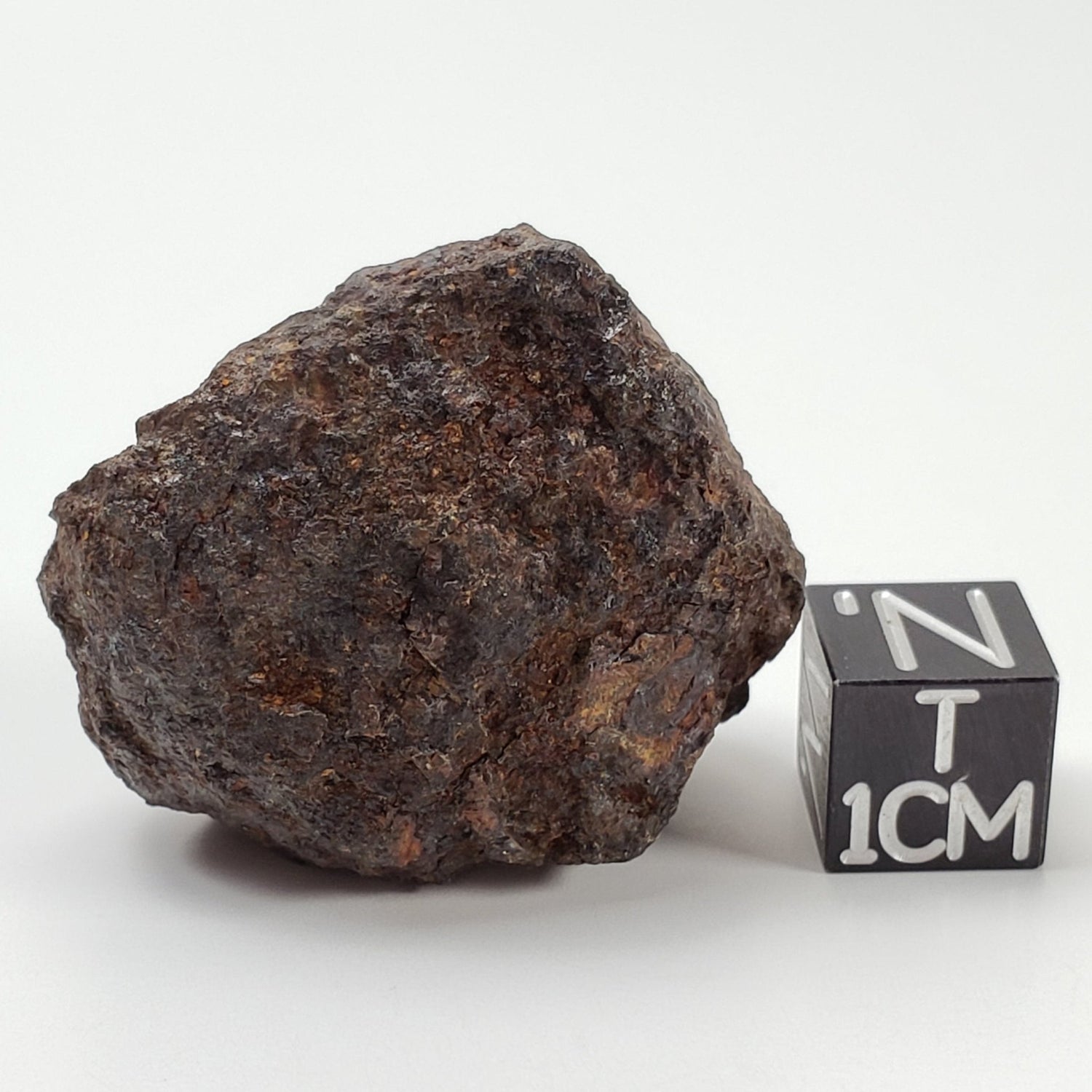
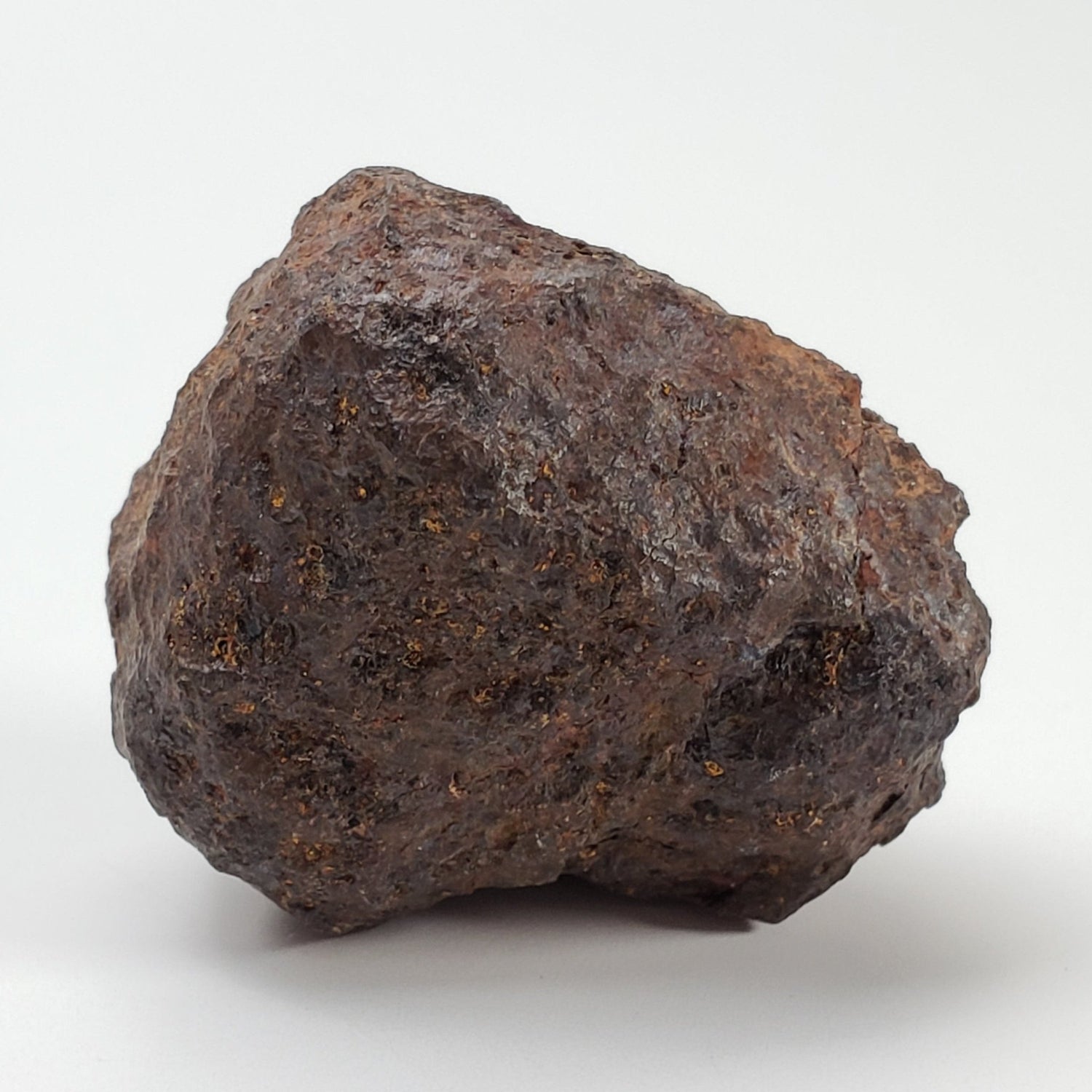
This is a superb looking Stony-iron or Mesosiderite Vaca Muerta (Dead Cow) classified meteorite weighing 40.52 grams. Its dimensions are 32x28x18 mm.
This classified meteorite was found in 1861 in the driest desert of the world called the Atacama, in Chile. Mesosiderites are formed on the surface of a parent body as a result of impacts with another body. The impact mixed broken fragments of surface eucrites with iron and olivine from deep within the body. Eucrites are believed to have come from the asteroid Vesta. Analysis has shown, however, that the Vaca Muerta eucrite inclusions are not consistent with other eucrites and possibly originated on a different parent body. Although most have a weathered exterior, they also have lots of metal inside and can be prepared and cut to show this.
This piece displays extremely well and would be a beautiful addition to any new or existing collection. Comes with a Canagem Collection specimen card.


Product Type: Sapphire
Product ID: SPLG97054 (Appraised at $1,029.55 USD)
Approx Weight (per piece): 1.83ct
Size: 10.7x8.3mm
Shape: Maple Leaf Checkerboard Cut
Color: Lime Green
Clarity: Clean
Origin: Africa
Appraisal Certificate Included
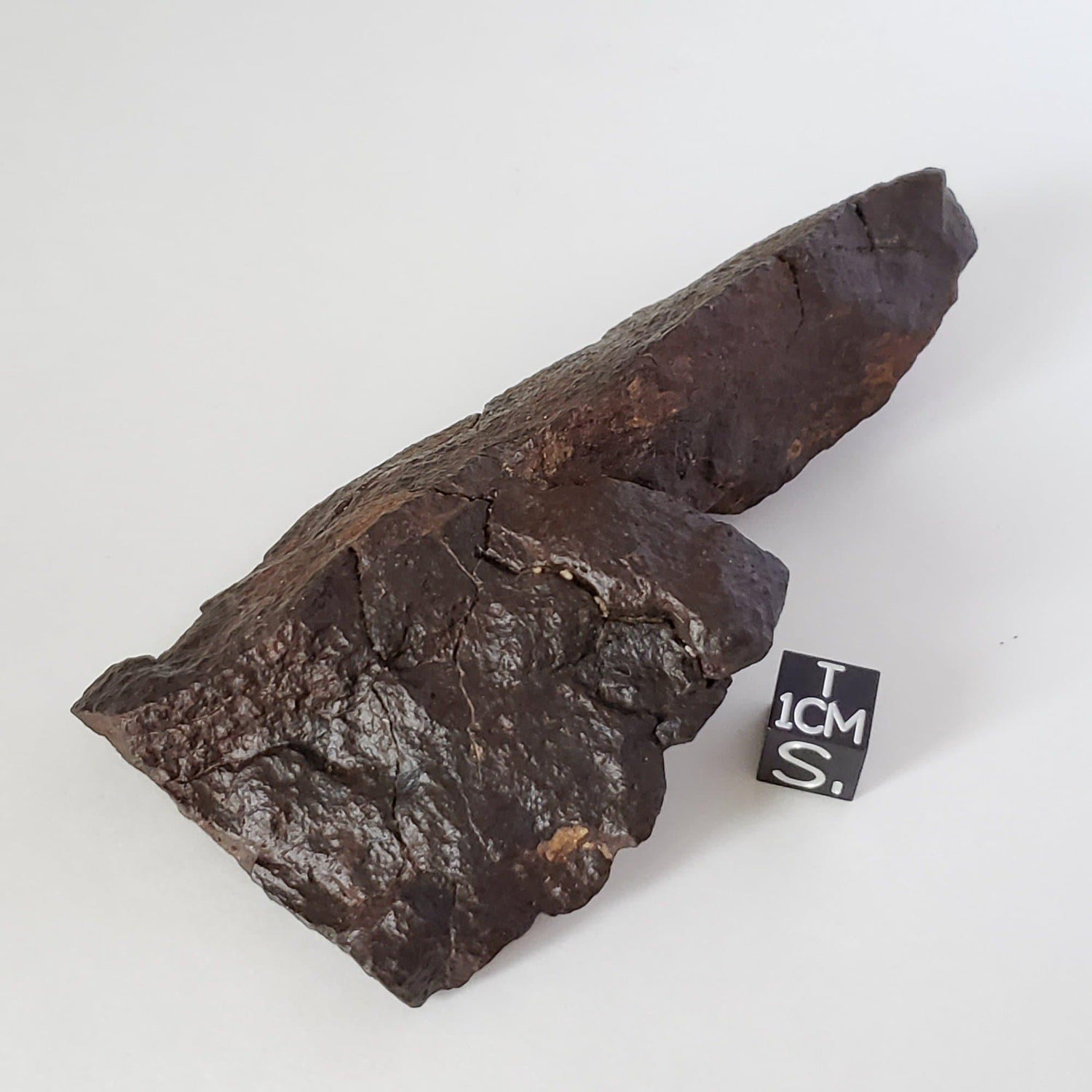
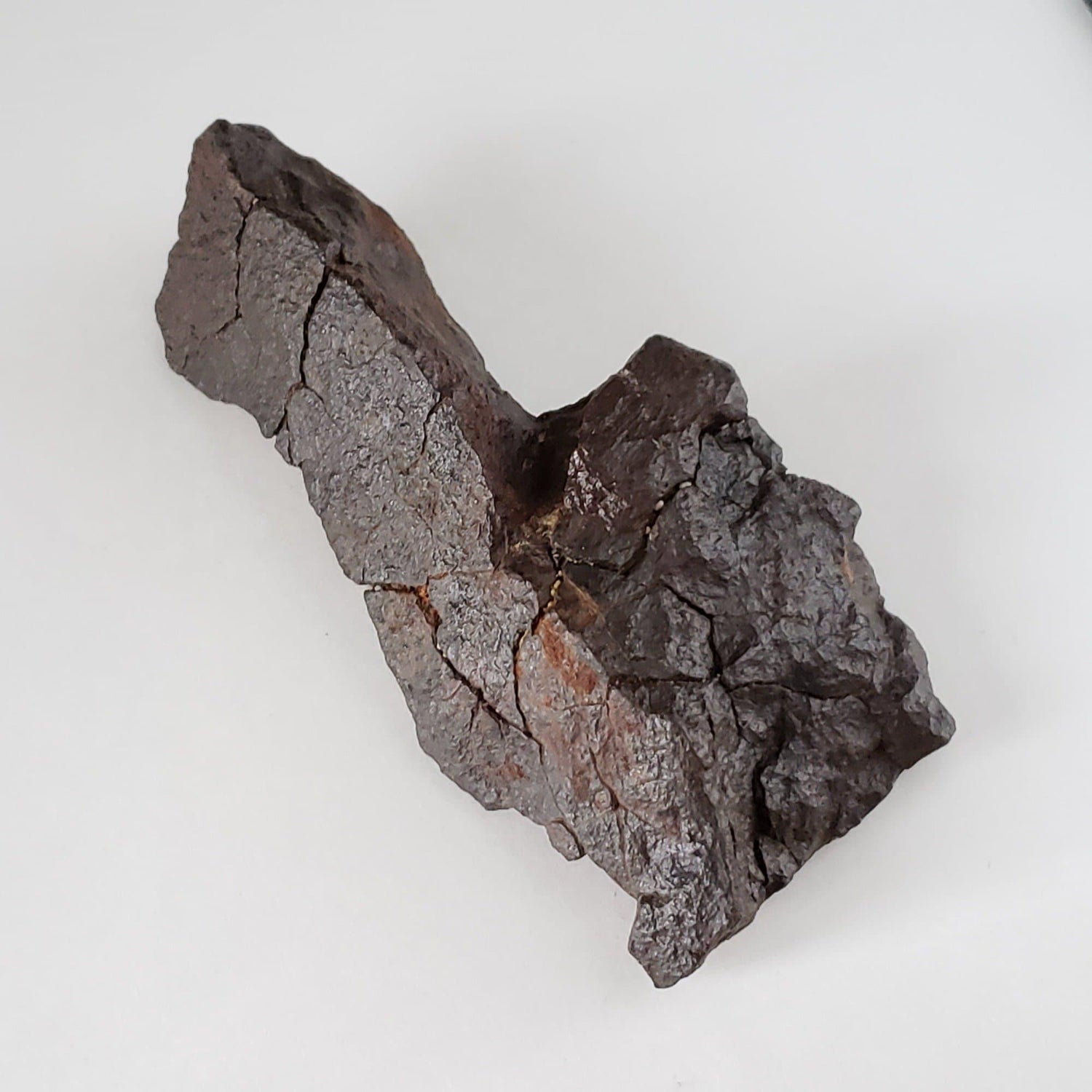
Here we have for you a superb looking Dhofar 020 classified meteorite weighing 159.67 grams. Its dimensions are 111x56x26 mm. Found 10 March 2000 in Dhofar, Oman, in the Arabian Peninsula this H4/5 classified chondrite has a TKW of 256 Kg with a shock stage of S4 and weathering grade of W3 by the Russian Academy of Sciences, USSR.
The following is an excerpt from Mark Bostick's review of this meteorite: "Dhofar 020 is a ordinary stone chondrite meteorite. The meteorite is high in free metal and therefore falls in the H class. S4 tells it is highly shocked. Slices of the meteorite, show veins of the cosmic impact created mineral Ringwoodite, although fractures in the stone tend to hide this some. It almost appears to me to have splinted upon impact. The meteorite falls in 4-5 petrology class, a reference to how metamorphed the meteorite is from its original state. This is judged by studying a thin section of the meteorite, most visually at the chondrules, a feature unique to stone meteorite. In a thin section under polarized light, pyroxene chondrules seem more common then their olivine pair. Still some regions in the meteorite show scattered patches of bright olivine inclusions. These are fairly rare, at least on my thin section, and most of the meteorite's olivine and pyroxene, some of the easier things to see in a thin section, appear to have went through a metamorphism, and have "melted" into the matrix and are at times undistinguishable."
This piece displays extremely well showing a beautiful crust, superb shape and good size. Would be a beautiful addition to any new or existing collection. Comes with a Canagem Collection specimen card.


An olivine volcanic bomb is a type of volcanic rock that contains olivine crystals and has been ejected during a volcanic eruption. Olivine is a mineral that is commonly found in the Earth's mantle and is one of the first minerals to crystallize as magma cools.
Volcanic bombs are large clots of lava that are ejected from a volcano during an explosive eruption. They can vary in size, and their shapes are often streamlined due to their molten nature as they are thrown through the air. When these volcanic bombs contain olivine crystals, they are referred to as olivine volcanic bombs.
The crystal face has been left raw on this piece to show the green olivine crystals which are showcased beautifully against the surrounding black lava crust. This huge display specimen is a museum grade specimen and would be a beautiful addition to any new or existing collection. Comes with a Canagem Collection specimen card.
Name: Olivine Crystal Bomb Chunk
Specimen Size: Large Cabinet-Sized
Dimensions: 115.4 x 130.5 x 86.1 mm / 4.5 x 5.1 x 3.4 Inches
Weight: 894 Grams / 1.97 Lbs
Details: Volcanic activity Mortlake, Victoria, Australia
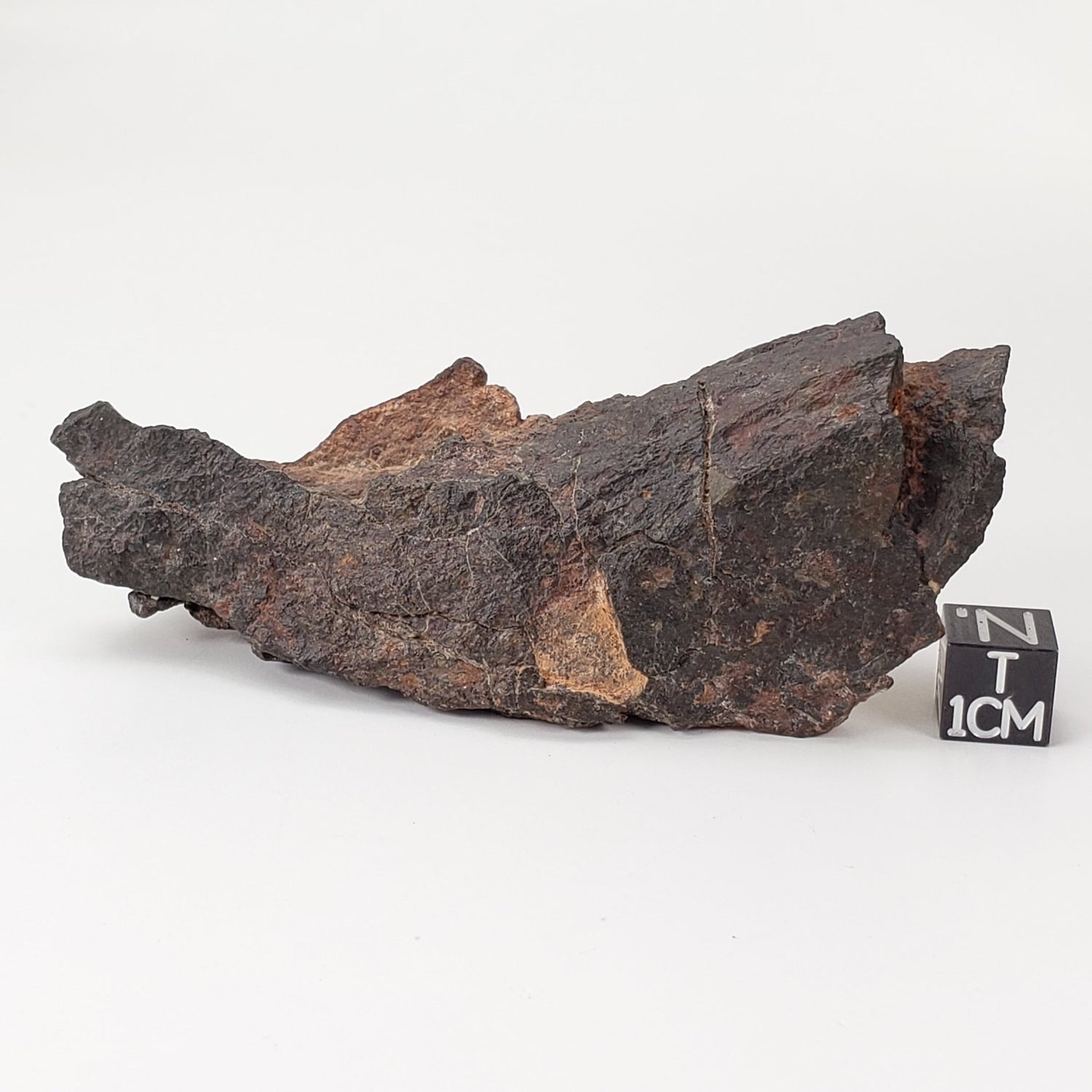
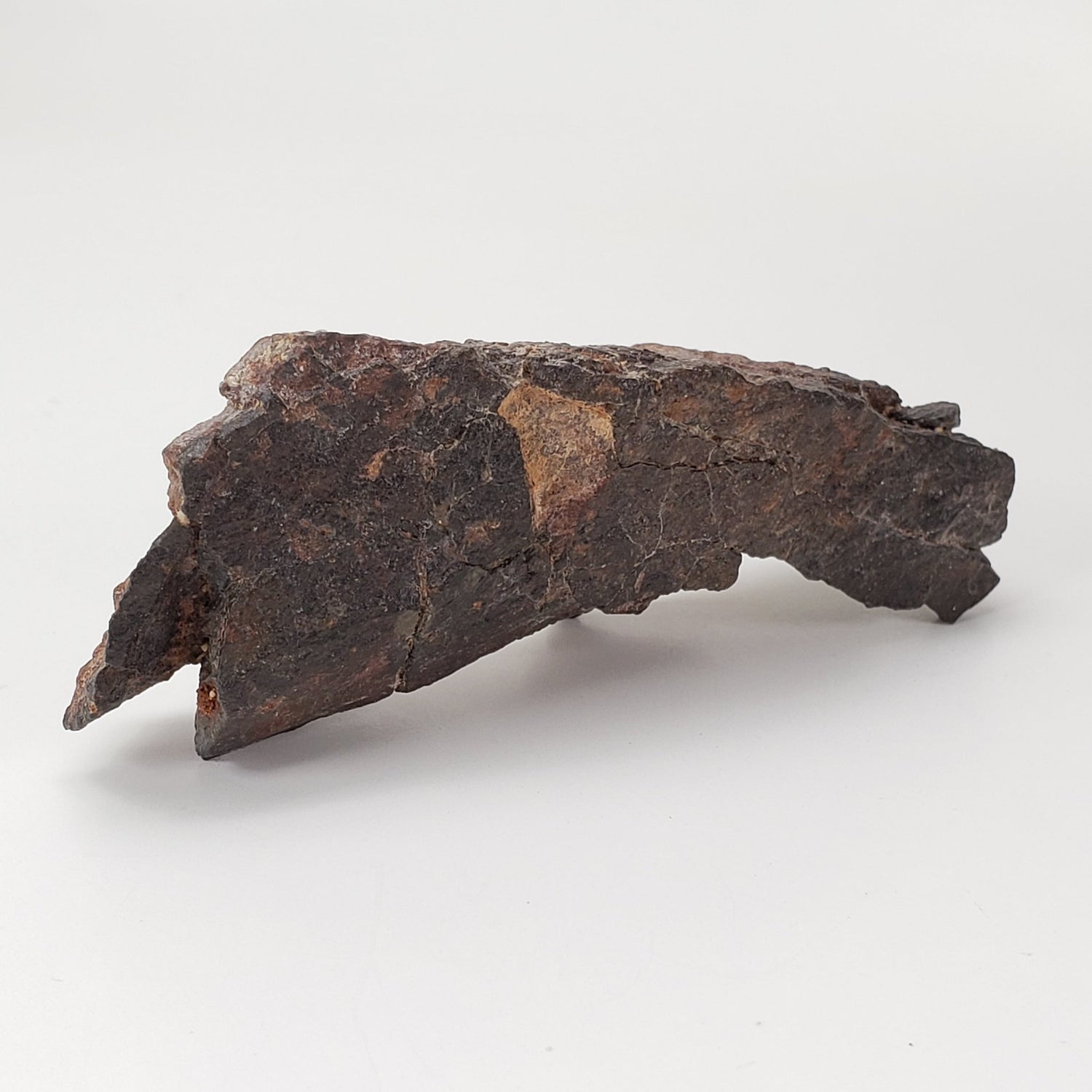
This is a fabulous fresh Ghubara meteorite whole fragment, weighing 115 grams and measuring 91x39x22mm . This meteorite was found in Oman, Southern Arabia in 1954 and is classified as an L5 Stony Black Chondrite.
This piece displays extremely well and is a very desirable size showing multiple characteristics of its time spent in space until it came crashing to earth. Would be a beautiful addition to any new or existing collection. Comes with a Canagem Collection specimen card.


Product Type: Bi-Color Tourmaline
Product ID: TOBC0415 (Appraisal at $ 1,318.15 USD included)
Approx Weight (per piece): 5.62ct
Size: 10.7x7.7mm
Shape: Octagon Cut
Color: Pink Orange & Green
Clarity: Clean
Origin: Africa


Stilbite is a zeolite mineral appreciated for its delicate crystal formations and pastel hues, ranging from colorless to white, yellow, pink, and peach. It forms distinctive tabular crystals with a bowtie or butterfly shape and exhibits a vitreous to pearly luster. Commonly found in cavities in volcanic rocks, stilbite is associated with other zeolite minerals. It is valued for its aesthetic appeal and is believed by some to have calming energy, supporting spiritual growth and emotional healing.
One of the distinguishing features of apophyllite is its ability to form well-defined crystals with a pyramid-like shape. These crystals often exhibit a prismatic or pseudo-cubic habit and have a vitreous luster. Apophyllite is transparent to translucent and is commonly found in colorless or white varieties, although it can also occur in shades of green, pink, yellow, or brown.
Name: Stilbite on Apophyllite Crystals
Specimen Size: Large Cabinet-Sized
Dimensions: 292x184x101 mm / 11.5x7.25x4 inches
Weight: 3.73 Grams / 8 Lbs 3 Ounces
Details: Mined in Jalgaon, India


Product Type: Iolite Cats Eye
Product ID: IOCE7501 ( Appraised at $1,676.95 USD)
Approx Weight (per piece): 11.90ct
Size: 18.2x9mm
Shape: Oval Cabochon
Color: Black Blue
Clarity: Transparent
Origin: Africa
Treatment: None


Product Type: Lemon Quartz
Approx Weight (per piece): 105.25ct
Size: 35x28x18.7mm
Shape: Oval Cut
Color: Lemon
Clarity: Clean
Origin: Brazil

Canagem is proud to be professional member of The International Gem Society(IGS) the world's top resource for gem professionals, enthusiasts, and industry content.