

📢 Notice to ALL Customers 📢
378 products
Sort by:
378 products
378 products


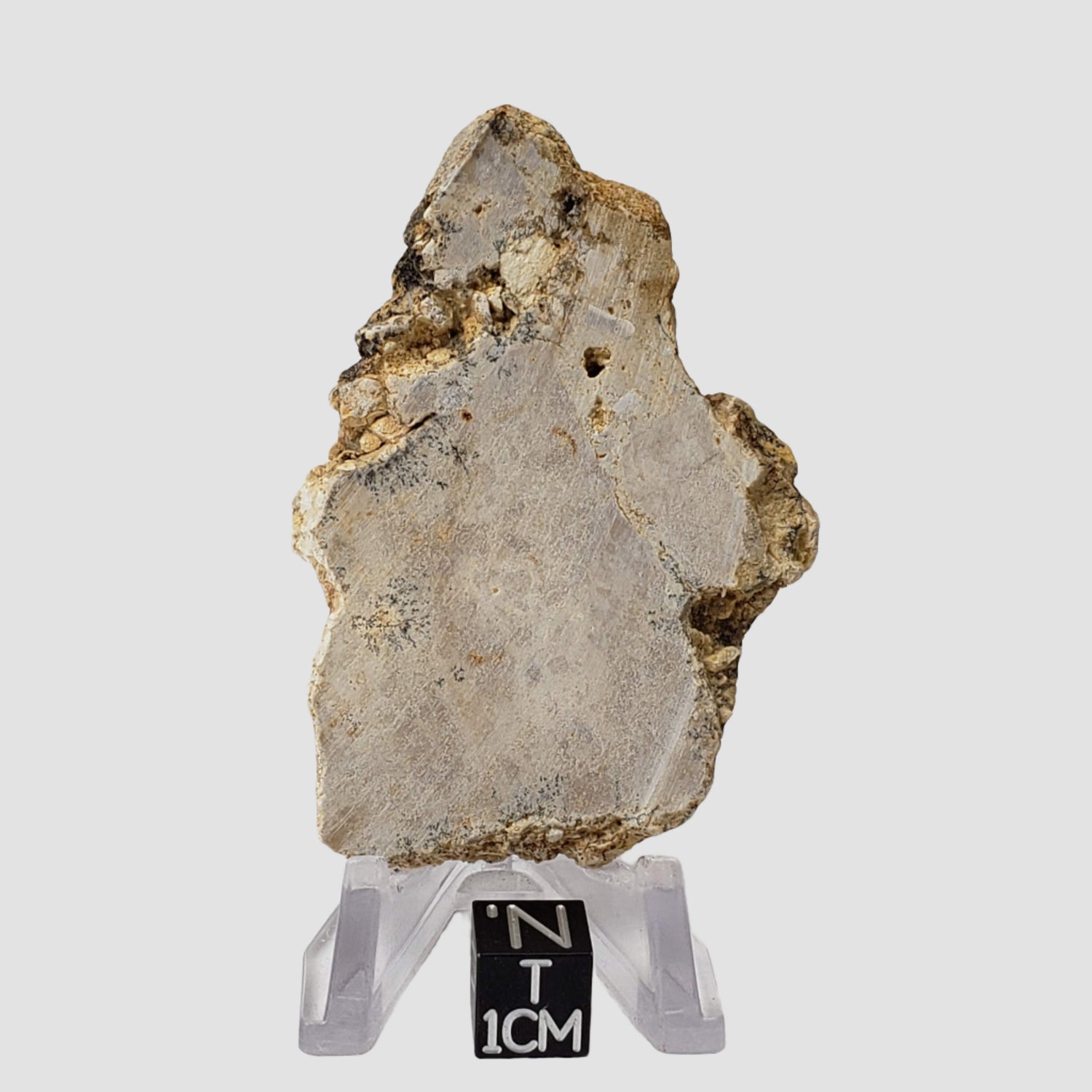
This is a superb looking fragment of a Sahara Desert NWA 515 classified meteorite weighing 1.16 grams. Its dimensions are 16x9x5 mm.
This meteorite was found by Berber nomads in the deserts of Africa. Hundreds of small stones, more then 20 kilograms in total, was purchased November 8th, 2000 in M'Hamid, Morocco, Africa by a group of meteorite dealers and collectors. 247 grams was donated to UCLA were it was classified by A. Rubin as an L6 Chondrite with a shock rating of 2 and a weathering grade of 3 (25% olivine). Cut pieces of this meteorite show a nice light matrix with golden hues.
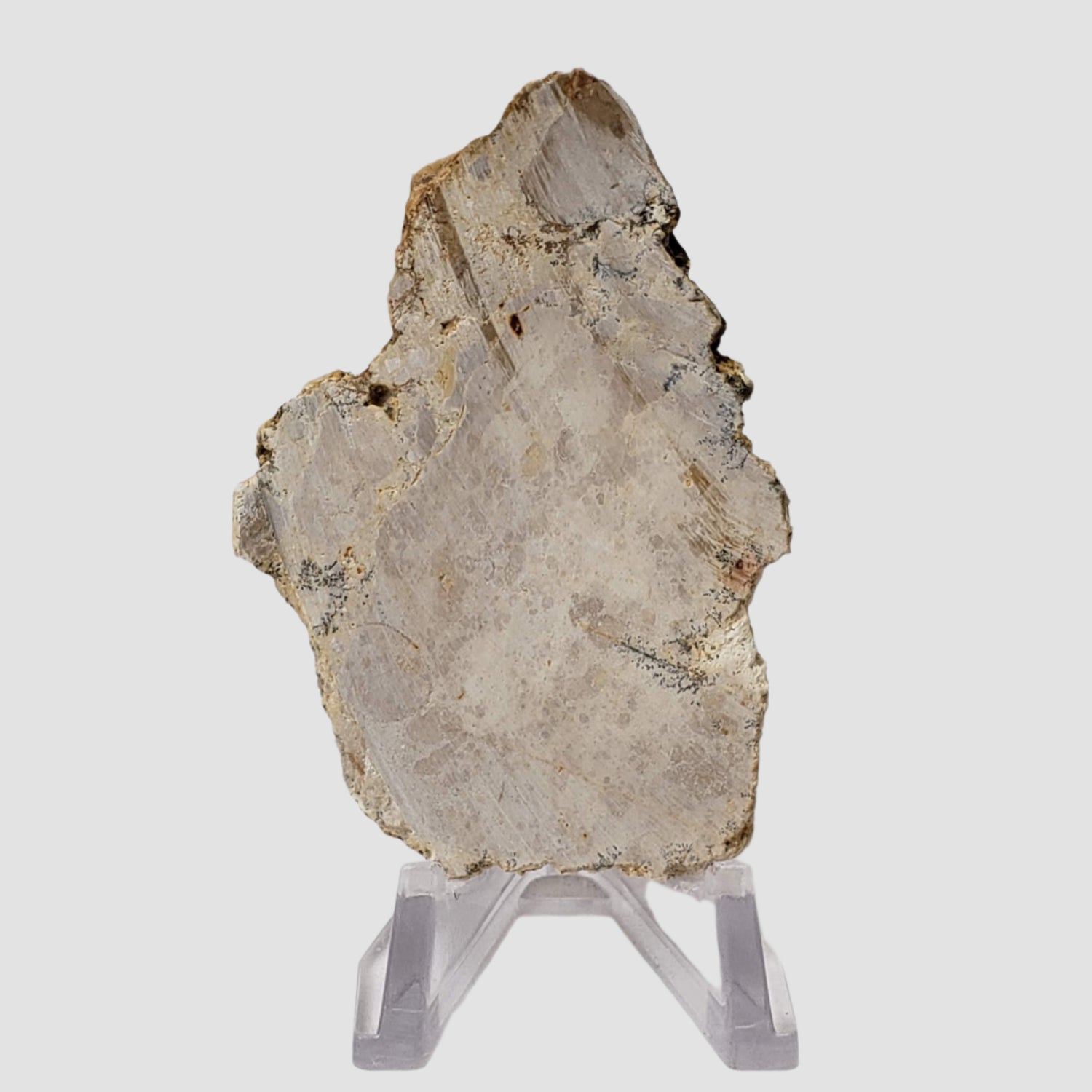
Thin sections (2nd photo) show nice chondrules ranging in size from less then 1mm to 3mm. Thin sections are used in earth geology, and in meteorites to identify the minerals in them. Stone meteorites are made of mostly of olivine and pyroxene. The pyroxene is typically greyish or yellowish and the bright colored minerals scattered throughout the photo are mostly olivine.
This piece displays extremely well and would be a beautiful addition to any new or existing collection. Comes with a The Mark Bostick Collection and a Canagem Collection specimen card.


Indochinite is a variety of the mineral tektite, which is a natural glass formed by the intense heat and pressure of a meteorite impact. These tektites are usually found as small, aerodynamically shaped objects, often teardrop or irregular in shape, resulting from the molten material solidifying as it cooled rapidly after being ejected from the impact site.
Indochinites are believed to have formed around 780,000 to 800,000 years ago, following a significant meteorite impact event that likely created the Southeast Asian tektite strewn field. The strewn field is quite large, and the tektites can be found scattered over a vast area which includes Vietnam, Laos, and Thailand.
This piece displays very well, showing multiple characteristics of its origin. The specimen has a weigh of 40.2 grams and dimensions of 38x35x23. Comes with a Canagem Collection specimen card.


This is a rare Iron ungrouped classified Taza Northwest Africa 859 specimen, in an as found state. It weighs 0.97 grams and measures 12x6x6 mm.
The NWA 859 was found in 2001 in Taza, Morocco. A total weight of 75.3 kg of mostly small pieces was classified by UCLA as an Iron, ungrouped; it is one of 157 meteorites classified as such.
This specimen displays extremely well and would be a beautiful addition to any new or existing collection. Comes in a gem jar with a Canagem Collection specimen card.


The NWA 267 meteorite fragment offered here is in as found condition. It weighs 2 grams, with dimensions of 18x11x6mm. The meteorite will come with two specimen description cards including a signed "The Mark Bostick Collection" card.
This meteorite was once a pile of weathered unclassified meteorite fragments brought to the 2000 Denver show by a Moroccan fossil dealer. These fragments, 73.9 kg. worth, where purchased by Canadian meteorite dealer Dean Bessey, who was told the following on the meteorites: "A nomad found an area with a lot of unusual strange stones near the Morocco/Algeria border. He brought one to a fossil dealer and asked: "I hear that you will pay money for stones like this". After shaking his head in disbelief at a positive response, the nomad gathered up all his camels, wives and children and brought them into the desert to search over his personal strewn field." Or at least that is how the story goes.
Many thousands of stones, 73.9 kilograms, were recovered, most of these fragments under 20 grams. Then 356 grams and a thin section of the meteorite was donated to the Vernadaky Institute of Geochemistry and Analytical Chemistry, part of the Russian Academy of Sciences, Moscow, where it was classified by M. Ivanova. This meteorite, an ordinary stone chondrite, H4 class has a Shock Rating of 2 and a Weathering Grade of 2-3 and the classification information was published in Meteoritical Bulletin 85.
While the stone did not get a heavy weathering grade, very few specimens show any crust. This meteorite is believed to have come from the Hebe class asteroids. I've included an informational photo of a NWA 267 Meteorite thin section which are used in earth geology, and in meteorites to identify the minerals in them. The photo shows a large imperfect elongated chondrule. Chondrules are unique features to meteorites. The chondrule shown is composed of mostly pyroxene and the bright colored minerals scattered throughout the thin section is mostly olivine.
One of the fun facts is that the NWA 267 was also the first meteorite ever minted onto a real legal tender coin. The National Bank of Liberia made 999 of these $10.00 Silver coins in 2004. The meteorite used in the coin, was supplied by Mark Bostick himself and his name and signature came on the certificate with the coin. The provided images of the coin shows a nomad on a camel on the obverse. A meteorite is falling through the star filled sky in the background. Reverse of coin has a seal of the Liberia Government and notes its value. We include 2 specimen cards but unfortunately the thin section and coin used in the ad are NOT included!
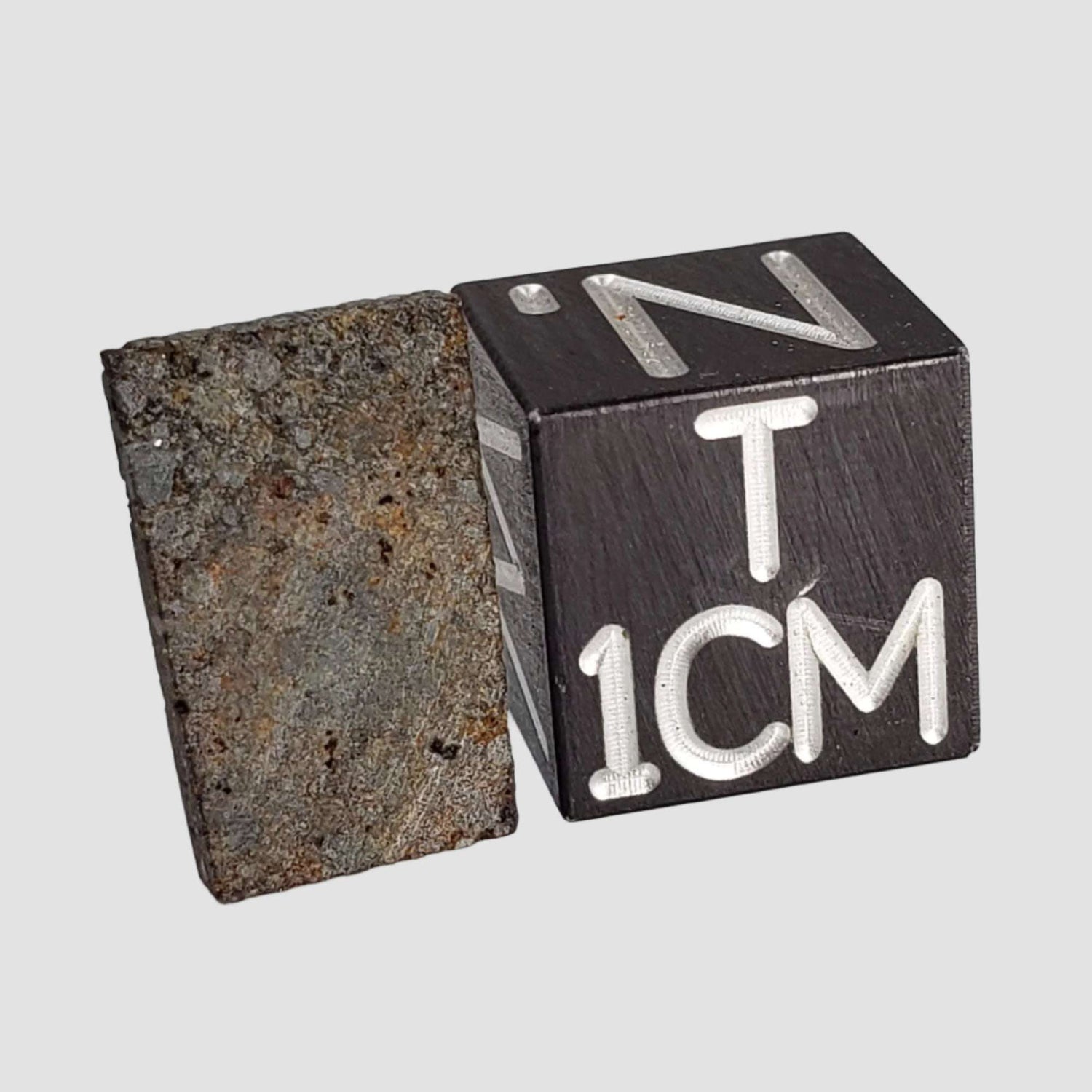

This is a great looking part slice of the Cole Creek H5 Chondrite classified meteorite. The slice weighs 0.45 grams and measures 12x7x1 mm.
A mass of 16.3 kg was found January 1, 1991 by Clay Fowler; it was exposed about two feet below the surface in an old road cut. The cavity from which the stone was removed is covered by a thin layer of undisturbed modern soil, inspection of the find site by V. L. Souders, Institute of Agriculture and Natural Resources, University of Nebraska, Lincoln, Nebraska, USA. Olivine Fa18.5, analysis and classification, A. Brearly, Dept. of Geology and Institute of Meteoritics, University of New Mexico, Albuquerque, New Mexico 87131, USA. Information by A. W. Struempler, Chadron State College, Chadron, Nebraska 69337, USA, where also the main mass is located.
The specimen comes with a BA-Meteorites.de.vu and a Canagem specimen card plus a professional metal label. Would be a beautiful addition to any new or existing collection.
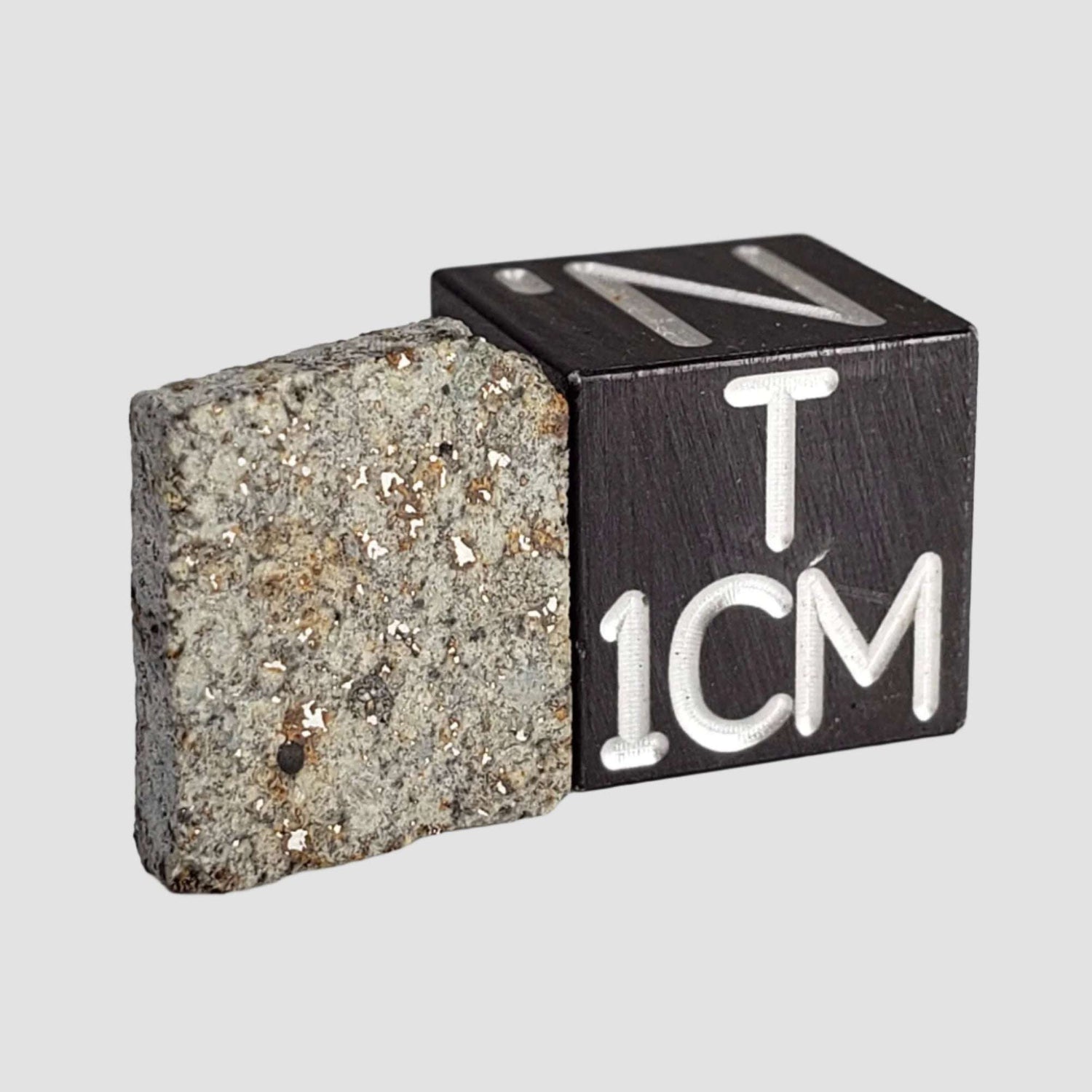

This is a great looking part slice of the Kabo H4 classified meteorite. It weighs 0.75 grams and measures 11x9x2 mm. The Kabo meteorite fell on April 25, 1971, at about 4:30 p.m. local time (1530 GMT), in Kabo, Gwarzo District, Kano State, Nigeria. The total known weight of the meteorite is 13.4 kg.
The shower occurred on a Sunday afternoon while farmers were in their fields. Sound directions and crater asymmetry indicated that the meteorite approached from the west. "Thunder-like sounds were heard consecutively and these were followed by the inclined descent of a reddish object with trails of cloudy smoke following it". During the following week the District Head collected the specimens and forwarded them to the Emir of Kano. One specimen was recovered in two pieces of about 3 kg each, one stone weighed over 5 kg, one almost 3 kg, and the smallest 0.9 kg.
The specimen comes with a Michael Cottingham Collection and a Canagem Collection specimen card. Would be a beautiful addition to any new or existing collection.
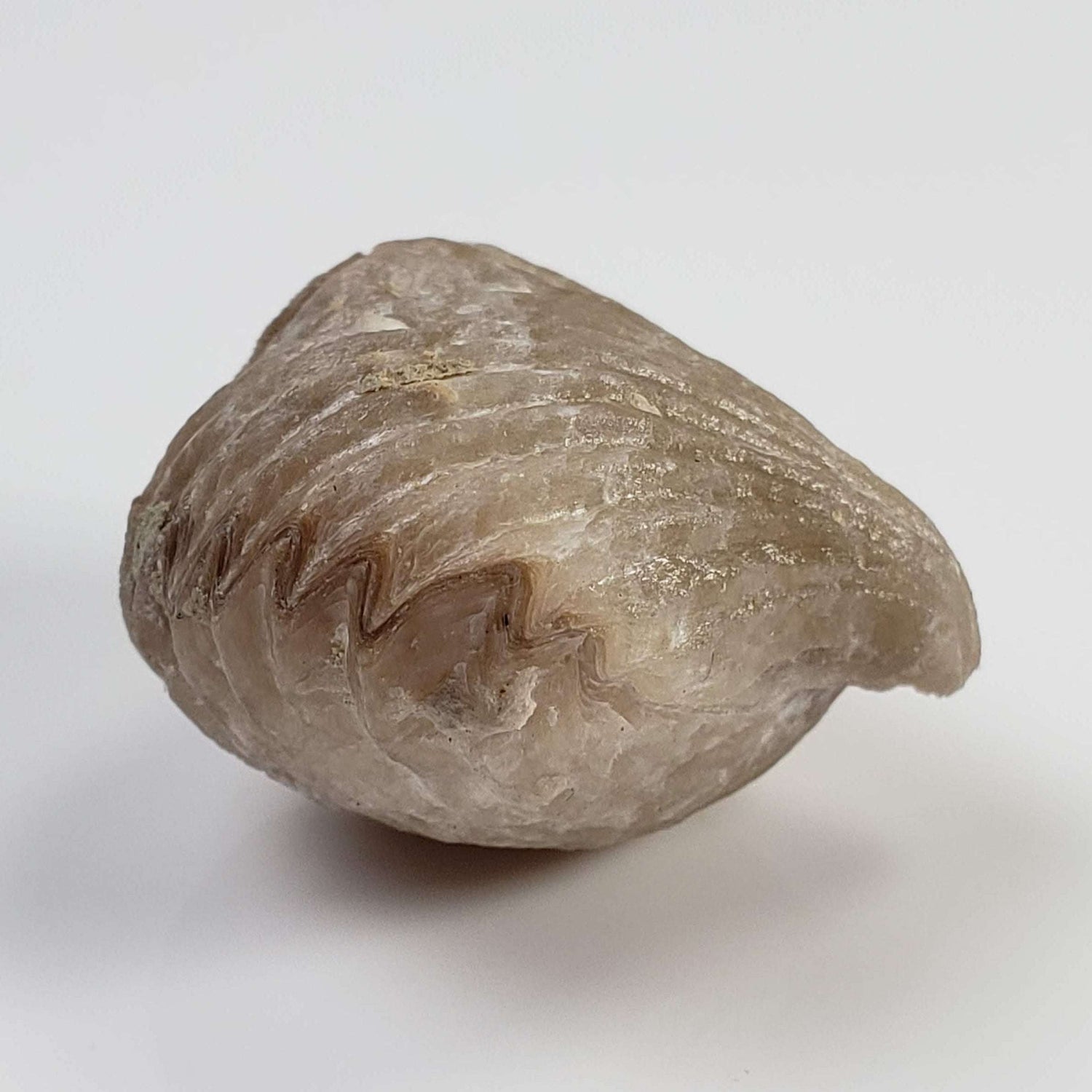
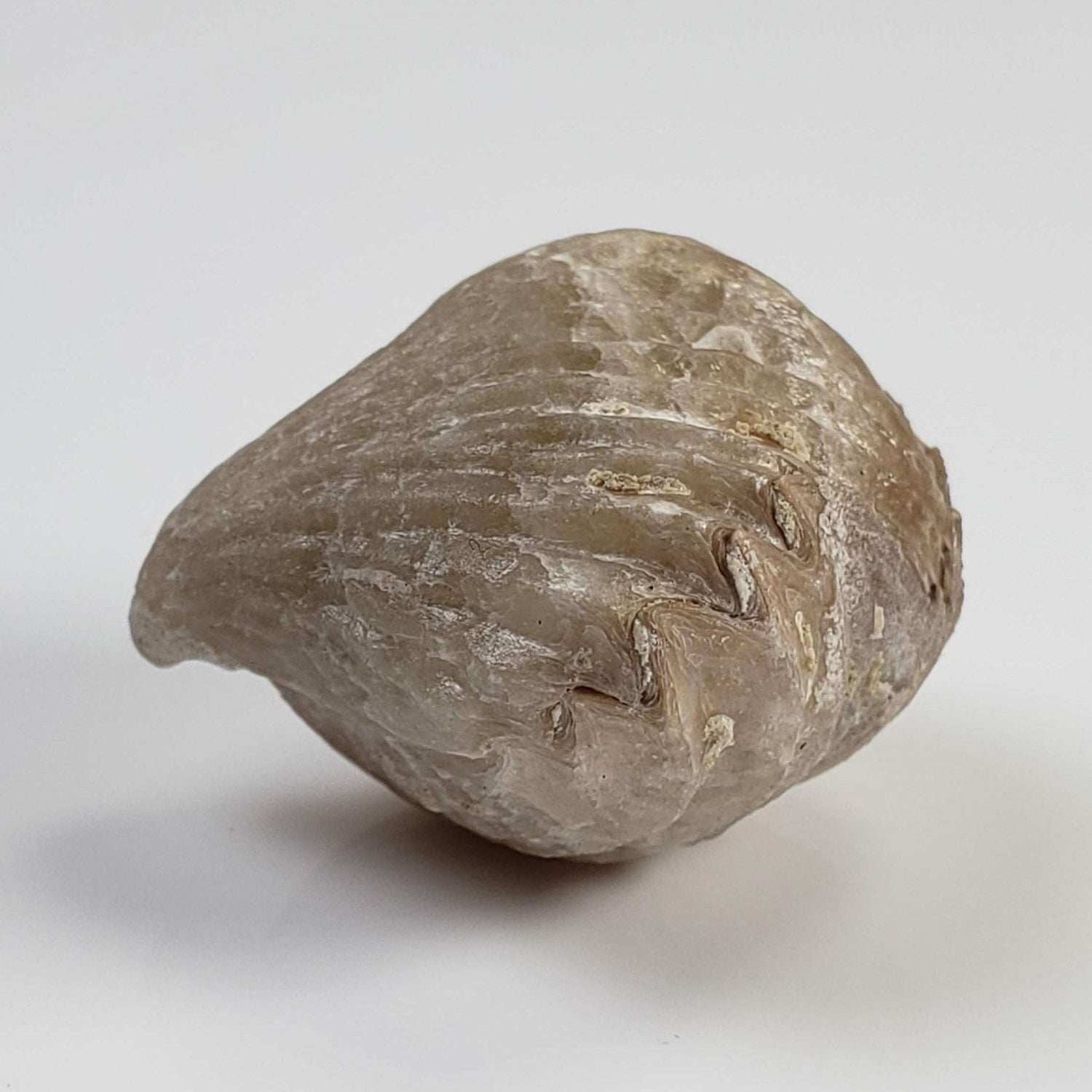
A superb example of fossilized brachiopod from Wapienno, Polanda. The high degree of preservation of the shell makes it much more special. These long articulate brachiopods are characterized by a triangular shell with a spherical profile, powerful ribs, a curved hinge line and a small umbo. The anterior margin shows a tongue like projection. Like most brachiopods, Rhynchonella was a stationary epifaunal suspension feeder.
Name: Rynchonella sp. Brachiopod
Age: Jurassic
Location: Wapienno, Poland
Dimensions: 28x24x18 mm / 1.1x0.9x0.7 inches
Weight: 12.7 grams / 0.45 oz
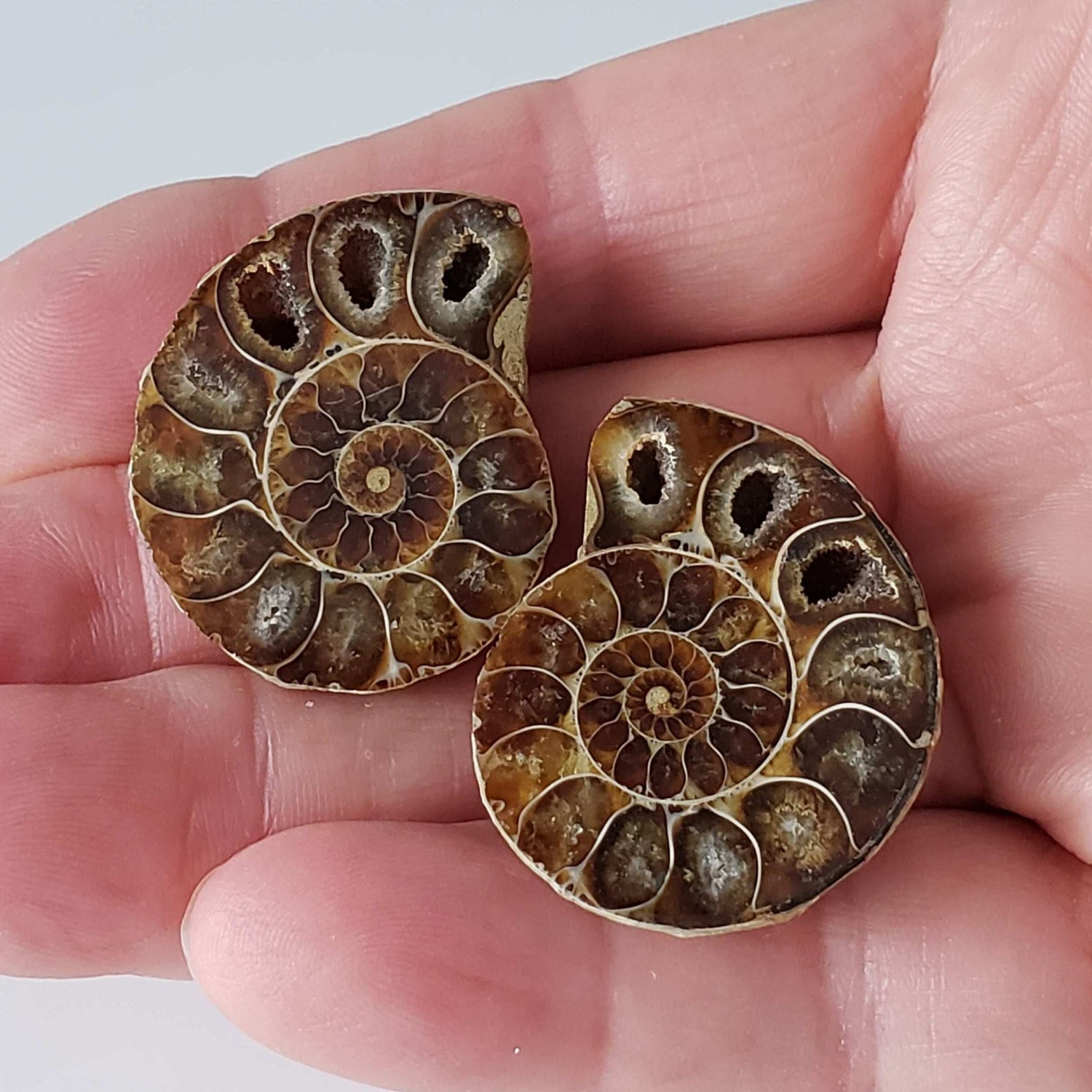
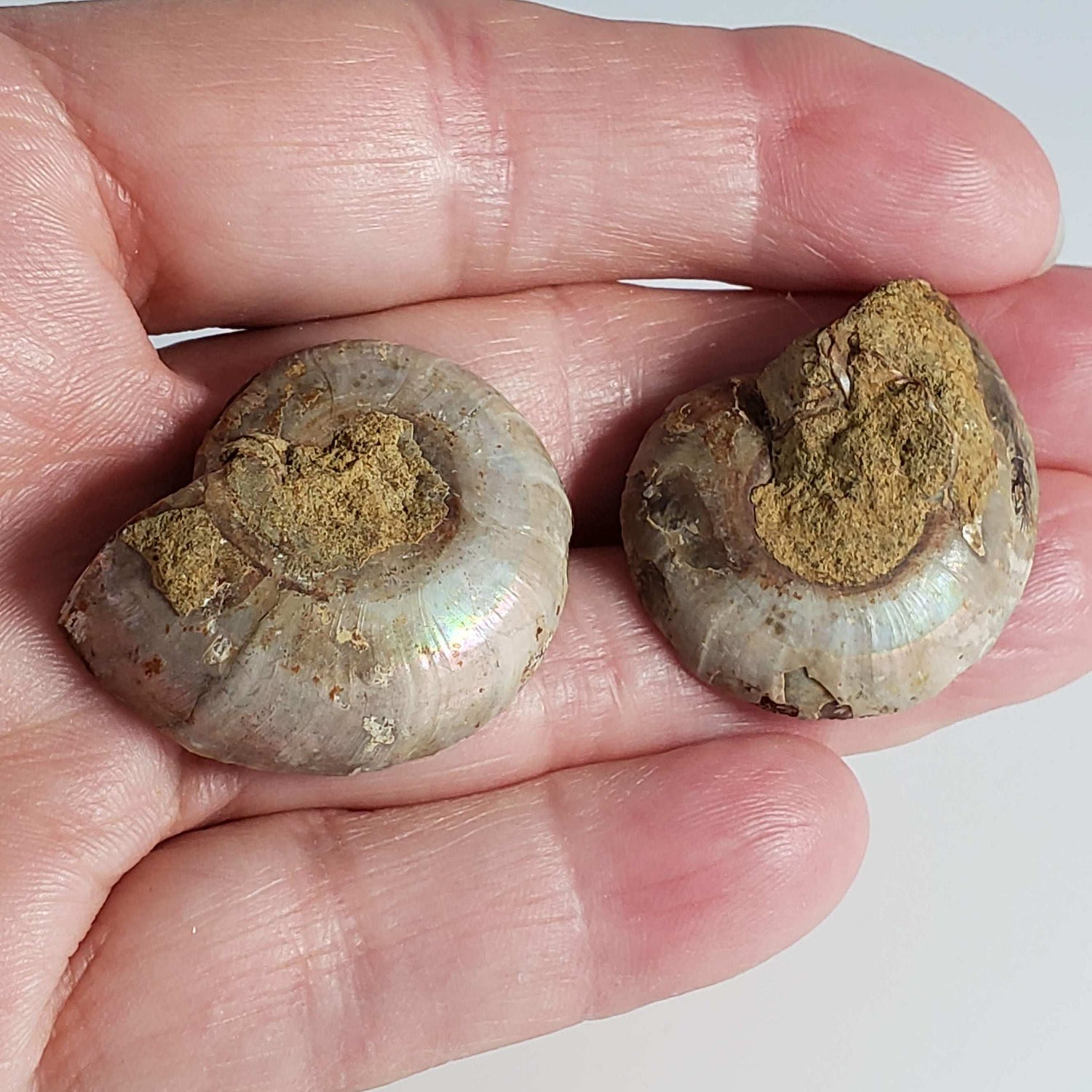
You will receive the exact matching iridescent ammonite halves pictured here. They measure 34x26mm.
This is a perfectly fossilized and highly polished natural Ammonite from Morocco, which is perfect for gift giving to a new fossil collector. Ammonites are perhaps the most widely known fossil, possessing the typically ribbed spiral-form shell. These creatures lived in the seas between 240 - 65 million years ago, when they became extinct along with the dinosaurs. They belong to a group of predators known as cephalopods, which includes their living relatives the octopus, squid, cuttlefish and nautilus. It is probably going to be one of the rarest collection item you'll ever own. These are perfect if you make jewelry and similar crafts or as a fossil collection item.

This is a superb looking fragment of a Sahara Desert NWA 515 classified meteorite weighing 1.086 grams. Its dimensions are 17x9x5mm.
This meteorite was found by Berber nomads in the deserts of Africa. Hundreds of small stones, more then 20 kilograms in total, was purchased November 8th, 2000 in M'Hamid, Morocco, Africa by a group of meteorite dealers and collectors. 247 grams was donated to UCLA were it was classified by A. Rubin as an L6 Chondrite with a shock rating of 2 and a weathering grade of 3 (25% olivine). Cut pieces of this meteorite show a nice light matrix with golden hues.
Thin sections (2nd photo) show nice chondrules ranging in size from less then 1mm to 3mm. Thin sections are used in earth geology, and in meteorites to identify the minerals in them. Stone meteorites are made of mostly of olivine and pyroxene. The pyroxene is typically greyish or yellowish and the bright colored minerals scattered throughout the photo are mostly olivine.
This piece displays extremely well and would be a beautiful addition to any new or existing collection. Comes with a The Mark Bostick Collection and a Canagem Collection specimen card.


This is a grouping of NWA 2224 meteorite micros. Although still considered unclassified, this meteorite was given the provisional class of CV3 for Carbonaceous.
These micro pieces come with a small glass jar for display and protection. Would be a beautiful addition to any new or existing collection. Comes with a Canagem Collection specimen card.
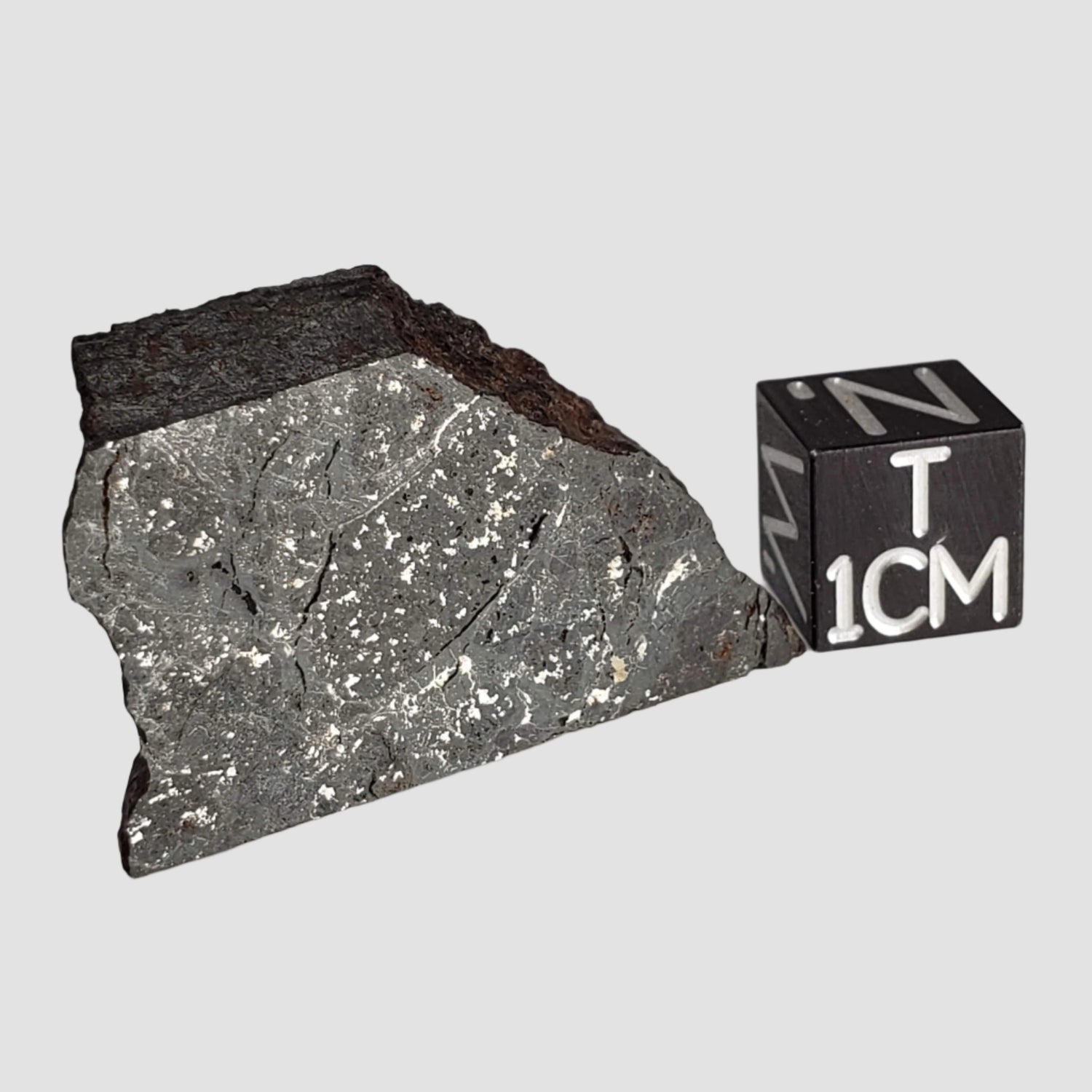
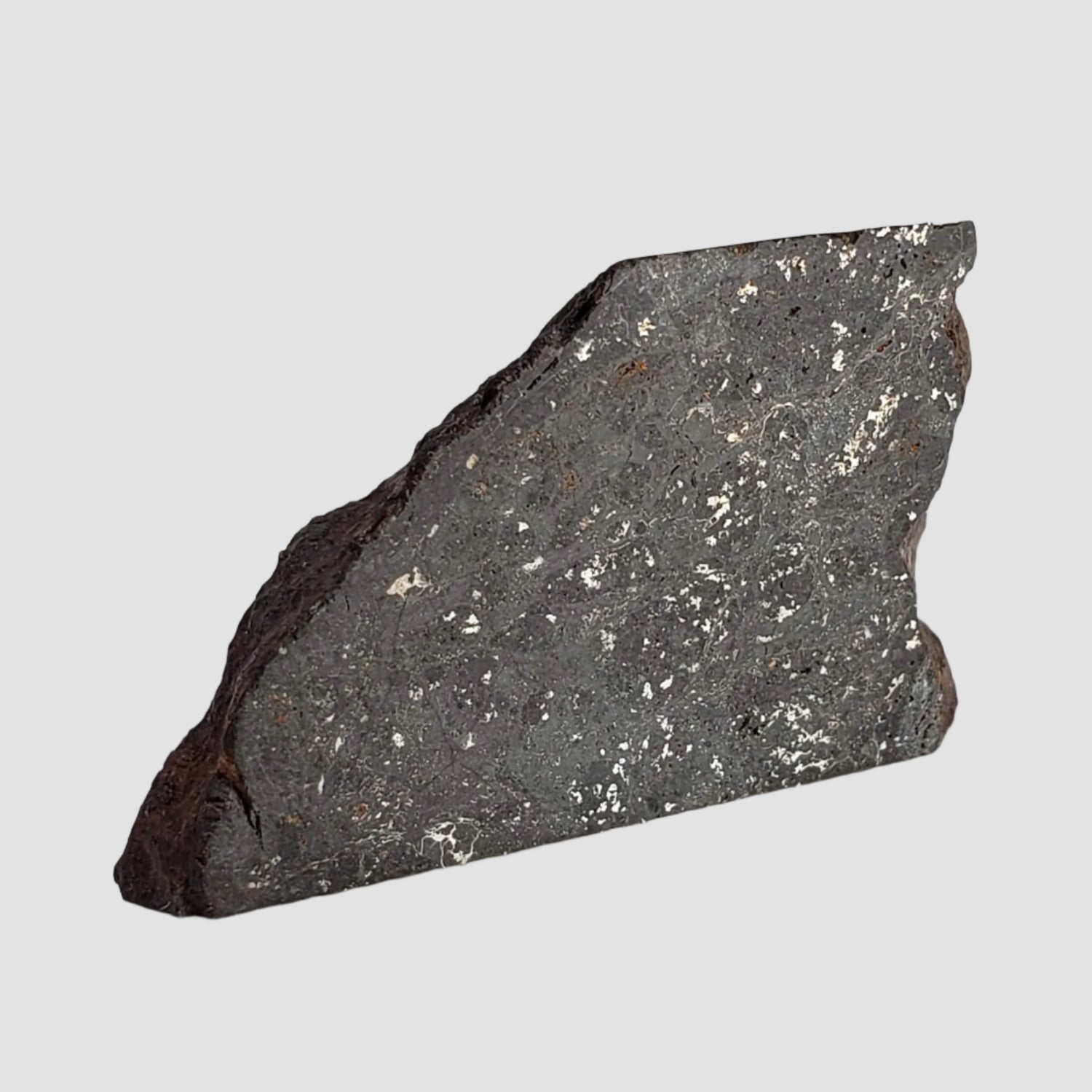
This is a great looking part slice of a Northwest Africa 2946 H3.8 classified meteorite. It weighs 9.8 grams and measures 33x21x5 mm. This meteorite was found in the Sahara Desert in 2005 and has a total recovered weight recorded as a low 149 grams. It has a Shock stage of 2 and a Weathering grade of 2. Very attractive highly shocked matrix. Nice metal in black shocked matrix.
The specimen comes with a Canagem Collection specimen card. Would be a beautiful addition to any new or existing collection.
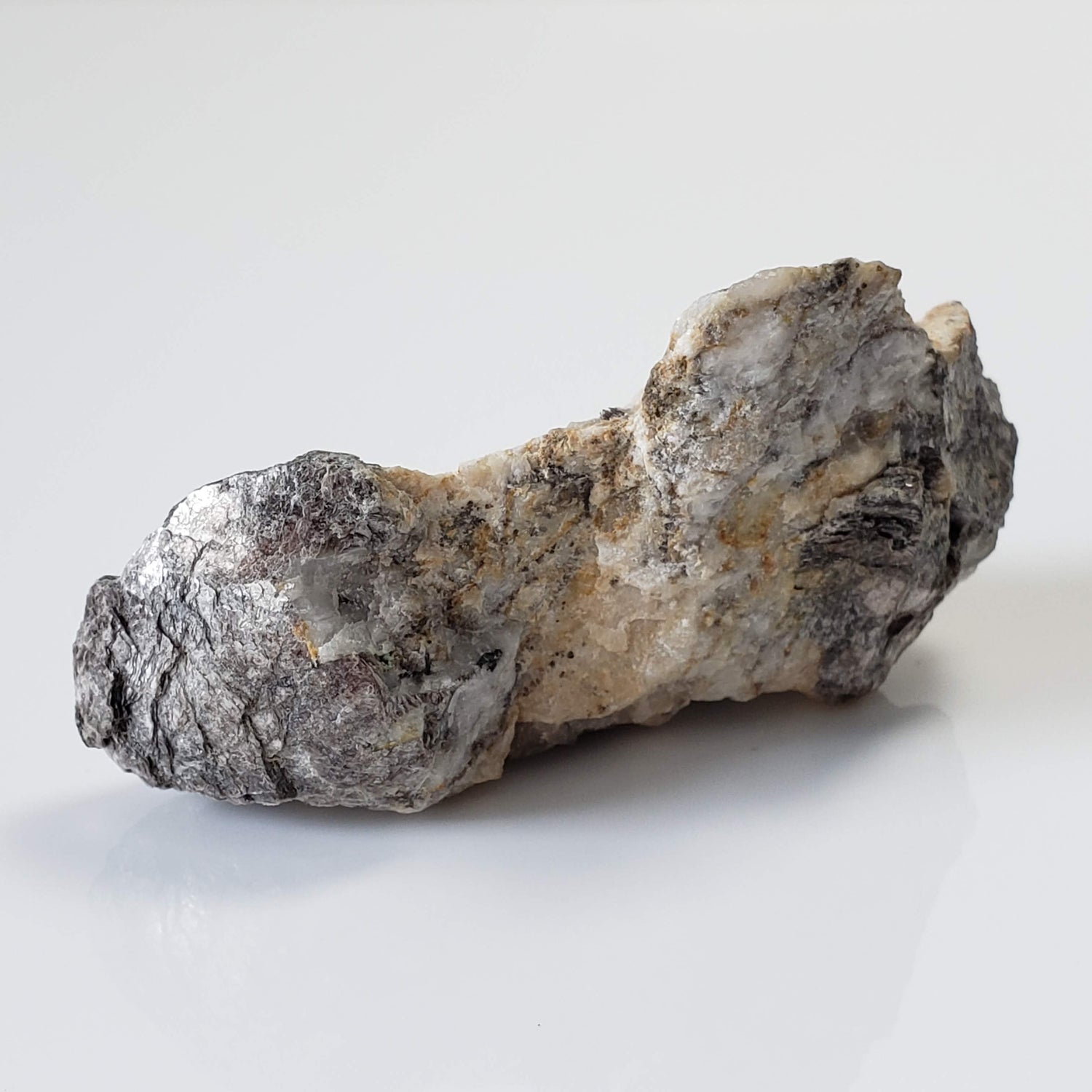
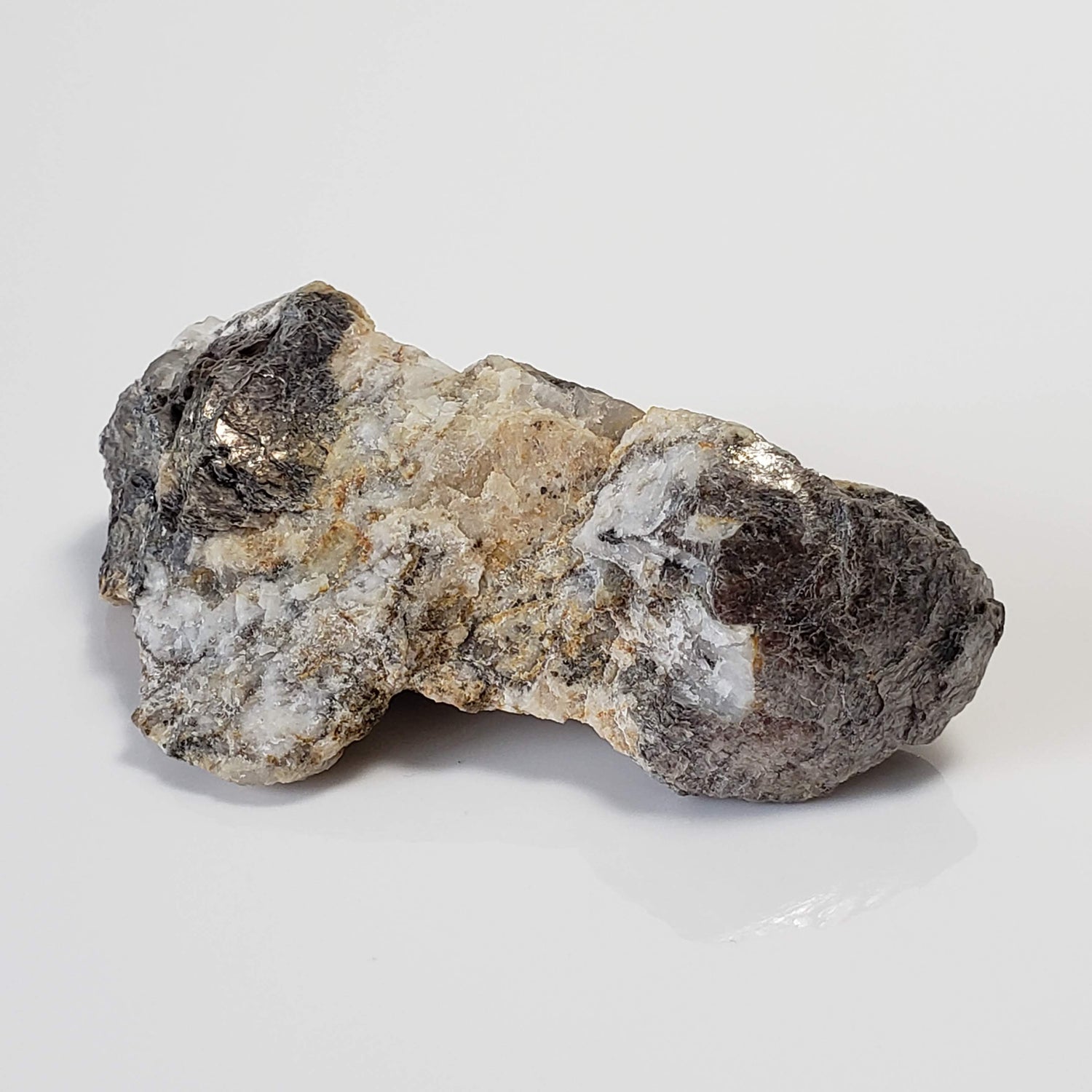
Zinnwaldite is a rare, lithium-rich mica mineral known for its dark, silvery brown to reddish-brown color. It forms in layered, sheet-like crystals and has a soft, slightly shiny surface typical of the mica group. It was first discovered in the Zinnwald area on the German–Czech border, which is where its name comes from.
Zinnwaldite is believed to promote clarity, balance, and inner strength—making it an excellent companion for decision-making, emotional resilience, and self-trust.
This specimen is in very good condition and displays very well. Make this a special specimen in your collection.
Name: Zinnwaldite
Specimen Size: Cabinet-Sized
Dimensions: 72x44x22 mm / 2.7x1.7x1.5 inches
Weight: 61.7 Grams / 2.2 Ounces
Origin: Price Lake, Florence Co., Wisconsin
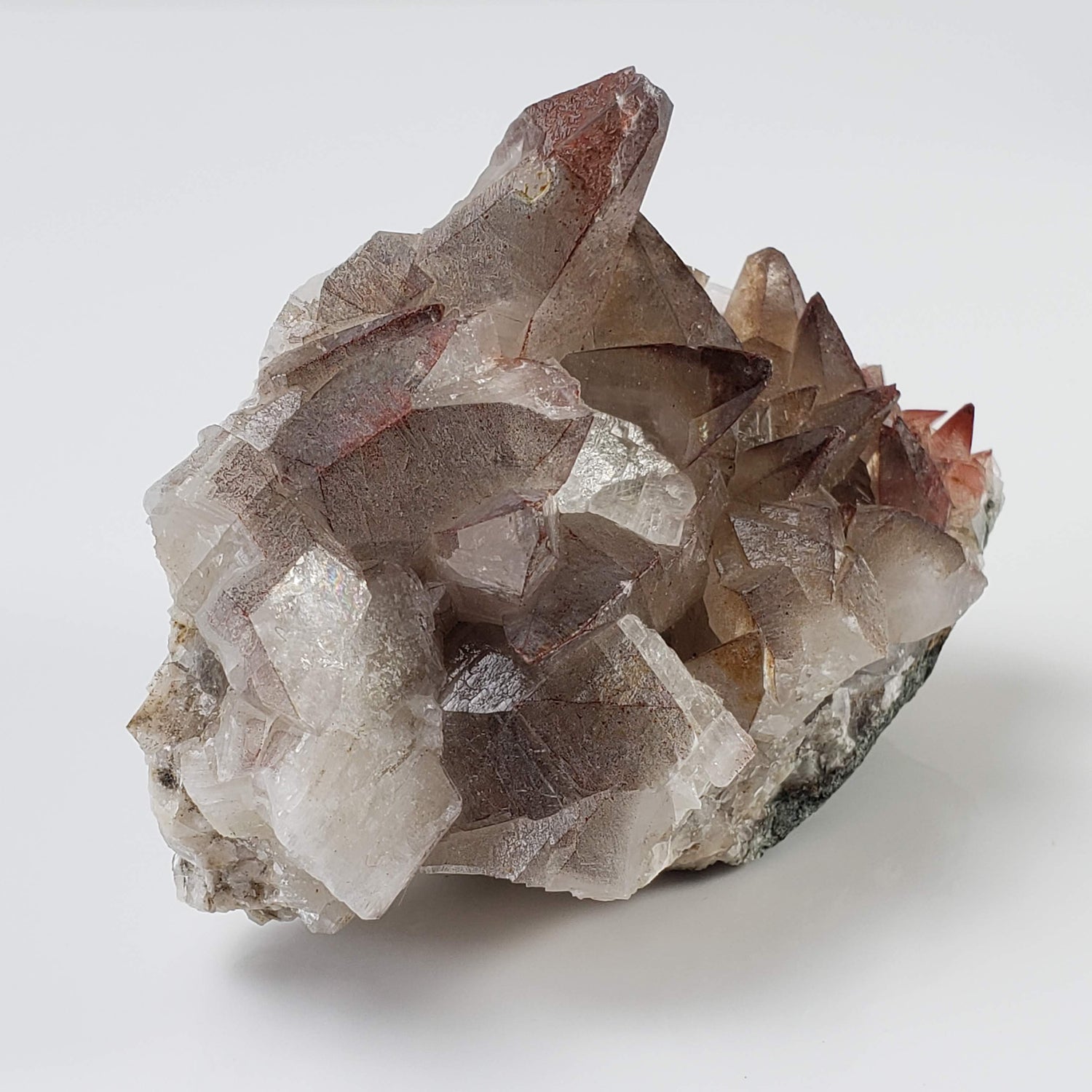

This is a natural cluster formation of large calcite crystals with hematite inclusions. This piece has some white color to translucent crystals with areas of orange/red coloring from hematite inclusions, with sharp tabular crystal formations. There are some nicks and imperfections on a few crystals but would still shine in the proper setup. They don't take away from how interesting this piece is. Would be a nice addition to any new or existing collection.
Name: Calcite with Hematite Crystal Cluster
Specimen Size: Cabinet-Sized
Dimensions: 75x54x55 mm / 2.8x2.1x2.2 inches
Weight: 160.5 Grams / 5.7 oz
Origin: Mined in Lane Quarry, Westfield, Hampden Co., Massachusetts, USA
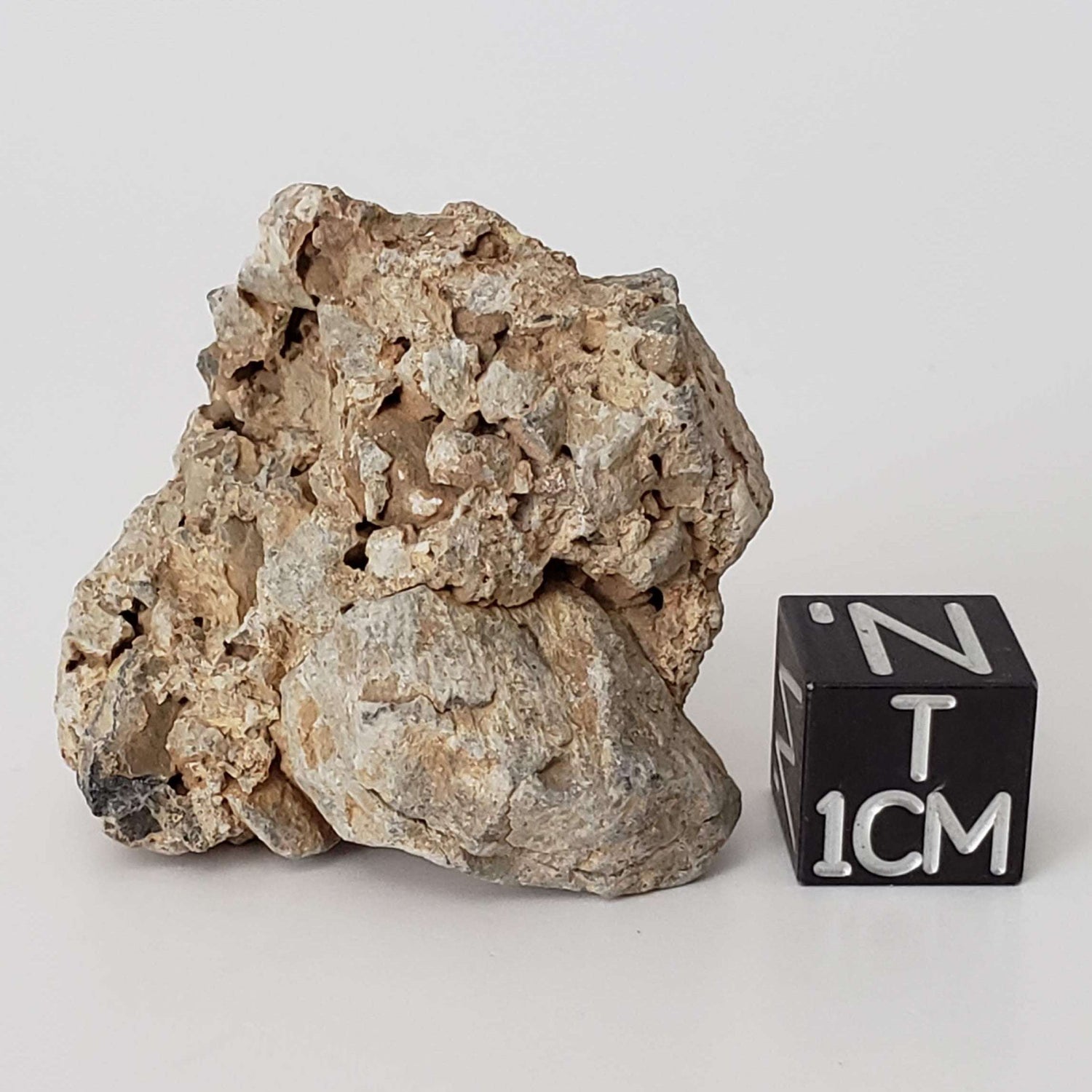

This is a must have 16.8 gram Impactite, monomict impact breccia from the Agoudal, Imilchil impact structure, Morocco. Although not a meteorite, impactites are directly linked to them and their impacts and are probably going to be one of the rarest collection items you'll ever own. Impactite is a slag-like glassy object found on the surface of the earth, formed from rock melted by the impact of a meteorite.
The term impactite encompasses shock-metamorphosed target rocks, melts or suevites and mixtures of the two, as well as sedimentary rocks with significant impact-derived components and shocked mineral grains, tektites, anomalous geochemical signatures, etc. According to the state of conservation of the meteorite into the sedimentary layers "Soltanian" and the dating of ancient lake sediments of the Isli lake, we can estimate their age limit to 40,000 years.
More than 183 structures of meteoritical impacts are highlighted on the Earth, including only three reported dual impact craters. The impact craters of Isli and Tislit are respectively located at 10 km and 4 km from the Imilchil village on the Central High Atlas in Morocco at respective altitudes of 2272 and 2266 meters. They are spaced apart from each other by 9.4 km. The origin and the date of formation of these two lakes are still unknown today. Surveys undertaken near them and in the surrounding areas leads to believe that they correspond to a dual meteoritical impact crater.
Polymict and monomict breccias were observed at the edges of these craters but they don’t form big masses because of erosion. They consist of irregular fragments with millimeter and centimeter sizes, in a carbonate matrix. In the breccias collected on the southern edges of the Isli crater, we noted the presence of several shocked quartz grains in planar structures associated with rolling extinction, indicators of shock metamorphism.
This gorgeous specimen displays very well with a mass of 35x35x25 mm. Would be a beautiful addition to any new or existing collection. Comes with a Canagem Collection specimen card.
This is a fantastic Impactite Fallback Breccia from Germany weighing 32.9 grams and measuring 70x48x7mm. Although not a meteorite, impactites and shatter cones are directly linked to them and their impacts. The Steinheim Basin today exhibits a distinct morphological depression that is ∼110 m deep and ∼3.5 km in diameter; the height of the central uplift totals to more than 140 m. The original size of the pristine crater is estimated to be ∼3.8 km with an original depth of ∼205 m.
As this drainless morphological depression was filled by lake sediments shortly after the impact, the primary crater morphology is widely preserved. The crater rim is formed by steeply inclined and intensely brecciated Upper Jurassic limestone blocks that also contain numerous shattered chert nodules, as well as some loose blocks of the host limestone. An impact breccia, referred to as the so-called ”Primäre Beckenbrekzie” (“primary basin breccia”) and interpreted as a “fallback breccia”, is known from many drillings in the Steinheim Basin.
Mainly composed of Middle to Upper Jurassic limestones, marls, mudstones, and sandstones, the impact breccia inside the morphological depression of the Steinheim Basin is overlain by lake sediments and is obviously preserved in its original thickness and position. This piece displays very well and is a very nice size showing multiple characteristics of its origin. Would make a beautiful addition to any collection.


Pseudomorphs are mineral specimens that have the external shape of one mineral but are composed of another. The pseudomorph goethite after marcasite forms when marcasite is exposed to oxidizing conditions and starts to oxidize and break down. As the marcasite breaks down, goethite replaces it in the crystal structure, preserving the shape of the original marcasite crystal. The resulting specimen appears as a marcasite crystal, but is actually composed of goethite.
The Farafra Oasis, in the White Desert, has been known for a number of years to deliver incredible pseudomorph specimens. The pseudomorphs occur within the Cretaceous Khoman Chalk, from which the White Desert derives its name.
This specimen is remarkable for its relatively sharp marcasite crystal form. It is in excellent condition.
Name: Goethite After Marcasite Pseudomorph
Specimen Size: Miniature-Sized Specimen
Dimensions: 27x24x21 mm / 1.1x0.9x0.8 inches
Weight: 20.8 grams / 0.7 ounces
Origin: White Desert, Farafra Oasis, Egypt

Canagem is proud to be professional member of The International Gem Society(IGS) the world's top resource for gem professionals, enthusiasts, and industry content.