

📢 Notice to ALL Customers 📢
225 products
Sort by:
225 products
225 products


This is a great looking 2.278 kg (5 lbs) Meteor Crater Oxide (Canyon Diablo) individual specimen directly from Arizona, U.S.A.. Its dimensions are 9.9x9.4x8.5 cm (3.9x3.7x3.3 inches).
This 2.278-kg Meteorite Oxide originates from the renowned Meteor Crater in Northern Arizona. Its natural oxidation process offers a unique, rugged texture and appearance, providing an authentic sample of extraterrestrial iron altered by Earth’s atmosphere over time. Ideal for collectors and researchers, this specimen exemplifies the scientific and geological significance of meteorite weathering. This piece was obtained in 2005 from a retiring Meteor Crater employee. It is highly magnetic and very heavy for its size.
-
Formation:As meteorites fall through the atmosphere and land on Earth, the iron and other metallic components can oxidize, forming rust-like coatings.
-
Impact on Appearance:The fusion crust of a meteorite can weather over time, transforming from a black, shiny surface to a rusty brown color due to oxidation.
-
Not all Meteorites Oxidize:While most meteorites have some degree of oxidation, the extent can vary based on factors like the meteorite's composition, the duration of exposure to the atmosphere, and the local environment.
Right now if you want to acquire something like this, the nice folks at the Crater will ask for $1.50 to $2.00 USD per gram. Here you get it for substantially less in the best shape possible. Would make a beautiful addition to any collection or start one today.


This is a beautiful polished free form of Malachite from the Democratic Republic of Congo. Malachite is perhaps the one of the most popular minerals for collectors due to its intense green color and sometimes beautiful, banded masses.
Africa contains several outstanding Malachite deposits. The mines at Katanga (Shaba), especially at Kolwezi, in the Congo (Zaire) produce Malachite in all sorts of odd shapes and forms, and are the source of the best banded, concentric, stalactitic and sparkling specimens.
Would be a beautiful addition to any new or existing collection.
Name: Malachite
Specimen Size: Large Cabinet-Sized
Dimensions: 22x18x7 cm / 8.7x7.1x2.7 inches
Weight: 3.04 KG / 6 lbs 9 oz
Origin: Mined in Shaba Copper Belt, Democratic Republic of Congo (Zaire)


This is a fabulous 1.24 grams Molong stony iron classified meteorite fragment. This superb meteorite was found in Ashburnham, NSW, Australia in 1912 and has a low Total Known Weight of 104 kg. This is 1 of 72 approved meteorites classified as Pallasite, PMG.
This Molong meteorite fragment is a rare 1.24-gram piece of Pallasite PMG (main chemical group) stony iron, originally part of a 230-pound mass found in 1912 near Ti Tree Creek, Ashburnham, NSW, Australia. Known for its unique iron-nickel matrix interspersed with olivine crystals, this specimen offers valuable insight into early solar system processes.
Even though the iron of this ancient meteorite has changed into Meteorite Shale due to its millions of years of exposure on earth, it still shows the beautiful pallasite structure it is famous for and will also reacts strongly to a magnet. Unlike most pallasites you see, Molong is almost all olivine crystals with just a little metal between them. The olivine crystals are semi-translucent, you can't see through them, but you can see reflections from within the crystals.
Its historical significance and scientific value make it an important addition for collectors and researchers specializing in meteoritics. Comes in a protective case with an ELKK Meteorites and a Canagem Collection specimen card.


This is a superb individual Tsarev meteorite weighing 60.4 grams. Its dimensions are 47x40x20 mm. Twenty-eight specimens of this L5 classified meteorite were found in fields. The largest mass weighs 284 kg, the smallest 761 gr with a total weight of 1.23 Tons. The greatest distance between the find sites was 6.0 km.
In 1968, amidst a global surge in conflicts, a remarkable discovery was made in a small village in Volgograd Oblast. This region, known as the primary site of the Battle of Stalingrad—one of the largest and bloodiest battles in history—yielded an extraordinary find in the quiet fields near the rural village of Tsarev.
The Tsarev meteorite, named after the Russian word for czar, is a stone meteorite responsible for one of the largest meteorite showers in Russian history. This meteorite shower occurred on December 6, 1922, but the stones were not discovered until 1968 and only recognized in 1979. The Tsarev meteorite's mineral composition matches that of ordinary chondrites, including olivine, orthopyroxene, clinopyroxene, maskelynite, calcium phosphates, nickel-iron, troilite, chromite, ilmenite, and rutile.
Academic analysis of the Tsarev meteorite reveals significant features: large grains of nickel-iron, light grey areas with well-preserved chondritic texture, and dark areas containing a matrix with olivine grains and remnants of chondrules.
This specimen would be a beautiful addition to any new or existing collection. Will come with a Canagem specimen card.


Aegirine, also known as acmite, is a rare and stunning black mineral. It is found in many locations around the world, and this outstanding specimen comes from the Poudrette Quarry at Mount Saint Hilaire, where it is often found in association with Microcline.
Aegirine is usually black, greenish-black, or brownish-black in color and has a glassy or vitreous luster. It has a hardness of 6 to 6.5 on the Mohs scale, which means it is relatively hard and durable. Aegirine is also known for its straight, needle-like crystals that can grow up to several centimeters in length.
Microcline, a member of the feldspar mineral family, is known for its beautiful color variations and distinctive twinning patterns. When paired with Aegirine, the result is a striking and eye-catching contrast of colors.
Aegirine is believed to have properties associated with protection, energy balancing, and spiritual growth. Microcline, being a feldspar, is often linked to creativity and intuition. The combination of these minerals is thought to enhance their individual metaphysical properties.
This Aegirine on Microcline crystal is the perfect combination for those looking for a unique and beautiful addition to their mineral collection!
Name: Aegirine on Microcline
Specimen Size: Miniature-Sized
Dimensions: 55x47x37 mm / 2.2x1.8x1.5 inches
Weight: 80.4 Grams / 2.8 Ounces
Origin: Mined in Poudrette Quarry, Mont-Saint-Hilaire, Québec, Canada


Thuathe Meteorite | 8.29 gr | Full Slice | H4-5 Chondrite | Observed Fall | Lesotho
This is a great looking complete slice of the Thuathe H4-5 classified meteorite. It weighs 8.29 grams and measures 36x30x4 mm.
A meteorite travelling east to west exploded over Lesotho producing an elliptical strewn field extending 7.4 by 1.9 km (bearing: ~276°) on the westernmost lobe of the Thuathe (or Berea) Plateau, ~12 km east of the capital city of Maseru.
The explosion was accompanied by an extraordinarily loud, 15 s long noise which was heard over a large (100 km radius) area of Lesotho; the fall was eye-witnessed by several people who reported sightings of dust trails of “sparkling objects” over Lesotho and the southern part of the Free State Province of South Africa. Many villagers of Ha Ralimo, Boqate Ha Majara, and Boqate Ha Sofonia reported falls of stones close to themselves and onto their homes. The estimated total mass of recovered material is ~30 kg, including 418 stones in the 2 g to 2.4 kg mass range for a total of 24.673 kg which were collected and catalogued by A. Ashworth and David P. Ambrose
Most freshly cut slices from several stones show a homogeneous beige to light-grey lithology speckled with abundant and heterogeneously distributed (20% to, in exceptional cases, >50 vol%) metal particles; some are crosscut by dark shock veinlets and show brecciated structure with light grey matrix surrounding lighter colored, well-rounded inclusions; chondrules distinctly recognizable.
Would be a beautiful addition to any new or existing collection. Comes in a protective case, and includes a Mark Bostick Collection and a Canagem® Collection specimen card.
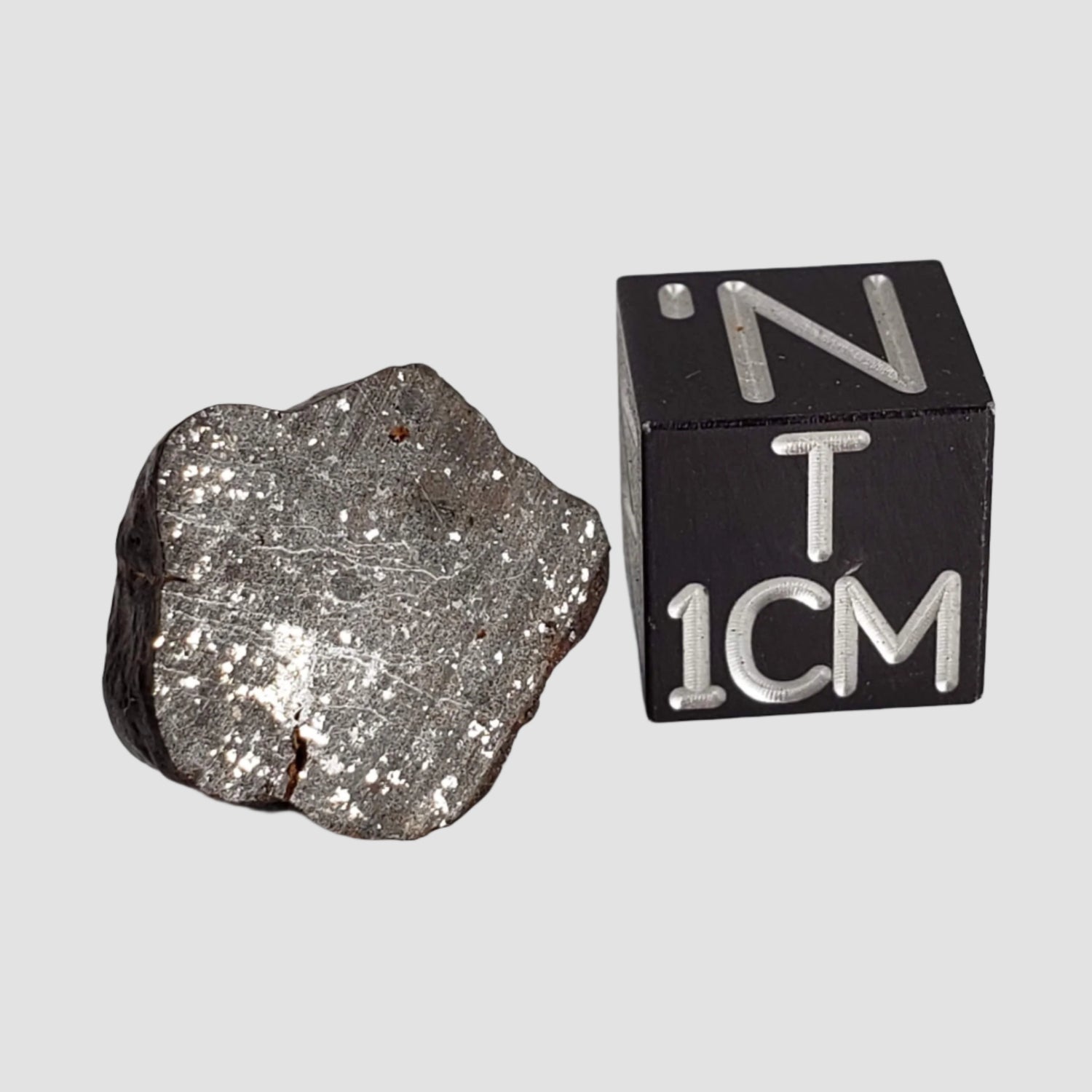
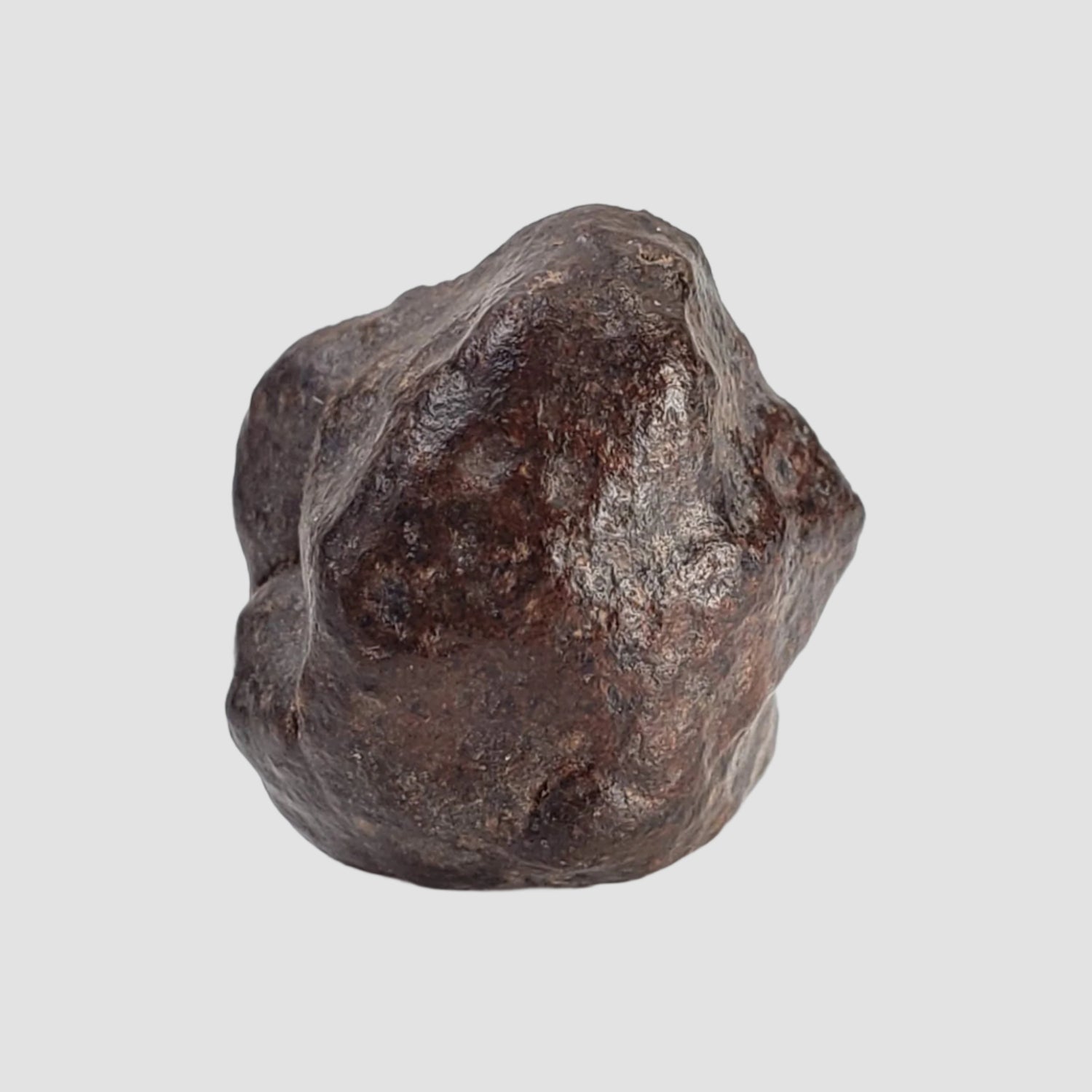
This is a great looking Northwest Africa 2521 H/L3.7 classified meteorite end cut. It weighs 2.472 grams and measures 14x13x7 mm. This meteorite was found in the Sahara Desert in 2004 and has a total recovered weight recorded as a very low 47.8 grams. It has a Shock stage of 3/4 and a Weathering grade of 2. A very good cut, ground and polished end cut.
This is the only approved meteorite classified as H/L3.7
The specimen comes with a Meteoritica and a Canagem Collection specimen card. Would be a beautiful addition to any new or existing collection.
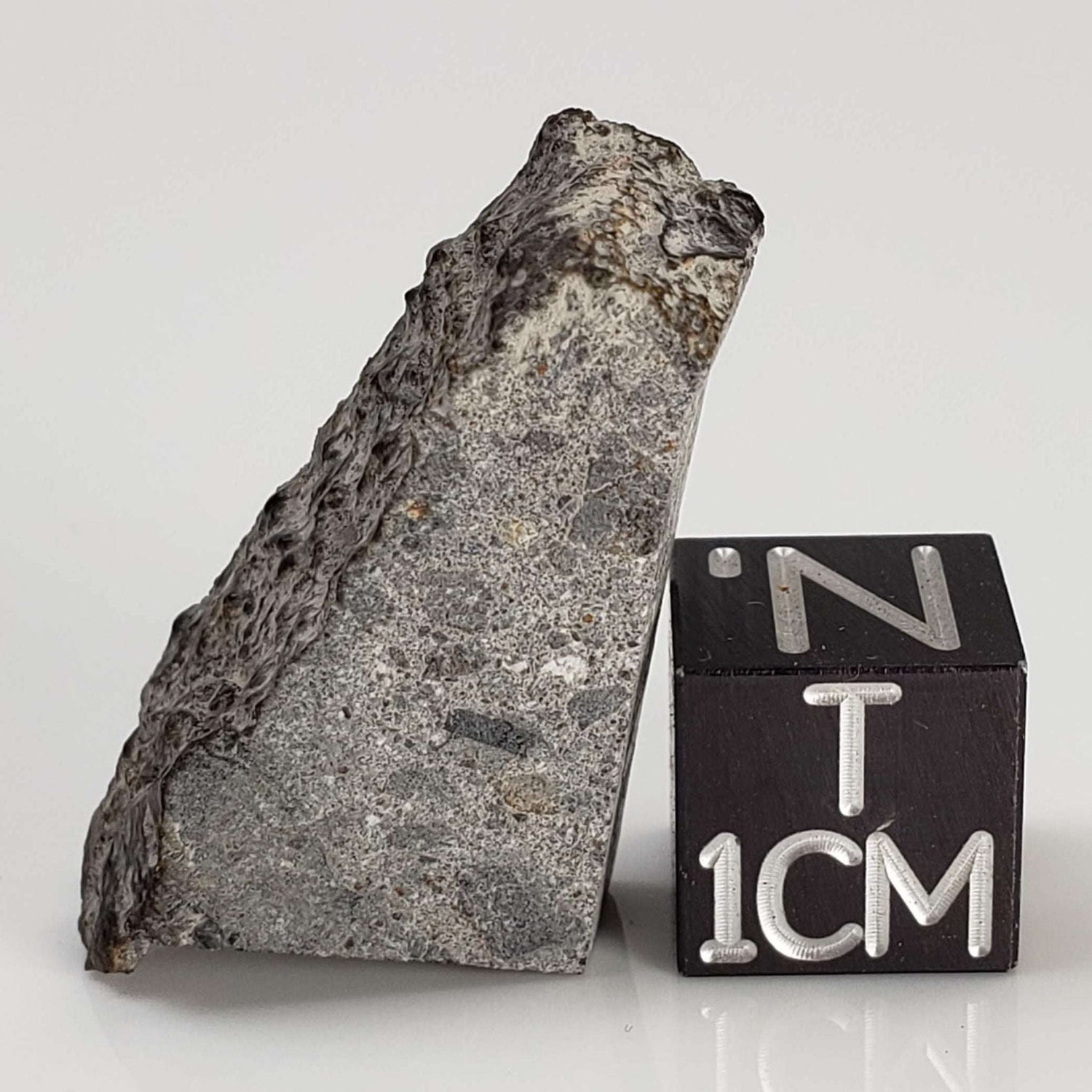
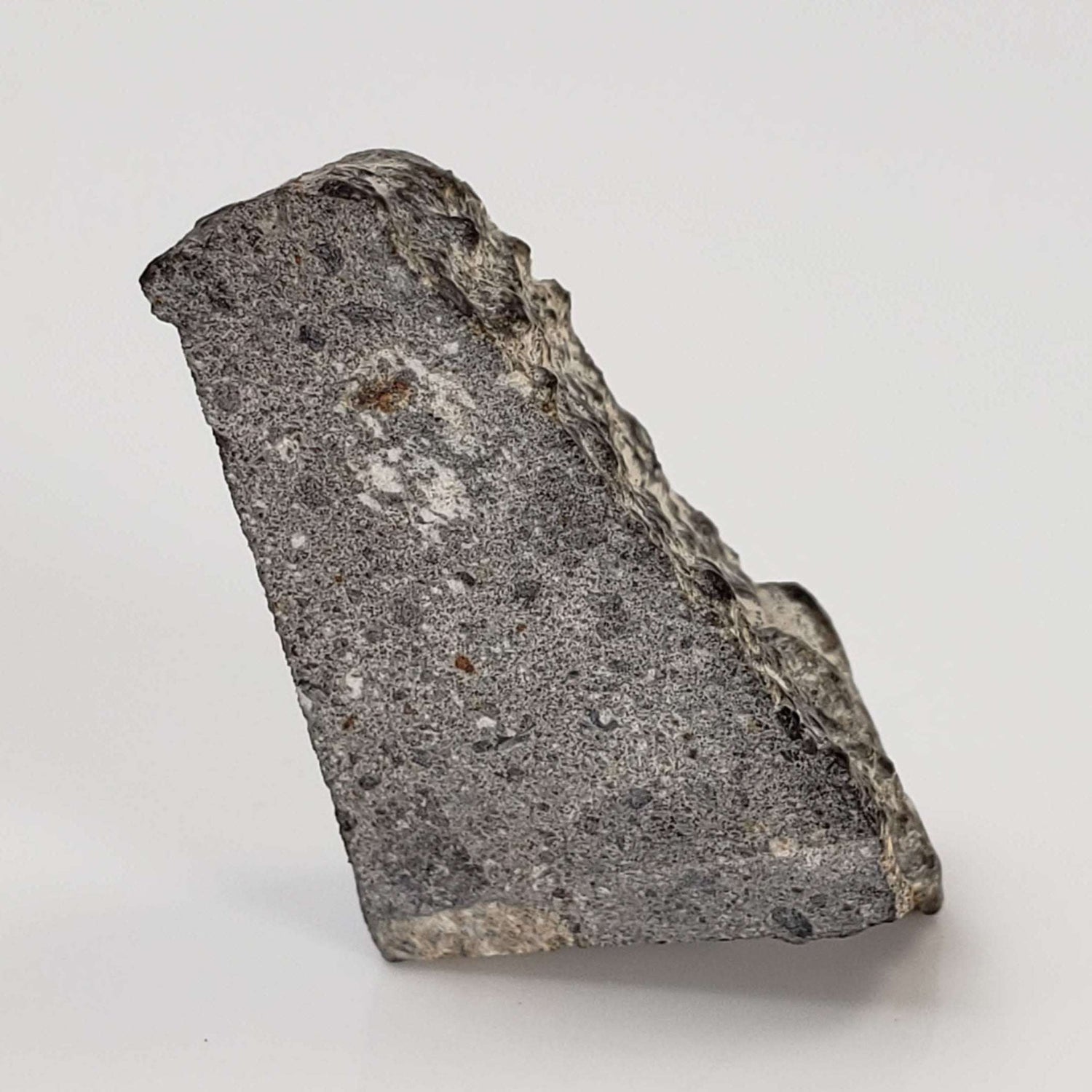
This is a great looking Northwest Africa 2516 basaltic eucrite classified meteorite part slice weighing 5.52 grams. Its dimensions are 22x15x9 mm.
This basaltic achondrite eucrite classified meteorite was found in the Sahara Desert in 2004 and is 1 of 641 approved meteorites classified as such. The total weight of the recovered pieces is recorded as a low 296 grams.
This piece displays extremely well, it is a nice size with a beautiful crusted exterior, and shows multiple characteristics of the type of material, it exhibits excellent clasts within the matrix. The matrix is a fine grain containing shocked eucritic inclusions. Beautiful grey matrix with nice clear inclusions. The three groups collectively known as HED meteorites (howardites, eucrites and diogenites) may come from asteroid 4 Vesta.
The specimen comes with a Meteoritica and a Canagem specimen card. Would be a beautiful addition to any new or existing collection.
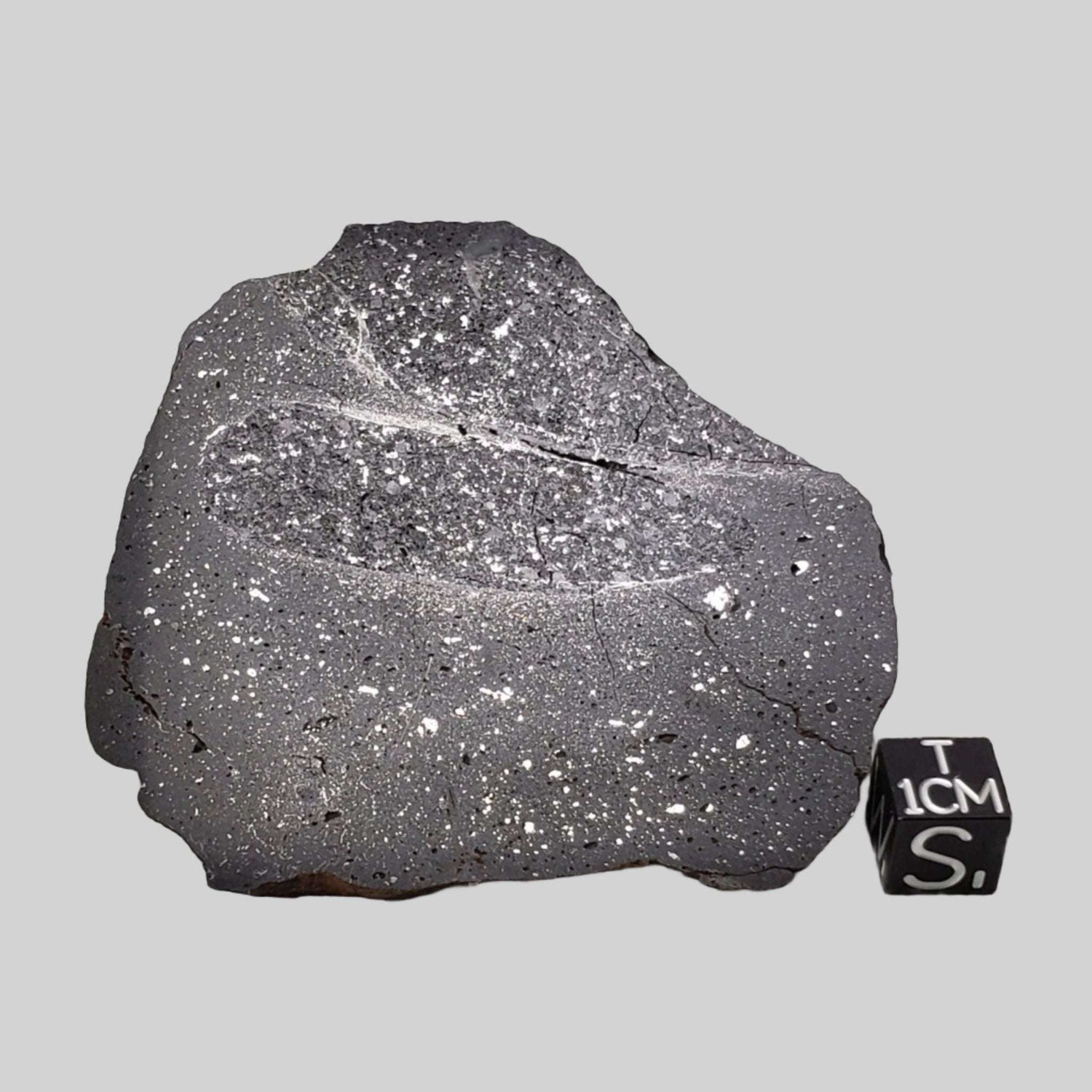
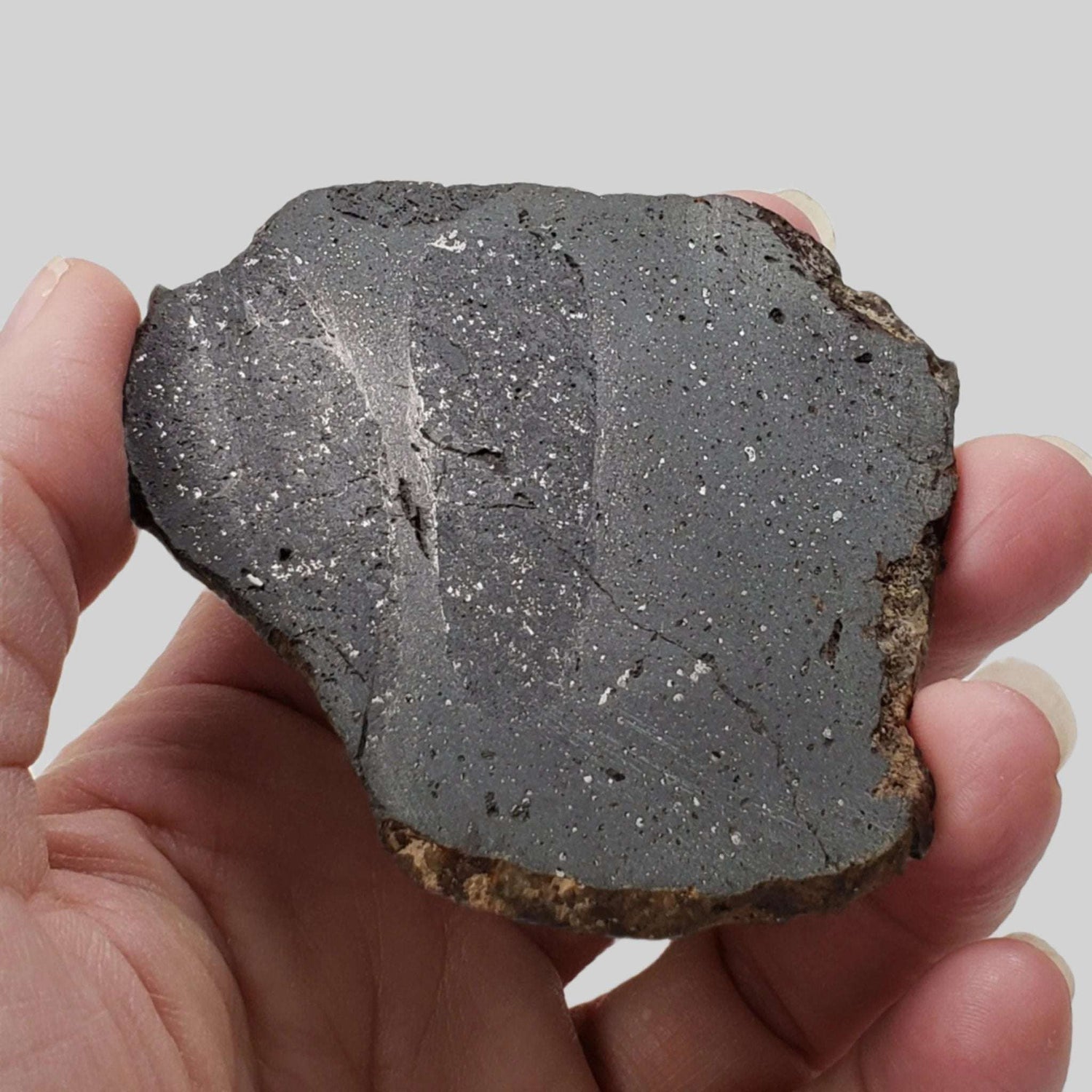
This is an incredible and professionally prepared slice of the NWA (Northwest Africa) 2902 meteorite weighing 51.05 grams and measuring 82 x 72 x 4 mm. This gorgeous and rare NWA classified meteorite is an L-related impact melt rock or Chondrite, shock-related crystallized impact melt with a total Mass of 1000 grams in many pieces and is 1 of only 44 approved meteorites classified as L-melt rock.
This 2003 find has a weathering grade of 1/2. This piece displays very well and would make an amazing addition to any collection with this unique piece. This world class specimen will come with a Canagem® Collection specimen card plus the original Certificate of Authenticity from SR Meteorites and finder Stefan Ralew of Germany. Will also be shipped in a Riker mount to protect your investment and will include a professional label and a stand.


This is a must have Impactite from the famous Terny Astrobleme, Ukrainian Shield and Crater in Ukraine. It weighs 14.33 grams and measures 42x32x9 mm. Although not a meteorite, impactites are directly linked to them and their impacts and are probably going to be one of the rarest collection pieces you'll ever own. The Terny impactites are important geological specimens that are recognized by the scientific community as evidence of asteroid or comet impacts on Earth.
The Terny astrobleme is a geological formation located in the Cherkasy region of Ukraine. It is believed to be the result of a meteorite impact that occurred approximately 65 million years ago during the Late Cretaceous period. The impact formed a crater that is estimated to be around 6 kilometers in diameter, although it is largely eroded and filled in with sediment.
The Terny astrobleme is an important geological site for studying the effects of meteorite impacts on the Earth's surface and the resulting geological processes that occur. It has been the subject of numerous scientific studies, and specimens of the impactite rocks found at the site have been collected and analyzed for their mineralogical and chemical properties.
Would be a beautiful addition to any new or existing collection. Comes with a Canagem Collection specimen card.
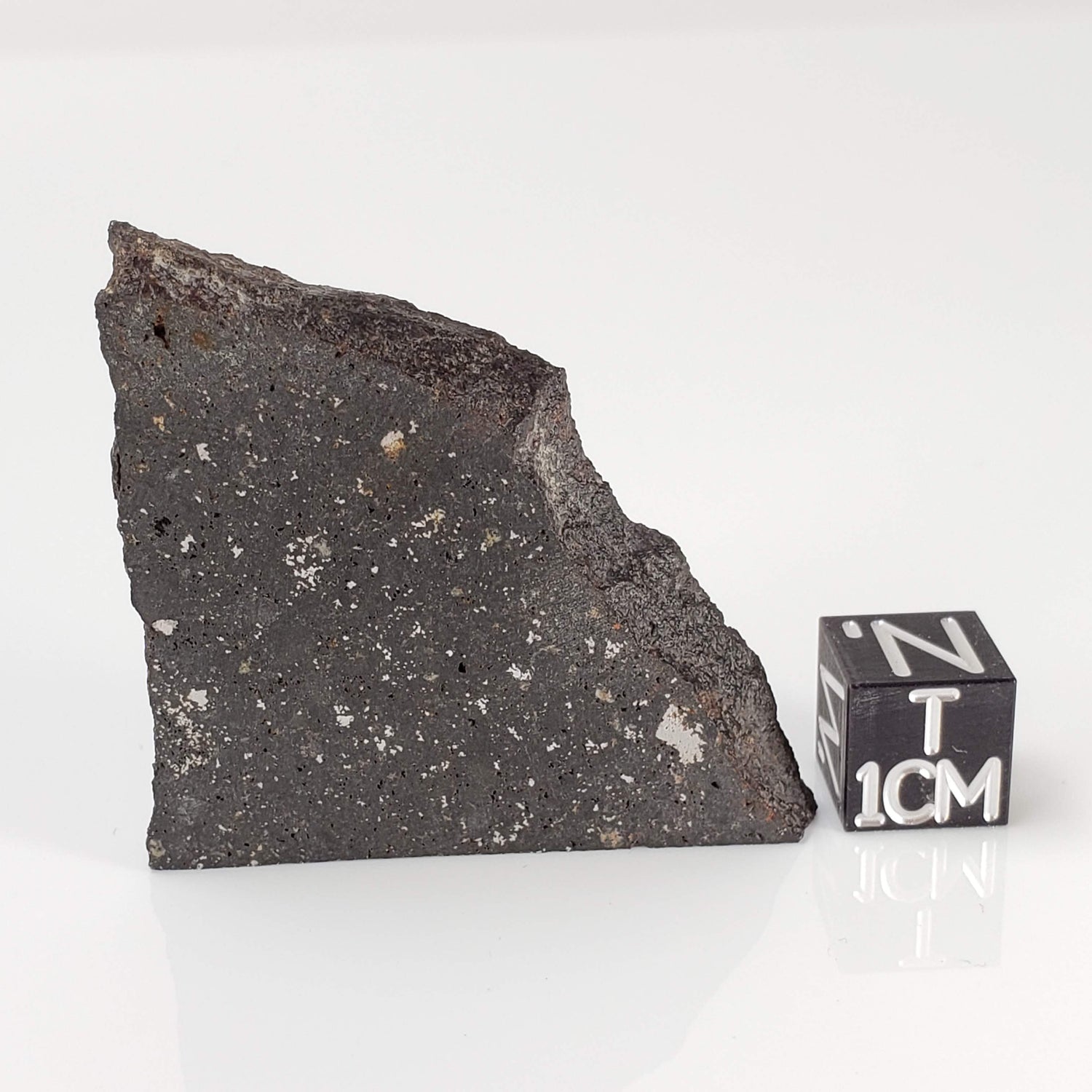

This is a superb looking slice of a Sahara Desert NWA 091 classified meteorite weighing 17.96 grams. Its dimensions are 40x39x5mm.
It is a nice dark gray color and is full of small holes (the small black specks in the pictures). It is very similar to Kimble County except a bit darker. The single piece was found in the desert in 2000 and has a total mass of only 370 grams and was classified as an L6 by UCLA. It is shock level 4 (very high) and weathering grade W2 (Low). It is highly vesiculated from a shock event.
This piece displays extremely well with its professionally finished cut face and is also a very nice size. Would be a beautiful addition to any new or existing collection. Comes with a Michael Cottingham Meteorite Collection and a Canagem Collection specimen card.
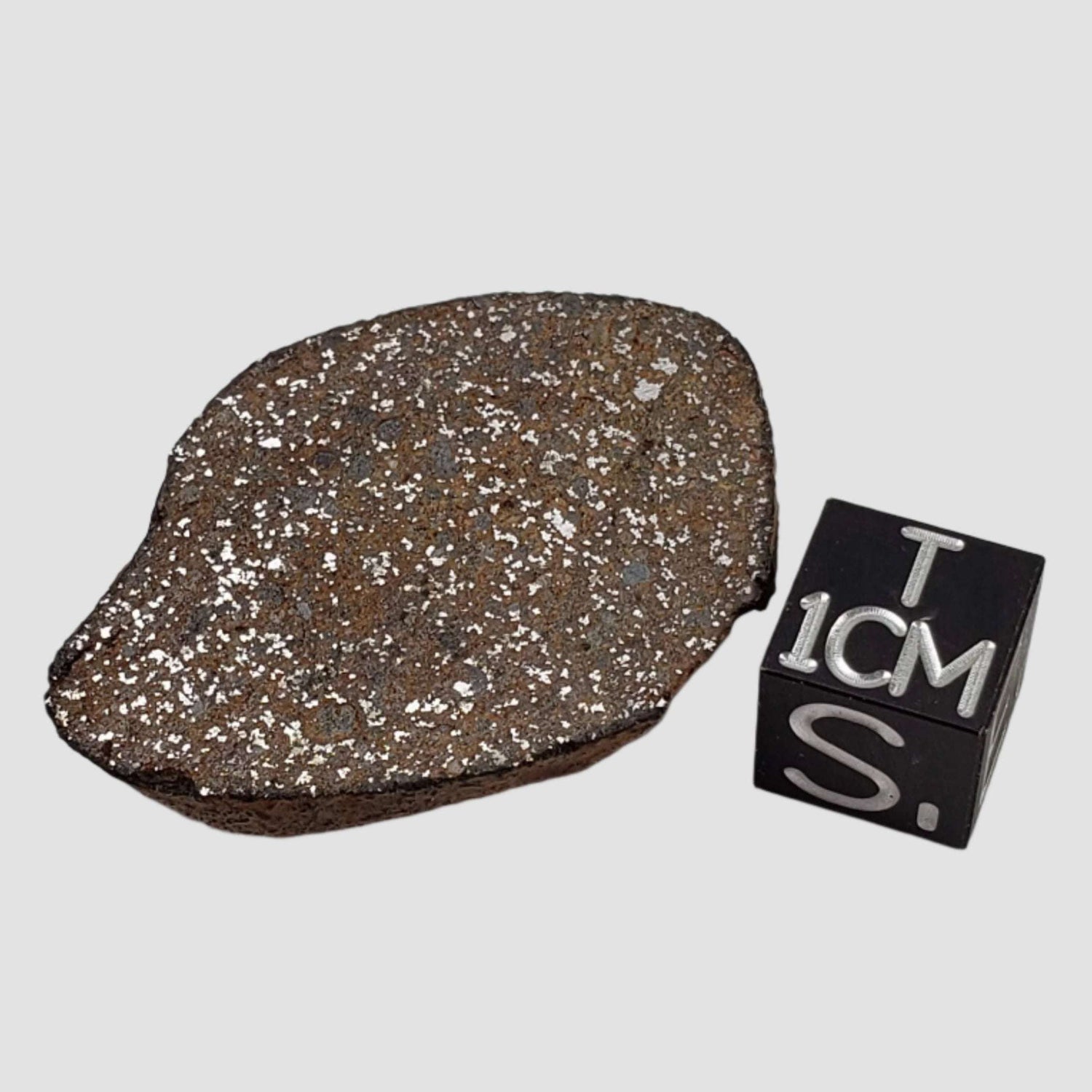
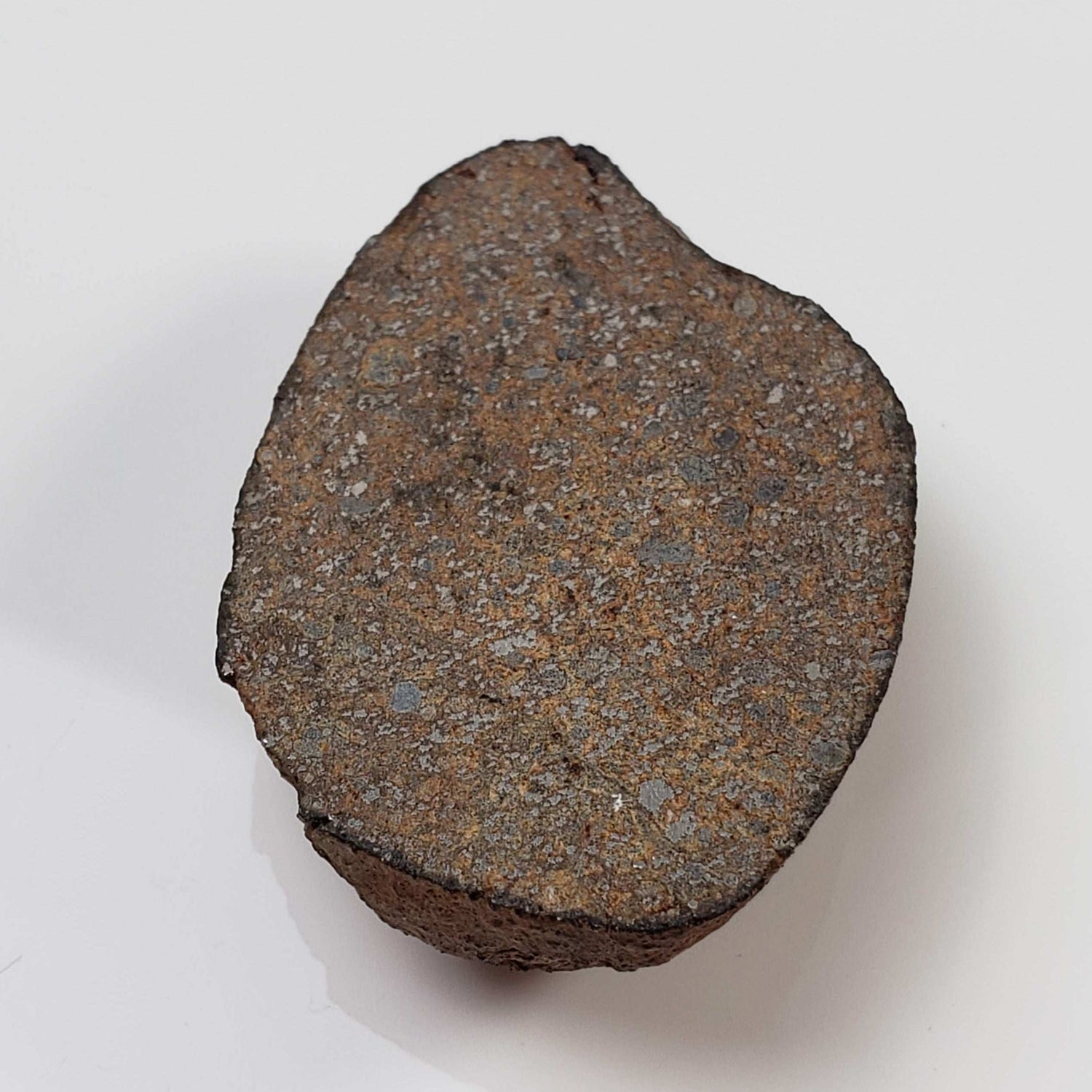
This is a great looking end cut Gao-Guenie H5 classified meteorite weighing 15.18 grams. Its dimensions are 35x25x9 mm and it has a crusted edge.
This H5 classified meteorite was observed falling at about 17:00 March 5, 1960 near the village of Gao in Africa. There is no total known weight recorded for this meteorite.
Would be a beautiful addition to any new or existing collection. Comes with an ELKK Meteorites and a Canagem Collection specimen card.
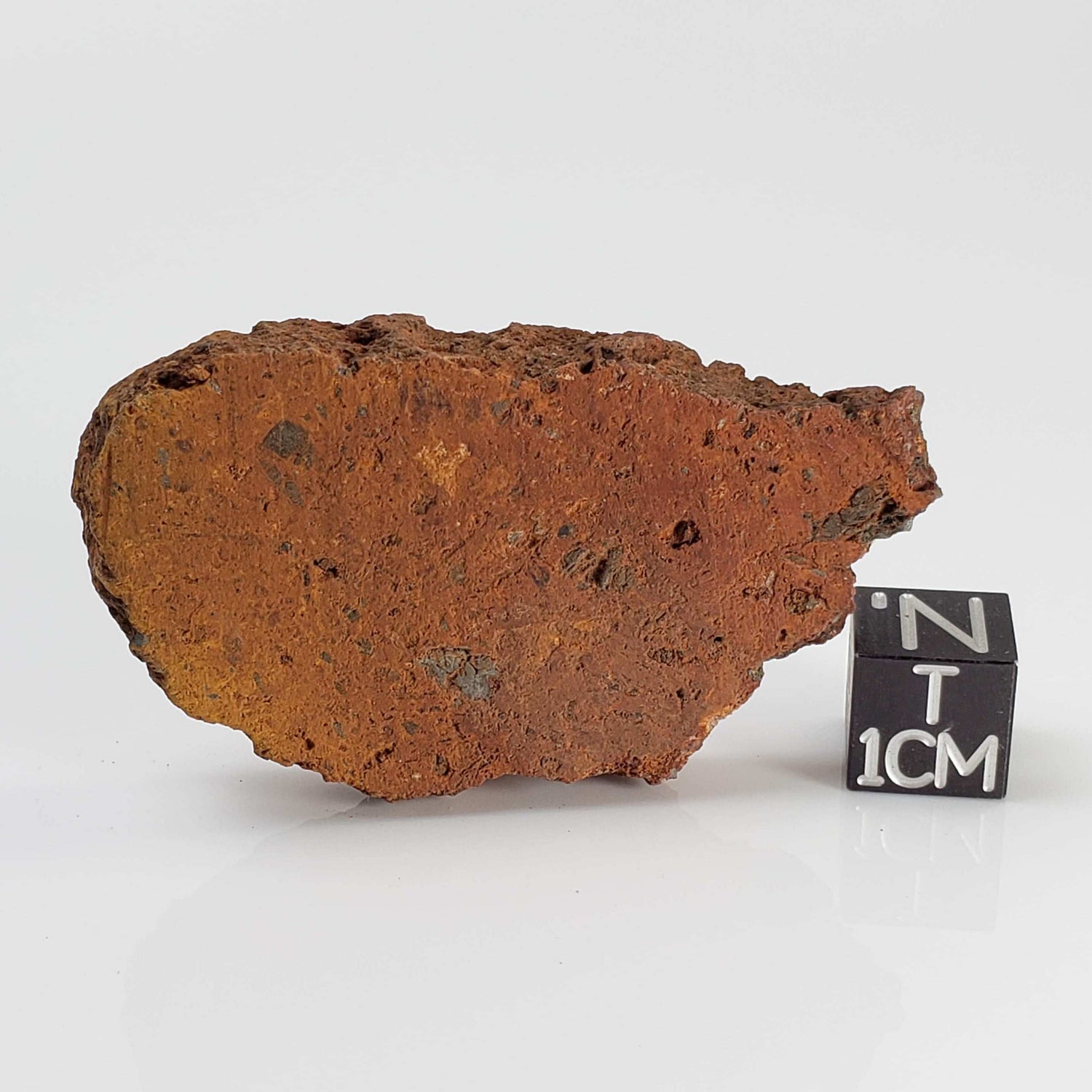
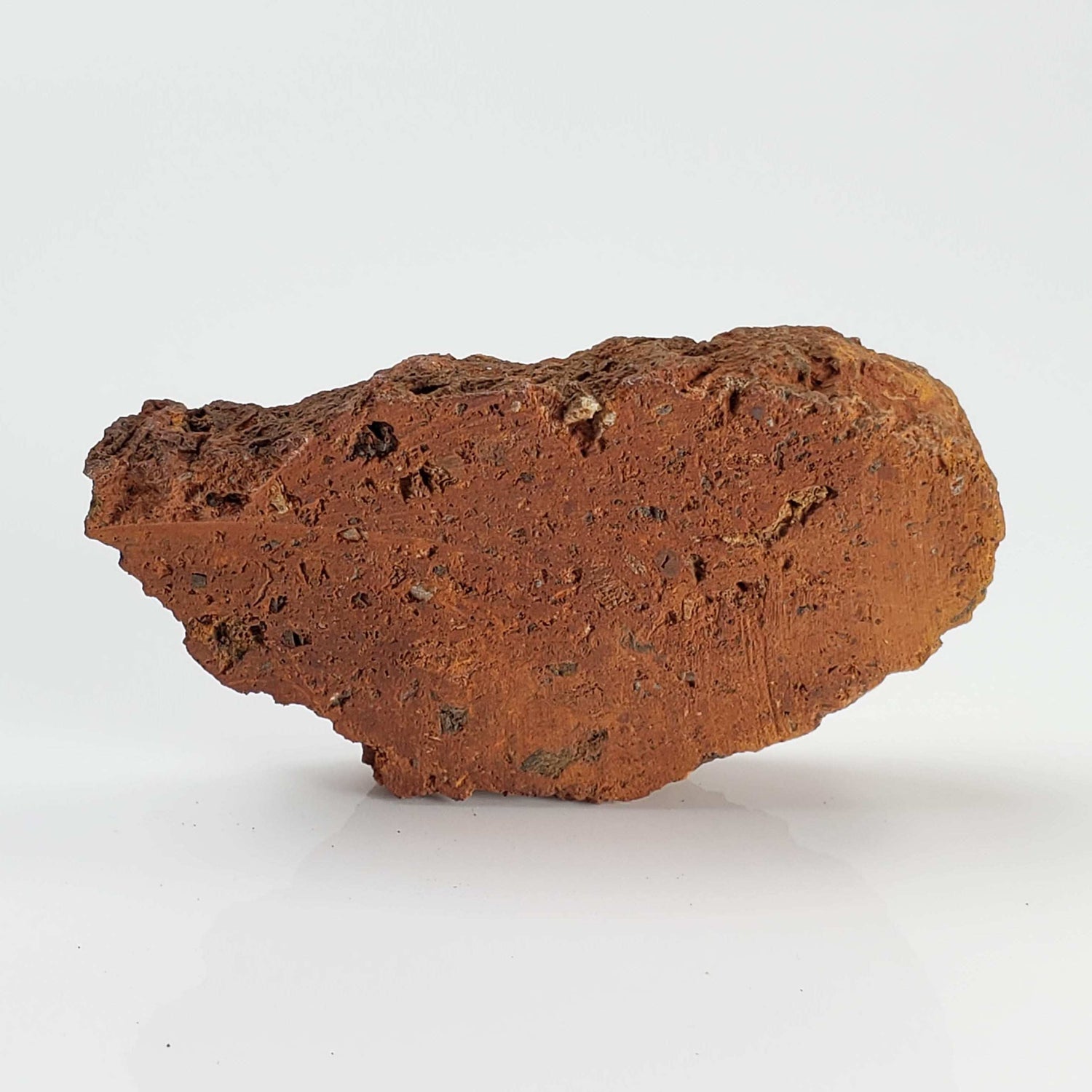
This is a must have 16.88-gram Impactite slice from the Terny Astrobleme (Ukrainian Shield) in Cherkasy Region of Ukraine. Its dimensions are 53x32x8mm. Although not a meteorite, impactites are directly linked to them and their impacts and are probably going to be one of the rarest collection pieces you'll ever own. The Terny impactites are important geological specimens that are recognized by the scientific community as evidence of asteroid or comet impacts on Earth.
The Terny astrobleme is a geological formation located in the Cherkasy region of Ukraine. It is believed to be the result of a meteorite impact that occurred approximately 65 million years ago during the Late Cretaceous period. The impact formed a crater that is estimated to be around 6 kilometers in diameter, although it is largely eroded and filled in with sediment.
It is an important geological site for studying the effects of meteorite impacts on the Earth's surface and the resulting geological processes that occur. It has been the subject of numerous scientific studies, and specimens of the impactite rocks found at the site have been collected and analyzed for their mineralogical and chemical properties.
Would be a beautiful addition to any new or existing collection. Comes with a Canagem Collection specimen card.


Pyrite from Bolivia is known for forming beautiful, well-shaped crystals, often appearing as sharp cubes, pyritohedrons (12-sided shapes), or even complex, stepped growth patterns. Bolivian pyrite tends to have a bright, brassy gold color with a good metallic luster, and it’s often found in association with other minerals like quartz or galena.
Much of the pyrite from Bolivia comes from mining regions such as Potosí and Oruro, areas famous for their rich mineral deposits. While pyrite is common around the world, Bolivian specimens are valued for their attractive crystal habits, clean formations, and the quality of the material.
Pyrite is known as a stone of protection, abundance, and confidence. It is believed to shield against negative energy and promote mental clarity and willpower.
This top Bolivian specimen is in very good condition. Would be a beautiful addition to any new or existing collection.
Name: Pyrite Cluster
Specimen Size: Cabinet-Sized
Dimensions: 60x48x43 mm / 2.4x1.9x1.7 inches
Weight: 153 Grams / 5.4 oz
Origin: Canutillos Mine, Machacamarca-Colavi District, Cornelio Saavedra Province, Potosi Department, Bolivia
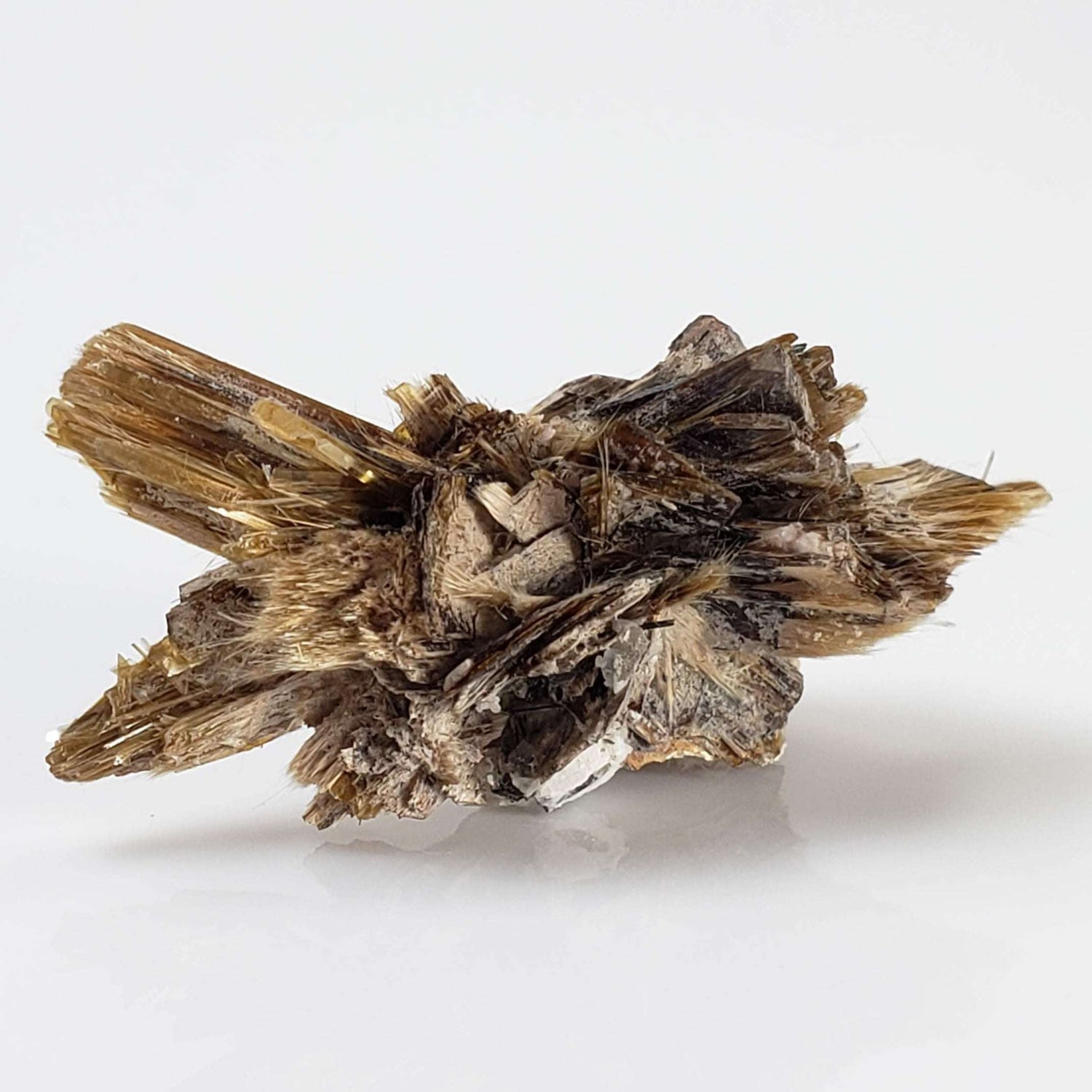
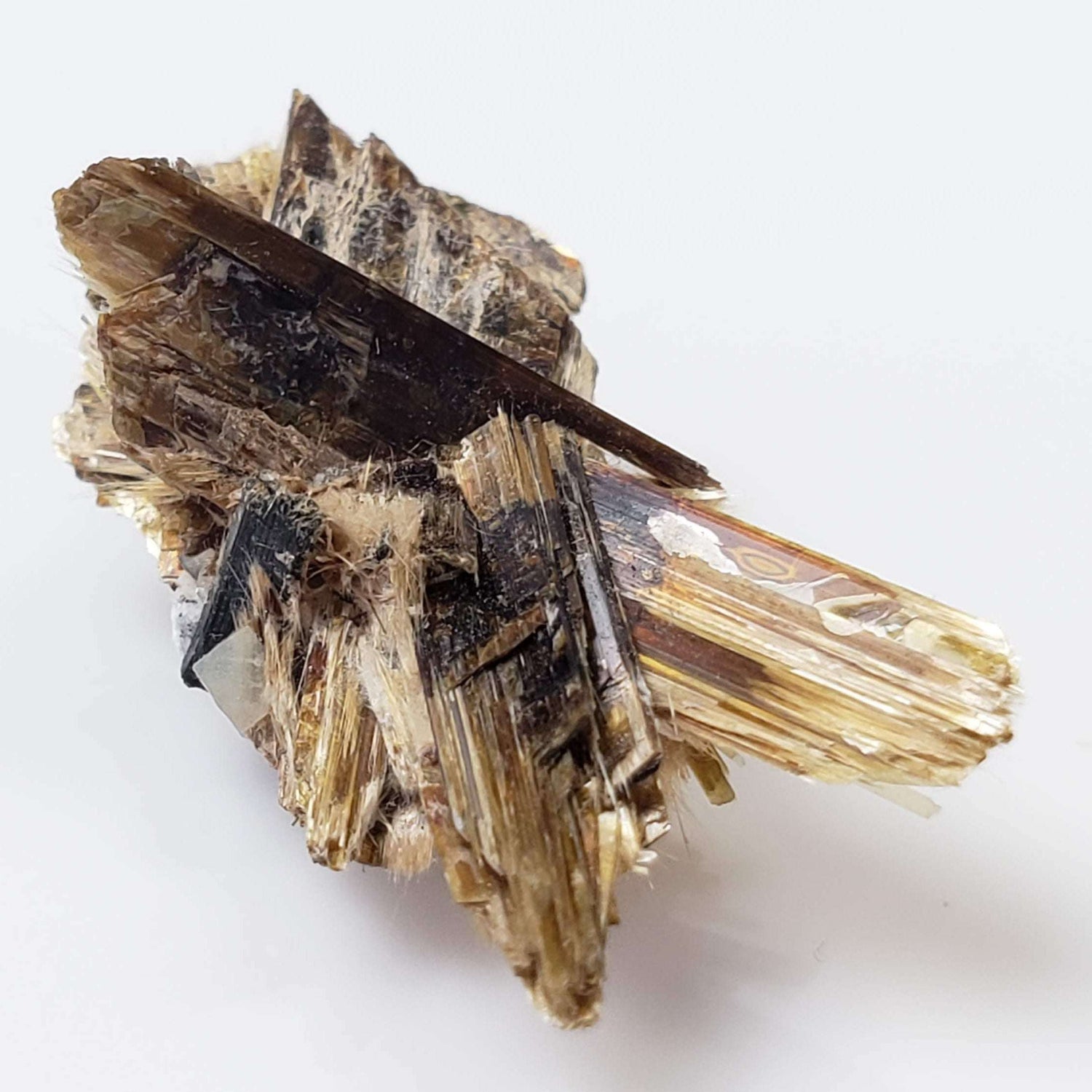
Kupletskite is a rare and complex titanium-bearing silicate mineral most famously found at Mont-Saint-Hilaire in Québec, Canada. It typically appears as tiny brown to reddish-brown crystals, often with a glassy or resinous luster. The crystals are usually slender and prismatic and may occur alongside other rare minerals that Mont-Saint-Hilaire is known for.
Due to its rarity and specific geological conditions needed for formation, kupletskite is primarily of interest to serious collectors and mineralogists, especially those focused on rare earth or alkaline complex minerals. It’s not commonly available in large or showy specimens, so even small, well-formed crystals are considered notable.
This beautiful and rare specimen of Kupletskite from world famous Mont-Saint-Hilaire, Québec, would be a great addition to any collection.
Name: Kupletskite
Specimen Size: Miniature-Sized
Dimensions: 30x15x15 mm / 1.2x0.6x0.6 inches
Weight: 1.63 grams / .057 oz
Origin: Mont Saint-Hilaire, Québec, Canada

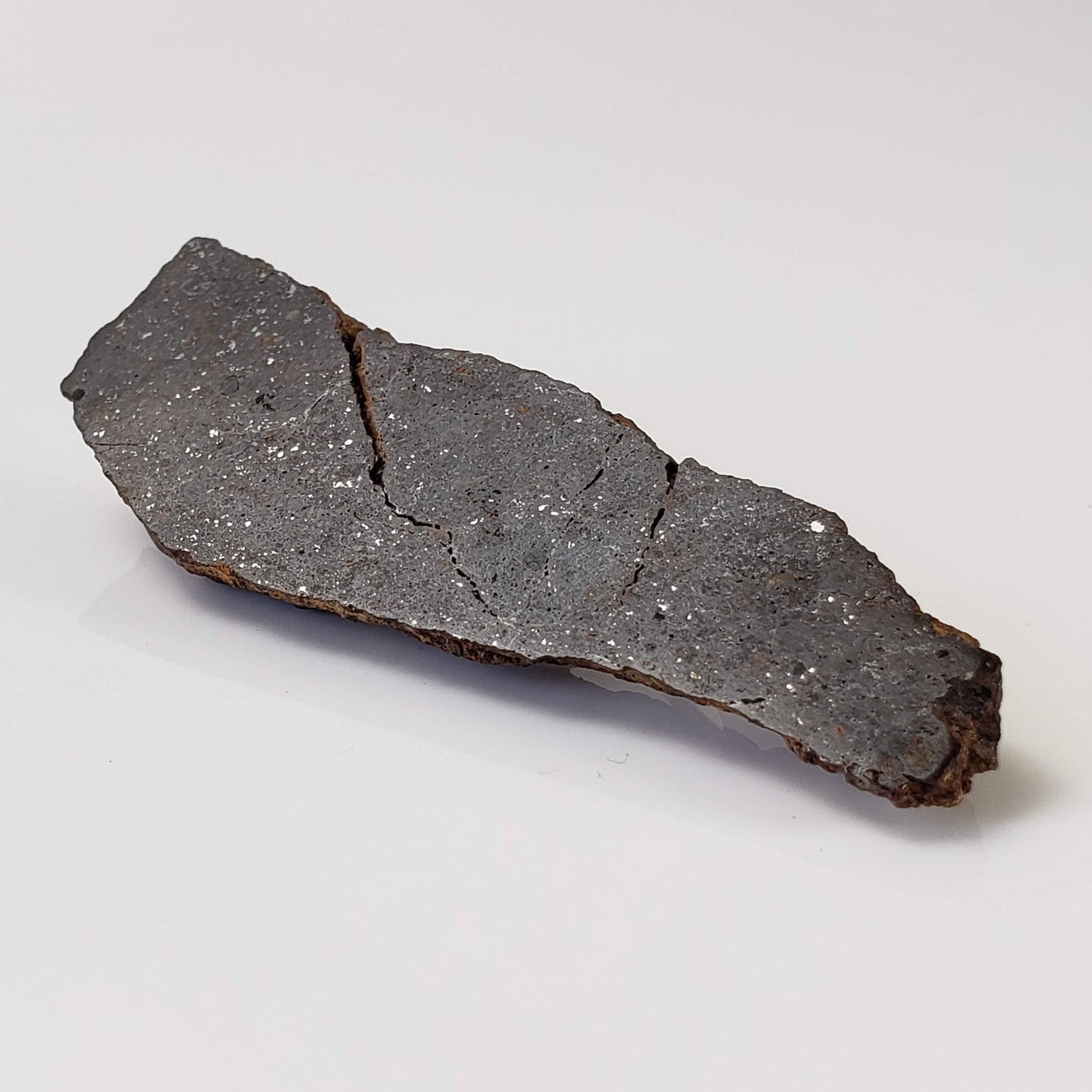
This is an incredible Korra Korrabes meteorite end cut of 18.1 grams, it measures 68x22x9 mm. This gorgeous classified meteorite is an H3 Chondrite and part of a 22 kg stone plus 11 smaller pieces totaling ~18 kg that were found November 1996 in a dry river bed by a farmer who was searching for Gibeon irons.
People searching with metal detectors recovered hundreds of additional buried, more weathered pieces within 50 m of the original material since 2000 November, bringing the total mass to ~120–130 kg. The largest specimen was used in a garden wall until August 2000.
This amazing piece was professionally prepared and would be a beautiful addition to any new or existing collection. Comes with a Canagem Collection specimen card.

Canagem is proud to be professional member of The International Gem Society(IGS) the world's top resource for gem professionals, enthusiasts, and industry content.