
📢 Notice to ALL Customers 📢
225 products
Sort by:
225 products
225 products


This is a must have 506.7-gram Impact Melt Breccia, also referred to as Suevite, coming from Zipplingen and the famous Ries crater Germany. Although not a meteorite, impactites are directly linked to them and their impacts and are probably going to be one of the rarest collection items you'll ever own. Impactite is a slag-like glassy object found on the surface of the earth, formed from rock melted by the impact of a meteorite.
The term impactite encompasses shock-metamorphosed target rocks, melts or suevites and mixtures of the two, as well as sedimentary rocks with significant impact-derived components and shocked mineral grains, tektites, anomalous geochemical signatures, etc. This impactite was formed 14.5 million years ago in Malmian or Jurassic limestone when a meteorite crashed into the earth making a ~10 miles wide crater named the Ries crater in Germany. This gorgeous end piece displays very well and shows typical inclusions of glass bomb as the dark material and crystalline fragments visible throughout the specimen showing the stages of shock metamorphism.
It is amazingly light considering its mass of 130x109x37 mm. Would be a beautiful addition to any new or existing collection. Comes with a Canagem Collection specimen card.


This is a 418 gram impact melt rock from the Gallejaur Crater, northern Sweden. Although not a meteorite, impactites are directly linked to them and their impacts and are probably going to be one of the rarest collection items you'll ever own. Impactite is a slag-like glassy object found on the surface of the earth, formed from rock melted by the impact of a meteorite.
The term impactite encompasses shock-metamorphosed target rocks, melts or suevites and mixtures of the two, as well as sedimentary rocks with significant impact-derived components and shocked mineral grains, tektites, anomalous geochemical signatures, etc.
Rocks, interpreted as impact generated lithologies, occur in a large area surrounding the Gallejaur magnetic structure at latitude 65°10/longitude 19°30 in northernmost Västerbotten County in northern Sweden. These rocks comprise a variety of different types of breccias: authigenic The Gallejaur structure is located in the central part of the Skellefte mining district in the Precambrian Baltic Shield. The ca. 1.9 Ga old Skellefte district is an extensively mineralized, mainly felsic, submarine volcanic belt. The rocks are described as impact-generated, have been called the Vargfors Group and overlie the Skellefte volcanics and sediments with an angular unconformity. The youngest rocks in the area, intruding the Skellefte district supracrustals and probably the impact-generated rock, are A/I-type granitoids belonging to the Revsund-Adak granite suite, which have been dated at ca. 1.80 to 1.78 Ga.
This great bookend slab displays very well. It has a mass of 94x84x48 mm. Would be a beautiful addition to any new or existing collection. Comes with a Canagem Collection specimen card.


NWA 1879 Meteorite | 4.16 Gr | Part Slice | Found 2003 | Stony Iron Mesosiderite | Morocco
This is a superb looking Stony-iron or Mesosiderite class C classified meteorite named Northwest Africa NWA 1879 . This specimen is a part slice weighing 4.16 grams with dimensions of 22x17x4 mm.
This is a quote from Mr Hupé : "This is the NWA 1879, a rare C type Mesosiderite found in 2003 in Northwest Africa. This stony-iron type meteorite is beautiful because it is very fresh, has crystal clusters scattered throughout its matrix and has a great deal of elemental metal. NWA 1879 weighed 1,624 grams before preparation. About 31% was lost during cutting and polishing. There are several pairings to this meteorite in existence so the Total Known Weight (TKW) is unknown.
No expense was spared in the preparation of this meteorite. It was cut using a diamond blade in oil so that the silicates would not be plucked. When cutting this way the blade had to be redressed constantly to prevent the iron from loading up the cutting medium. It was coarse polished using a diamond lap, which needed the same treatment as the blade. It was then soaked in pure ethyl alcohol for days to extract the oil introduced during the cutting and polishing phases. A final dry polish was applied by hand, a very time consuming process. The final step was to clean it again with pure ethyl alcohol and dry it under a heat lamp providing great looking and stable specimens. This specimen comes with an identification card from The Hupé Collection."
This part slice displays extremely well and would be a beautiful addition to any new or existing collection. Comes protected in a gem jar with both a Canagem Collection and a The Hupé Collection specimen card.
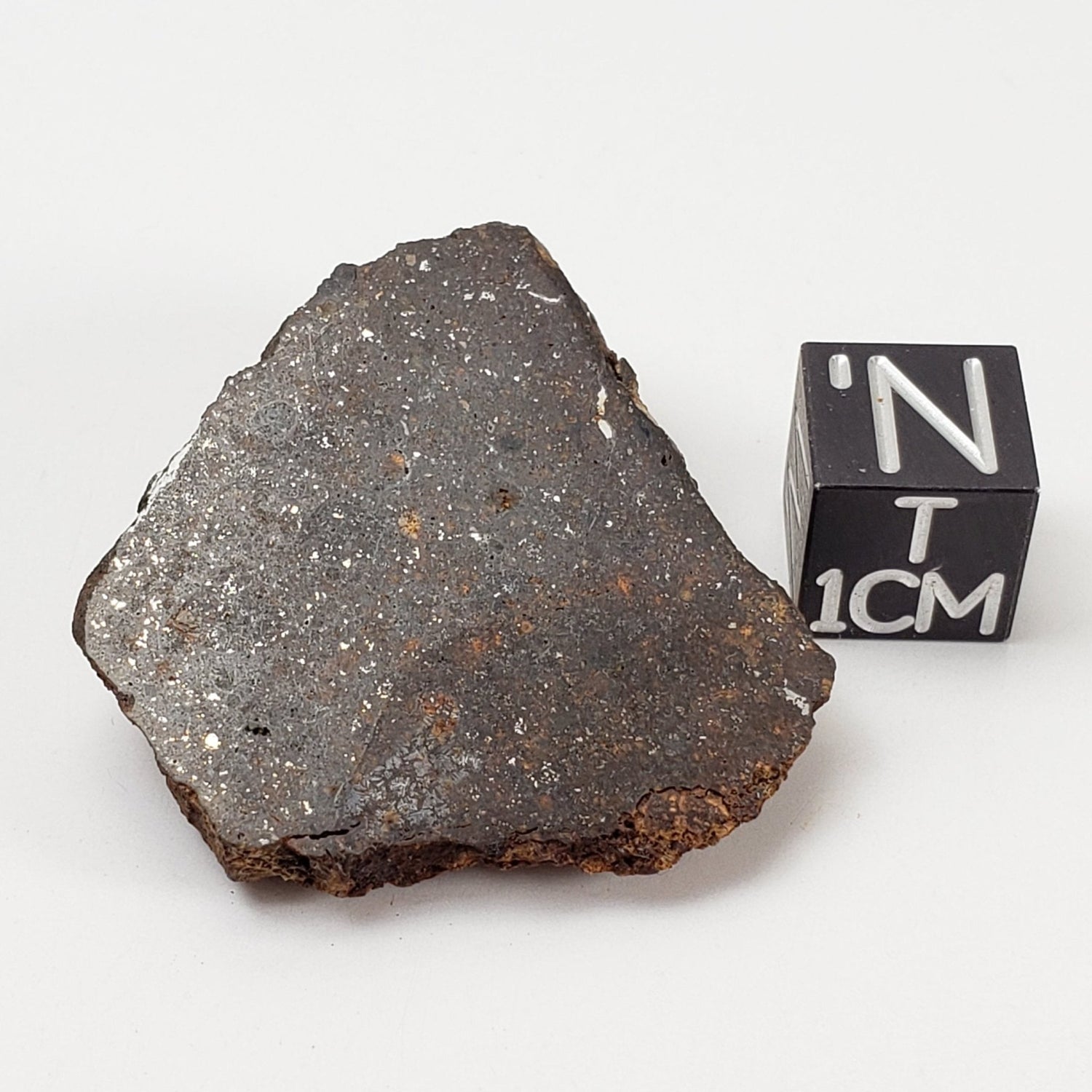
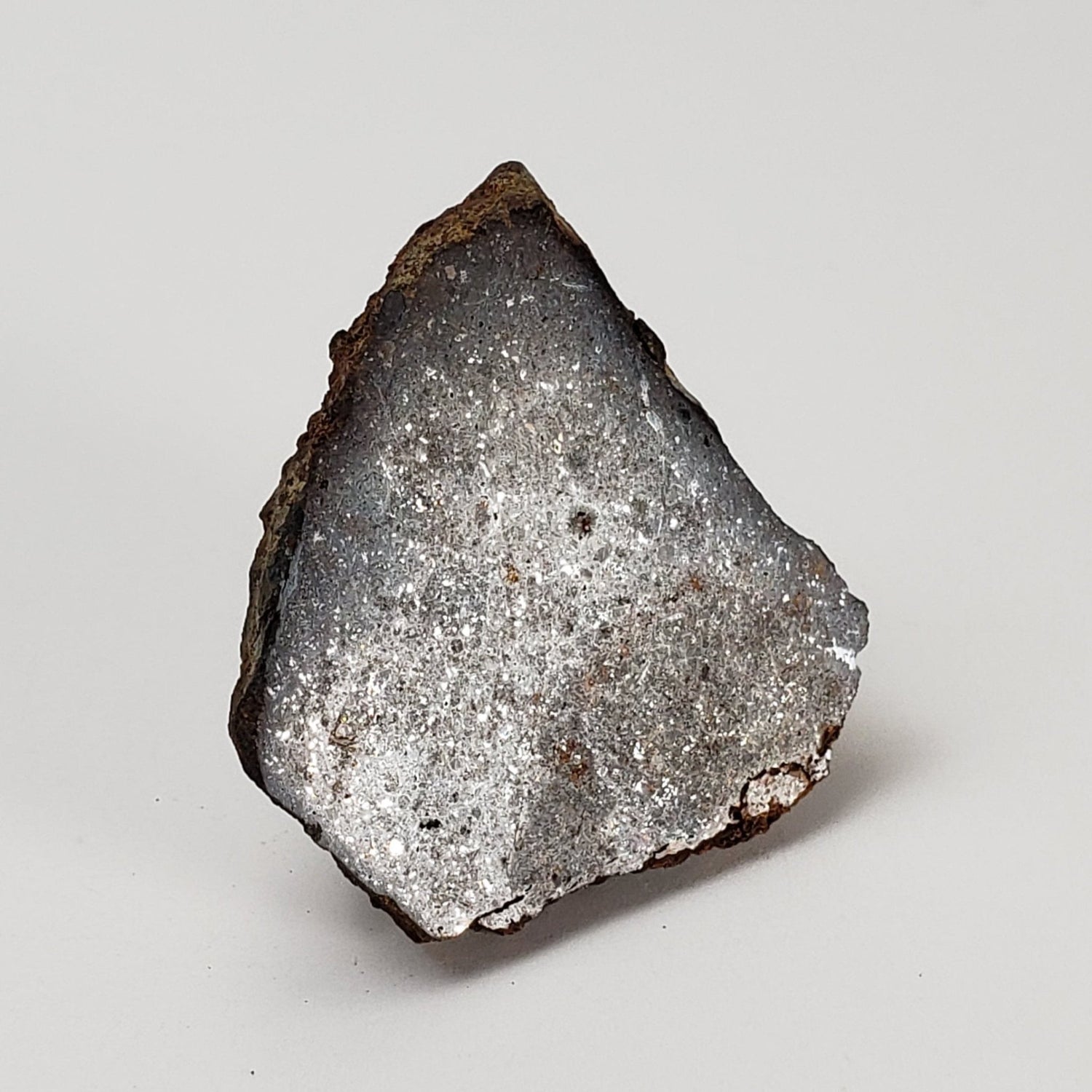
This is an incredible Korra Korrabes meteorite end cut of 15 grams, it measures 33x33x10 mm. This gorgeous classified meteorite is an H3 Chondrite and part of a 22 kg stone plus 11 smaller pieces totaling ~18 kg that were found November 1996 in a dry river bed by a farmer who was searching for Gibeon irons.
People searching with metal detectors recovered hundreds of additional buried, more weathered pieces within 50 m of the original material since 2000 November, bringing the total mass to ~120–130 kg. The largest specimen was used in a garden wall until August 2000.
This amazing piece was professionally prepared and would be a beautiful addition to any new or existing collection. Comes with a Canagem Collection specimen card.

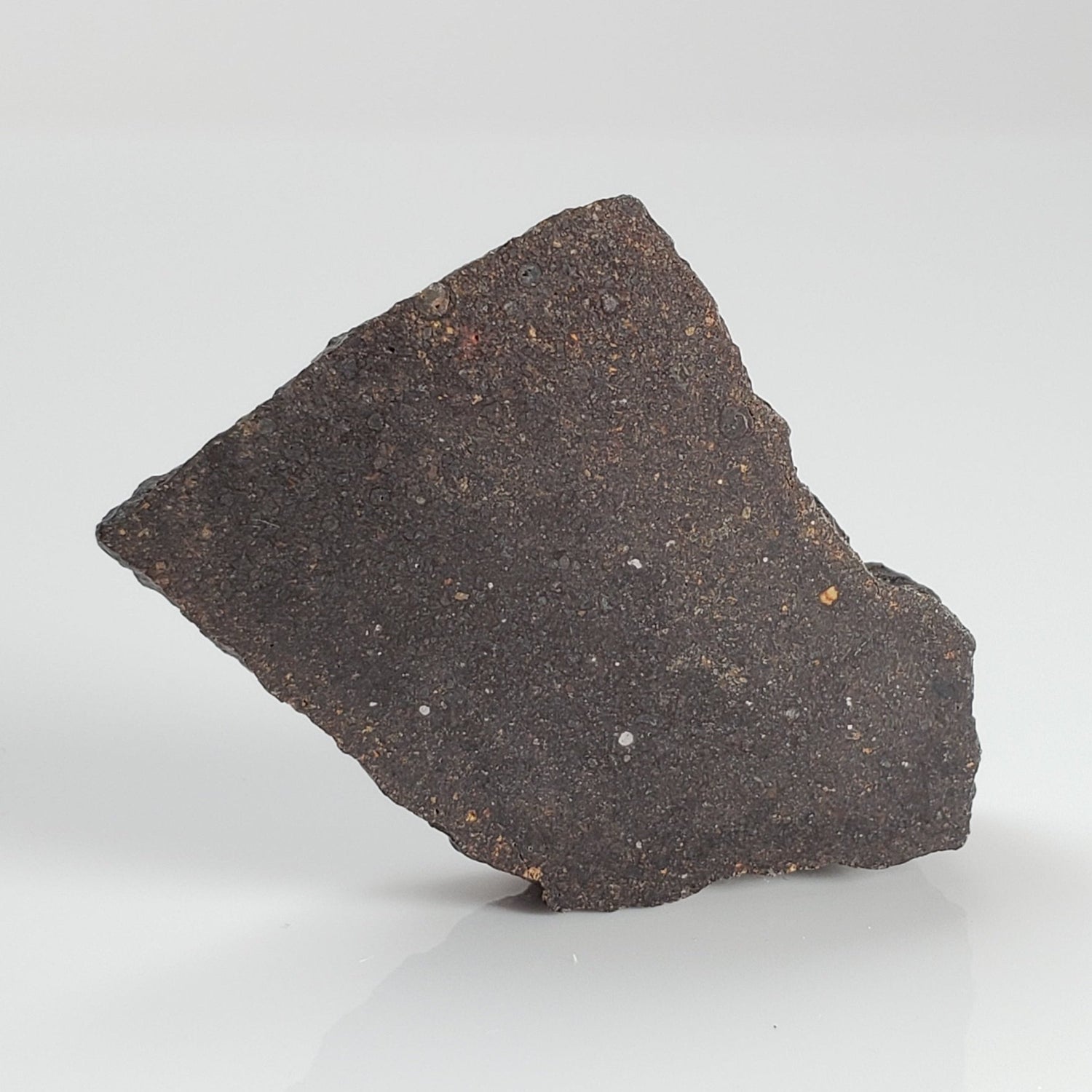
NWA 4441 Meteorite | 7.7 gr | End cut | LOW TKW 124 gr | Rare CO3.2 Carbonaceous | Morocco
This is a gorgeous end cut of the NWA 4441 Carbonaceous chondrites type 3.2 meteorite found in Sahara Desert in 2004. This excellent cut specimen has all the qualities you're looking for in a rare Carbonaceous specimen.
This specimen weighs in at 7.7 grams with dimensions of 28x22x7 mm. The total known weight of this meteorite is a minuscule 124 grams.
This piece displays extremely well and is a very desirable type. Would be a beautiful addition to any new or existing collection. Comes with a Greg Hupé Collection and a Canagem Collection specimen card.
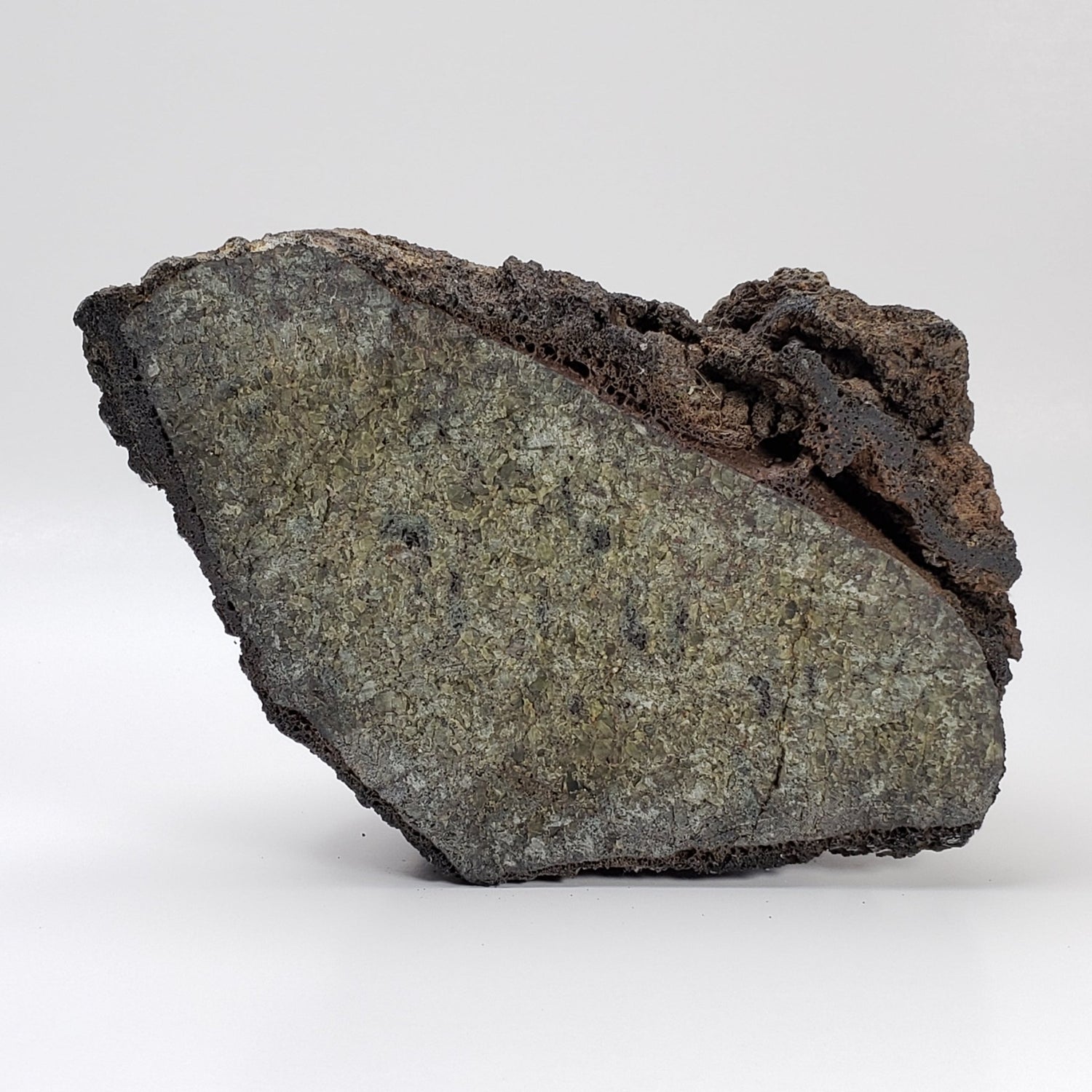
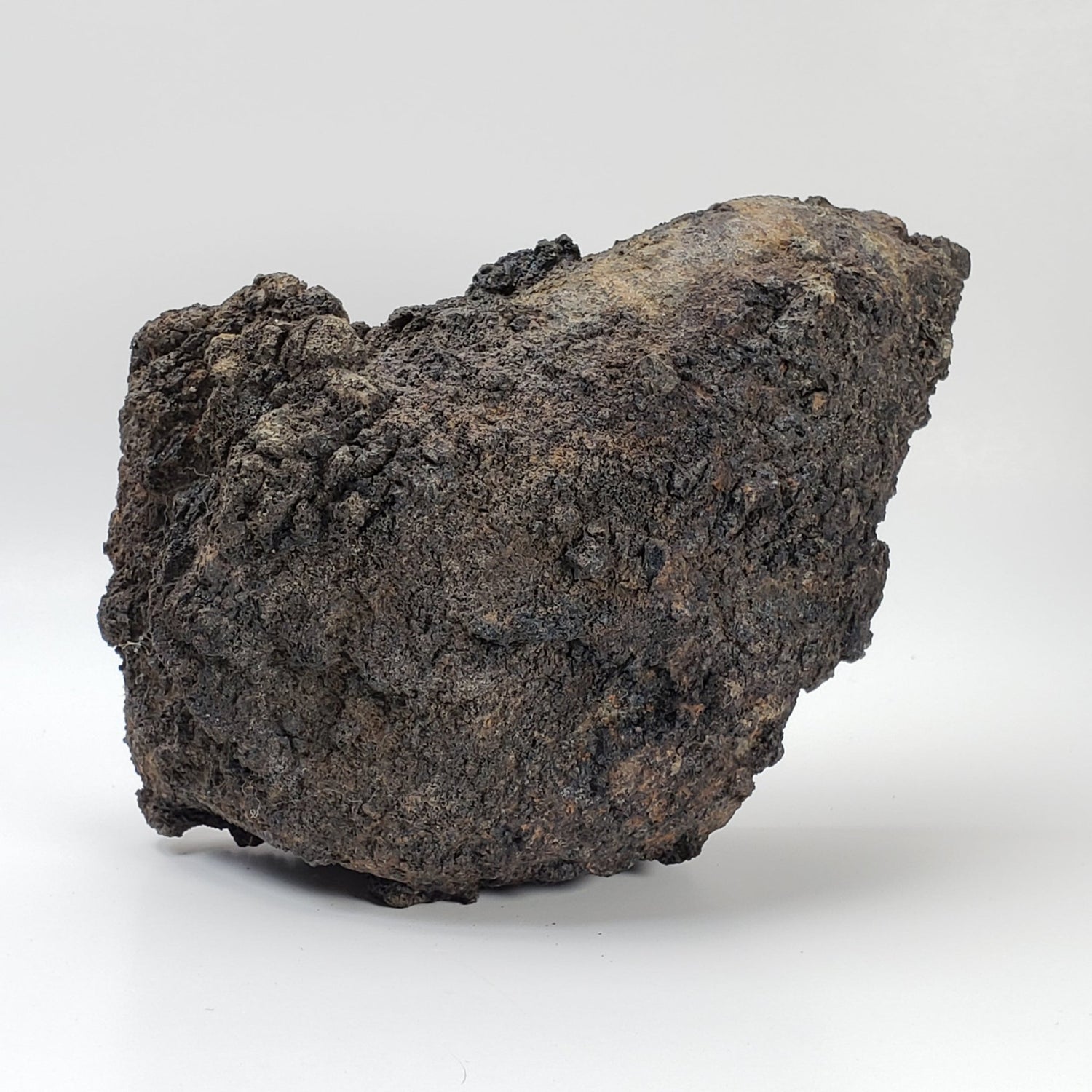
Volcanic bombs are large clots of volcanic lava rock that are ejected from a volcano during an explosive eruption. They can vary in size, and their shapes are often streamlined due to their molten nature as they are thrown through the air. When these volcanic lava rocks contain olivine crystals, they are referred to as olivine volcanic bombs.
Mount Shadwell, a dormant volcano, was formed 25,000 years ago and is believed to have last erupted about 5,000 years ago. The town of Mortlake, which is situated at the foot of the volcano, is the self-proclaimed olivine capital of Australia. This is where large ejected rocks from Mt Shadwell, called volcanic bombs, are found.
This huge museum piece has been cut to show the green olivine crystals which are showcased beautifully against the surrounding black lava crust.
Would be a beautiful addition to any new or existing collection. Comes with a Canagem Collection specimen card.
Name: Olivine Crystal Bomb
Specimen Size: Large Cabinet-Sized
Dimensions: 173x121x61 mm / 6.8x4.8x2.4 Inches
Weight: 1.45 Kg / 3 lbs 3 Ounces
Details: Volcanic activity Mortlake, Victoria, Australia

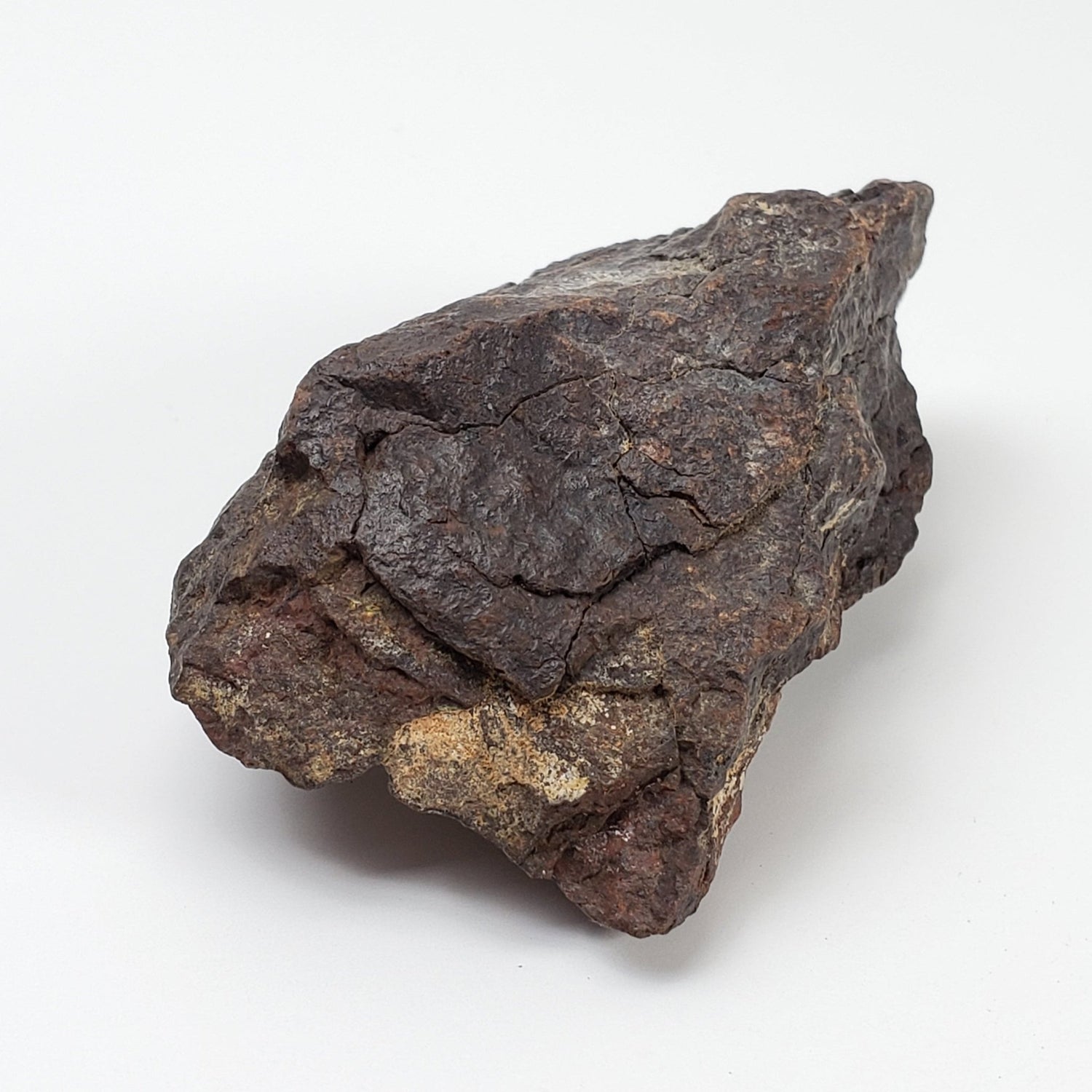
This is a superb Dhofar 221 classified meteorite weighing 117 grams and measuring 73x45x26 mm. This L5 classified meteorite was found in Zufar, Oman in 2000; it has a shock stage of 3 and weathering grade of 3. The total weight of the 100's of pieces recovered is recorded as a low 3.54 kg.
This piece displays extremely well because of its beautiful crust, superb shape and size. Would be a beautiful addition to any new or existing collection. Comes with a Canagem Collection specimen card.
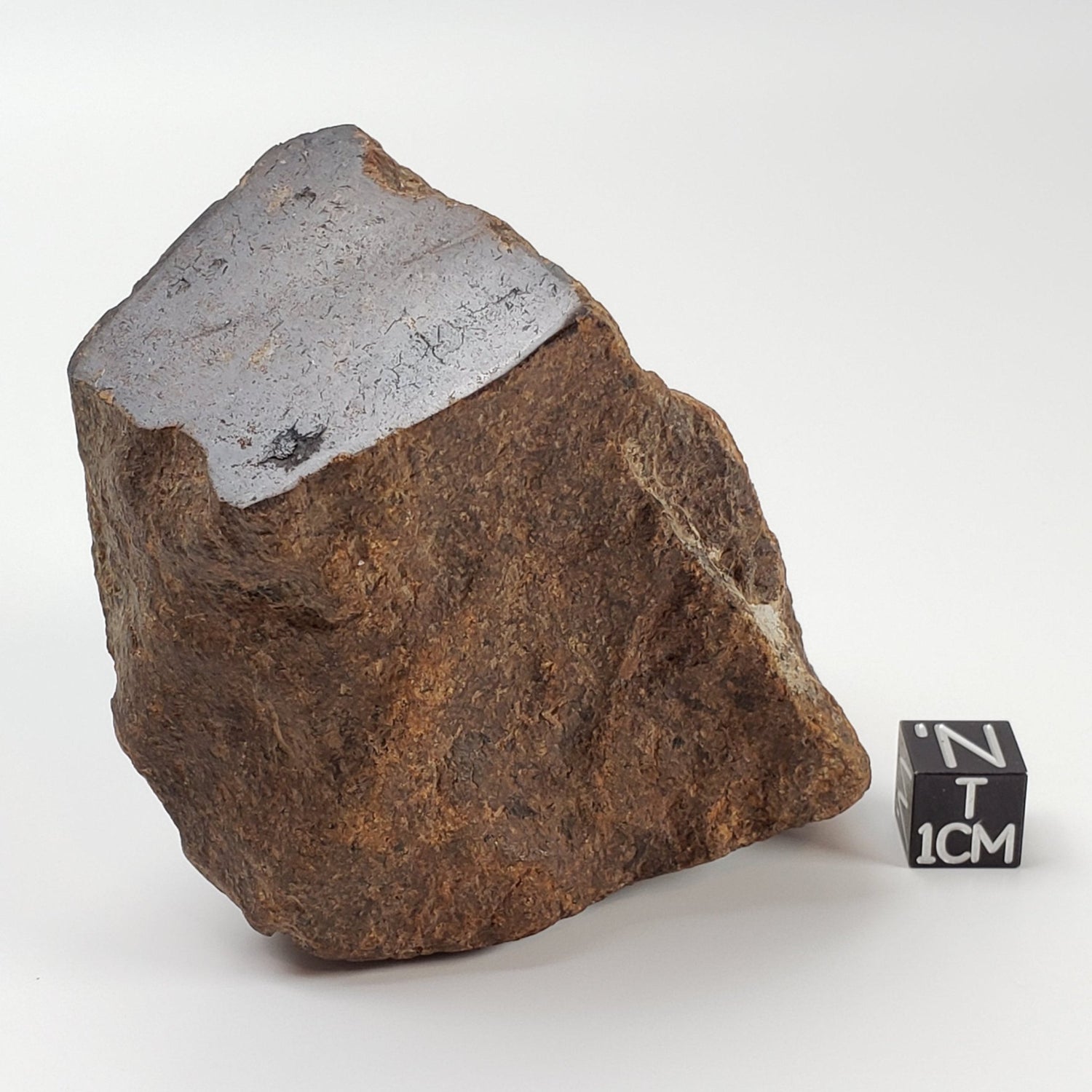
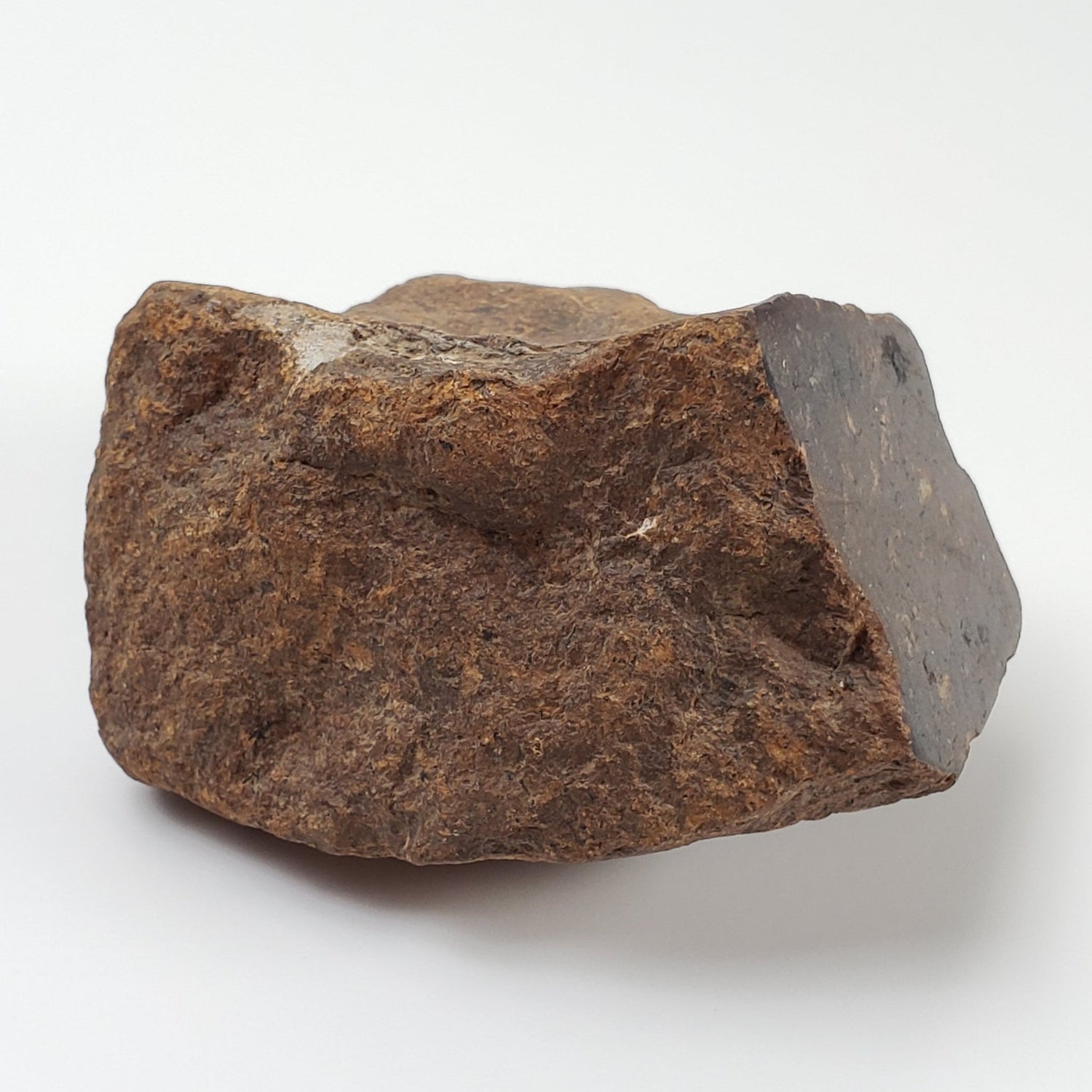
Here we have for you a nice looking individual cut fragment of a Sahara Desert NWA unclassified meteorite weighing 298.8 grams. Its dimensions are 70x65x45mm. This never classified North West Africa stone was found in the Sahara desert around 2000.
It's a good quality individual cut fragment NWA meteorite specimen. Some weathering shows the meteorite's time spent aging in the desert. Would be a beautiful addition to any new or existing collection. Comes with a Canagem Collection specimen card.
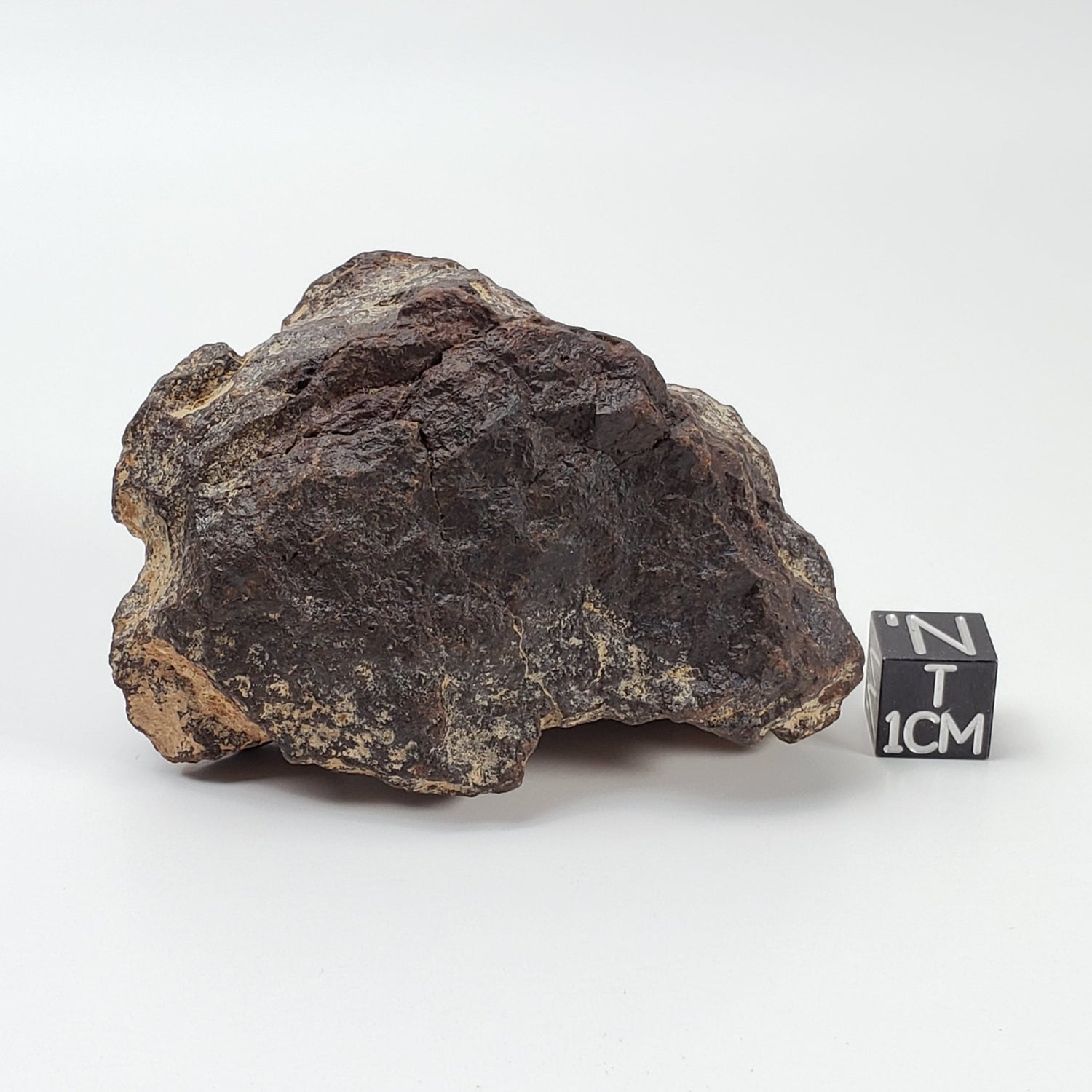
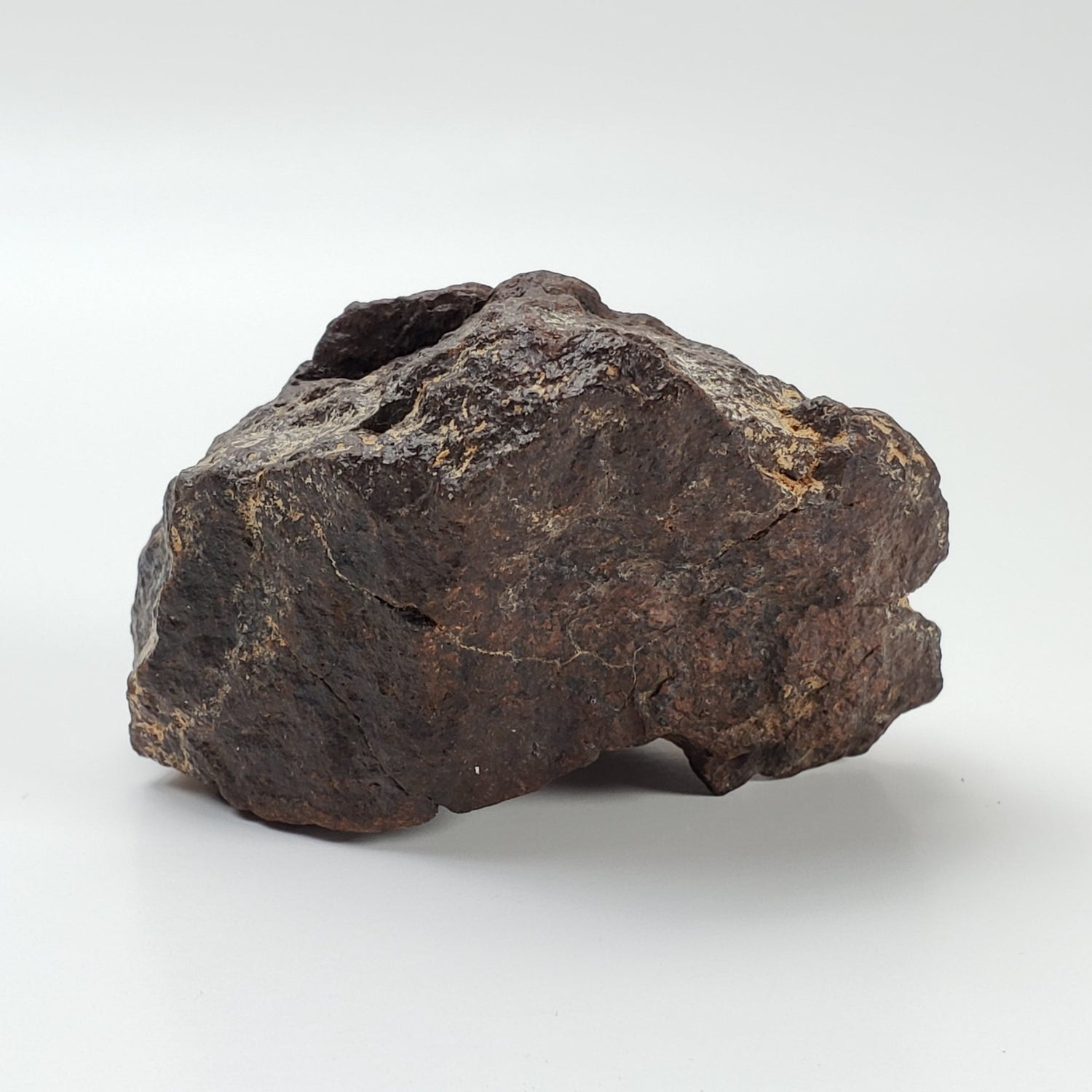
This is a superb Dhofar 221 classified meteorite weighing 142.8 grams and measuring 66x50x38 mm. This L5 classified meteorite was found in Zufar, Oman in 2000; it has a shock stage of 3 and weathering grade of 3. The total weight of the 100's of pieces recovered is recorded as a low 3.54 kg.
This piece displays extremely well because of its beautiful crust, superb shape and size. Would be a beautiful addition to any new or existing collection. Comes with a Canagem Collection specimen card.


This large Calcite sphere which comes from a premier supplier of superb calcite. We have included photos showing the sphere lit from various angles in order to show its incredible beauty. Will include wood base.
Name: Calcite Sphere
Dimensions: 110 mm / 4.25 inches
Weight: 1.9 Kg / 4 lbs 4 Ounces
Origin: China


This is a very large and beautiful Labradorite sphere, showing fantastic labradorescence. Labradorite is an unusual mineral. It can display a beautiful iridescent play of colors, caused by internal fractures in the mineral that reflect light back and forth, dispersing it into different colors. This effect, known as labradorescence, gives Labradorite its appeal and fame.
Product Type: Labradorite Sphere
Dimensions: 150 mm / 6 inches
Weight: 4.5 Kg / 10 lbs
Origin: Madagascar
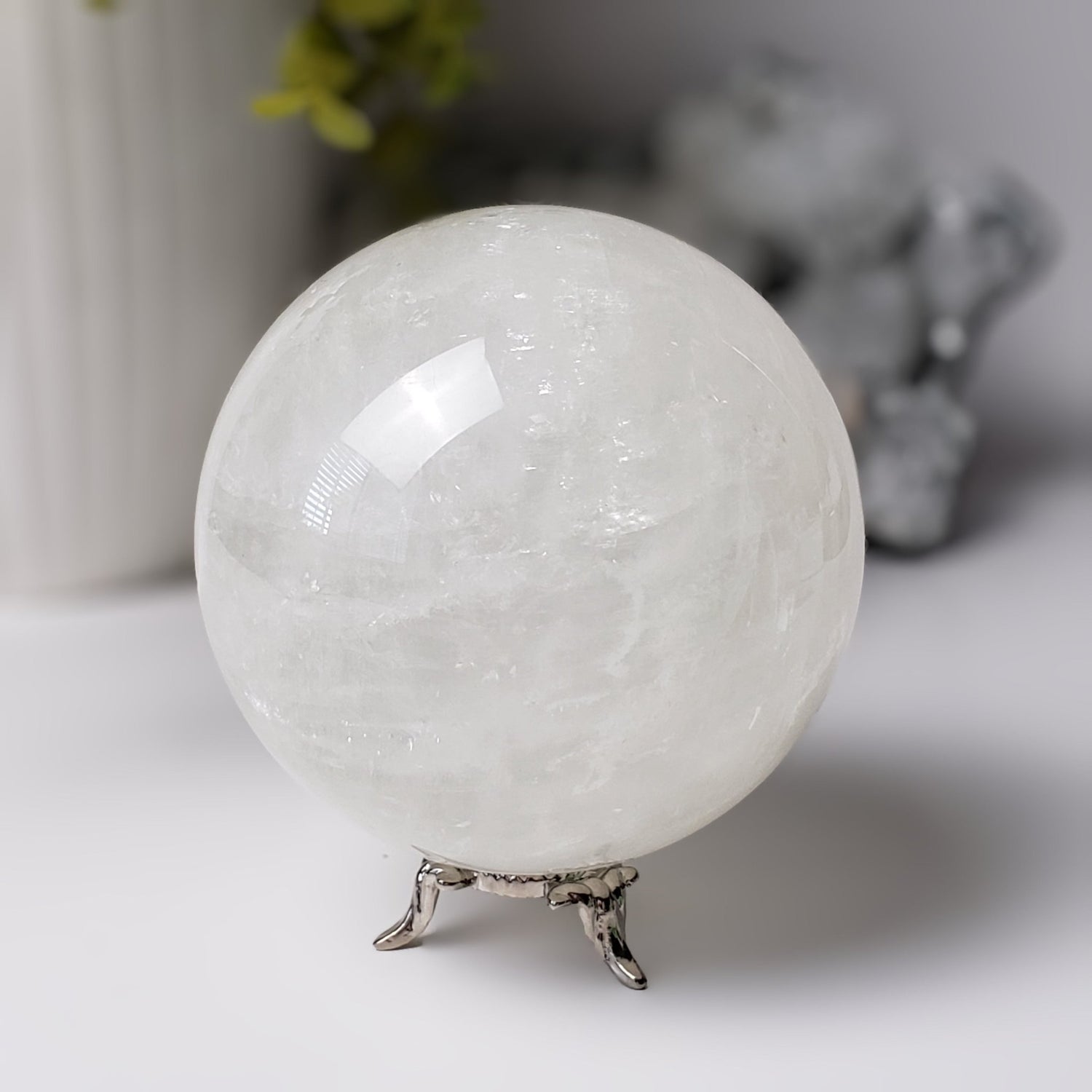
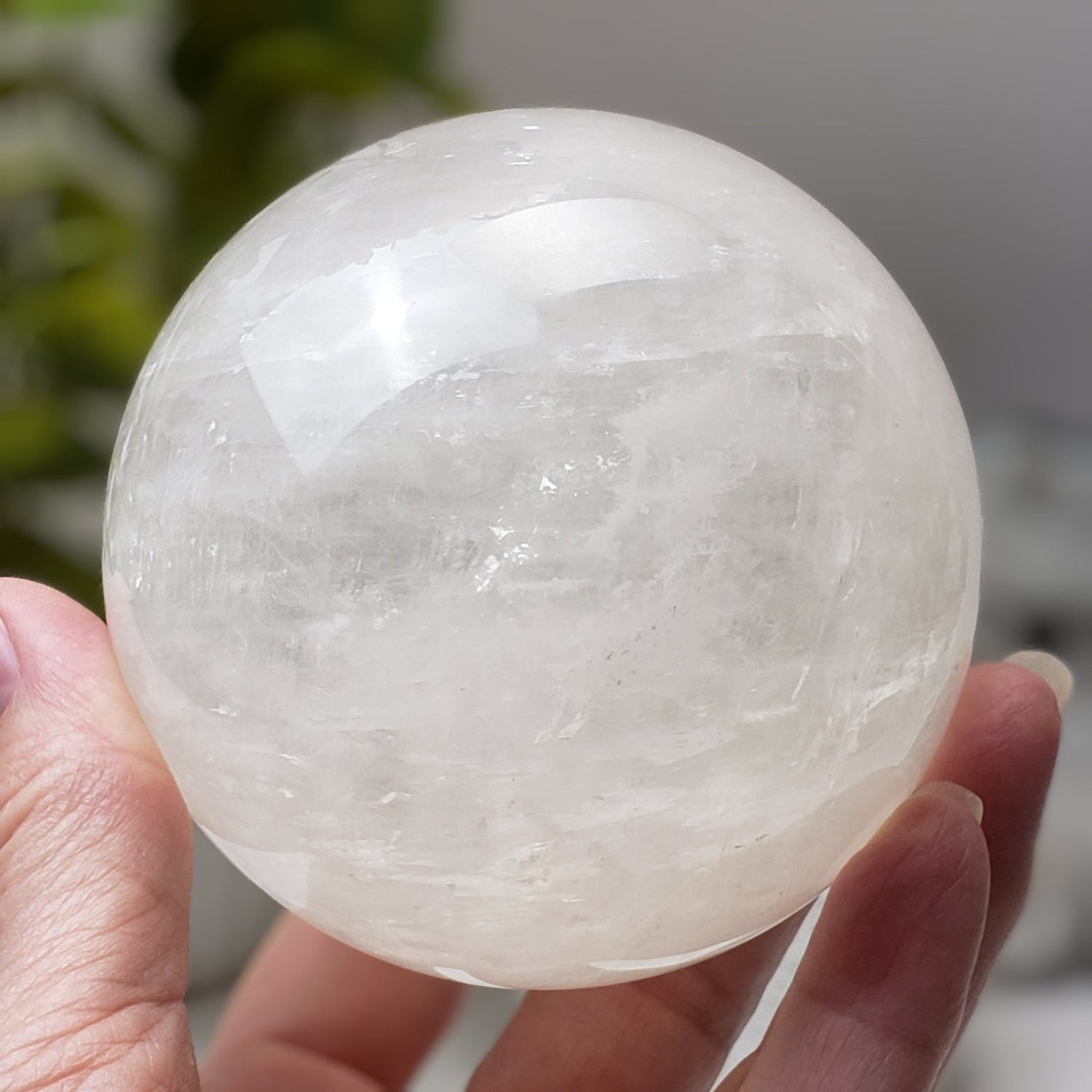
This is large Calcite sphere which comes from a premier supplier of superb calcite. It is a beautiful bright snowy white.
Name: Calcite Sphere
Dimensions: 89 mm / 3.5 inches
Weight: 992 Grams / 2 lbs 3 Ounces
Origin: China


These are fragments of the Abee meteorite (MB 8) that fell in Alberta, Canada at 11:05 p.m. on June 9th 1952. It took five days to find it in a wheat field belonging to Mr Harry Buryn. It is located in the community of Abee, Alberta, Canada in Thorhild County, along the Canadian National Railway and Highway 63, 16 km north of Thorhild and 49 km from Boyle.
This rare and highly collectable EH4 Enstatite chondrite is 1 of only 21 approved meteorites classified as such, 1 of 3 being an observed fall and only 1 of 5 not found in Antarctica. The total Mass is registered at 107 Kilograms in one stone recovered from a 6 ft (1.8 m) deep crater. This is a great opportunity to acquire fragments that were used for testing in laboratory weighing 508 milligrams.
This hard to acquire rare specimen would make an amazing addition to any new or existing collection. Comes with a Dr. Martin Horejsi Collection of Meteorites and a Canagem Collection specimen card and is displayed and protected in a pill case.


This is a superb tumbled individual Tsarev meteorite weighing 38.5 grams. Its dimensions are 45x27x25 mm. Twenty-eight specimens of this L5 classified meteorite were found in fields. The largest mass weighs 284 kg, the smallest 761 gr with a total weight of 1.23 Tons. The greatest distance between the find sites was 6.0 km.
In 1968, amidst a global surge in conflicts, a remarkable discovery was made in a small village in Volgograd Oblast. This region, known as the primary site of the Battle of Stalingrad—one of the largest and bloodiest battles in history—yielded an extraordinary find in the quiet fields near the rural village of Tsarev.
The Tsarev meteorite, named after the Russian word for czar, is a stone meteorite responsible for one of the largest meteorite showers in Russian history. This meteorite shower occurred on December 6, 1922, but the stones were not discovered until 1968 and only recognized in 1979. The Tsarev meteorite's mineral composition matches that of ordinary chondrites, including olivine, orthopyroxene, clinopyroxene, maskelynite, calcium phosphates, nickel-iron, troilite, chromite, ilmenite, and rutile.
Academic analysis of the Tsarev meteorite reveals significant features: large grains of nickel-iron, light grey areas with well-preserved chondritic texture, and dark areas containing a matrix with olivine grains and remnants of chondrules.
This specimen would be a beautiful addition to any new or existing collection. Will come with a Canagem specimen card.


This large Smoky Quartz sphere from Brazil. We have included photos showing the sphere lit from various angles in order to show its incredible beauty.
Name: Smoky Quartz sphere
Dimensions: 101 mm / 4.0"
Weight: 1270 grams / 2 lbs 12 oz
Origin: Brazil

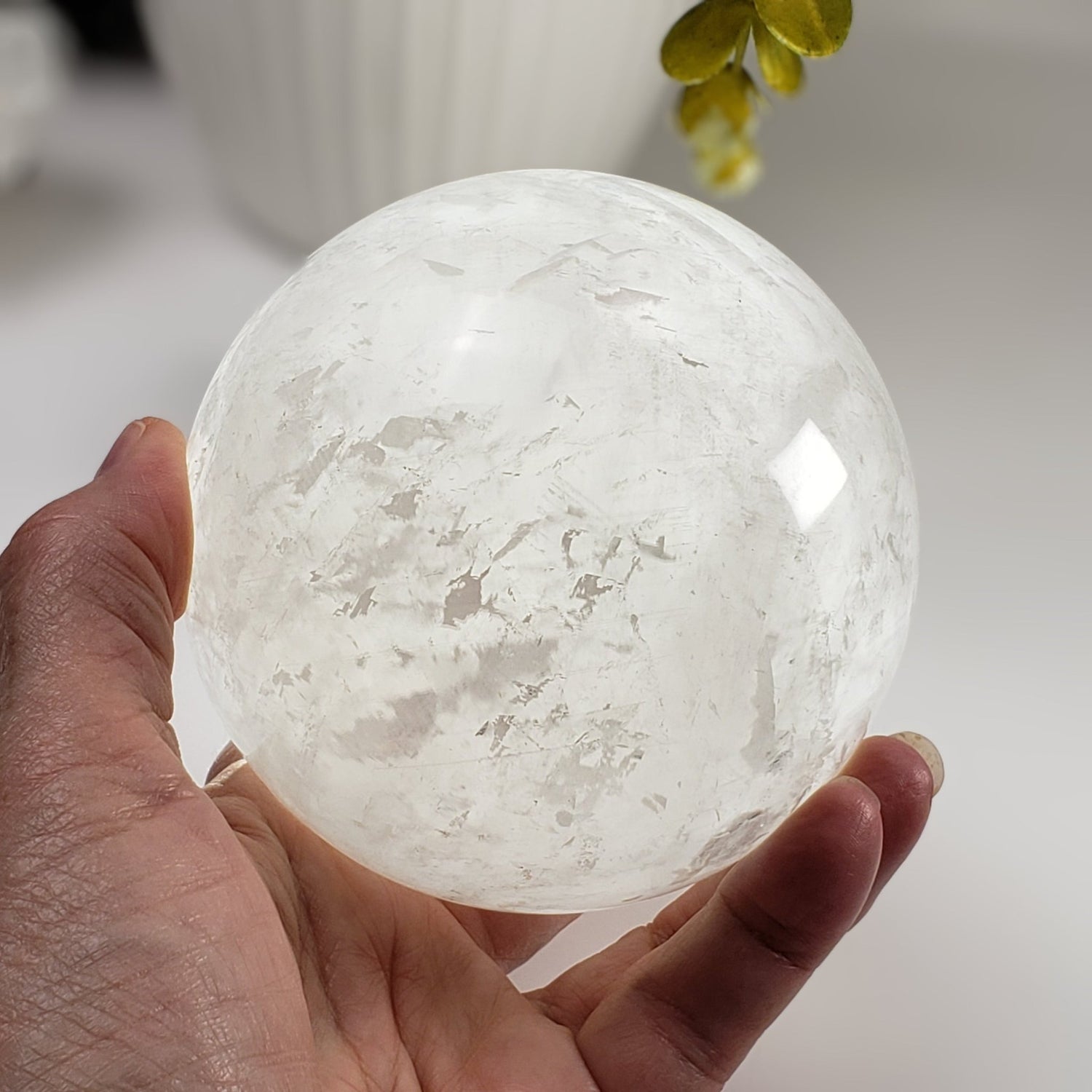
This is a large Calcite sphere which comes from a premier supplier of superb calcite. We have included photos showing the sphere lit from various angles in order to show its incredible beauty.
Name: Calcite Sphere
Dimensions: 98 mm / 3.8 inches
Weight: 1332 Grams / 2 lbs 15 Ounces
Origin: China

Canagem is proud to be professional member of The International Gem Society(IGS) the world's top resource for gem professionals, enthusiasts, and industry content.