


1573 products
Sort by:
1573 products
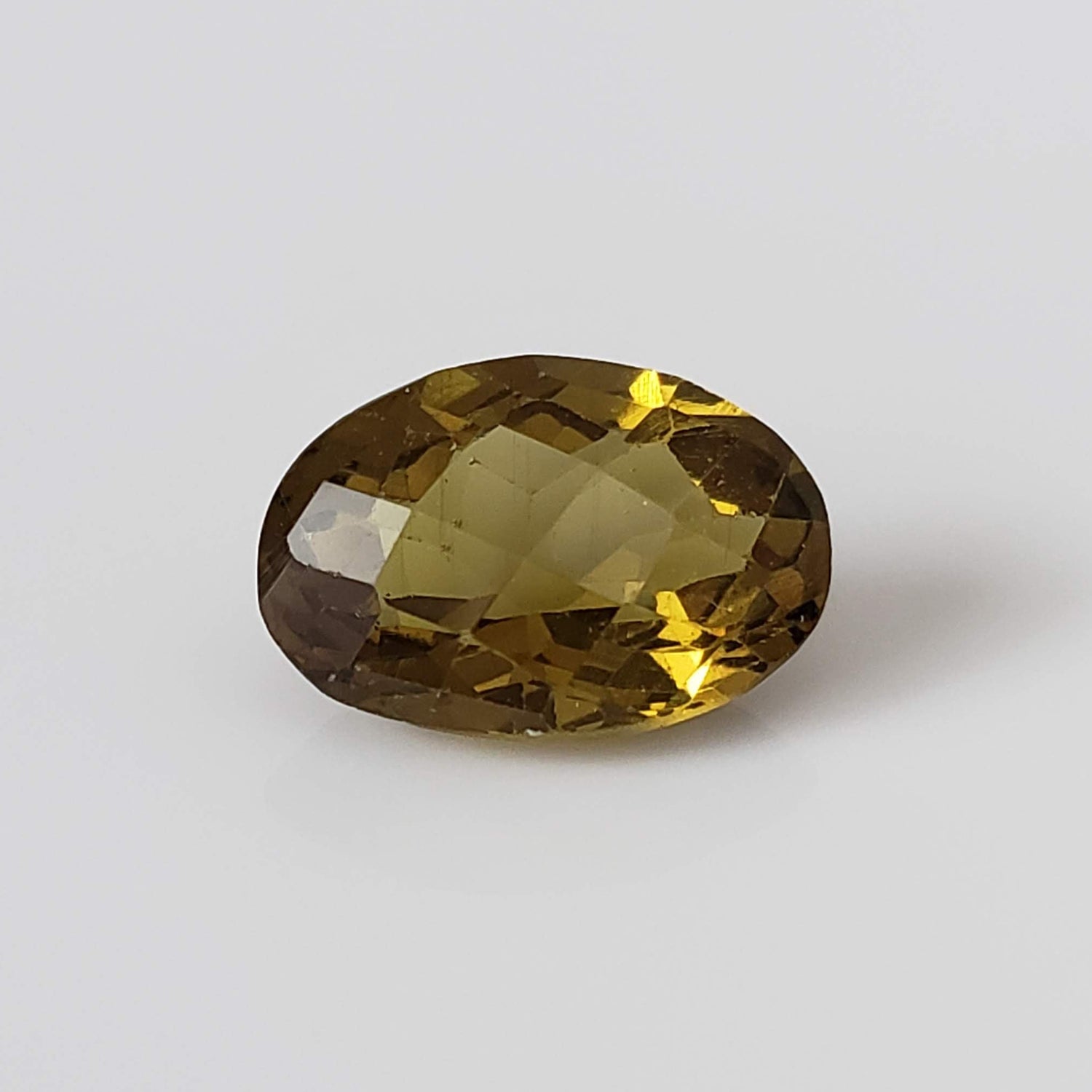
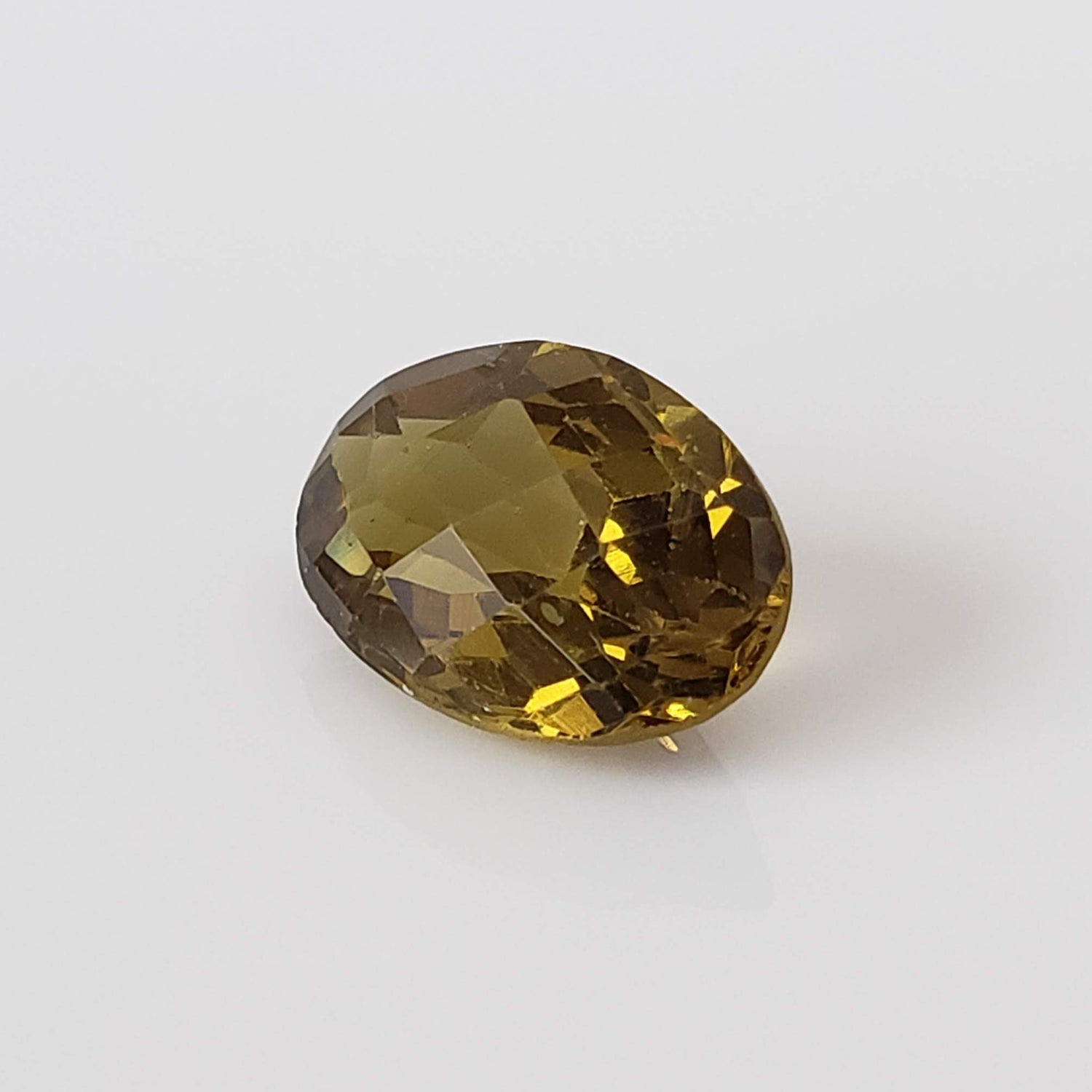
Product Type: Apatite (Olive)
Approx Weight (per piece): 2.9ct
Size: 11x7.5mm
Shape: Oval Cut
Color: Honey Green
Clarity: Clean
Origin: Africa
Apatite is a group of phosphate minerals that are commonly found in igneous, metamorphic, and sedimentary rocks. Apatite is named after the Greek word "apate," which means deceit, as it can be easily confused with other minerals due to its wide range of colors and forms. It can occur in various colors, including green, blue, yellow, brown, and violet.
Apatite is believed to possess healing properties and is associated with creativity, self-expression, and personal growth. It is thought to enhance communication skills, stimulate intellect, and promote clarity of thought.


Pyrite from Bolivia is known for forming beautiful, well-shaped crystals, often appearing as sharp cubes, pyritohedrons (12-sided shapes), or even complex, stepped growth patterns. Bolivian pyrite tends to have a bright, brassy gold color with a good metallic luster, and it’s often found in association with other minerals like quartz or galena.
Much of the pyrite from Bolivia comes from mining regions such as Potosí and Oruro, areas famous for their rich mineral deposits. While pyrite is common around the world, Bolivian specimens are valued for their attractive crystal habits, clean formations, and the quality of the material.
Pyrite is known as a stone of protection, abundance, and confidence. It is believed to shield against negative energy and promote mental clarity and willpower.
This top Bolivian specimen is in very good condition. Would be a beautiful addition to any new or existing collection.
Name: Pyrite Cluster
Specimen Size: Cabinet-Sized
Dimensions: 60x48x43 mm / 2.4x1.9x1.7 inches
Weight: 153 Grams / 5.4 oz
Origin: Canutillos Mine, Machacamarca-Colavi District, Cornelio Saavedra Province, Potosi Department, Bolivia
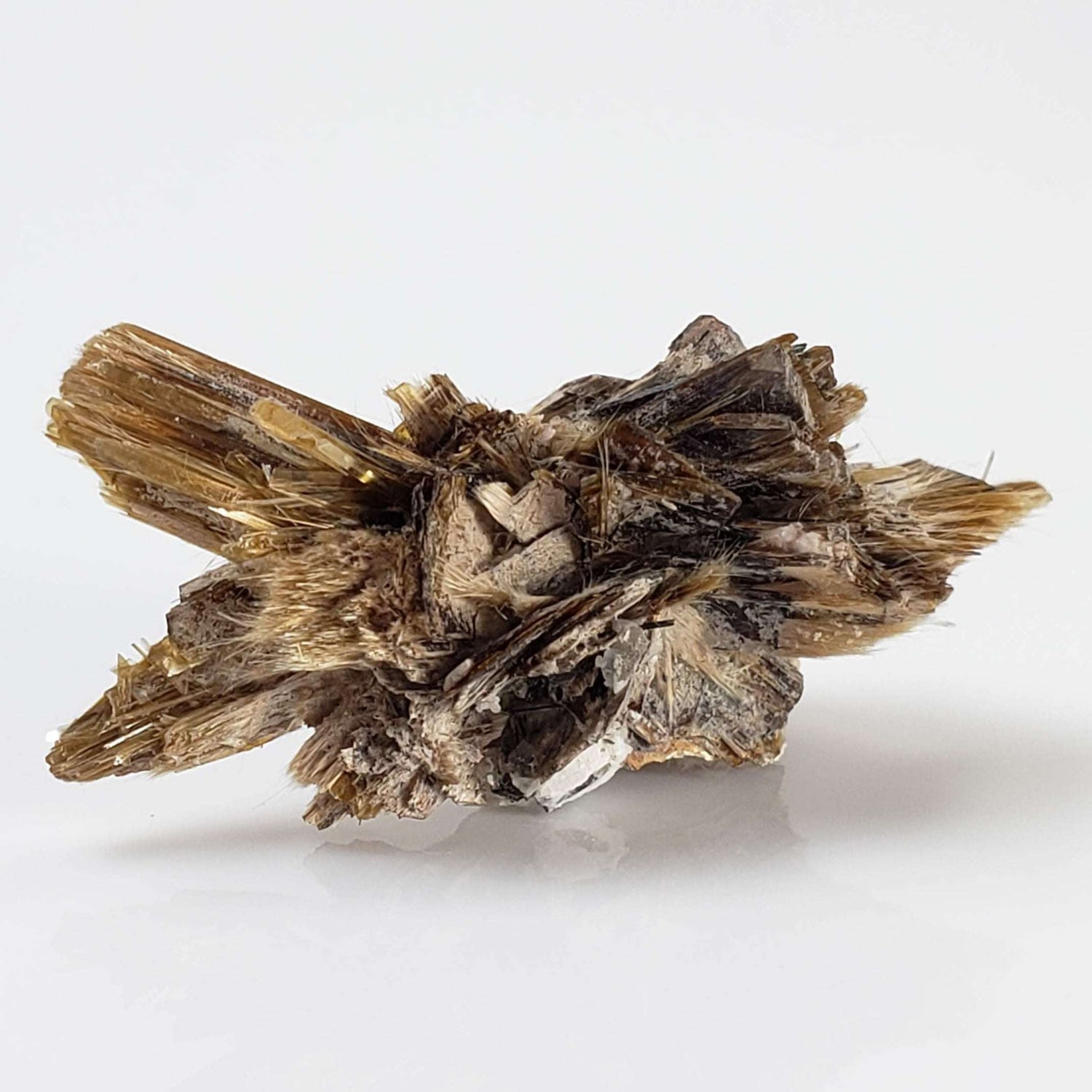
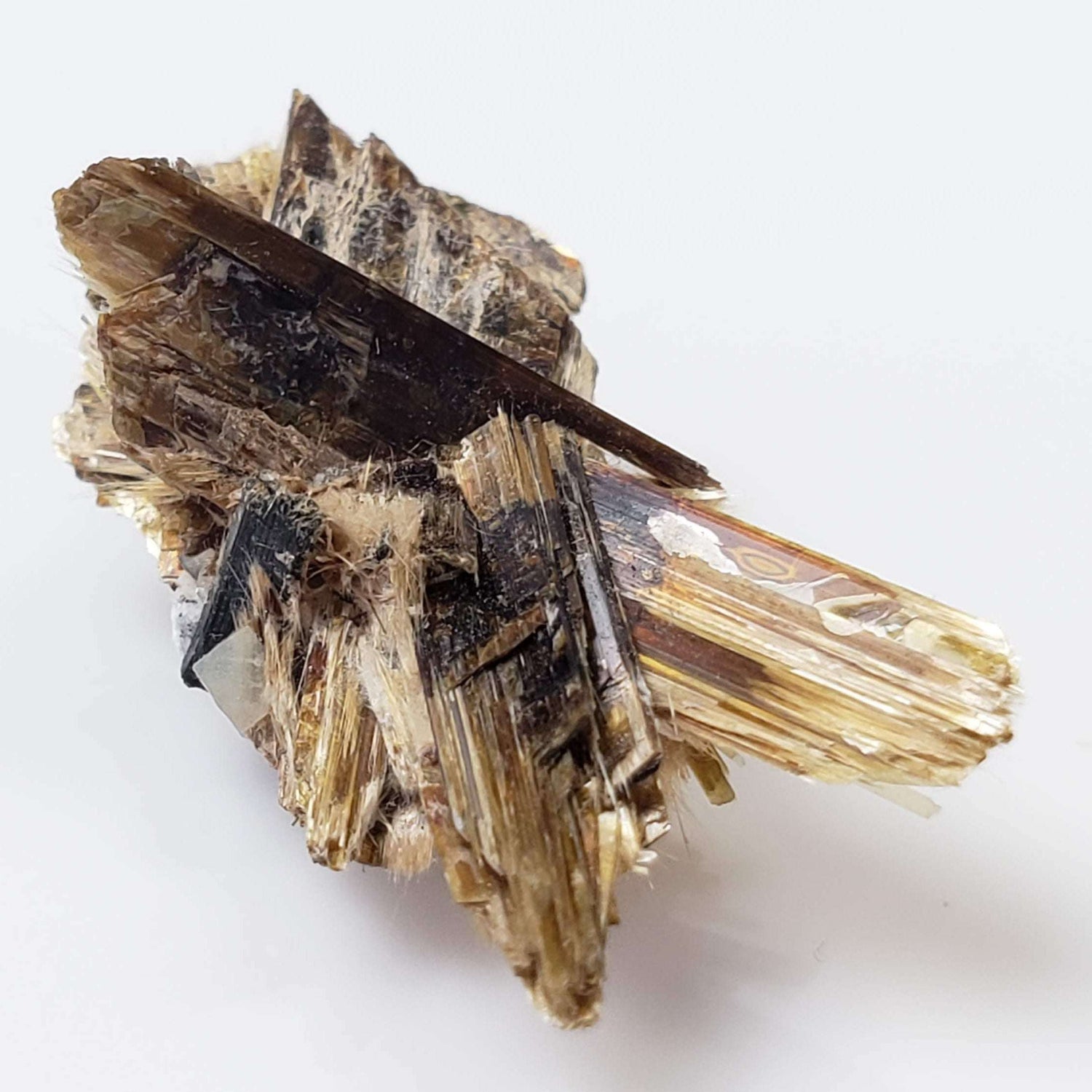
Kupletskite is a rare and complex titanium-bearing silicate mineral most famously found at Mont-Saint-Hilaire in Québec, Canada. It typically appears as tiny brown to reddish-brown crystals, often with a glassy or resinous luster. The crystals are usually slender and prismatic and may occur alongside other rare minerals that Mont-Saint-Hilaire is known for.
Due to its rarity and specific geological conditions needed for formation, kupletskite is primarily of interest to serious collectors and mineralogists, especially those focused on rare earth or alkaline complex minerals. It’s not commonly available in large or showy specimens, so even small, well-formed crystals are considered notable.
This beautiful and rare specimen of Kupletskite from world famous Mont-Saint-Hilaire, Québec, would be a great addition to any collection.
Name: Kupletskite
Specimen Size: Miniature-Sized
Dimensions: 30x15x15 mm / 1.2x0.6x0.6 inches
Weight: 1.63 grams / .057 oz
Origin: Mont Saint-Hilaire, Québec, Canada


This is a rare Iron ungrouped classified Taza Northwest Africa 859 specimen, in an as found state. It weighs 3.79 grams and measures 15x11x7 mm.
The NWA 859 was found in 2001 in Taza, Morocco. A total weight of 75.3 kg of mostly small pieces was classified by UCLA as an Iron, ungrouped; it is one of 157 meteorites classified as such.
This specimen displays extremely well and would be a beautiful addition to any new or existing collection. Comes in a gem jar with a Canagem Collection specimen card.


Amber golden calcite from Mexico is a beautiful variety of calcite known for its rich golden to honey-colored tones. It often forms in sharp, well-shaped crystals like dogtooth clusters or larger, chunky crystals with smooth faces. These pieces can have a soft glow when light passes through them, making them visually warm and inviting. Much of this material comes from regions like Durango and Chihuahua, areas well known for producing high-quality calcite in many colors.
Amber golden calcite is often associated with confidence, warmth, and personal growth. Some believe it helps boost self-esteem and encourages a positive, motivated outlook, making it a helpful stone during times of change or new beginnings. It's also thought to carry a gentle grounding energy, helping balance emotions while keeping one connected to a sense of inner strength.
Name: Amber Golden Calcite Spray
Specimen Size: Large Cabinet-Sized
Dimensions: 105x72x43 mm / 4.1x2.8x1.7 inches
Weight: 424 Grams / 14.9 Ounces
Origin: Mined in Mexico


Pyrite from Bolivia is known for forming beautiful, well-shaped crystals, often appearing as sharp cubes, pyritohedrons (12-sided shapes), or even complex, stepped growth patterns. Bolivian pyrite tends to have a bright, brassy gold color with a good metallic luster, and it’s often found in association with other minerals like quartz or galena.
Much of the pyrite from Bolivia comes from mining regions such as Potosí and Oruro, areas famous for their rich mineral deposits. While pyrite is common around the world, Bolivian specimens are valued for their attractive crystal habits, clean formations, and the quality of the material.
Pyrite is known as a stone of protection, abundance, and confidence. It is believed to shield against negative energy and promote mental clarity and willpower.
This top Bolivian specimen is in very good condition. Would be a beautiful addition to any new or existing collection.
Name: Pyrite Cluster
Specimen Size: Miniature-Sized
Dimensions: 42x34x26 mm / 1.6x1.3x1.3 inches
Weight: 64.4 Grams / 2.3 oz
Origin: Canutillos Mine, Machacamarca-Colavi District, Cornelio Saavedra Province, Potosi Department, Bolivia


At this famous Canadian site, siderite typically forms as small, brown to tan crystals, often rhombohedral in shape, growing over or alongside white to gray albite. Scattered among them, tiny, sharp zircon crystals can appear — often reddish-brown, yellow, or even colorless depending on the exact specimen.
Mont-Saint-Hilaire is renowned for producing rare and unusual mineral combinations, and specimens like this highlight the diversity and richness of the location. While each mineral is interesting on its own, having siderite, albite, and zircon together in one piece makes it a well-balanced and attractive collector’s specimen, especially for those who appreciate the geology of the region
This is a very typical specimen of MSH and is in very good condition. Would be a beautiful addition to any new or existing collection.
Name: Siderite in Albite with Zircon
Specimen Size: Miniature-Sized
Dimensions: 37x36x24 mm / 1.5x1.5x0.9 inches
Weight: 32 Grams / 1.0 Ounces
Origin: Mined in Poudrette Quarry, Mont-Saint-Hilaire, La Vallée-du-Richelieu RCM, Montérégie, Québec, Canada
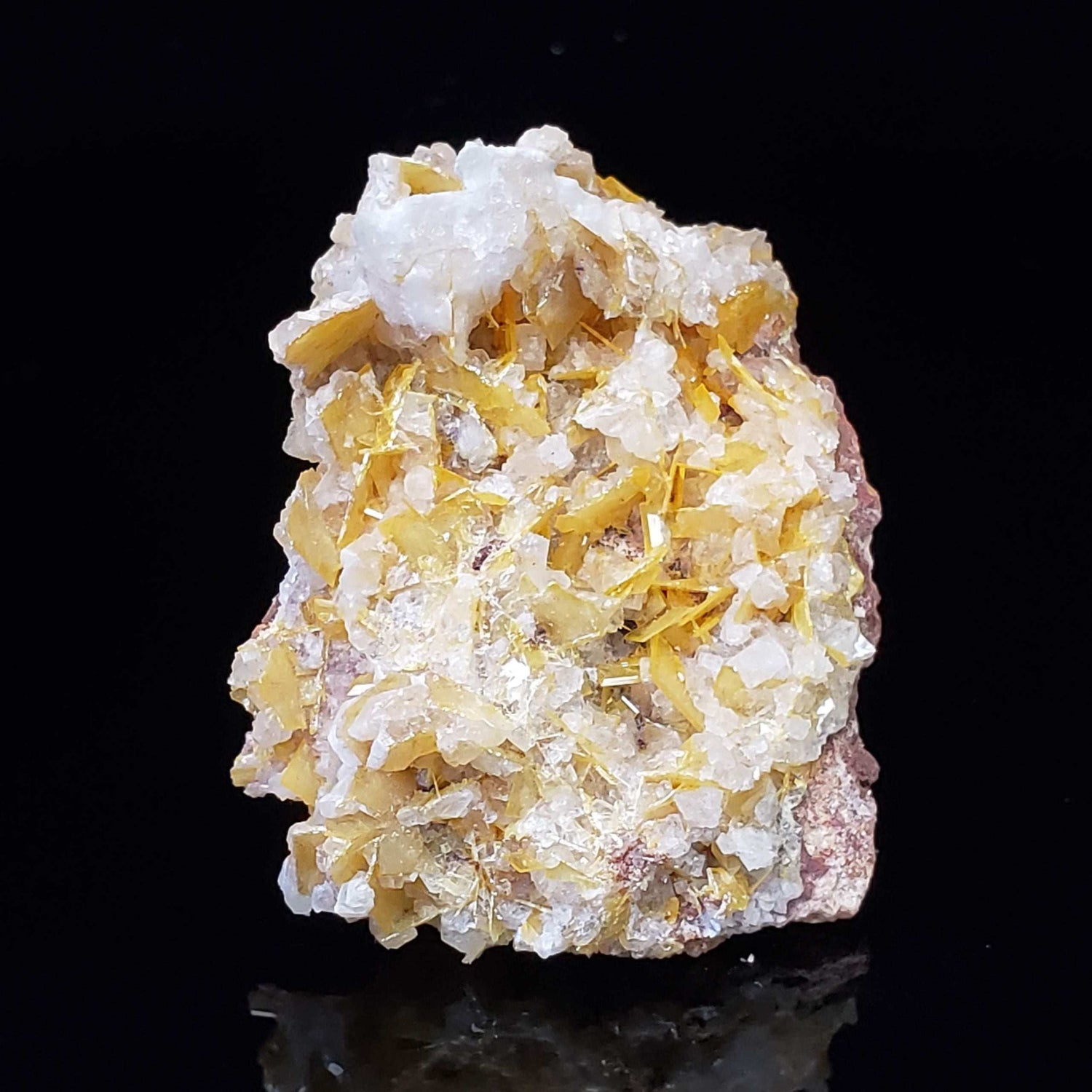
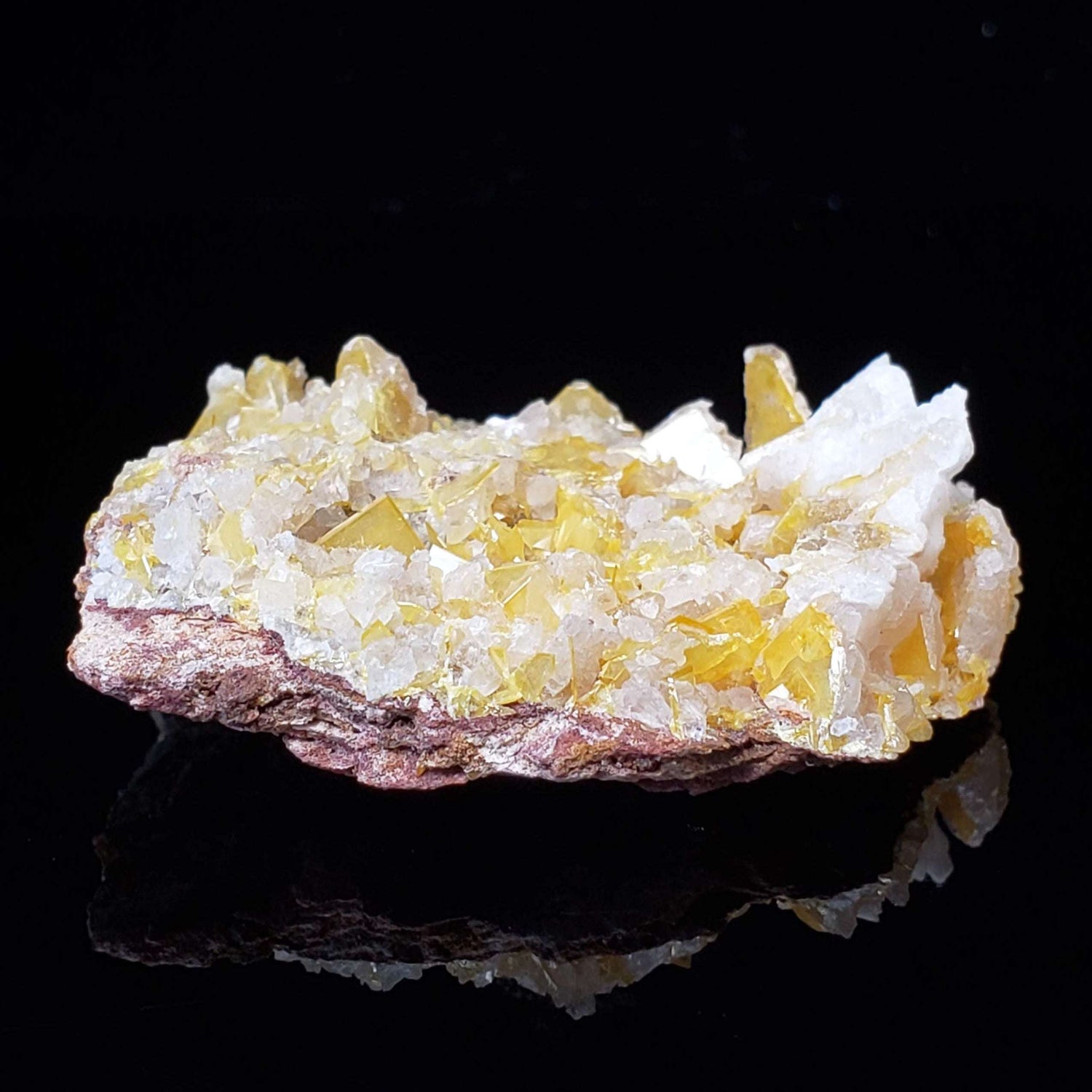
This is a nice group of small yellow wulfenite crystals on matrix from Total Wreck Mine, Arizona. Wulfenite from the Total Wreck Mine is known for producing small but attractive crystals, usually in shades of yellow to orange-yellow. The crystals from this mine tend to be thin, tabular, and sometimes slightly translucent, often growing on a contrasting, earthy matrix.
While the Total Wreck Mine isn’t as famous as places like the Red Cloud Mine for wulfenite, it has still yielded pieces that are valued by collectors, especially because Arizona as a whole is renowned for producing some of the world’s finest wulfenite. Specimens from Total Wreck are typically more modest in size and brightness but are appreciated for their historic mining context and authentic desert character.
Wulfenite is often associated with creativity, emotional balance, and perseverance. Some believe it helps connect the heart and the will, encouraging people to follow their passions even through difficult or uncertain times. Wulfenite is also thought to support emotional healing by helping release old attachments and clearing a path for new experiences.
The specimen is in good condition and is a colorful and really beautiful specimen. Would be a beautiful addition to any new or existing collection.
Name: Wulfenite and Quartz
Specimen Size: Miniature-Sized
Dimensions: 42x33x13 mm / 1.6x1.3x0.5 inches
Weight: 16.62 Grams / 0.6 ounces
Origin: Mined in Total Wreck Mine, Cienega Creek, The Narrows, Empire Mining District, Empire Mountains, Pima County, Arizona, USA


Astrophyllite is a striking and rare mineral known for its bronze to golden-bladed crystals that radiate like starbursts, often embedded in a dark matrix of other minerals. The name comes from Greek, meaning “star leaf,” referring to its star-like crystal formations. It is found in locations such as Russia, Norway, Greenland, and Canada. This specimen of Astrophyllite crystals originates from the world famous site of Mont-Saint-Hilaire, Québec.
Astrophyllite is often seen as a stone of inner illumination and self-discovery. Some believe it helps reveal hidden potential and encourages personal truth, making it a supportive companion during times of change or reflection. It’s sometimes associated with letting go of the past and embracing a more authentic path forward.
This specimen is in very good condition and displays very well. Make this a special specimen in your collection.
Name: Astrophyllite cluster
Specimen Size: Miniature-Sized
Dimensions: Specimen 38x29 mm / 1.5x1.1 inches
Specimen Box 54x54 mm / 2.1x2.1 inches
Weight: 36.6 Grams / 1.3 Ounces
Origin: Mined in Poudrette Quarry, Mont-Saint-Hilaire, Québec, Canada


Indochinite is a variety of the mineral tektite, which is a natural glass formed by the intense heat and pressure of a meteorite impact. These tektites are usually found as small, aerodynamically shaped objects, often teardrop or irregular in shape, resulting from the molten material solidifying as it cooled rapidly after being ejected from the impact site.
Indochinites are believed to have formed around 780,000 to 800,000 years ago, following a significant meteorite impact event that likely created the Southeast Asian tektite strewn field. The strewn field is quite large, and the tektites can be found scattered over a vast area which includes Vietnam, Laos, and Thailand.
This piece displays very well, showing multiple characteristics of its origin. The specimen has a weigh of 27.8 grams and dimensions of 33x32x21. Comes with a Canagem Collection specimen card.

Canagem is proud to be professional member of The International Gem Society(IGS) the world's top resource for gem professionals, enthusiasts, and industry content.