



1573 products
Sort by:
1573 products
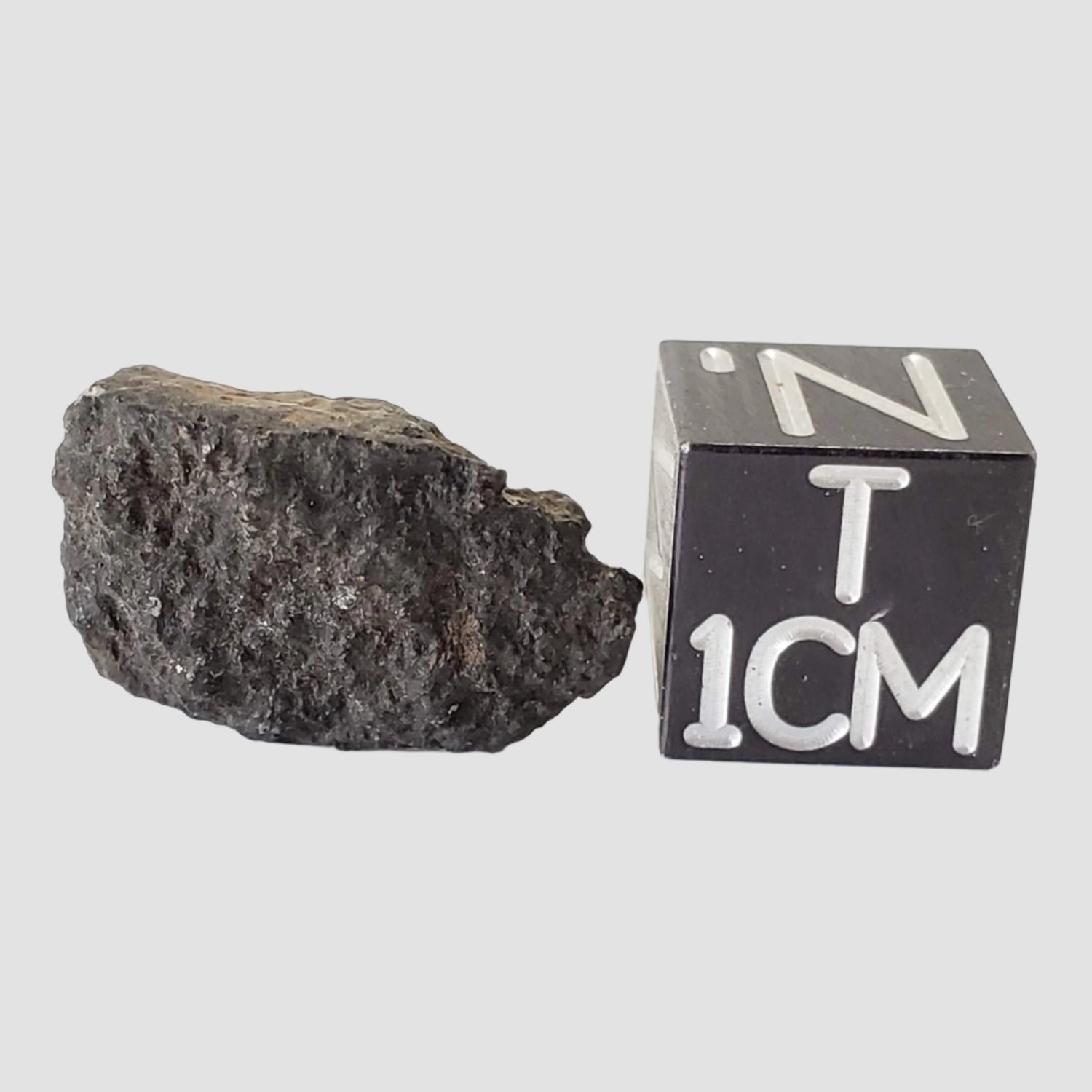
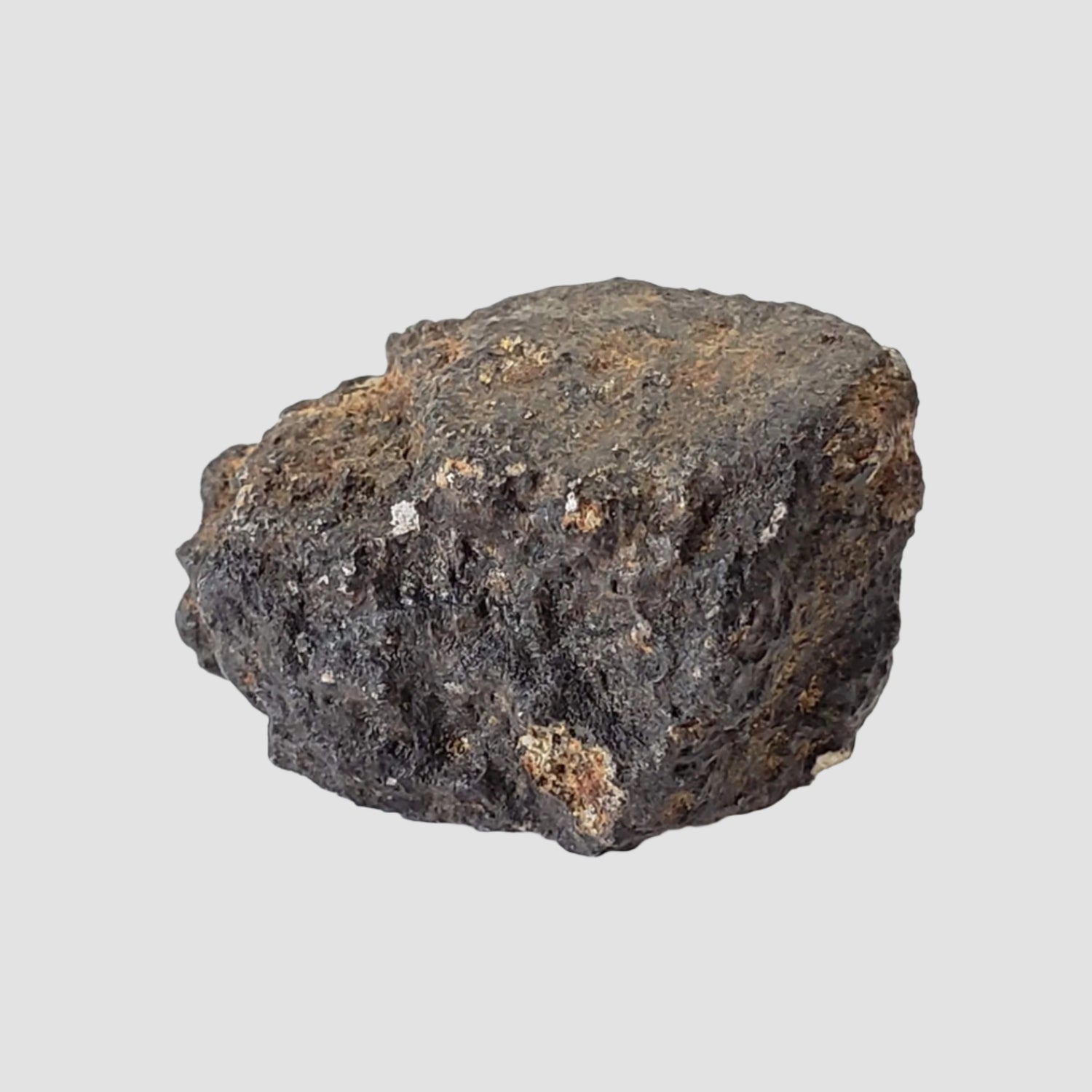
Thuathe Meteorite | 3 gr | H4-5 Chondrite | Observed Fall | Lesotho | 99% Crusted
This is a great looking fresh individual Thuathe H4-5 classified meteorite weighing 3 grams, with dimensions of 17x11x7 mm. It is 99% fusion crusted, which is the most desirable specimen state.
A meteorite travelling east to west exploded over Lesotho producing an elliptical strewn field extending 7.4 by 1.9 km (bearing: ~276°) on the westernmost lobe of the Thuathe (or Berea) Plateau, ~12 km east of the capital city of Maseru.
The explosion was accompanied by an extraordinarily loud, 15 s long noise which was heard over a large (100 km radius) area of Lesotho; the fall was eye-witnessed by several people who reported sightings of dust trails of “sparkling objects” over Lesotho and the southern part of the Free State Province of South Africa. Many villagers of Ha Ralimo, Boqate Ha Majara, and Boqate Ha Sofonia reported falls of stones close to themselves and onto their homes. The estimated total mass of recovered material is ~30 kg, including 418 stones in the 2 g to 2.4 kg mass range for a total of 24.673 kg which were collected and catalogued by A. Ashworth and David P. Ambrose
Most freshly cut slices from several stones show a homogeneous beige to light-grey lithology speckled with abundant and heterogeneously distributed (20% to, in exceptional cases, >50 vol%) metal particles; some are crosscut by dark shock veinlets and show brecciated structure with light grey matrix surrounding lighter colored, well-rounded inclusions; chondrules distinctly recognizable.
Would be a beautiful addition to any new or existing collection. Comes in a protective case, and includes a Michael Farmer Meteorites, a Mark Bostick Collection and a Canagem® Collection specimen card.


Product Type: Sapphire
Approx Weight (per piece): 1.6ct
Size: 8x6.3mm
Shape: Oval Cut
Color: Yellow
Clarity: VSI
Origin: Africa


Product Type: Rutilated Quartz
Approx Weight (per piece): 15.7ct
Size: 17.5x17.8mm
Shape: Trilliant Cut
Color: Clear White with Golden Needles
Clarity: Transparent
Origin: Brazil
Rutilated Quartz is a beautiful variety of Quartz that contains needle-like inclusions of the mineral Rutile. These golden, coppery, or silver-colored needle inclusions create unique patterns within the Quartz.
Rutilated Quartz is thought to amplify energy, enhance clarity and intuition, facilitate spiritual connection, provide protection, and promote healing and manifestation.


Product Type: Tourmalinated Quartz
Approx Weight (per piece): 19.7ct
Size: 17mm
Shape: Square Cut
Color: Colorless
Clarity: Tourmalinated Clear
Origin: Brazil
Treatment: Natural - No known treatment
The appearance of Tourmalinated Quartz is characterized by clear or milky quartz with dark, thread-like, or needle-shaped inclusions of black tourmaline running through the stone. These inclusions can vary in density, giving each piece a distinct and unique appearance.
Tourmalinated Quartz is a crystal that combines the properties of Clear Quartz and Black Tourmaline. It is believed to offer strong protection by shielding against negative energies and enhancing the grounding and balancing effects of Black Tourmaline. The crystal is thought to amplify intentions and promote emotional healing. It may also support spiritual connection, chakra alignment, and provide emotional support during challenging times.


Product Type: Smoky Quartz
Approx Weight (per piece): 3.5ct
Size: 9.7x7.8mm
Shape: Octagon Cut
Color: Smoky Color
Clarity: VSI (Very Slightly Included)
Origin: Brazil


Product Type: Rutilated Quartz
Approx Weight (per piece): 12.8ct
Size: 16mm
Shape: Round Cut
Color: Clear White with Golden Needles
Clarity: Transparent
Origin: Brazil
Rutilated Quartz is a beautiful variety of Quartz that contains needle-like inclusions of the mineral Rutile. These golden, coppery, or silver-colored needle inclusions create unique patterns within the Quartz.
Rutilated Quartz is thought to amplify energy, enhance clarity and intuition, facilitate spiritual connection, provide protection, and promote healing and manifestation.


Product Type: Smoky Quartz
Approx Weight (per piece): 6.9ct
Size: 16x10mm
Shape: Barrel Cut
Color: Dark Smoky
Clarity: Clean to the eye
Origin: Brazil


Product Type: Tourmalinated Quartz
Approx Weight (per piece): 13.3ct
Size: 17x13mm
Shape: Octagon Cut
Color: Colorless
Clarity: Tourmalinated Clear
Origin: Brazil
Treatment: Natural - No known treatment
The appearance of Tourmalinated Quartz is characterized by clear or milky quartz with dark, thread-like, or needle-shaped inclusions of black tourmaline running through the stone. These inclusions can vary in density, giving each piece a distinct and unique appearance.
Tourmalinated Quartz is a crystal that combines the properties of Clear Quartz and Black Tourmaline. It is believed to offer strong protection by shielding against negative energies and enhancing the grounding and balancing effects of Black Tourmaline. The crystal is thought to amplify intentions and promote emotional healing. It may also support spiritual connection, chakra alignment, and provide emotional support during challenging times.
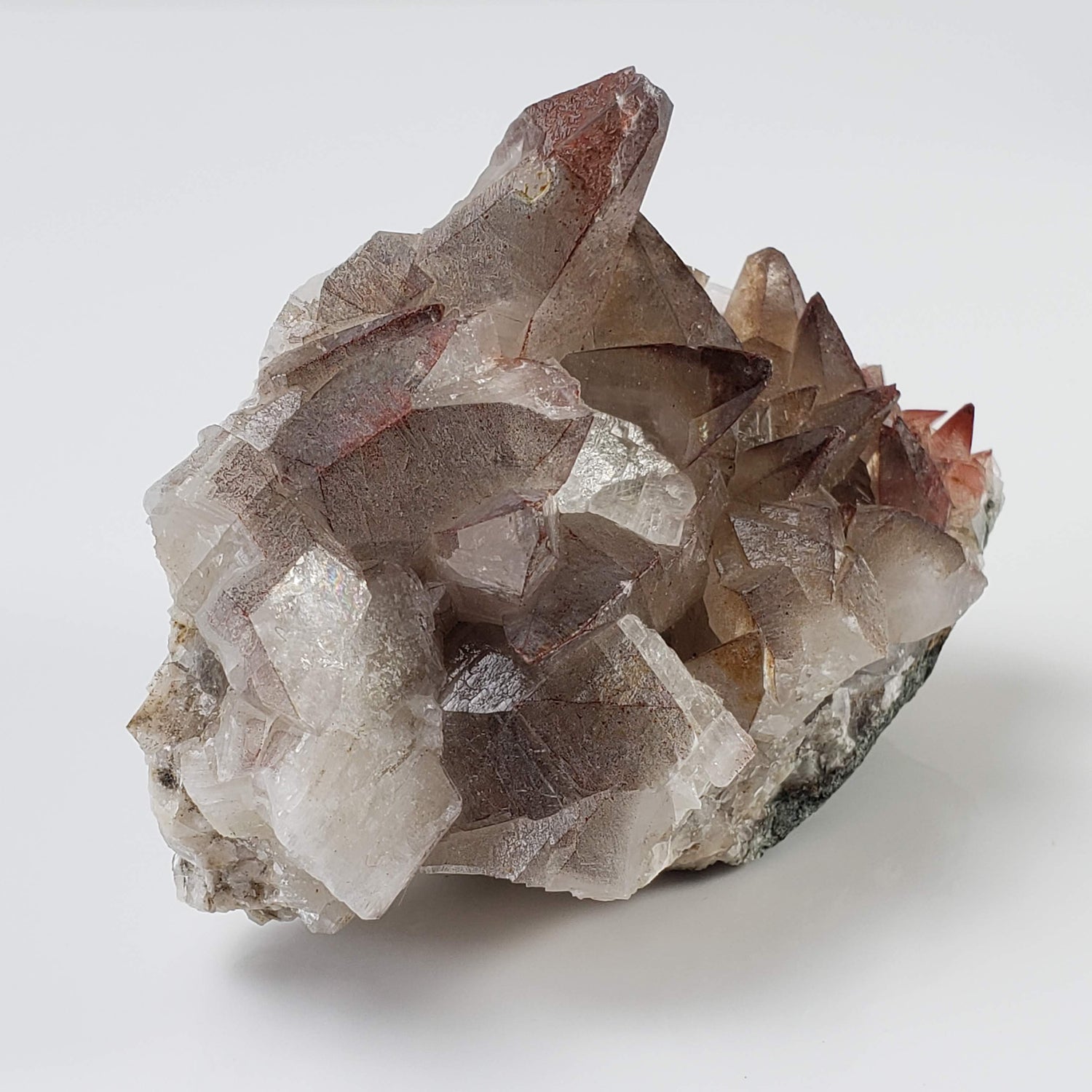

This is a natural cluster formation of large calcite crystals with hematite inclusions. This piece has some white color to translucent crystals with areas of orange/red coloring from hematite inclusions, with sharp tabular crystal formations. There are some nicks and imperfections on a few crystals but would still shine in the proper setup. They don't take away from how interesting this piece is. Would be a nice addition to any new or existing collection.
Name: Calcite with Hematite Crystal Cluster
Specimen Size: Cabinet-Sized
Dimensions: 75x54x55 mm / 2.8x2.1x2.2 inches
Weight: 160.5 Grams / 5.7 oz
Origin: Mined in Lane Quarry, Westfield, Hampden Co., Massachusetts, USA


Product Type: Ruby
Approx Weight (per piece): .54ct
Size: 4mm
Shape: Square Cut
Color: Pigeon Blood Red
Clarity: Transparent
Origin: Madagascar

Canagem is proud to be professional member of The International Gem Society(IGS) the world's top resource for gem professionals, enthusiasts, and industry content.