



1573 products
Sort by:
1573 products


Product Type: Labradorite
Approx Weight (per piece): 4.0ct
Size: 12.3x8.3mm
Shape: Freeform cabochon
Color: Gray with Rainbow Luster
Clarity: Transparent
Origin: Africa
Labradorite is an unusual mineral. It can display a beautiful iridescent play of colors, caused by internal fractures in the mineral that reflect light back and forth, dispersing it into different colors. This effect, known as labradorescence, gives Labradorite its appeal and fame.


Product Type: Spinel
Size: Various - see below for measurements of each stone
Shape: Oval Cut
Color: Purple Pink
Clarity: Clean
Origin: Myanmar (Burma)
The dimensions of each spinel are as follows:
A - 7.0x6.1mm | 1.1ct
B - 6.9x6.0mm | 1.5ct
C - 7.0x5.7mm | 1.1ct
Spinel comes in a variety of colors, ranging from vivid reds and pinks to blues, purples, oranges, and even black. It is a durable gemstone with a hardness of 8 on the Mohs scale making it suitable for everyday wear in jewelry.
Spinels are believed to enhance energy, promote vitality, and offer protection. Some also associate spinel with love and compassion.
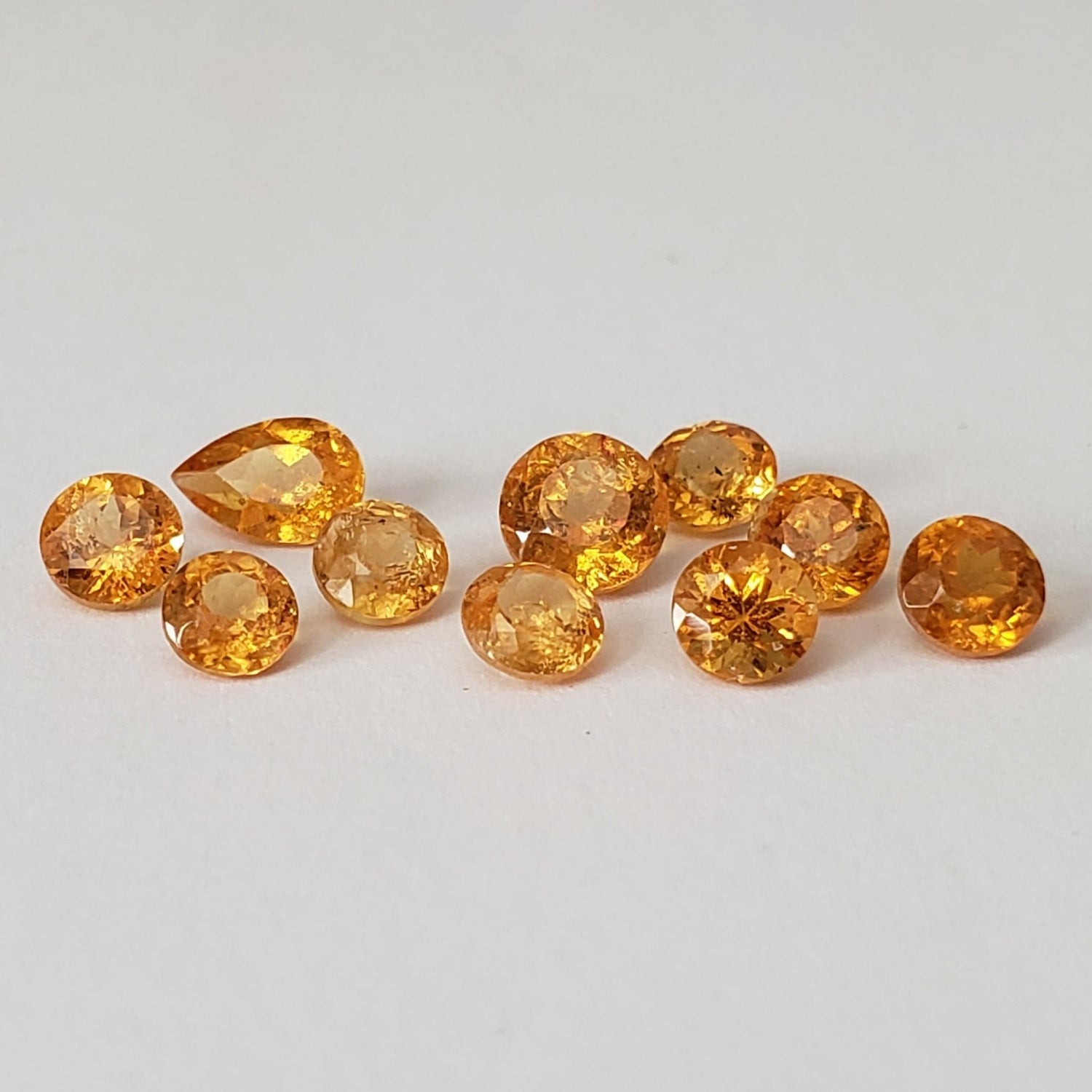
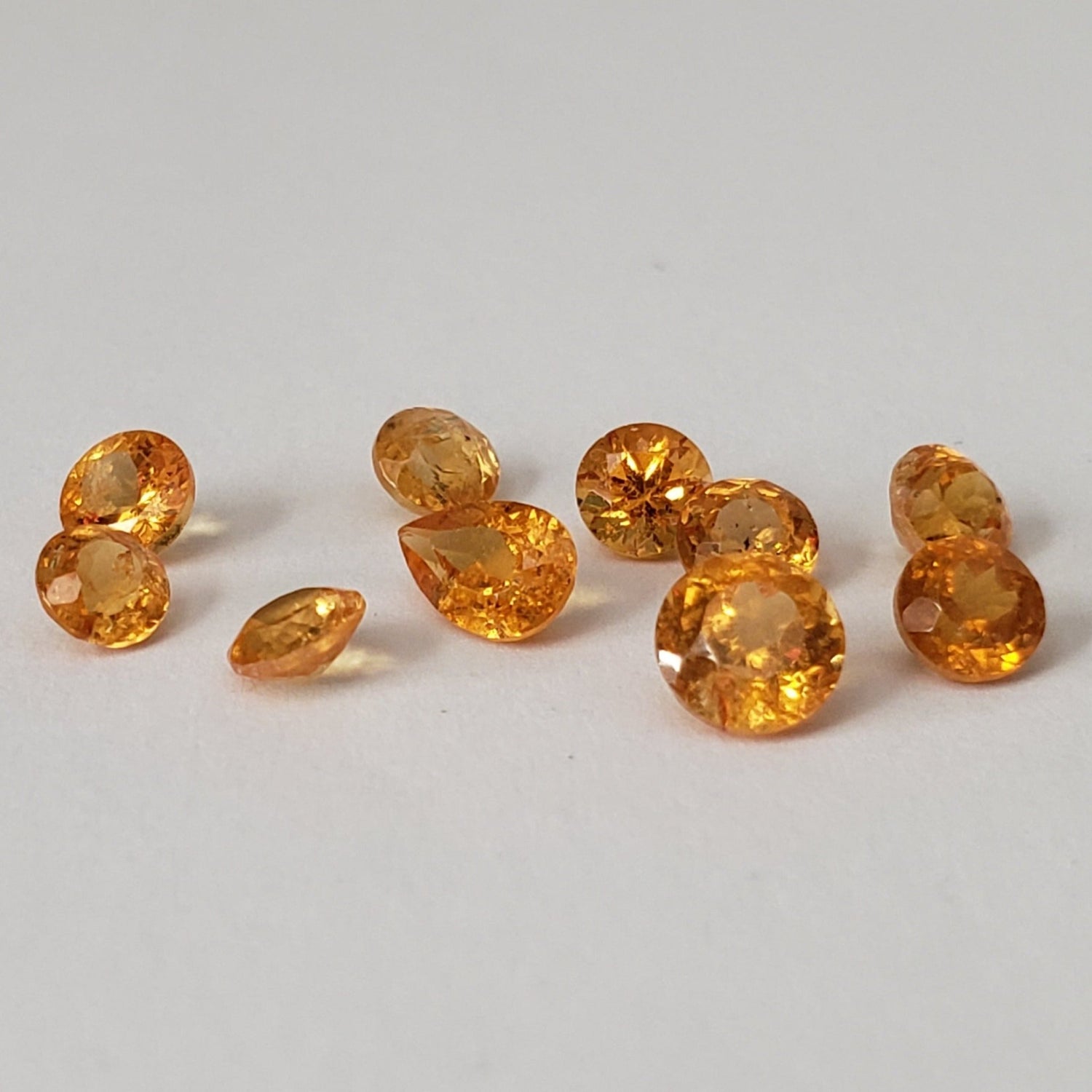
Product Type: Spessartite Garnet
Approx Weight (per lot): 4.4tcw
Shape & Size: Round Cut 3.8 - 5.0mm | Pear Shape 6x3.9mm
Color: Golden Orange
Clarity: Included
Origin: Tanzania
Treatment: None


Product Type: Ruby
Approx Weight (per piece): 0.8ct
Size: 5mm
Shape: Round Cabochon
Color: Rich Pink
Clarity: Transparent
Origin: Myanmar (Burma)
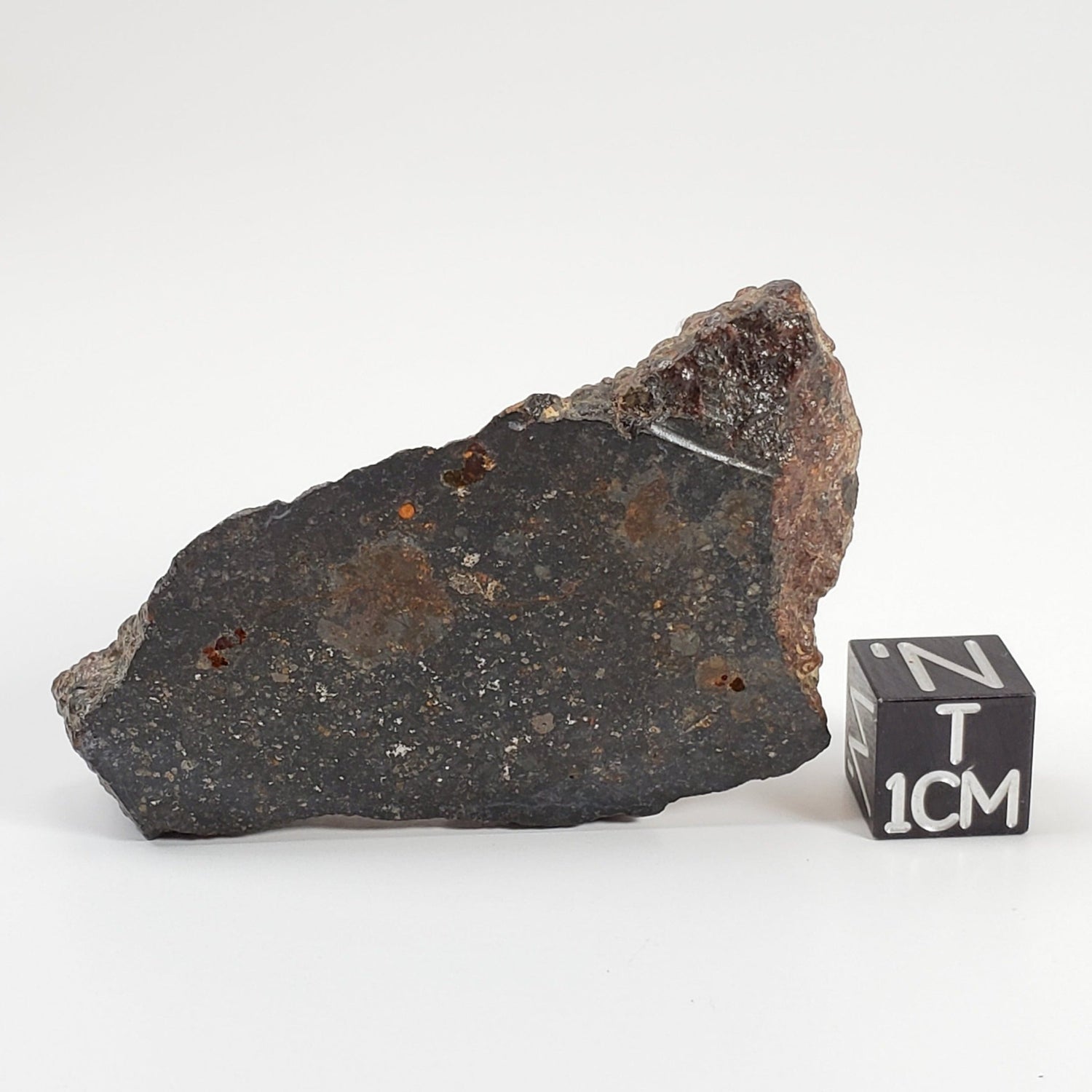
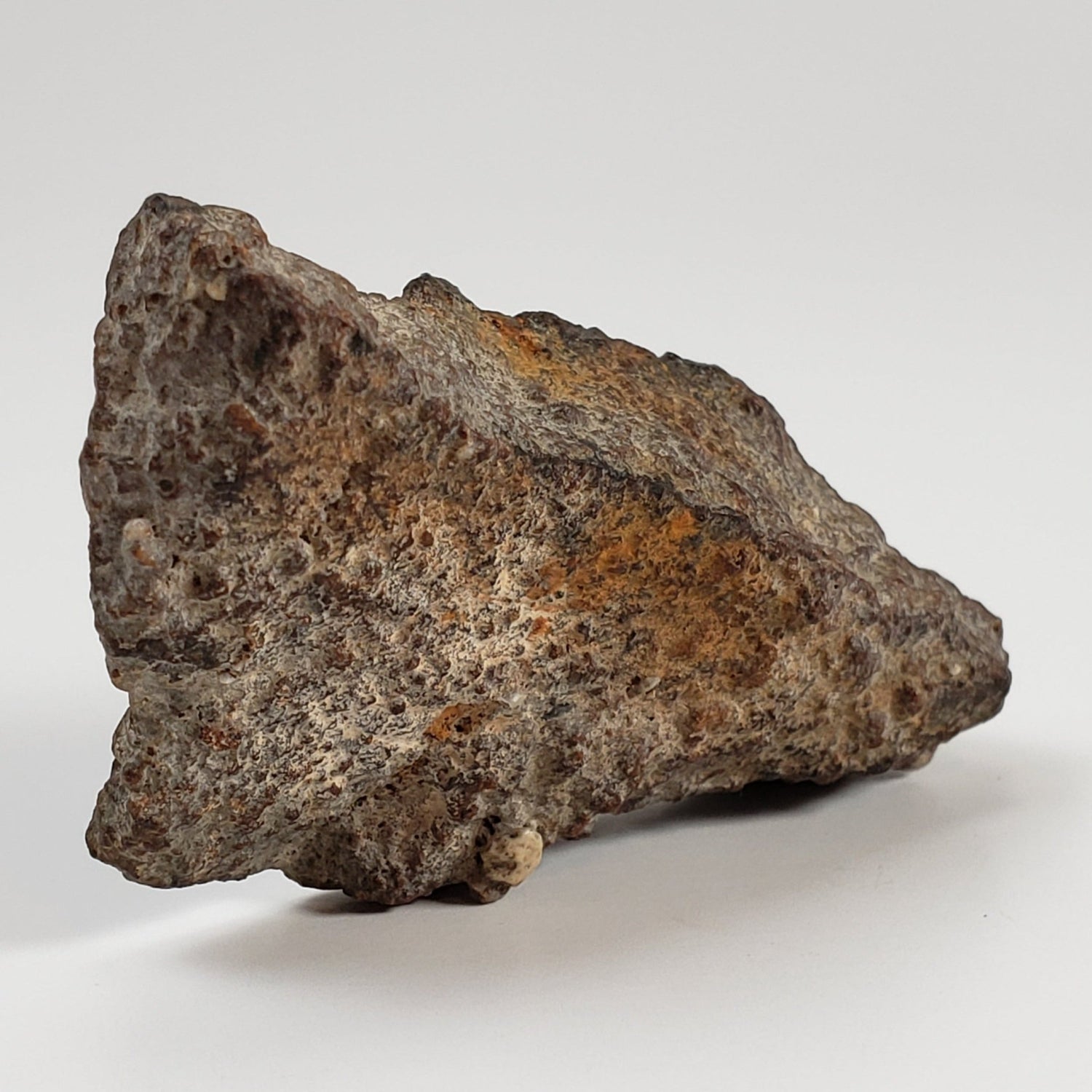
This is a fabulous Ghubara meteorite end cut from the Michael Cottingham Collection, weighing 36.12 grams and measuring 56x30x14 mm. It was found in Oman, Southern Arabia in 1954 and is classified as an L5 Stony Black Chondrite.
This piece displays extremely well with a high gloss finish and would be a beautiful addition to any new or existing collection. Comes with a Michael Cottingham Collection and a Canagem Collection specimen card.


This is a superb looking Spade meteorite part slice weighing 0.8 gram. This H6 chondrite classified meteorite was found in 2000 and has a total weight of 8.86 Kg.
This single mass of 8.86 kg was found in a grass field by Mr. J. Talbert while farming. The classification and mineralogy performed by R. Jones, UNM and A. Rubin, UCLA, determined it to be an annealed impact melt rock. It has a shock stage of S2 and a moderate weathering grade of W2.
Would be a beautiful addition to any new or existing collection. Will come with a Canagem Collection specimen card.


This is a stunning Veevers classified meteorite weighing 2.67 grams. Mark Bostick said that the specimen was shaped like a bird claw. He traded the main mass of this amazing meteorite to TCU. This amazingly well preserved specimen measures 15x8x7 mm.
The Veevers crater is located in the Gibson Desert of Western Australia. It has a diameter of 60-80 meters across and a depth of about 6-7 meters. The crater's rim is raised 1.5m above the surrounding plain, and contains exposed rocks thrown from the center of the crater. The sides are gravelly rock with a few larger rocks mixed within. The bottom of the crater is covered with sand. Veevers is isolated in a vast, flat landscape with no other features in sight. Discovered in the mid-1970's and named by Yeates, A.N., Crowe, R.W.A. & Towner, R.R., in 1976, as The Veevers Crater in honor of Australian geologist Prof. John Veevers, for his work at mapping Western Australia.
In 1984, Dr. Carolyn and Eugene Shoemaker investigated meteorite craters and ancient impact structures throughout Australia. Their search recovered thirty-six small meteoritic fragments from the Veevers crater. Their finds totaled 298.1 grams, and included the largest found to date, 36.3g., now cleaned and coated it weighs 37.0 grams. The Veevers fragments have been described as single crystals of kamacite. Kamacite is a metallic iron with up to 7.5% nickel. Since the Shoemaker trip, more meteorite fragments have been found, bringing the total known weight to around 1 kg. The Veevers crater is naturally rich in iron-rich laterite, which makes recovery of small meteorite fragments hard. It is one of only two impact craters where group IIAB meteorites have been discovered. The other being the Sikhote-Alin craters in Eastern Siberia, Russia.
Would be an exceptional and rare addition to any new or existing collection. This historically important specimen will come in its original Mark Bostick display box and include The Mark Bostick Collection and Canagem Collection specimen cards.


This is a great looking H5 classified meteorite and a great looking professionally prepared full slice, this excellent specimen weighs 15.88 grams and represents the Capot Rey meteorite found in 2004 in Niger. The total know weight of the find is at 38 Kilograms with a shock stage of S2 and weathering degree of W1. This full slice measures 55x32x3 mm.
Many stony fragments totalling 38 kg were found by by G. Moreau in the erg Capot-Rey, Ténéré du Tafassasset, Niger. The stones define an elliptical strewn-field measuring 7x3.5 km, with a NE-SW major axis. The largest fragment weighs 2 kg.
Would be a beautiful addition to any new or existing collection. A great display piece, it comes with a Gi-Po-de Collection and a Canagem Collection specimen card.
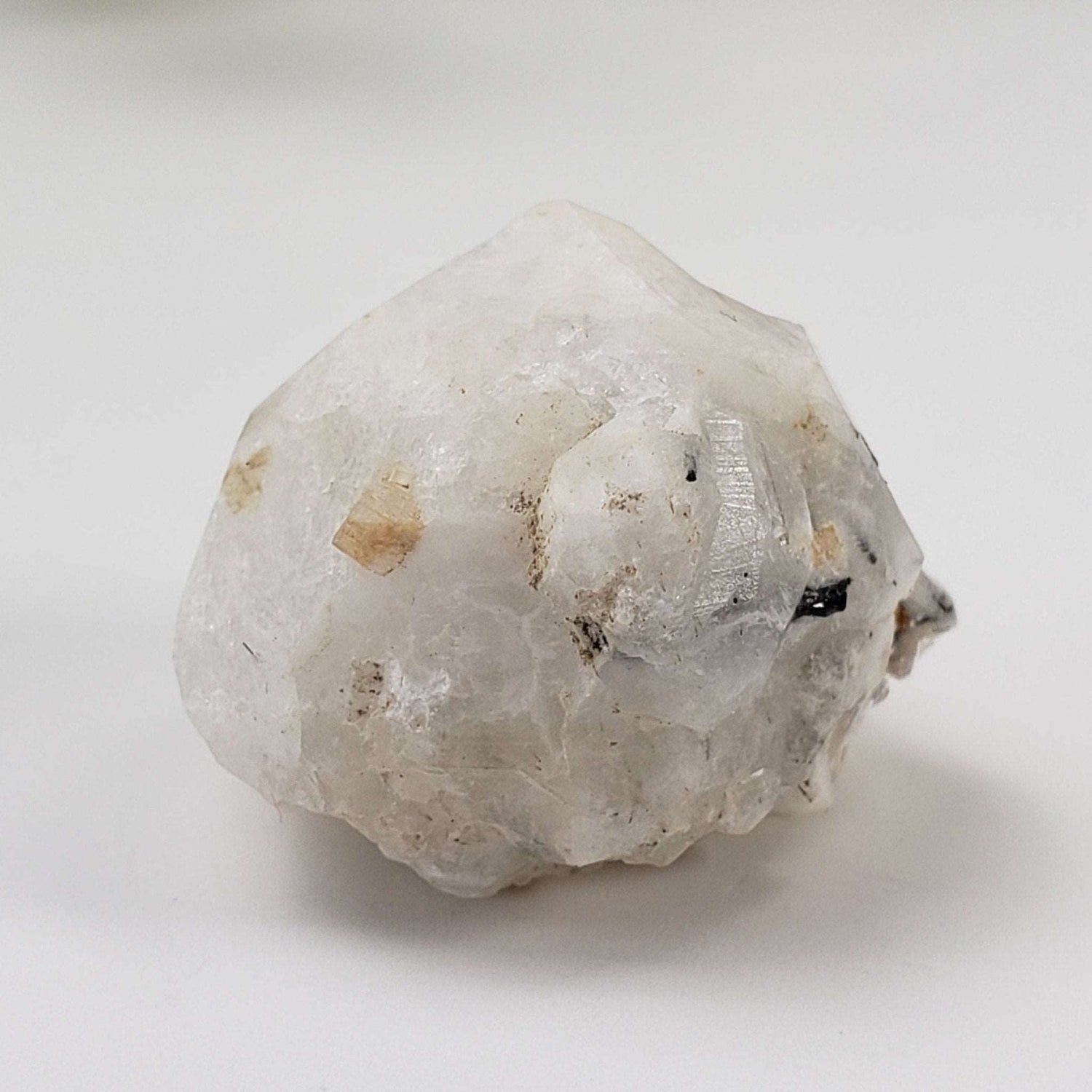
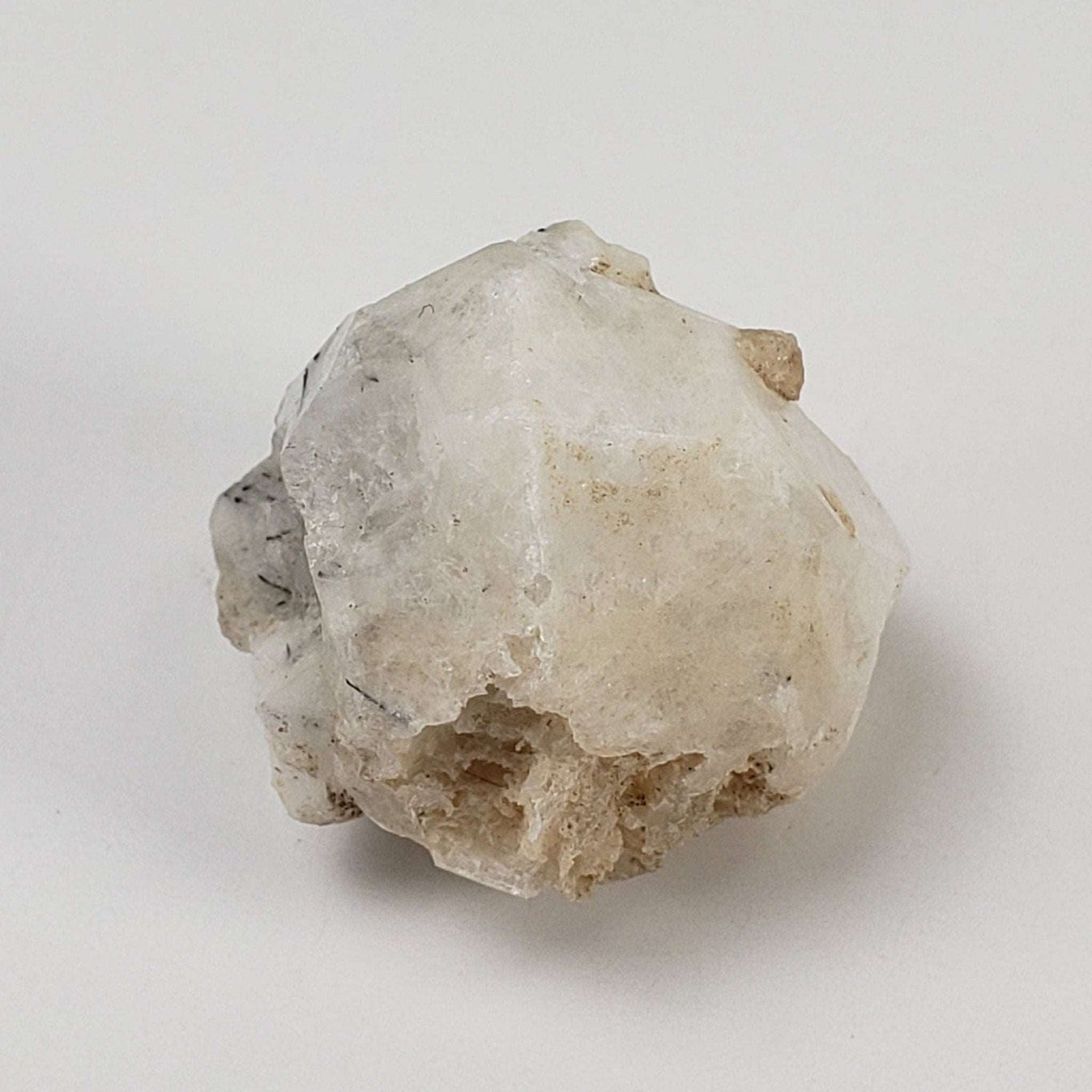
This Analcime specimen comes from the Poudrette Quarry at Mount-Saint-Hilaire and displays a nice terminated crystal. The specimen also has some small intersecting black aegirine crystals.
Great looking translucent, colorless analcime crystal. An excellent specimen from the world renowned location that is MSH. This beautiful crystal would be a great addition to any new or existing collection.
Name: Analcime
Specimen Size: Thumbnail-Sized
Dimensions: Specimen 18x19 mm / 1.2x1.0 inches
Specimen Box 33x33 mm / 1.3x1.3 inches
Weight: 7.25 Grams / 0.2 Ounces
Origin: Mined in Poudrette Quarry, Mont-Saint-Hilaire, Québec, Canada

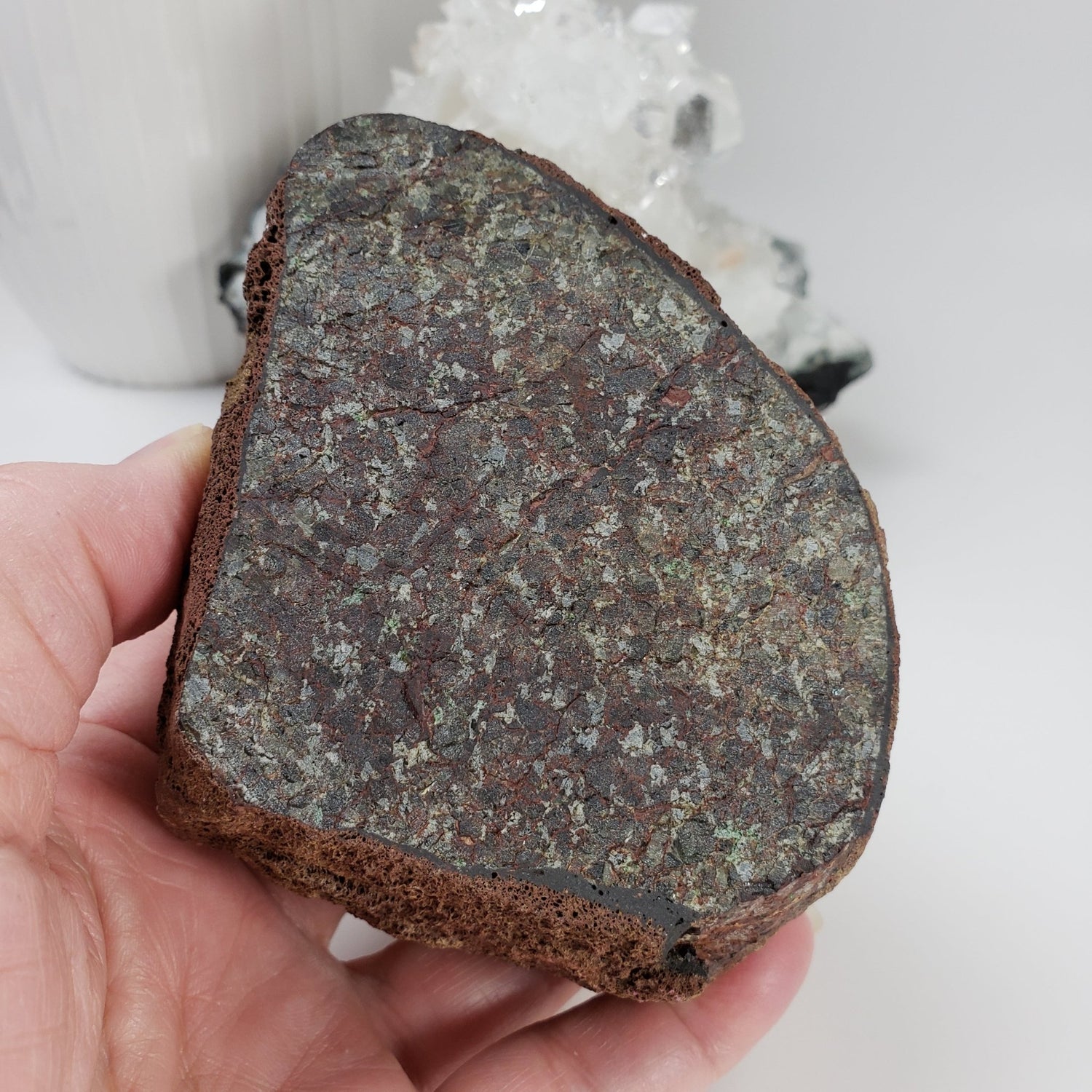
An olivine volcanic bomb is a type of volcanic rock that contains olivine crystals and has been ejected during a volcanic eruption. Olivine is a mineral that is commonly found in the Earth's mantle and is one of the first minerals to crystallize as magma cools.
Volcanic bombs are large clots of lava that are ejected from a volcano during an explosive eruption. They can vary in size, and their shapes are often streamlined due to their molten nature as they are thrown through the air. When these volcanic bombs contain olivine crystals, they are referred to as olivine volcanic bombs.
The crystal face has been cut and polished to show the red and green olivine crystals which are showcased beautifully against the surrounding lava crust. This museum grade specimen would be a beautiful addition to any new or existing collection. Comes with a Canagem Collection specimen card.
Name: Red Olivine Crystal Bomb
Specimen Size: Large Cabinet-Sized
Dimensions: 110x91x51 mm / 4.3x3.6x 2.0 Inches
Weight: 768.7 Grams / 1 Lb 11 Ounces
Details: Volcanic activity Mortlake, Victoria, Australia

Canagem is proud to be professional member of The International Gem Society(IGS) the world's top resource for gem professionals, enthusiasts, and industry content.