


1573 products
Sort by:
1573 products
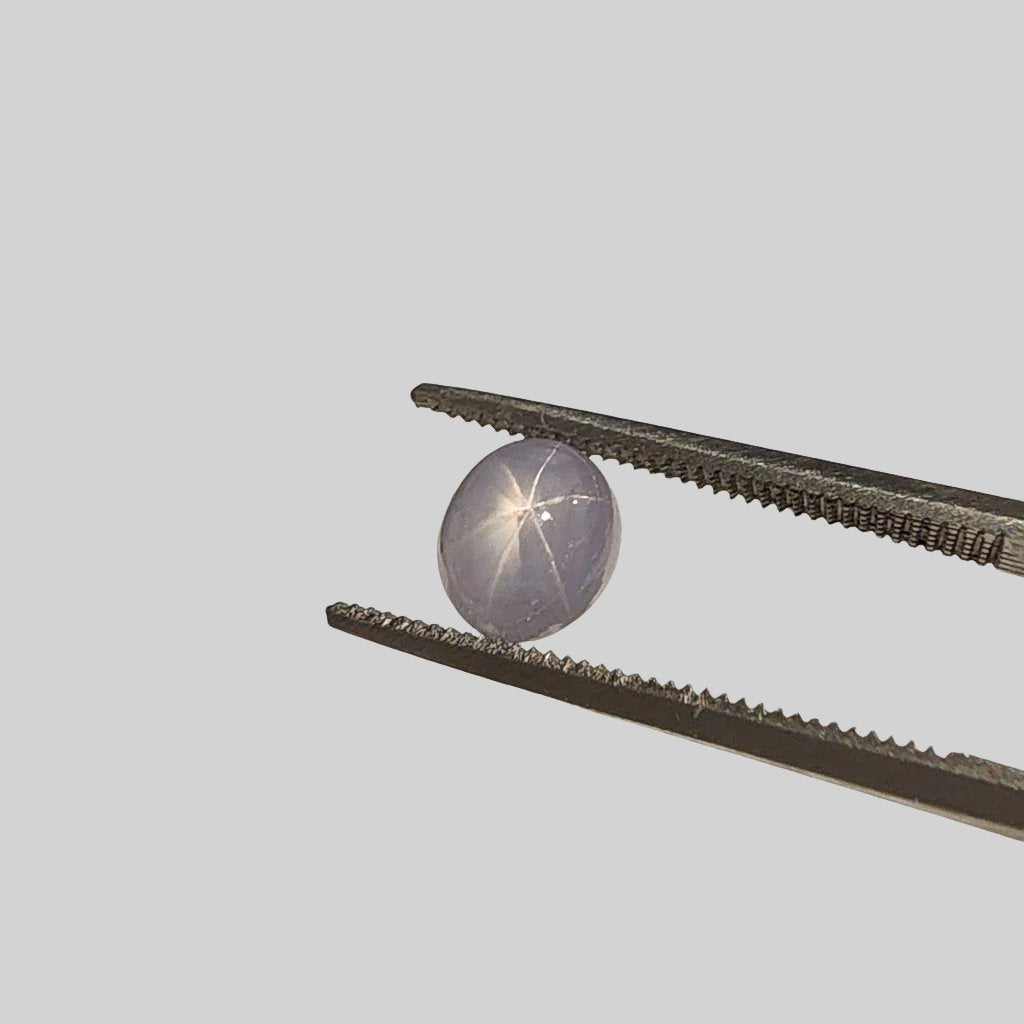
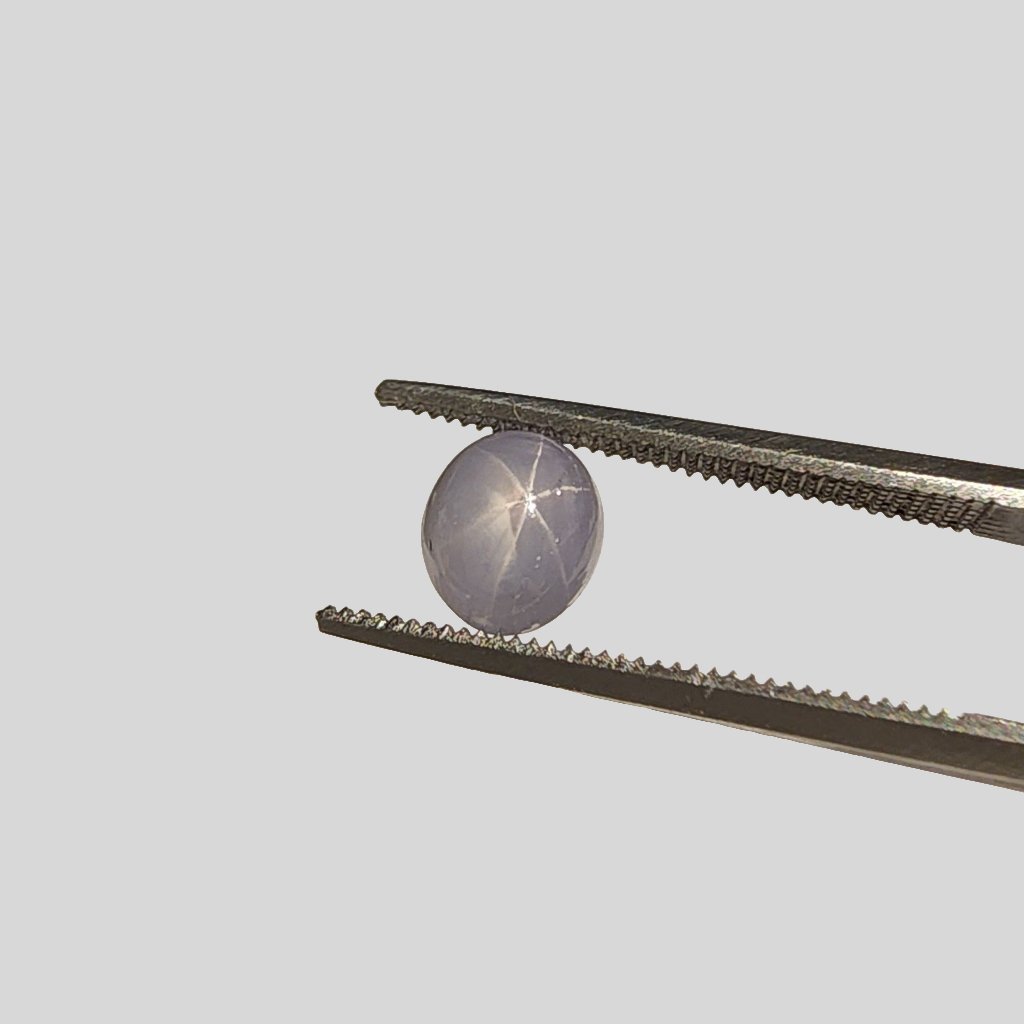
Product Type: Star Sapphire
Approx Weight (per piece): 1.7ct
Size: 6.4x5.5mm
Shape: Oval Cabochon
Color: Fine Pale Blue
Clarity: Transparent Sharp 6 Rays Star
Origin: Myanmar (Burma)
Treatment: None


Product Type: Rutile Cats Eye
Approx Weight (per piece): 6.6ct
Size: 10.7mm
Shape: Round Cabochon
Color: Top White with Golden Needles
Clarity: Transparent Sharp Cats Eye
Origin: Brazil
Treatment: None


This is a beautiful combination of Calcite and Stilbite on Apophyllite crystal cluster.
Calcite is found throughout the world in sedimentary, metamorphic, and igneous rocks. Some geologists consider it to be a "ubiquitous mineral" - one that is found everywhere. Calcite is the principal constituent of limestone and marble. Stilbite is perhaps the most popular zeolite mineral for collectors. Stilbite is a handsome specimen with its pearly luster and sometimes colorful pink tints. Apophyllite is transparent to translucent and is commonly found in colorless or white varieties, although it can also occur in shades of green, pink, yellow, or brown.
This nice crystal specimen would be a beautiful addition to any new or existing collection.
Name: Calcite, Stilbite and Apophyllite cluster
Specimen Size: Cabinet-Sized
Dimensions: 62x59x46 mm / 2.4x2.3x1.8 inches
Weight: 185 grams / 6.5 ounces
Origin: Mined in Jalgaon, India
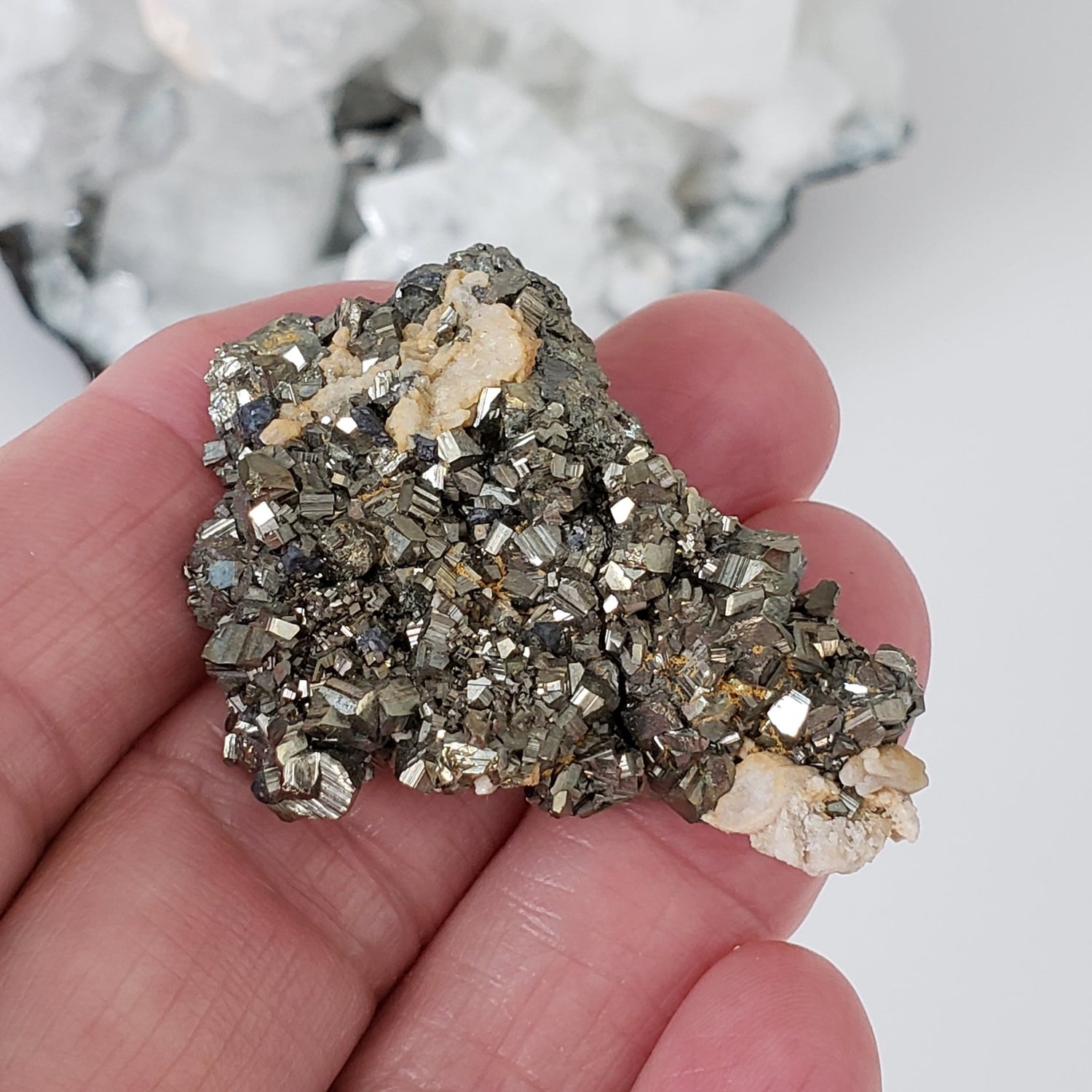
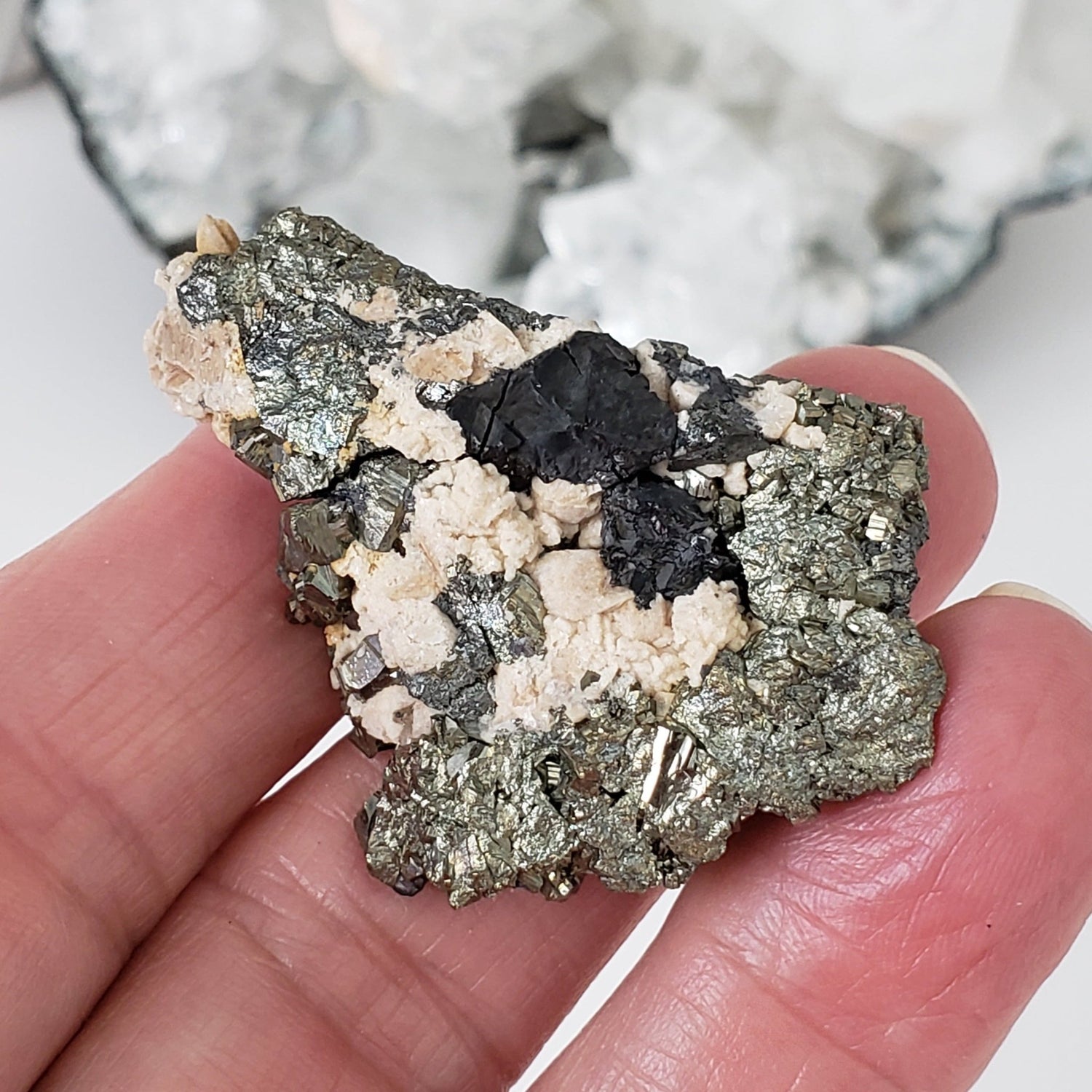
A fantastic Cubic and crystallized pyrite with sphalerite and dolomite crystals cluster. This rare specimen has a fracture across near the top to the bottom but is still connected (visible 2/3rd to the right). Despite this, the overall specimen is in great condition. These ultra rare crystals are from the Polaris Mine, Nanisivik, Baffin Island, Nunavut (Northwest Territories). You will not find anything like it. Would be an amazing addition to any new or existing collection.
Name: Pyrite with sphalerite and dolomite Crystal Cluster
Specimen Size: Miniature-Sized
Dimensions: 48x31x14 mm / 1.9x1.2x0.5 inches
Weight: 31.3 Grams / 1.1 oz
Origin: Polaris Mine, Nanisivik, Baffin Island, Nunavut (Northwest Territories)


This is an excellent specimen of Zircon from the world renowned location that is Mount-Saint Hilaire. This beautiful crystal would be a great addition to any new or existing collection.
Name: Zircon on Analcime
Specimen Size: Miniature-Sized
Dimensions: 54x42x41 mm / 2.1x1.6x1.6 inches
Weight: 76.7 Grams / 2.7 Ounces
Origin: Mined in Mont-Saint-Hilaire, Québec, Canada


Here we have for you a superb looking Dhofar 020 classified meteorite weighing 40.3 grams. Its dimensions are 56x37x14 mm. Found 10 March 2000 in Dhofar, Oman, in the Arabian Peninsula this H4/5 classified chondrite has a TKW of 256 Kg with a shock stage of S4 and weathering grade of W3 by the Russian Academy of Sciences, USSR.
The following is an excerpt from Mark Bostick's review of this meteorite: "Dhofar 020 is a ordinary stone chondrite meteorite. The meteorite is high in free metal and therefore falls in the H class. S4 tells it is highly shocked. Slices of the meteorite, show veins of the cosmic impact created mineral Ringwoodite, although fractures in the stone tend to hide this some. It almost appears to me to have splinted upon impact. The meteorite falls in 4-5 petrology class, a reference to how metamorphed the meteorite is from its original state. This is judged by studying a thin section of the meteorite, most visually at the chondrules, a feature unique to stone meteorite. In a thin section under polarized light, pyroxene chondrules seem more common then their olivine pair. Still some regions in the meteorite show scattered patches of bright olivine inclusions. These are fairly rare, at least on my thin section, and most of the meteorite's olivine and pyroxene, some of the easier things to see in a thin section, appear to have went through a metamorphism, and have "melted" into the matrix and are at times undistinguishable."
This piece displays extremely well showing a beautiful crust, superb shape and good size. Would be a beautiful addition to any new or existing collection. Comes with a Canagem Collection specimen card.
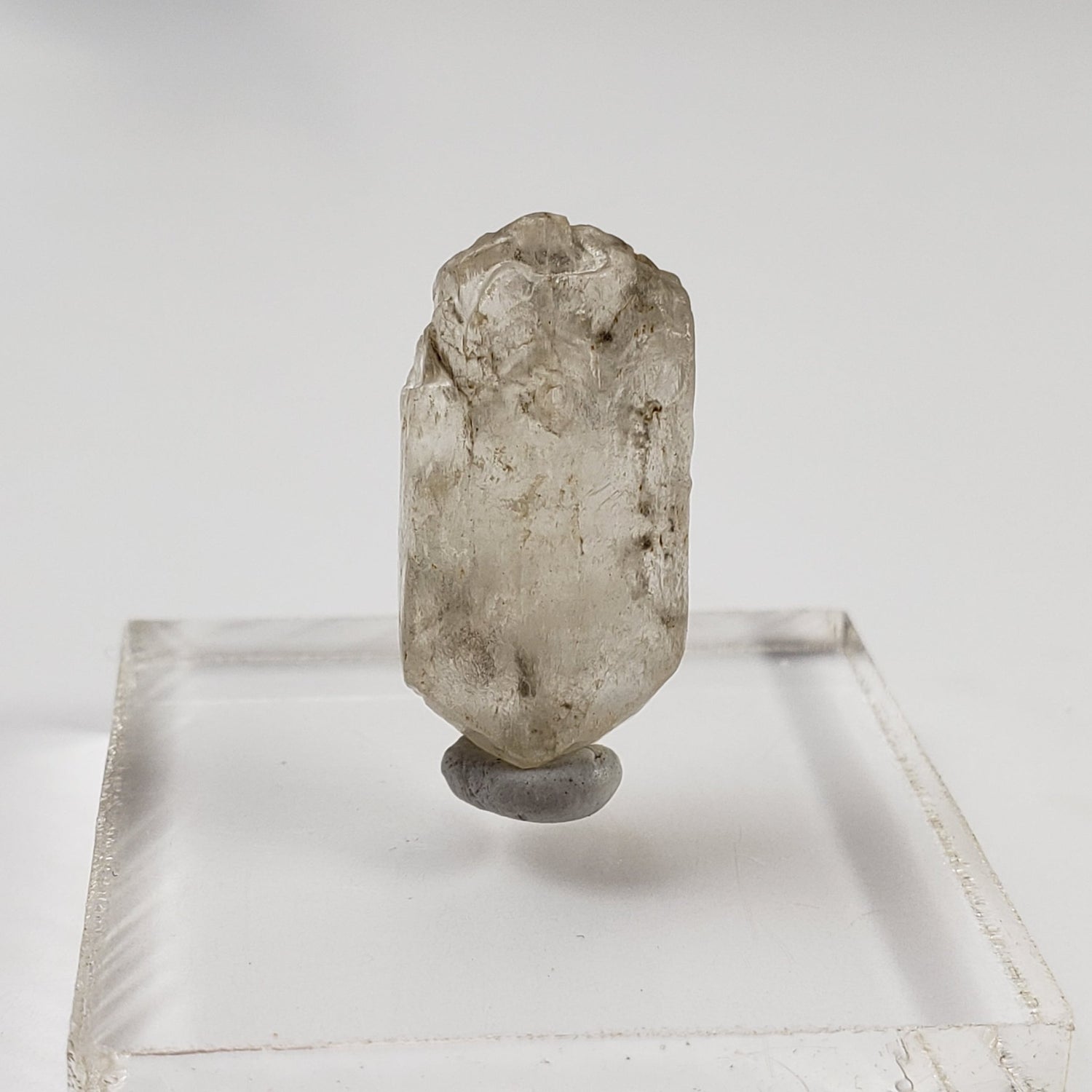
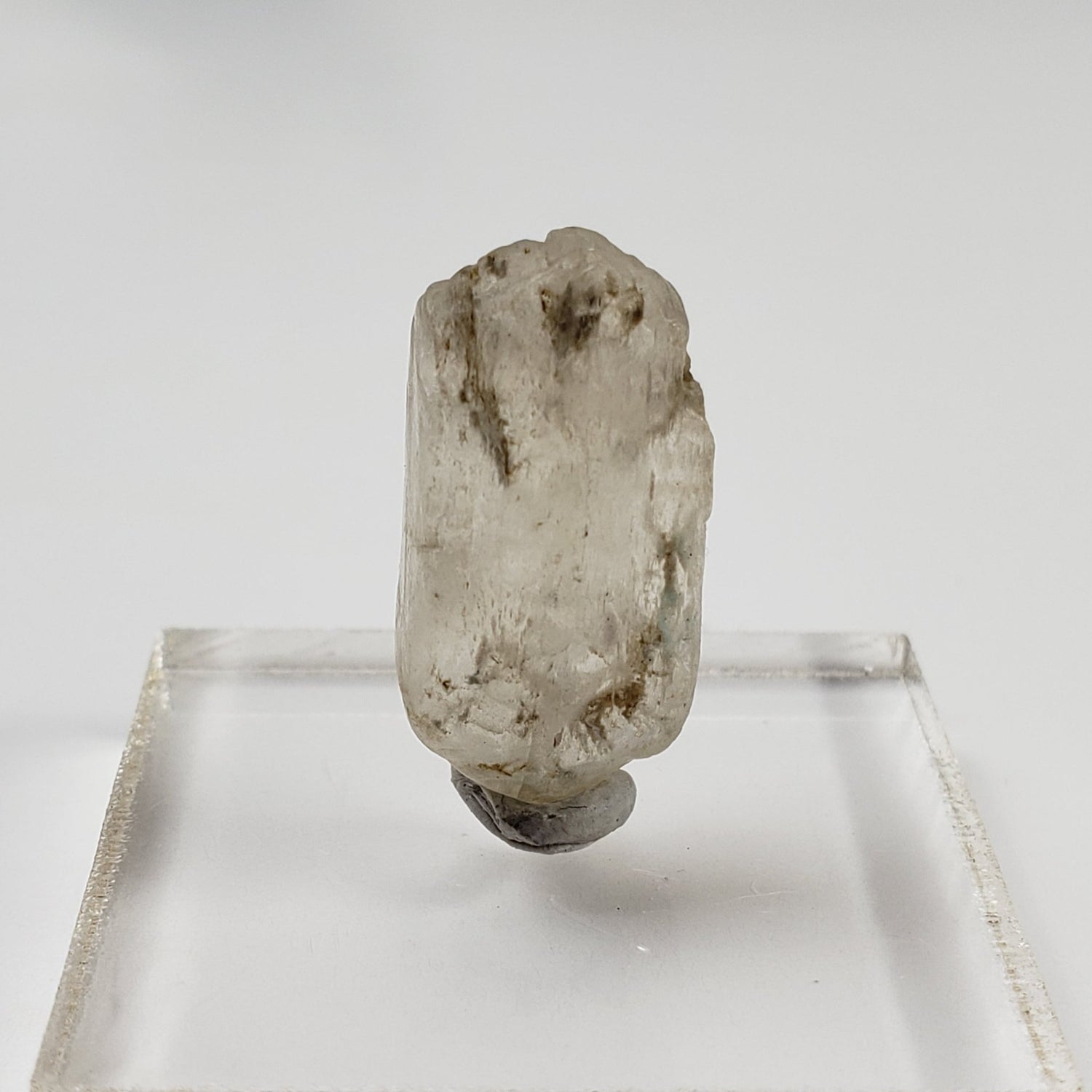
We have for you a small floater crystal of gypsum var Selenite in a perky box found 1962 in Ellsworth Mahoning County, Ohio U.S.A..
Gypsum is one of the more common minerals in sedimentary environments. It is a major rock forming mineral that produces massive beds, usually from precipitation out of highly saline waters. Since it forms easily from saline water, gypsum can have many inclusions of other minerals and even trapped bubbles of air and water.
This specimen has no damage and will ship in its protective display box.
Name: Gypsum var. Selenite
Specimen Size: Thumbnail-Sized
Dimensions: Specimen 20x10x7 mm / 0.8x0.4x0.3 inches
Box 35x33x34 mm / 1.4x1.3x1.3 inches
Weight: 10.9 grams / 0.4 oz (incl box)
Origin: Ellsworth, Mahoning County, Ohio USA


Product Type: Spinel
Approx Weight (per piece): 3.0ct
Size: 10x7.8mm
Shape: Oval Cut
Color: Deep Purple
Clarity: Clean
Origin: Myanmar (Burma)
Spinel comes in a variety of colors, ranging from vivid reds and pinks to blues, purples, oranges, and even black. It is a durable gemstone with a hardness of 8 on the Mohs scale making it suitable for everyday wear in jewelry.
Spinels are believed to enhance energy, promote vitality, and offer protection. Some also associate spinel with love and compassion.
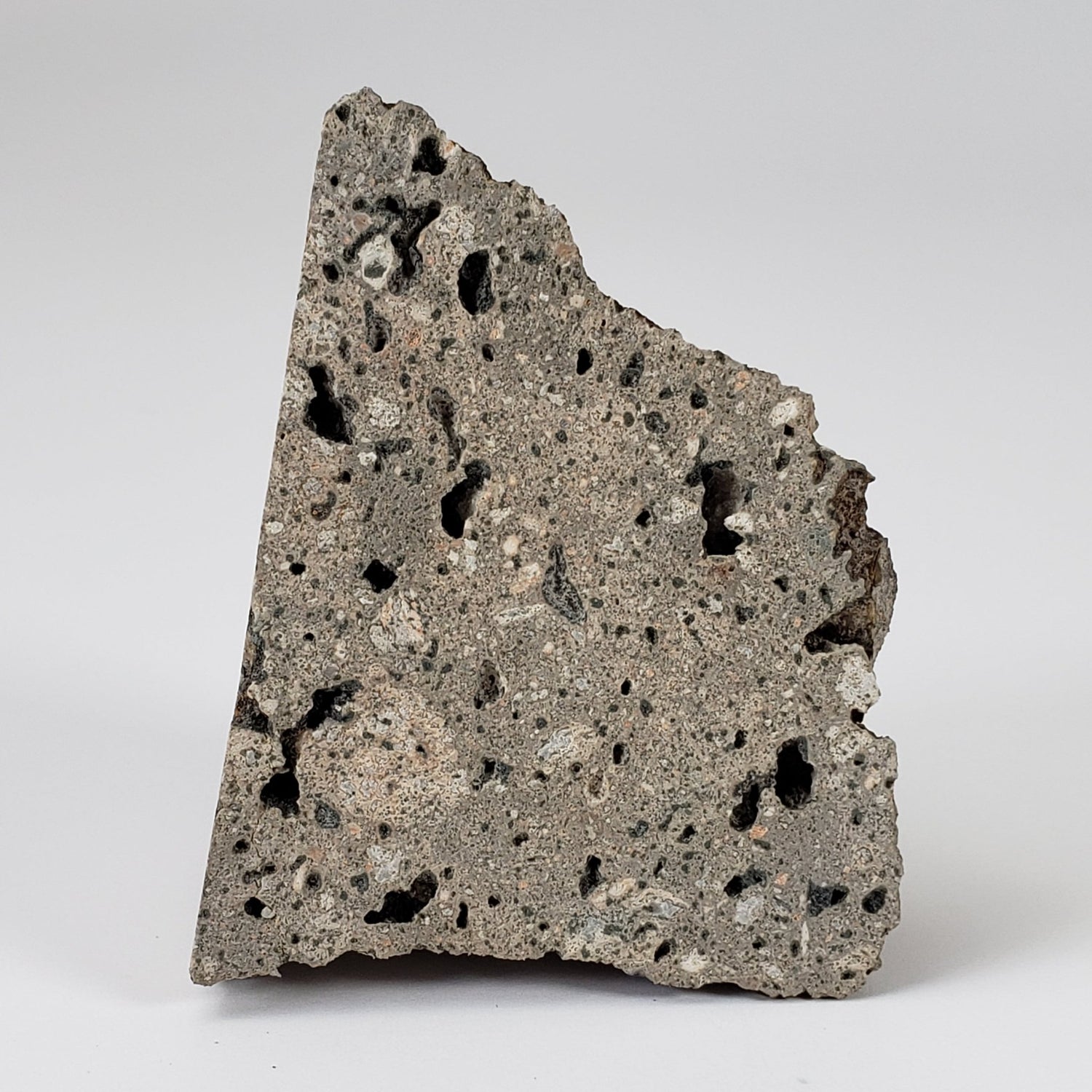
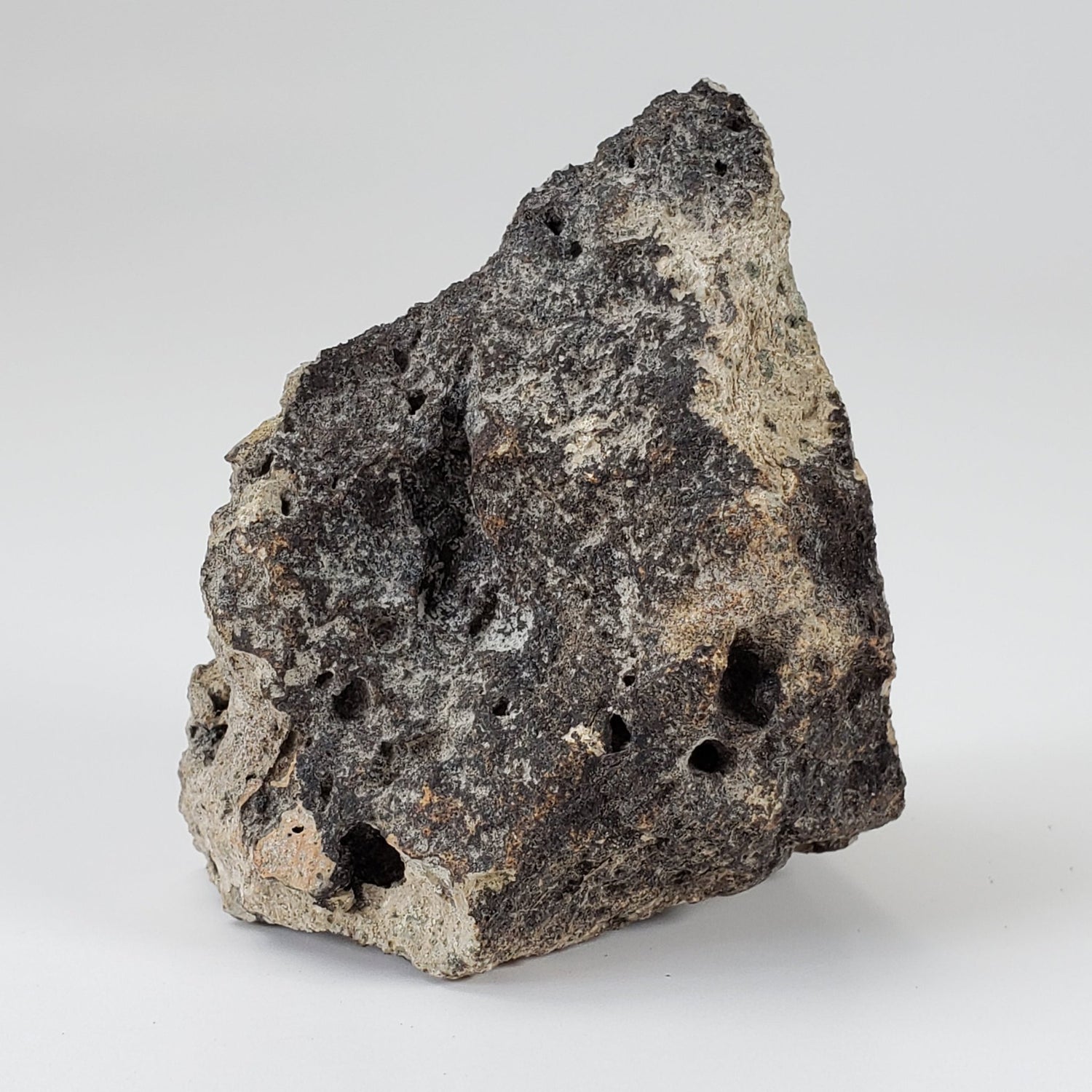
This is a great 50.7 gram Impact Melt Breccia from the Sääksjärvi crater in Finland. It is amazingly light considering its mass of 54x42x25 mm. Although not a meteorite, impactites are directly linked to them and their impacts and are probably going to be one of the rarest collection item you'll ever own. Impactite is a slag-like glassy object found on the surface of the earth, formed from rock melted by the impact of a meteorite.
The term impactite encompasses shock-metamorphosed target rocks, melts or suevites and mixtures of the two, as well as sedimentary rocks with significant impact-derived components and shocked mineral grains, tektites, anomalous geochemical signatures, etc.
Sääksjärvi is a lake in Kokemäki, Satakunta, western Finland, east of the town of Pori. The lake is notable because it overlies an impact crater. The crater is 5 kilometres (3 mi) in diameter and is completely buried under the lake and is not visible at the surface. The age of the impact structure is estimated to be about 543 ± 12 Ma (million years ago), at the boundary between the Ediacaran and Cambrian periods. There are impactite rocks in the southwestern region from the crater confirming its extraterrestrial origin. At the time of its discovery, only one impact crater (Lappajärvi) was known in Finland.
Would be a beautiful addition to any new or existing collection. Comes with a Canagem Collection specimen card.


Pseudomorphs are mineral specimens that have the external shape of one mineral but are composed of another. The pseudomorph goethite after marcasite forms when marcasite is exposed to oxidizing conditions and starts to oxidize and break down. As the marcasite breaks down, goethite replaces it in the crystal structure, preserving the shape of the original marcasite crystal. The resulting specimen appears as a marcasite crystal, but is actually composed of goethite.
The Farafra Oasis, in the White Desert, has been known for a number of years to deliver incredible pseudomorph specimens. The pseudomorphs occur within the Cretaceous Khoman Chalk, from which the White Desert derives its name.
These specimens are remarkable for their relatively sharp marcasite crystal forms in aesthetic crystal clusters. They are in excellent condition. This collector's specimen is unique, of great quality and ready for display.
Name: Goethite After Marcasite Pseudomorph
Specimen Size: Miniature-Sized
Dimensions: 42x39x28 mm / 1.6x1.5x1.1 inches
Weight: 45.8 grams / 1.6 ounces
Origin: Found in White Desert, Farafra Oasis, Egypt

Canagem is proud to be professional member of The International Gem Society(IGS) the world's top resource for gem professionals, enthusiasts, and industry content.