



1573 products
Sort by:
1573 products
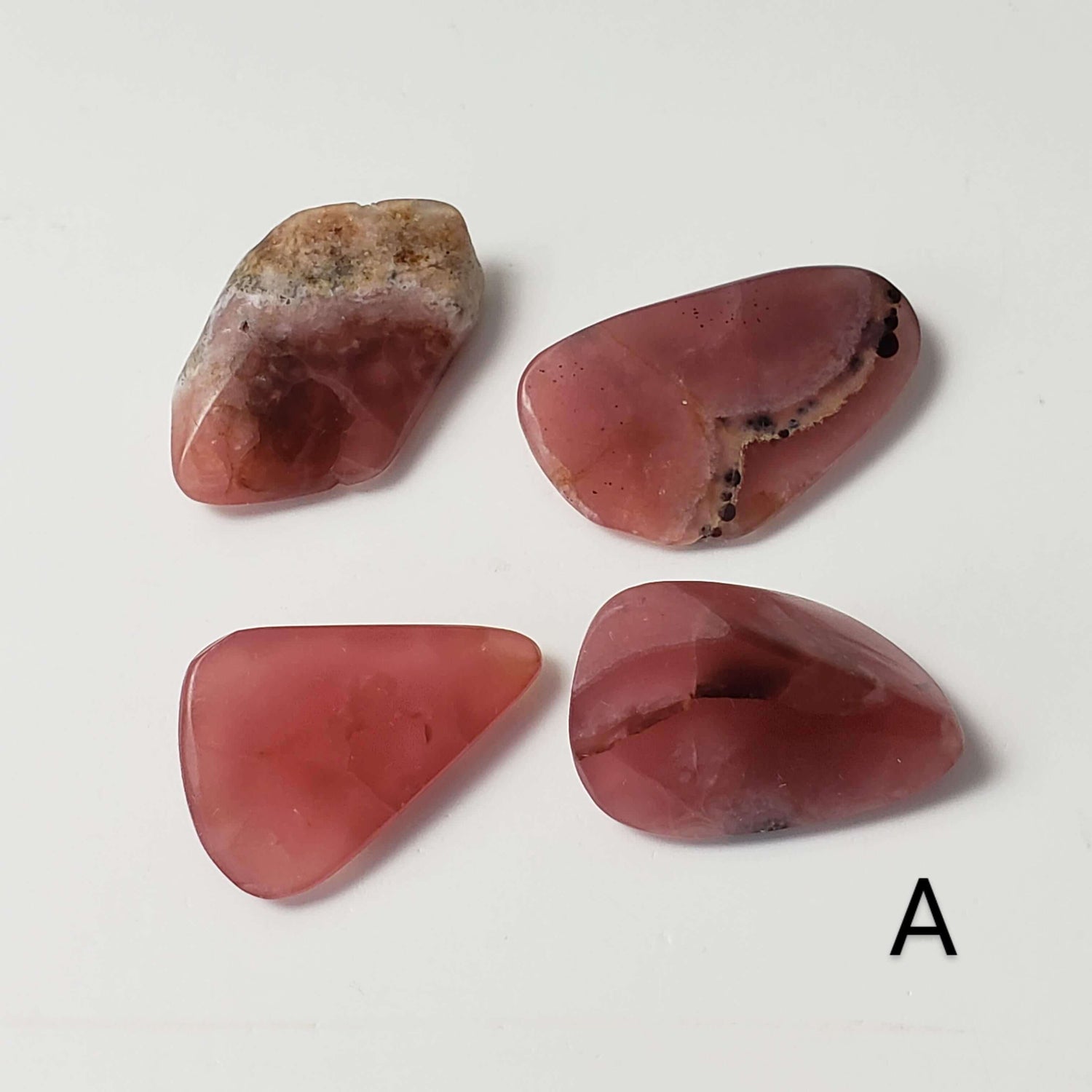
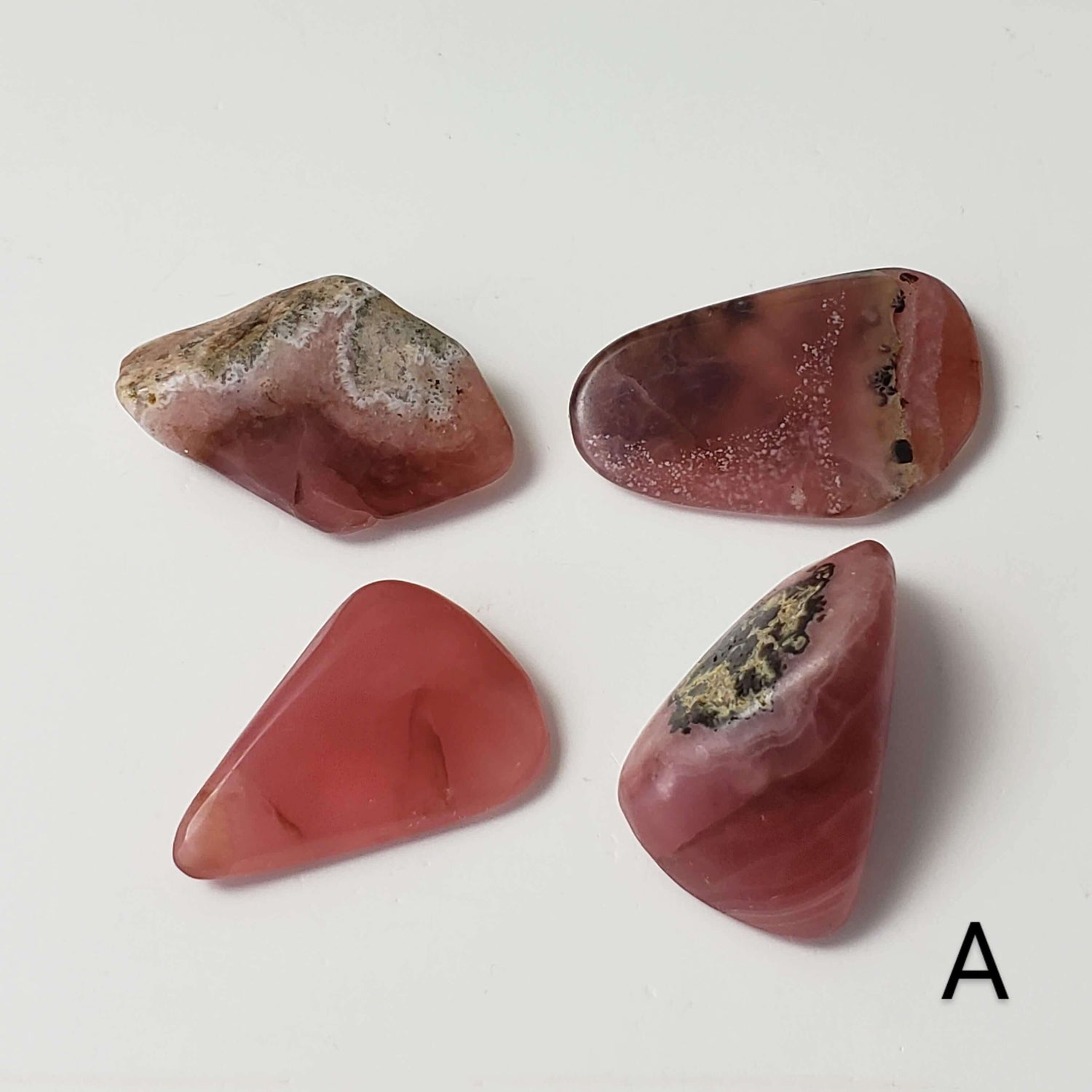
Rhodochrosite is a beautiful pink to red mineral that is typically found in veins associated with silver, copper, lead, and zinc ores. Peru is one of the most famous sources of rhodochrosite, and the country is known for producing some of the most vibrant and high-quality specimens of this mineral.
These tumbled rhodochrosite would make a beautiful addition to a mineral collection. They are also perfectly sized for jewelry-making.
Rhodochrosite is believed to have healing properties, particularly related to the heart and emotional healing. It is said to promote love, compassion, and self-awareness, and to help release emotional trauma and negative patterns. It is also thought to be a stone of creativity, helping to stimulate and enhance artistic expression.
Product Type: Rhodocrosite
Approx Weight (per lot): 6.0 - 17.7 grams
Origin: Peru

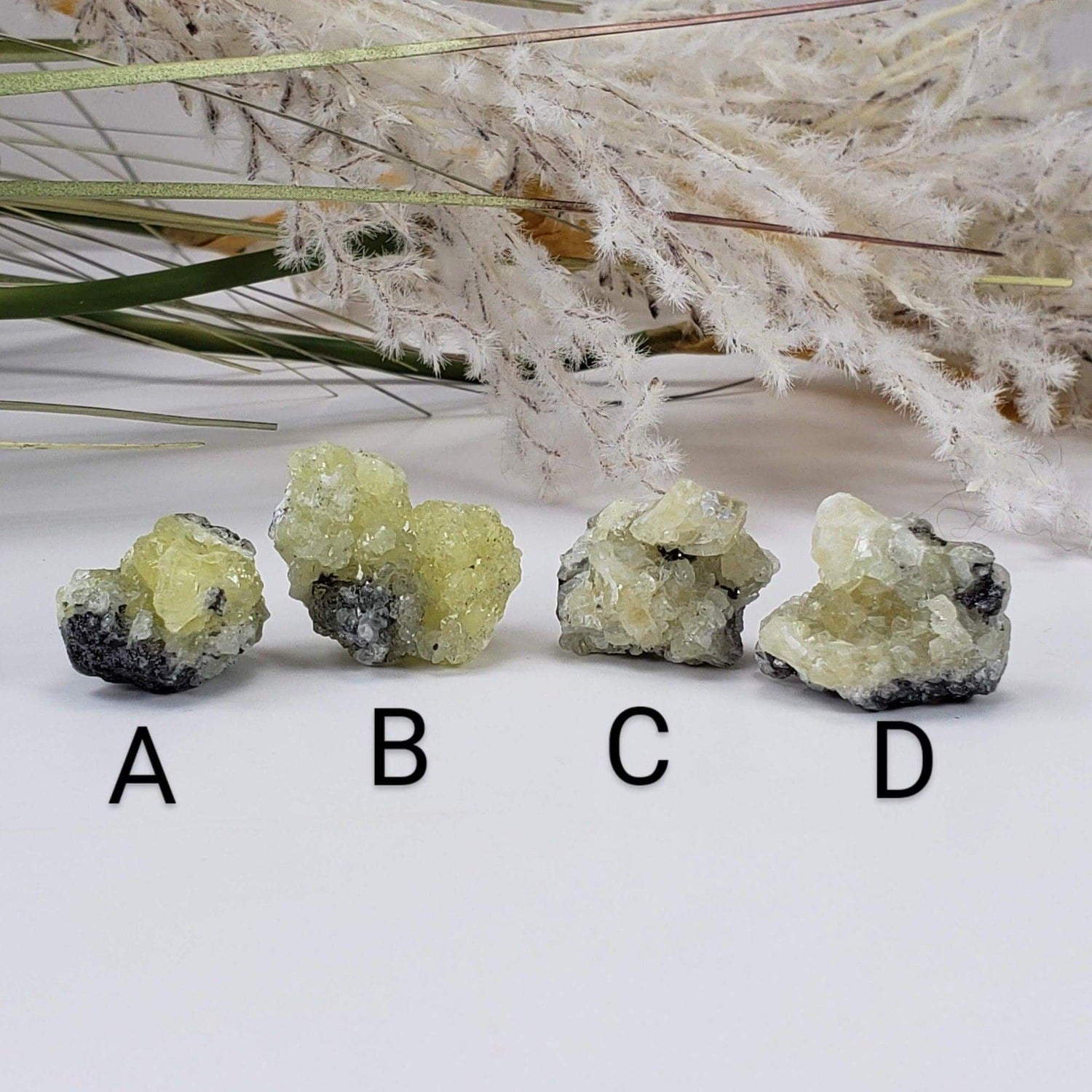
Prehnite is a green to yellowish-green colored mineral that belongs to the phyllosilicate family. It is composed of calcium, aluminum, and silicate, with traces of iron, magnesium, and other elements. Prehnite crystals have a unique pearly luster and can form in a variety of shapes, including tabular, prismatic, and stalactitic formations.
Prehnite is believed to have a calming effect on the mind and emotions, promoting relaxation and inner peace. It is also said to be a stone of unconditional love, compassion, and healing.
Name: Prehnite and Graphite Crystal Cluster
Specimen Size: Thumbnail-Sized
Dimensions: 19-25 mm / .75 - 1.0 inches
Weight: 7.0 - 8.4 Grams / 0.2 - 0.3 Ounces
Origin: Mined in Merelani Hills, Arusha, Tanzania


Product Type: Ruby
Approx Weight (per piece): 1.1ct
Size: 9.5x4.5mm
Shape: Marquise Cut
Color: Pink
Clarity: Fine Crystal
Origin: Africa


Obsidian is a naturally occurring volcanic glass formed when lava extruded from a volcano cools rapidly with minimal crystal growth. Pure obsidian is usually dark in appearance, though the color varies depending on the impurities present. Iron and other transition elements may give the obsidian a dark brown to black color.
Most black obsidians contain nano inclusions of magnetite, an iron oxide. Very few samples of obsidian are nearly colorless. In some stones, the inclusion of small, white, radially clustered crystals (spherulites) of the mineral cristobalite in the black glass produce a blotchy or snowflake pattern (snowflake obsidian).
Name: Obsidian Sphere
Dimensions: 116 mm - 4.57 in
Weight: 2.186 kg - 4 lbs 13 oz
Origin: China


Here we have for you a nice looking tumbled individual of a Sahara Desert NWA unclassified meteorite weighing 75.5 grams. Its dimensions are 49x39x29mm. This never classified North West Africa stone was found in the Sahara desert around 2000.
It's a good quality individual NWA meteorite specimen. Would be a beautiful addition to any new or existing collection. Comes with a Canagem Collection specimen card.


Product Type: Sapphire
Approx Weight (per piece): 2.18ct
Size: 9x7mm
Shape: Oval Cut
Color: Midnight Blue
Clarity: Nice crystal
Origin: Madagascar
Treatment: Diffusion*
*This gemstone was heated and surface diffused to improve its appearance. This is a routine and safe treatment that is accepted worldwide.


Product Type: Moldavite (also known as Impact Melt Glass or Tektite)
Approx Weight (per piece): 3.45ct
Size: 12x10mm
Shape: Oval Cut
Color: Rich Green
Clarity: VSI (Very Slightly Included)
Origin: Chlum Region, Czech Republic
Moldavite is a rare, greenish gemstone formed by the impact of a meteorite. It is a type of tektite, which is a natural glass created from terrestrial material that melted during the intense heat of meteor impacts. Moldavite is believed to have been formed around 15 million years ago when a massive meteorite hit what is now the southern Germany and Czech Republic region, forming the Ries Impact Structure. The impact ejected material into the atmosphere, which later cooled and fell back to Earth as moldavite, primarily in the region of the Czech Republic. The most well-known deposits are located near the Moldau River, from which it gets its name. It is found in small quantities, making it relatively rare.
Moldavite has a distinct green color, ranging from pale olive green to deep forest green. Some specimens even have a slight brownish tint. It often has a wrinkled or pitted surface, a characteristic of its formation process.


The principal member of the Aragonite Group, aragonite is the second most common polymorph of natural calcium carbonate (the most common is calcite). It is significantly less widespread and abundant than calcite and is formed under a much narrower range of physiochemical conditions. It is metastable relative to calcite and often converts to calcite accompanying changes in the environment. It is nearly always a low-temperature, near surface mineral.
Name: Aragonite Sphere
Dimensions: 104 mm - 4.1 inches
Weight: 1.71 kg - 3 lbs 23 oz
Origin: China


Pseudomorphs are mineral specimens that have the external shape of one mineral but are composed of another. The pseudomorph goethite after marcasite forms when marcasite is exposed to oxidizing conditions and starts to oxidize and break down. As the marcasite breaks down, goethite replaces it in the crystal structure, preserving the shape of the original marcasite crystal. The resulting specimen appears as a marcasite crystal, but is actually composed of goethite.
The Farafra Oasis, in the White Desert, has been known for a number of years to deliver incredible pseudomorph specimens. The pseudomorphs occur within the Cretaceous Khoman Chalk, from which the White Desert derives its name.
These specimens are remarkable for their relatively sharp marcasite crystal forms in aesthetic crystal clusters. They are in excellent condition. This collector's specimen is unique, of great quality and ready for display.
Name: Goethite After Marcasite Pseudomorph
Specimen Size: Miniature-Sized Specimen
Dimensions: 32x31x26 mm / 1.3x1.2x1.0 inches
Weight: 29 grams / 1 ounces
Origin: Found in White Desert, Farafra Oasis, Egypt


Product Type: Sunstone
Approx Weight (per piece): 3.5ct
Size: 11.5mm
Shape: Round Cabochon
Color: Orange Red
Clarity: Semi Translucent - Fine Schiller
Origin: India
Sunstone is a type of feldspar, its color is often attributed to the presence of tiny copper platelets or hematite inclusions within the stone. The most common color of sunstone is a warm and vibrant orange or reddish-brown, often referred to as "Heliolite" due to its association with the sun. However, it can also occur in shades of yellow, pink, peach, and even green.
Sunstone is renowned for its unique optical phenomenon called adularescence. This effect creates a shimmering or glowing appearance on the surface of the stone, caused by the reflection of light from within the inclusions. It is relatively durable, with a hardness ranging from 6 to 6.5 on the Mohs scale. While it's suitable for jewelry, care should be taken to avoid rough handling and exposure to extreme conditions.
Sunstone is associated with warmth, positive energy, and leadership qualities. It's thought to bring joy, vitality, and encourage independence and originality.

Canagem is proud to be professional member of The International Gem Society(IGS) the world's top resource for gem professionals, enthusiasts, and industry content.