


1573 products
Sort by:
1573 products


Product Type: Spessartite Garnet
Approx Weight (per piece): 2.3ct
Size: 7.5x9.7mm
Shape: Kite Shape Cut
Color: Dark Red Orange
Clarity: VSI (Very Slightly Included)
Origin: Nigeria
Treatment: None, Untreated


Here we have for you a nice looking individual fragment of a Sahara Desert NWA unclassified meteorite weighing 210.8 grams. Its dimensions are 113x42x34mm. This never classified North West Africa stone was found in the Sahara desert around 2000.
It's a good quality individual fragment NWA meteorite specimen. Some weathering shows the meteorite's time spent aging in the desert. Would be a beautiful addition to any new or existing collection. Comes with a Canagem Collection specimen card.


This is a very fine green Apophyllite with Stilbite from Parsboro, Cape d'Or, Nova Scotia, Canada. It is one of the rare green specimens which was collected in the 2002, and is a quality specimen.
One of the distinguishing features of apophyllite is its ability to form well-defined crystals with a pyramid-like shape. These crystals often exhibit a prismatic or pseudo-cubic habit and have a vitreous luster. Apophyllite is transparent to translucent and is commonly found in colorless or white varieties, although it can also occur in shades of green, pink, yellow, or brown.
Stilbite is a zeolite mineral appreciated for its delicate crystal formations and pastel hues, ranging from colorless to white, yellow, pink, and peach. It forms distinctive tabular crystals with a bowtie or butterfly shape and exhibits a vitreous to pearly luster. Commonly found in cavities in volcanic rocks, stilbite is often associated with other zeolite minerals.
Name: Apophyllite, Stilbite Crystals
Specimen Size: Miniature-Sized
Dimensions: 45x33x33 mm / 1.8x1.3x1.3 inches
Weight: 35.2 gr / 1.2 oz
Details: Mined in Cape D'Or, Nova Scotia, Canada


Here we have for you a nice looking end cut of a Sahara Desert NWA unclassified meteorite weighing 224 grams. Its dimensions are 59x58x37mm. This never classified North West Africa stone was found in the Sahara desert around 2000.
It's a good quality cut NWA meteorite specimens showing interesting internal structure (L5?) and somewhat attractive with a mottled interior with chondrules and metallic flakes. Some weathering shows the meteorite's time spent aging in the desert. Displays nicely with a ground and rough polished without a mirror finish.
Would be a beautiful addition to any new or existing collection. Comes with a Canagem Collection specimen card.


Product Name: Kunzite
Approx Weight (per piece): 2.0ct
Size: 6mm
Shape: Square Cut
Color: Pink
Clarity: Clean
Origin: Afghanistan
Treatment: None


Product Type: Sapphire
Approx Weight (per piece): 0.62ct
Size: 6x4mm
Shape: Oval Cut
Color: Greenish Yellow
Clarity: Clean
Origin: Mogok, Myanmar (Burma)
Treatment: None


Product Type: Moldavite (Impactite Green Melt Glass)
Approx Weight (per piece): 2.78ct
Size: 11x9mm
Shape: Oval Cut
Color: Rich Green
Clarity: VSI (Very Slightly Included)
Origin: Chlum Region, Czech Republic
Moldavite is a rare, greenish gemstone formed by the impact of a meteorite. It is a type of tektite, which is a natural glass created from terrestrial material that melted during the intense heat of meteor impacts. Moldavite is believed to have been formed around 15 million years ago when a massive meteorite hit what is now the southern Germany and Czech Republic region, forming the Ries Impact Structure. The impact ejected material into the atmosphere, which later cooled and fell back to Earth as moldavite, primarily in the region of the Czech Republic. The most well-known deposits are located near the Moldau River, from which it gets its name. It is found in small quantities, making it relatively rare.
Moldavite has a distinct green color, ranging from pale olive green to deep forest green. Some specimens even have a slight brownish tint. It often has a wrinkled or pitted surface, a characteristic of its formation process.
.


Product Type: Moldavite (Impactite Green Melt Glass)
Approx Weight (per piece): 1.55ct
Size: 8mm
Shape: Round Cut
Color: Rich Green
Clarity: VSI (Very Slightly Included)
Origin: Chlum Region, Czech Republic
Moldavite is a rare, greenish gemstone formed by the impact of a meteorite. It is a type of tektite, which is a natural glass created from terrestrial material that melted during the intense heat of meteor impacts. Moldavite is believed to have been formed around 15 million years ago when a massive meteorite hit what is now the southern Germany and Czech Republic region, forming the Ries Impact Structure. The impact ejected material into the atmosphere, which later cooled and fell back to Earth as moldavite, primarily in the region of the Czech Republic. The most well-known deposits are located near the Moldau River, from which it gets its name. It is found in small quantities, making it relatively rare.
Moldavite has a distinct green color, ranging from pale olive green to deep forest green. Some specimens even have a slight brownish tint. It often has a wrinkled or pitted surface, a characteristic of its formation process.


Product Type: Moldavite (Impactite Green Melt Glass)
Approx Weight (per piece): 2.15ct
Size: 14x7mm
Shape: Marquise Cut
Color: Rich Green
Clarity: VSI (Very Slightly Included)
Origin: Chlum Region, Czech Republic
Moldavite is a rare, greenish gemstone formed by the impact of a meteorite. It is a type of tektite, which is a natural glass created from terrestrial material that melted during the intense heat of meteor impacts. Moldavite is believed to have been formed around 15 million years ago when a massive meteorite hit what is now the southern Germany and Czech Republic region, forming the Ries Impact Structure. The impact ejected material into the atmosphere, which later cooled and fell back to Earth as moldavite, primarily in the region of the Czech Republic. The most well-known deposits are located near the Moldau River, from which it gets its name. It is found in small quantities, making it relatively rare.
Moldavite has a distinct green color, ranging from pale olive green to deep forest green. Some specimens even have a slight brownish tint. It often has a wrinkled or pitted surface, a characteristic of its formation process.
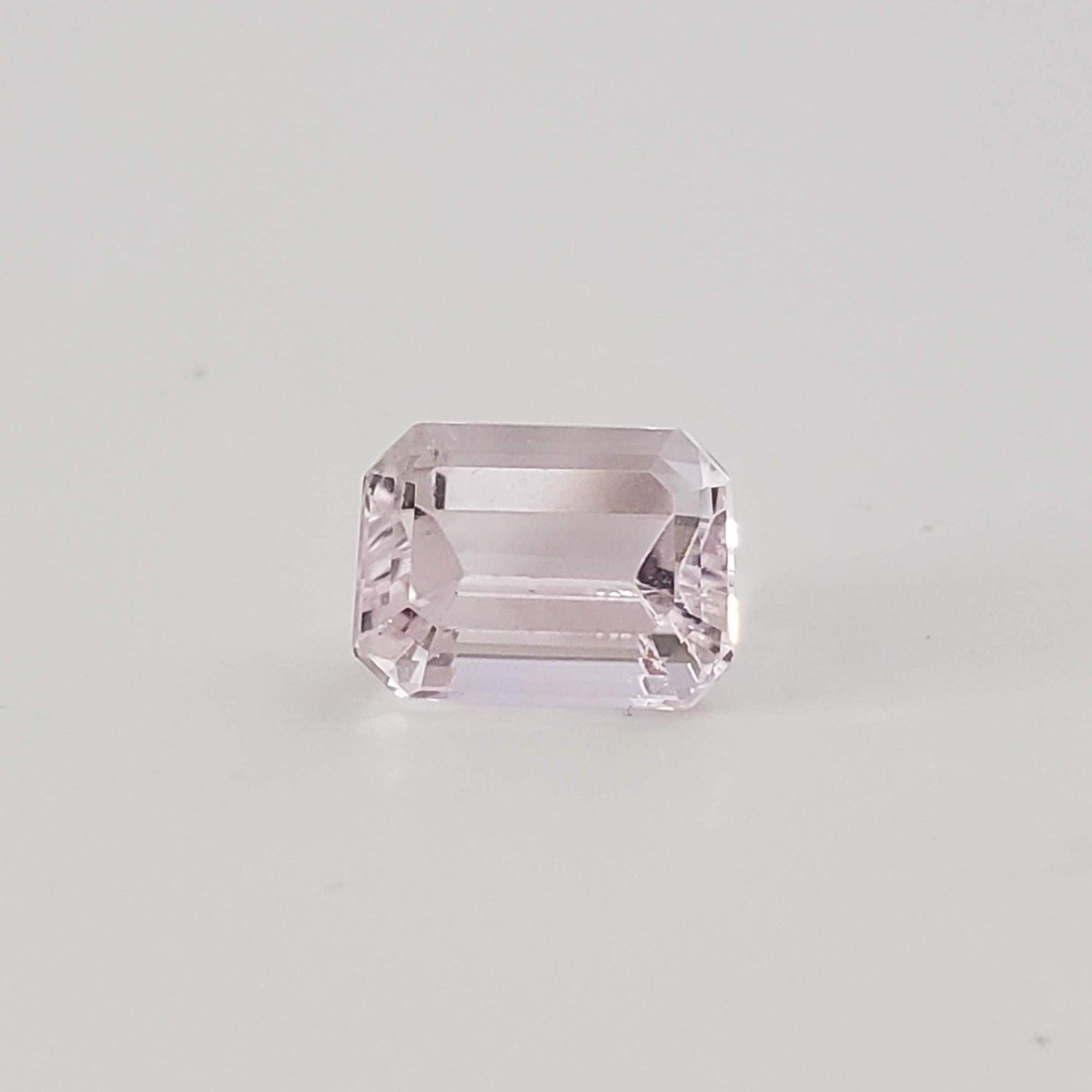
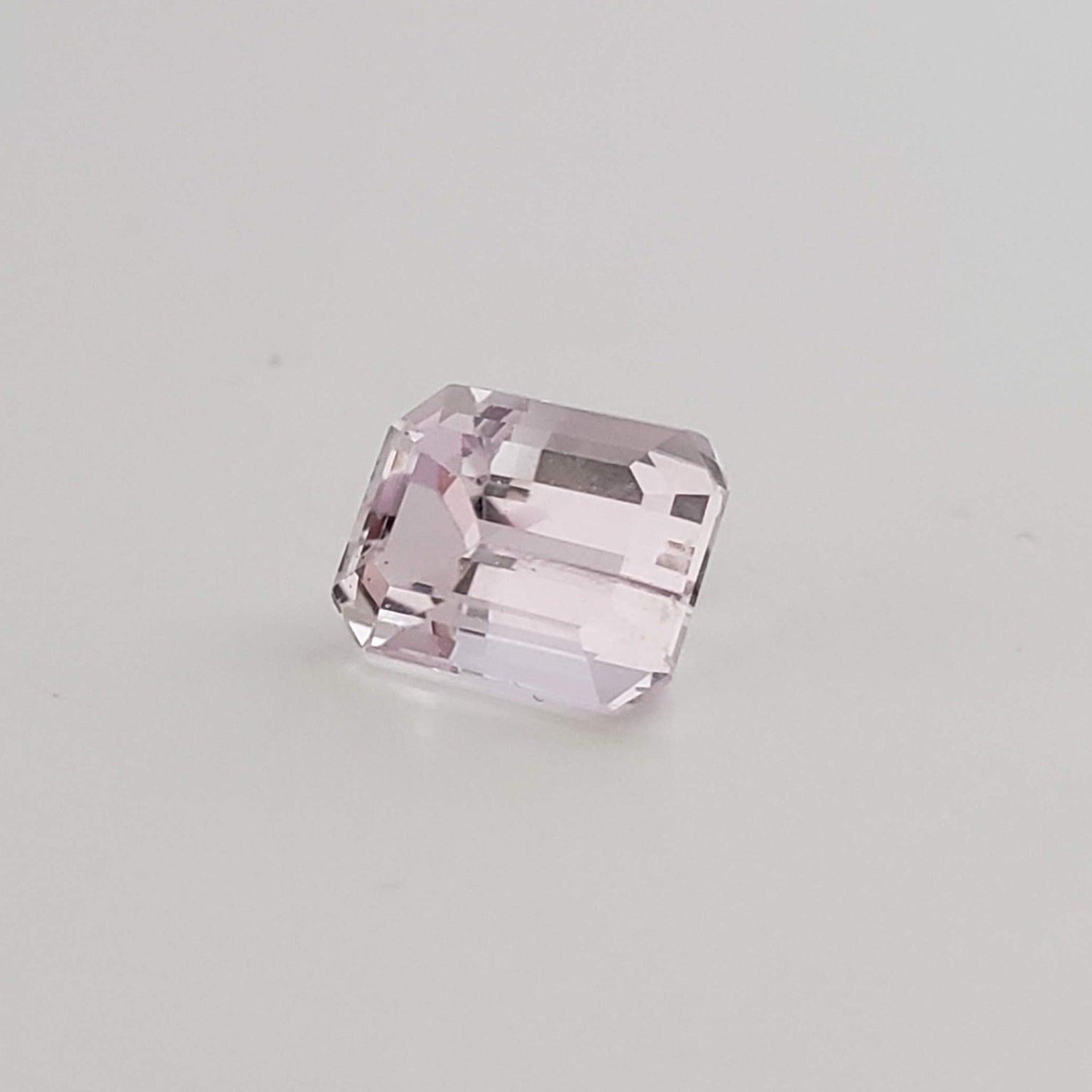
Product Name: Kunzite
Approx Weight (per piece): 3.02ct
Size: 9x7mm
Shape: Octagon Cut
Color: Pink
Clarity: Clean
Origin: Afghanistan
Treatment: None

Canagem is proud to be professional member of The International Gem Society(IGS) the world's top resource for gem professionals, enthusiasts, and industry content.