



1573 products
Sort by:
1573 products


Product Type: Sodalite
Approx Weight (per piece): 39.7ct
Size: 36x29mm
Shape: Triangular Cabochon
Color: Navy Blue with Intricate White Patterns
Clarity: Opaque - Good Polish with Fine Glow
Origin: Africa
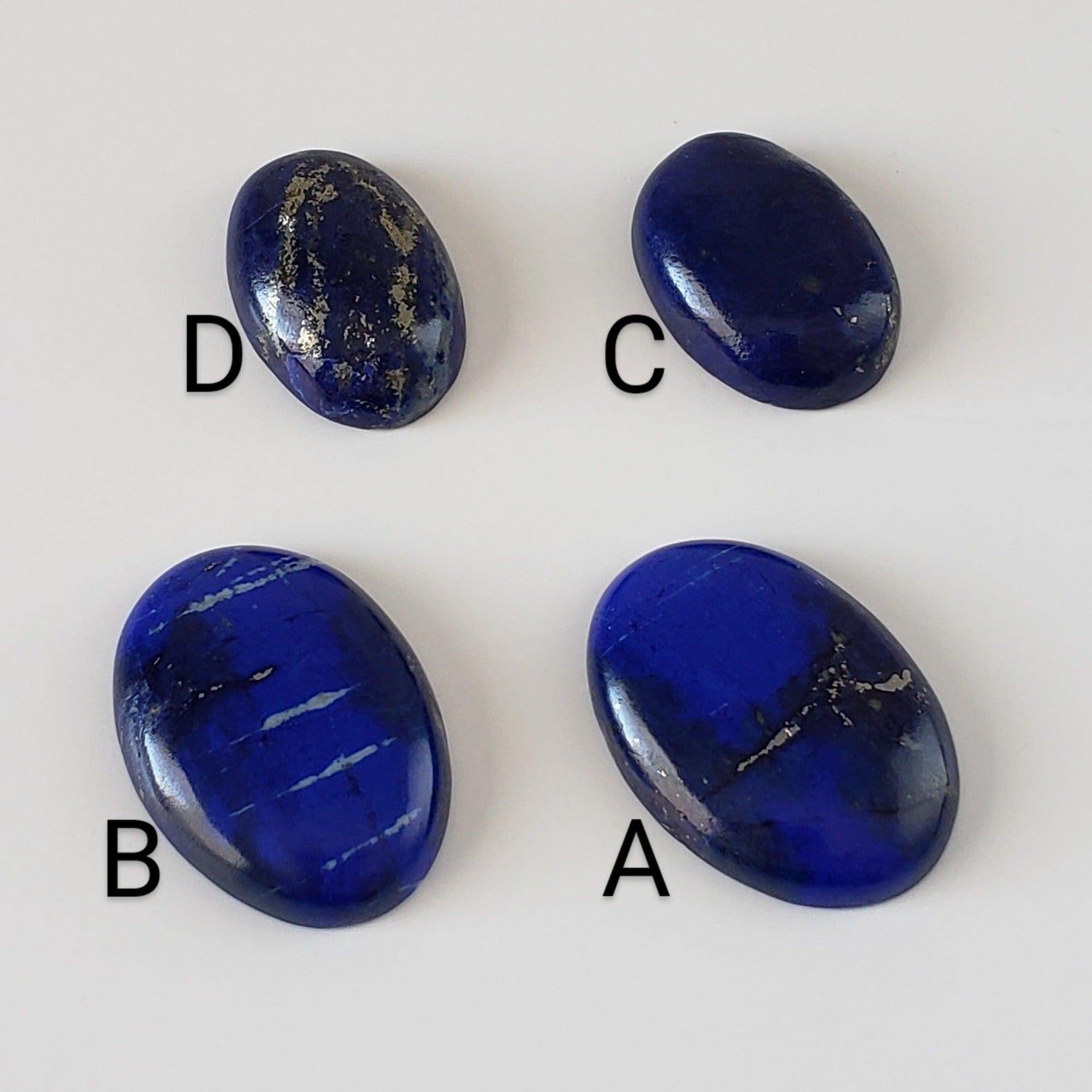
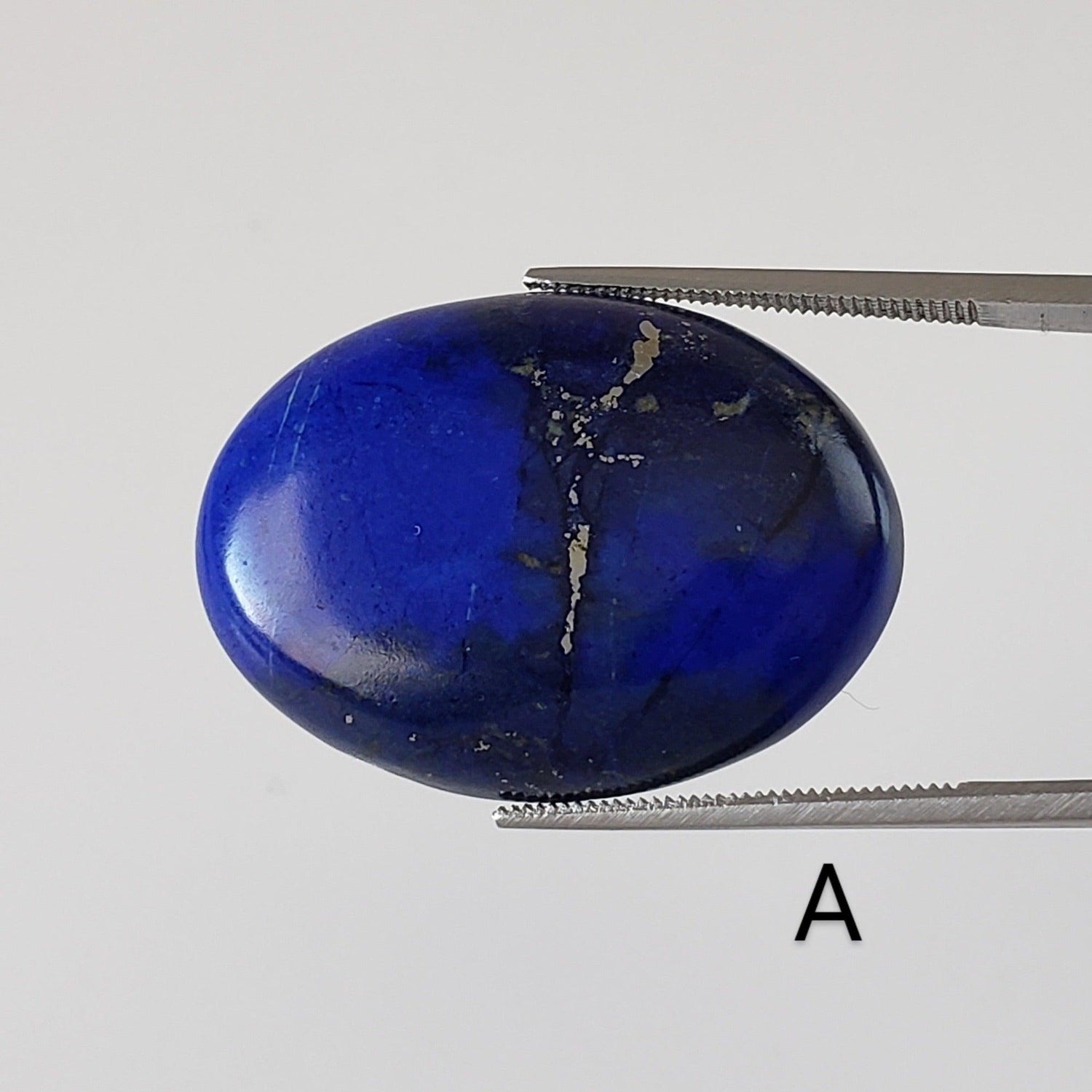
Product Type: Lapis Lazuli
Size: Various mm - see below for measurements of each stone
Shape: Oval Cabochon
Color: Royal Blue
Clarity: Opaque
Origin: Afghanistan
The dimensions of each cabochon are as follows:
A - 30x21.6mm
B - 29.5x21.2mm
C - 24x17.5mm
D - 24x16.5mm
Lapis lazuli is a vivid blue metamorphic rock and a gemstone that has been prized for its intense color and historical significance for thousands of years. It's composed of lazurite (for the blue color), calcite, sodalite, and pyrite. It is the presence of pyrite that causes the gold-colored flecks or veins in the stone. Lapis lazuli has a moderate hardness, typically ranging from 5 to 5.5 on the Mohs scale. High-quality lapis lazuli has been historically sourced from mines in Afghanistan; however, other deposits are found in countries such as Russia, Chile, Italy, and the United States.
Lapis lazuli has been used for various purposes throughout history. It has been highly prized for ornamental and decorative purposes, including as a gemstone in jewelry and art. The ancient Egyptians used lapis lazuli in the creation of jewelry, amulets, and cosmetics. The pigment ultramarine, derived from lapis lazuli, was highly valued by Renaissance painters.
Lapis lazuli is believed to promote self-awareness and mental clarity.


Product Type: Moldavite (Impactite Green Melt Glass)
Approx Weight (per piece): 2.00ct
Size: 10x8mm
Shape: Oval Cut
Color: Rich Green
Clarity: VSI (Very Slightly Included)
Origin: Chlum Region, Czech Republic
Moldavite is a rare, greenish gemstone formed by the impact of a meteorite. It is a type of tektite, which is a natural glass created from terrestrial material that melted during the intense heat of meteor impacts. Moldavite is believed to have been formed around 15 million years ago when a massive meteorite hit what is now the southern Germany and Czech Republic region, forming the Ries Impact Structure. The impact ejected material into the atmosphere, which later cooled and fell back to Earth as moldavite, primarily in the region of the Czech Republic. The most well-known deposits are located near the Moldau River, from which it gets its name. It is found in small quantities, making it relatively rare.
Moldavite has a distinct green color, ranging from pale olive green to deep forest green. Some specimens even have a slight brownish tint. It often has a wrinkled or pitted surface, a characteristic of its formation process.


This is a nice 45.34 gram natural untreated Indochinite Tektite from Maoming City, Guangdong Province, China. It is almost round at 40x32x29mm in size. Although not a meteorite, tektite is directly linked to them or their impacts, just consider its age of around 780,000 years old.
Tektite can still be interesting just because of the persistent mystery that resisted clear explanations of their creation for generations of geologists.
This piece displays very well and is a very nice size showing multiple characteristics of its origin. It has a rounded shape with a beautiful pitted body. Would make a beautiful addition to any collection or start one today.


Lepidolite is a lilac-gray or rose-colored member of the mica group of minerals. Because lepidolite is a lithium-bearing mica, it is often wrongly assumed that lithium is what causes the pink hues that are so characteristic of this mineral. Instead, it is trace amounts of manganese that cause the pink, purple, and red colors. The most notable and certainly the most studied of these deposits is the Brown Derby #1 Pegmatite, located in the Ohio City/Quartz Creek District, approximately 18 miles northeast of Gunnison in the high mountains of Central Colorado.
This top specimen is in very good condition. Would be a beautiful addition to any new or existing collection.
Name: Lepidolite on Quartz Crystal Cluster
Specimen Size: Large Cabinet Sized
Dimensions: 111x85x57 mm / 4.4x3.3x2.2 inches
Weight: 661Grams / 1 lb 7 oz
Origin: Mined in Brown Derby Mine, Quartz Creek Pegmatite Mining District, Gunnison County, Colorado, USA
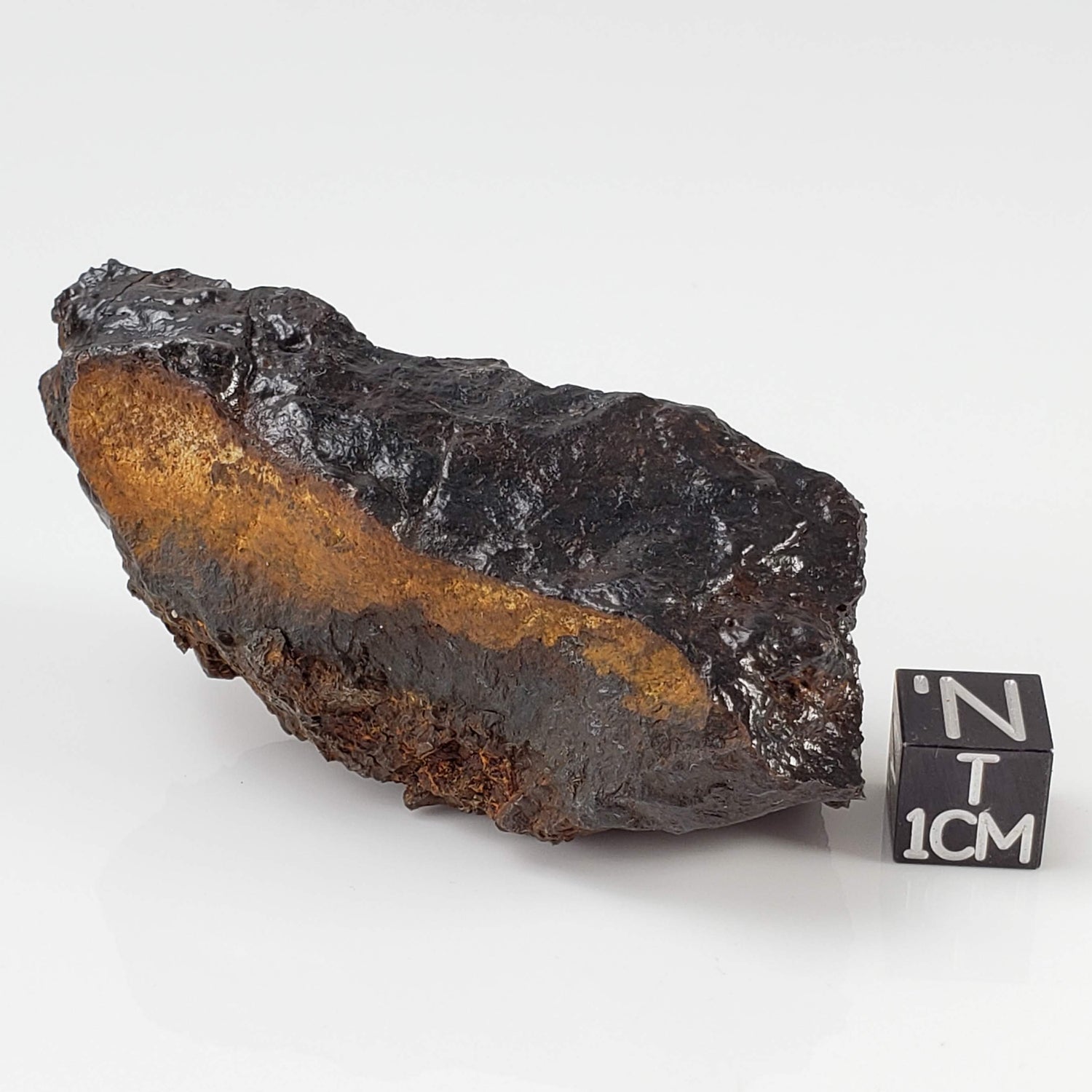
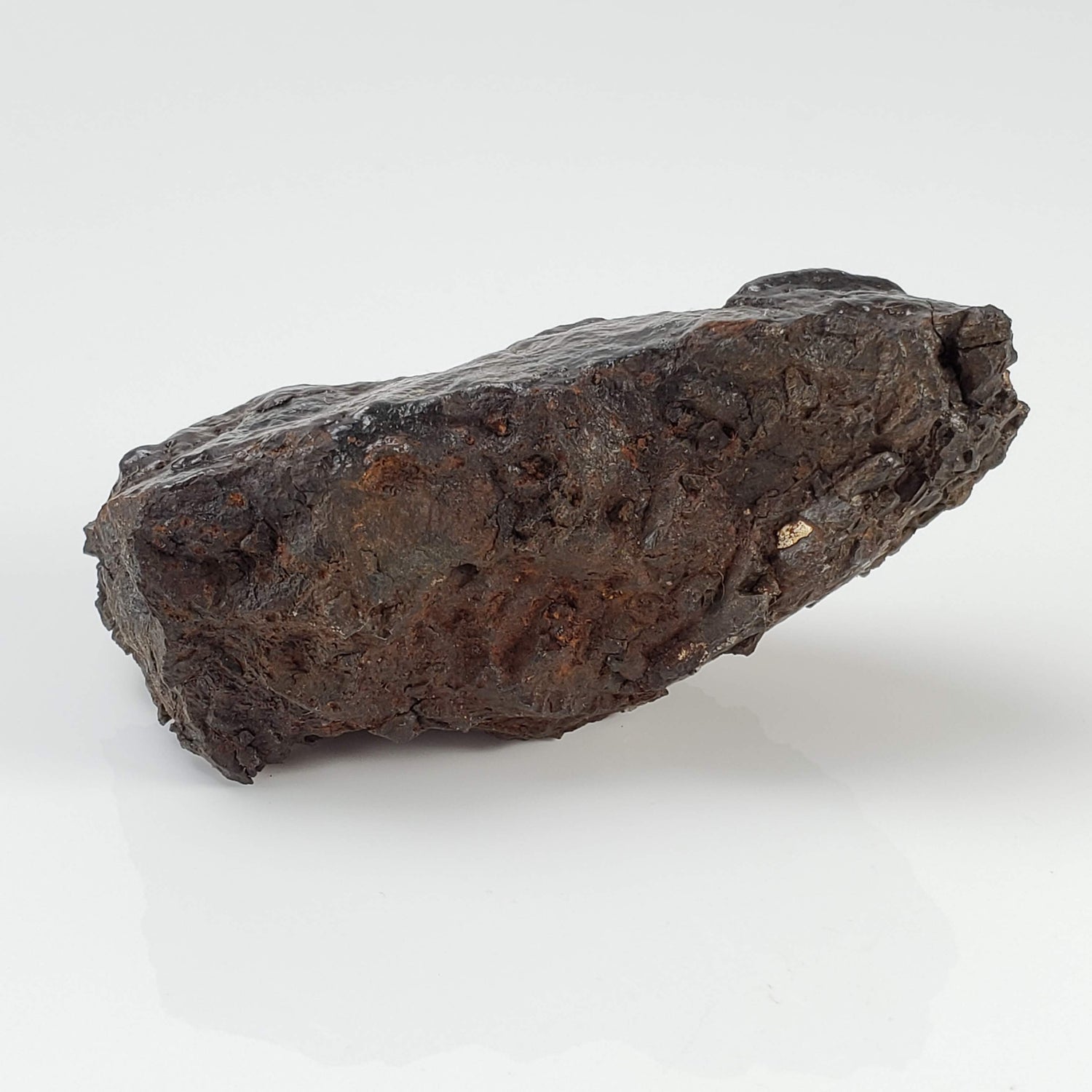
This is a superb Nantan meteorite individual specimen, directly from Guangxi, China. Its dimensions are 69x26x32 mm and it weighs 157.3 grams
The Nantan meteorites are a must for all collectors, more so that it is now very difficult to find worthy specimen. They are a very interesting IAB-MG iron discovered in 1958 and there is an estimated 9.5 T of this material. This is 1 of 88 approved meteorites classified as Iron, IAB-MG.
Would be a beautiful addition to any new or existing collection. Comes with a Canagem Collection specimen card.


These are striking Charoite cabochons from Russia. Charoite is a purple to violet silicate mineral with a striking appearance. Its vibrant purple color grabs a person's attention. Then, upon closer examination, the viewer discovers interesting banding, swirls, scales, or radial and parallel habits.
Charoite stones are used for carving ornamental objects and are also cut and polished into attractive purple veined cabochons for jewelry use.
Product Type: Charoite
Approx Weight (per piece): 10.8-13.7gr / 54.2-68.9ct
Shape: Various Shape Cabochon
Color: Purple
Clarity: Opaque
Origin: Russia
Weight and dimensions for each stone are as follows;
A: 10.8g | 54.2ct | 33.5x24x6.5mmB: 13.7g | 68.9ct | 29.7x29.5x8.4mm
C: 11.3g | 56.3ct | 38.2x27.7x5.7mm


Product Type: Zircon
Approx Weight (per piece): 1.85ct
Size: 8x5.6mm
Shape: Oval Cut
Color: Medium Blue
Clarity: Clean
Origin: Cambodia
Zircon comes in a variety of colors, including blue, yellow, green, brown, and red, and is renowned for its exceptional brilliance. Blue zircon, in particular, is highly sought after for its vibrant and saturated hue. Zircon is found in many locations worldwide, including Sri Lanka, Myanmar, Cambodia, and Australia. Some of the oldest zircon crystals have been dated to be over 4 billion years old, making them among the oldest minerals on Earth.
Zircon has a hardness of 6.5 to 7.5 on the Mohs scale, making it durable enough for use in various types of jewelry. However, care should be taken to avoid sharp blows and extreme temperatures.
Zircon is associated with promoting spiritual growth, mental clarity, and prosperity. It is also thought to enhance self-confidence and provide protection.
It's important to note the distinction between natural zircon and cubic zirconia. Natural zircon is a genuine gemstone, while cubic zirconia is a synthetic material often used as a diamond simulant.


Product Type: Zircon
Approx Weight (per piece): 1.40ct
Size: 7x5mm
Shape: Oval Cut
Color: Medium Blue
Clarity: Clean
Origin: Cambodia
Zircon comes in a variety of colors, including blue, yellow, green, brown, and red, and is renowned for its exceptional brilliance. Blue zircon, in particular, is highly sought after for its vibrant and saturated hue. Zircon is found in many locations worldwide, including Sri Lanka, Myanmar, Cambodia, and Australia. Some of the oldest zircon crystals have been dated to be over 4 billion years old, making them among the oldest minerals on Earth.
Zircon has a hardness of 6.5 to 7.5 on the Mohs scale, making it durable enough for use in various types of jewelry. However, care should be taken to avoid sharp blows and extreme temperatures.
Zircon is associated with promoting spiritual growth, mental clarity, and prosperity. It is also thought to enhance self-confidence and provide protection.
It's important to note the distinction between natural zircon and cubic zirconia. Natural zircon is a genuine gemstone, while cubic zirconia is a synthetic material often used as a diamond simulant.


Product Type: Zircon
Approx Weight (per piece): 1.15ct
Size: 7x5mm
Shape: Oval Cut
Color: Medium Blue
Clarity: Clean
Origin: Cambodia
Zircon comes in a variety of colors, including blue, yellow, green, brown, and red, and is renowned for its exceptional brilliance. Blue zircon, in particular, is highly sought after for its vibrant and saturated hue. Zircon is found in many locations worldwide, including Sri Lanka, Myanmar, Cambodia, and Australia. Some of the oldest zircon crystals have been dated to be over 4 billion years old, making them among the oldest minerals on Earth.
Zircon has a hardness of 6.5 to 7.5 on the Mohs scale, making it durable enough for use in various types of jewelry. However, care should be taken to avoid sharp blows and extreme temperatures.
Zircon is associated with promoting spiritual growth, mental clarity, and prosperity. It is also thought to enhance self-confidence and provide protection.
It's important to note the distinction between natural zircon and cubic zirconia. Natural zircon is a genuine gemstone, while cubic zirconia is a synthetic material often used as a diamond simulant.

Canagem is proud to be professional member of The International Gem Society(IGS) the world's top resource for gem professionals, enthusiasts, and industry content.