

📢 Notice to ALL Customers 📢
52 products
Sort by:
52 products
52 products


This is an outstanding specimen with an eye catching mix of crystals. This cluster is comprised of Dolomite with a patch of terminated calcite, tiny terminated quartz crystals and traces of pyrite matrix,. This top specimen has it all and is in great condition. Will mesmerize you for hours examining all angles of this fantastic specimen. Would be an amazing addition to any new or existing collection.
Name: Dolomite, Pyrite, Calcite and Quartz Crystal Cluster
Specimen Size: Large Cabinet-Sized
Dimensions: 165x114x82 mm / 6.5x4.5x3.25 inches
Weight: 1.68 KG / 3 Lbs 11 Ounces
Origin: Mined in Sainte Clotilde, Quebec Canada
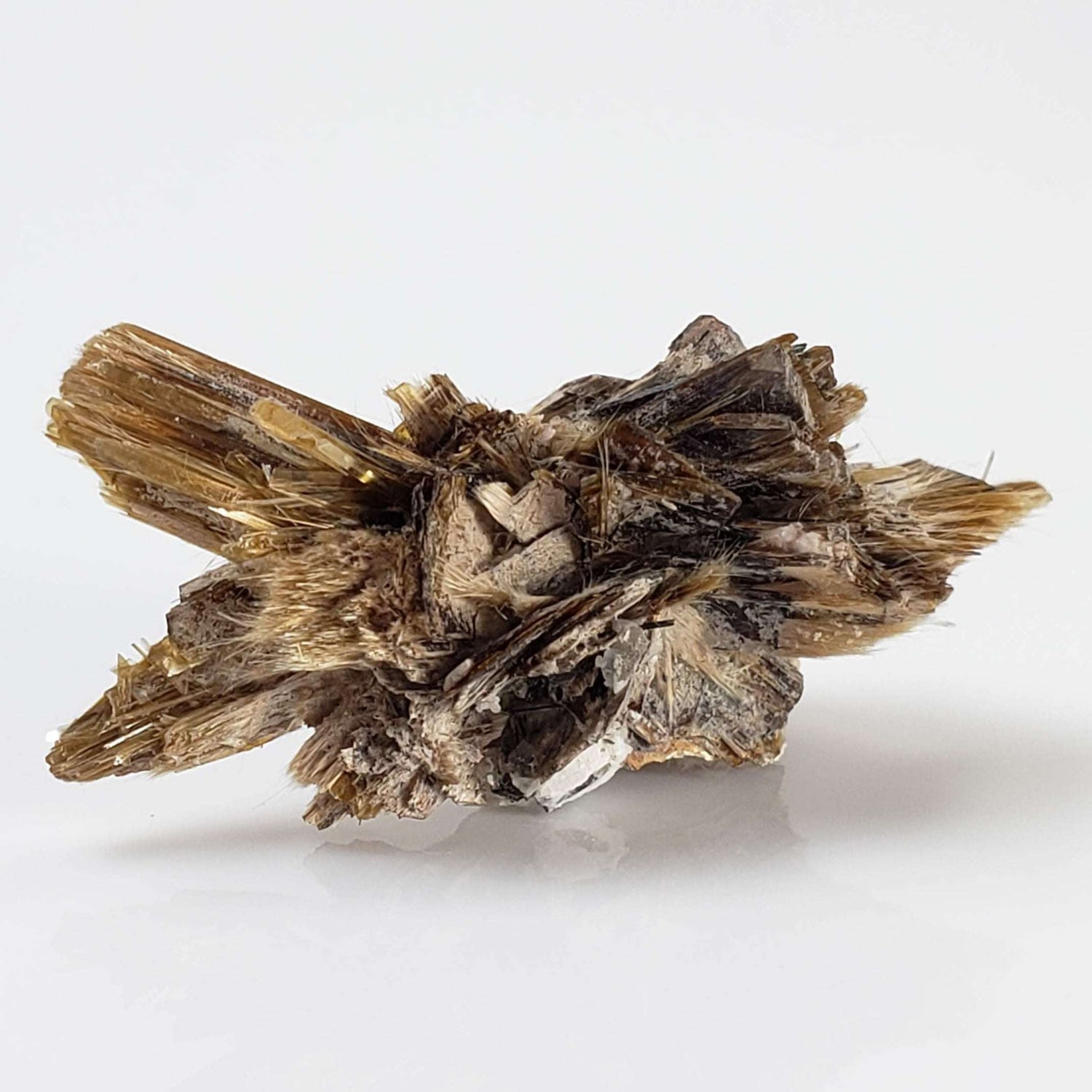
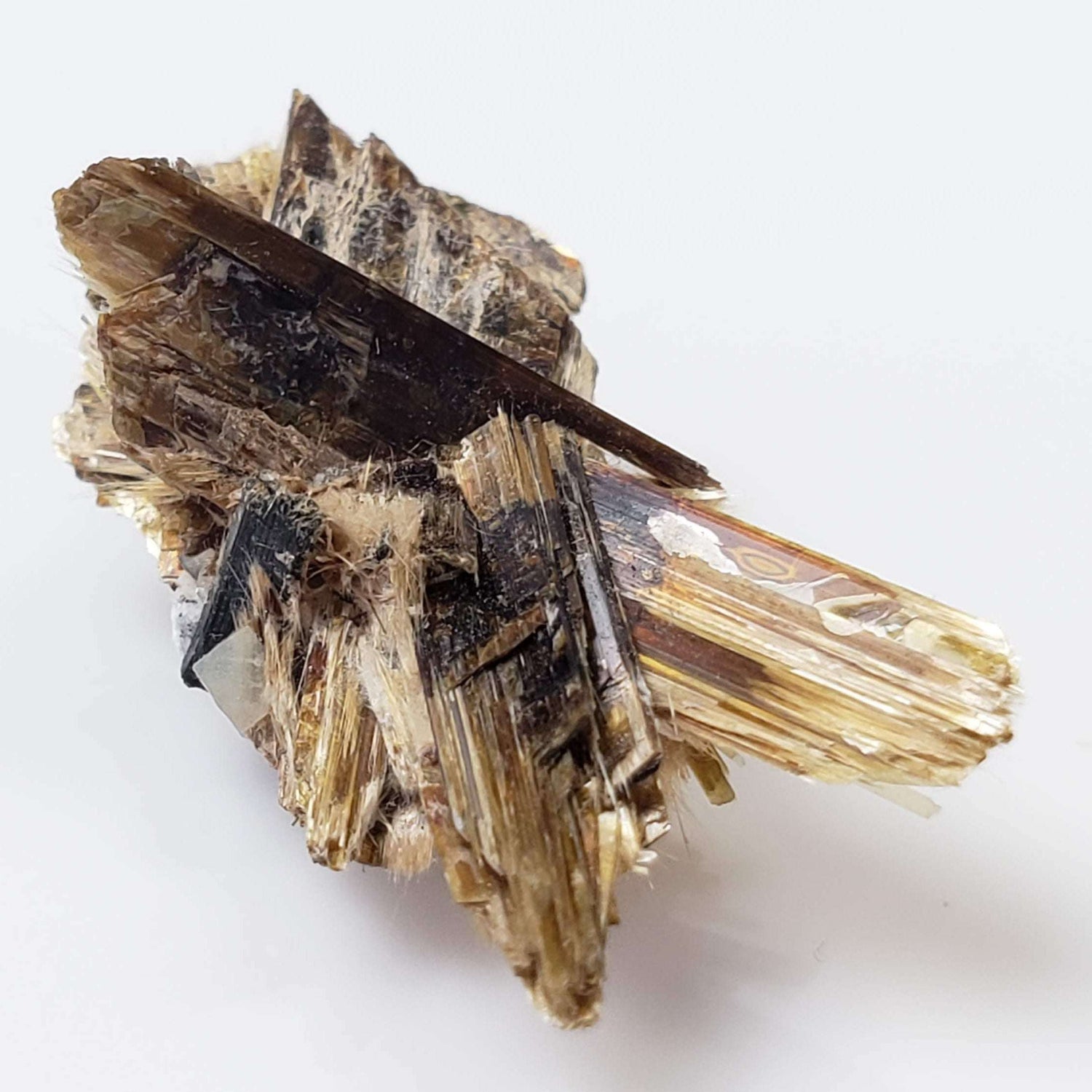
Kupletskite is a rare and complex titanium-bearing silicate mineral most famously found at Mont-Saint-Hilaire in Québec, Canada. It typically appears as tiny brown to reddish-brown crystals, often with a glassy or resinous luster. The crystals are usually slender and prismatic and may occur alongside other rare minerals that Mont-Saint-Hilaire is known for.
Due to its rarity and specific geological conditions needed for formation, kupletskite is primarily of interest to serious collectors and mineralogists, especially those focused on rare earth or alkaline complex minerals. It’s not commonly available in large or showy specimens, so even small, well-formed crystals are considered notable.
This beautiful and rare specimen of Kupletskite from world famous Mont-Saint-Hilaire, Québec, would be a great addition to any collection.
Name: Kupletskite
Specimen Size: Miniature-Sized
Dimensions: 30x15x15 mm / 1.2x0.6x0.6 inches
Weight: 1.63 grams / .057 oz
Origin: Mont Saint-Hilaire, Québec, Canada


This is a must have 217.7 gram slice of Black Onaping Impact Fallback Breccia from the famous Sudbury Impact Structure in Ontario Canada. It's dimensions are 126x117x7 mm. Although not a meteorite, impactites are directly linked to them and their impacts and are probably going to be one of the rarest collection piece you'll ever own.
About 1.87 billion years ago, an object from space 9 kilometers in diameter, slammed into Canada a little north of Sudbury, Ontario creating the second largest impact structure on the earth. This impact was equivalent to a billion tons of TNT; an impact so great that it cracked the earth, in fact they still have earthquakes because of it today!
This specimen of Sudbury Black Onaping Breccia is a lithified fallback breccia composed of melt glass and country target rock fragments. This meteorite impact created a large mushroom cloud that fell back down to earth to create this breccia. "Bucky Ball Fullerine" with terrestrial carbon in the form of C-60 and C-70 is found in this type of Sudbury impact rock. Greenish-Blueish dust covered Tektites can also be found within its matrix. The Onaping forms in two layers, the first one is grey and second one is black.
The many mineral rich deposits and strange rock formations in such close proximity has attracted attention for 100's of years, long before its impact origin was known. Thomas Edison, for instance, built a lab on site and NASA Moonwalker "Gene" Cernan, who studied and collected geology samples as part of his pre-moon mission training.
Would be a beautiful addition to any new or existing collection. Comes with a Canagem Collection specimen card.
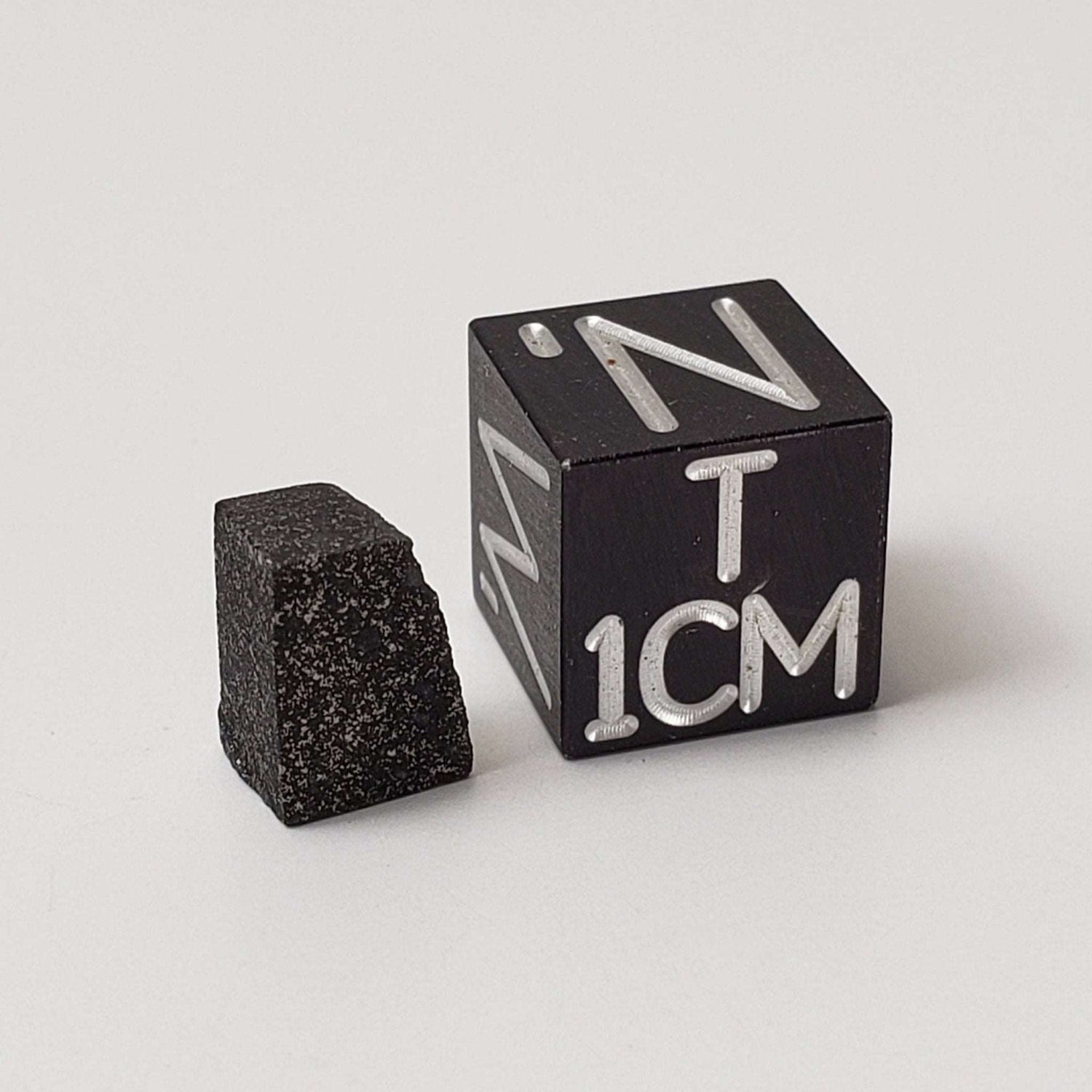
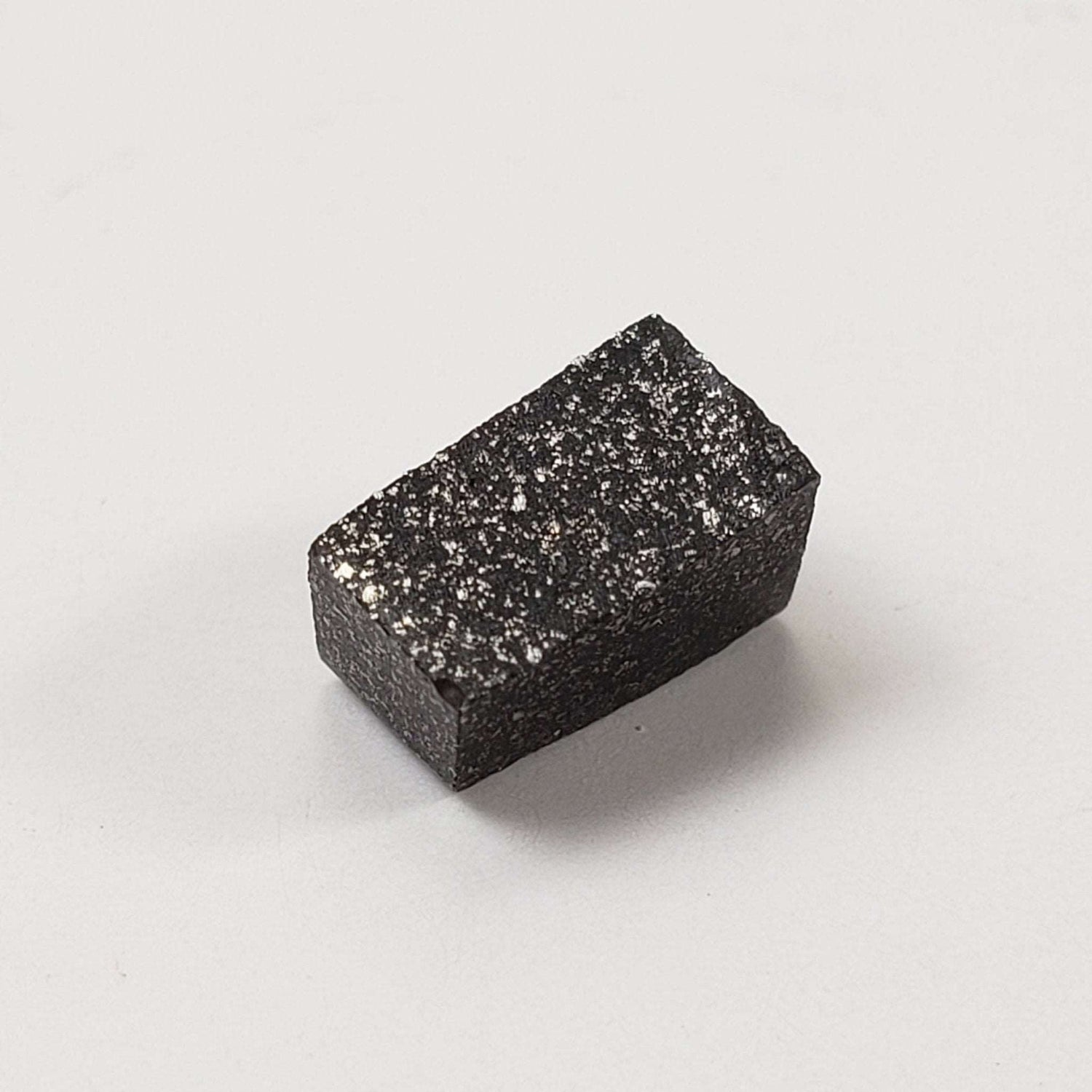
This is an incredible part slice of the Abee meteorite (MB 8) that fell in Alberta, Canada at 11:05 p.m. on June 9th 1952. It took five days to find it in a wheat field belonging to Mr. Harry Buryn. It is located in the community of Abee, Alberta, Canada in Thorhild County, along the Canadian National Railway and Highway 63, 16 km north of Thorhild and 49 km from Boyle.
This rare and highly collectable EH4 Enstatite chondrite is 1 of only 21 approved meteorites classified as such, 1 of 3 being an observed fall and only 1 of 5 not found in Antarctica. The total Mass is registered at 107 Kilograms in one stone recovered from a 6 ft (1.8 m) deep crater. This is a great specimen at 0.6 grams.
This piece of the hard to acquire Abee meteorite is a high quality specimen that would make an amazing addition to any new or existing collection. Comes with a Michael Cottingham Meteorites and a Canagem Collection specimen card.

Canagem is proud to be professional member of The International Gem Society(IGS) the world's top resource for gem professionals, enthusiasts, and industry content.