
Sort by:
1557 products
1557 products


Product Type: Chrysoberyl Cats Eye
Approx Weight (per piece): 1.1ct
Size: 6.5x5.6mm
Shape: Oval Cabochon
Color: Yellow
Clarity: Top Crystal
Origin: Sri Lanka
The distinctive "cat's eye" effect in this Chrysoberyl is caused by the reflection of light off parallel needle-like inclusions within the crystal. When the gem is cut en cabochon, a concentrated, bright band of light appears to move across the surface as the stone is rotated.
Cat's Eye Chrysoberyl comes in various colors, such as green, yellow, and golden-brown. It is a durable gemstone, scoring 8.5 on the Mohs scale of hardness, making it suitable for various types of jewelry. Significant sources of Cat's Eye Chrysoberyl include Sri Lanka, Brazil, India, Myanmar, and Madagascar.
Cat's Eye Chrysoberyl is believed to possess metaphysical properties associated with protection, intuition, and good fortune. Some traditions consider it a talisman for enhancing insight and awareness.


NWA 869 Meteorite | 20.4 Gr | Individual | L3-6 Chondrite | Crusted Specimen
$44.00 CAD
Unit price perNWA 869 Meteorite | 20.4 Gr | Individual | L3-6 Chondrite | Crusted Specimen
$44.00 CAD
Unit price perThis is a fantastic crusted 20.4 grams NWA (Northwest Africa) 869 L3-6 classified meteorite Individual found by Nomads in the Sahara Desert. The dimensions of the specimen are 30x23x19 mm.
NWA 869 classified meteorites can still be interesting and this one is for sure perfectly shaped to catch your attention. It displays a superb crust on most of its surface. Most samples are individual meteorites but some fragments (mostly >1 kg) also occur. In most cases the fusion crust has been polished or ablated by wind erosion. Many samples are more severely affected and show faces with deep wind erosion features. Fracture faces, formed by ground collision, show a typical gray-green color and sometimes visible brecciation (light and/or dark clasts).
Would be a beautiful addition to any new or existing collection. Comes with a Canagem Collection specimen card.


Product Type: Star Sapphire
Approx Weight (per piece): 2.0ct
Size: 7.0x6.5mm
Shape: Oval Cabochon
Color: Fine Pale Blue
Clarity: Transparent Sharp 6 Rays Star
Origin: Myanmar (Burma)
Treatment: None


Product Type: Zircon
Approx Weight (per piece): 1.39ct
Size: 7x5mm
Shape: Oval Cut
Color: Fine Cinnamon Yellow
Clarity: Clean
Origin: Cambodia
Zircon comes in a variety of colors, including blue, yellow, green, brown, and red, and is renowned for its exceptional brilliance. Blue zircon, in particular, is highly sought after for its vibrant and saturated hue. Zircon is found in many locations worldwide, including Sri Lanka, Myanmar, Cambodia, and Australia. Some of the oldest zircon crystals have been dated to be over 4 billion years old, making them among the oldest minerals on Earth.
Zircon has a hardness of 6.5 to 7.5 on the Mohs scale, making it durable enough for use in various types of jewelry. However, care should be taken to avoid sharp blows and extreme temperatures.
Zircon is associated with promoting spiritual growth, mental clarity, and prosperity. It is also thought to enhance self-confidence and provide protection.
It's important to note the distinction between natural zircon and cubic zirconia. Natural zircon is a genuine gemstone, while cubic zirconia is a synthetic material often used as a diamond simulant.


Product Type: Imperial Topaz
Approx Weight (per piece): 1.1ct
Size: 11.5x5mm
Shape: Marquise Cut
Color: Imperial Orange
Clarity: Clean
Origin: Brazil
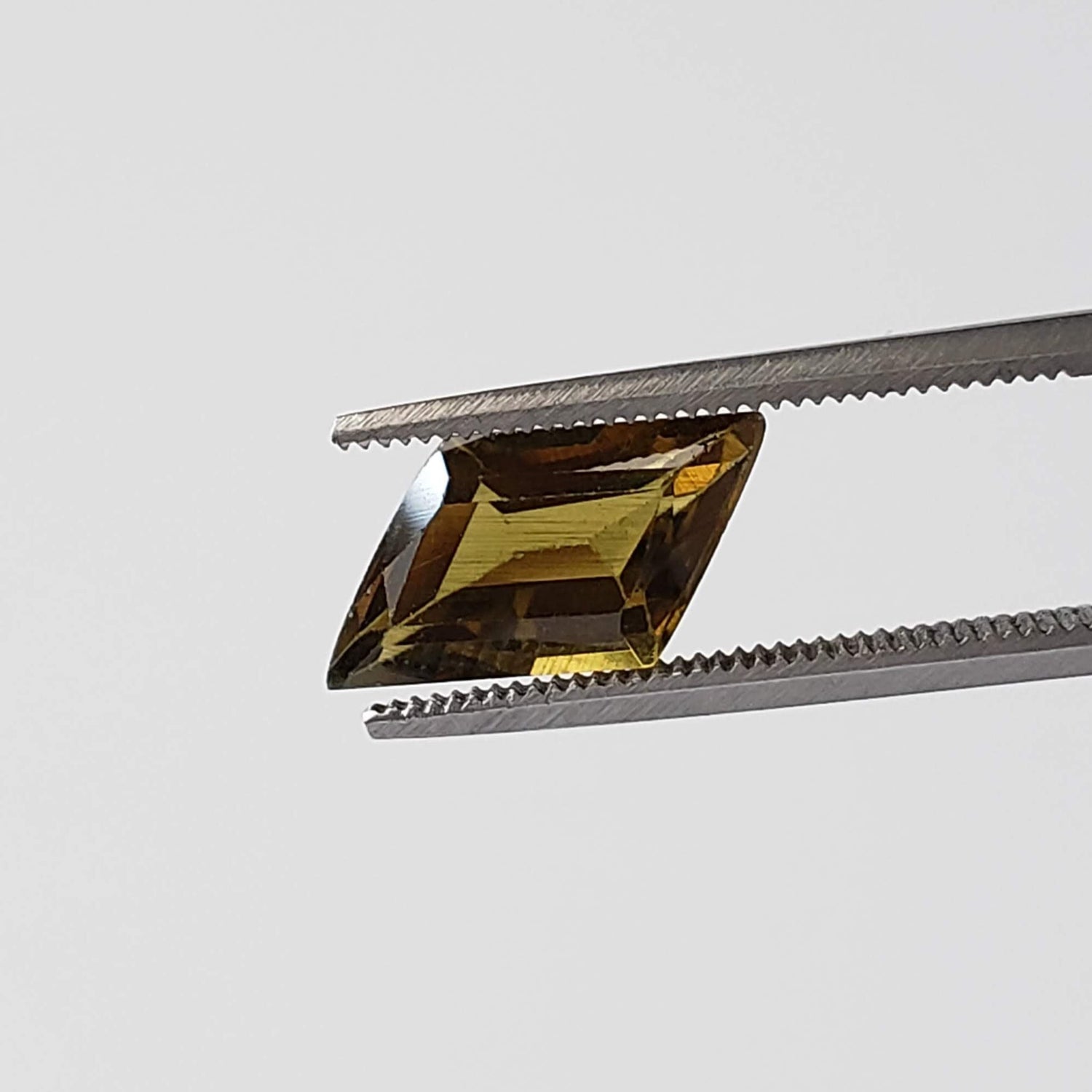
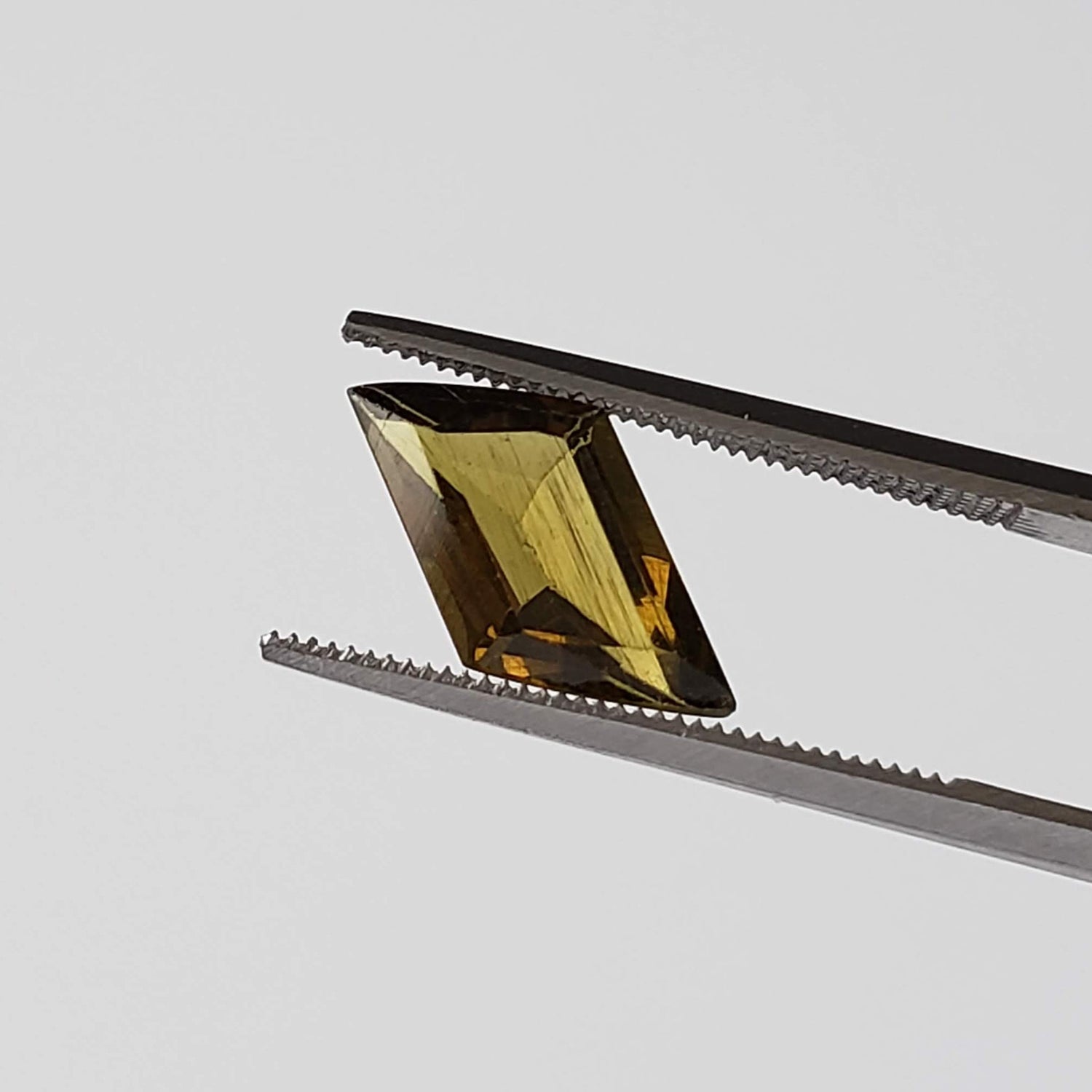
Product Type: Apatite (Olive)
Approx Weight (per piece): 2.2ct
Size: 13.7x6.3mm
Shape: Lozenge Cut
Color: Honey Green
Clarity: Clean to the Eye
Origin: Africa
Apatite is a group of phosphate minerals that are commonly found in igneous, metamorphic, and sedimentary rocks. Apatite is named after the Greek word "apate," which means deceit, as it can be easily confused with other minerals due to its wide range of colors and forms. It can occur in various colors, including green, blue, yellow, brown, and violet.
Apatite is believed to possess healing properties and is associated with creativity, self-expression, and personal growth. It is thought to enhance communication skills, stimulate intellect, and promote clarity of thought.

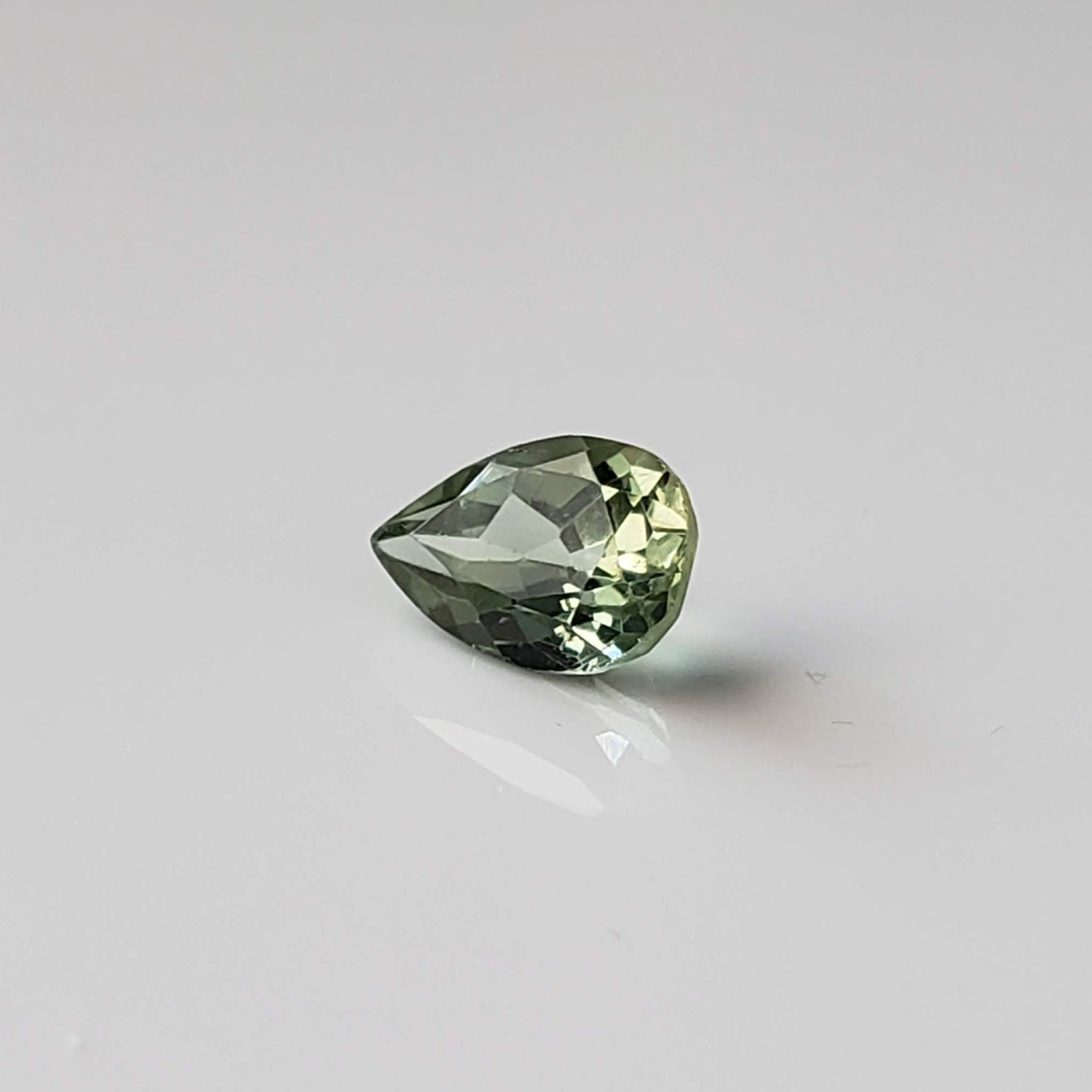
Product Type: Apatite
Approx Weight (per piece): 1.8ct
Size: 9.6x6.3mm
Shape: Pear Shape Cut
Color: Jungle Green
Clarity: Clean
Origin: Russia
Apatite is a group of phosphate minerals that are commonly found in igneous, metamorphic, and sedimentary rocks. Apatite is named after the Greek word "apate," which means deceit, as it can be easily confused with other minerals due to its wide range of colors and forms. It can occur in various colors, including green, blue, yellow, brown, and violet.
Apatite is believed to possess healing properties and is associated with creativity, self-expression, and personal growth. It is thought to enhance communication skills, stimulate intellect, and promote clarity of thought.


Indochinite is a variety of the mineral tektite, which is a natural glass formed by the intense heat and pressure of a meteorite impact. These tektites are usually found as small, aerodynamically shaped objects, often teardrop or irregular in shape, resulting from the molten material solidifying as it cooled rapidly after being ejected from the impact site.
Indochinites are believed to have formed around 780,000 to 800,000 years ago, following a significant meteorite impact event that likely created the Southeast Asian tektite strewn field. The strewn field is quite large, and the tektites can be found scattered over a vast area which includes Vietnam, Laos, and Thailand.
This piece displays very well, showing multiple characteristics of its origin. The specimen has a weigh of 51 grams and dimensions of 45x32x23. Comes with a Canagem Collection specimen card.

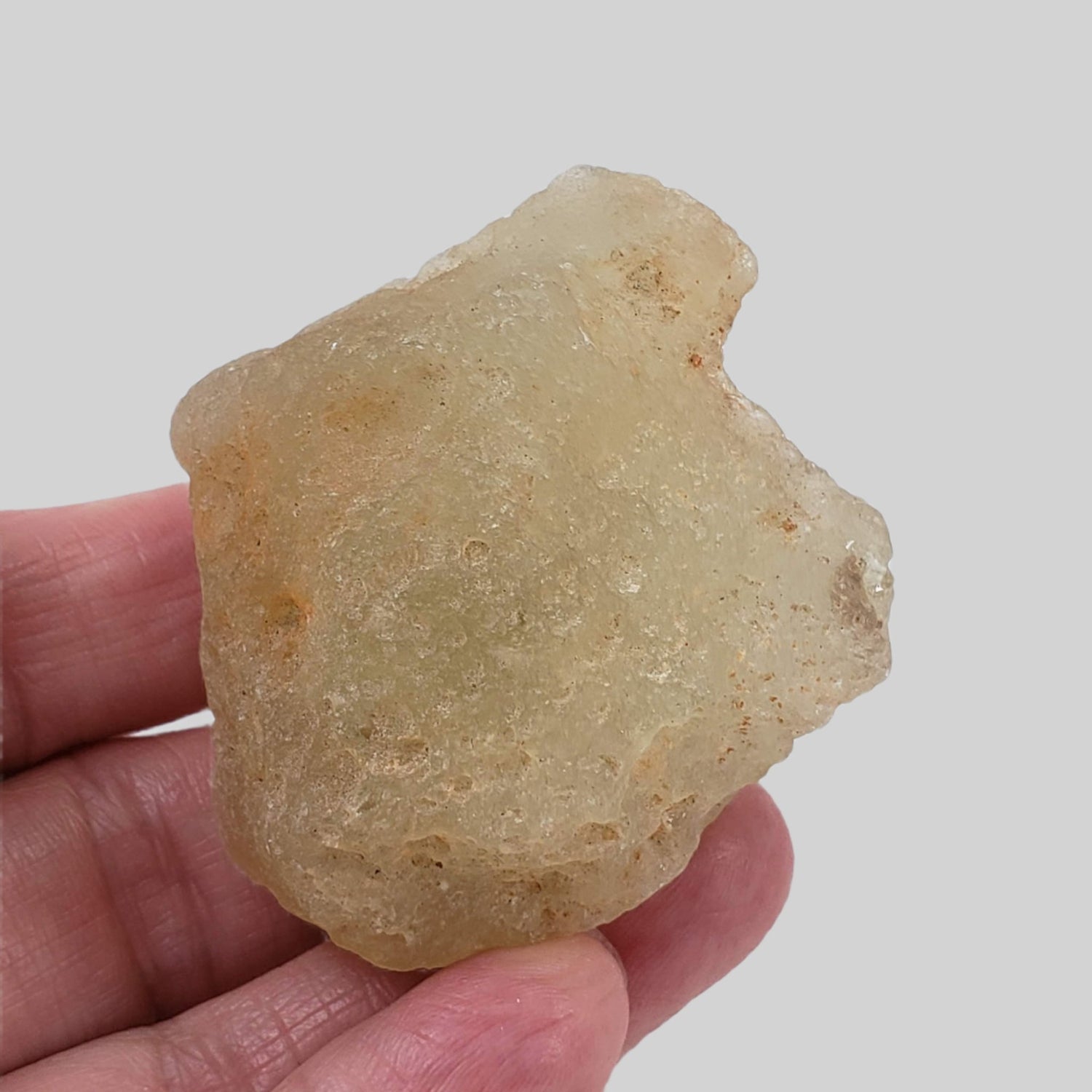
Libyan Desert Glass | Natural Impact Glass | 78.3 Grams | Authentic Impactite
$402.00 CAD
Unit price perLibyan Desert Glass | Natural Impact Glass | 78.3 Grams | Authentic Impactite
$402.00 CAD
Unit price perThis is a rare and fantastic 78.3 gram Libyan Desert Glass from Kuffra, Libya, with dimensions of 54x48x31 mm.
Although its exact origin is still debated, the leading theory suggests it was formed by a high-energy event, such as a meteoric impact or airburst, that melted the desert sand directly where it lay, without being ejected into the atmosphere and re-entering. This results in different physical characteristics compared to tektites. Libyan Desert Glass is found specifically in the Great Sand Sea of the Eastern Sahara, within a more localized area spanning parts of western Egypt and eastern Libya.
This piece displays extremely well and is a quality translucent specimen. It has an aesthetic shape with a beautiful wind eroded body from the years spent in the Desert. Would be a beautiful addition to any new or existing collection. Comes with a Canagem Collection specimen card.


Product Type: Sapphire
Approx Weight (per piece): 0.64ct
Size: 5.8x4.8mm
Shape: Oval Cut
Color: Canary Yellow
Clarity: VSI (Very Slightly Included)
Origin: Africa


Product Type: Sapphire
Approx Weight (per piece): 0.6ct
Size: 5x4.3mm
Shape: Oval Cut
Color: Pumpkin Orange
Clarity: Clean
Origin: Africa


Product Type: Zircon
Approx Weight (per piece): 1.6ct
Size: 8x6mm
Shape: Pear Shape Cut
Color: Golden
Clarity: Clean
Origin: Cambodia
Zircon comes in a variety of colors, including blue, yellow, green, brown, and red, and is renowned for its exceptional brilliance. It is found in many locations worldwide, including Sri Lanka, Myanmar, Cambodia, and Australia. Some of the oldest zircon crystals have been dated to be over 4 billion years old, making them among the oldest minerals on Earth.
Zircon has a hardness of 6.5 to 7.5 on the Mohs scale, making it durable enough for use in various types of jewelry. However, care should be taken to avoid sharp blows and extreme temperatures.
Zircon is associated with promoting spiritual growth, mental clarity, and prosperity. It is also thought to enhance self-confidence and provide protection.
It's important to note the distinction between natural zircon and cubic zirconia. Natural zircon is a genuine gemstone, while cubic zirconia is a synthetic material often used as a diamond simulant.
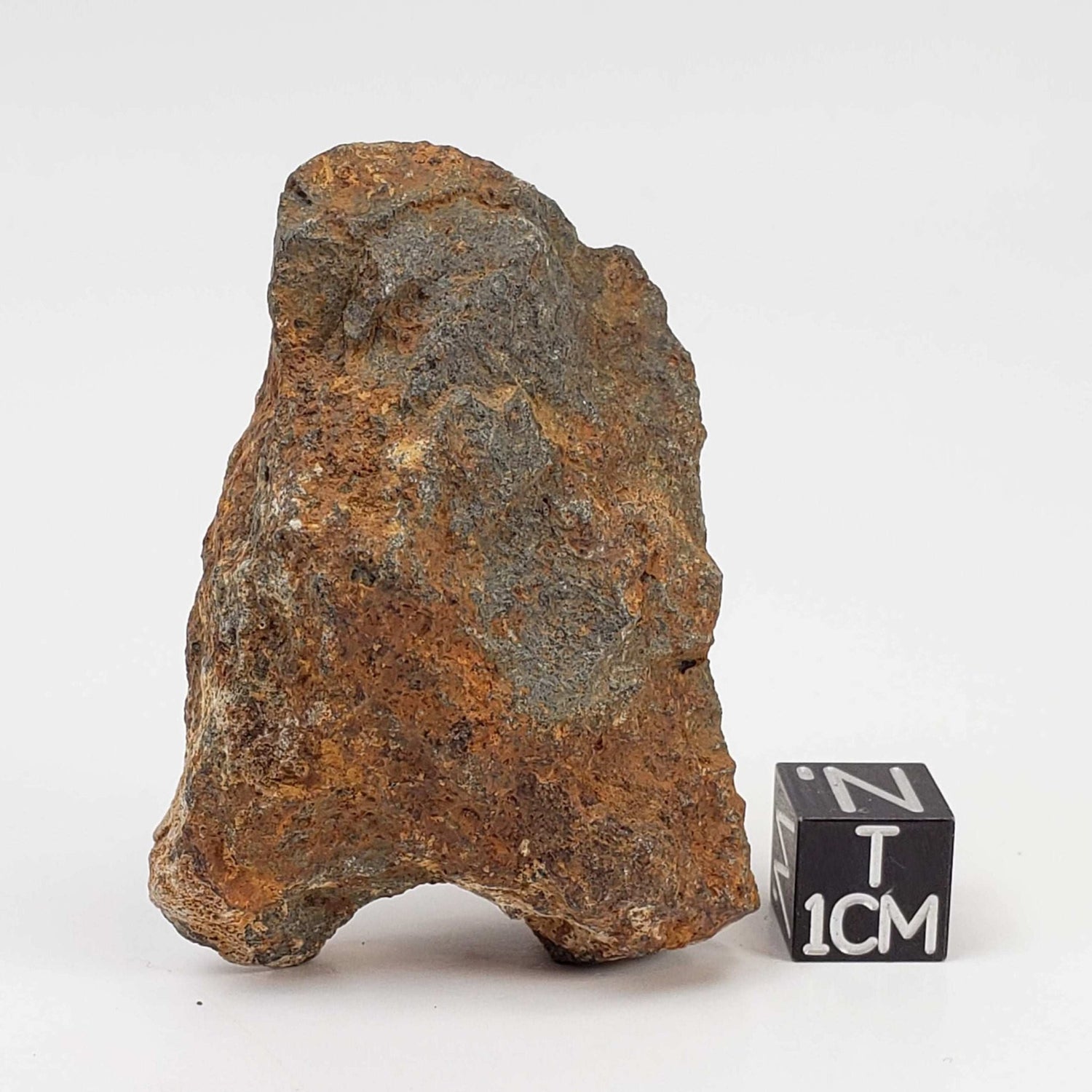
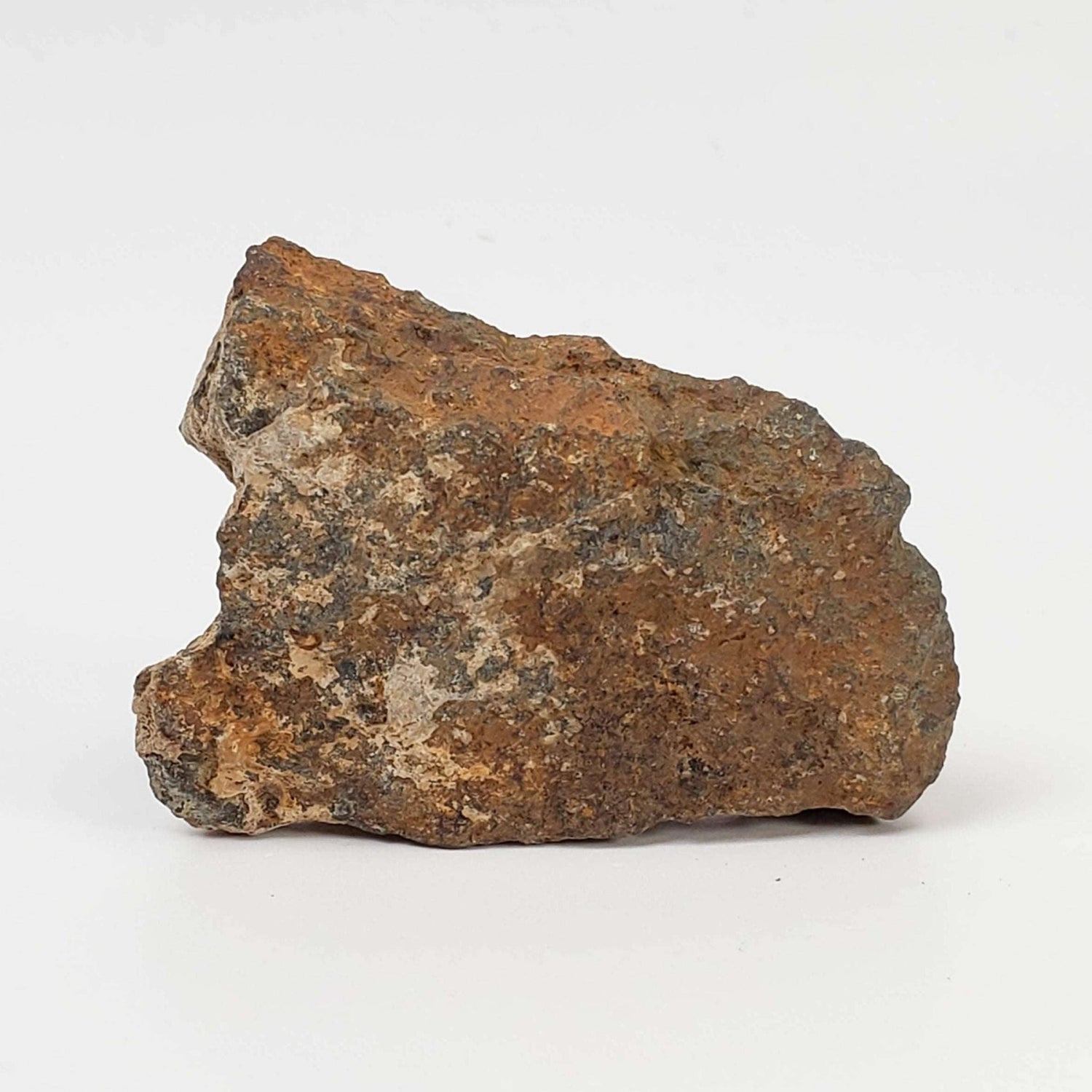
Tsarev Meteorite | 56.2 Grams | Individual | L5 Chondrite | Fell Dec 1922 | Volgograd Region, Russia
$246.00 CAD
Unit price perTsarev Meteorite | 56.2 Grams | Individual | L5 Chondrite | Fell Dec 1922 | Volgograd Region, Russia
$246.00 CAD
Unit price perThis is a superb individual Tsarev meteorite weighing 56.2 grams. Its dimensions are 53x38x18 mm. Twenty-eight specimens of this L5 classified meteorite were found in fields. The largest mass weighs 284 kg, the smallest 761 gr with a total weight of 1.23 Tons. The greatest distance between the find sites was 6.0 km.
In 1968, amidst a global surge in conflicts, a remarkable discovery was made in a small village in Volgograd Oblast. This region, known as the primary site of the Battle of Stalingrad—one of the largest and bloodiest battles in history—yielded an extraordinary find in the quiet fields near the rural village of Tsarev.
The Tsarev meteorite, named after the Russian word for czar, is a stone meteorite responsible for one of the largest meteorite showers in Russian history. This meteorite shower occurred on December 6, 1922, but the stones were not discovered until 1968 and only recognized in 1979. The Tsarev meteorite's mineral composition matches that of ordinary chondrites, including olivine, orthopyroxene, clinopyroxene, maskelynite, calcium phosphates, nickel-iron, troilite, chromite, ilmenite, and rutile.
Academic analysis of the Tsarev meteorite reveals significant features: large grains of nickel-iron, light grey areas with well-preserved chondritic texture, and dark areas containing a matrix with olivine grains and remnants of chondrules.
This specimen would be a beautiful addition to any new or existing collection. Will come with a Canagem specimen card.


This is a 620 gram impact melt rock from the Gallejaur Crater, northern Sweden. Although not a meteorite, impactites are directly linked to them and their impacts and are probably going to be one of the rarest collection items you'll ever own. Impactite is a slag-like glassy object found on the surface of the earth, formed from rock melted by the impact of a meteorite.
The term impactite encompasses shock-metamorphosed target rocks, melts or suevites and mixtures of the two, as well as sedimentary rocks with significant impact-derived components and shocked mineral grains, tektites, anomalous geochemical signatures, etc.
Rocks, interpreted as impact generated lithologies, occur in a large area surrounding the Gallejaur magnetic structure at latitude 65°10/longitude 19°30 in northernmost Västerbotten County in northern Sweden. These rocks comprise a variety of different types of breccias: authigenic The Gallejaur structure is located in the central part of the Skellefte mining district in the Precambrian Baltic Shield. The ca. 1.9 Ga old Skellefte district is an extensively mineralized, mainly felsic, submarine volcanic belt. The rocks are described as impact-generated, have been called the Vargfors Group and overlie the Skellefte volcanics and sediments with an angular unconformity. The youngest rocks in the area, intruding the Skellefte district supracrustals and probably the impact-generated rock, are A/I-type granitoids belonging to the Revsund-Adak granite suite, which have been dated at ca. 1.80 to 1.78 Ga.
This great bookend slab displays very well. It has a mass of 190x97x39 mm. Would be a beautiful addition to any new or existing collection. Comes with a Canagem Collection specimen card.


This is natural rough tourmaline from Mount Mica Quarry, Paris, Oxford County, Maine, USA. Mount Mica is one of the most well-known sources of high-quality tourmaline in the world, and it has been a significant site for gem mining since the 1800s. This tourmaline crystal cluster will come protected in a Perky Box.
It is believed that Tourmaline can be used to repel negativity. It is said to enhance one's physical wellbeing by providing an increase in physical vitality, emotional stability, and intellectual acuity.
Name: Tourmaline Cluster
Specimen Size: Thumbnail-Sized
Dimensions: Specimen 25x17 mm / 1.0x0.7 inches
Specimen Box 33x33 mm / 1.3x1.3 inches
Weight: 11.8 Grams / 0.4 Ounces (including box)
Origin: Mined in Mount Mica Quarry, Paris, Oxford County, Maine, USA
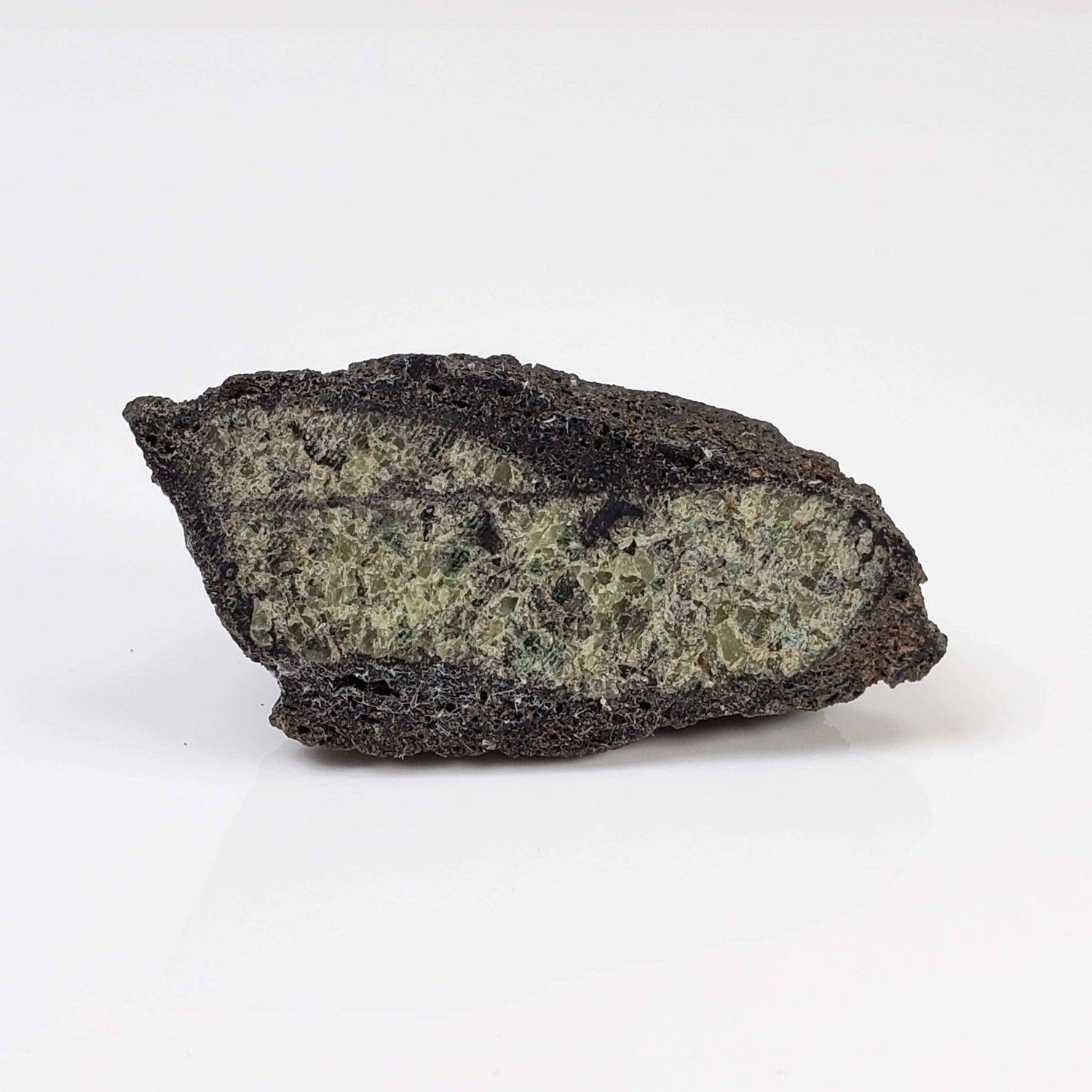
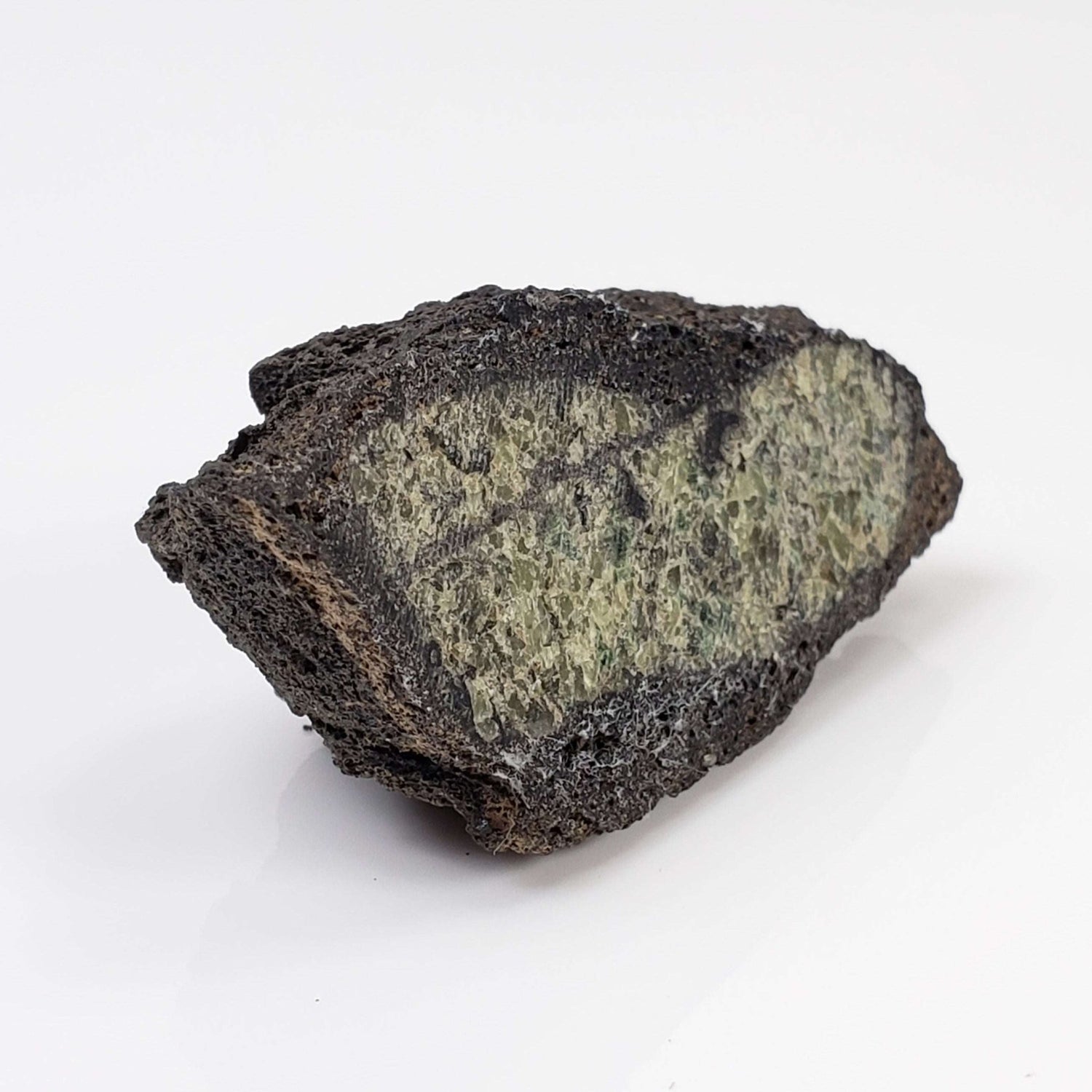
Olivine Volcanic Bomb | Lava Coated Crystal | 34.3 gr | Mt Shadwell Volcano, Australia
$24.00 CAD
Unit price perOlivine Volcanic Bomb | Lava Coated Crystal | 34.3 gr | Mt Shadwell Volcano, Australia
$24.00 CAD
Unit price perAn olivine volcanic bomb is a type of volcanic rock that contains olivine crystals and has been ejected during a volcanic eruption. Olivine is a mineral that is commonly found in the Earth's mantle and is one of the first minerals to crystallize as magma cools.
Volcanic bombs are large clots of lava that are ejected from a volcano during an explosive eruption. They can vary in size, and their shapes are often streamlined due to their molten nature as they are thrown through the air. When these volcanic bombs contain olivine crystals, they are referred to as olivine volcanic bombs.
This piece has been cut to showcase the beautiful green olivine crystals. It would be a beautiful addition to any new or existing collection. Comes with a Canagem Collection specimen card and a stand will also be included.
Name: Olivine Volcanic Bomb
Specimen Size: Miniature-Sized
Dimensions: 55x26x21 mm / 2.2x1.0x0.8 Inches
Weight: 34.3 Grams / 1.2 Ounce
Details: Volcanic activity Mortlake, Victoria, Australia

Canagem is proud to be professional member of The International Gem Society(IGS) the world's top resource for gem professionals, enthusiasts, and industry content.