
Sort by:
1557 products
1557 products


This is a great looking impactite Tektite collection in a Riker style box containing individual specimens selected for you. From China you have a Tektite specimen; from Kazakhstan you'll find an Irghizite specimen and from the Sahara Desert a Libyan Desert Glass specimen. The Riker collection box is approximately 85x110x23mm (3.3x4.3x.9 inch).
You will receive 1 Riker box containing the above impactite specimens. Note that the photos provided are representative, so you may not receive the exact pictured specimen; however, you will receive one of each of the specimen listed above of the same or higher value and similar characteristics.
The first Tektite is an Indochinite from Maoming City, Guangdong Province, China, although not a meteorite, it is directly linked to them or their impacts, just consider its age of around 780,000 years old. Tektite can still be interesting just because of the persistent mystery that resisted clear explanations of there creation for generations of geologists.
The Libyan Desert Glass from Kuffra, Libya, although its exact origin is still debated, the leading theory suggests it was formed by a high-energy event, such as a meteoric impact or airburst, that melted the desert sand directly where it lay, without being ejected into the atmosphere and re-entering. This results in different physical characteristics compared to tektites. Libyan Desert Glass is found specifically in the Great Sand Sea of the Eastern Sahara, within a more localized area spanning parts of western Egypt and eastern Libya.
The specimen of Irghizite from the Zhamanshin impact crater, Yrgyz District, Aktobe Region in Kazakhstan is a must in any collection. This natural glass was formed from a meteorite impact melting the local rock which is confirmed with the Zhamanshin meteor crater 14 km in diameter and dated at 900,000 years ± 100,000. Of interest, this tektite glass was often used in paleolithic tool making..
Each specimen shows very well and is a perfect size to proudly display in your collection and they will come with a Canagem Collection specimen card. Would be a beautiful addition to any new or existing collection.


Product Type: Zircon
Approx Weight (per piece): 1.8ct
Size: 8x6mm
Shape: Pear Shape Cut
Color: Golden
Clarity: Clean to the eye
Origin: Cambodia
Zircon comes in a variety of colors, including blue, yellow, green, brown, and red, and is renowned for its exceptional brilliance. It is found in many locations worldwide, including Sri Lanka, Myanmar, Cambodia, and Australia. Some of the oldest zircon crystals have been dated to be over 4 billion years old, making them among the oldest minerals on Earth.
Zircon has a hardness of 6.5 to 7.5 on the Mohs scale, making it durable enough for use in various types of jewelry. However, care should be taken to avoid sharp blows and extreme temperatures.
Zircon is associated with promoting spiritual growth, mental clarity, and prosperity. It is also thought to enhance self-confidence and provide protection.
It's important to note the distinction between natural zircon and cubic zirconia. Natural zircon is a genuine gemstone, while cubic zirconia is a synthetic material often used as a diamond simulant.


Product Type: Sapphire
Approx Weight (per piece): 0.8ct
Size: 6.7x5mm
Shape: Oval Cut
Color: Green
Clarity: Clean to the Eye
Origin: Africa


Product Type: Citrine (Madeira)
Approx Weight (per piece): 2.4ct
Size: 9mm
Shape: Trilliant Cut
Color: Golden Yellow
Clarity: Clean to the Eye
Origin: Brazil
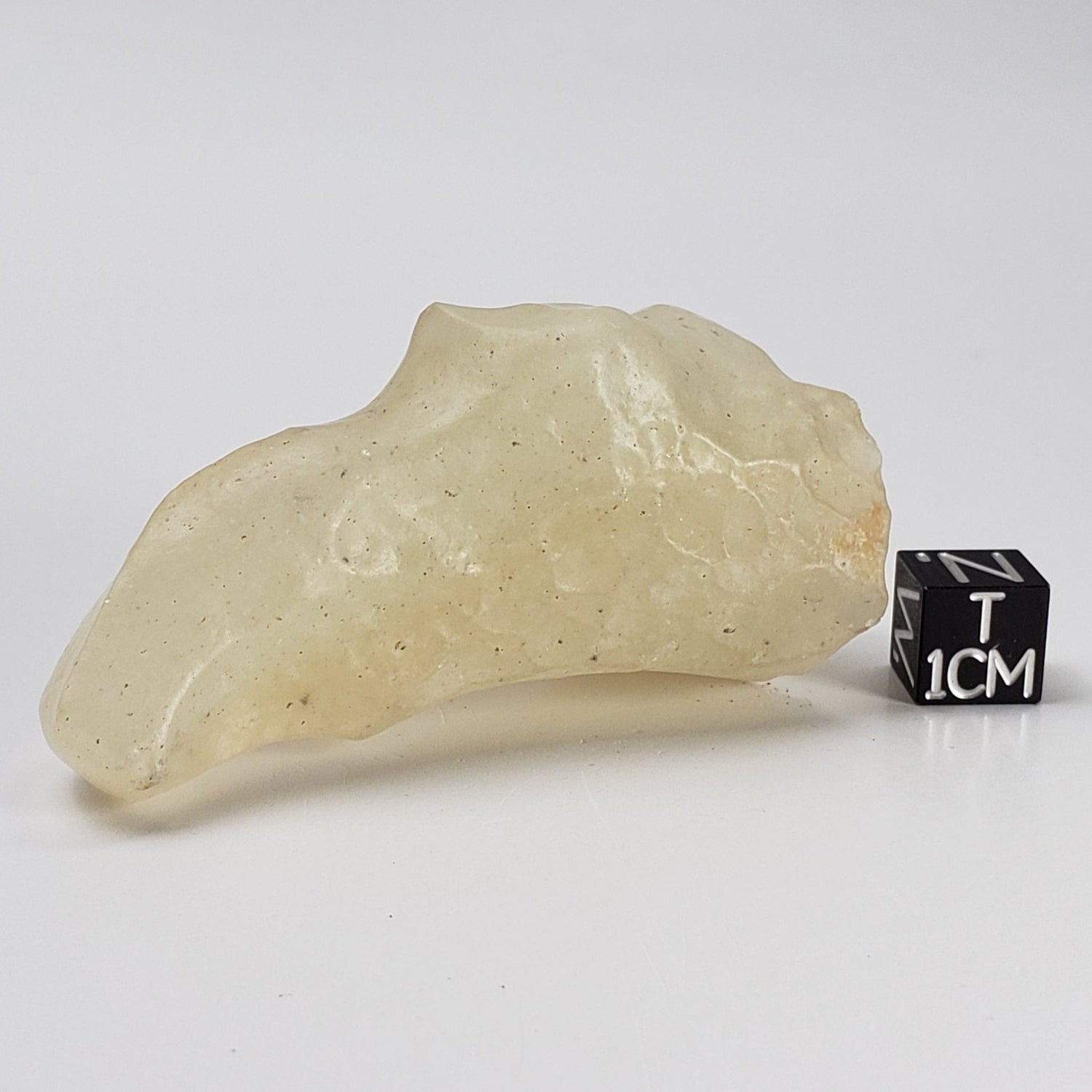
Libyan Desert Glass | Natural Impact Glass | 54.4 Grams | Authentic Impactite
$282.00 CAD
Unit price perLibyan Desert Glass | Natural Impact Glass | 54.4 Grams | Authentic Impactite
$282.00 CAD
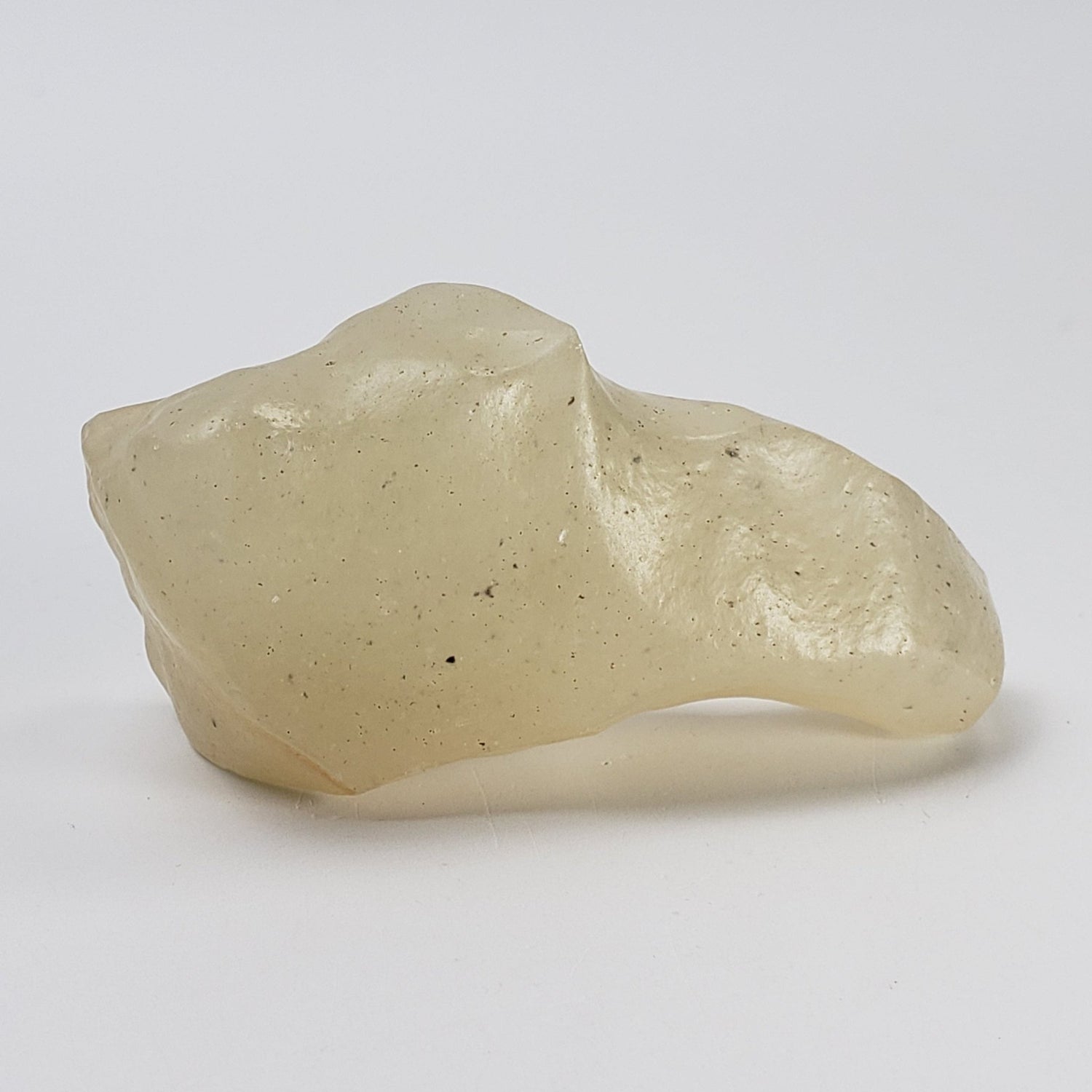
Unit price perThis is a rare and fantastic 54.4 gram Libyan Desert Glass from Kuffra, Libya, with dimensions of 68x33x22 mm.
Although its exact origin is still debated, the leading theory suggests it was formed by a high-energy event, such as a meteoric impact or airburst, that melted the desert sand directly where it lay, without being ejected into the atmosphere and re-entering. This results in different physical characteristics compared to tektites. Libyan Desert Glass is found specifically in the Great Sand Sea of the Eastern Sahara, within a more localized area spanning parts of western Egypt and eastern Libya.
This piece displays extremely well and is a quality translucent specimen. It has an aesthetic shape with a beautiful wind eroded body from the years spent in the Desert. Would be a beautiful addition to any new or existing collection. Comes with a Canagem Collection specimen card.

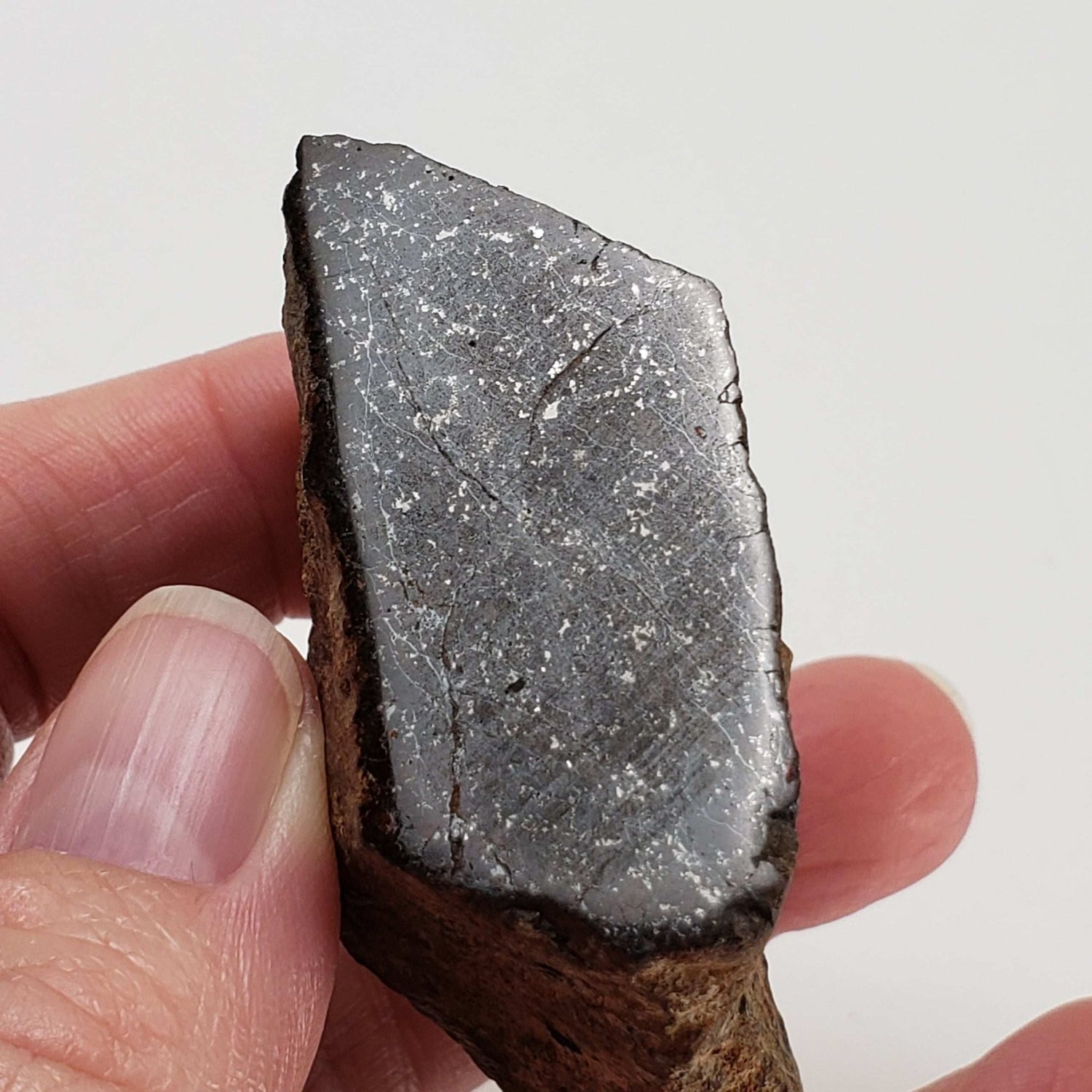
Northwest Africa NWA Meteorite | 114 Grams | Individual Cut Fragment | Sahara
$153.00 CAD
Unit price perNorthwest Africa NWA Meteorite | 114 Grams | Individual Cut Fragment | Sahara
$153.00 CAD
Unit price perHere we have for you a nice looking individual cut fragment of a Sahara Desert NWA unclassified meteorite weighing 114 grams. Its dimensions are 54x53x24mm. This never classified North West Africa stone was found in the Sahara desert around 2000.
It's a good quality individual fragment NWA meteorite specimen. Some weathering shows the meteorite's time spent aging in the desert. Would be a beautiful addition to any new or existing collection. Comes with a Canagem Collection specimen card.


Impactite Breccia Suevite | 25.97 Grams | Montoume, Rochechouart Structure, France
$55.00 CAD
Unit price perImpactite Breccia Suevite | 25.97 Grams | Montoume, Rochechouart Structure, France
$55.00 CAD
Unit price perThis is a must have 25.97 gram Impact Breccia also referred to as Suevite coming from the famous Rochechouart impact structure in South Western France, near the village of Montoume. Although not a meteorite, impactites are directly linked to them and their impacts and are probably going to be one of the rarest collection items you'll ever own. Impactite is a slag-like glassy object found on the surface of the earth, formed from rock melted by the impact of a meteorite.
Named after the town of Rochechouart, the Rochechouart impact structure is located on the western margin of the French Massif Central near the city of Limoges, approximately 350 km (220 mi) south of Paris. Rochechouart (population about 3800) is built with rocks created or modified by the impact (impactites).
The term impactite encompasses shock-metamorphosed target rocks, melts or suevites and mixtures of the two, as well as sedimentary rocks with significant impact-derived components and shocked mineral grains, tektites, anomalous geochemical signatures, etc. This impactite was formed 186 million years ago. This deformed rock fragments and partly molten are imbedded in a melt matrix showing typical flow structures from former melt.
This gorgeous slice displays very well with a mass of 58x37x7 mm. Would be a beautiful addition to any new or existing collection. Comes with a Canagem Collection specimen card.


Lapis lazuli or lapis for short, is a deep-blue metamorphic rock used as a semi-precious gemstone that has been prized since antiquity for its intense color. This specimen shows deep blue with sparks of pyrite and is in great condition.
Product Type: Lapis Lazuli Rough
Specimen Size: Cabinet-Sized
Dimensions: 75x68x35 mm / 2.9x2.7x1.4 inches
Weight: 341.6 Grams / 12 ounces
Origin: Afghanistan


Libyan Desert Glass | Natural Impact Glass | 18 Grams | Authentic Impactite
$101.00 CAD
Unit price perLibyan Desert Glass | Natural Impact Glass | 18 Grams | Authentic Impactite
$101.00 CAD
Unit price perThis is a rare and fantastic 18 gram Libyan Desert Glass from Kuffra, Libya, with dimensions of 44x25x19 mm.
Although its exact origin is still debated, the leading theory suggests it was formed by a high-energy event, such as a meteoric impact or airburst, that melted the desert sand directly where it lay, without being ejected into the atmosphere and re-entering. This results in different physical characteristics compared to tektites. Libyan Desert Glass is found specifically in the Great Sand Sea of the Eastern Sahara, within a more localized area spanning parts of western Egypt and eastern Libya.
This piece displays extremely well and is a quality translucent specimen. It has an aesthetic shape with a beautiful wind eroded body from the years spent in the Desert. Would be a beautiful addition to any new or existing collection. Comes with a Canagem Collection specimen card.


Stilbite is a zeolite mineral appreciated for its delicate crystal formations and pastel hues, ranging from colorless to white, yellow, pink, and peach. It forms distinctive tabular crystals with a bowtie or butterfly shape and exhibits a vitreous to pearly luster. Commonly found in cavities in volcanic rocks, stilbite is often associated with other zeolite minerals.
Stilbite is believed to have soothing and spiritually uplifting qualities, often associated with promoting emotional healing, inner peace, and mental clarity. Many consider it helpful for enhancing spiritual connection, deepening meditation, and supporting dream recall or lucid dreaming. Often linked to the heart chakra, it is thought to encourage love, compassion, and the release of emotional wounds. Stilbite may assist in navigating transitions, amplifying the energy of other crystals, and fostering a calming environment by shifting negative energy into positive vibrations.
Name: Stilbite Crystal
Specimen Size: Miniature-Sized
Dimensions: 45x34x31 mm / 1.8x1.3x1.2 inches
Weight: 18 Grams / 0.6 Ounces
Origin: Mined in India


Barite clusters are beautiful mineral specimens that feature intergrown crystals forming visually appealing arrangements. It is typically found as thick to thin tabular crystals, usually in clusters with the crystals growing parallel to one another, or nearly so. It can also occur as bladed, blocky, or even rosette-like aggregates. This is a fine cluster of bladed barite crystals. Would be a beautiful addition to any new or existing collection.
Name: Barite Cluster Crystal
Specimen Size: Miniature-Sized
Dimensions: 55x35x35 mm / 2.2x1.4x1.4 inches
Weight: 66.97 Grams / 2.4 ounces
Origin: Mined in northern Nevada barite belt, Nevada, USA

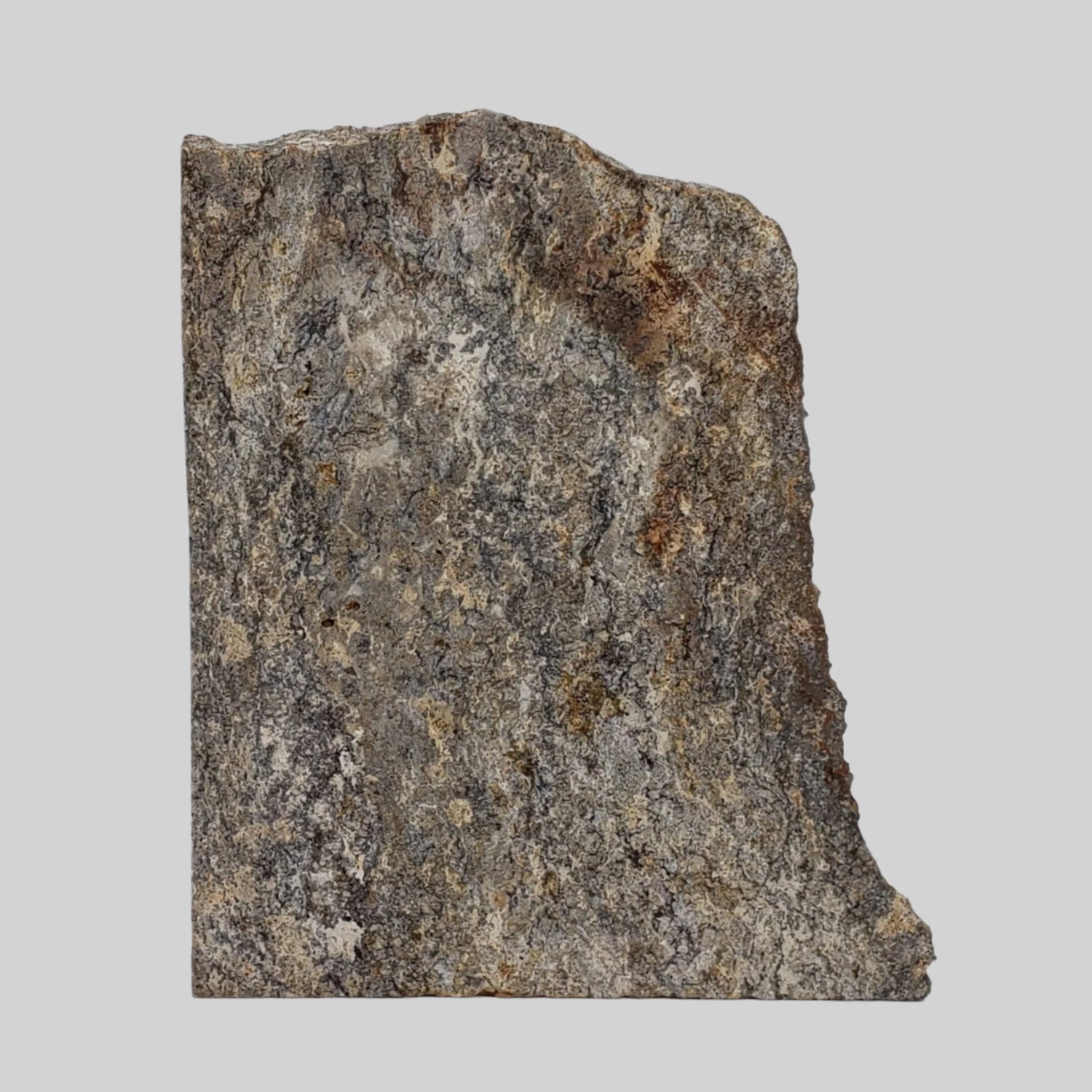
This is a must have 80.5 gram Impact Melt Rock from the Dellen Crater, north of Stokholm, Sweden. Some locals call these rocks by the name of “dellenites”, although officially they are impact melt rocks. Although not a meteorite, impactites are directly linked to them and their impacts and are probably going to be one of the rarest collection items you'll ever own. Impactite is a slag-like glassy object found on the surface of the earth, formed from rock melted by the impact of a meteorite.
The term impactite encompasses shock-metamorphosed target rocks, melts or suevites and mixtures of the two, as well as sedimentary rocks with significant impact-derived components and shocked mineral grains, tektites, anomalous geochemical signatures, etc.
This impactite was formed approx. 89 million years ago when a meteorite crashed into the earth making a round crater which is now a lake about 11 miles wide. Dellen impactites were divided into three impactite groups: (i) suevitic impact breccias with lithic and melt clasts, (ii) impact melt rocks, and (iii) shocked (parautochthonous) target rock. In turn, impact melt rocks were divided into (i) clast-rich, (ii) clast-poor, and (iii) clast-free types. The Dellenite type material was classified as clast poor impact melt breccia.
This gorgeous slice displays very well. It is amazingly light considering its mass of 87x73x6 mm. Would be a beautiful addition to any new or existing collection. Comes with a Canagem Collection specimen card.


This is a must have 38.6 gram Impact Melt Rock from the Dellen Crater, north of Stokholm, Sweden. Although not a meteorite, impactites are directly linked to them and their impacts and are probably going to be one of the rarest collection items you'll ever own. Impactite is a slag-like glassy object found on the surface of the earth, formed from rock melted by the impact of a meteorite.
The term impactite encompasses shock-metamorphosed target rocks, melts or suevites and mixtures of the two, as well as sedimentary rocks with significant impact-derived components and shocked mineral grains, tektites, anomalous geochemical signatures, etc.
This impactite was formed approx. 89 million years ago when a meteorite crashed into the earth making a round crater which is now a lake about 11 miles wide. The term tagamite was introduced in 1975 to describe impact rock from the Popigai crater in Russia. Varieties of tagamites are described based on crystallinity, texture and clast content. HT Tagamite differs from other material due to the complete melting of the crystalline matrix and then being subjected to rapid cooling.
This gorgeous slice displays very well. It is amazingly light considering its mass of 79x54x5 mm. Would be a beautiful addition to any new or existing collection. Comes with a Canagem Collection specimen card.


Barite clusters are beautiful mineral specimens that feature intergrown crystals forming visually appealing arrangements. It is typically found as thick to thin tabular crystals, usually in clusters with the crystals growing parallel to one another, or nearly so. It can also occur as bladed, blocky, or even rosette-like aggregates. This is a fine cluster of blocky barite crystals. Would be a beautiful addition to any new or existing collection.
Name: Barite Cluster Crystal
Specimen Size: Miniature-Sized
Dimensions: 54x39x31 mm / 2.1x1.5x1.2 inches
Weight: 68.76 Grams / 2.4 ounces
Origin: Mined in northern Nevada barite belt, Nevada, USA


Product Type: Silver Greek Key Ring
Gem Type: Sugilite
Metal Type: 925 Silver
Weight: Silver & Gemstone 7 grams
Size: Ring Size 9
Sugilite is a rare and beautiful purple gemstone, known for its vibrant color and metaphysical properties. It is a borosilicate mineral, typically ranging from lavender to deep violet, and is primarily found in South Africa. Discovered in Japan in 1944, it is valued for its spiritual and healing qualities, including emotional healing, protection, and enhancing spiritual growth. Sugilite is considered a "love stone," fostering compassion, empathy, and harmonious relationships. It is often used in jewelry, especially in cabochons, it is relatively soft, requiring gentle care. Due to its rarity and striking color, sugilite is a prized and valuable gem.
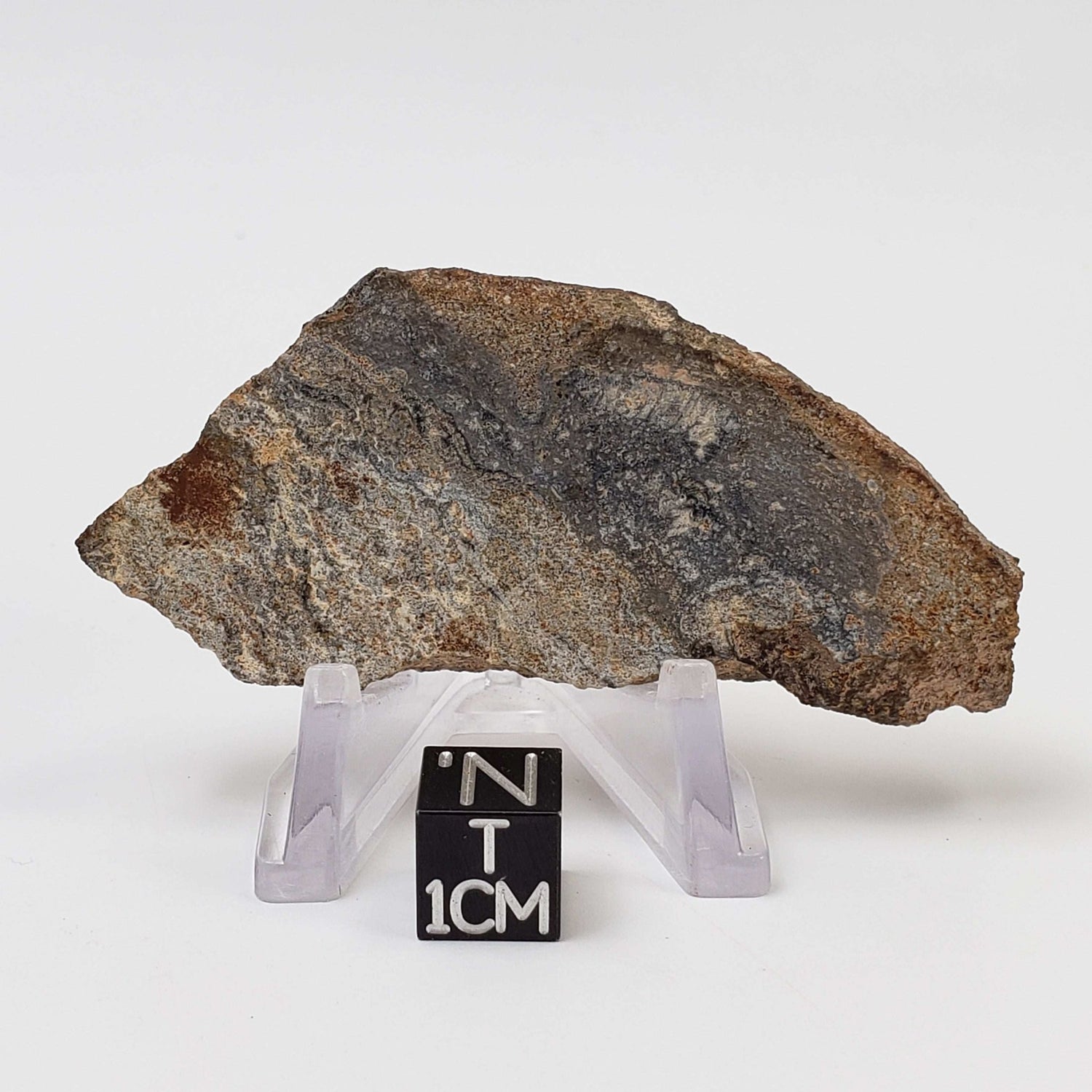
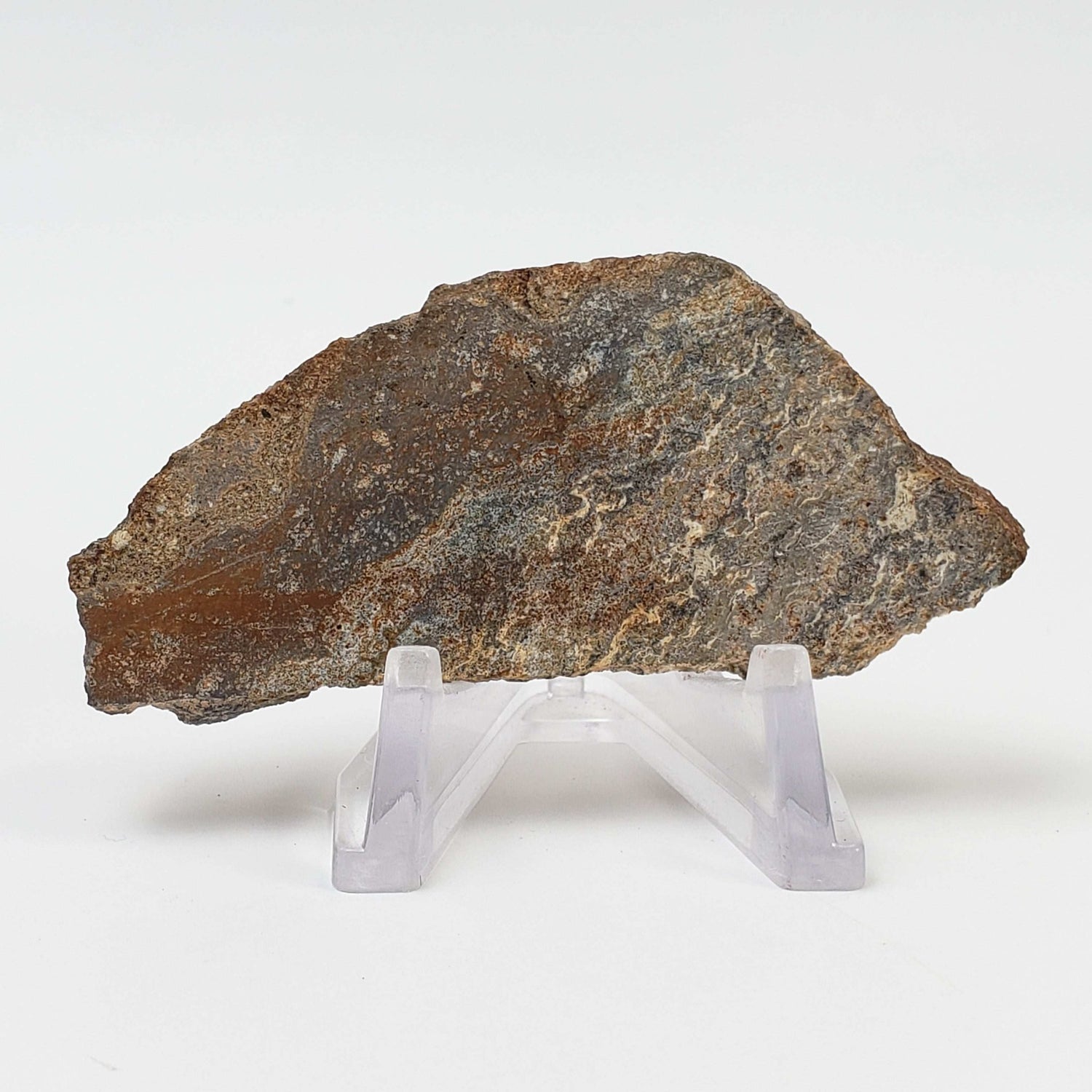
This is a must have 26.7 gram Impact Melt Rock from the Dellen Crater, north of Stokholm, Sweden. Some locals call these rocks by the name of “dellenites”, although officially they are impact melt rocks. Although not a meteorite, impactites are directly linked to them and their impacts and are probably going to be one of the rarest collection items you'll ever own. Impactite is a slag-like glassy object found on the surface of the earth, formed from rock melted by the impact of a meteorite.
The term impactite encompasses shock-metamorphosed target rocks, melts or suevites and mixtures of the two, as well as sedimentary rocks with significant impact-derived components and shocked mineral grains, tektites, anomalous geochemical signatures, etc.
This impactite was formed approx. 89 million years ago when a meteorite crashed into the earth making a round crater which is now a lake about 11 miles wide. Dellen impactites were divided into three impactite groups: (i) suevitic impact breccias with lithic and melt clasts, (ii) impact melt rocks, and (iii) shocked (parautochthonous) target rock. In turn, impact melt rocks were divided into (i) clast-rich, (ii) clast-poor, and (iii) clast-free types. The Dellenite type material was classified as clast poor impact melt breccia.
This gorgeous slice displays very well. It is amazingly light considering its mass of 70x32x8 mm. Would be a beautiful addition to any new or existing collection. Comes with a Canagem Collection specimen card.

Canagem is proud to be professional member of The International Gem Society(IGS) the world's top resource for gem professionals, enthusiasts, and industry content.