

📢 Notice to ALL Customers 📢
288 products
Sort by:
288 products
288 products


This is a complete black Sphene (or Titanite) crystal in matrix of green Diopside and white Calcite from Bancroft, Ontario. The Sphene crystal is 12 mm/0.5 inches across. This is an outstanding crystal and it is in very good condition.
Product Name: Titanite Crystal in Green Diopside matrix with Calcite
Specimen Size: Cabinet Sized
Dimensions: 75x64x65 mm / 2.9x2.5x2.6 inches
Weight: 454 Grams / 16 Ounces
Origin: Bancroft, Ontario, Canada


Color change garnet refers to a type of garnet gemstone that exhibits a distinct color change when viewed under different lighting conditions. This phenomenon is known as "alexandrite effect," named after the alexandrite gemstone, which is famous for its dramatic color shift.
Color change garnets typically appear green or bluish-green in daylight or fluorescent lighting and shift to purplish-red or reddish-purple under incandescent lighting or in the presence of candlelight. This phenomenon occurs due to the interaction of different wavelengths of light with the trace elements or impurities present in the garnet's crystal structure. The most valuable color change garnets display a strong and noticeable shift between the two primary colors.
Color Change Garnet is thought to possess qualities such as adaptability, transformation, and balance. The color shift is often likened to personal growth and the ability to navigate changing circumstances. This gemstone is believed to enhance perception and awareness, potentially offering new perspectives on situations. It's also associated with inner strength and courage, with the color shift symbolizing the ability to overcome challenges.
Product Type: Raw Color Change Garnet
Approx Weight (per piece): 2.1ct
Size: 8.0x5.8mm
Color: Color Change Olive Green to Pink
Origin: Africa
Treatment: None
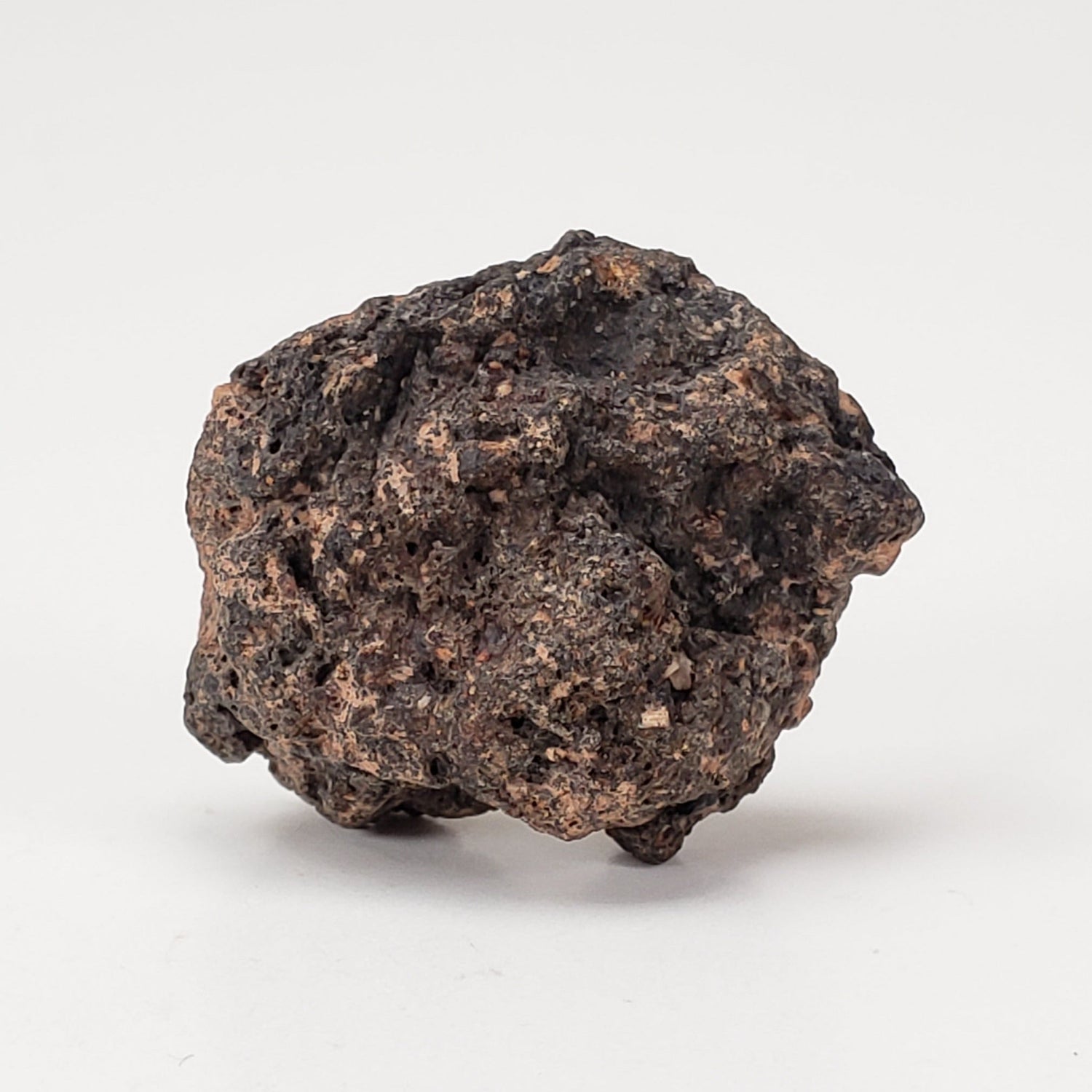
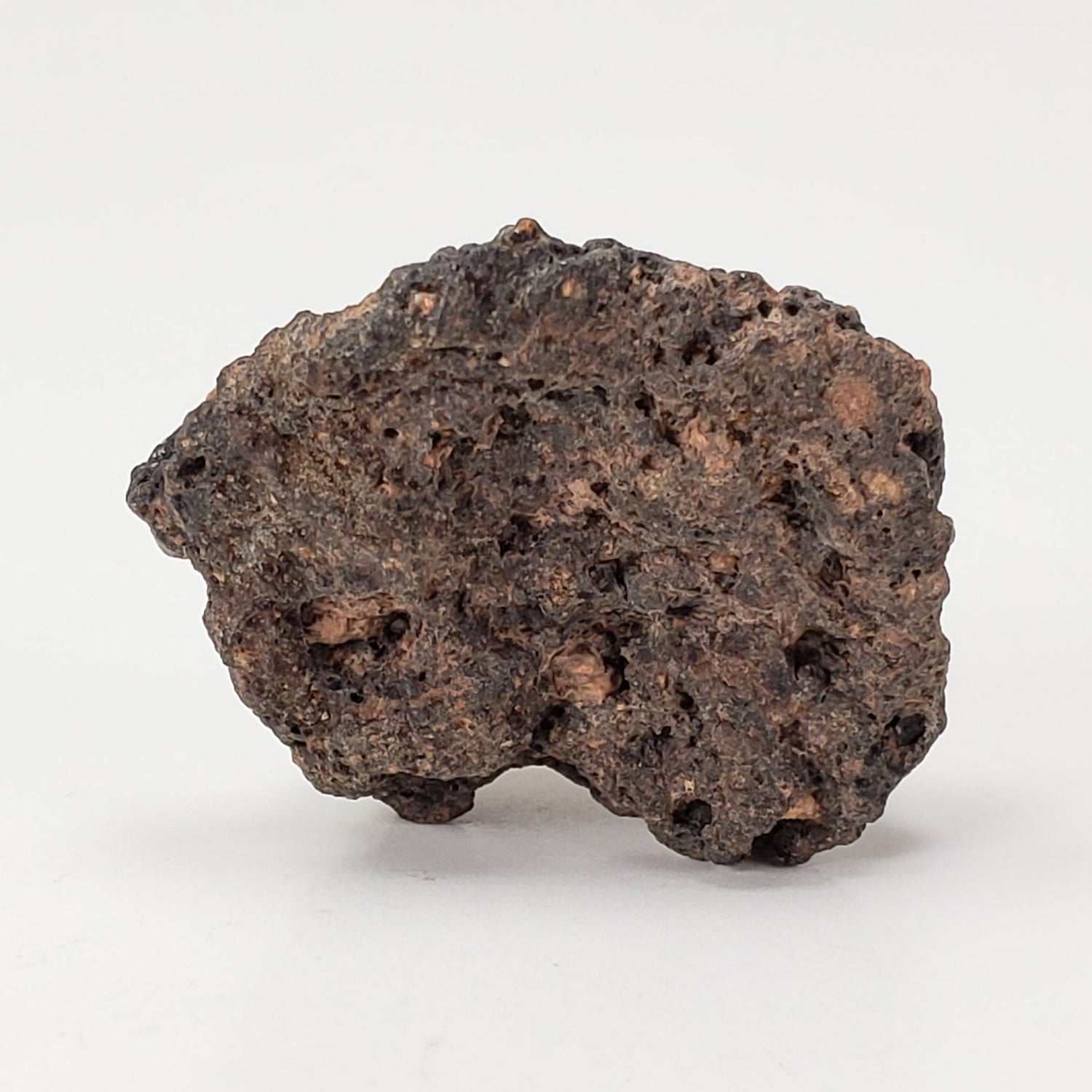
This is an outstanding Monturaqui Impactite specimen weighing 5.66 grams. It measures 26x20x11 mm. Although not a meteorite, impactites are directly linked to them and their impacts.
Some of the recovered pieces of this impactite show tiny bits of the original iron meteorite. There is very little of the original meteorite left at this impact site, but sometimes when these Impactites are sliced you can find small fragments of metal in them. This specimen was collected by Michael Cottingham during an excursion to the Impactite Site.
The Monturaqui Crater is located in a very remote part of North Chile's Atacama Desert. This crater measures about 370 meters in diameter. Less than 4 kilos of Iron Shale fragments and about 50kg of Impactites have been found so far. This crater was made over 100,000 years ago. The only evidence remaining of the original meteorite is seen in the shale and impactite.
Impactite is a slag-like glassy object found on the surface of the earth, formed from rock melted by the impact of a meteorite. The term encompasses shock-metamorphosed target rocks, melts or suevites and mixtures of the two, as well as sedimentary rocks with significant impact-derived components and shocked mineral grains, tektites, anomalous geochemical signatures, etc.
This piece displays extremely well. It is amazingly light considering its mass. It has a unique hollow sound when you tap it. This Chilean find is very well shaped and preserved. These impactites are becoming more difficult to acquire so this is a good time to get a fine specimen. Would be a beautiful addition to any new or existing collection.
This specimen originates from the Michael Cottingham Meteorite Collection and is guaranteed to be authentic. The specimen will come with a Michael Cottingham and a Canagem specimen card.

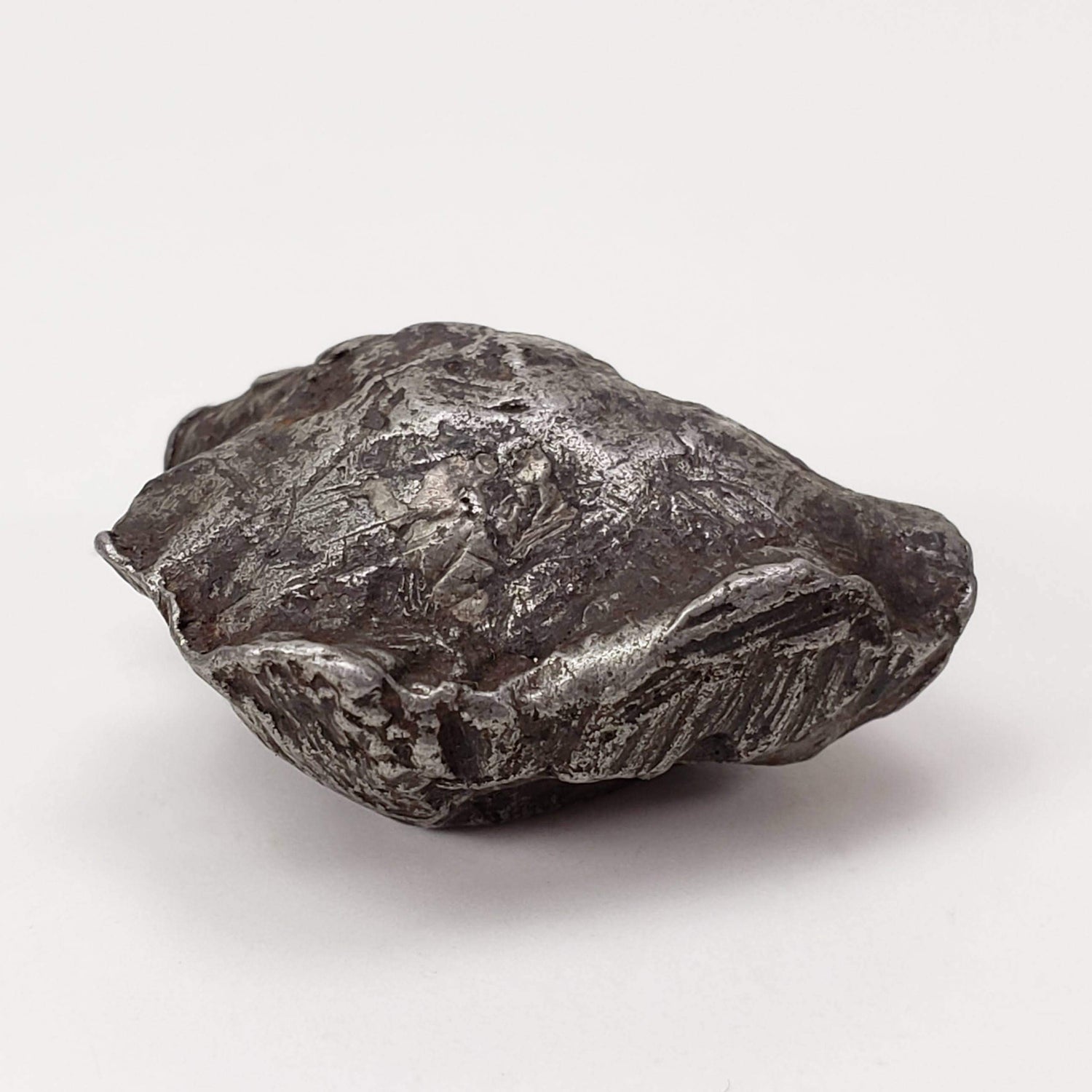
This is a great looking Russian Sikhote-Alin classified meteorite weighing 26.8 grams. Its dimensions are 29x22x13mm. This Iron (IIAB) Coarsest Octahedrite classified meteorite was recovered in Russia after the fall of February 12, 1947.
So far approximately 23 tons of this material have been recovered. This piece displays extremely well and is a very desirable size. These specimens are known as shrapnel specimens, ripped and torn edges reminiscent of bomb shrapnel. They broke due to atmospheric pressure and/or mid-air collisions, and possibly explosive fragmentation upon impact. These pieces are a good example of the shrapnel type Sikhote-Alin.
Would be a beautiful addition to any new or existing collection. Comes with a Canagem Collection specimen card.


This is a fabulous 11.3 gram Sericho Pallasite Main Group meteorite, it measures 26x21x17 mm. In 2016, two brothers were searching for their camels and came across several large, dense stones west of the village of Habaswein and south of Sericho, Kenya. Though recognized as meteorites in 2016, the masses had been known to camel-herders for decades. One village elder said that as a child, he and his brothers would play on top of the stones. It is classified as an Iron Pallasite main group with low weathering and is 1 of only 68 approved meteorites classified as such, with a recovered weight of about 2.8 T.
This piece displays extremely well and is a nice size showing great features. Would be a beautiful addition to any new or existing collection. Comes with a Canagem Collection specimen card.

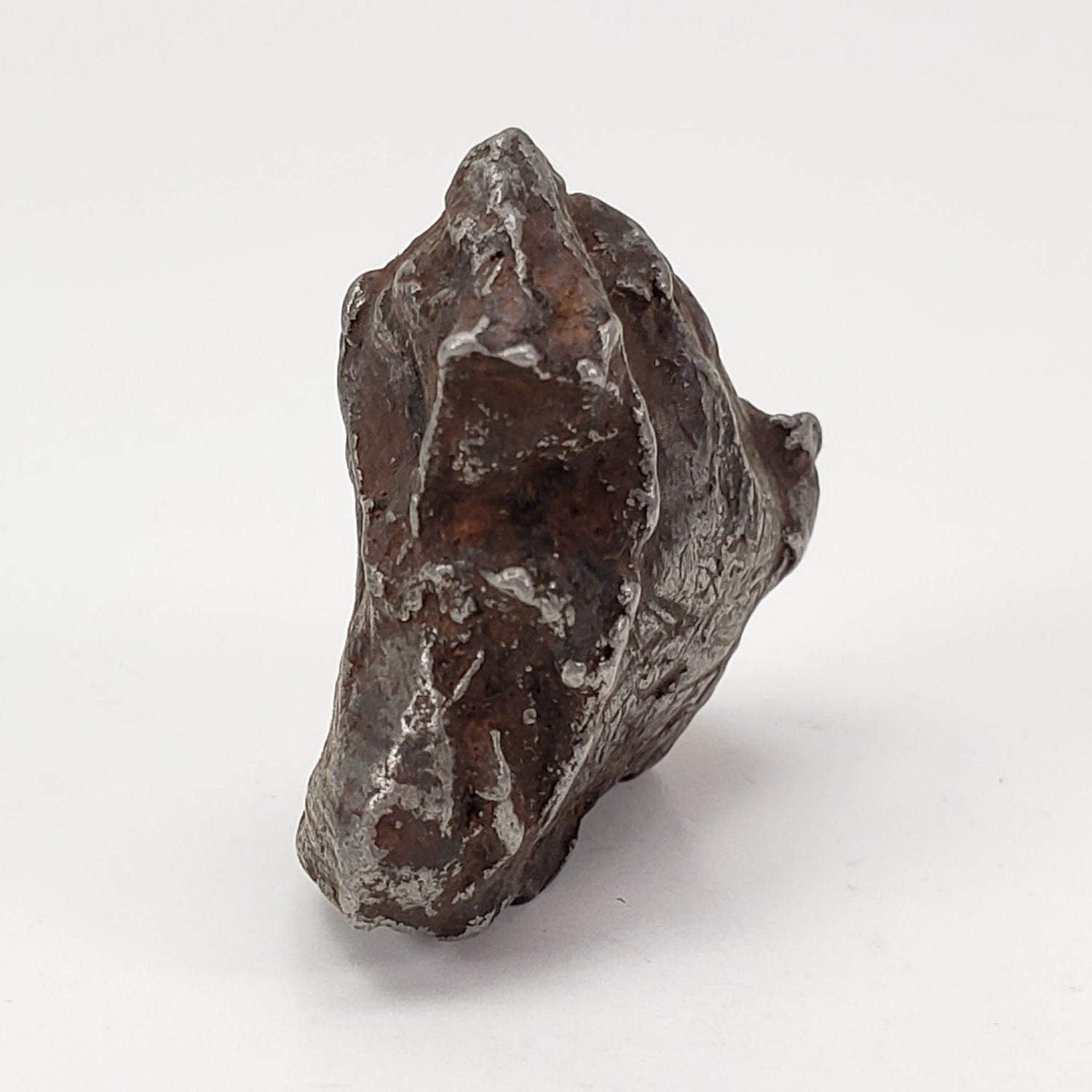
This is a great looking Russian Sikhote-Alin classified meteorite weighing 26.8 grams. Its dimensions are 26x25X12mm. This Iron (IIAB) Coarsest Octahedrite classified meteorite was recovered in Russia after the fall of February 12, 1947.
So far approximately 23 tons of this material have been recovered. This piece displays extremely well and is a very desirable size. These specimens are known as shrapnel specimens, ripped and torn edges reminiscent of bomb shrapnel. They broke due to atmospheric pressure and/or mid-air collisions, and possibly explosive fragmentation upon impact. These pieces are a good example of the shrapnel type Sikhote-Alin.
Would be a beautiful addition to any new or existing collection. Comes with a Canagem Collection specimen card.
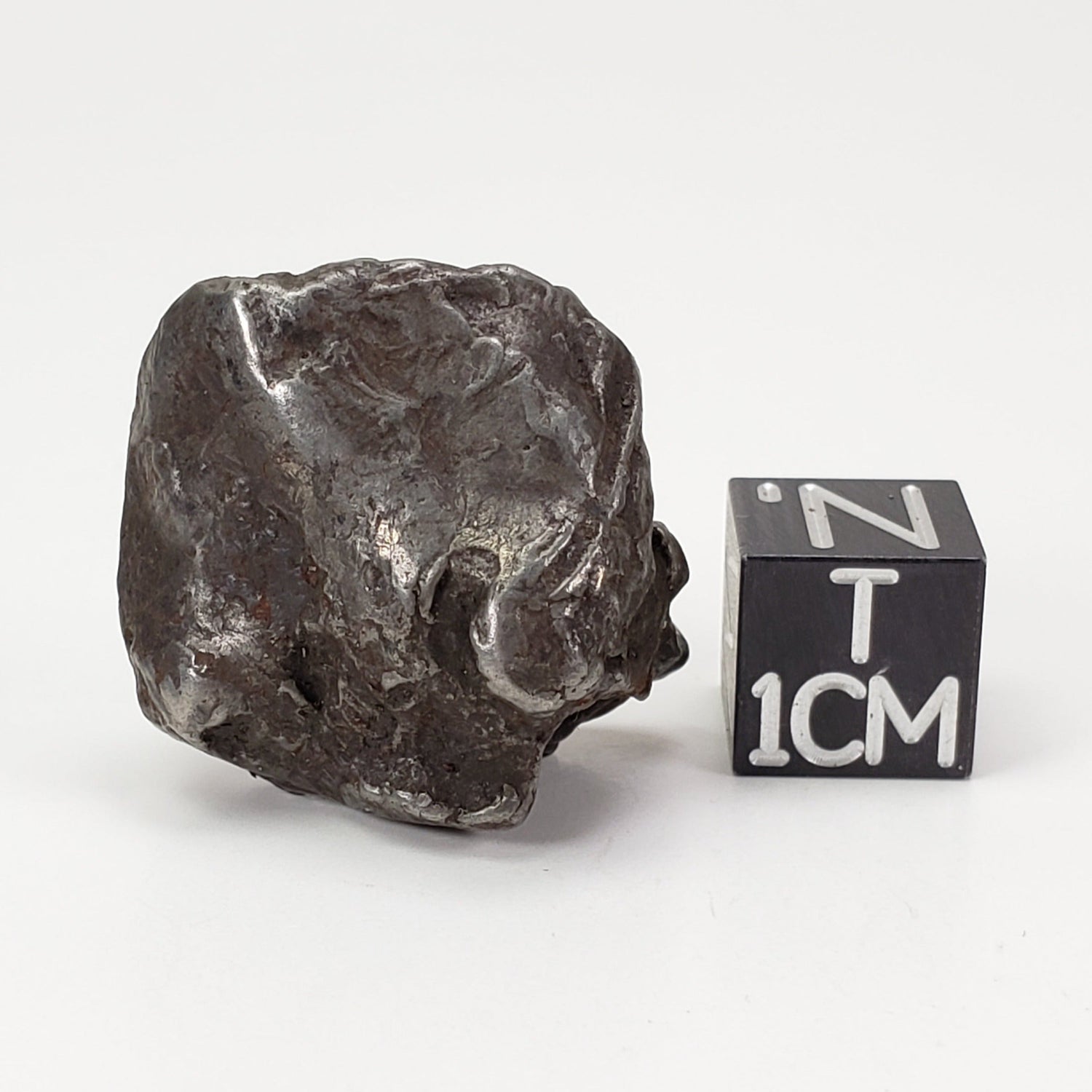
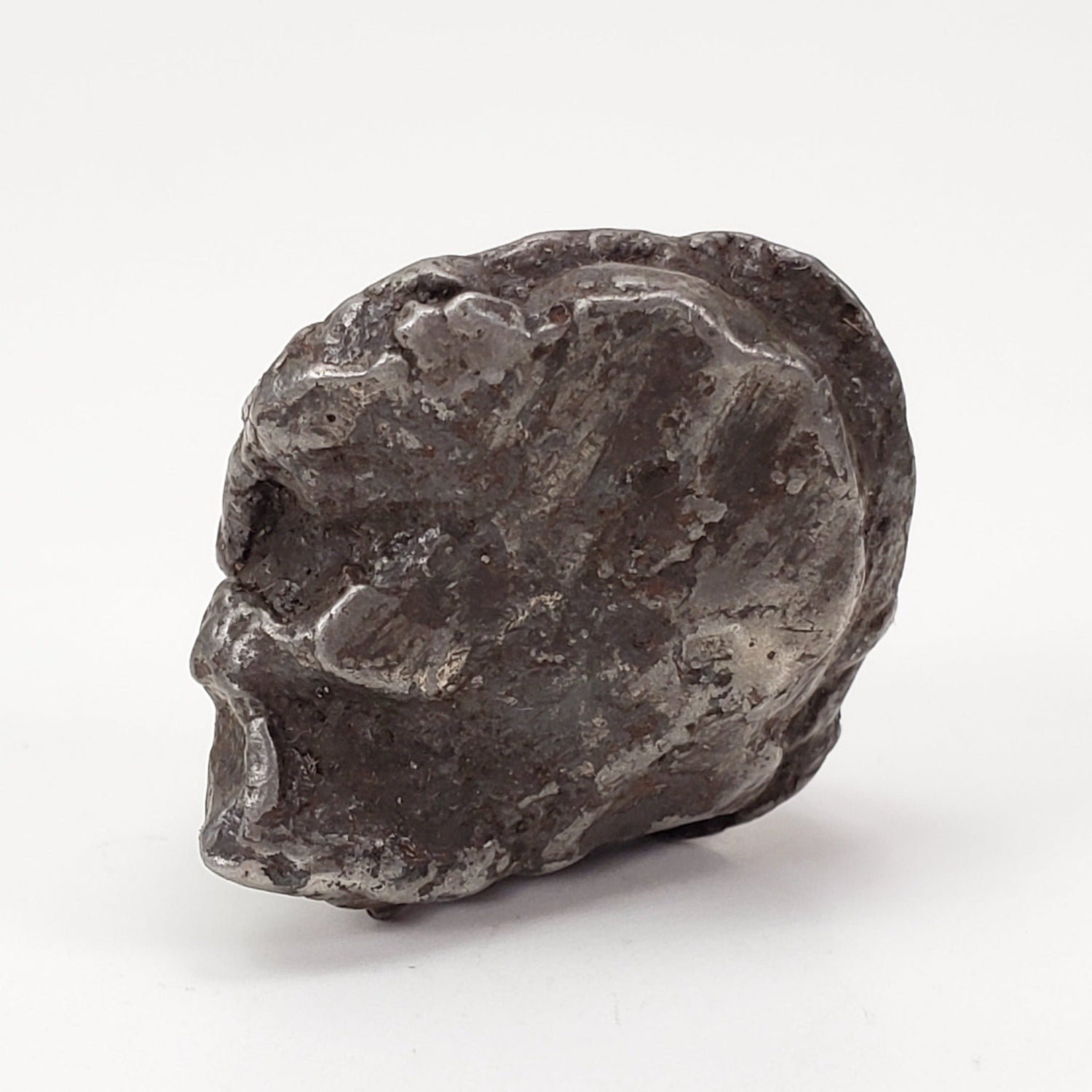
This is a great looking Russian Sikhote-Alin classified meteorite weighing 25.8 grams. Its dimensions are 26x24X16mm. This Iron (IIAB) Coarsest Octahedrite classified meteorite was recovered in Russia after the fall of February 12, 1947.
So far approximately 23 tons of this material have been recovered. This piece displays extremely well and is a very desirable size. These specimens are known as shrapnel specimens, ripped and torn edges reminiscent of bomb shrapnel. They broke due to atmospheric pressure and/or mid-air collisions, and possibly explosive fragmentation upon impact. These pieces are a good example of the shrapnel type Sikhote-Alin.
Would be a beautiful addition to any new or existing collection. Comes with a Canagem Collection specimen card.


This is a must have 59.5 gram Metal Ore Copper rich Impact Breccia from the famous Sudbury Astrobleme Impact Structure in Ontario Canada. Its dimensions are 52x31x13 mm. Although not a meteorite, impactites are directly linked to them and their impacts and are probably going to be one of the rarest collection pieces you'll ever own.
Mark Bostick wrote "About 1.87 billion years ago, an object from space nine kilometers in diameter slammed into Canada, a little north of Sudbury, Ontario creating the second largest impact structure on the earth. This impact was equivalent to a billion tons of TNT. An impact so big it cracked the earth, and in fact there are still earthquakes because of that event today! The many mineral rich deposits and strange rock formations in such close proximity has attracted attention for 100's of years, long before its impact origin was known.
Note that this is not a meteorite but a slice of Earth rock, altered by the impact of a very large meteorite. This came from the ring of the impact and is the harder to find gold-copper-bronze colored impactite described as a metal-rich breccia and sulfides composed chiefly of some amount of iridium, cobalt & selenium. In addition, most of these specimens will contain nickel, iron, sperrylite and pentlandite as well as minor amounts of other metals, metallic & silicate minerals."
Note that this is a very fragile material so it will be packed with attention. Would be a beautiful addition to any new or existing collection. Comes with a copy of a signed Mark Bostick Collection and a Canagem Collection specimen card.


This is a must have 81.85-gram Impact Melt Breccia also referred to as Suevite coming from the famous Ries crater Germany. Although not a meteorite, impactites are directly linked to them and their impacts and are probably going to be one of the rarest collection items you'll ever own. Impactite is a slag-like glassy object found on the surface of the earth, formed from rock melted by the impact of a meteorite.
The term impactite encompasses shock-metamorphosed target rocks, melts or suevites and mixtures of the two, as well as sedimentary rocks with significant impact-derived components and shocked mineral grains, tektites, anomalous geochemical signatures, etc. This impactite was formed 14.5 million years ago in Malmian or Jurassic limestone when a meteorite crashed into the earth making a ~10 miles wide crater named the Ries crater in Germany. This gorgeous end piece displays very well and shows typical inclusions of glass bomb as the dark material and crystalline fragments visible throughout the specimen showing the stages of shock metamorphism.
It is amazingly light considering its mass of 113x78x8 mm. Would be a beautiful addition to any new or existing collection. Comes with a Canagem Collection specimen card.


This is a fabulous 22 gram Sericho Pallasite Main Group meteorite, it measures 42x18x17. In 2016, two brothers were searching for their camels and came across several large, dense stones west of the village of Habaswein and south of Sericho, Kenya. Though recognized as meteorites in 2016, the masses had been known to camel-herders for decades. One village elder said that as a child, he and his brothers would play on top of the stones. It is classified as an Iron Pallasite main group with low weathering and is 1 of only 68 approved meteorites classified as such, with a recovered weight of about 2.8 T.
This piece displays extremely well and is a nice size showing great features. Would be a beautiful addition to any new or existing collection. Comes with a Canagem Collection specimen card.


This is a superb looking slice of a Dhofar 224 classified meteorite weighing 23.2 grams. Its dimensions are 36x35x7 mm. This H4 classified meteorite was found in Zufar, Oman in 2001. The total weight of the pieces recovered is recorded as 14.97 kg and the meteorite has a shock stage of 1 and weathering grade of 3.
This piece displays extremely well because of its beautiful color and multiple chondrules. Would be a beautiful addition to any new or existing collection. Comes with a Canagem Collection specimen card.


This is a sharp, lustrous dark green epidote crystal specimen from V.A.G. Mine in Eden Mills, Vermont. Epidote is widely recognized for its distinctive green color, although it can also occur in shades of yellow, brown, or rarely, nearly black.
Name: Epidote
Specimen Size: Thumbnail-Sized
Dimensions: 15x8x6 mm / 0.6x0.3x0.2 inches Specimen
35x33x33 mm / 1.4x1.3x1.3 inches Box
Weight: 11.3 Grams / 0.4 Ounces
Origin: Mined at "C" Pit V.A.G. Quarries, Eden Mills, Vermont USA


This is a great looking Russian Sikhote-Alin classified meteorite weighing 20.2 grams. Its dimensions are 29x26X13mm. This Iron (IIAB) Coarsest Octahedrite classified meteorite was recovered in Russia after the fall of February 12, 1947.
So far approximately 23 tons of this material have been recovered. This piece displays extremely well and is a very desirable size. These specimens are known as shrapnel specimens, ripped and torn edges reminiscent of bomb shrapnel. They broke due to atmospheric pressure and/or mid-air collisions, and possibly explosive fragmentation upon impact. These pieces are a good example of the shrapnel type Sikhote-Alin.
Would be a beautiful addition to any new or existing collection. Comes with a Canagem Collection specimen card.
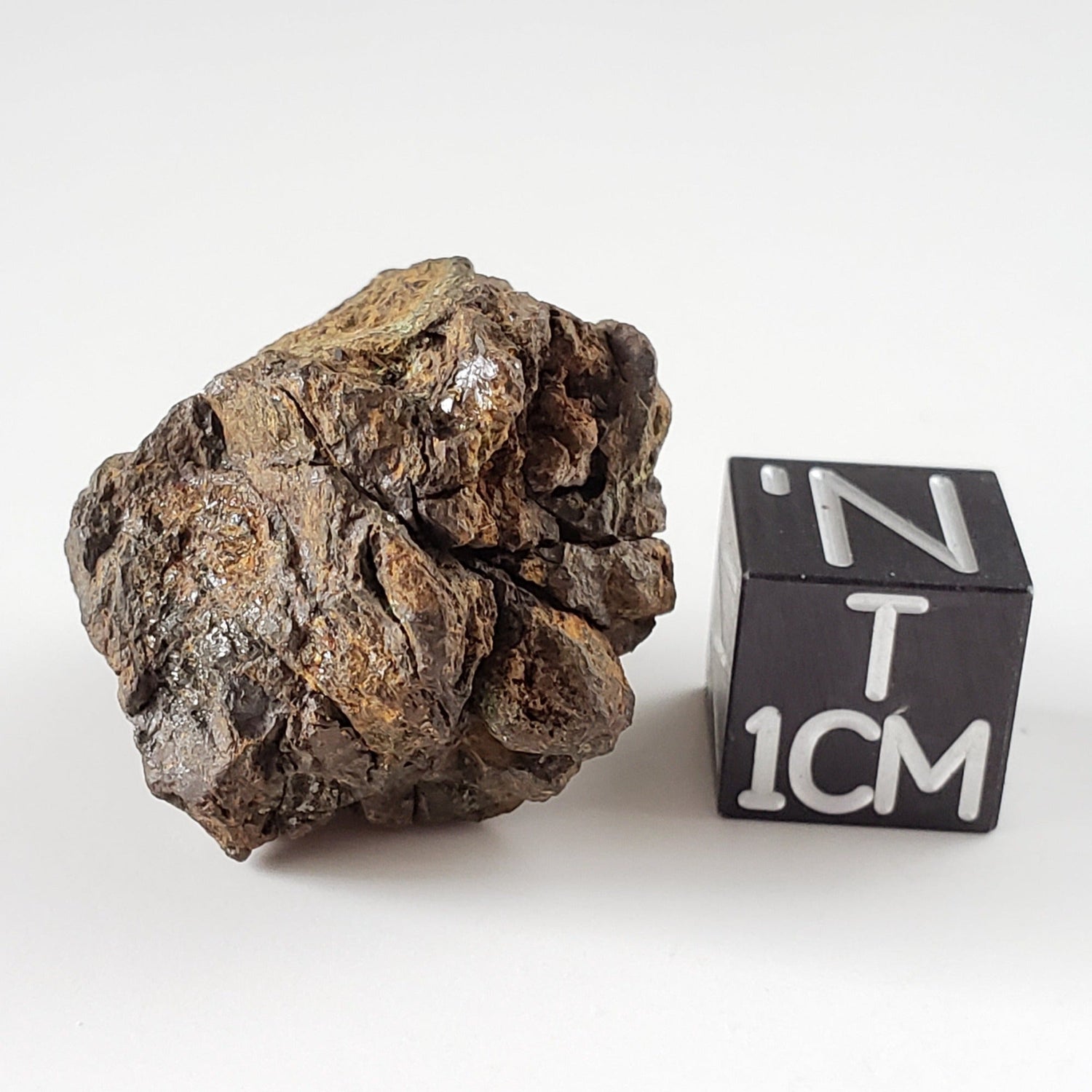
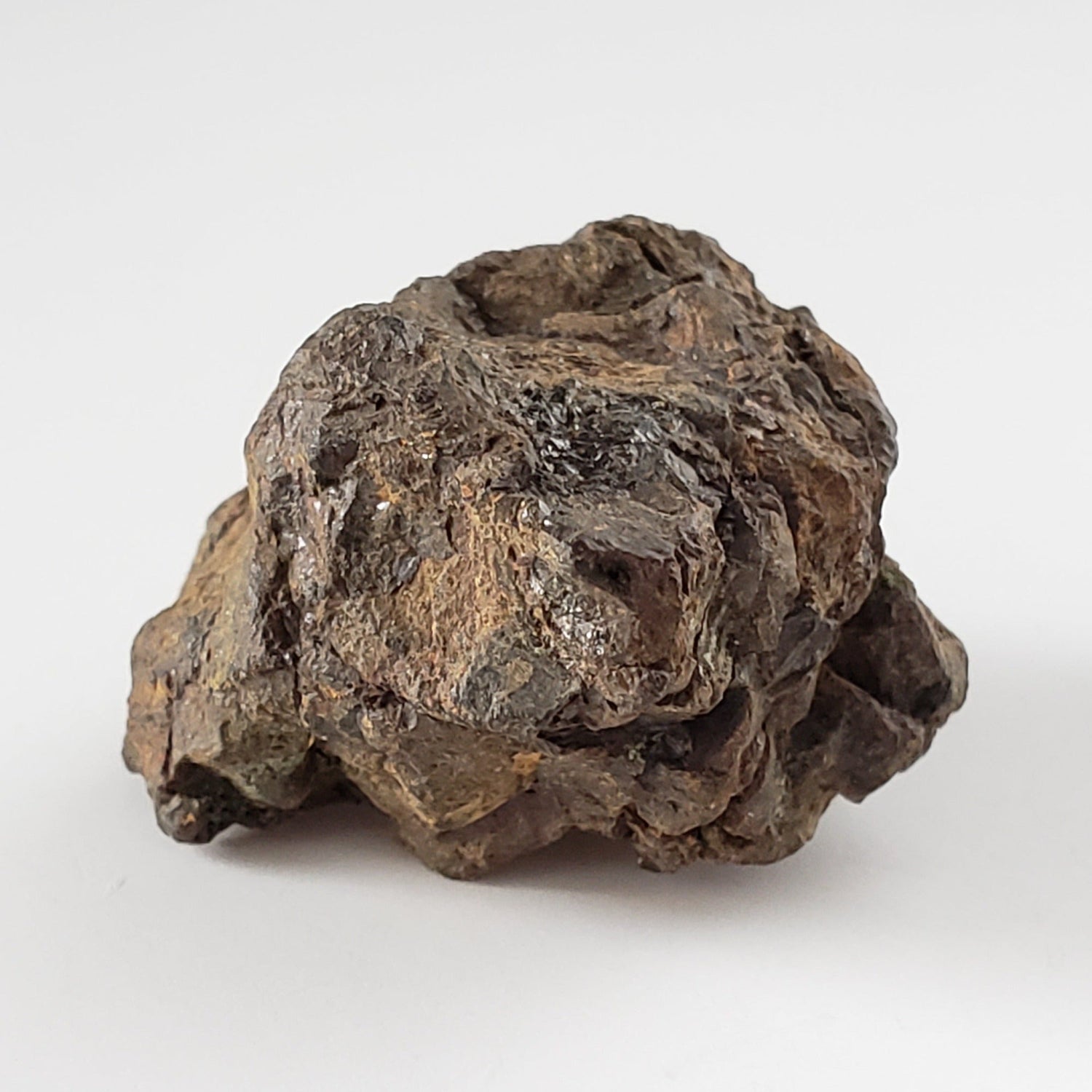
This is a fabulous 10.45 gram Sericho Pallasite Main Group meteorite, it measures 22x20x14. In 2016, two brothers were searching for their camels and came across several large, dense stones west of the village of Habaswein and south of Sericho, Kenya. Though recognized as meteorites in 2016, the masses had been known to camel-herders for decades. One village elder said that as a child, he and his brothers would play on top of the stones. It is classified as an Iron Pallasite main group with low weathering and is 1 of only 68 approved meteorites classified as such, with a recovered weight of about 2.8 T.
This piece displays extremely well and is a nice size showing great features. Would be a beautiful addition to any new or existing collection. Comes with a Canagem Collection specimen card.


This is a superb looking Stony-iron or Mesosiderite Vaca Muerta (Dead Cow) classified meteorite end cut weighing 5.62 grams. Its dimensions are 19x15x11 mm.
This classified meteorite was found in 1861 in the driest desert of the world called the Atacama, in Chile. Mesosiderites are formed on the surface of a parent body as a result of impacts with another body. The impact mixed broken fragments of surface eucrites with iron and olivine from deep within the body. Eucrites are believed to have come from the asteroid Vesta. Analysis has shown, however, that the Vaca Muerta eucrite inclusions are not consistent with other eucrites and possibly originated on a different parent body. Although most have a weathered exterior, they also have lots of metal inside and can be prepared and cut to show this.
This piece displays extremely well and would be a beautiful addition to any new or existing collection. Comes with ELKK Meteorites and Canagem® specimen cards.


This is a fabulous 16.2 gram Sericho Pallasite Main Group meteorite, it measures 28x26x17. In 2016, two brothers were searching for their camels and came across several large, dense stones west of the village of Habaswein and south of Sericho, Kenya. Though recognized as meteorites in 2016, the masses had been known to camel-herders for decades. One village elder said that as a child, he and his brothers would play on top of the stones. It is classified as an Iron Pallasite main group with low weathering and is 1 of only 68 approved meteorites classified as such, with a recovered weight of about 2.8 T.
This piece displays extremely well and is a nice size showing great features. Would be a beautiful addition to any new or existing collection. Comes with a Canagem Collection specimen card.

Canagem is proud to be professional member of The International Gem Society(IGS) the world's top resource for gem professionals, enthusiasts, and industry content.