

📢 Notice to ALL Customers 📢
288 products
Sort by:
288 products
288 products


This is a beautiful specimen of golden brown Vesuvianite crystals on a white carbonate matrix from Mexico. A great addition to any collection! It was first discovered on Mount Vesuvius in Italy in the 18th century, hence its name.
Vesuvianite typically occurs as a green, brown, yellow, or blue-green crystal, and is often found in metamorphic and igneous rocks. The alternate name, Idocrase, is from the Greek eidos “form”, and krasis “mixture”, because Vesuvianite often appears to combine the crystal forms of other minerals. It is used as a gemstone.
Name: Vesuvianite Crystal
Specimen Size: Miniature-Sized
Dimensions: 56x29x26mm / 2.2x1.1x1.0 inches
Weight: 46 grams / 1.6 Ounces
Origin: Sierra de Cruces, Coahuila, Mexico


This is an Adamite Crystals on Limonite matrix mined in Mina Ojuela, Mapimi, Durango, Mexico. Adamite typically occur as small, brightly colored, prismatic or blocky crystals, or as crusts or aggregates. It is commonly found in association with other minerals such as limonite, calcite, and smithsonite. Adamite colors include green, yellow, white, and reddish-brown. The green color of adamite is caused by the presence of traces of copper in its crystal structure. One of the unique features of adamite is its strong fluorescence under ultraviolet (UV) light. It can exhibit vibrant green or yellow fluorescence.
Adamite was first discovered in 1866 in the Ojuela Mine in Durango, Mexico. It was named after French mineralogist Gilbert-Joseph Adam (1795-1881), who studied the mineralogy of the mine.
Adamite is associated with joy, creativity, and the balancing of energies. Some believe it can enhance one's ability to express themselves and promote a positive outlook. It is highly valued by collectors for its bright colors and distinctive crystal habits and would be a great addition to any new or existing collection.
Name: Adamite Crystals on Limonite Matrix
Specimen Size: Cabinet-Sized
Dimensions: 70x25x39 mm / 2.7x1.0x1.5 inches
Weight: 77.1 Grams / 2.7 Ounces
Origin: Mined in Mina Ojuela, Mapimi Durango, Mexico


Here we have for you a nice looking tumbled individual of a Sahara Desert NWA unclassified meteorite weighing 75.5 grams. Its dimensions are 49x39x29mm. This never classified North West Africa stone was found in the Sahara desert around 2000.
It's a good quality individual NWA meteorite specimen. Would be a beautiful addition to any new or existing collection. Comes with a Canagem Collection specimen card.


This is a beautiful cluster of clear quartz crystals on a carpet of green pistacite, also known as epidote. The epidote underneath are clearly visible through the quartz.
Pistacite is a historical term once commonly used to describe a green variety of epidote, named for its pistachio-like color. While the term is still recognized among collectors and in older literature, it has largely been replaced in modern mineralogy by the more general name green epidote.
Pistacite (green epidote) is often associated with growth, release, and emotional healing. Some believe it helps clear negative energy and encourages letting go of patterns or emotions that no longer serve you. It’s thought to support personal transformation by boosting a sense of hope and forward movement, especially during times of change or recovery.
This large specimen would be a beautiful addition to any new or existing collection.
Name: Clinozoisite var. Pistacite and Quartz Cluster
Specimen Size: Cabinet-Sized
Dimensions: 85x70x57 mm / 3.3x2.7x2.2 inches
Weight: 326.4 Grams / 11.5 ounces
Origin: Mined in Alicante, Valencian Community, Spain


This is a fabulous Inesite on Hubeite crystal cluster from Ezhou, China. Inesite's name originates from the Greekines, "fibers" alluding to its color and habit. Hubeite was found and named after the province of Hubei, China and is common to iron ores in mines of that region. It occurs mainly as aggregates of fan like crystals. It is dark to pale brown, has orange-brown streak and is vitreous.
This rare specimen is in very good condition and is a spectacular combination of minerals
Name: Inesite on Hubeite Crystal Mineral
Specimen Size: Thumbnail-Sized
Dimensions: Specimen: 27x27 mm / 1.1x1.1 inches
Box: 33x33 mm / 1.3x1.3 Inches
Weight: 12.9 gr / 0.4 Ounces (including box)
Origin: Ezhou, Hubei Province, China


This is a very fine green Apophyllite with Stilbite from Parsboro, Cape d'Or, Nova Scotia, Canada. It is one of the rare green specimens which was collected in the 2002, and is a quality specimen.
One of the distinguishing features of apophyllite is its ability to form well-defined crystals with a pyramid-like shape. These crystals often exhibit a prismatic or pseudo-cubic habit and have a vitreous luster. Apophyllite is transparent to translucent and is commonly found in colorless or white varieties, although it can also occur in shades of green, pink, yellow, or brown.
Stilbite is a zeolite mineral appreciated for its delicate crystal formations and pastel hues, ranging from colorless to white, yellow, pink, and peach. It forms distinctive tabular crystals with a bowtie or butterfly shape and exhibits a vitreous to pearly luster. Commonly found in cavities in volcanic rocks, stilbite is often associated with other zeolite minerals.
Name: Apophyllite, Stilbite Crystals
Specimen Size: Miniature-Sized
Dimensions: 45x33x33 mm / 1.8x1.3x1.3 inches
Weight: 35.2 gr / 1.2 oz
Details: Mined in Cape D'Or, Nova Scotia, Canada


Lepidolite is a lilac-gray or rose-colored member of the mica group of minerals. Because lepidolite is a lithium-bearing mica, it is often wrongly assumed that lithium is what causes the pink hues that are so characteristic of this mineral. Instead, it is trace amounts of manganese that cause the pink, purple, and red colors. The most notable and certainly the most studied of these deposits is the Brown Derby #1 Pegmatite, located in the Ohio City/Quartz Creek District, approximately 18 miles northeast of Gunnison in the high mountains of Central Colorado.
This top specimen is in very good condition. Would be a beautiful addition to any new or existing collection.
Name: Lepidolite on Quartz Crystal Cluster
Specimen Size: Large Cabinet Sized
Dimensions: 111x85x57 mm / 4.4x3.3x2.2 inches
Weight: 661Grams / 1 lb 7 oz
Origin: Mined in Brown Derby Mine, Quartz Creek Pegmatite Mining District, Gunnison County, Colorado, USA

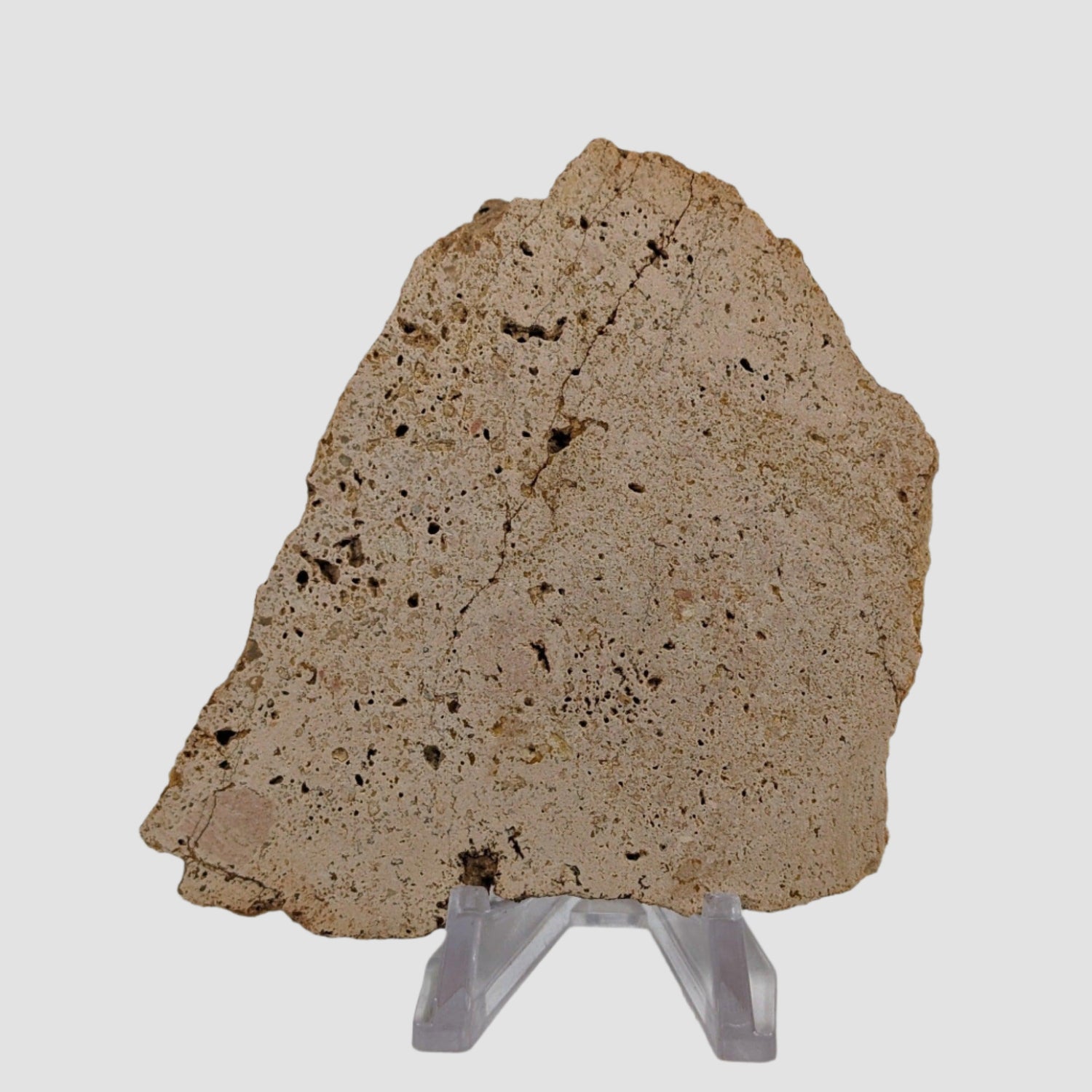
This is a must have 76.5 gram Impact Vesicular Breccia also referred to as Suevite coming from the famous Rochechouart impact structure in South Western France, near the village of La Valette. Although not a meteorite, impactites are directly linked to them and their impacts and are probably going to be one of the rarest collection item you'll ever own. Impactite is a slag-like glassy object found on the surface of the earth, formed from rock melted by the impact of a meteorite.
The term impactite encompasses shock-metamorphosed target rocks, melts or suevites and mixtures of the two, as well as sedimentary rocks with significant impact-derived components and shocked mineral grains, tektites, anomalous geochemical signatures, etc. This impactite was formed 186 million years ago. This deformed rock fragments and partly molten are imbedded in a melt matrix showing typical flow structures from former melt.
This gorgeous end piece displays very well with a mass of 92.3 x 71.3 x 9.8 mm. Would be a beautiful addition to any new or existing collection. Comes with a Canagem Collection specimen card.

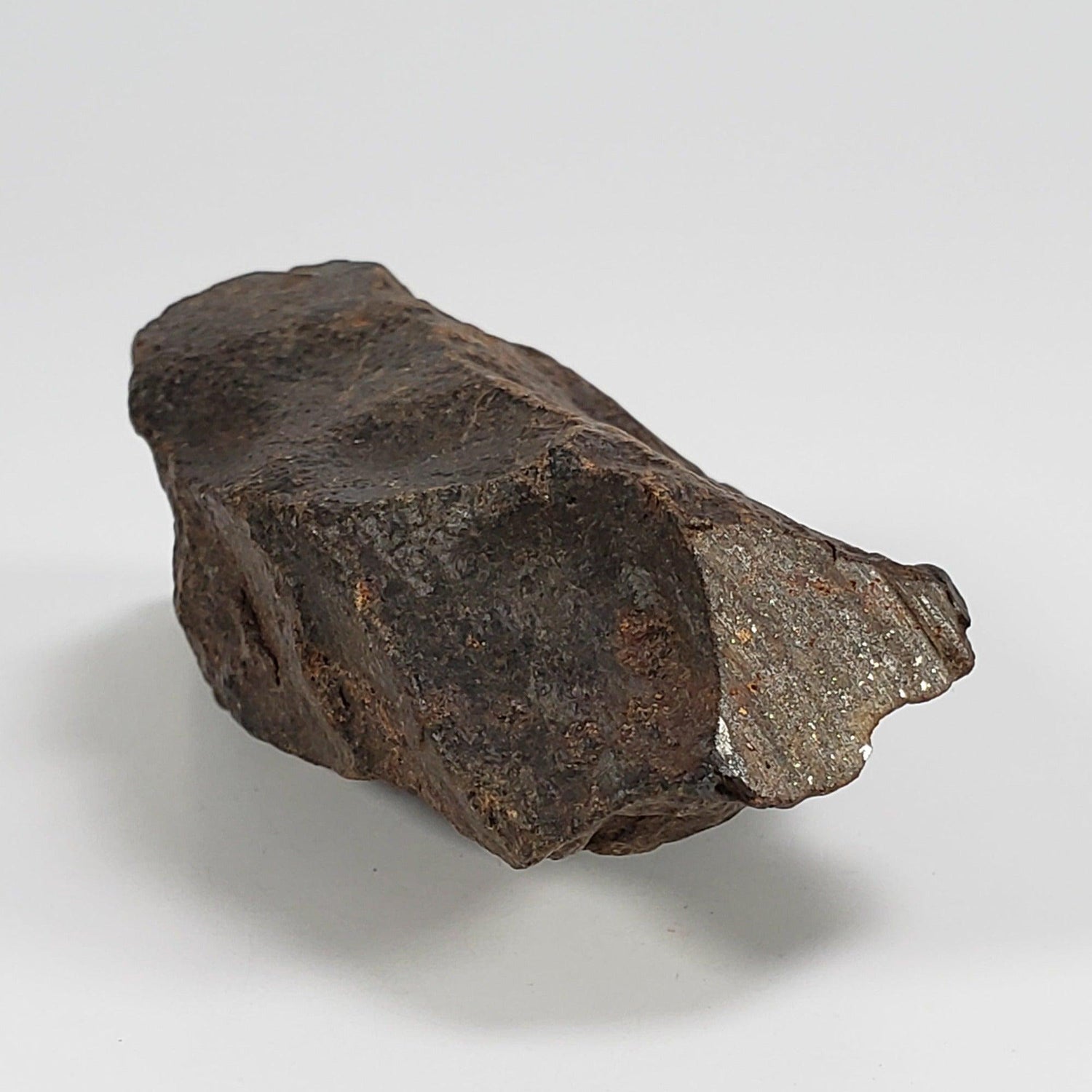
Here we have for you a nice looking individual cut fragment of a Sahara Desert NWA unclassified meteorite weighing 107 grams. Its dimensions are 72x42x28mm. This never classified North West Africa stone was found in the Sahara desert around 2000.
It's a good quality individual fragment NWA meteorite specimen. Some weathering shows the meteorite's time spent aging in the desert. Would be a beautiful addition to any new or existing collection. Comes with a Canagem Collection specimen card.


Here we have for you a nice looking individual fragment of a Sahara Desert NWA unclassified meteorite weighing 41.6 grams. Its dimensions are 62x23x20mm. This never classified North West Africa stone was found in the Sahara desert around 2000.
It's a good quality individual fragment NWA meteorite specimen. Some weathering shows the meteorite's time spent aging in the desert. Would be a beautiful addition to any new or existing collection. Comes with a Canagem Collection specimen card.


Here we have for you a nice looking individual fragment of a Sahara Desert NWA unclassified meteorite weighing 49.4 grams. Its dimensions are 66x28x19mm. This never classified North West Africa stone was found in the Sahara desert around 2000.
It's a good quality individual fragment NWA meteorite specimen. Some weathering shows the meteorite's time spent aging in the desert. Would be a beautiful addition to any new or existing collection. Comes with a Canagem Collection specimen card.


This is a beautiful Spinel crystal in marble host from Myanmar (Burma). Spinel comes in a variety of colors, including red, pink, blue, purple, orange, and black. It is often mistaken for other gemstones due to its resemblance to rubies and sapphires, especially red spinel, which historically has been confused with ruby.
Spinel is found in various regions around the world, including Myanmar (formerly Burma), Sri Lanka, Tanzania, Madagascar, Vietnam, and Afghanistan. Myanmar, in particular, is known for producing some of the finest red spinel gemstones.
Spinel is associated with vitality, rejuvenation, and inspiration. It is believed to promote energy, strength, and positive transformation.
Name: Spinel Crystal In Host (marble matrix)
Specimen Size: Cabinet-Sized
Dimensions: 71x59x40 mm / 2.8x2.3x1.6 inches
Weight: 172.2 gr / 6.1 ounces / 860.9 ct
Origin: Mogok, Myanmar (Burma)

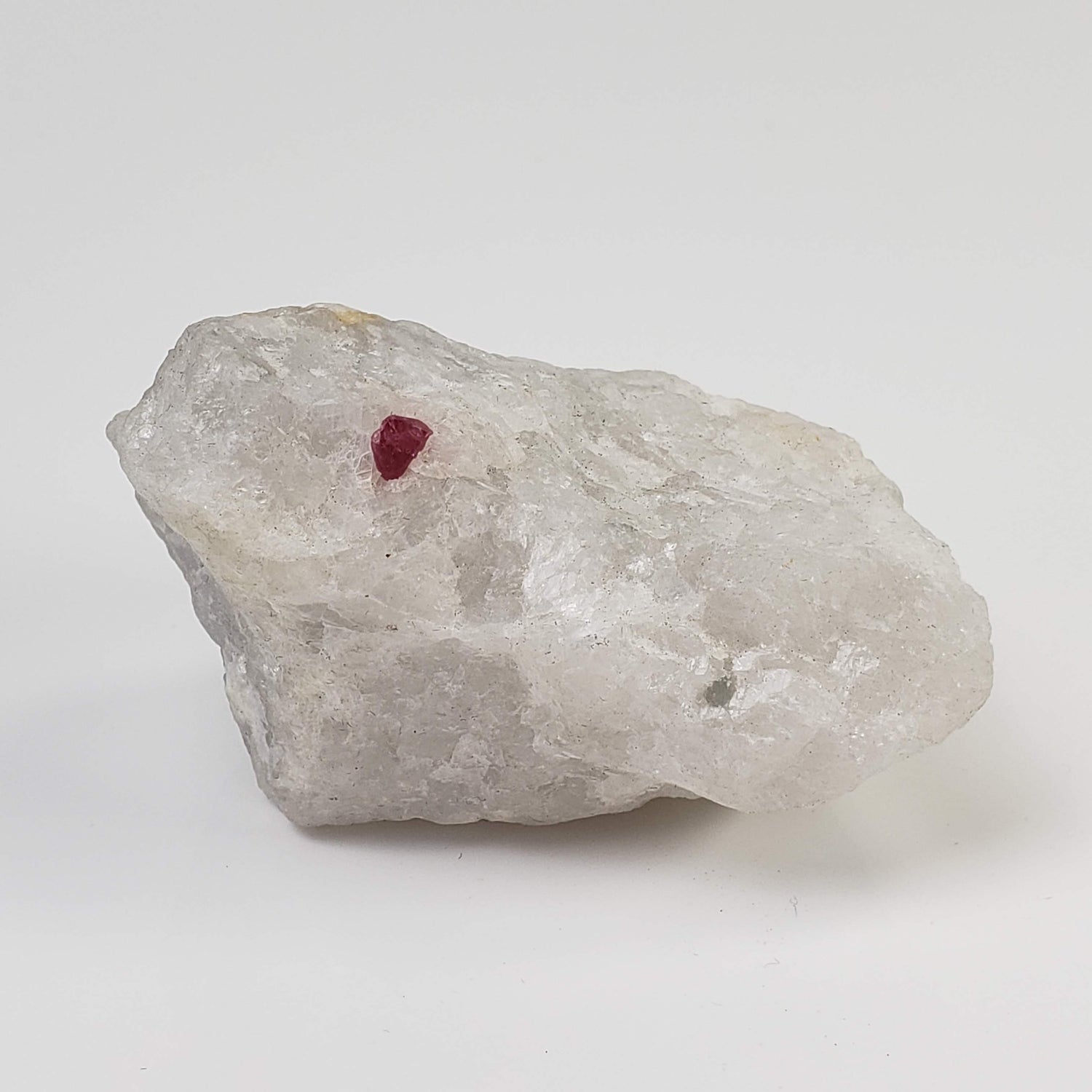
This is a beautiful Spinel crystal in marble host from Myanmar (Burma). Spinel comes in a variety of colors, including red, pink, blue, purple, orange, and black. It is often mistaken for other gemstones due to its resemblance to rubies and sapphires, especially red spinel, which historically has been confused with ruby.
Spinel is found in various regions around the world, including Myanmar (formerly Burma), Sri Lanka, Tanzania, Madagascar, Vietnam, and Afghanistan. Myanmar, in particular, is known for producing some of the finest red spinel gemstones.
Spinel is associated with vitality, rejuvenation, and inspiration. It is believed to promote energy, strength, and positive transformation.
Name: Spinel Crystal In Host (marble matrix)
Specimen Size: Cabinet-Sized
Dimensions: 62x36x40 mm / 2.4x1.4x1.6 inches
Weight: 98.9 gr / 3.5 ounces / 494 ct
Origin: Mogok, Myanmar (Burma)
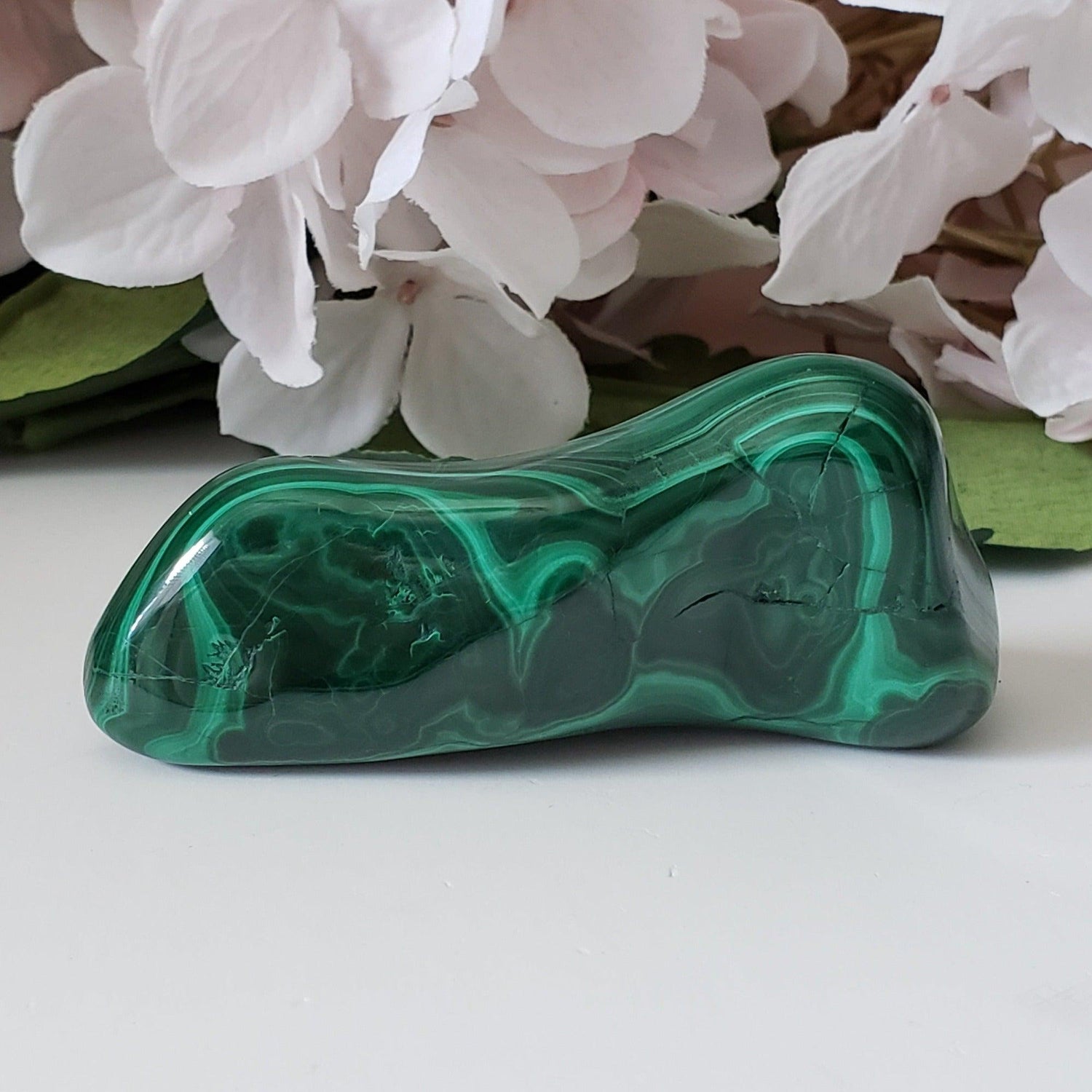
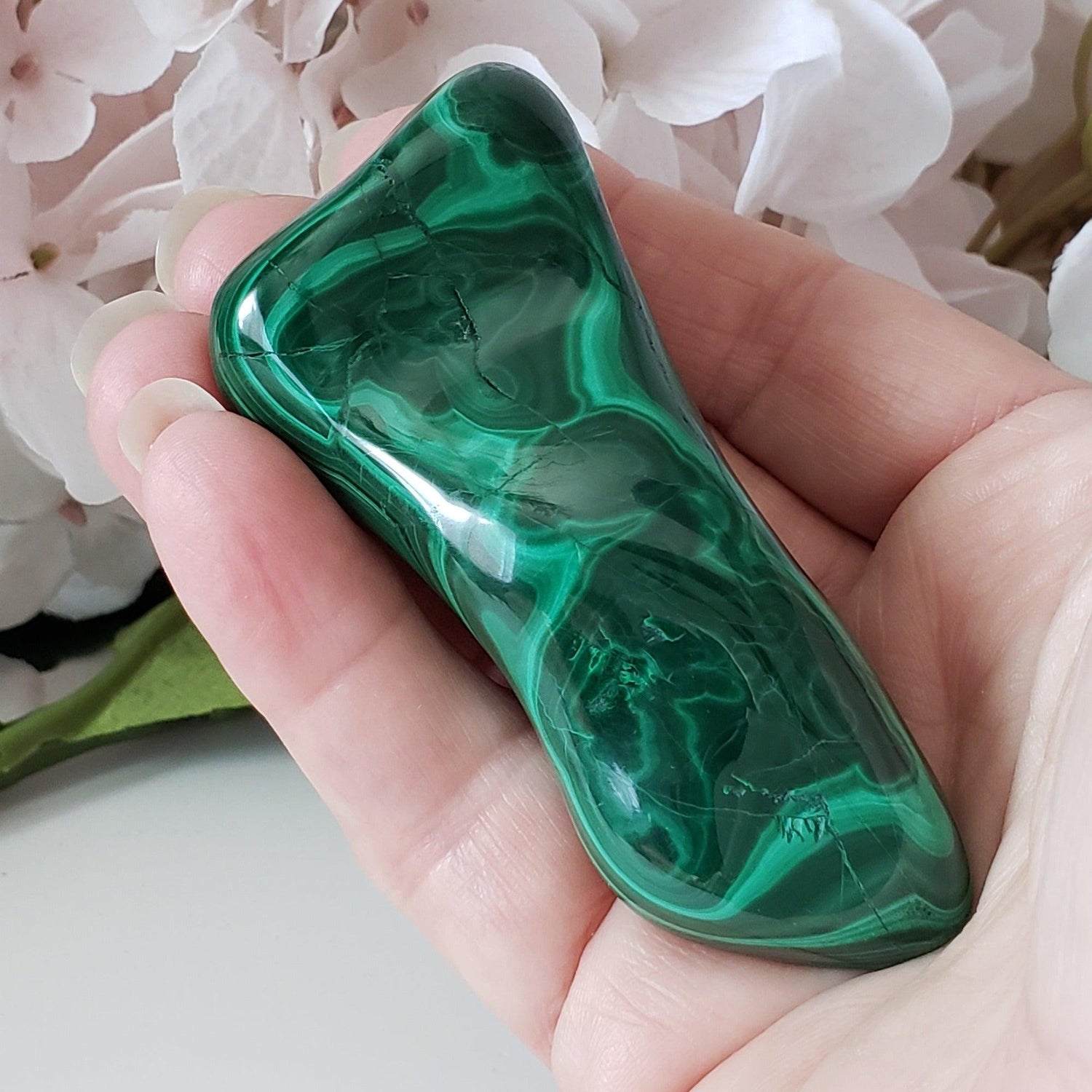
This is a beautiful polished free form of Malachite from the Democratic Republic of Congo. Malachite is perhaps the one of the most popular minerals for collectors due to its intense green color and sometimes beautiful, banded masses.
Africa contains several outstanding Malachite deposits. The mines at Katanga (Shaba), especially at Kolwezi, in the Congo (Zaire) produce Malachite in all sorts of odd shapes and forms, and are the source of the best banded, concentric, stalactitic and sparkling specimens.
Would be a beautiful addition to any new or existing collection.
Name: Malachite
Specimen Size: Cabinet-Sized
Dimensions: 82x30x39 mm / 3.2x1.2x1.5 inches
Weight: 161 Grams / 5.7 Ounces
Origin: Mined in Shaba Copper Belt, Zaire


This is a great looking meteorite collection in a Riker style box containing individual specimens selected for you. From Guangxi, China you have a Nantan meteorite specimen; from Kenya you'll find a Sericho specimen and from the Northwest Africa a NWA 4293. The Riker collection box is approximately 85x110x23mm (3.3x4.3x.9 inch).
You will receive 1 Riker box containing the above meteorite specimens. Note that the photos provided are representative, so you may not receive the exact pictured specimen; however, you will receive one of each of the specimen listed above of the same or higher value and similar characteristics.
The Nantan meteorites are a must for all collectors, more so that it is now very difficult to find worthy specimen. They are a very interesting IAB-MG iron discovered in 1958 and there is an estimated 9.5 T of this material. This is 1 of 88 approved meteorites classified as Iron, IAB-MG.
The individual Northwest Africa or NWA 4293 formerly known as NQ10 is an H6 chondrite found in the Sahara desert in 2005 and is one of 5854 approved meteorites classified as such. This fascinating meteorite was mainly found as small individuals and the total weight of the 100's of pieces recovered is recorded as a low 25 kg. The meteorite has a shock stage of 4 and weathering grade of 2.
Then this Stony-iron or Mesosiderite Vaca Muerta (Dead Cow) classified meteorite was found in 1861 in the driest desert of the world called the Atacama, Chile. Although most have a weathered exterior, they also have lots of metal inside. Classified as a Mesosiderite A1 is 1 of only 7 approved meteorites classified as such, with a recovered weight of about 3.83 T.
Each specimen shows very well and is a perfect size to proudly display in your collection. Also included is a stand for the Riker box and a Canagem Collection specimen card for each meteorite. Would be a beautiful addition to any new or existing collection.


This is an etched part slice of the Gibeon classified meteorite mounted on a Sterling Silver medallion, made by an artisan from Mexico. The Widmanstatten pattern on this Gibeon stands out remarkably, making for an eye catching pendant. The thin part slice measures 11x7 mm and is placed onto a silver medallion measuring 34x18x2mm. The total weight of this pendant, including meteorite and silver, is 13 grams. This Iron (IAV) classified meteorite was found in Great Nama Land Namibia in 1836. So far approximately 26 T of this material have been recovered.
Gibeon pieces are becoming more difficult to acquire so this is a good time to get a fine specimen. Comes with a Canagem® Collection specimen card.

Canagem is proud to be professional member of The International Gem Society(IGS) the world's top resource for gem professionals, enthusiasts, and industry content.