

📢 Notice to ALL Customers 📢
288 products
Sort by:
288 products
288 products


This is a fabulous specimen of Black kyanite and quartz mined in Marilac, Safira pegmatite district, Eastern Brazilian pegmatite province, Minas Gerais, Brazil. The specimen will sit perfectly flat to allow easy display in a favorable position.
Kyanite is a silicate mineral and is known to be one of the most attractive natural minerals in the world, frequently found with lustrous bladed crystals, with the intensity of color varying by location of extraction. Kyanite regularly forms fibrous, radiating crystals, as well as flattened and tabular. Some crystals form with white striations, color bands, and even multi-colored crystals, though typically found with a deep blue streak running down the middle.
Name: Kyanite and Quartz Crystal
Specimen Size: Cabinet-Sized
Dimensions: 92x48x25 mm / 3.6x1.9x1inches
Weight: 104.36 grams / 3.7 Ounces
Origin: Safira pegmatite district, Eastern Brazilian pegmatite province, Minas Gerais, Brazil


The Lead–Zinc deposits of Madan Ore Field (Southwest Rhodopy Mountains) were operated by the Turks in the Middle Ages. Greek coins from Tassos island dating from 14th century AD, have been found in the ancient galleries. As well, the name of the Madan field, which in Turkish means Ore, originates from that time.
The Madan Ore Field is built up mainly of the highly crystalline rocks of the lower (Ar) and upper (Pt) metamorphic units which form the Madan dome structure. The Lead–Zinc deposits of the Madan Ore Field are represented by: 1. Ore veins of Quartz–Carbonate–Sulphide composition, and 2. Metasomatic scarn deposits of Johannsenite–Rhodonite or Quartz–Sulphide composition.
This top specimen is in very good condition. Would be a beautiful addition to any new or existing collection.
Name: Quartz Galena Crystal Cluster
Specimen Size: Cabinet-Sized
Dimensions: 62x36x24 mm / 2.4x1.4x0.9 inches
Weight: 59 Grams / 2.1 oz
Origin: Mined in Mogila, Madan, Bulgaria


Cubic and crystallized Pyrite matrix with Marmatite crystal cluster.
Some of the more important Colorado localities for specimens of well-crystallized pyrite include mines at cli- max, Gilman, Leadville, Rico, Ouray, Telluride, Creede, Alicante, Alice, and State Bridge. Specimens from each of these localities often have distinctive crystal habits and mineral associations. The Eagle mine is probably best known for its pyritohedral Pyrite specimens. This cluster is a good representative Eagle mine Pyrite showing typical striated pyritohedra with sharp, lustrous faces plus some Marmatite opaque black iron-rich crystals.
This top specimen is in very good condition. Would be a beautiful addition to any new or existing collection.
Name: Pyrite with Marmatite Crystal Cluster
Specimen Size: Cabinet-Sized
Dimensions: 65x44x42 mm / 2.6x1.7x1.6 inches
Weight: 248 Grams / 8.7 oz
Origin: Mined in Gilman, Colorado, USA


This is an amazing specimen of Hematite, or Specularite, crystals on a large hematite matrix from Egremont, Cumbria, England. The entire top of the specimen is covered with Specularite crystals while the other side is botryoidal Hematite. The specimen is in very good condition. Would be a nice addition to any new or existing collection.
Name: Hematite var. Specularite Crystal Cluster
Specimen Size: Cabinet-Sized
Dimensions: 62x42x21 mm / 2.4x1.6x.8 inches
Weight: 82 Grams / 2.9 ounces
Origin: Mined in Ullcoats mine, Egremont, Cumbria, England


Stilbite is a zeolite mineral appreciated for its delicate crystal formations and pastel hues, ranging from colorless to white, yellow, pink, and peach. It forms distinctive tabular crystals with a bowtie or butterfly shape and exhibits a vitreous to pearly luster. Commonly found in cavities in volcanic rocks, stilbite is associated with other zeolite minerals. It is valued for its aesthetic appeal and is believed by some to have calming energy, supporting spiritual growth and emotional healing.
Name: Stilbite Crystals
Specimen Size: Large Cabinet-Sized
Dimensions: 145x87x92mm / 5.7x3.4x3.6 inches
Weight: 487 Grams / 1 Lbs 1 Ounces
Origin: Mined in Jalgaon, India


This is a great looking Russian Sikhote-Alin classified meteorite weighing 26.2 grams. Its dimensions are 34x22x11 mm. This Iron (IIAB) Coarsest Octahedrite classified meteorite was recovered in Russia after the fall of February 12, 1947.
So far approximately 23 tons of this material have been recovered. This piece displays extremely well and is a very desirable size. These specimens are known as shrapnel specimens, ripped and torn edges reminiscent of bomb shrapnel. They broke due to atmospheric pressure and/or mid-air collisions, and possibly explosive fragmentation upon impact. These pieces are a good example of the shrapnel type Sikhote-Alin.
Would be a beautiful addition to any new or existing collection. Comes with a Canagem Collection specimen card.


Sharp lustrous metallic crystals makes this top specimen of Skutterudite most beautiful and unique. Some pearly white Calcite is intergrown between crystals. Although most Skutterudite are uninteresting in form, several localities have produced sharp, lustrous crystals that are striking in aesthetics like this one.
The Bou Azer District, Morocco, produces the best examples of Skutterudite, in large, lustrous crystals, often in a cuboctadral shape. Skutterudite may partially alter to pink Erythrite. Skutterudite is named after its type locality of Skutterud, Norway.
This specimen is in very good condition. Would be a beautiful addition to any new or existing collection.
Name: Skutterudite Crystal
Specimen Size: Cabinet-Sized
Dimensions: 90x65x37 mm / 3.5x2.6x1.5 inches
Weight: 657 Grams / 1 lb 7 oz
Origin: Bou Azzer Mine, Bou Azzer mining district, Drâa-Tafilalet Region, Morocco


Sharp lustrous metallic crystals makes this top specimen of Skutterudite most beautiful and unique. Some pearly white Calcite is intergrown between crystals. Although most Skutterdite are uninteresting in form, several localities have produced sharp, lustrous crystals that are striking in aesthetics like this one.
The Bou Azer District, Morocco, produces the best examples of Skutterudite, in large, lustrous crystals, often in a cuboctadral shape. Skutterudite may partially alter to pink Erythrite. Skutterudite is named after its type locality of Skutterud, Norway.
This specimen is in very good condition. Would be a beautiful addition to any new or existing collection.
Name: Skutterudite Crystal
Specimen Size: Cabinet-Sized
Dimensions: 85x65x57 mm / 3.3x2.5x2.2 inches
Weight: 692 Grams / 1 Lb 8 oz
Origin: Bou Azzer Mine, Bou Azzer mining district, Drâa-Tafilalet Region, Morocco
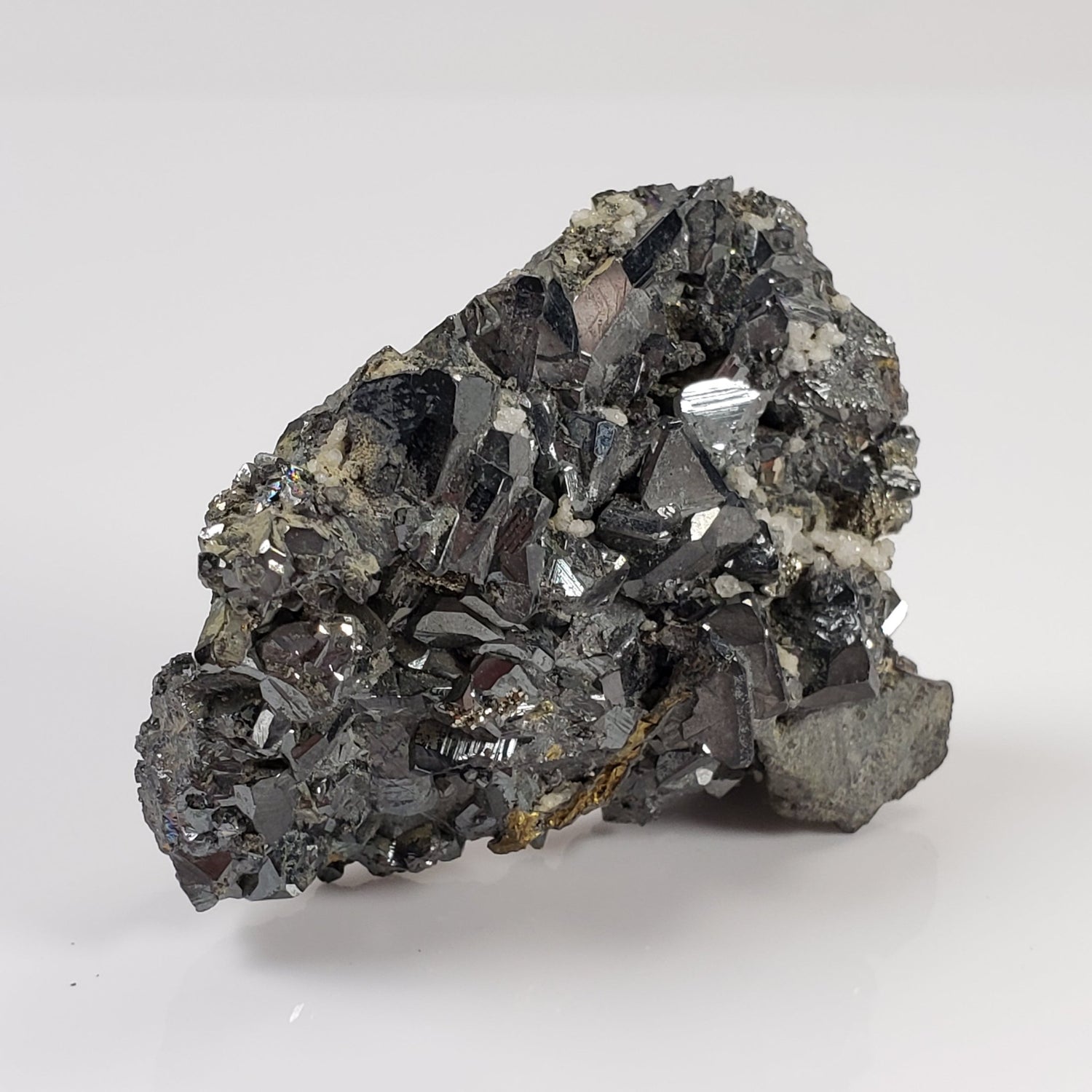

This beautiful cluster of tetrahedrite with calcite, small terminated quartz crystals and small, but brilliant, crystallized pyrite.
Tetrahedrite crystals are fascinating minerals known for their distinctive tetrahedral shape and shiny, metallic luster. It typically forms in well-defined tetrahedral crystals, which can be grouped in clusters. The color range includes shades of metallic gray, black, and sometimes reddish hues due to the presence of copper and other trace elements. Tetrahedrite is commonly found in hydrothermal veins and is often associated with other minerals such as quartz, galena, and sphalerite.
Tetrahedrite is believed to promote emotional healing and provide a protective shield against negativity. It is thought to enhance creativity and clarity, helping individuals connect with their inner selves.
This top specimen is in very good condition. Would be a beautiful addition to any new or existing collection.
Name: Tetrahedrite, Pyrite, Calcite and Quartz Crystal Cluster
Specimen Size: Miniature-Sized
Dimensions: 53x39x20 mm / 2.1x1.5x0.8 inches
Weight: 65.65 Grams / 2.3 oz
Origin: Mined in Peru
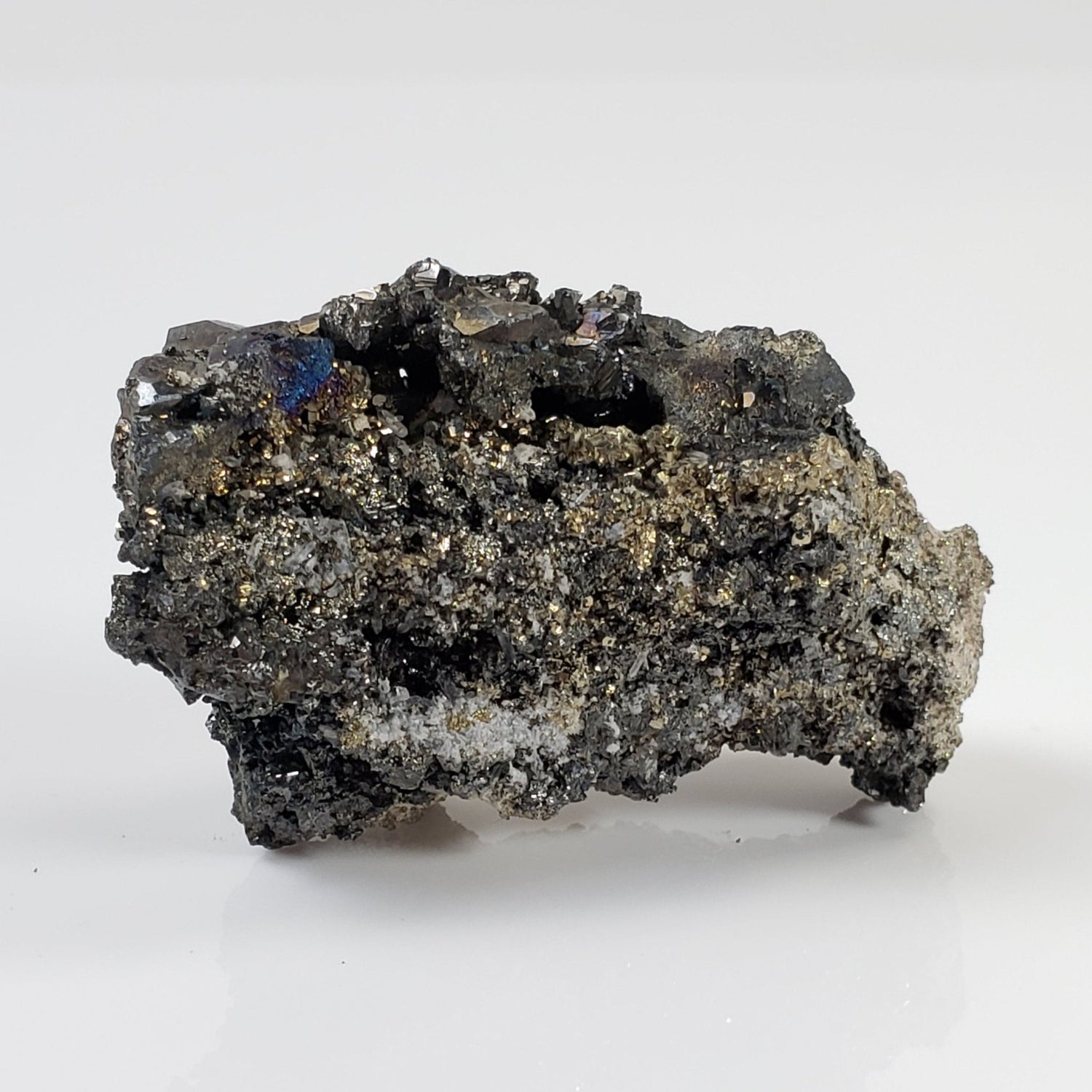
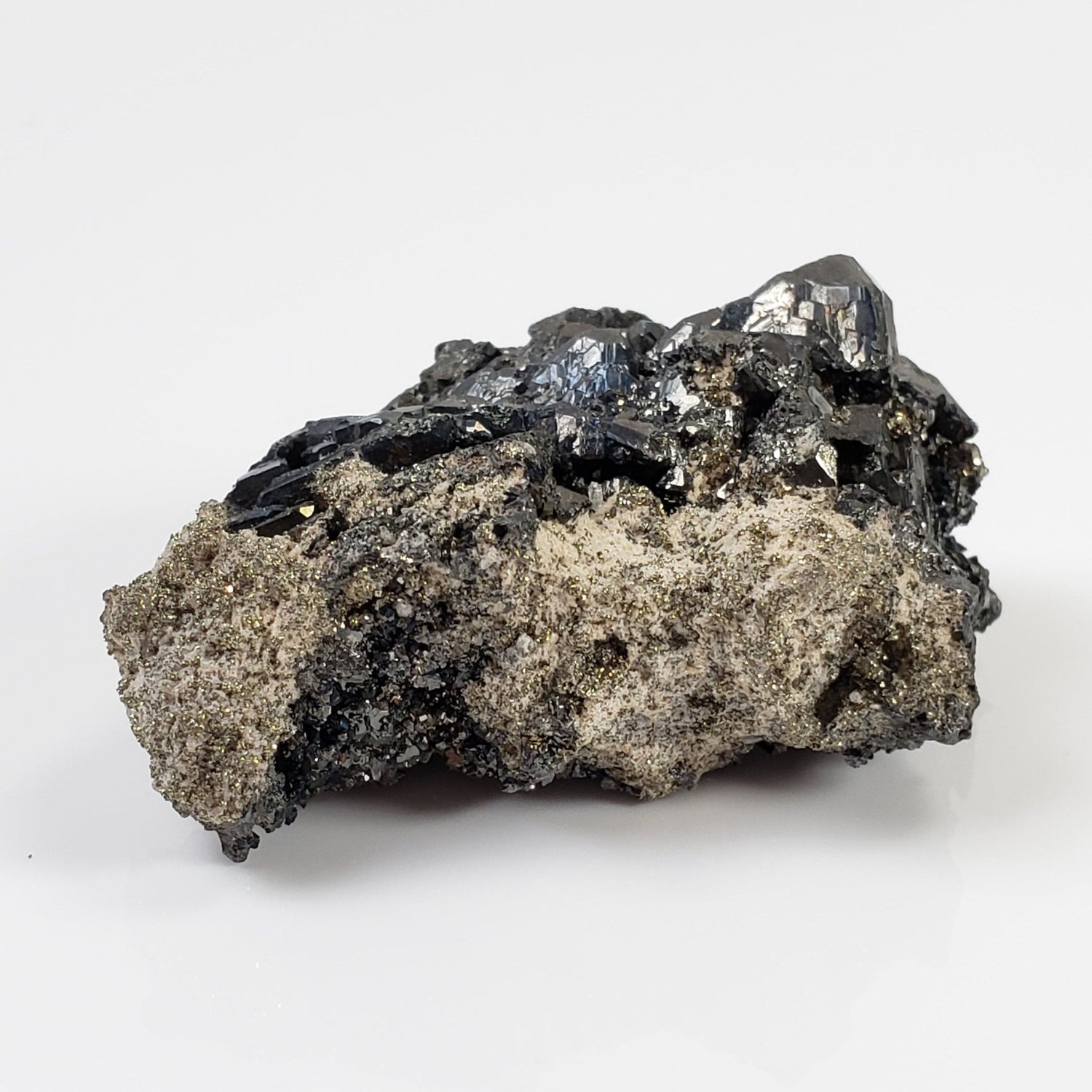
This beautiful cluster of tetrahedrite with calcite, small terminated quartz crystals and small, but brilliant, crystallized pyrite.
Tetrahedrite crystals are fascinating minerals known for their distinctive tetrahedral shape and shiny, metallic luster. It typically forms in well-defined tetrahedral crystals, which can be grouped in clusters. The color range includes shades of metallic gray, black, and sometimes reddish hues due to the presence of copper and other trace elements. Tetrahedrite is commonly found in hydrothermal veins and is often associated with other minerals such as quartz, galena, and sphalerite.
Tetrahedrite is believed to promote emotional healing and provide a protective shield against negativity. It is thought to enhance creativity and clarity, helping individuals connect with their inner selves.
This top specimen is in very good condition. Would be a beautiful addition to any new or existing collection.
Name: Tetrahedrite, Pyrite, Calcite and Quartz Crystal Cluster
Specimen Size: Miniature-Sized
Dimensions: 46x28x22 mm / 1.8x1.1x0.9 inches
Weight: 38.71 Grams / 1.36 oz
Origin: Mined in Peru


Found only in Mexico, Silver Lace Agate stone is also known as Mexican Agate. This Silver Lace Agate sphere features a beautiful mixture of green, gray, silver, and brown.
Silver Lace Agate is thought to increase vigor and stamina and promote mental acuity. It is also thought to encourage unity and teamwork.
Name: Silver Lace Agate Sphere
Dimensions: 50 mm / 2 inches
Weight : 198.95 grams / 7 ounces
Origin: Mexico


This is a superb looking Dhofar 221 classified meteorite weighing 16.73 grams. Its dimensions are 39x32x14 mm. This L5 classified meteorite was found in Zufar, Oman in 2000. The total weight of the 100's of pieces recovered is recorded as a low 3.54 kg and the meteorite has a shock stage of 3 and weathering grade of 3.
This piece displays extremely well because of its beautiful crust, superb shape and is a good size. Would be a beautiful addition to any new or existing collection. Comes with a Canagem Collection specimen card.


This is a superb looking Dhofar 221 classified meteorite weighing 20.82 grams. Its dimensions are 32x23x29 mm. This L5 classified meteorite was found in Zufar, Oman in 2000. The total weight of the 100's of pieces recovered is recorded as a low 3.54 kg and the meteorite has a shock stage of 3 and weathering grade of 3.
This piece displays extremely well because of its beautiful crust, superb shape and is a good size. Would be a beautiful addition to any new or existing collection. Comes with a Canagem Collection specimen card.


This is a superb looking Dhofar 221 classified meteorite weighing 15.38 grams. Its dimensions are 33x24x16 mm. This L5 classified meteorite was found in Zufar, Oman in 2000. The total weight of the 100's of pieces recovered is recorded as a low 3.54 kg and the meteorite has a shock stage of 3 and weathering grade of 3.
This piece displays extremely well because of its beautiful crust, superb shape and is a good size. Would be a beautiful addition to any new or existing collection. Comes with a Canagem Collection specimen card.


It is believed that Black Tourmaline, also called schorl, can be used to repel negativity. It is said to enhance ones physical well being by providing an increase in physical vitality, emotional stability, and intellectual acuity. It is associated with the root chakra.
Product Name: Schorl Tourmaline Point Crystal
Specimen Size: Cabinet Sized
Dimensions: 76x75x63 mm / 3x3x2.5 inches
Weight: 410.9 Grams / 14.5 Ounces
Origin: Pakistan
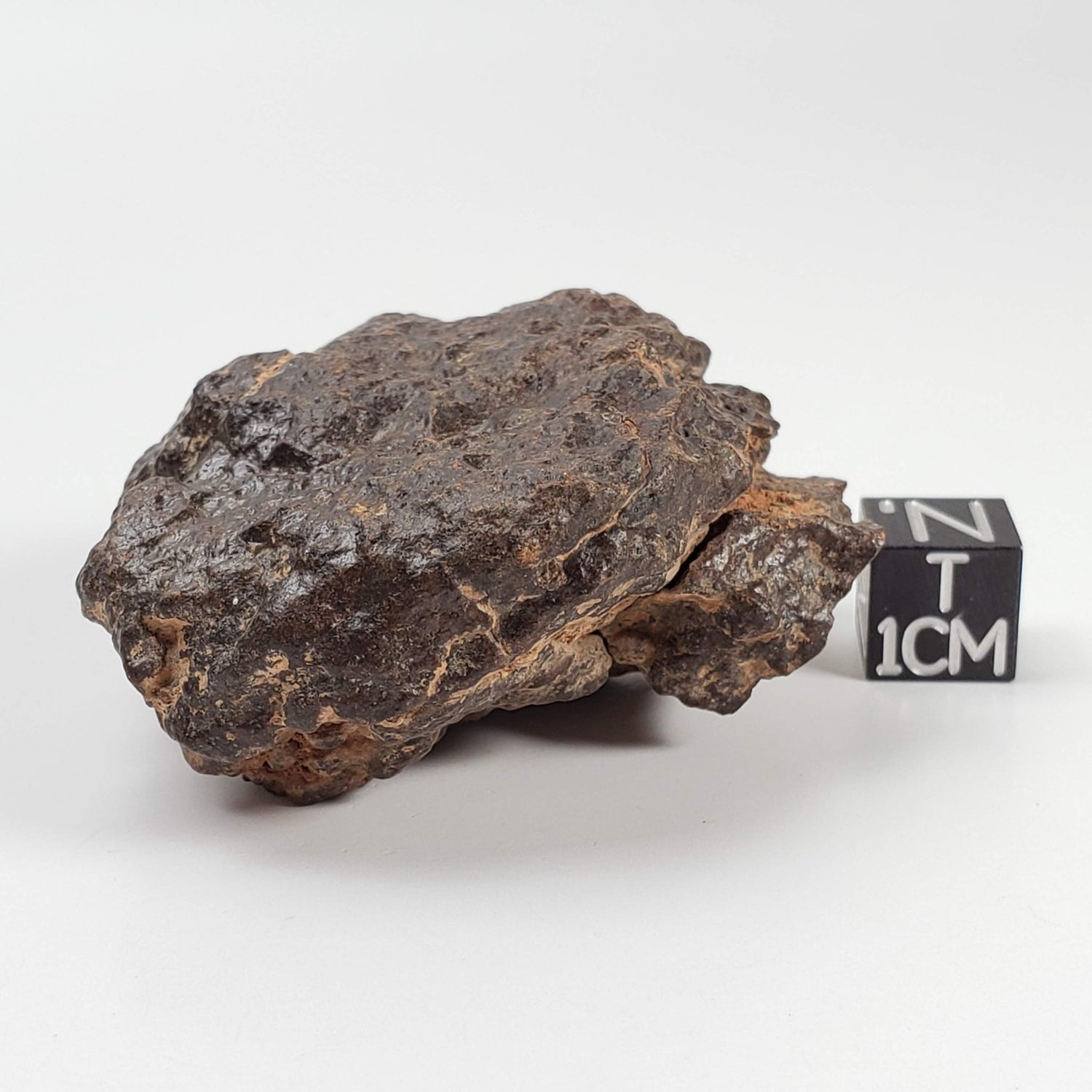
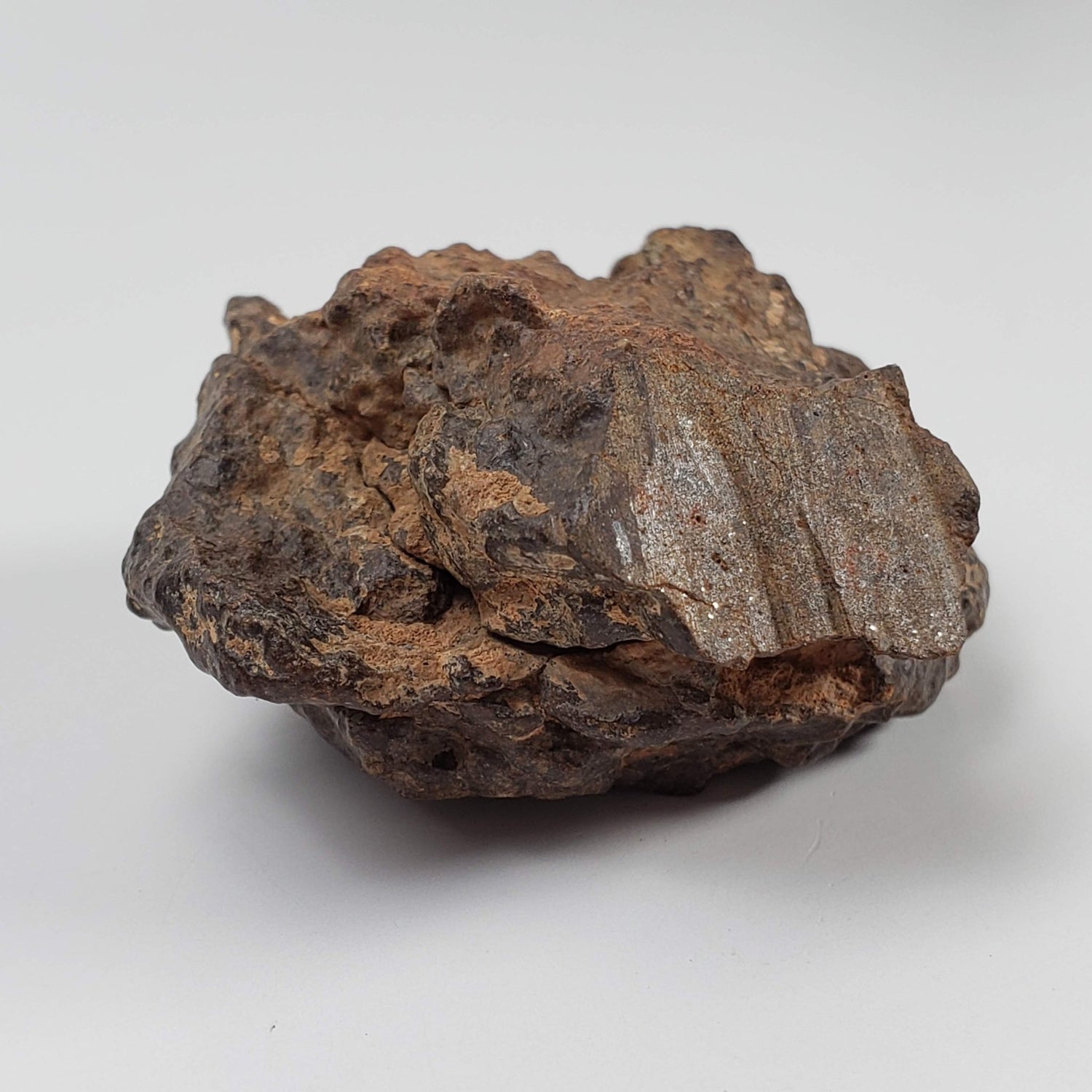
Here we have for you a nice looking individual cut fragment of a Sahara Desert NWA unclassified meteorite weighing 81.9 grams. Its dimensions are 52x50x24mm. This never classified North West Africa stone was found in the Sahara desert around 2000.
It's a good quality individual fragment NWA meteorite specimen. Some weathering shows the meteorite's time spent aging in the desert. Would be a beautiful addition to any new or existing collection. Comes with a Canagem Collection specimen card.

Canagem is proud to be professional member of The International Gem Society(IGS) the world's top resource for gem professionals, enthusiasts, and industry content.