

📢 Notice to ALL Customers 📢
288 products
Sort by:
288 products
288 products


This is a great looking fresh individual Gao-Guenie H5 classified meteorite. It weighs 7.87 grams and measures 18x17x14 mm. Picked up right after the fall, It is 100% fresh fusion crusted which is the most desirable specimen state.
This H5 classified meteorite was observed falling at about 17:00 March 5, 1960 near the village of Gao in Africa. There is no total known weight recorded for this meteorite.
Would be a beautiful addition to any new or existing collection. Comes with a Canagem® Collection specimen card.


This is a great looking part slice of a Northwest Africa 2841 H3.9 classified meteorite. It weighs 8.0 grams and measures 30x16x6 mm. This meteorite was found in the Sahara Desert in 2004 and has a total recovered weight recorded as a very low 190 grams. It has a Shock stage of 2 and a Weathering grade of 1. Very attractive porous matrix.
The specimen comes with a Canagem Collection specimen card. Would be a beautiful addition to any new or existing collection.
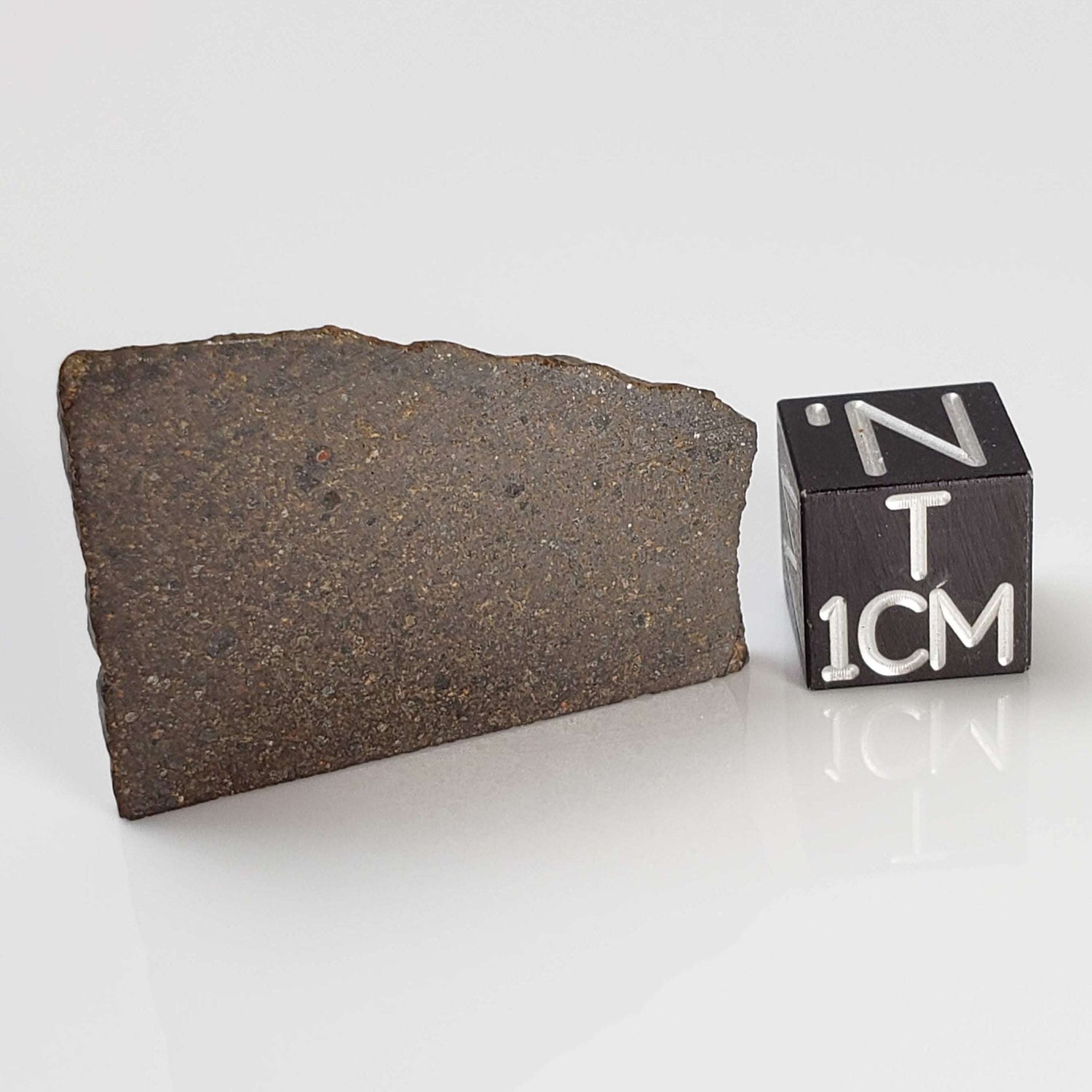
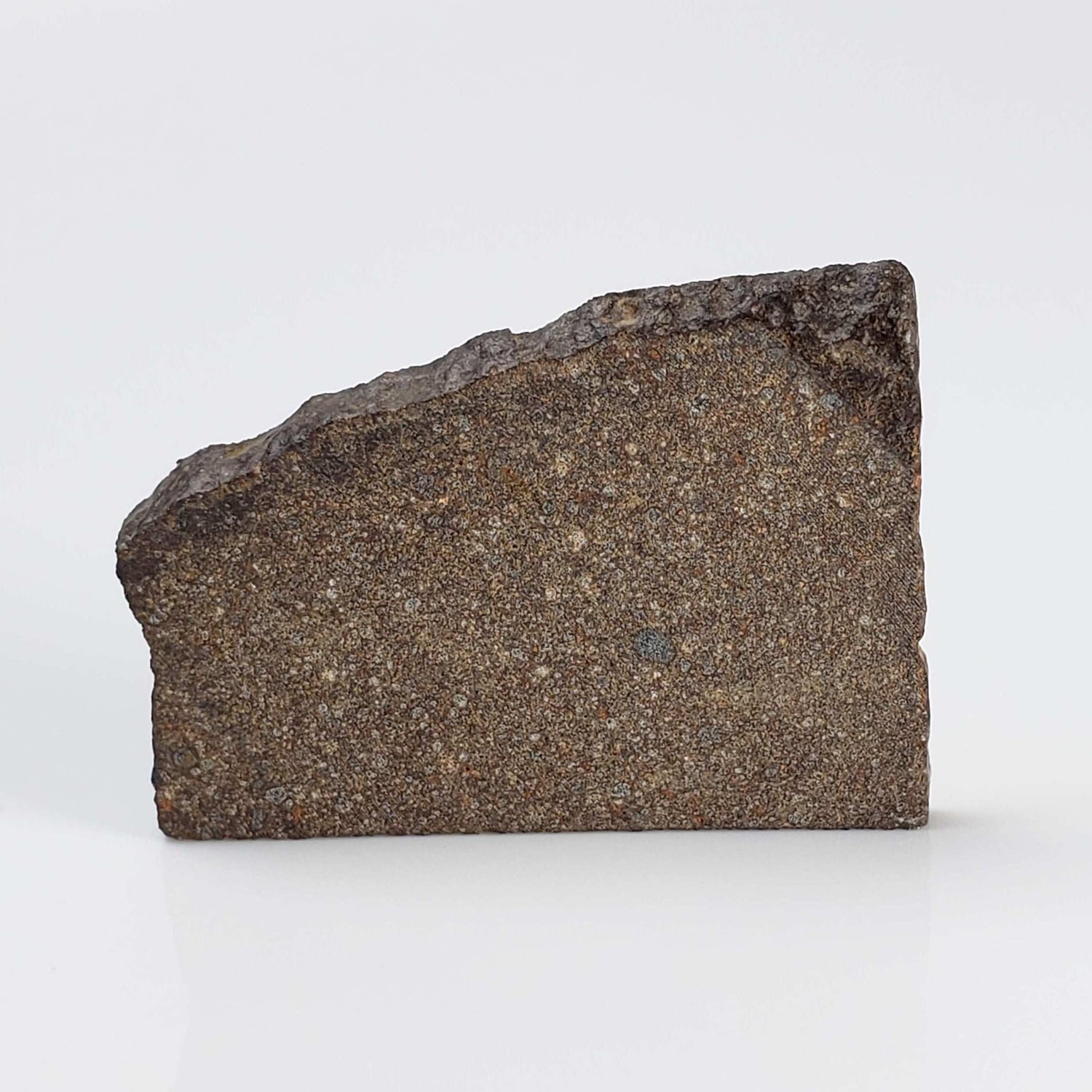
This is a superb looking part slice of Sahara Desert NWA 2663 meteorite. It weighs 3.24 grams and measures 29x21x2 mm. Although still considered unclassified, this meteorite was given the provisional class of CO3.1.
This is a great specimen with many multicolored chondrules and CAIs. It's a Ted Bunch meteorite but unfortunately this find was never fully submitted for analysis. It is a shame for this particular specimen, as it is just special.
This piece displays extremely well with its professionally finished cut face. Would be a beautiful addition to any new or existing collection. Comes with a Canagem Collection specimen card.
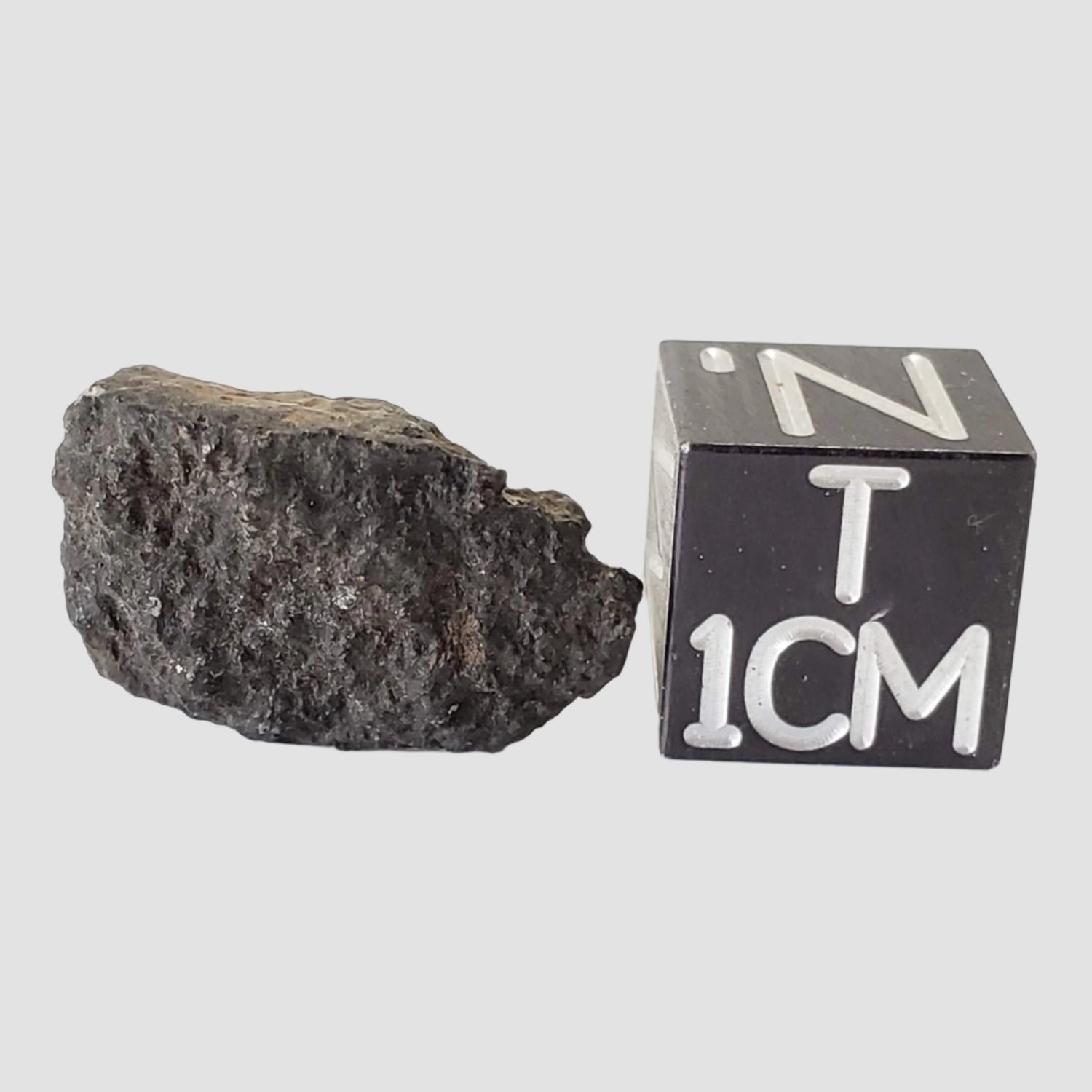
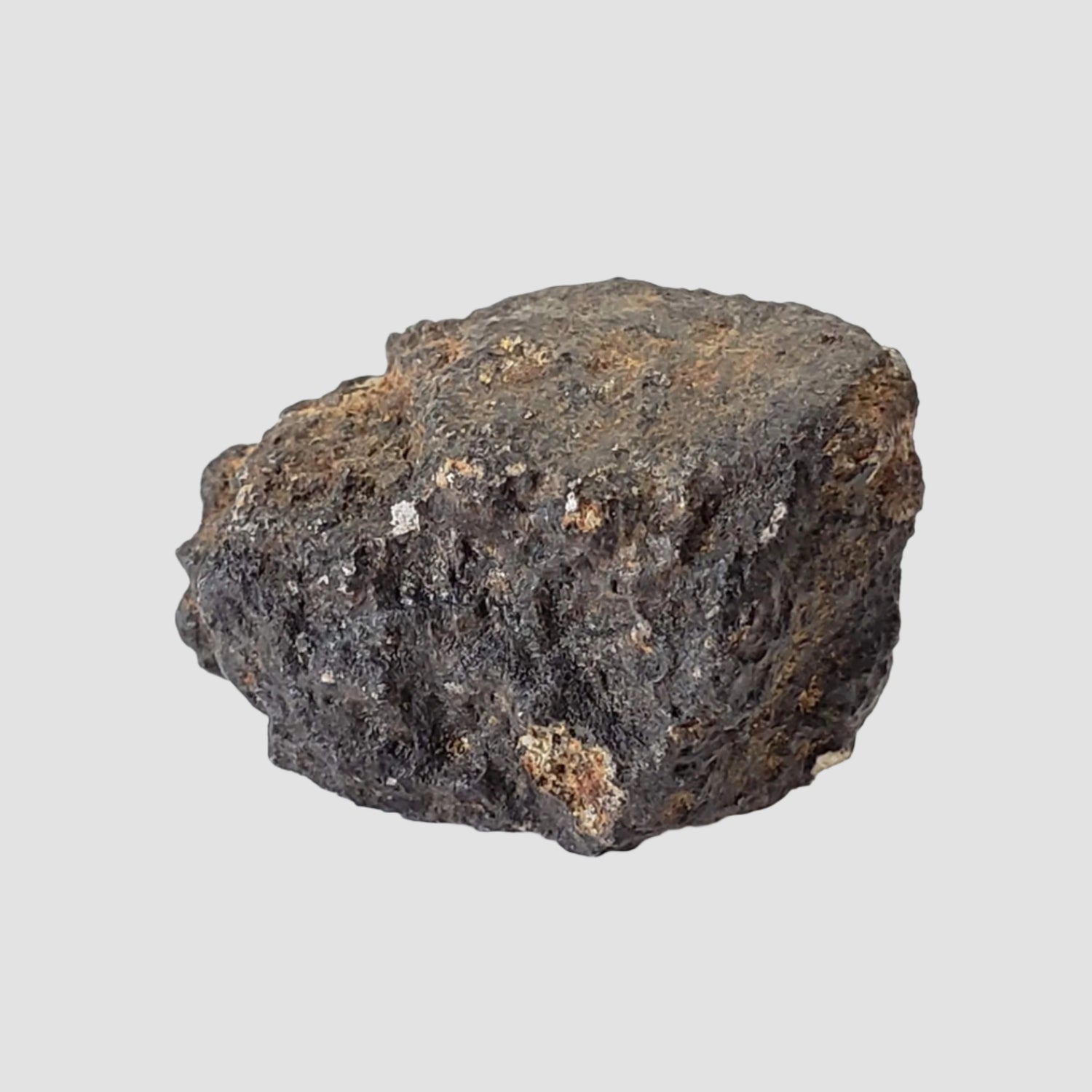
Thuathe Meteorite | 3 gr | H4-5 Chondrite | Observed Fall | Lesotho | 99% Crusted
This is a great looking fresh individual Thuathe H4-5 classified meteorite weighing 3 grams, with dimensions of 17x11x7 mm. It is 99% fusion crusted, which is the most desirable specimen state.
A meteorite travelling east to west exploded over Lesotho producing an elliptical strewn field extending 7.4 by 1.9 km (bearing: ~276°) on the westernmost lobe of the Thuathe (or Berea) Plateau, ~12 km east of the capital city of Maseru.
The explosion was accompanied by an extraordinarily loud, 15 s long noise which was heard over a large (100 km radius) area of Lesotho; the fall was eye-witnessed by several people who reported sightings of dust trails of “sparkling objects” over Lesotho and the southern part of the Free State Province of South Africa. Many villagers of Ha Ralimo, Boqate Ha Majara, and Boqate Ha Sofonia reported falls of stones close to themselves and onto their homes. The estimated total mass of recovered material is ~30 kg, including 418 stones in the 2 g to 2.4 kg mass range for a total of 24.673 kg which were collected and catalogued by A. Ashworth and David P. Ambrose
Most freshly cut slices from several stones show a homogeneous beige to light-grey lithology speckled with abundant and heterogeneously distributed (20% to, in exceptional cases, >50 vol%) metal particles; some are crosscut by dark shock veinlets and show brecciated structure with light grey matrix surrounding lighter colored, well-rounded inclusions; chondrules distinctly recognizable.
Would be a beautiful addition to any new or existing collection. Comes in a protective case, and includes a Michael Farmer Meteorites, a Mark Bostick Collection and a Canagem® Collection specimen card.
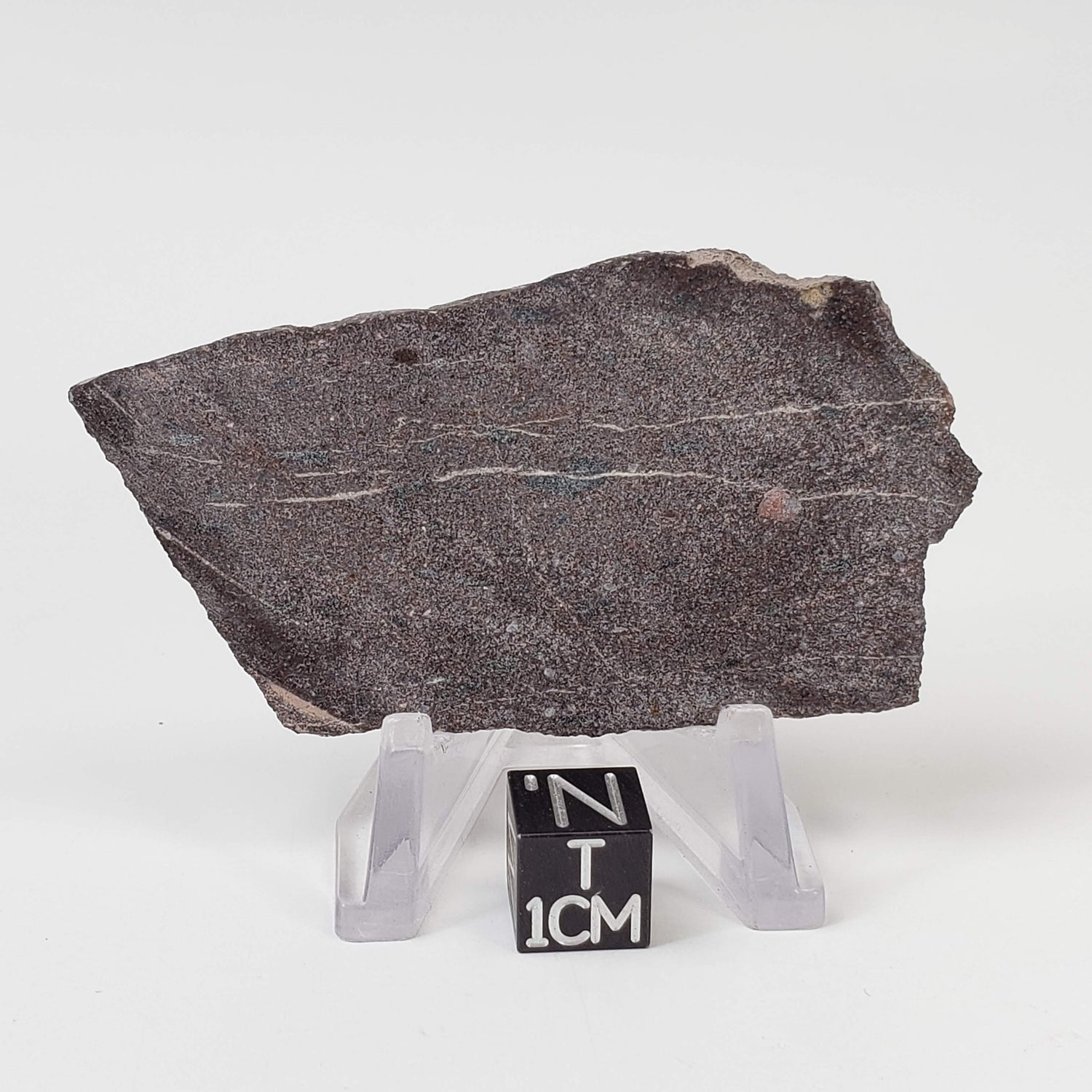
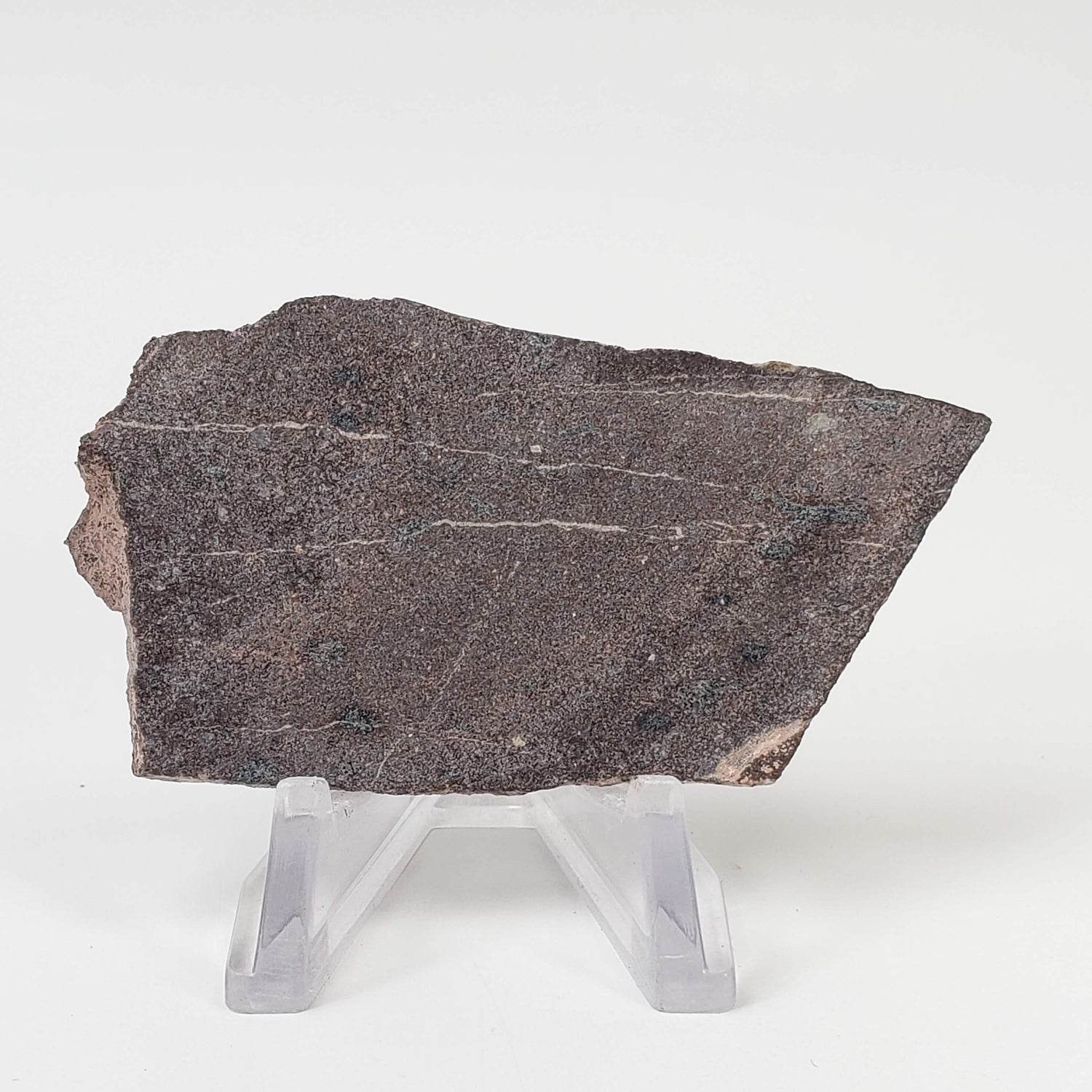
This is a must have 27.4 gram Impact Melt Rock from the Stac Fada Member Impact Structure, NW Scotland. It measures 67x37x5 mm. Although not a meteorite, impactites are directly linked to them and their impacts and are probably going to be one of the rarest collection items you'll ever own. Impactite is a slag-like glassy object found on the surface of the earth, formed from rock melted by the impact of a meteorite.
The term impactite encompasses shock-metamorphosed target rocks, melts or suevites and mixtures of the two, as well as sedimentary rocks with significant impact-derived components and shocked mineral grains, tektites, anomalous geochemical signatures, etc.
This beautiful Impact melt rock comes from the Stac Fada impact structure in Scotland. The structure has an estimated age of about 1.2Ga (1,200 Ma). The Stac Fada Member of the Precambrian Stoer Group in Scotland has previously been described as volcanic in origin. However, shocked quartz and biotite provide evidence for high-pressure shock metamorphism, while chromium isotope values and elevated abundances of platinum group metals and siderophile elements indicate addition of meteoritic material. Thus, the unit is reinterpreted as having an impact origin.
This gorgeous slice displays very well. Would be a beautiful addition to any new or existing collection. Comes with two a Canagem Collection specimen card.


This is a must have 4.71 gram impactite from the Boltysh Crater in Ukraine. Its dimensions are 28x27x4mm. Although not a meteorite, impactites are directly linked to them and their impacts and are probably going to be one of the rarest collection pieces you'll ever own. The Boltysh impactites are important geological specimens that are recognized by the scientific community as evidence of asteroid or comet impacts on Earth.
The Boltysh crater is a well-preserved impact crater located in central Ukraine. It was formed approximately 65 million years ago during the Late Cretaceous period, around the same time as the Chicxulub impact that is thought to have caused the mass extinction of the dinosaurs. The crater is estimated to be around 24 kilometers in diameter and is one of the best-preserved impact structures in the world.
The Boltysh crater has been extensively studied by scientists because of its importance in understanding the effects of large-scale impacts on the Earth's surface and the resulting environmental changes that occur. Studies of the rocks and sediments from the crater have provided valuable insights into the processes of impact cratering, such as the formation of impact melt rocks and the creation of shock metamorphic features.
Would be a beautiful addition to any new or existing collection. Comes with a Canagem Collection specimen card.


This is a rare Iron ungrouped classified Taza Northwest Africa 859 specimen, in an as found state. It weighs 3.79 grams and measures 15x11x7 mm.
The NWA 859 was found in 2001 in Taza, Morocco. A total weight of 75.3 kg of mostly small pieces was classified by UCLA as an Iron, ungrouped; it is one of 157 meteorites classified as such.
This specimen displays extremely well and would be a beautiful addition to any new or existing collection. Comes in a gem jar with a Canagem Collection specimen card.


Pyrite from Bolivia is known for forming beautiful, well-shaped crystals, often appearing as sharp cubes, pyritohedrons (12-sided shapes), or even complex, stepped growth patterns. Bolivian pyrite tends to have a bright, brassy gold color with a good metallic luster, and it’s often found in association with other minerals like quartz or galena.
Much of the pyrite from Bolivia comes from mining regions such as Potosí and Oruro, areas famous for their rich mineral deposits. While pyrite is common around the world, Bolivian specimens are valued for their attractive crystal habits, clean formations, and the quality of the material.
Pyrite is known as a stone of protection, abundance, and confidence. It is believed to shield against negative energy and promote mental clarity and willpower.
This top Bolivian specimen is in very good condition. Would be a beautiful addition to any new or existing collection.
Name: Pyrite Cluster
Specimen Size: Miniature-Sized
Dimensions: 42x34x26 mm / 1.6x1.3x1.3 inches
Weight: 64.4 Grams / 2.3 oz
Origin: Canutillos Mine, Machacamarca-Colavi District, Cornelio Saavedra Province, Potosi Department, Bolivia


At this famous Canadian site, siderite typically forms as small, brown to tan crystals, often rhombohedral in shape, growing over or alongside white to gray albite. Scattered among them, tiny, sharp zircon crystals can appear — often reddish-brown, yellow, or even colorless depending on the exact specimen.
Mont-Saint-Hilaire is renowned for producing rare and unusual mineral combinations, and specimens like this highlight the diversity and richness of the location. While each mineral is interesting on its own, having siderite, albite, and zircon together in one piece makes it a well-balanced and attractive collector’s specimen, especially for those who appreciate the geology of the region
This is a very typical specimen of MSH and is in very good condition. Would be a beautiful addition to any new or existing collection.
Name: Siderite in Albite with Zircon
Specimen Size: Miniature-Sized
Dimensions: 37x36x24 mm / 1.5x1.5x0.9 inches
Weight: 32 Grams / 1.0 Ounces
Origin: Mined in Poudrette Quarry, Mont-Saint-Hilaire, La Vallée-du-Richelieu RCM, Montérégie, Québec, Canada
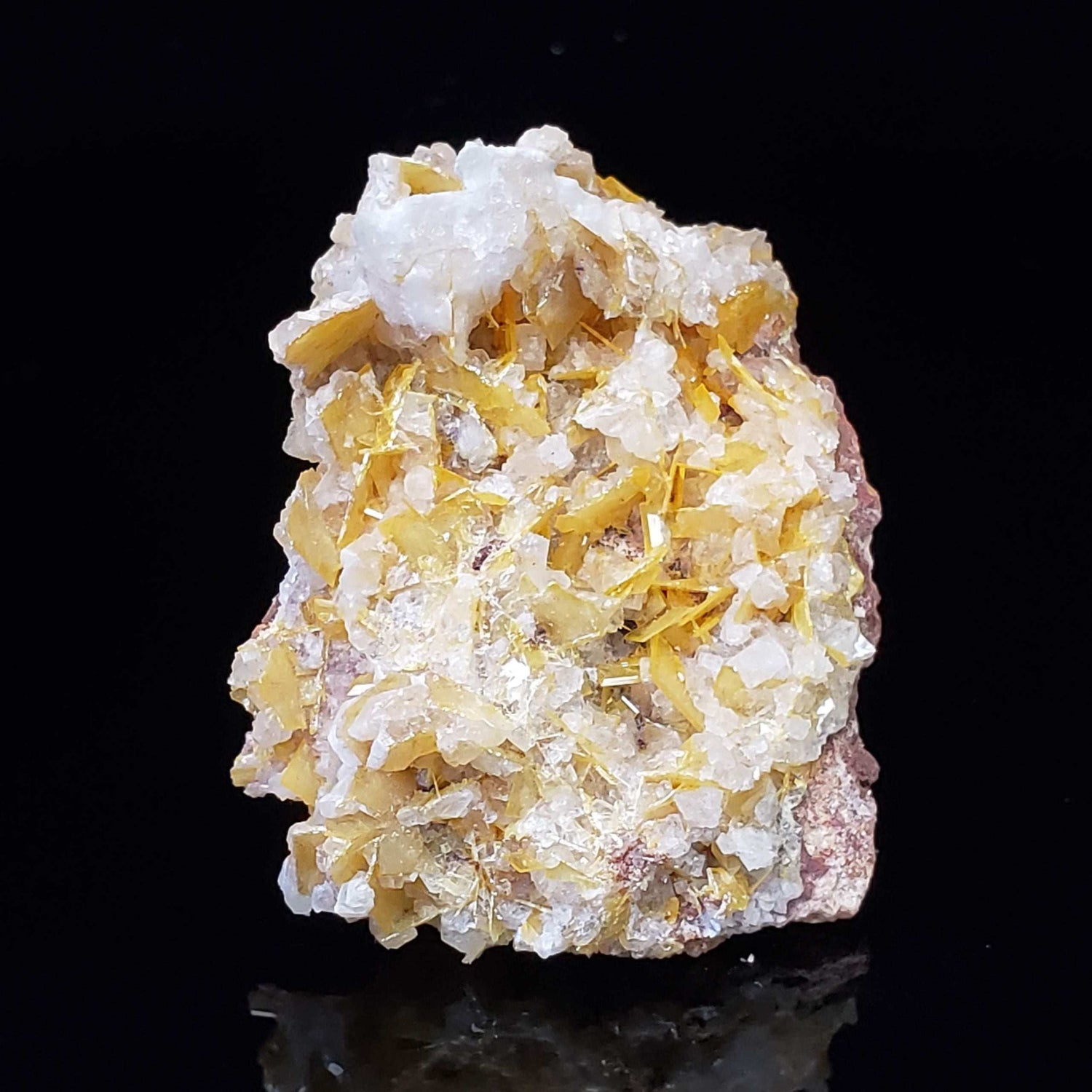
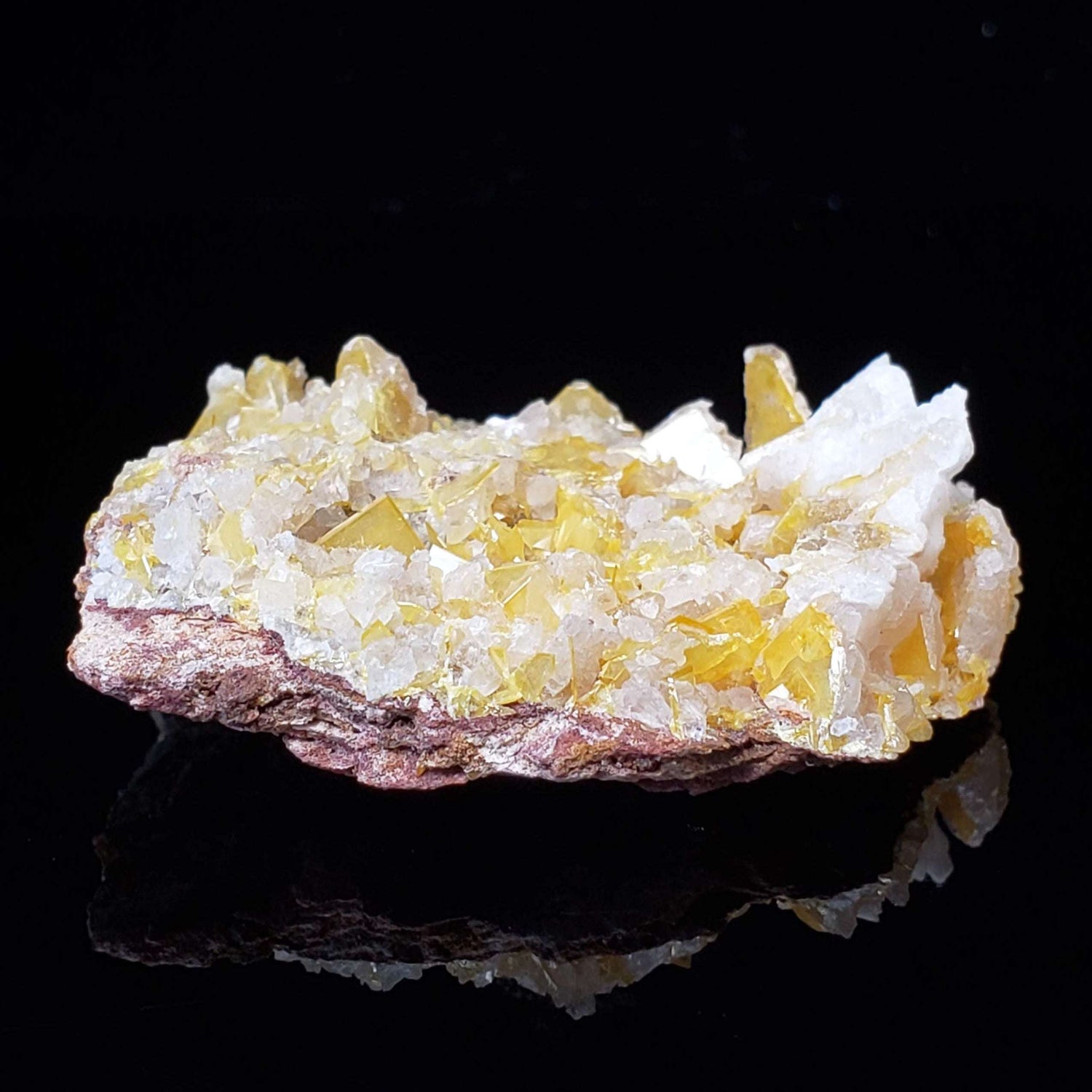
This is a nice group of small yellow wulfenite crystals on matrix from Total Wreck Mine, Arizona. Wulfenite from the Total Wreck Mine is known for producing small but attractive crystals, usually in shades of yellow to orange-yellow. The crystals from this mine tend to be thin, tabular, and sometimes slightly translucent, often growing on a contrasting, earthy matrix.
While the Total Wreck Mine isn’t as famous as places like the Red Cloud Mine for wulfenite, it has still yielded pieces that are valued by collectors, especially because Arizona as a whole is renowned for producing some of the world’s finest wulfenite. Specimens from Total Wreck are typically more modest in size and brightness but are appreciated for their historic mining context and authentic desert character.
Wulfenite is often associated with creativity, emotional balance, and perseverance. Some believe it helps connect the heart and the will, encouraging people to follow their passions even through difficult or uncertain times. Wulfenite is also thought to support emotional healing by helping release old attachments and clearing a path for new experiences.
The specimen is in good condition and is a colorful and really beautiful specimen. Would be a beautiful addition to any new or existing collection.
Name: Wulfenite and Quartz
Specimen Size: Miniature-Sized
Dimensions: 42x33x13 mm / 1.6x1.3x0.5 inches
Weight: 16.62 Grams / 0.6 ounces
Origin: Mined in Total Wreck Mine, Cienega Creek, The Narrows, Empire Mining District, Empire Mountains, Pima County, Arizona, USA


Astrophyllite is a striking and rare mineral known for its bronze to golden-bladed crystals that radiate like starbursts, often embedded in a dark matrix of other minerals. The name comes from Greek, meaning “star leaf,” referring to its star-like crystal formations. It is found in locations such as Russia, Norway, Greenland, and Canada. This specimen of Astrophyllite crystals originates from the world famous site of Mont-Saint-Hilaire, Québec.
Astrophyllite is often seen as a stone of inner illumination and self-discovery. Some believe it helps reveal hidden potential and encourages personal truth, making it a supportive companion during times of change or reflection. It’s sometimes associated with letting go of the past and embracing a more authentic path forward.
This specimen is in very good condition and displays very well. Make this a special specimen in your collection.
Name: Astrophyllite cluster
Specimen Size: Miniature-Sized
Dimensions: Specimen 38x29 mm / 1.5x1.1 inches
Specimen Box 54x54 mm / 2.1x2.1 inches
Weight: 36.6 Grams / 1.3 Ounces
Origin: Mined in Poudrette Quarry, Mont-Saint-Hilaire, Québec, Canada

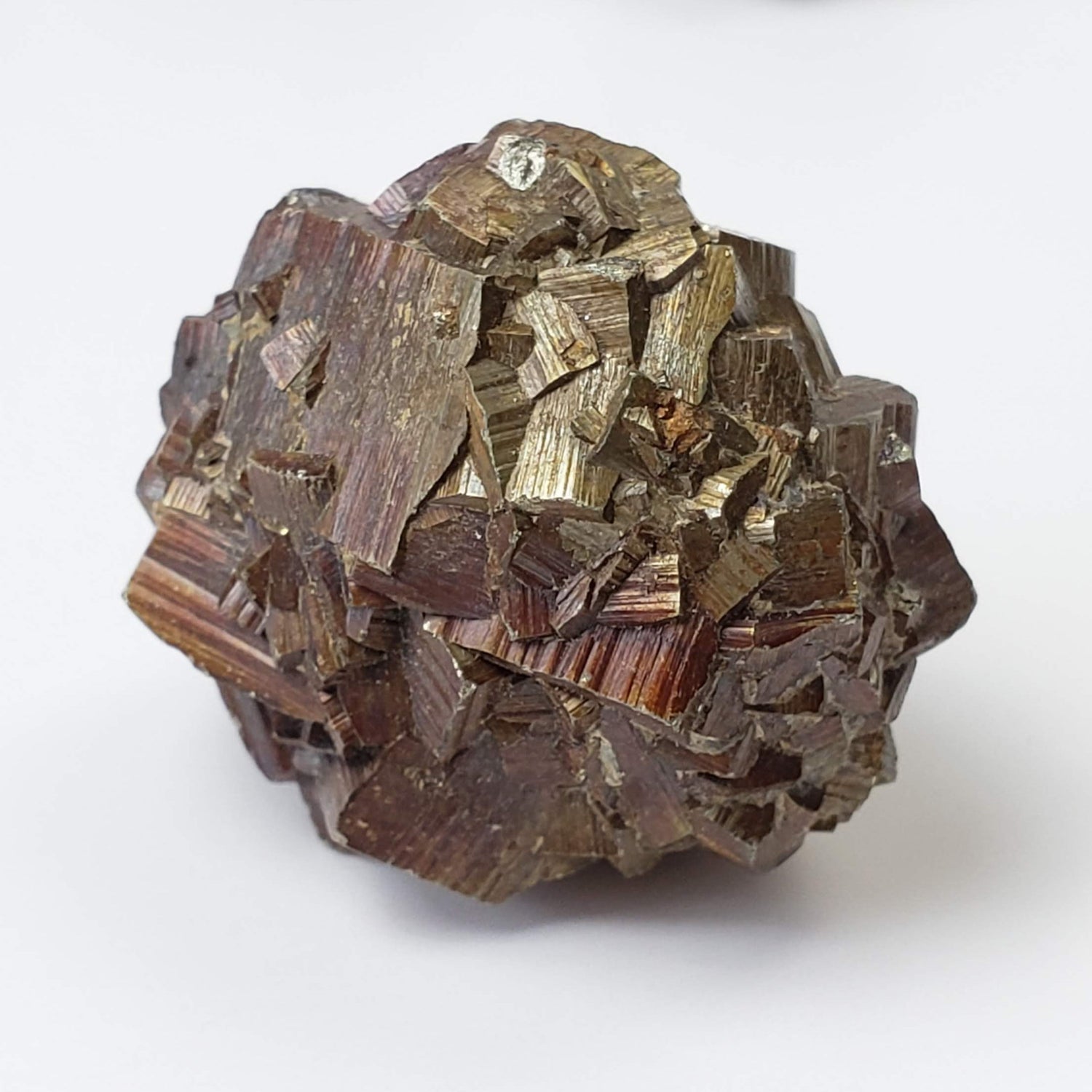
This is a set of five chalcopyrite crystals displaying varying cubic formations. Chalcopyrite is a brassy yellow copper iron sulfide mineral and the primary ore of copper worldwide. It has a metallic luster and often develops an iridescent tarnish in shades of purple, blue, and green. Chalcopyrite often forms alongside minerals like quartz, pyrite, and sphalerite.
Some believe chalcopyrite is a stone of abundance and transformation, helping to clear energy blockages and inspire creativity. Its vibrant tarnish colors are thought to symbolize change and new opportunities.
These top specimens are in very good condition and would be a beautiful addition to any new or existing collection.
Name: Chalcopyrite Crystal Cluster
Specimen Size: Thumbnail-Sized
Dimensions: 22x21x15 - 9x8x8 mm / 0.9x0.8x0.6 - 0.3x0.3x0.3 inches
Weight: 43 Grams / 1.5 oz
Origin: Mined in Baia Sprie Mine, Maramureș County, Romania


This is a crystal combining Dolomite and Chalcopyrite. The lovely, light pink blades of dolomite are will defined on this specimen and are covered in tiny chalcopyrite crystals.
Dolomite from the Joplin Mine in Joplin, Missouri, is well-known for its saddle-shaped crystal formations and association with other minerals like galena, sphalerite, marcasite and less frequently Chalcopyrite. The dolomite from this area typically forms in shades of white, beige, yellow, or pink, often with a pearly to slightly curved crystal habit.
Dolomite is often associated with stability, patience, and emotional balance. Some believe it encourages a sense of calm and centeredness.
This is very nice, showy material in excellent condition, a great addition to any collection.
Name: Pink Dolomite and Chalcopyrite
Specimen Size: Cabinet-Sized
Dimensions: 92x65x36 mm / 3.6x2.5x1.4 inches
Weight: 222 Grams / 7.8 Ounces
Origin: Joplin Field, Jasper County, Missouri, USA


This is a fabulous specimen of bladed kyanite and quartz mined in Barra do Salinas district, Barra do Salinas, Coronel Murta, Minas Gerais, Brazil.
Kyanite is known to be one of the most attractive natural minerals in the world, frequently found with lustrous blue bladed crystals, with the intensity of color varying by location of extraction. Kyanite regularly forms fibrous, radiating crystals, as well as flattened and tabular. Some crystals form with white striations, color bands, and even multi-colored crystals, though typically found with a deep blue streak running down the middle.
Blue kyanite is often associated with clarity, communication, and energy alignment. Some believe it helps with self-expression and speaking one’s truth, making it a popular stone for those who want to improve communication or deepen their intuition.
Name: Bladed Kyanite Crystal
Specimen Size: Large Cabinet-Sized
Dimensions: 95x40x36 mm / 3.7x1.6x1.4 inches
Weight: 150 grams / 5.2 Ounces
Origin: Barra do Salinas district, Barra do Salinas, Coronel Murta, Minas Gerais, Brazil


This is a lustrous diopside crystal with many emerald-green chrome-bearing grossular crystals. It was found in Orford Nickel mine, St-Denis-de-Brompton, Le Val-Saint-François RCM, Estrie, Québec, Canada, which is famous for excellent specimens of diopside, green grossular (chrome-bearing), orange grossular and millerite.
This is a very showy specimen that will display very well within your collection.
Name: Diopside with Grossular Crystal Cluster
Specimen Size: Miniature-Sized
Dimensions: 38x24x13 mm / 1.5x0.9x0.5 inches
Weight: 13.66 grams / 0.5 Ounces
Origin: Mined at Orford Nickel mine, St-Denis-de-Brompton, Le Val-Saint-François RCM, Estrie, Québec, Canada

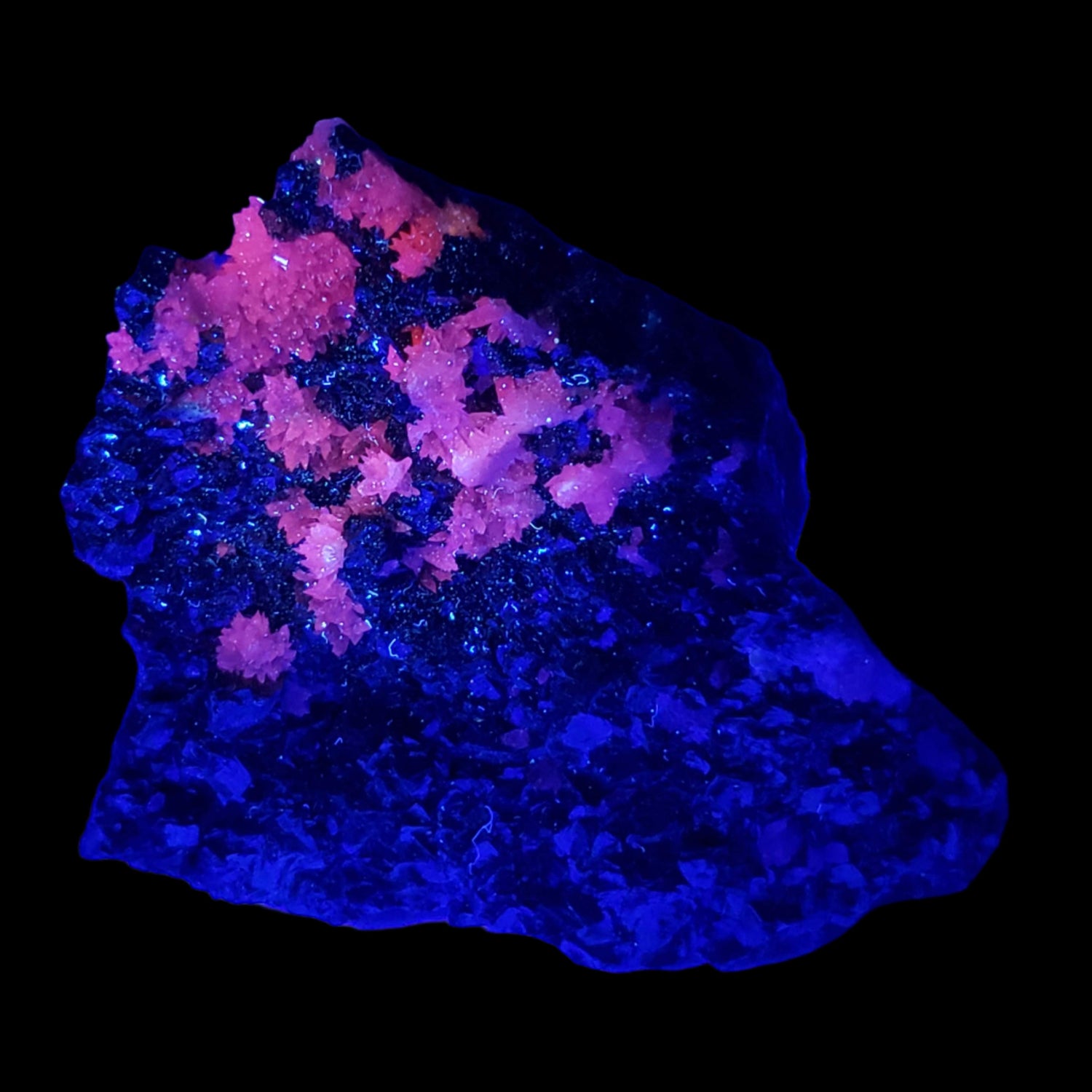
This is a beautiful self standing cluster of marcasite crystals from the N’Chwaning II Mine, Kuruman, South Africa. The front of the specimen is covered with many sharp semi-iridescent marcasite crystals. There are also some small calcite crystals, which are fluorescent under UV light.. The specimen is in excellent condition.
Name: Marcasite and Calcite Cluster
Specimen Size: Miniature-Sized
Dimensions: 56x45x23 mm / 2.2x1.8x0.9 inches
Weight: 49.56 grams / 1.7 ounces
Origin: Mined in the N’Chwaning II Mine, Kuruman, South Africa

Canagem is proud to be professional member of The International Gem Society(IGS) the world's top resource for gem professionals, enthusiasts, and industry content.