

📢 Notice to ALL Customers 📢
288 products
Sort by:
288 products
288 products

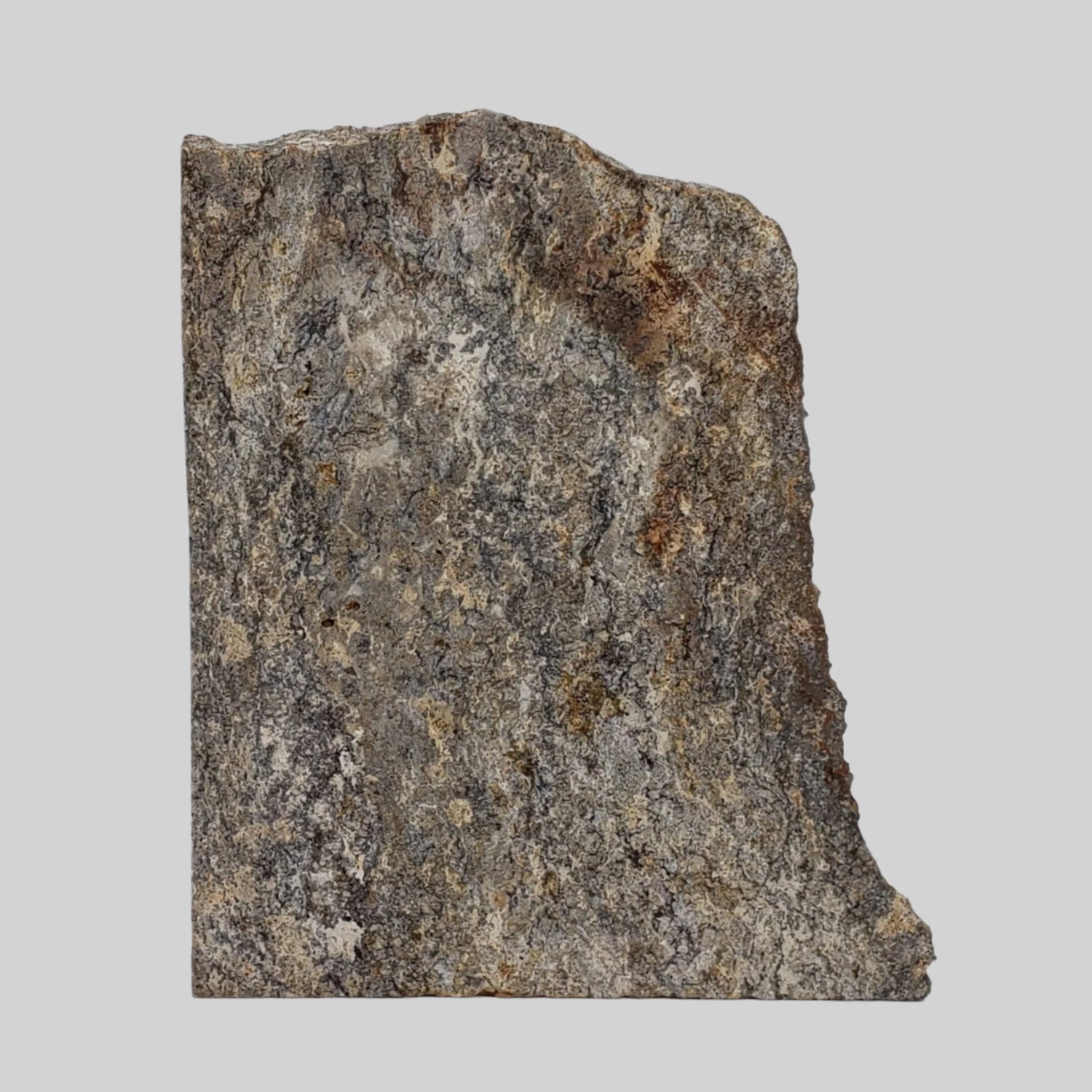
This is a must have 80.5 gram Impact Melt Rock from the Dellen Crater, north of Stokholm, Sweden. Some locals call these rocks by the name of “dellenites”, although officially they are impact melt rocks. Although not a meteorite, impactites are directly linked to them and their impacts and are probably going to be one of the rarest collection items you'll ever own. Impactite is a slag-like glassy object found on the surface of the earth, formed from rock melted by the impact of a meteorite.
The term impactite encompasses shock-metamorphosed target rocks, melts or suevites and mixtures of the two, as well as sedimentary rocks with significant impact-derived components and shocked mineral grains, tektites, anomalous geochemical signatures, etc.
This impactite was formed approx. 89 million years ago when a meteorite crashed into the earth making a round crater which is now a lake about 11 miles wide. Dellen impactites were divided into three impactite groups: (i) suevitic impact breccias with lithic and melt clasts, (ii) impact melt rocks, and (iii) shocked (parautochthonous) target rock. In turn, impact melt rocks were divided into (i) clast-rich, (ii) clast-poor, and (iii) clast-free types. The Dellenite type material was classified as clast poor impact melt breccia.
This gorgeous slice displays very well. It is amazingly light considering its mass of 87x73x6 mm. Would be a beautiful addition to any new or existing collection. Comes with a Canagem Collection specimen card.


Product Type: Silver Greek Key Ring
Gem Type: Sugilite
Metal Type: 925 Silver
Weight: Silver & Gemstone 7 grams
Size: Ring Size 9
Sugilite is a rare and beautiful purple gemstone, known for its vibrant color and metaphysical properties. It is a borosilicate mineral, typically ranging from lavender to deep violet, and is primarily found in South Africa. Discovered in Japan in 1944, it is valued for its spiritual and healing qualities, including emotional healing, protection, and enhancing spiritual growth. Sugilite is considered a "love stone," fostering compassion, empathy, and harmonious relationships. It is often used in jewelry, especially in cabochons, it is relatively soft, requiring gentle care. Due to its rarity and striking color, sugilite is a prized and valuable gem.


Introducing our stunning Impactite Melt Rock from the Babaudus Impactite site in France. This rare and unique piece weighs 30.89 grams and measures 53x38x9 mm. It is a must-have for any collector or enthusiast.
This Babaudus Type Impact Melt Rock was formed by the intense heat and pressure of a meteorite impact. The Rochechouart Structure, where it was found, is known for producing some of the world's most beautiful and intriguing impactites.
This Impact Melt Rock is a beautiful example of the unique textures and patterns that can be found in impactites. It displays very well and would be a beautiful addition to any new or existing collection. Comes with a Canagem Collection specimen card.


Introducing our stunning Impactite Melt Rock from the Babaudus Impactite site in France. This rare and unique piece weighs 21.97 grams and measures 54x40x7 mm. It is a must-have for any collector or enthusiast.
This Babaudus Type Impact Melt Rock was formed by the intense heat and pressure of a meteorite impact. The Rochechouart Structure, where it was found, is known for producing some of the world's most beautiful and intriguing impactites.
This Impact Melt Rock is a beautiful example of the unique textures and patterns that can be found in impactites. It displays very well and would be a beautiful addition to any new or existing collection. Comes with a Canagem Collection specimen card.


This is a great 85.2 gram Impact Melt Breccia from the Sääksjärvi crater in Finland. It is amazingly light considering its mass of 95x51x15 mm. Although not a meteorite, impactites are directly linked to them and their impacts and are probably going to be one of the rarest collection item you'll ever own. Impactite is a slag-like glassy object found on the surface of the earth, formed from rock melted by the impact of a meteorite.
The term impactite encompasses shock-metamorphosed target rocks, melts or suevites and mixtures of the two, as well as sedimentary rocks with significant impact-derived components and shocked mineral grains, tektites, anomalous geochemical signatures, etc.
Sääksjärvi is a lake in Kokemäki, Satakunta, western Finland, east of the town of Pori. The lake is notable because it overlies an impact crater. The crater is 5 kilometres (3 mi) in diameter and is completely buried under the lake and is not visible at the surface. The age of the impact structure is estimated to be about 543 ± 12 Ma (million years ago), at the boundary between the Ediacaran and Cambrian periods. There are impactite rocks in the southwestern region from the crater confirming its extraterrestrial origin. At the time of its discovery, only one impact crater (Lappajärvi) was known in Finland.
Would be a beautiful addition to any new or existing collection. Comes with a Canagem Collection specimen card.


This is a must have 17 gram Impact Melt Rock from the Stac Fada Member Impact Structure, NW Scotland. It measures 65x38x4 mm. Although not a meteorite, impactites are directly linked to them and their impacts and are probably going to be one of the rarest collection items you'll ever own. Impactite is a slag-like glassy object found on the surface of the earth, formed from rock melted by the impact of a meteorite.
The term impactite encompasses shock-metamorphosed target rocks, melts or suevites and mixtures of the two, as well as sedimentary rocks with significant impact-derived components and shocked mineral grains, tektites, anomalous geochemical signatures, etc.
This beautiful Impact melt rock comes from the Stac Fada impact structure in Scotland. The structure has an estimated age of about 1.2Ga (1,200 Ma). The Stac Fada Member of the Precambrian Stoer Group in Scotland has previously been described as volcanic in origin. However, shocked quartz and biotite provide evidence for high-pressure shock metamorphism, while chromium isotope values and elevated abundances of platinum group metals and siderophile elements indicate addition of meteoritic material. Thus, the unit is reinterpreted as having an impact origin.
This gorgeous slice displays very well. Would be a beautiful addition to any new or existing collection. Comes with two a Canagem Collection specimen card.


This is a rare specimen of the brown Cyrtolite variety of Zircon crystals mined at MacDonald Mine, Hastings County, Ontario, Canada. This is a large mass of Cyrtolite. The mine deposit is remarkable for the presence of a variety of rare-element minerals, some of them recorded for the first time. Its content of such minerals makes this deposit one of the most remarkable pegmatites, mineralogically, yet discovered in Canada. The specimen is in great condition.
Name: Cyrtolite (Zircon) Crystals
Specimen Size: Cabinet-Sized
Dimensions: 65x47x29 mm / 2.6x1.8x1.1 inches
Weight: 125 Grams / 4.4 Ounces
Origin: Mined in MacDonald Mine, Monteagle Township, Hastings Highlands Municipality, Hastings County, Ontario, Canada


This is an outstanding specimen Impact Melt Glass, or "Flädle" glass, from the Lake Mien crater, 12 km (7.5 mi) southwest of the town of Tingsryd, Sweden. It weighs 39.8 grams and measures 54x49x20 mm. Although not a meteorite, impactites are directly linked to them and their impacts.
Impactite is a slag-like glassy object found on the surface of the earth, formed from rock melted by the impact of a meteorite. The term encompasses shock-metamorphosed target rocks, melts or suevites and mixtures of the two, as well as sedimentary rocks with significant impact-derived components and shocked mineral grains, tektites, anomalous geochemical signatures, etc.
This eroded crater is marked by a 5.5-km (3.4-mi) diameter circular lake named Lake Mien. The original crater rim is estimated to have been about 9 km in diameter before erosion. Its age is estimated to be 121.0 ± 2.3 million years (Early Cretaceous). This Suevitic breccia with clastic matrix and melt inclusions (black) and crystalline rock clasts (gray to white) is amazingly light considering its mass. It has a unique hollow sound when you tap it.
Would be a beautiful addition to any new or existing collection. Comes with a Canagem Collection specimen card.


Product Type: Silver Ring
Gem Type: Spider Turquoise
Metal Type: 925 Silver
Weight: Silver & Gemstone 17 grams
Size: Ring Size 8


Product Type: Silver Ring
Gem Type: Labradorite
Metal Type: 925 Silver
Weight: Silver & Gemstone 12 grams
Size: Ring Size 8
Labradorite is an unusual mineral. It can display a beautiful iridescent play of colors, caused by internal fractures in the mineral that reflect light back and forth, dispersing it into different colors. This effect, known as labradorescence, gives Labradorite its appeal and fame.


Product Type: 925 Sterling Silver Pendant (20" cord with silver plated clasp included)
Gem Type: Chalcedony
Metal Type: 925 stamped Silver
Weight: Silver and Gem 14 grams
Size: 53x27 mm (including bail) / Bail Length: 10 mm
Special Care: Do not use silver dipping cleaning method with this pendant. Use a dry cloth to wipe the stone and a polishing cloth for the silver. Any liquid including perfumes can damage the stone over time so keep in a dry place.


Sodalite is usually found in the massive form, rather than crystals. Its name is derived from its sodium content. This stone is frequently found with lapis lazuli, but contains little or no golden pyrite specks in it as lapis does. It may, however, contain patches or streaks of white calcite. Although some people think that sodalite resembles lapis in some ways, it is entirely different in chemical composition and has more of a navy blue coloring.
Product Type: 925 Sterling Silver Pendant (20" cord with silver plated clasp included)
Gem Type: Sodalite
Metal Type: 925 stamped Silver
Weight: Silver and Gem 16.9 grams
Size: 57x30 mm (including bail) / Bail Length: 11 mm


Amethyst is a purple variety of quartz, which is a mineral composed of silicon and oxygen. It is one of the most popular gemstones due to its beautiful color. Amethyst ranges in color from light purple to deep violet. The color is caused by impurities of iron within the quartz crystal. Amethyst can be found in various locations around the world, including Brazil, Uruguay, Russia, Zambia, and the United States.
Amethyst is believed to enhance spiritual awareness, ward off negative energies, promote balance and relaxation, and improve intuitive and psychic abilities. Amethyst is also thought to enhance mental clarity and focus.
Product Type: 925 Sterling Silver Pendant (20" cord with silver plated clasp included)
Gem Type: Amethyst
Metal Type: 925 stamped Silver
Weight: Silver and Gem 15.3 grams
Size: 47x27 mm (including bail) / Bail Length: 10 mm


This is a must have 96.3 gram Impact Breccia, also referred to as Suevite, from the famous Rochechouart impact structure in South Western France, near the village of Chassenon. Although not a meteorite, impactites are directly linked to them and their impacts and are probably going to be one of the rarest collection items you'll ever own. Impactite is a slag-like glassy object found on the surface of the earth, formed from rock melted by the impact of a meteorite.
Named after the town of Rochechouart, the Rochechouart impact structure is located on the western margin of the French Massif Central near the city of Limoges, approximately 350 km (220 mi) south of Paris. Rochechouart (population about 3800) is built with rocks created or modified by the impact (impactites). Chassenon, a third of the size of Rochechouart, is also built of impactites. Impactite was used 2000 years ago for building Chassenon's monumental Roman baths of Cassinomagus.
The very fine materials (impactoclastites) are preserved forming a very fine layered horizontal deposits on top of the melt rich suevite (breccia with a debris matrix and both rock debris and melt fragments as clasts) near Chassenon.
The term impactite encompasses shock-metamorphosed target rocks, melts or suevites and mixtures of the two, as well as sedimentary rocks with significant impact-derived components and shocked mineral grains, tektites, anomalous geochemical signatures, etc. This impactite was formed 186 million years ago. This deformed rock fragments and partly molten are imbedded in a melt matrix showing typical flow structures from former melt.
This gorgeous end cut displays very well with a mass of 89x62x19 mm. Would be a beautiful addition to any new or existing collection. Comes with a Canagem Collection specimen card.


Labradorite is an unusual mineral. It can display a beautiful iridescent play of colors, caused by internal fractures in the mineral that reflect light back and forth, dispersing it into different colors. This effect, known as labradorescence, gives Labradorite its appeal and fame.
Product Type: 925 Sterling Silver Pendant (20" cord with silver plated clasp included)
Gem Type: Labradorite
Metal Type: 925 stamped Silver
Weight: Silver and Gem 17.7 grams
Size: 55x28 mm (including bail) / Bail Length: 6.5 mm


Product Type: Silver Ring
Gem Type: Turquoise
Metal Type: 925 Silver
Weight: Silver Gemstone 12 grams
Size: Ring Size 7

Canagem is proud to be professional member of The International Gem Society(IGS) the world's top resource for gem professionals, enthusiasts, and industry content.