

📢 Notice to ALL Customers 📢
288 products
Sort by:
288 products
288 products


Lapis lazuli is a vivid blue metamorphic rock and a gemstone that has been prized for its intense color and historical significance for thousands of years. It's composed of lazurite (for the blue color), calcite, sodalite, and pyrite. It is the presence of pyrite that causes the gold-colored flecks or veins in the stone. Lapis lazuli has a moderate hardness, typically ranging from 5 to 5.5 on the Mohs scale. High-quality lapis lazuli has been historically sourced from mines in Afghanistan; however, other deposits are found in countries such as Russia, Chile, Italy, and the United States.
Lapis lazuli has been used for various purposes throughout history. It has been highly prized for ornamental and decorative purposes, including as a gemstone in jewelry and art. The ancient Egyptians used lapis lazuli in the creation of jewelry, amulets, and cosmetics. The pigment ultramarine, derived from lapis lazuli, was highly valued by Renaissance painters.
Lapis lazuli is believed to promote self-awareness and mental clarity.
Product Type: 925 Sterling Silver Pendant (20" cord with silver plated clasp included)
Gem Type: Lapis Lazuli
Metal Type: 925 stamped Silver
Weight: Silver and Gem 11.6 grams
Size: Pendant: 37.5x23 mm (including top ring) / Bail Length: 9 mm

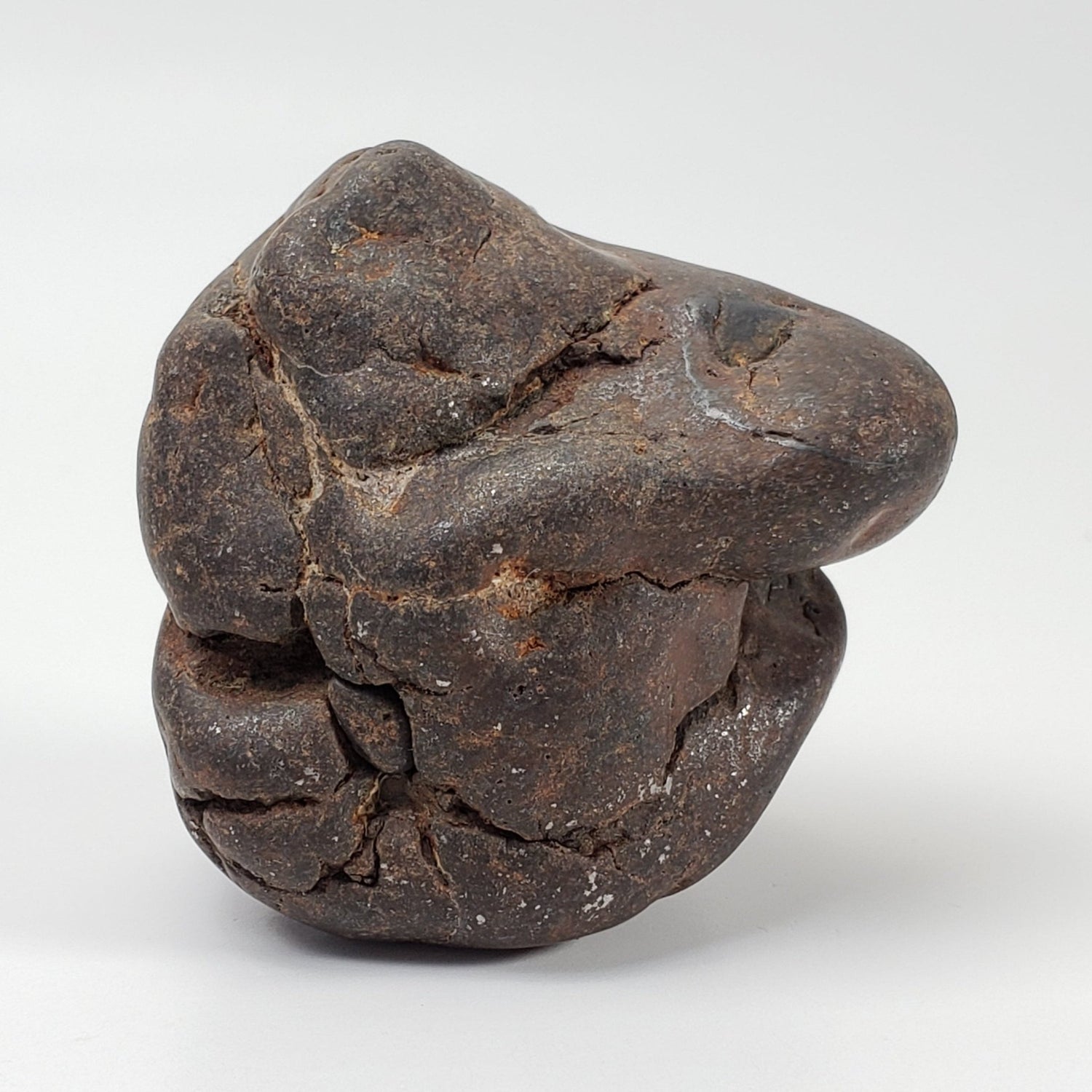
Here we have for you a very interesting looking tumbled individual of a Sahara Desert NWA unclassified meteorite weighing 97.4 grams. Its dimensions are 47x43x33mm. This never classified North West Africa stone was found in the Sahara desert around 2000.
It's a good quality individual NWA meteorite specimen. Would be a beautiful addition to any new or existing collection. Comes with a Canagem Collection specimen card.


This is a superb slice of the famous Northwest Africa 2965 meteorite, it weigh 1.49 grams and measures 26x22x1. This is 1 of only 26 approved meteorites classified as EL-melt rock.
This North West Africa was first classified as an Enstatite EL6/7, then became an EL3 and finally ended up being classified an EL-Melt Rock meteorite; it was found along with the rest of the total mass of more than 100 Kilograms in the Algerian Desert in August 2005. This is one of the oldest meteorites on our planet in terms of terrestrial age and has been referred to as a fossil meteorite.
This Enstatite chondrite shock Level is minimal and weathering varies from 2 to 5. This piece displays extremely well and is a completely recrystallized enstatite chondrite with polygonal to irregular grain outlines. The grain size varies from 0.02 to 0.7 mm. Round, curved, blocky objects contain coarser-grained orthopyroxene than in the matrix. No relict chondrules were observed.
This hard to acquire piece displays very well with its diamond lap finish, it is a high quality specimen that would make an amazing addition to any new or existing collection. Comes with Canagem specimen card.

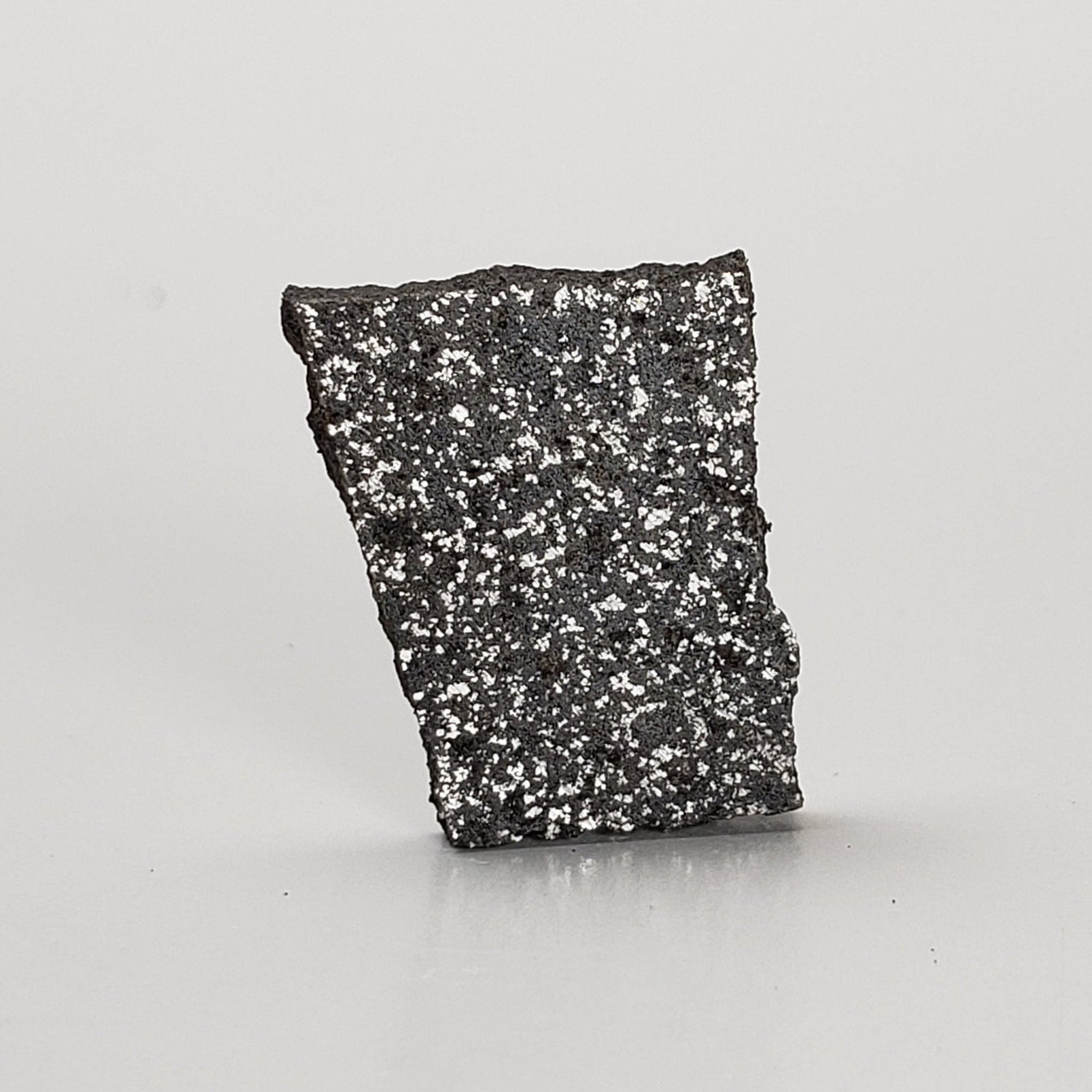
This is a superb looking Spade meteorite part slice weighing 2.7 grams and measuring 19x15x3 mm. This H6 chondrite classified meteorite was found in 2000 and has a total weight of 8.86 Kg.
This single mass of 8.86 kg was found in a grass field by Mr. J. Talbert while farming. The classification and mineralogy performed by R. Jones, UNM and A. Rubin, UCLA, determined it to be an annealed impact melt rock. It has a shock stage of S2 and a moderate weathering grade of W2.
Would be a beautiful addition to any new or existing collection. Will come with a Hupé Collection and a Canagem Collection specimen card.

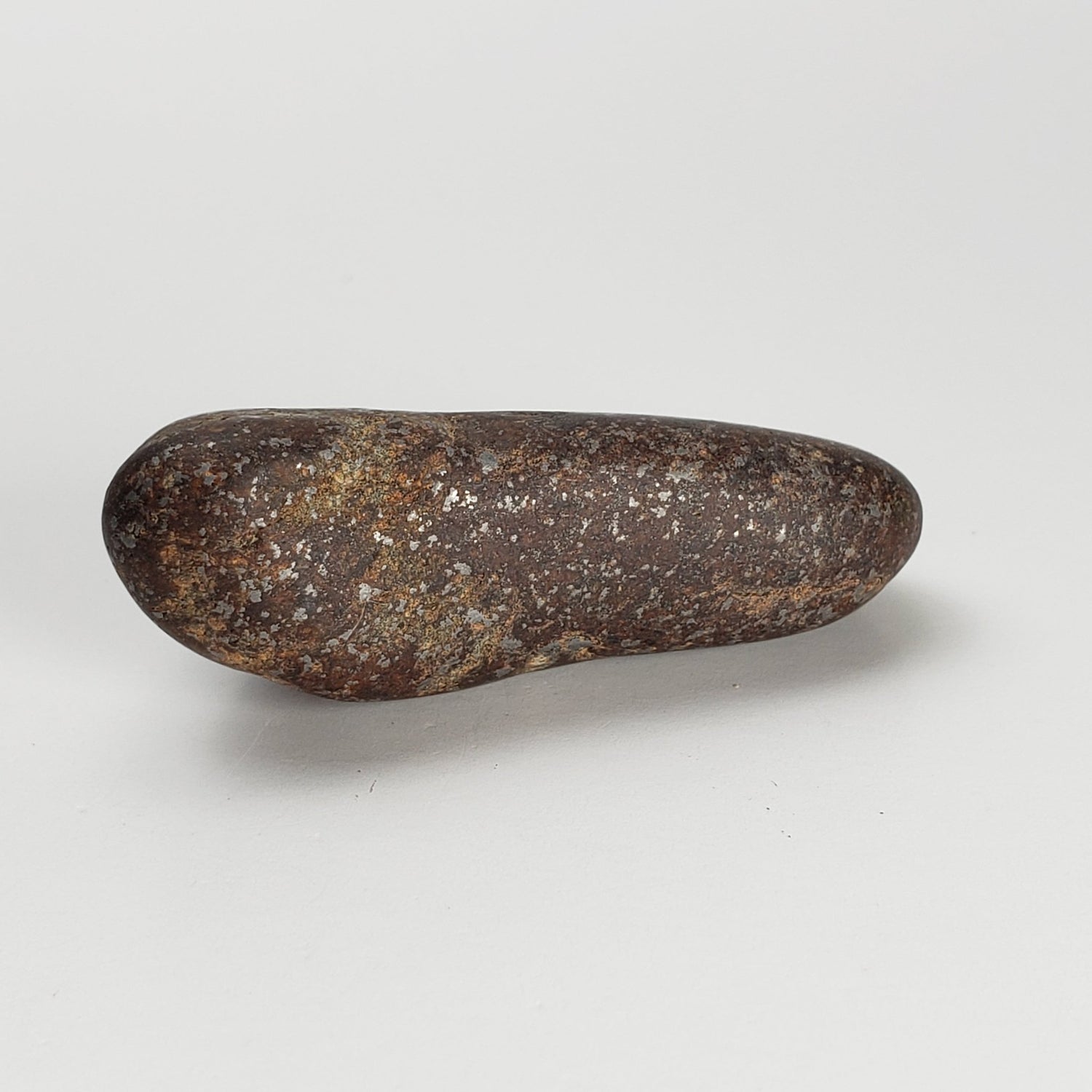
Here we have for you a nice looking tumbled individual of a Sahara Desert NWA unclassified meteorite weighing 40.8 grams. Its dimensions are 51x28x17mm. This never classified North West Africa stone was found in the Sahara desert around 2000.
It's a good quality individual NWA meteorite specimen. Would be a beautiful addition to any new or existing collection. Comes with a Canagem Collection specimen card.

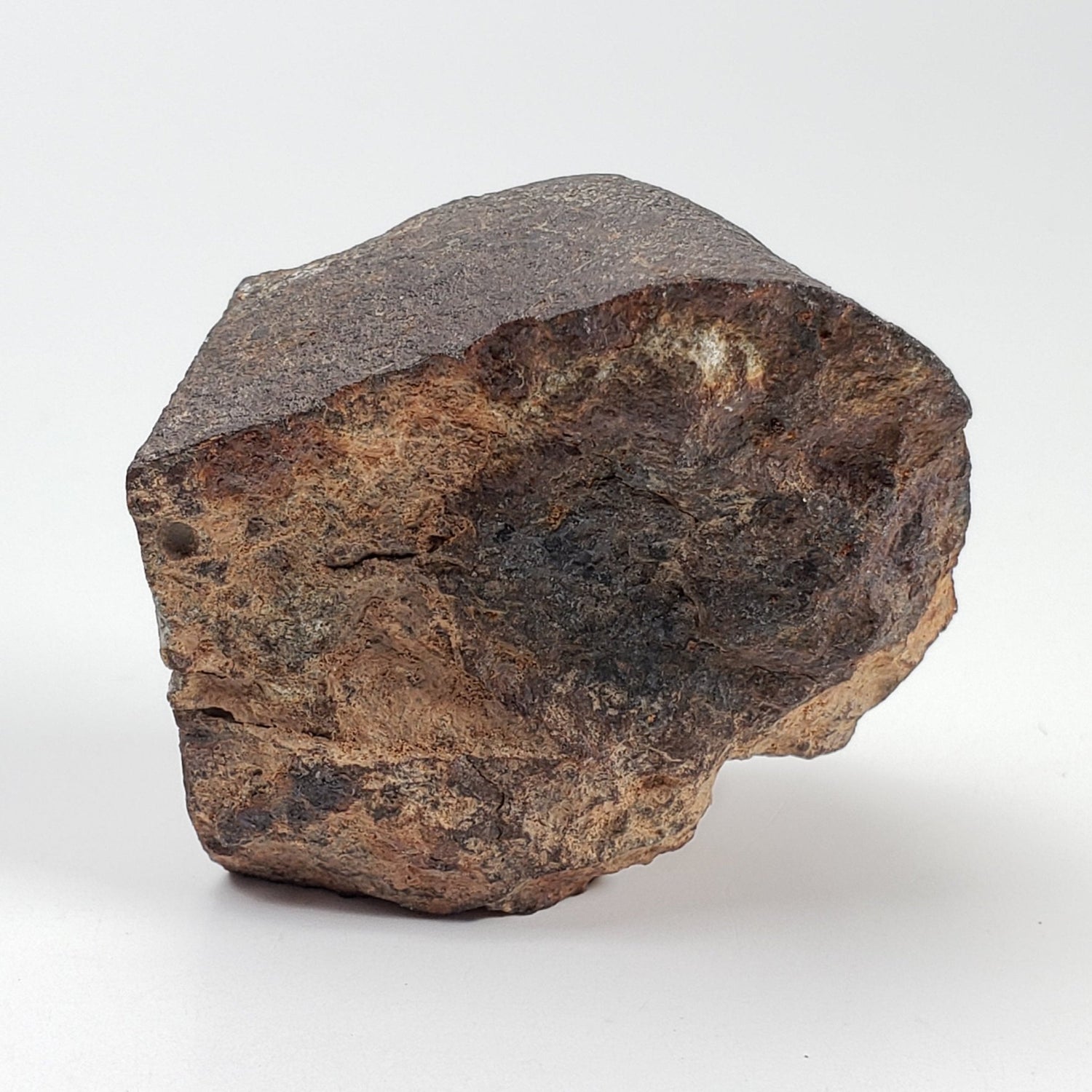
Here we have for you a nice looking individual cut fragment of a Sahara Desert NWA unclassified meteorite weighing 52.7 grams. Its dimensions are 41x33x22mm. This never classified North West Africa stone was found in the Sahara desert around 2000.
It's a good quality individual cut fragment NWA meteorite specimen. Some weathering shows the meteorite's time spent aging in the desert. Would be a beautiful addition to any new or existing collection. Comes with a Canagem Collection specimen card.


This is a natural cluster formation of large calcite crystals with hematite inclusions. This piece has some white color to translucent crystals with areas of orange/red coloring from hematite inclusions, with sharp tabular crystal formations. There are some nicks and imperfections on a few crystals but would still shine in the proper setup. They don't take away from how interesting this piece is. Would be a nice addition to any new or existing collection.
Name: Calcite with Hematite Crystal Cluster
Specimen Size: Cabinet-Sized
Dimensions: 95x81x45 mm / 3.7x3.2x1.8 inches
Weight: 267.8 Grams / 9.4 oz
Origin: Mined in Lane Quarry, Westfield, Hampden Co., Massachusetts, USA


This specimen of Vesuvianite was collected in the now closed Jeffery Mine, Asbestos, Québec, Canada. The specimen is made up of a combination of green and mauve vesuvianite crystals also named violet manganoan vesuvianite. It is in good condition. A great addition to any collection!
Vesuvianite was first discovered on Mount Vesuvius in Italy in the 18th century, hence its name. It typically occurs as a green, brown, yellow, or blue-green crystal, and is often found in metamorphic and igneous rocks. The alternate name, Idocrase, is from the Greek eidos “form”, and krasis “mixture”, because Vesuvianite often appears to combine the crystal forms of other minerals. It is used as a gemstone.
Name: Vesuvianite Crystal
Specimen Size: Miniature-Sized
Dimensions: 41x18x14 mm / 1.6x0.7x0.5 inches
Weight: 14.8 grams / 0.5 ounces
Origin: Mined in Jeffery Mine, Asbestos, Québec, Canada


An outstanding Bixbyite crystal from Topaz Mountain, Thomas Range, Utah. This crystal has a mirror-like luster and is a good size specimen. A great example of Bixbyite with a single black cube exhibiting trioctahedral corners, a mirror-like metallic luster. It has no damage, making this a fine specimen.
Product Type: Bixbyite Crystal
Specimen Size: Thumbnail-Sized
Dimensions: Specimen: 8x7x6 mm
Box: 33x33x35
Weight: 9.7 gr / 0.3 oz (including box)
Origin: Mined at Thomas Range, Juab County, Utah USA


This is an excellent specimen from the world renowned location that is Mount-Saint Hilaire. This beautiful crystal would be a great addition to any new or existing collection.
Name: Rhodochrosite
Specimen Size: Thumbnail-Sized
Dimensions: Specimen 14x9x7 mm
Box 33x33
Weight: 2.5 Grams / 12.7ct
Origin: Mined in Poudrette Quarry, Mont-Saint-Hilaire, Québec, Canada
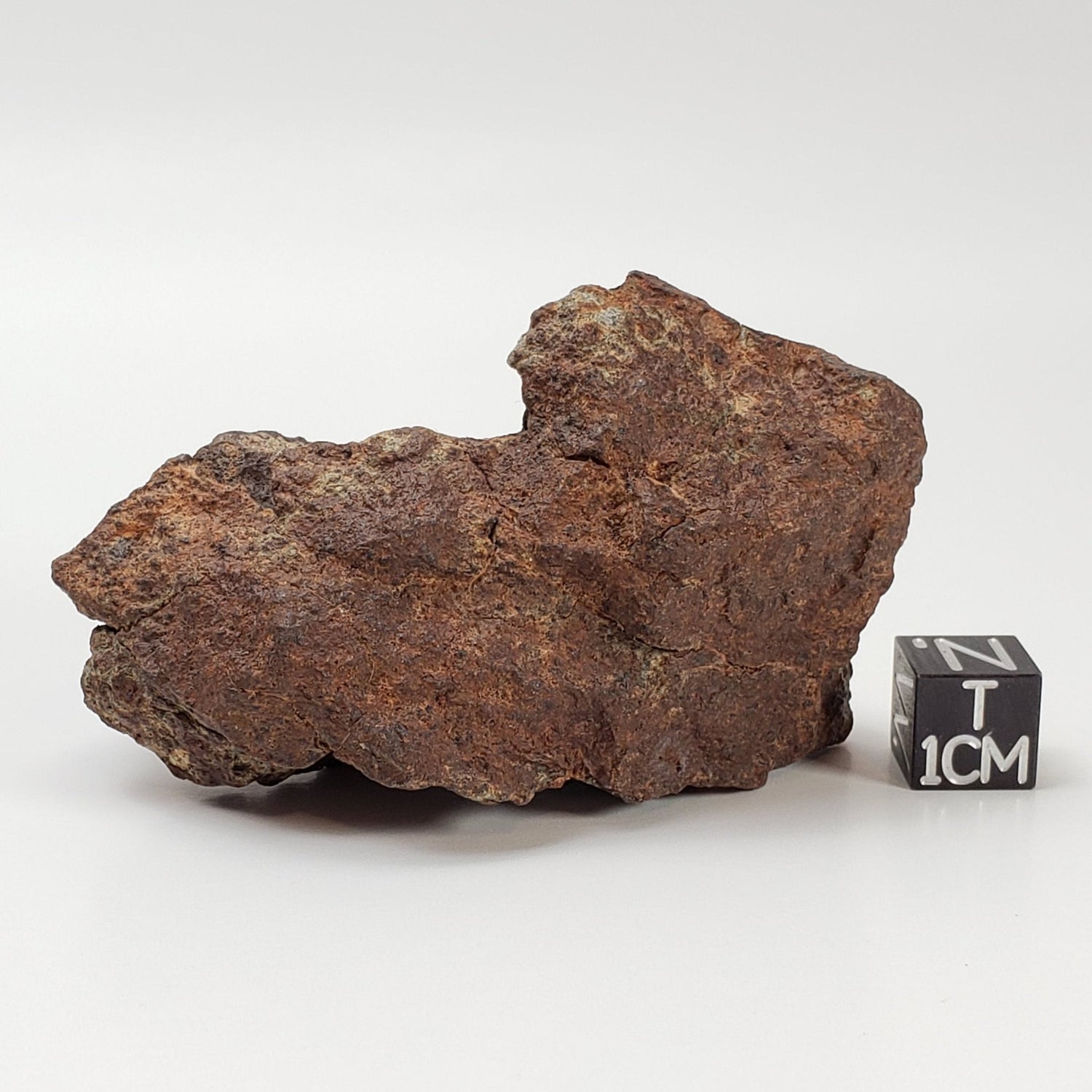
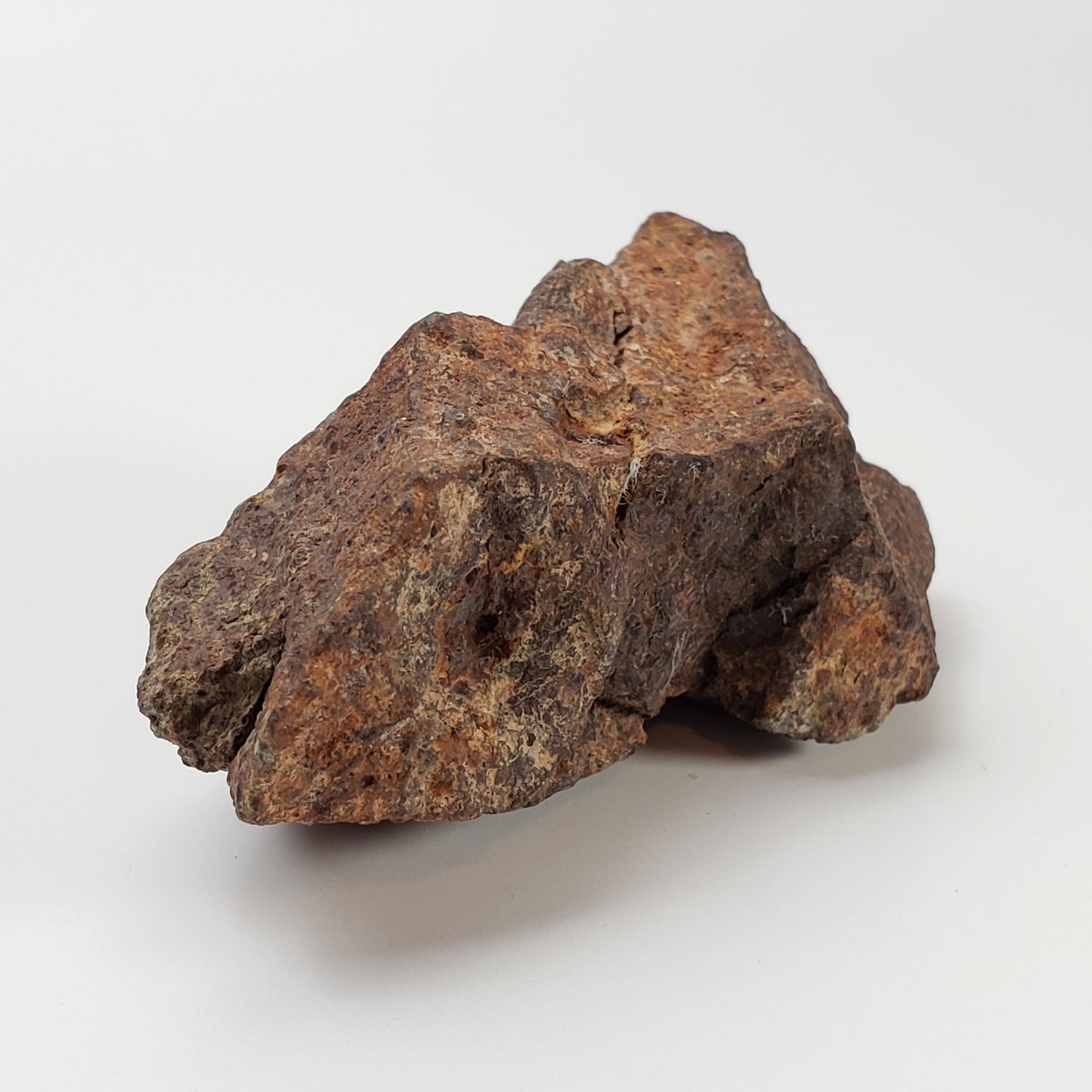
Here we have for you a nice looking individual fragment of a Sahara Desert NWA unclassified meteorite weighing 121.6 grams. Its dimensions are 71x42x32 mm. This never classified North West Africa stone was found in the Sahara desert around 2000.
It's a good quality individual fragment NWA meteorite specimen. Some weathering shows the meteorite's time spent aging in the desert. Would be a beautiful addition to any new or existing collection. Comes with a Canagem Collection specimen card.
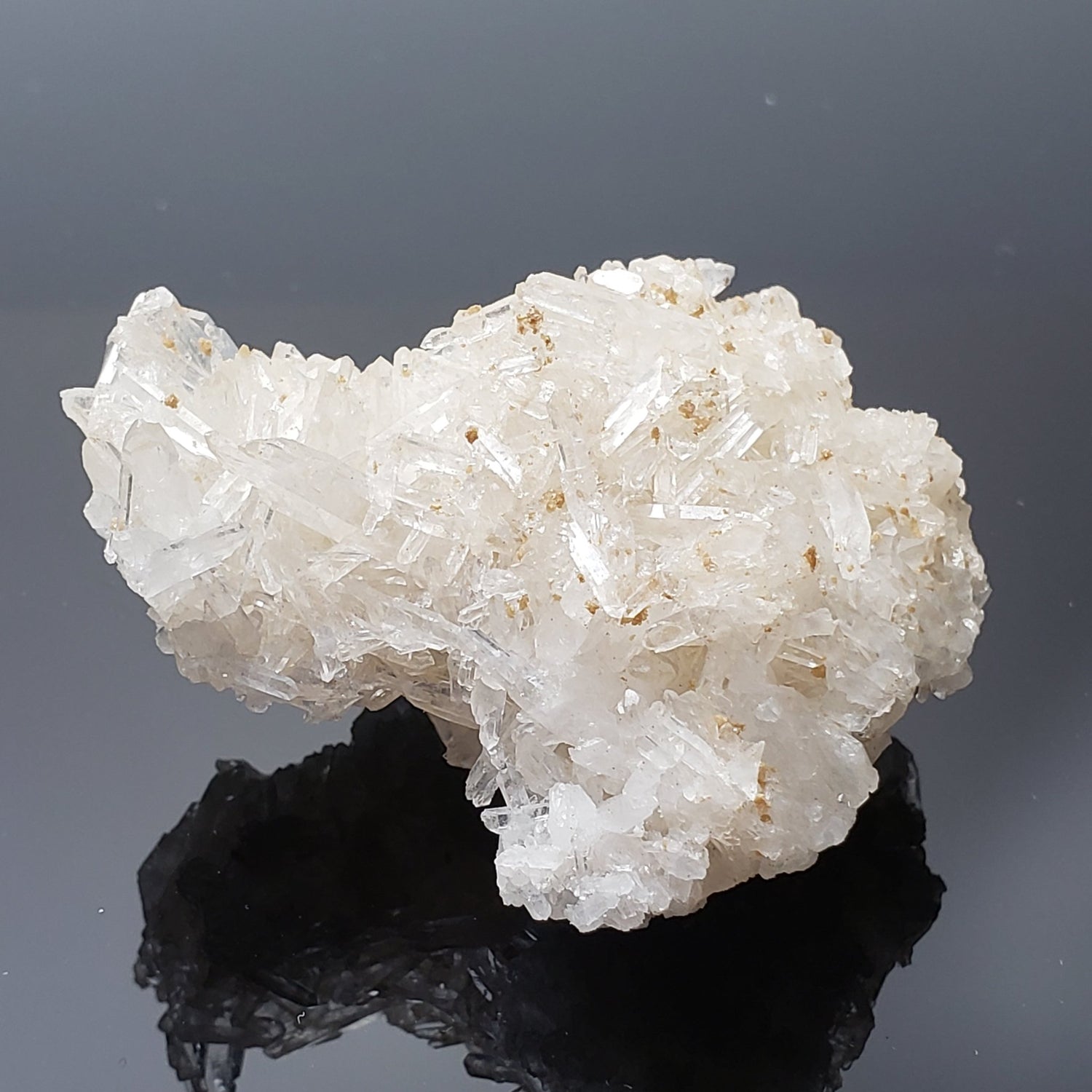
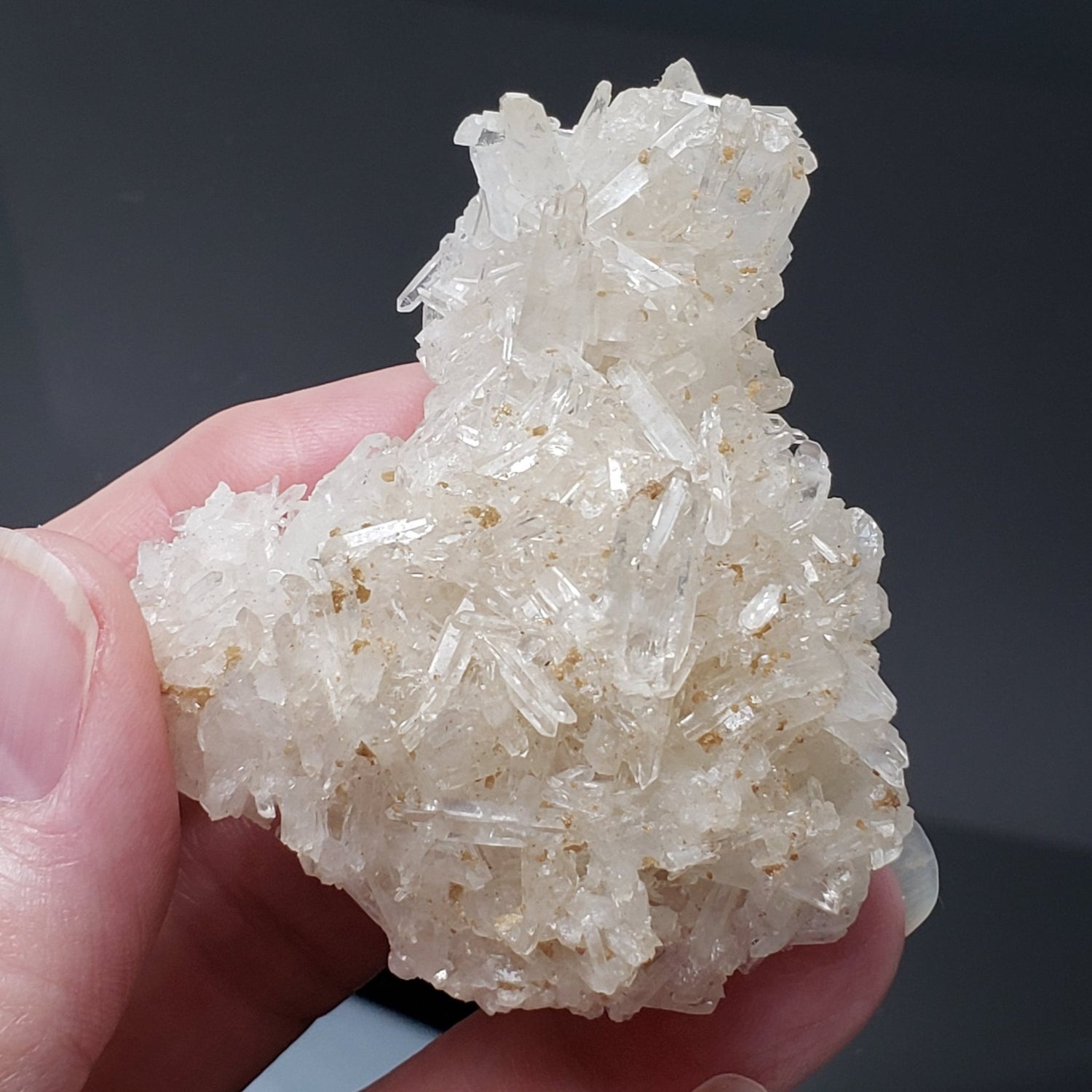
Quartz crystals are among the most abundant and well-known minerals on Earth. It belongs to the hexagonal crystal system, and typically forms six-sided prismatic crystals with a pointed termination. Its crystals can be colorless or exhibit a wide range of colors. The color variations are often due to the presence of impurities or trace elements during the crystal's formation. Quartz is transparent to translucent.
Quartz from this quarry is known as the best of its kind. These specimens have a unique brightness and surface sparkle preferred by collectors around the world. The crystals are intergrown with many others in jackstraw groups which are not attached to matrix: giving you an unlikely-looking floater specimen. The specimen is in very good condition.
Name: Solution Quartz
Specimen Size: Cabinet-Sized
Dimensions: 63x53x35 mm / 2.5x2.1x1.4 inches
Weight: 69.4 Grams / 2.4 Ounces
Origin: Jeffrey Quarry, North Little Rock, Arkansas, USA
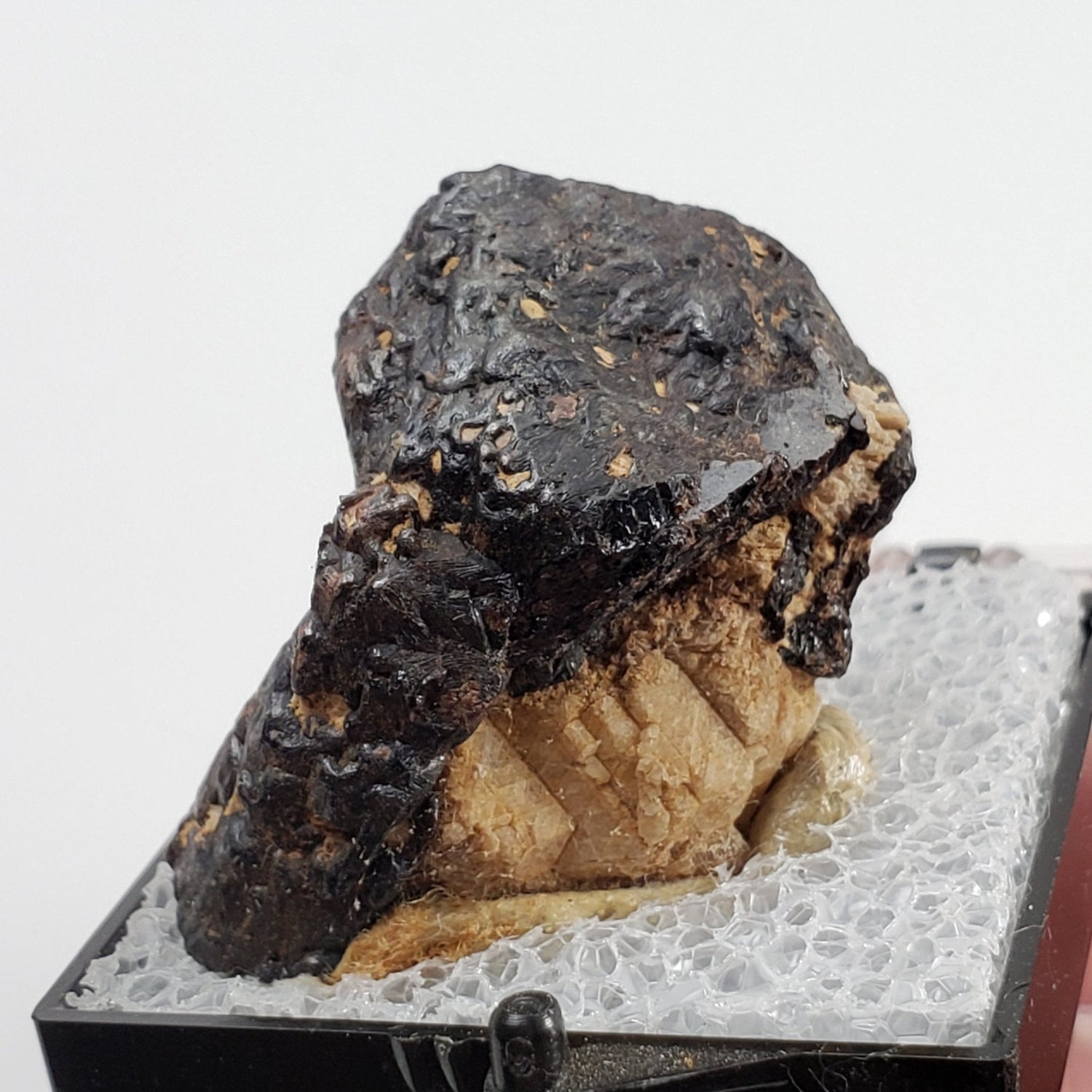
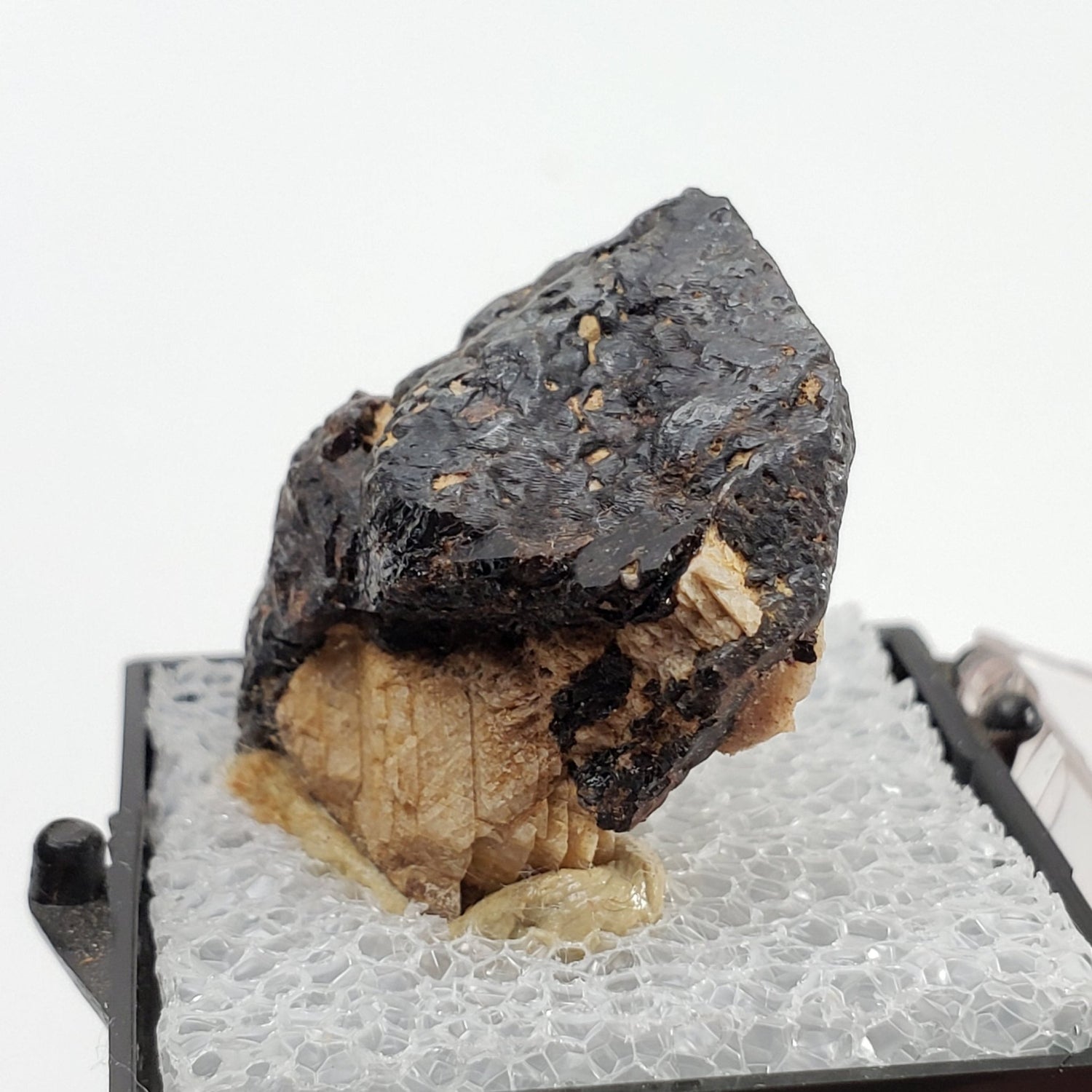
Name: Titanite var. Sphene
Specimen Size: Thumbnail-Sized
Dimensions: Specimen 28x14 mm / 1.1x0.5 inches
Specimen Box 33x33 mm / 1.3x1.3 inches
Weight: 20.9 Grams / 0.7 Ounces (including box)
Origin: Mined in Faraday Twp, Bancroft, Ontario, Canada


This is a must have 40.8 gram Impact Breccia, also referred to as Suevite, from the famous Rochechouart impact structure in South Western France, near the village of Chassenon. Although not a meteorite, impactites are directly linked to them and their impacts and are probably going to be one of the rarest collection items you'll ever own. Impactite is a slag-like glassy object found on the surface of the earth, formed from rock melted by the impact of a meteorite.
Named after the town of Rochechouart, the Rochechouart impact structure is located on the western margin of the French Massif Central near the city of Limoges, approximately 350 km (220 mi) south of Paris. Rochechouart (population about 3800) is built with rocks created or modified by the impact (impactites). Chassenon, a third of the size of Rochechouart, is also built of impactites. Impactite was used 2000 years ago for building Chassenon's monumental Roman baths of Cassinomagus.
The very fine materials (impactoclastites) are preserved forming a very fine layered horizontal deposits on top of the melt rich suevite (breccia with a debris matrix and both rock debris and melt fragments as clasts) near Chassenon.
The term impactite encompasses shock-metamorphosed target rocks, melts or suevites and mixtures of the two, as well as sedimentary rocks with significant impact-derived components and shocked mineral grains, tektites, anomalous geochemical signatures, etc. This impactite was formed 186 million years ago. This deformed rock fragments and partly molten are imbedded in a melt matrix showing typical flow structures from former melt.
This gorgeous end cut displays very well with a mass of 50x46x18 mm. Would be a beautiful addition to any new or existing collection. Comes with a Canagem Collection specimen card.
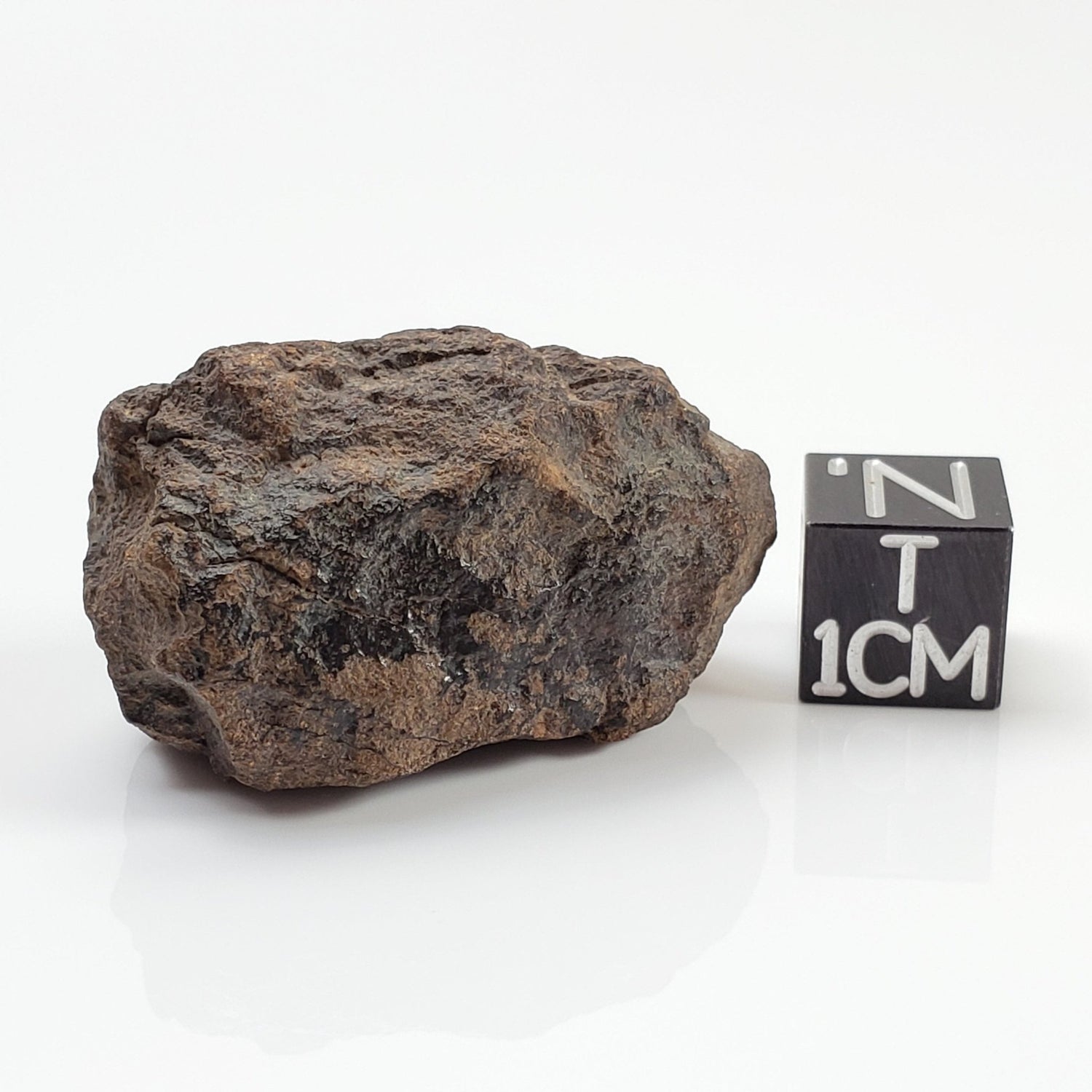
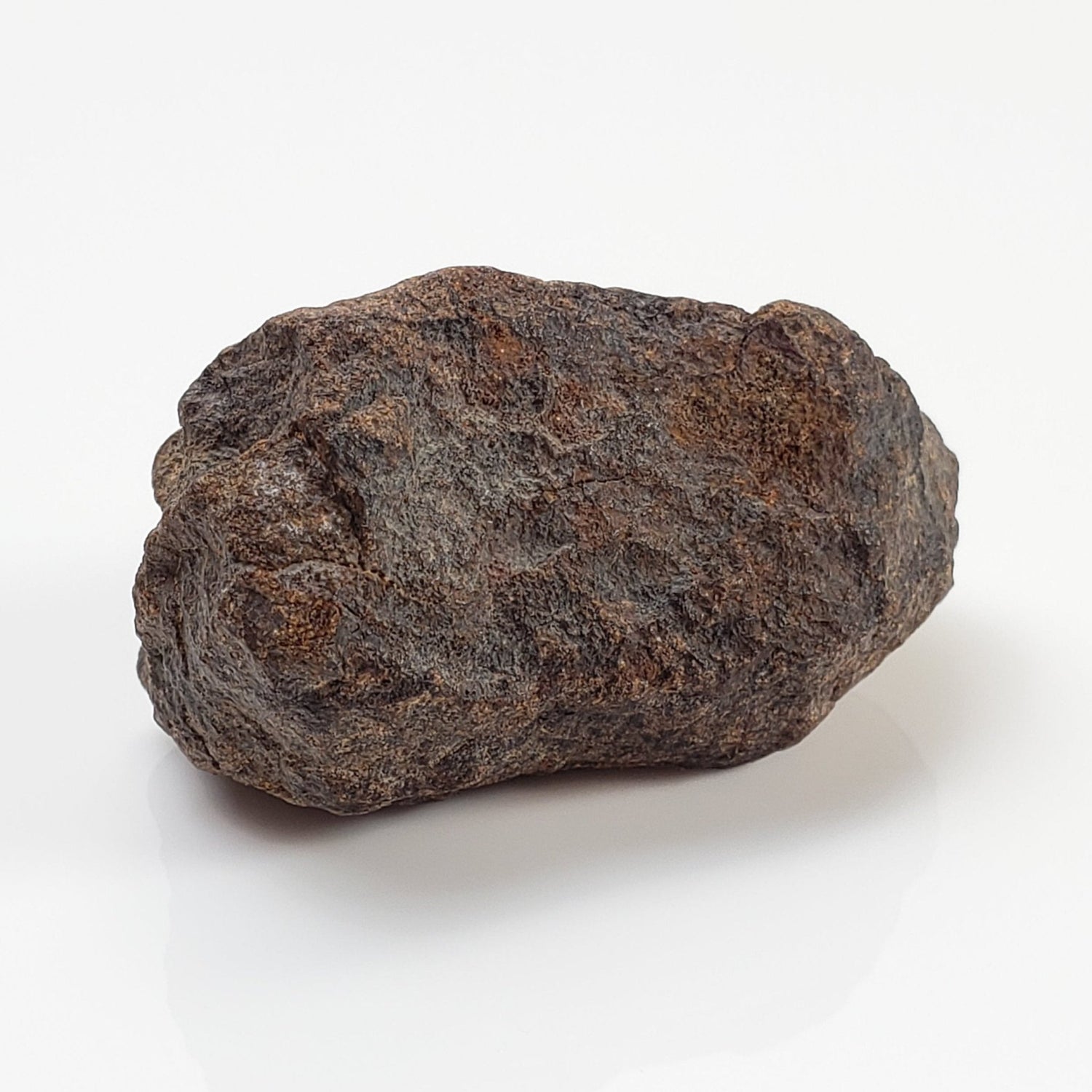
This is a superb whole specimen of the famous Northwest Africa 2965 meteorite weighing 20.6 grams. This is a beautiful specimen from the Thomas Phillips Meteorite Collection.
Its dimensions are 34x20x20 mm. This North West Africa was classified originally as an Enstatite EL6/7, then later as an EL3 and finally an EL-Melt Rock meteorite which was found along with the rest of the total mass of more than 100 Kilograms in the Algerian Desert in August 2005. This is one of the oldest meteorites on our planet in terms of terrestrial age and has been referred to as a fossil meteorite.
This Enstatite chondrite shock Level is minimal and weathering varies from 2 to 5. This piece displays extremely well and if cut would show a completely recrystallized enstatite chondrite with polygonal to irregular grain outlines. The grain size varies from 0.02 to 0.7 mm. Round, curved, blocky objects contain coarser-grained orthopyroxene than in the matrix. No relict chondrules were observed.
This hard to acquire piece displays very well with its prehistoric look. This rare and quality specimen would make an amazing addition to any new or existing collection. Comes with specimen card.
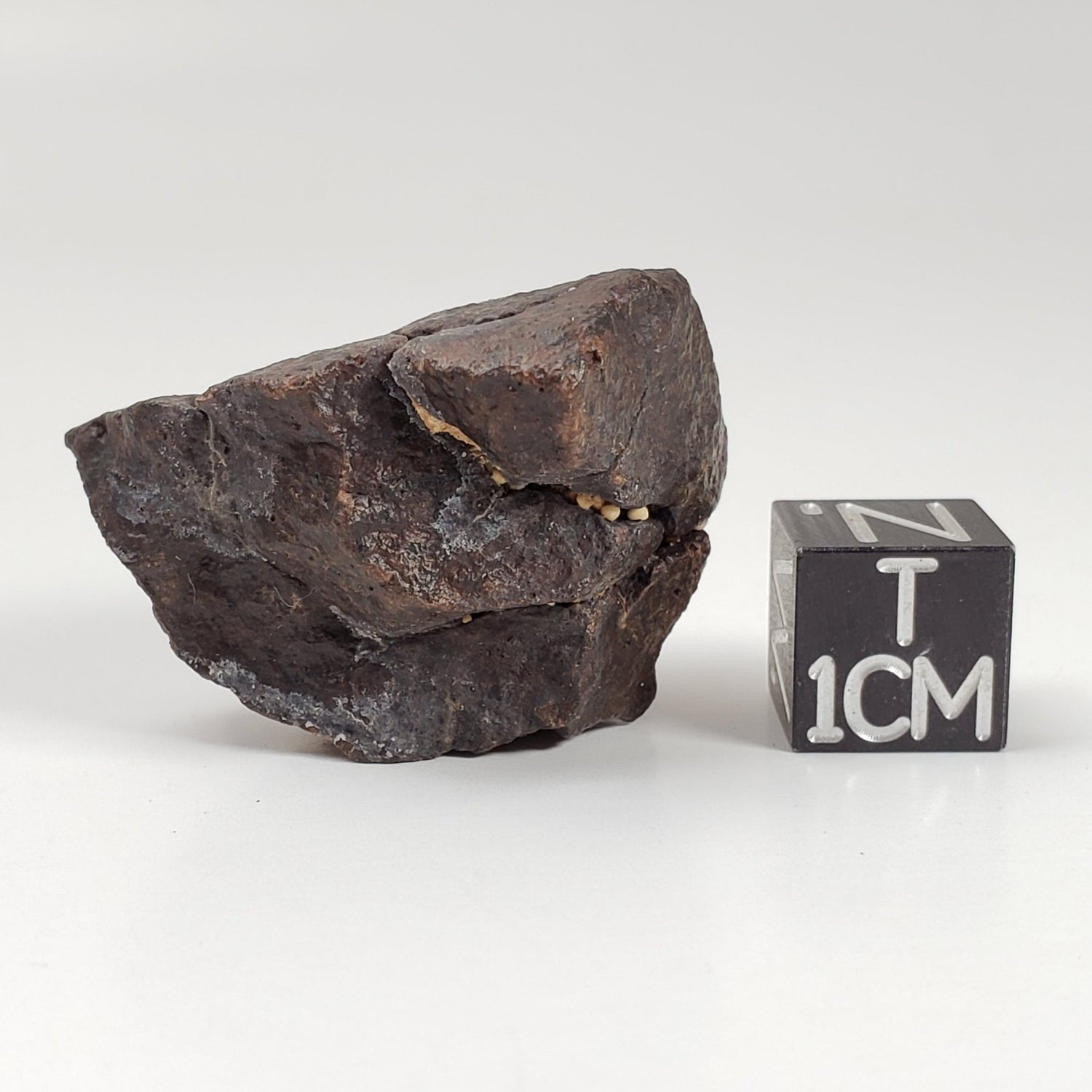
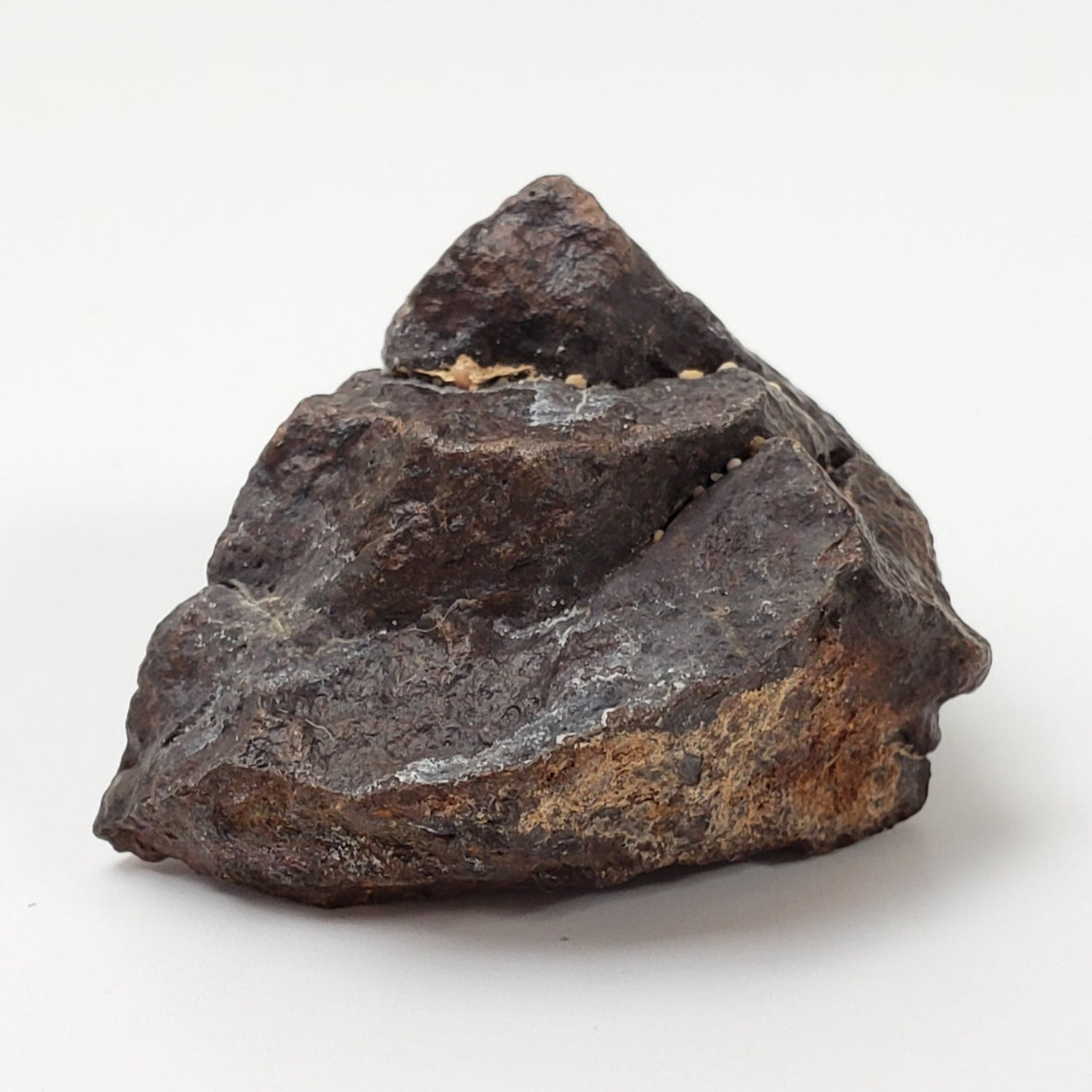
Here we have for you a superb looking Dhofar 020 classified meteorite weighing 17.15 grams. Its dimensions are 31x19x20 mm. Found 10 March 2000 in Dhofar, Oman, in the Arabian Peninsula this H4/5 classified chondrite has a TKW of 256 Kg with a shock stage of S4 and weathering grade of W3 by the Russian Academy of Sciences, USSR.
Dhofar 020 is an ordinary stone chondrite meteorite. The meteorite is high in free metal and therefore falls in the H class. S4 tells it is highly shocked. Slices of the meteorite, show veins of the cosmic impact created mineral Ringwoodite, although fractures in the stone tend to hide this some. It almost appears to me to have splinted upon impact. The meteorite falls in 4-5 petrology class, a reference to how metamorphed the meteorite is from its original state. This is judged by studying a thin section of the meteorite, most visually at the chondrules, a feature unique to stone meteorite. In a thin section under polarized light, pyroxene chondrules seem more common then their olivine pair. Still some regions in the meteorite show scattered patches of bright olivine inclusions. These are fairly rare, at least on my thin section, and most of the meteorite's olivine and pyroxene, some of the easier things to see in a thin section, appear to have went through a metamorphism, and have "melted" into the matrix and are at times undistinguishable.
This piece displays extremely well, it has a beautiful crust and is a good size. Would be a beautiful addition to any new or existing collection. Comes with a Michael Farmer Meteorites and a Canagem Collection specimen card.

Canagem is proud to be professional member of The International Gem Society(IGS) the world's top resource for gem professionals, enthusiasts, and industry content.