

📢 Notice to ALL Customers 📢
225 products
Sort by:
225 products
225 products


Cubic and crystallized pyrite matrix with calcite crystal cluster. This top Peruvian specimen is in very good condition. Would be a beautiful addition to any new or existing collection.
Name: Pyrite with Calcite Crystal Cluster
Specimen Size: Large Cabinet-Sized
Dimensions: 114x83x76 mm / 4.5x3.3x3 inches
Weight: 864Grams / 1 lb 14 oz
Origin: Mined in Huaron, Peru


Malachite is perhaps the one of the most popular minerals for collectors, as its rich patterned coloration in shades of green is unique among gems. It is a beautiful decorative stone. Malachite’s low hardness makes it easy to work, though it still takes a polish very well. These qualities, combined with ready availability, make malachite a popular choice for lapidary artistry. Would be a beautiful addition to any new or existing collection.
Name: Malachite
Specimen Size: Large Cabinet-Sized
Dimensions: 170x95x90 mm / 6.7x3.7x3.5 inches
Weight: 1.3 Kg /2 lbs 14 Ounces
Origin: Mined in DaYe, HuBei Province, China
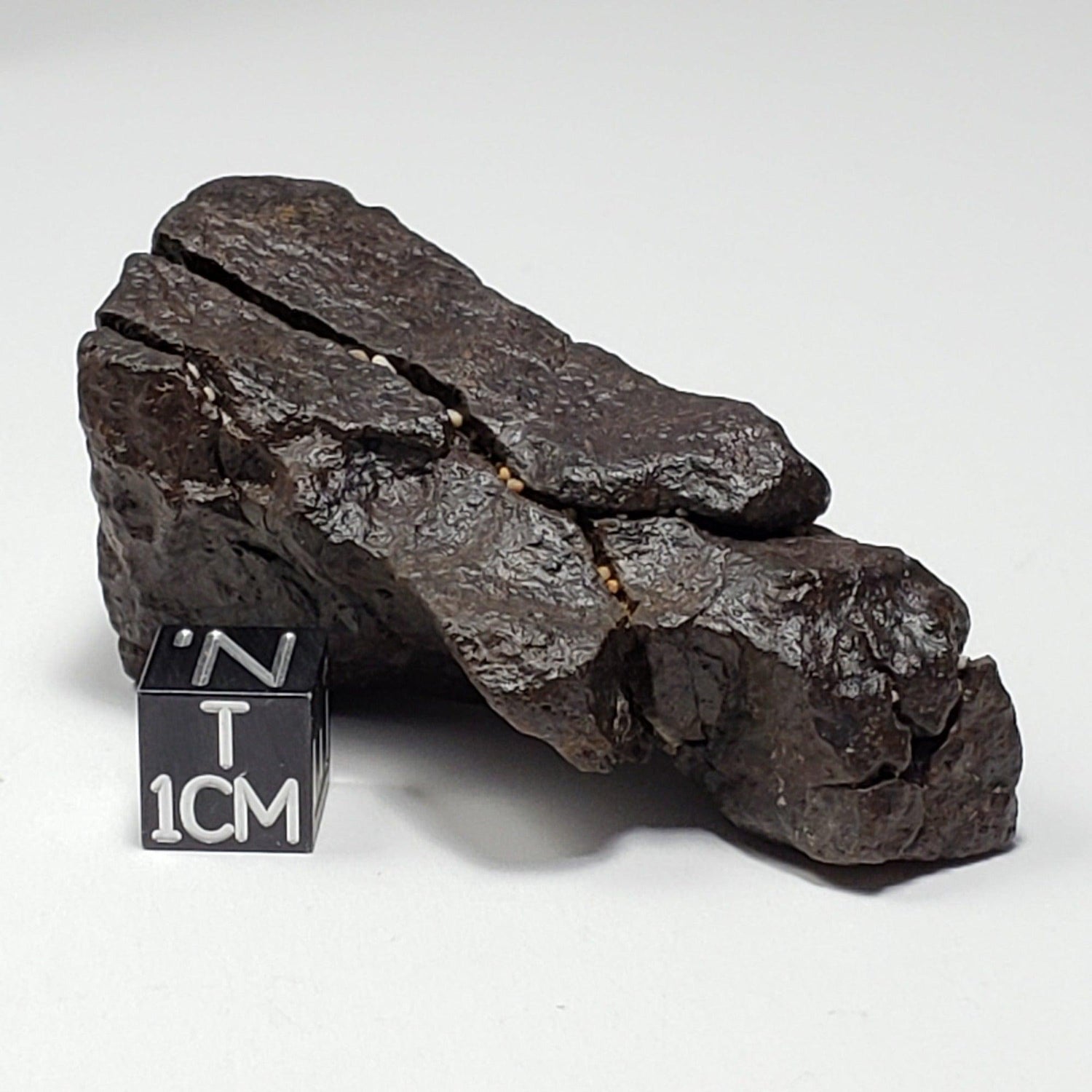

Here we have for you a superb looking Dhofar 020 classified meteorite weighing 82.14 grams. Its dimensions are 70x32x32 mm. Found 10 March 2000 in Dhofar, Oman, in the Arabian Peninsula this H4/5 classified chondrite has a TKW of 256 Kg with a shock stage of S4 and weathering grade of W3 by the Russian Academy of Sciences, USSR.
The following is an excerpt from Mark Bostick's review of this meteorite: "Dhofar 020 is a ordinary stone chondrite meteorite. The meteorite is high in free metal and therefore falls in the H class. S4 tells it is highly shocked. Slices of the meteorite, show veins of the cosmic impact created mineral Ringwoodite, although fractures in the stone tend to hide this some. It almost appears to me to have splinted upon impact. The meteorite falls in 4-5 petrology class, a reference to how metamorphed the meteorite is from its original state. This is judged by studying a thin section of the meteorite, most visually at the chondrules, a feature unique to stone meteorite. In a thin section under polarized light, pyroxene chondrules seem more common then their olivine pair. Still some regions in the meteorite show scattered patches of bright olivine inclusions. These are fairly rare, at least on my thin section, and most of the meteorite's olivine and pyroxene, some of the easier things to see in a thin section, appear to have went through a metamorphism, and have "melted" into the matrix and are at times undistinguishable."
This piece displays extremely well showing a beautiful crust, superb shape and good size. Would be a beautiful addition to any new or existing collection. Comes with a Canagem Collection specimen card.


Great terminated quartz crystals with crystallized pyrite specks all over one face of the points. This special specimen is in excellent condition. Would be an amazing addition to any new or existing collection.
Name: Pyrite specks on Quartz Crystal Cluster
Specimen Size: Large Cabinet-Sized
Dimensions: 103x69x80 mm / 4.1x2.7x3.1 inches
Weight: 475 Grams / 1 Lb 1 oz
Origin: Mined in China


This is a rare and fantastic 31 gram Libyan Desert Glass from Kuffra, Libya, with dimensions of 45x41x25 mm.
Although its exact origin is still debated, the leading theory suggests it was formed by a high-energy event, such as a meteoric impact or airburst, that melted the desert sand directly where it lay, without being ejected into the atmosphere and re-entering. This results in different physical characteristics compared to tektites. Libyan Desert Glass is found specifically in the Great Sand Sea of the Eastern Sahara, within a more localized area spanning parts of western Egypt and eastern Libya.
This piece displays extremely well and is a quality translucent specimen. It has an aesthetic shape with a beautiful wind eroded body from the years spent in the Desert. Would be a beautiful addition to any new or existing collection. Comes with a Canagem Collection specimen card.


Córdoba is one of Europe's most famous pyromorphite-producing regions, known for yielding green, yellow-green, olive-green and brownish-green crystals from its historic lead mining districts. Spanish pyromorphite is highly regarded among mineral collectors for its rich color and attractive crystal forms.
This specimen has groups of small apple-green, prismatic crystals nestled in vugs on contrasting limonite matrix. A very colorful and really beautiful specimen. Would be a beautiful addition to any new or existing collection.
Name: Pyromorphite
Specimen Size: Large Cabinet-Sized
Dimensions: 105x90x60 mm / 4.1x3.5x2.4 inches
Weight: 769 Grams / 1 lb 11 ounces
Origin: Mined in Córdoba, Spain


This is an attractive specimen consisting of large, terminated Calcite points with red Realgar inclusions from the Jiepaiyu Mine, Shimen deposit, Shimen Co., Changde, Hunan Province, China.
Name: Calcite with Realgar
Specimen Size: Large Cabinet-Sized
Dimensions: 148x71x81 mm / 5.8x2.8x3.2 inches
Weight: 462 Grams / 1 LB
Origin: Mined in Shimen mine, Hunan Province, China


This is an attractive specimen consisting of large, Terminated Calcite points with red Realgar inclusions from the Jiepaiyu Mine, Shimen deposit, Shimen Co., Changde, Hunan Province, China.
Name: Calcite with Realgar
Specimen Size: Large Cabinet-Sized
Dimensions: 127x101x51 mm/ 5x4x2 inches
Weight: 885 Grams / 1 Lb 15 Ounces
Origin: Mined in Shimen mine, Hunan Province, China


This is a superb looking Dhofar 221 classified meteorite weighing 168.8 grams. Its dimensions are 86x57x43 mm. This L5 classified meteorite was found in Zufar, Oman in 2000. The total weight of the 100's of pieces recovered is recorded as a low 3.54 kg and the meteorite has a shock stage of 3 and weathering grade of 3.
This piece displays extremely well because of its beautiful crust, superb shape and is a good size. Would be a beautiful addition to any new or existing collection. Comes with a Canagem Collection specimen card.


Apophyllite is a mineral known for its distinctive crystal formations, often occurring in clusters with a unique beauty. Its crystals are usually colorless or white, allowing them to be transparent or translucent. Although, some specimens may exhibit a greenish, yellowish, or pinkish tint due to the presence of impurities. This specimen has multiple double terminated apophyllite points, it's a very beautiful piece.
Apophyllite is believed to promote self-reflection and authentic self-expression, helping to reduce stress, release mental blockages, and overcome anxiety by revealing truth and facilitating the release of suppressed emotions.
Name: Apophyllite on Druse
Specimen Size: Large Cabinet-Sized
Dimensions: 158x95x89 mm / 6.25x3.75x3.5 inches
Weight: 893 Grams / 1 lbs 15 Ounces
Origin: Mined in Jalgaon, India


Stilbite is a zeolite mineral appreciated for its delicate crystal formations and pastel hues, ranging from colorless to white, yellow, pink, and peach. It forms distinctive tabular crystals with a bowtie or butterfly shape and exhibits a vitreous to pearly luster. Commonly found in cavities in volcanic rocks, stilbite is associated with other zeolite minerals. It is valued for its aesthetic appeal and is believed by some to have calming energy, supporting spiritual growth and emotional healing.
Chalcedony is a microcrystalline Quartz found in many different colours and patterns. It has a number of crystals grouped under it many of which are very familiar, including Agate, Carnelian, Chrysoprase, Aventurine, Jasper and Onyx.
Name: Stilbite on Chalcedony Crystals
Specimen Size: Large Cabinet-Sized
Dimensions: 158x114x69 mm / 6.25x4.5x2.75 inches
Weight: 688 Grams / 1 Lbs 8 Ounces
Details: Mined in Jalgaon, India


This is a great looking end cut Gao-Guenie H5 classified meteorite weighing 18.98 grams. Its dimensions are 35x27x21 mm and it has a crusted edge.
This H5 classified meteorite was observed falling at about 17:00 March 5, 1960 near the village of Gao in Africa. There is no total known weight recorded for this meteorite.
Would be a beautiful addition to any new or existing collection. Comes with two specimen cards.

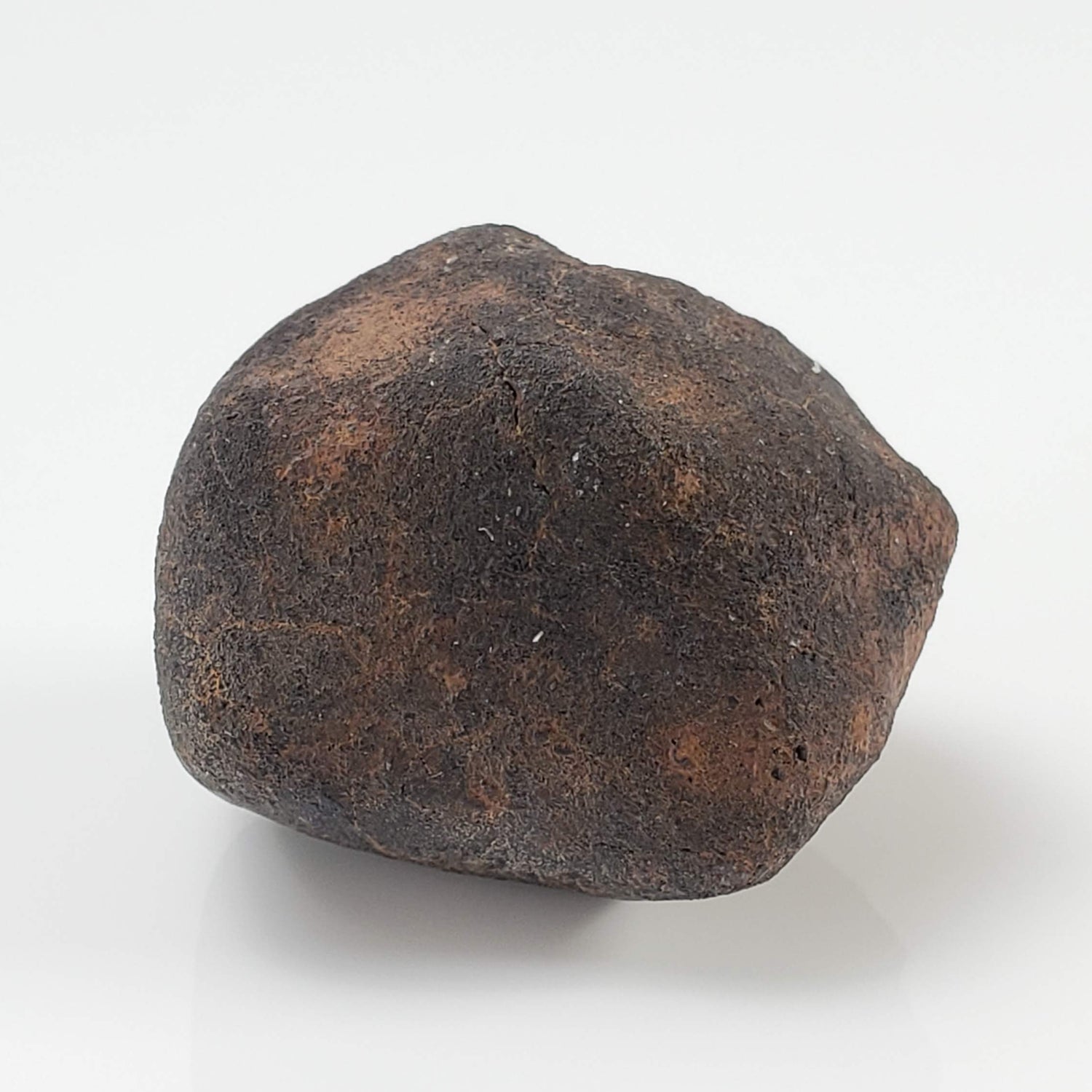
This is a great looking individual Gao-Guenie H5 classified meteorite that is 100% crusted. It weighs 26.72 grams and measures 29x23x23 mm.
This H5 classified meteorite was observed falling at about 17:00 March 5, 1960 near the village of Gao in Africa. There is no total known weight recorded for this meteorite.
Would be a beautiful addition to any new or existing collection. Comes with a ELKK Meteorites and Canagem® Collection specimen cards.
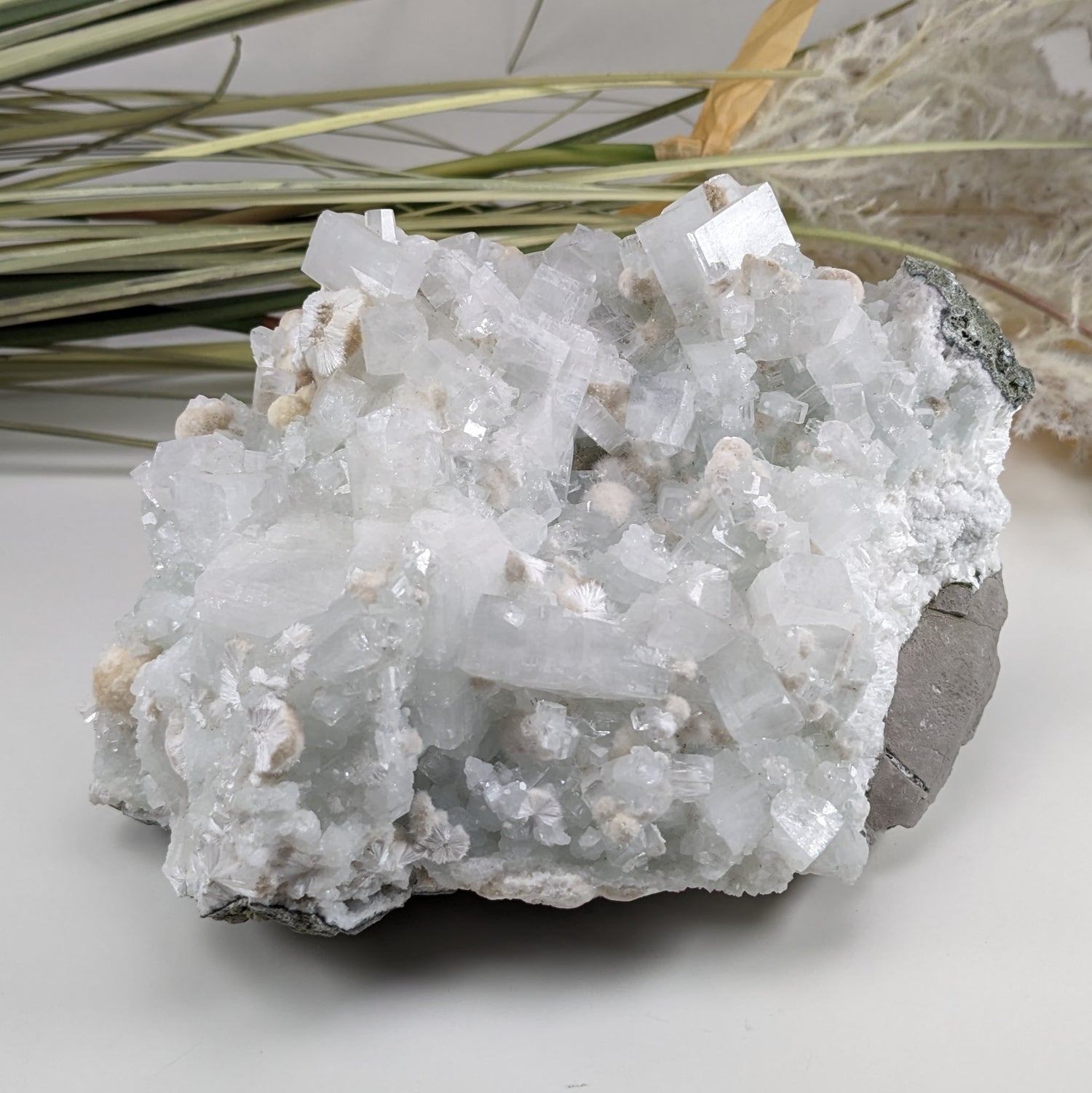
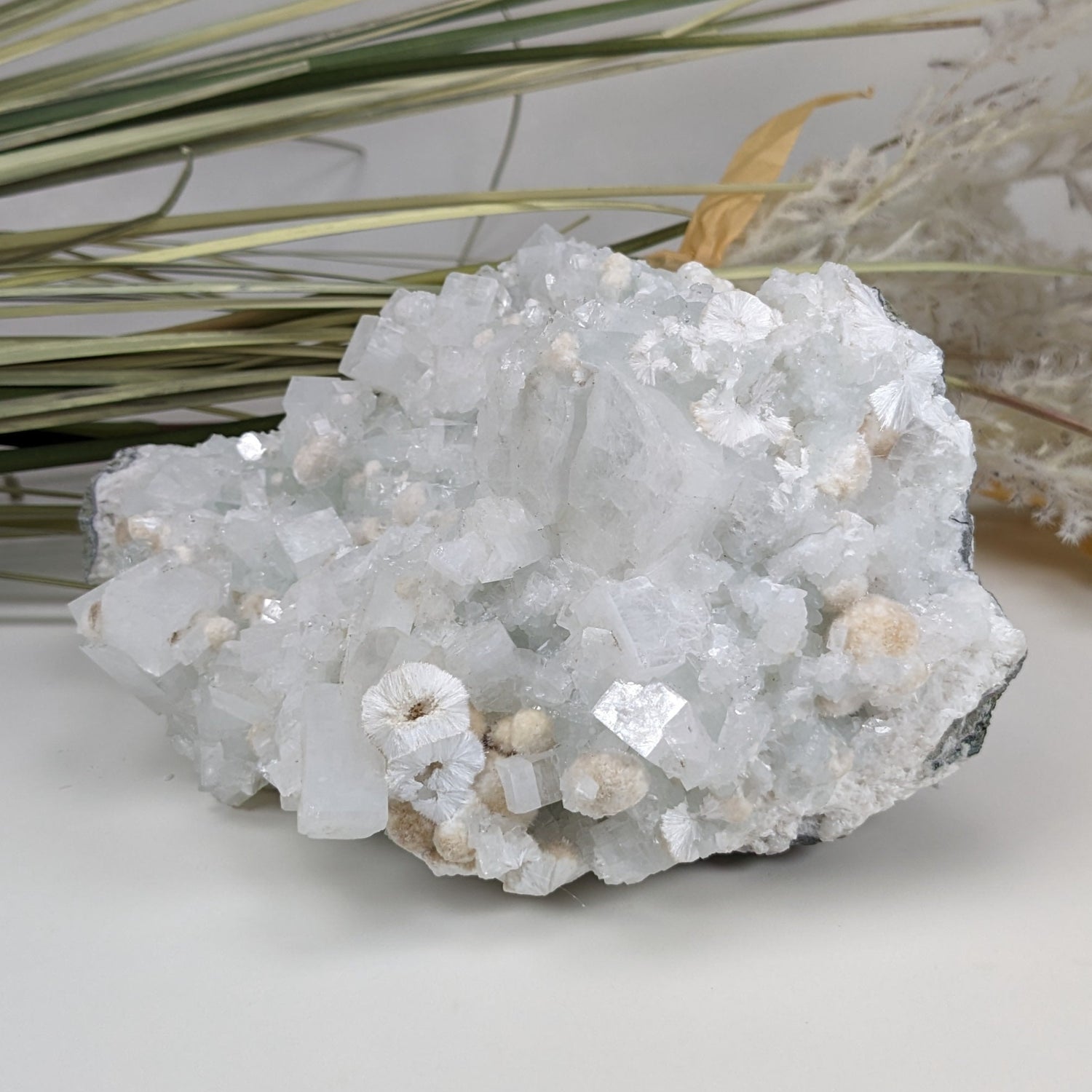
Gyrolite often forms nodular aggregates that can appear glassy, dull or even fibrous. The aggregate nodules often accompany many fine and rare minerals such as Apophyllite and Okenite plus many of the Zeolites. Looks very nice on blue green Prehnite! Would be a beautiful addition to any new or existing collection.
Name: Gyrolite and Apophyllite on Prehnite
Specimen Size: Large Cabinet-Sized
Dimensions: 171x101x95 mm / 6.75x4x3.75 inches
Weight: 1.03 KG / 2 Lbs 4 Ounces
Origin: Mumbai, India
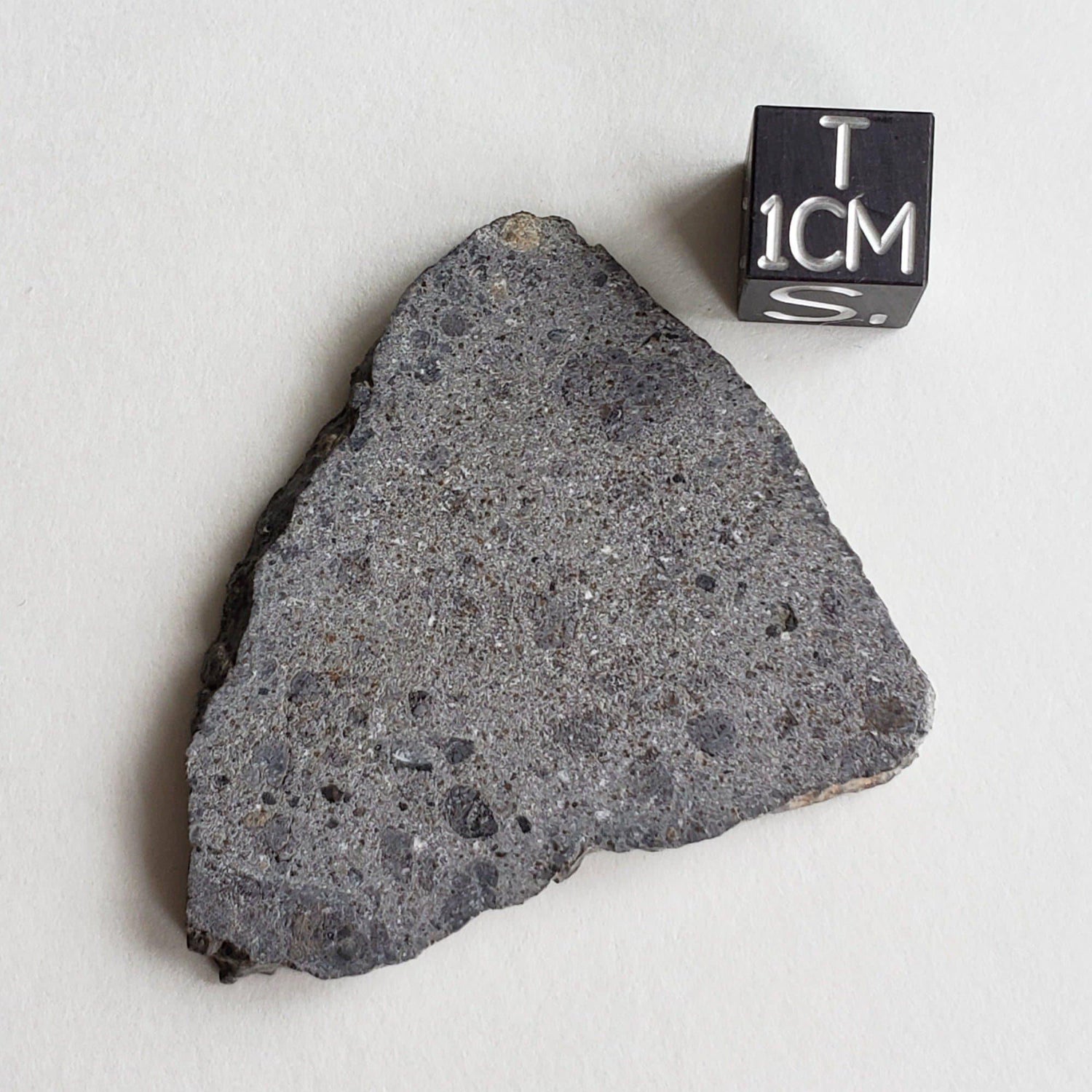
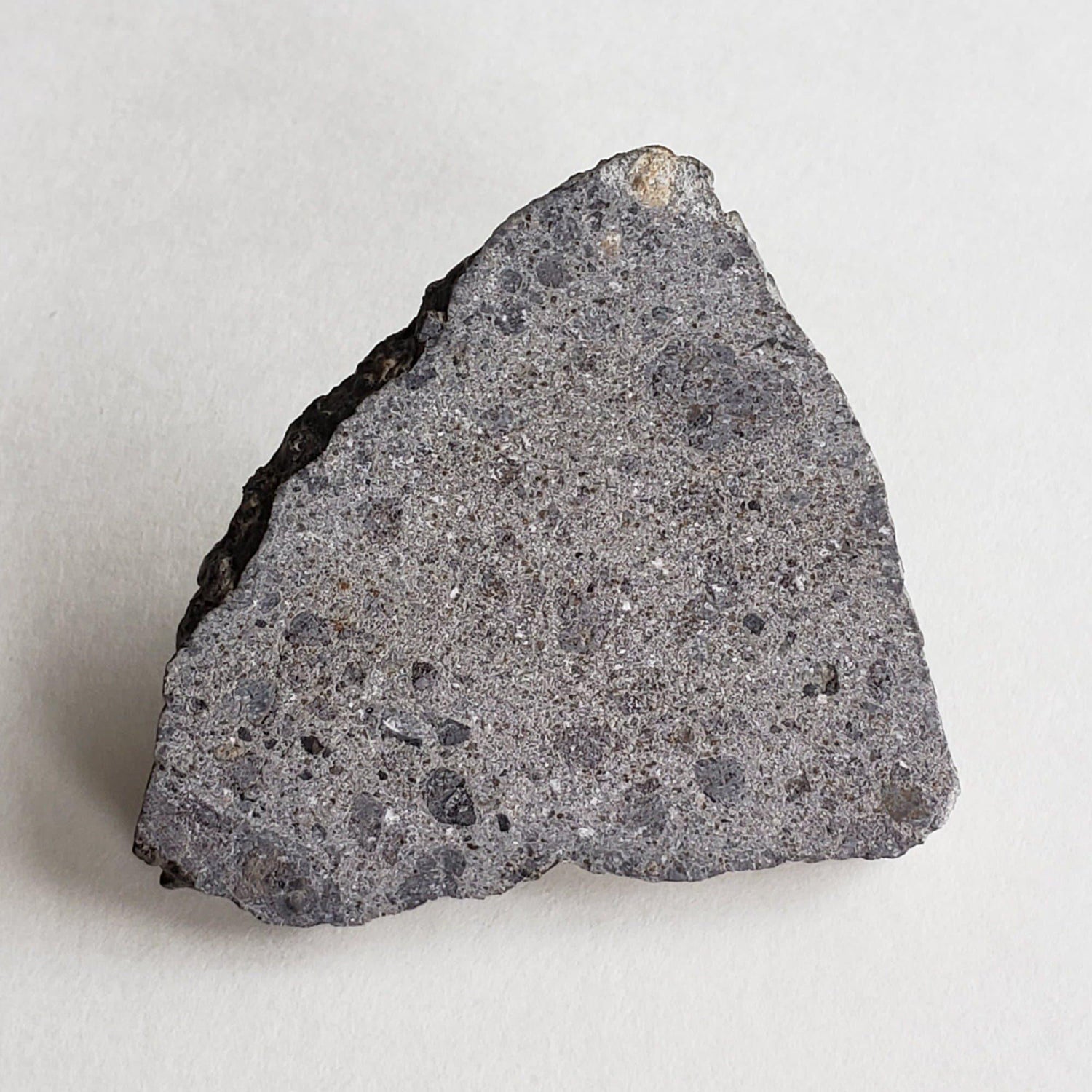
This is a great looking Northwest Africa 2949 basaltic eucrite classified meteorite slice weighing 9.7 grams. Its dimensions are 43x38x3 mm.
This basaltic achondrite eucrite classified meteorite was found in the Sahara Desert in 2005 and is 1 of 468 approved meteorites classified as such. The total weight of the 5 recovered pieces is recorded as a low 1365 grams.
This piece displays extremely well with a beautiful crusted exterior and is a nice size showing multiple characteristics of the type of material, exhibiting excellent clasts within the matrix. The matrix is a fine grain containing shocked eucritic inclusions. Beautiful grey matrix with nice clear inclusions. The three groups collectively known as HED meteorites(howardites, eucrites and diogenites) may come from asteroid 4 Vesta.
The specimen comes a Canagem specimen card. Would be a beautiful addition to any new or existing collection.


This is a superb looking Dhofar 221 classified meteorite weighing 63.52 grams. Its dimensions are 67x42x17 mm. This L5 classified meteorite was found in Zufar, Oman in 2000. The total weight of the 100's of pieces recovered is recorded as a low 3.54 kg and the meteorite has a shock stage of 3 and weathering grade of 3.
This piece displays extremely well because of its beautiful crust, superb shape and is a good size. Would be a beautiful addition to any new or existing collection. Comes with a Canagem Collection specimen card.

Canagem is proud to be professional member of The International Gem Society(IGS) the world's top resource for gem professionals, enthusiasts, and industry content.