



406 products
Sort by:
406 products


This is an attractive specimen of calcite crystals from the Wessels Mine, Kuruman, South Africa. The entire top surface of the specimen is covered with many sharp well formed calcite crystals. Some are a frosted snow white ball shape which sit amongst a sharper sparkly druzy calcite. It is in excellent condition.
Calcite is found throughout the world in sedimentary, metamorphic, and igneous rocks. Some geologists consider it to be a "ubiquitous mineral" - one that is found everywhere. Calcite is the principal constituent of limestone and marble.
Name: Calcite Crystal
Specimen Size: Cabinet-Sized
Dimensions: 61x50x35 mm/ 2.4x2.0x1.4 inches
Weight: 96.82 Grams / 3.4 Ounces
Origin: Mined in Wessels Mine, Kuruman, South Africa


This is a natural cluster formation of large calcite crystals with hematite inclusions. This piece has some white color to translucent crystals with areas of orange/red coloring from hematite inclusions, with sharp tabular crystal formations. There are some nicks and imperfections on a few crystals but would still shine in the proper setup. They don't take away from how interesting this piece is. Would be a nice addition to any new or existing collection.
Name: Calcite with Hematite Crystal Cluster
Specimen Size: Cabinet-Sized
Dimensions: 95x81x45 mm / 3.7x3.2x1.8 inches
Weight: 267.8 Grams / 9.4 oz
Origin: Mined in Lane Quarry, Westfield, Hampden Co., Massachusetts, USA
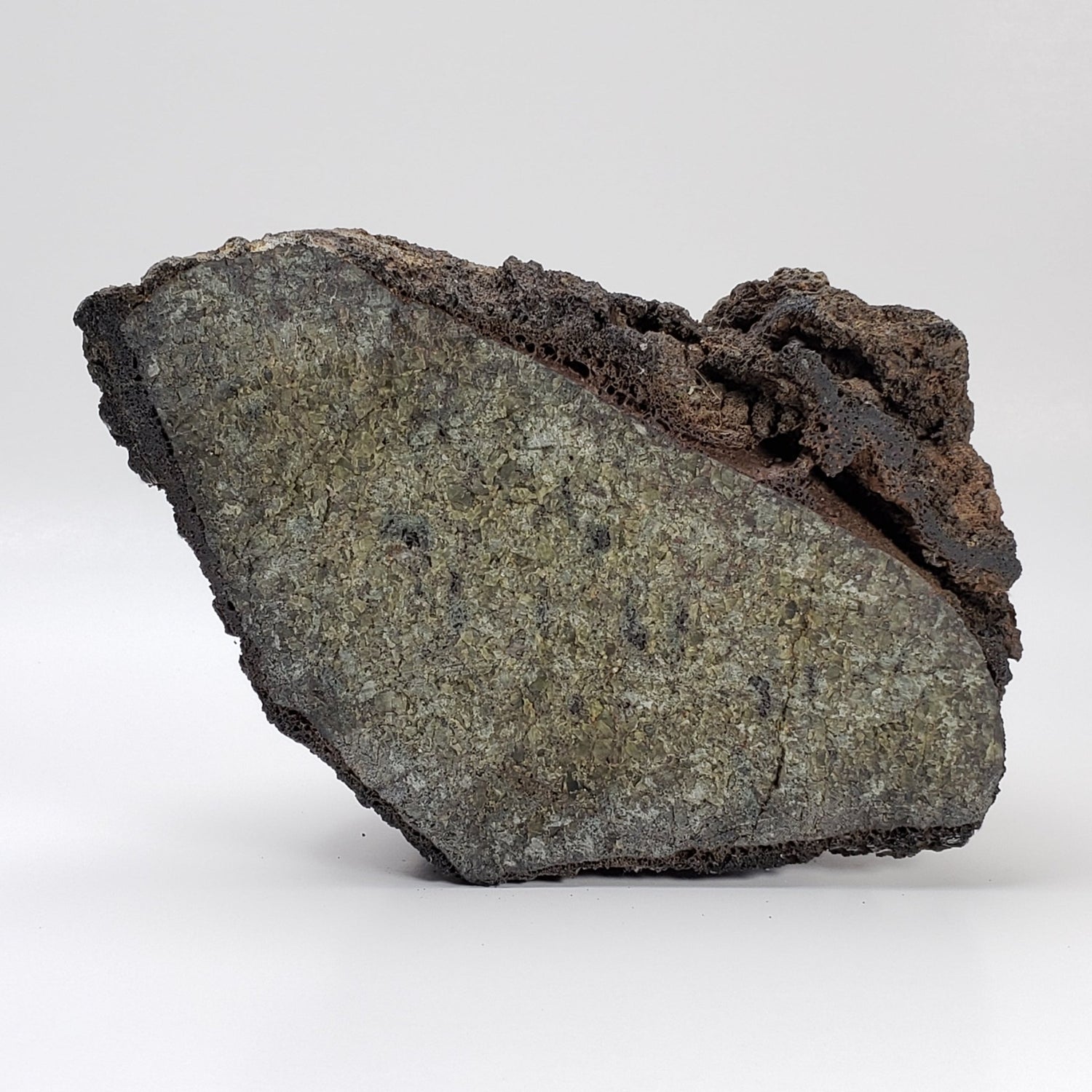
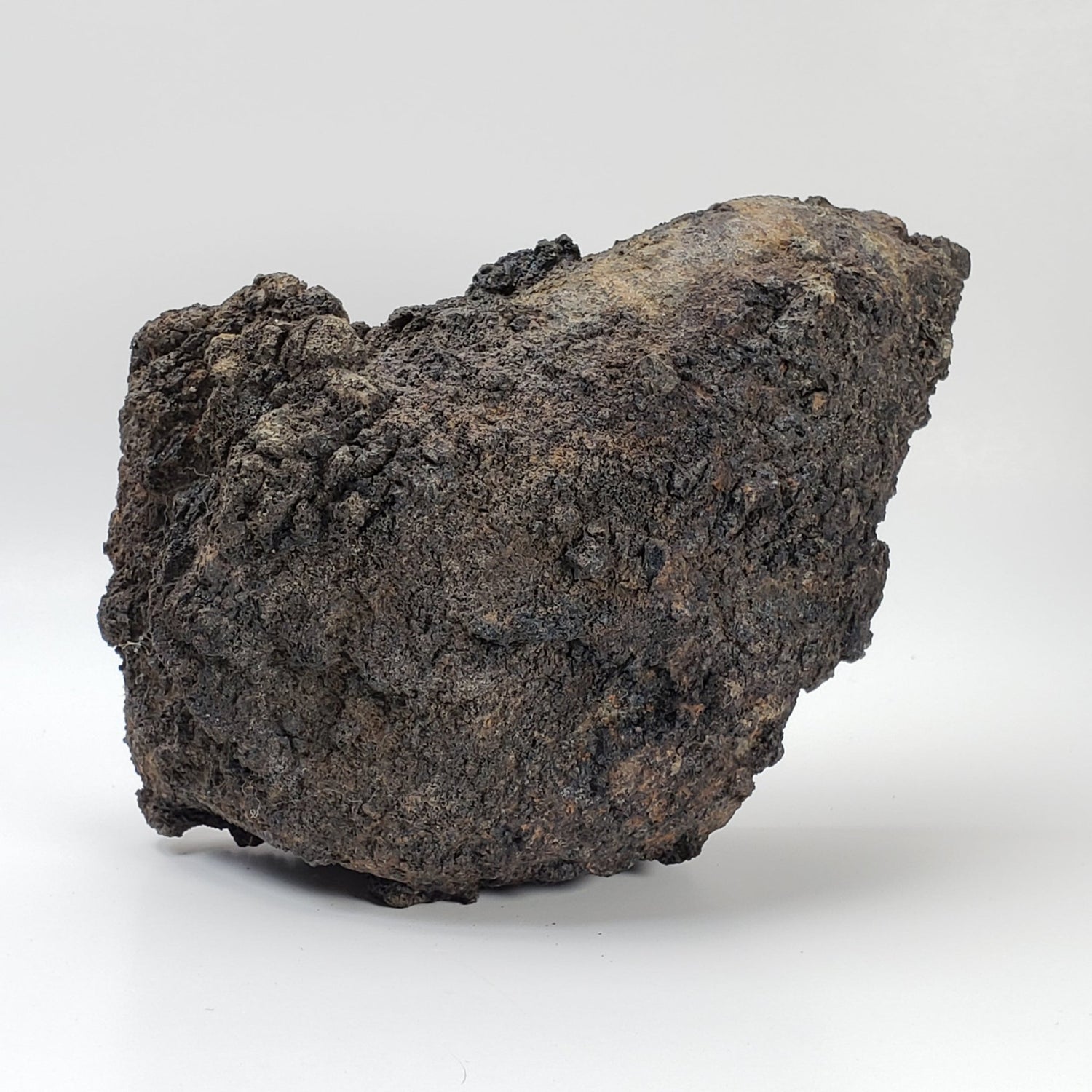
Volcanic bombs are large clots of volcanic lava rock that are ejected from a volcano during an explosive eruption. They can vary in size, and their shapes are often streamlined due to their molten nature as they are thrown through the air. When these volcanic lava rocks contain olivine crystals, they are referred to as olivine volcanic bombs.
Mount Shadwell, a dormant volcano, was formed 25,000 years ago and is believed to have last erupted about 5,000 years ago. The town of Mortlake, which is situated at the foot of the volcano, is the self-proclaimed olivine capital of Australia. This is where large ejected rocks from Mt Shadwell, called volcanic bombs, are found.
This huge museum piece has been cut to show the green olivine crystals which are showcased beautifully against the surrounding black lava crust.
Would be a beautiful addition to any new or existing collection. Comes with a Canagem Collection specimen card.
Name: Olivine Crystal Bomb
Specimen Size: Large Cabinet-Sized
Dimensions: 173x121x61 mm / 6.8x4.8x2.4 Inches
Weight: 1.45 Kg / 3 lbs 3 Ounces
Details: Volcanic activity Mortlake, Victoria, Australia


This specimen of Vesuvianite was collected in the now closed Jeffery Mine, Asbestos, Québec, Canada. The specimen is made up of a combination of green and mauve vesuvianite crystals also named violet manganoan vesuvianite. It is in good condition. A great addition to any collection!
Vesuvianite was first discovered on Mount Vesuvius in Italy in the 18th century, hence its name. It typically occurs as a green, brown, yellow, or blue-green crystal, and is often found in metamorphic and igneous rocks. The alternate name, Idocrase, is from the Greek eidos “form”, and krasis “mixture”, because Vesuvianite often appears to combine the crystal forms of other minerals. It is used as a gemstone.
Name: Vesuvianite Crystal
Specimen Size: Miniature-Sized
Dimensions: 41x18x14 mm / 1.6x0.7x0.5 inches
Weight: 14.8 grams / 0.5 ounces
Origin: Mined in Jeffery Mine, Asbestos, Québec, Canada


An outstanding Bixbyite crystal from Topaz Mountain, Thomas Range, Utah. This crystal has a mirror-like luster and is a good size specimen. A great example of Bixbyite with a single black cube exhibiting trioctahedral corners, a mirror-like metallic luster. It has no damage, making this a fine specimen.
Product Type: Bixbyite Crystal
Specimen Size: Thumbnail-Sized
Dimensions: Specimen: 8x7x6 mm
Box: 33x33x35
Weight: 9.7 gr / 0.3 oz (including box)
Origin: Mined at Thomas Range, Juab County, Utah USA


This is a beautiful, fully terminated thumbnail sized Quartz Point.
Quartz crystals are among the most abundant and well-known minerals on Earth. Quartz belongs to the hexagonal crystal system. It typically forms six-sided prismatic crystals with a pointed termination. Its crystals can be colorless or exhibit a wide range of colors. The color variations are often due to the presence of impurities or trace elements during the crystal's formation. Quartz is transparent to translucent.
This specimen would be a beautiful addition to any new or existing collection.
Name: Quartz Point
Specimen Size: Thumbnail-Sized
Dimensions: Specimen 26x8x8 mm / 1.0x0.3x0.3 inches
Specimen Box 33x33 mm / 1.3x1.3 inches
Weight: 11.2 Grams / 0.4 Ounces (including box)
Origin: Bennet Quarry, Buckfield, Maine


This is an excellent specimen from the world renowned location that is Mount-Saint Hilaire. This beautiful crystal would be a great addition to any new or existing collection.
Name: Rhodochrosite
Specimen Size: Thumbnail-Sized
Dimensions: Specimen 14x9x7 mm
Box 33x33
Weight: 2.5 Grams / 12.7ct
Origin: Mined in Poudrette Quarry, Mont-Saint-Hilaire, Québec, Canada
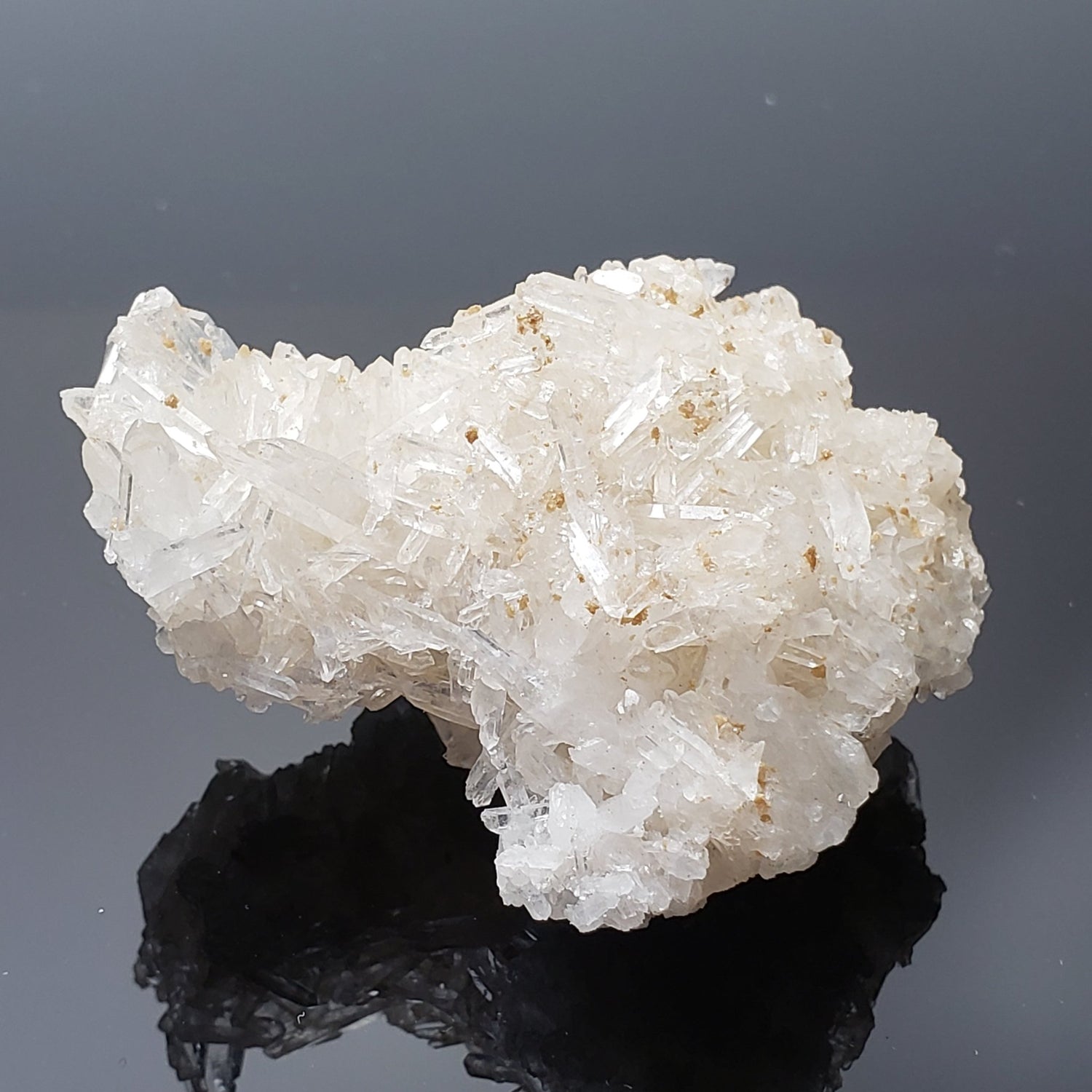
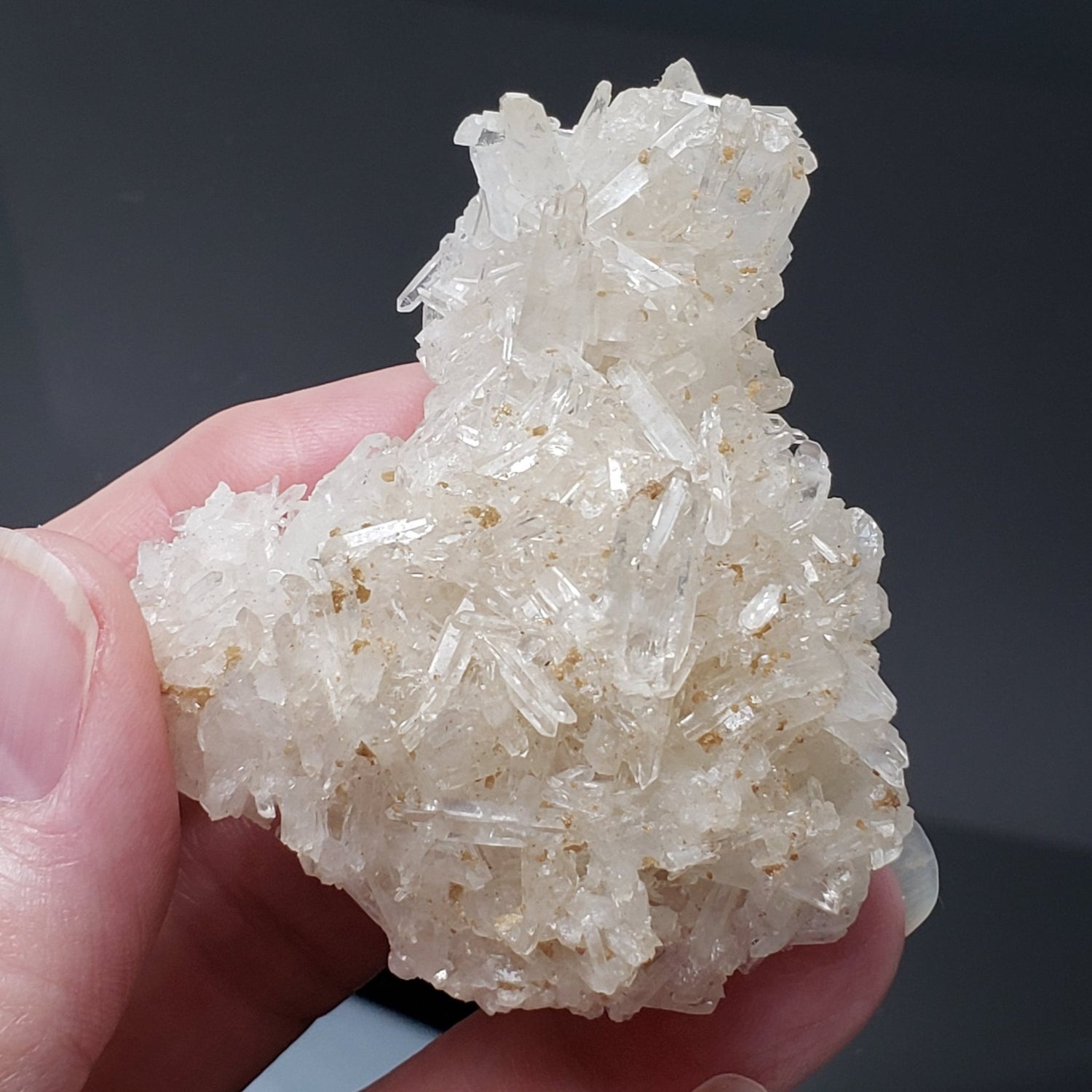
Quartz crystals are among the most abundant and well-known minerals on Earth. It belongs to the hexagonal crystal system, and typically forms six-sided prismatic crystals with a pointed termination. Its crystals can be colorless or exhibit a wide range of colors. The color variations are often due to the presence of impurities or trace elements during the crystal's formation. Quartz is transparent to translucent.
Quartz from this quarry is known as the best of its kind. These specimens have a unique brightness and surface sparkle preferred by collectors around the world. The crystals are intergrown with many others in jackstraw groups which are not attached to matrix: giving you an unlikely-looking floater specimen. The specimen is in very good condition.
Name: Solution Quartz
Specimen Size: Cabinet-Sized
Dimensions: 63x53x35 mm / 2.5x2.1x1.4 inches
Weight: 69.4 Grams / 2.4 Ounces
Origin: Jeffrey Quarry, North Little Rock, Arkansas, USA
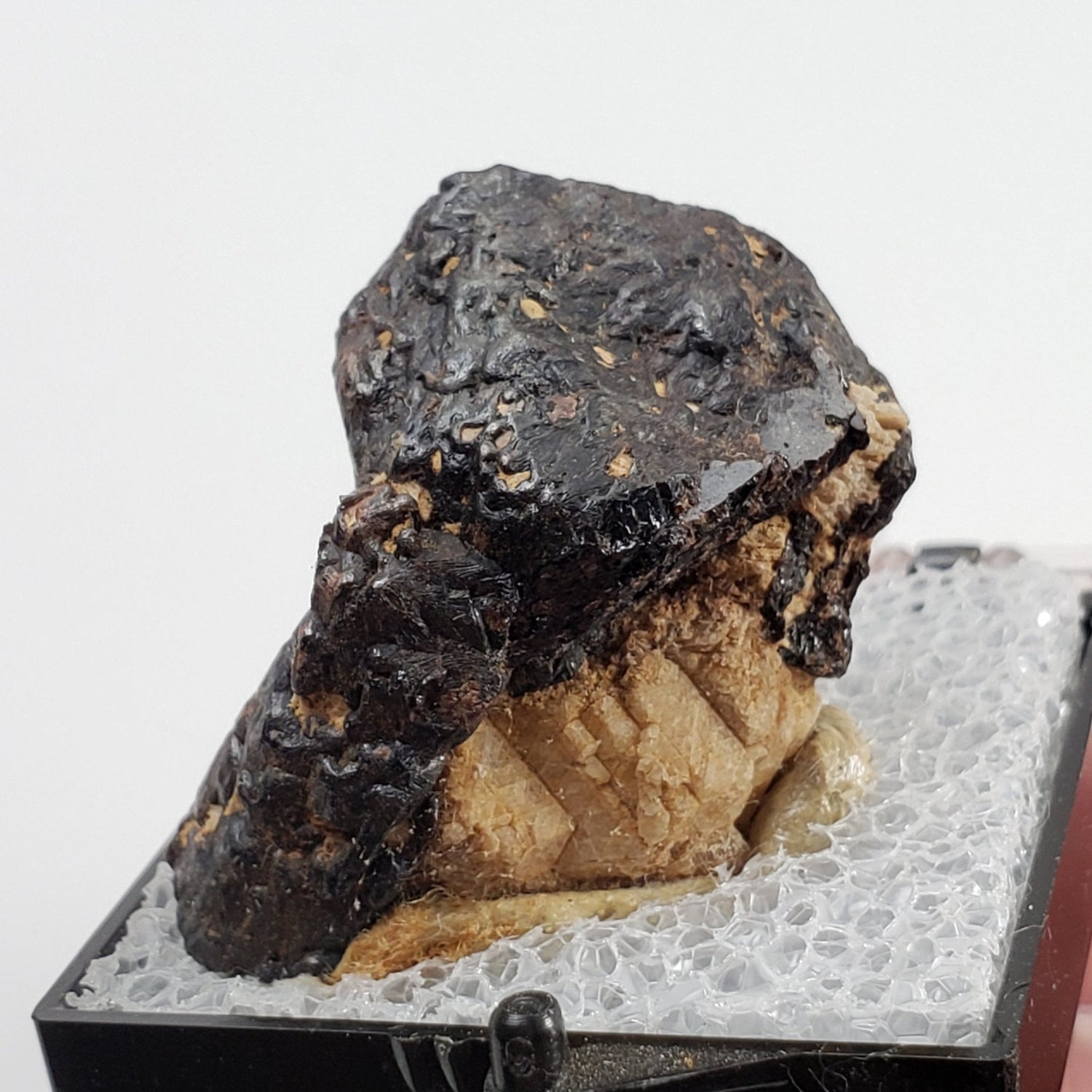
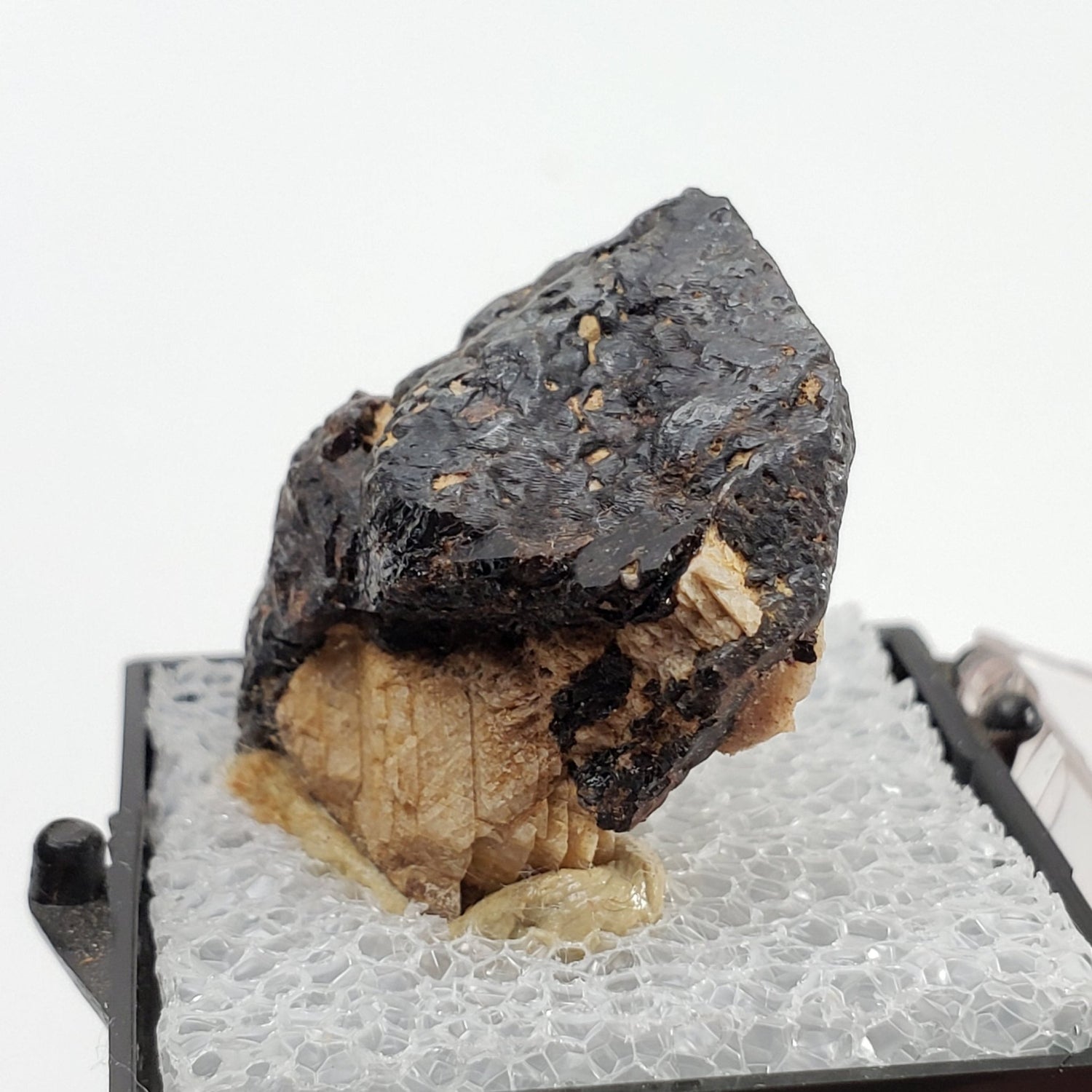
Name: Titanite var. Sphene
Specimen Size: Thumbnail-Sized
Dimensions: Specimen 28x14 mm / 1.1x0.5 inches
Specimen Box 33x33 mm / 1.3x1.3 inches
Weight: 20.9 Grams / 0.7 Ounces (including box)
Origin: Mined in Faraday Twp, Bancroft, Ontario, Canada


Pseudomorphs are mineral specimens that have the external shape of one mineral but are composed of another. The pseudomorph goethite after marcasite forms when marcasite is exposed to oxidizing conditions and starts to oxidize and break down. As the marcasite breaks down, goethite replaces it in the crystal structure, preserving the shape of the original marcasite crystal. The resulting specimen appears as a marcasite crystal, but is actually composed of goethite.
The Farafra Oasis, in the White Desert, has been known for a number of years to deliver incredible pseudomorph specimens. The pseudomorphs occur within the Cretaceous Khoman Chalk, from which the White Desert derives its name.
These specimens are remarkable for their relatively sharp marcasite crystal forms in aesthetic crystal clusters. They are in excellent condition. This collector's specimen is unique, of great quality and ready for display.
Name: Goethite After Marcasite Pseudomorph
Specimen Size: Miniature-Sized Specimen
Dimensions: 35x22x20 mm / 1.4x0.9x0.8 inches
Weight: 17 grams / 0.6 ounces
Origin: White Desert, Farafra Oasis, Egypt

Canagem is proud to be professional member of The International Gem Society(IGS) the world's top resource for gem professionals, enthusiasts, and industry content.