



430 products
Sort by:
430 products
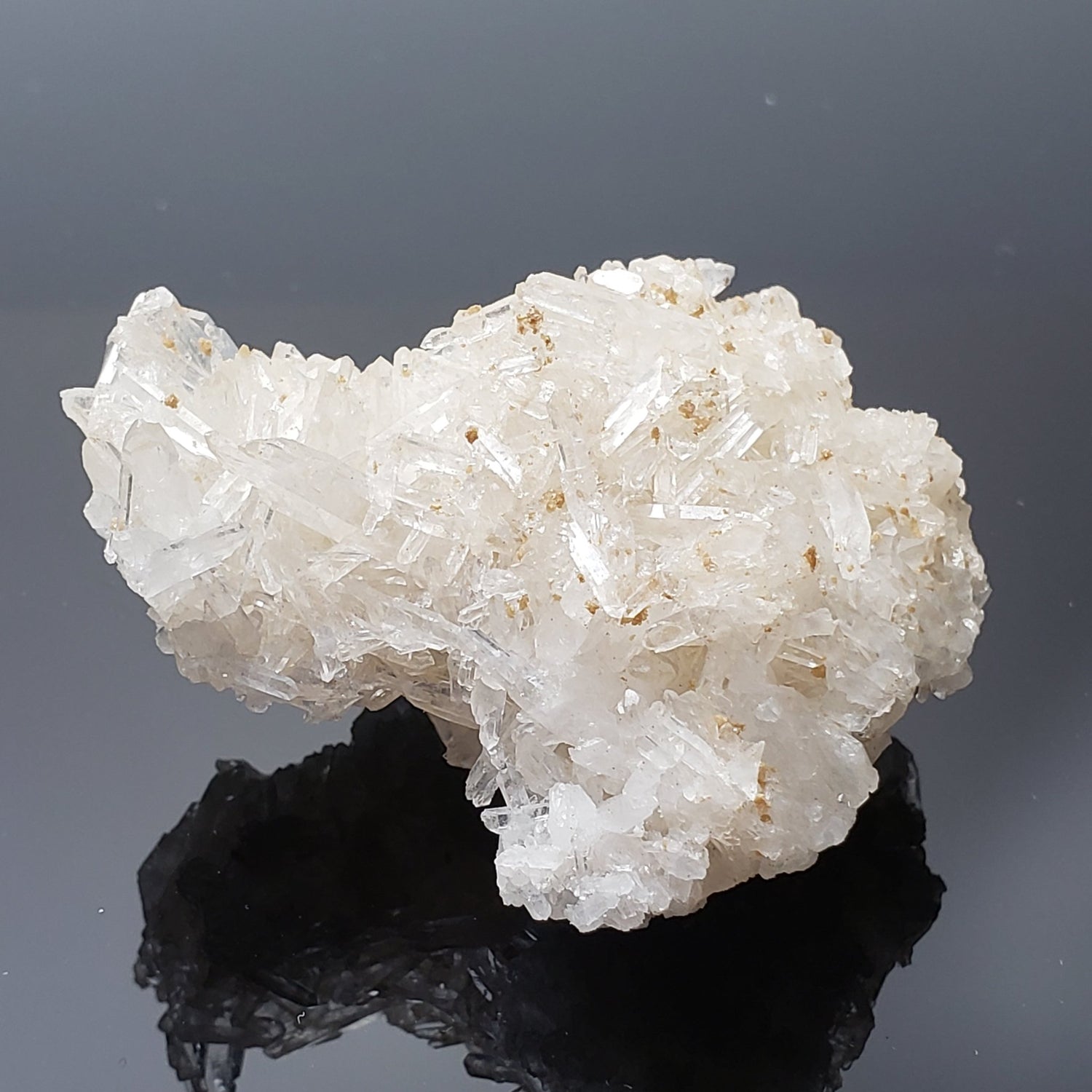
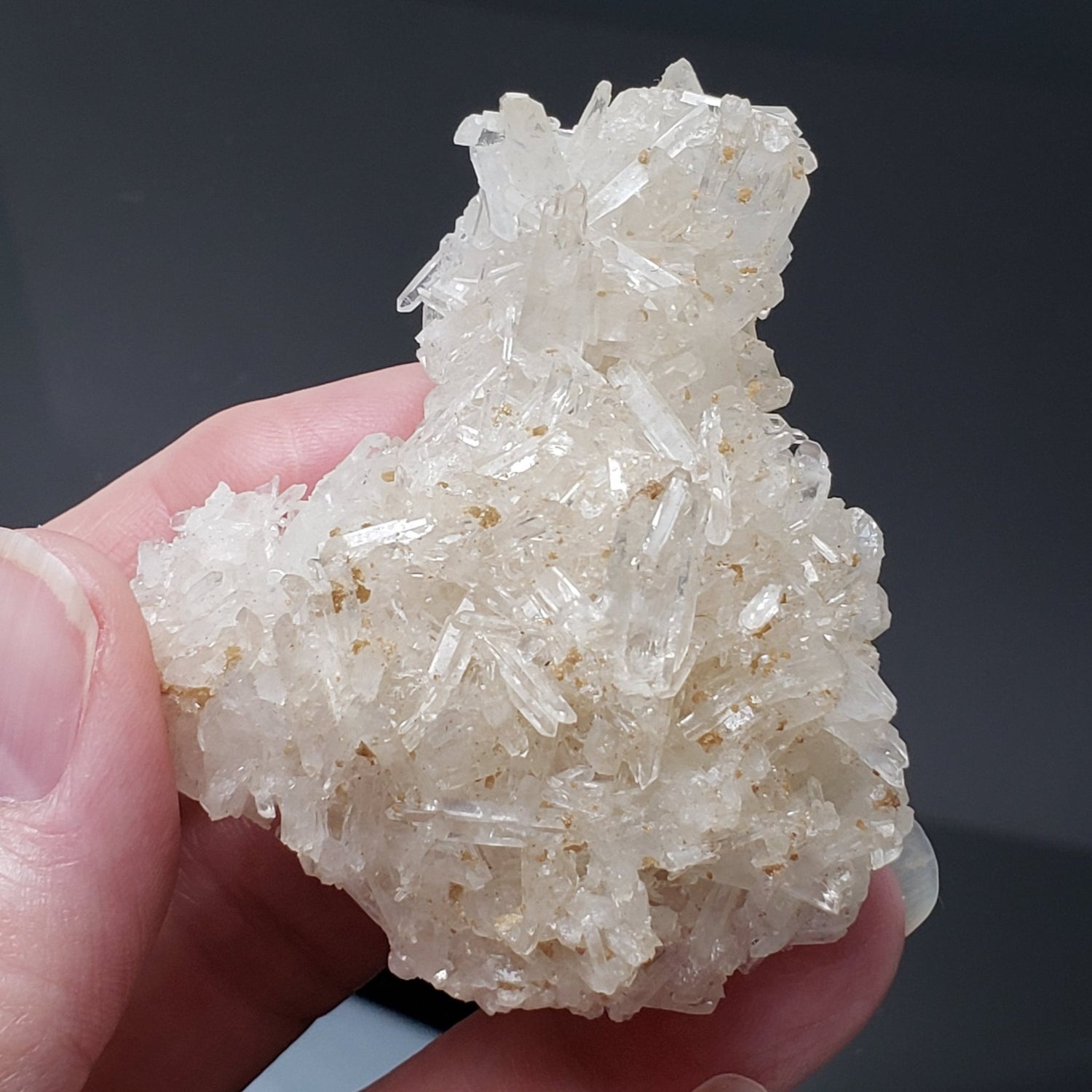
Quartz crystals are among the most abundant and well-known minerals on Earth. It belongs to the hexagonal crystal system, and typically forms six-sided prismatic crystals with a pointed termination. Its crystals can be colorless or exhibit a wide range of colors. The color variations are often due to the presence of impurities or trace elements during the crystal's formation. Quartz is transparent to translucent.
Quartz from this quarry is known as the best of its kind. These specimens have a unique brightness and surface sparkle preferred by collectors around the world. The crystals are intergrown with many others in jackstraw groups which are not attached to matrix: giving you an unlikely-looking floater specimen. The specimen is in very good condition.
Name: Solution Quartz
Specimen Size: Cabinet-Sized
Dimensions: 63x53x35 mm / 2.5x2.1x1.4 inches
Weight: 69.4 Grams / 2.4 Ounces
Origin: Jeffrey Quarry, North Little Rock, Arkansas, USA
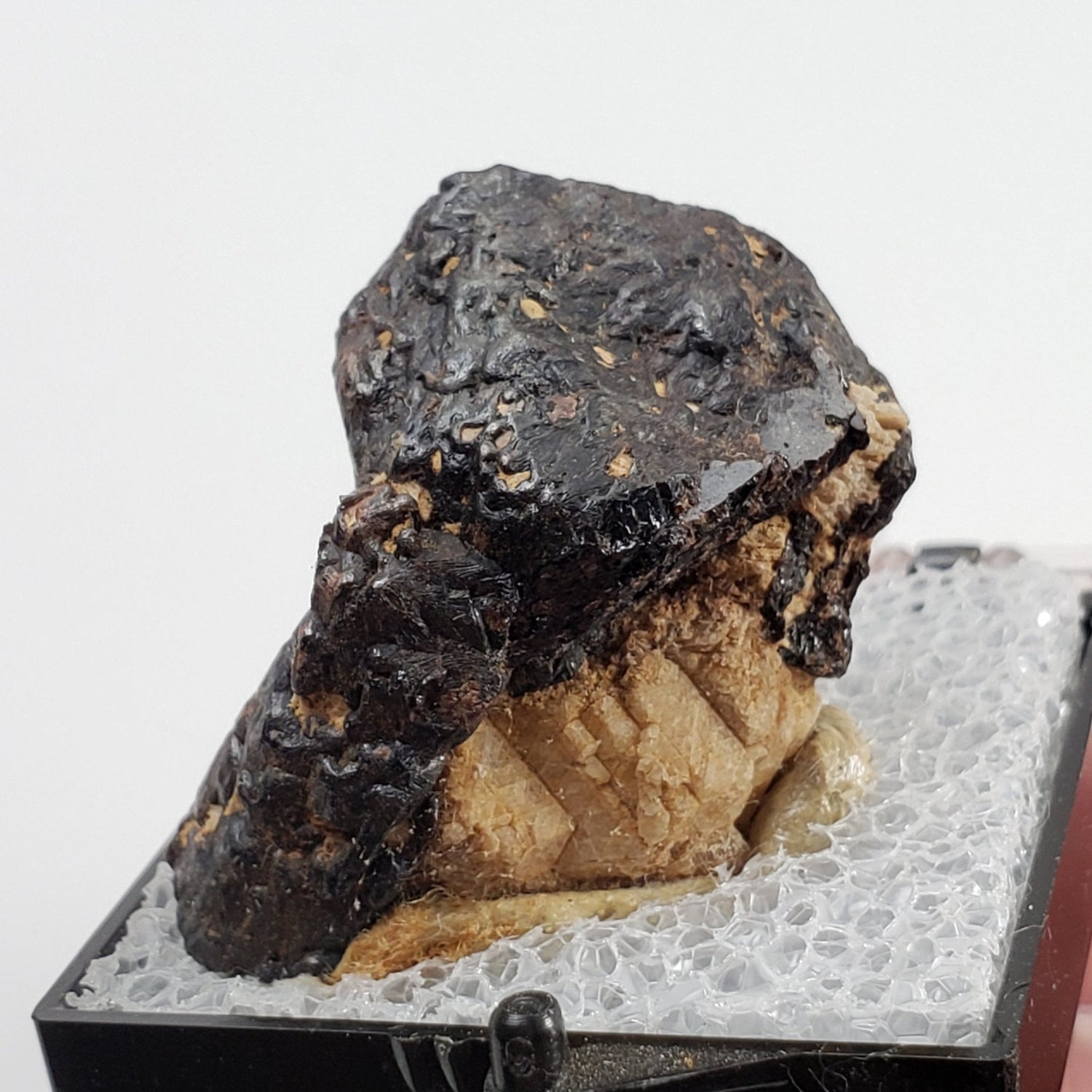
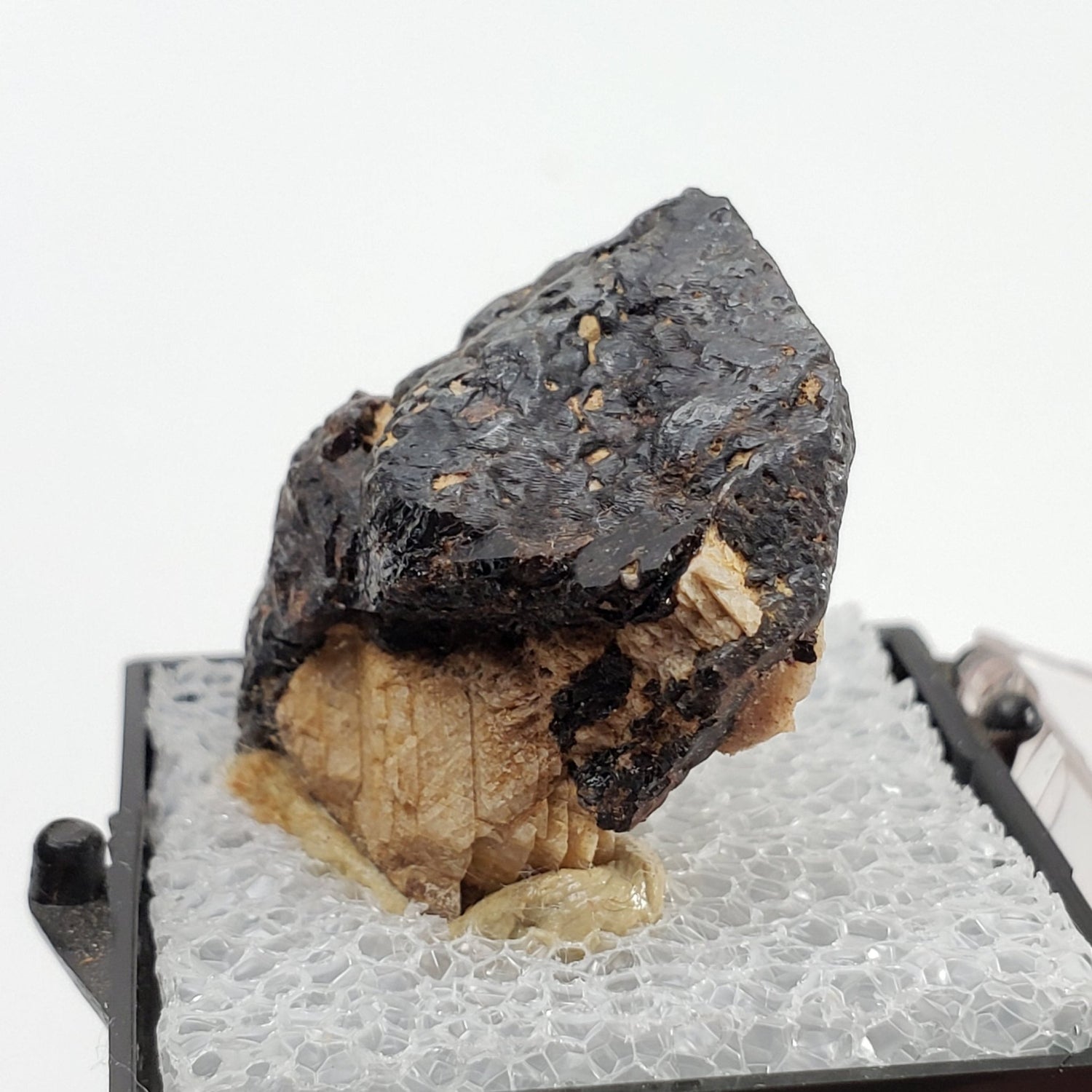
Name: Titanite var. Sphene
Specimen Size: Thumbnail-Sized
Dimensions: Specimen 28x14 mm / 1.1x0.5 inches
Specimen Box 33x33 mm / 1.3x1.3 inches
Weight: 20.9 Grams / 0.7 Ounces (including box)
Origin: Mined in Faraday Twp, Bancroft, Ontario, Canada


Pseudomorphs are mineral specimens that have the external shape of one mineral but are composed of another. The pseudomorph goethite after marcasite forms when marcasite is exposed to oxidizing conditions and starts to oxidize and break down. As the marcasite breaks down, goethite replaces it in the crystal structure, preserving the shape of the original marcasite crystal. The resulting specimen appears as a marcasite crystal, but is actually composed of goethite.
The Farafra Oasis, in the White Desert, has been known for a number of years to deliver incredible pseudomorph specimens. The pseudomorphs occur within the Cretaceous Khoman Chalk, from which the White Desert derives its name.
These specimens are remarkable for their relatively sharp marcasite crystal forms in aesthetic crystal clusters. They are in excellent condition. This collector's specimen is unique, of great quality and ready for display.
Name: Goethite After Marcasite Pseudomorph
Specimen Size: Miniature-Sized Specimen
Dimensions: 35x22x20 mm / 1.4x0.9x0.8 inches
Weight: 17 grams / 0.6 ounces
Origin: White Desert, Farafra Oasis, Egypt
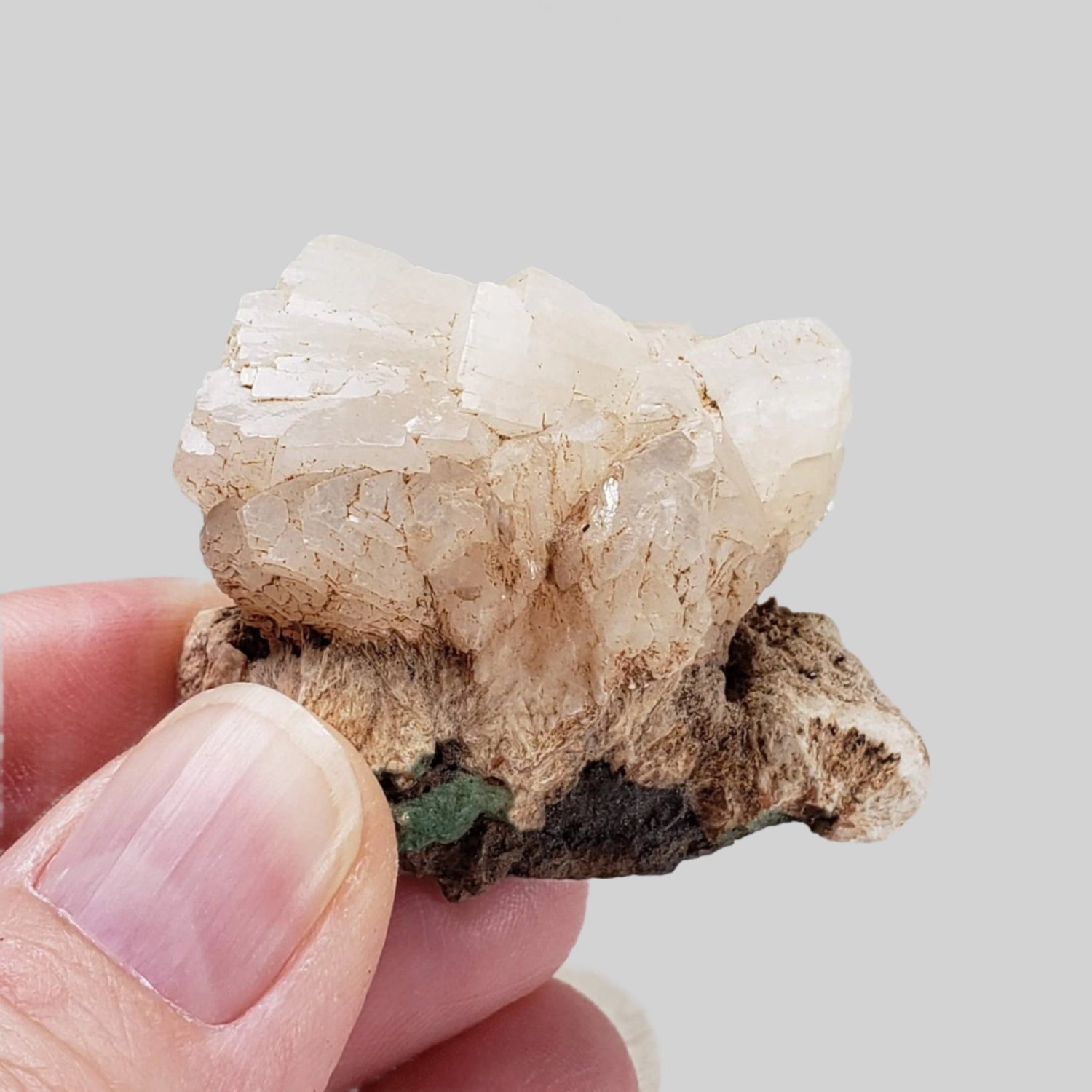
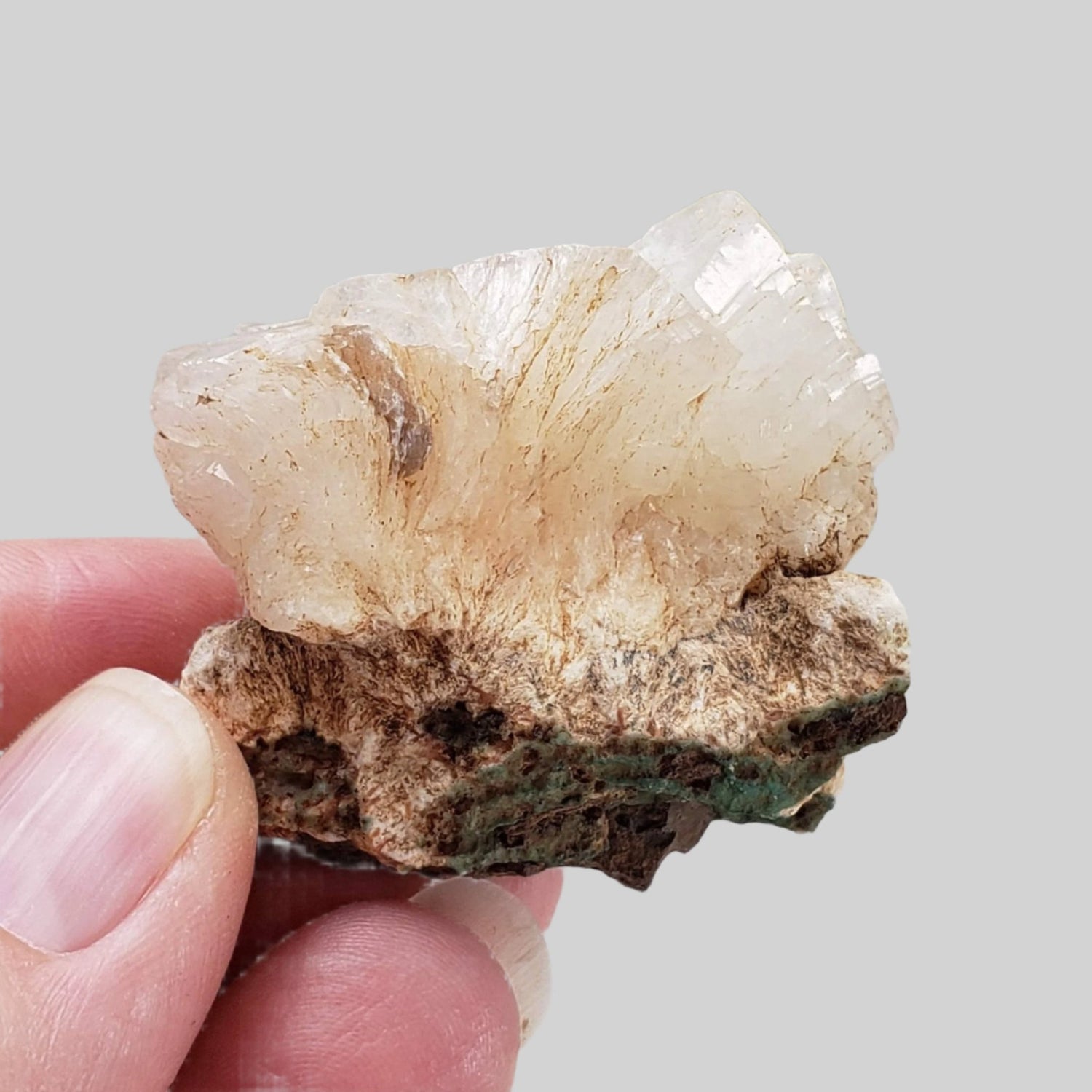
This is a very fine and lustrous Stilbite from Parsboro, Cape d'Or, Nova Scotia, Canada. It was collected in 2002 and is a group of well terminated crystals with nice sharp edges.
Stilbite is a zeolite mineral appreciated for its delicate crystal formations and pastel hues, ranging from colorless to white, yellow, pink, and peach. It forms distinctive tabular crystals with a bowtie or butterfly shape and exhibits a vitreous to pearly luster. Commonly found in cavities in volcanic rocks, stilbite is often associated with other zeolite minerals. It is valued for its aesthetic appeal and is believed by some to have calming energy, supporting spiritual growth and emotional healing.
Name: Stilbite CrystalsSpecimen Size: Miniature-Sized
Dimensions: 40x43x24 mm / 1.6x1.7x0.9 inches
Weight: 31.4 gr / 1.1 oz
Details: Mined in Cape D'Or, Nova Scotia, Canada
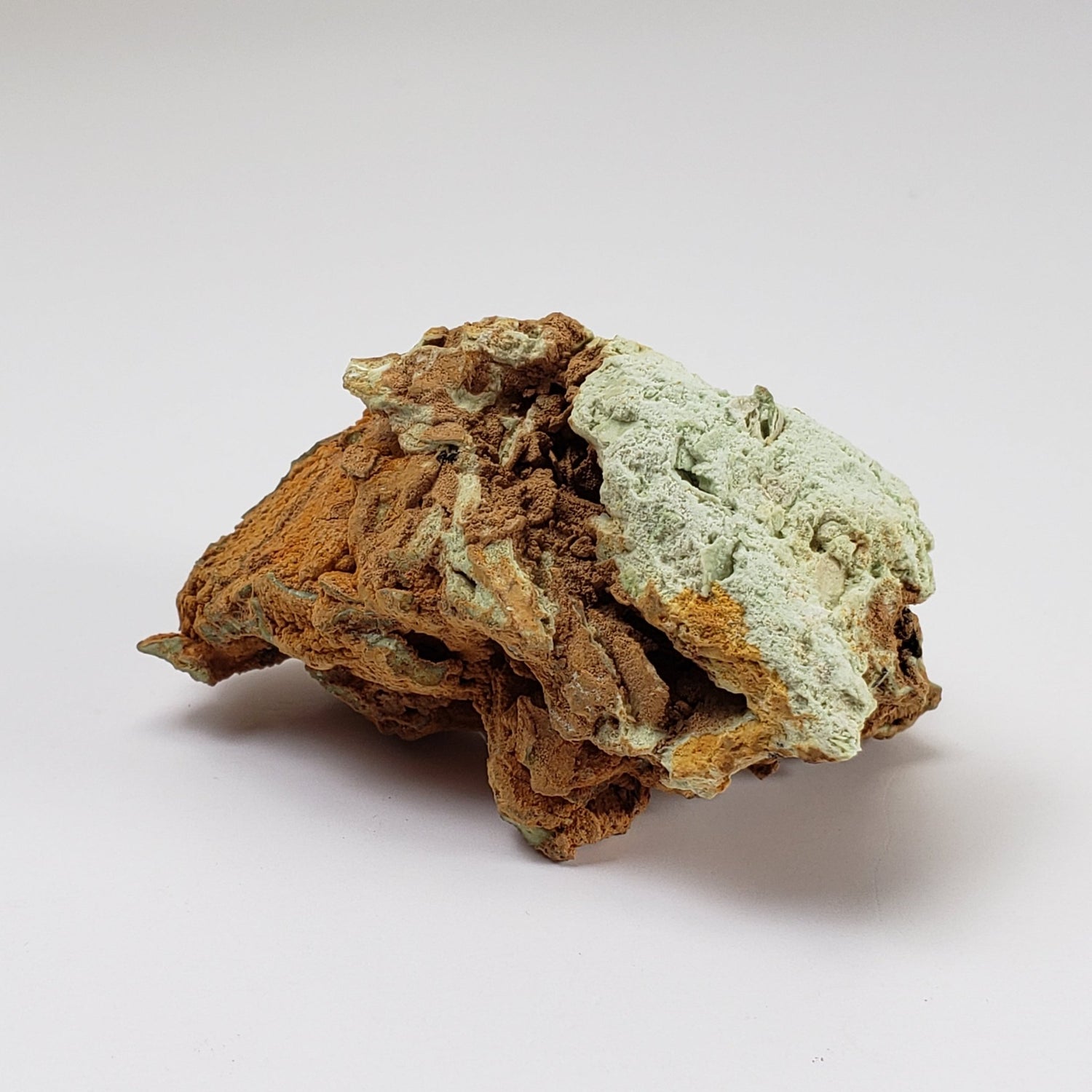
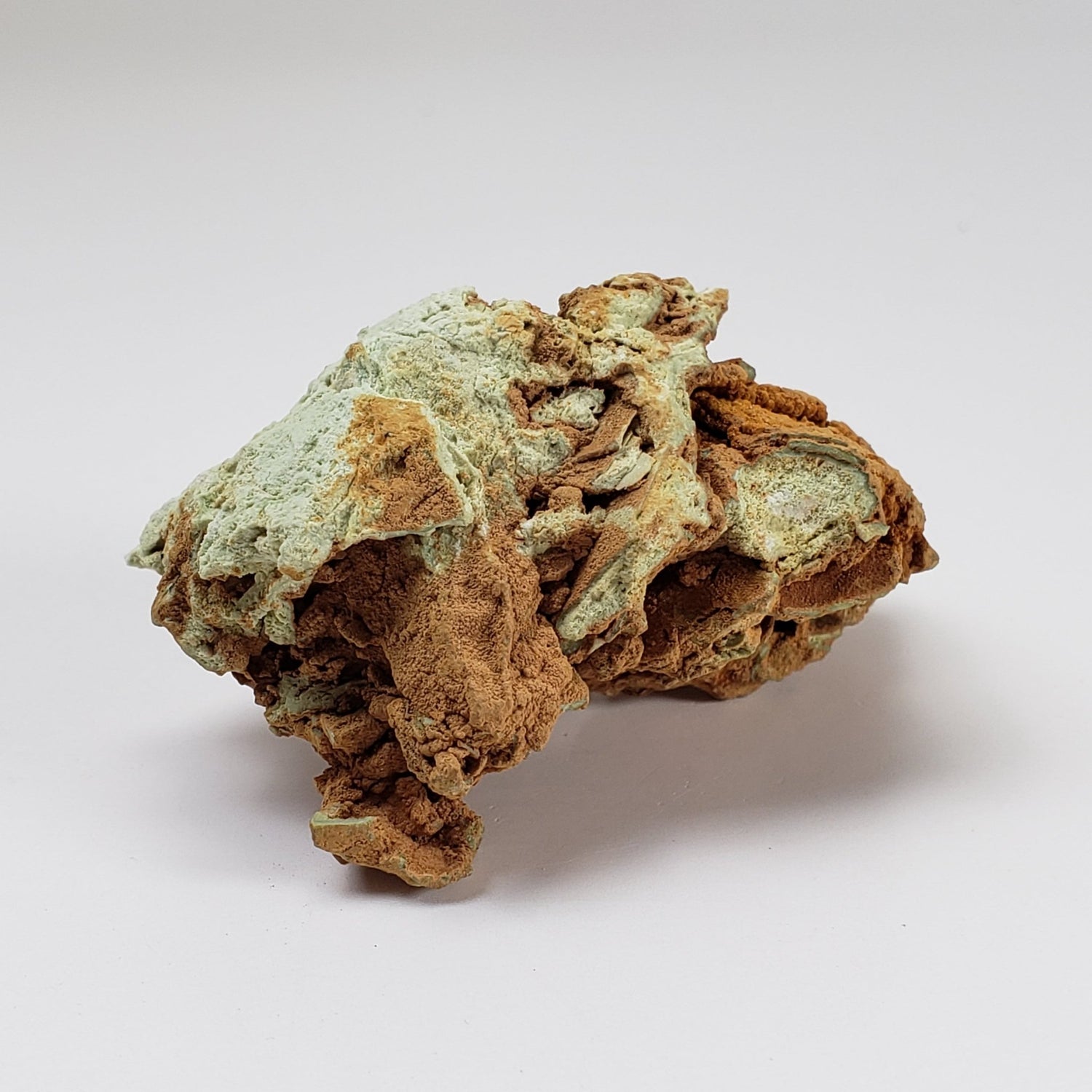
This is a pale green crust of hidalgoite on matrix. It was named after the place where it was first discovered, the Zimapán mining district, Hidalgo, Mexico.
Name: Hidalgoite
Specimen Size: Miniature-Sized
Dimensions: 57x35x41 mm / 2.2x1.4x1.6 inches
Weight: 41.8 Grams / 1.5 ounces
Origin: Mined in Gold Hill Mine, Gold Hill, Gold Hill Mining District (Clifton Mining District), Tooele County, Utah, USA

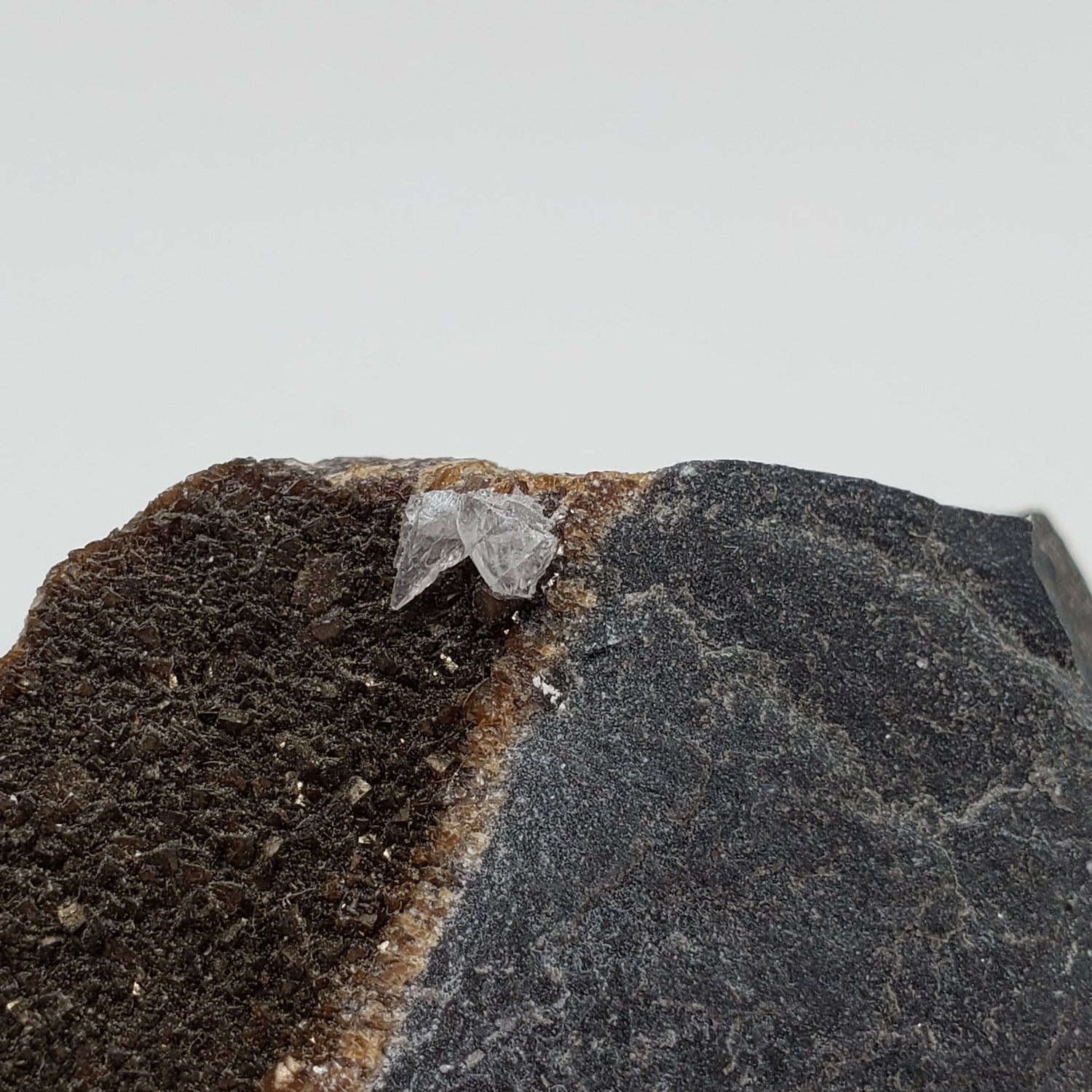
This is a natural cluster formation of calcite on calcite crystals or two variations of the mineral found in a cracked concretion in a coal mine in Oskaloosa, Mahaska County, Iowa, USA.
It is a specimen consisting of two types of calcite on matrix. The first type is a coating of iridescent, dark calcite on the matrix. The second type are white crystals of calcite. It is in good condition. Would be a nice addition to any new or existing collection.
Name: Calcite on Calcite Crystal Cluster
Specimen Size: Cabinet-Sized
Dimensions: 65x47x32 mm / 2.6x1.8x1.3 inches
Weight: 64 Grams / 2.2 oz
Origin: Mined in Oskaloosa, Mahaska County, Iowa, USA

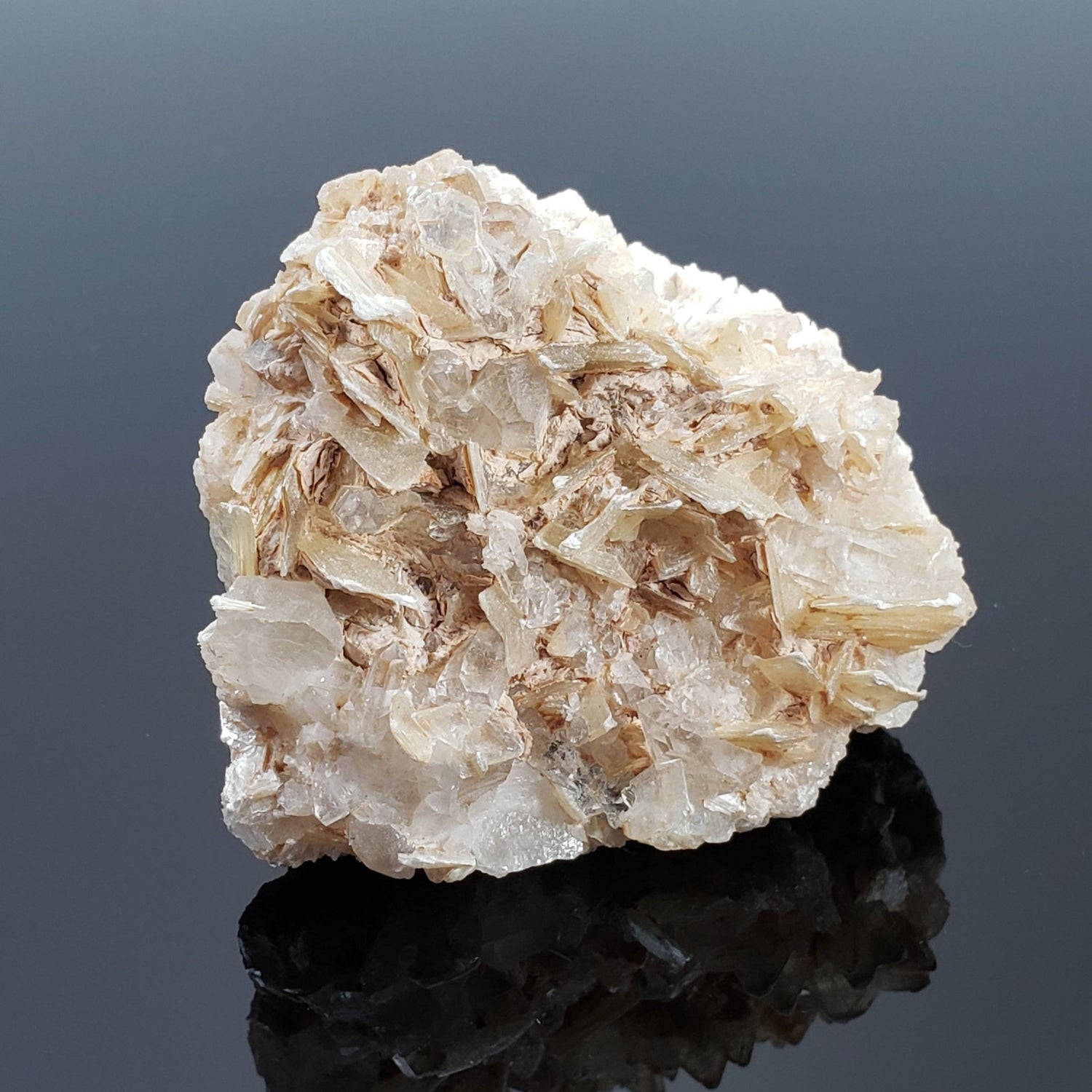
This is a specimen of Star Mica or Muscovite and Quartz cluster. These clusters show crystals that grow in sheets or book formations. It is silvery gold with good transparency when held up to the light. The name Muscovite comes from the term Muscovy Glass which was a name for the thick sheets of Mica used as a substitute for glass Russia. The name Mica is derived from the Greek word that means to split.
On this nice specimen, the matrix faces are covered with beautiful golden yellow point stars of muscovite mica, a typical shape for this rare mica formation. The stars are the result of twinning; the points show a bit of wear but this does not detract from the beauty of such a piece.
Name: Star Mica - Muscovite with Quartz
Specimen Size: Miniature-Sized
Dimensions: 47x43x25 mm / 1.8x1.7x1.0 inches
Weight: 48 Grams / 1.7 ounces
Origin: Mined in Minas Gerais, Brazil
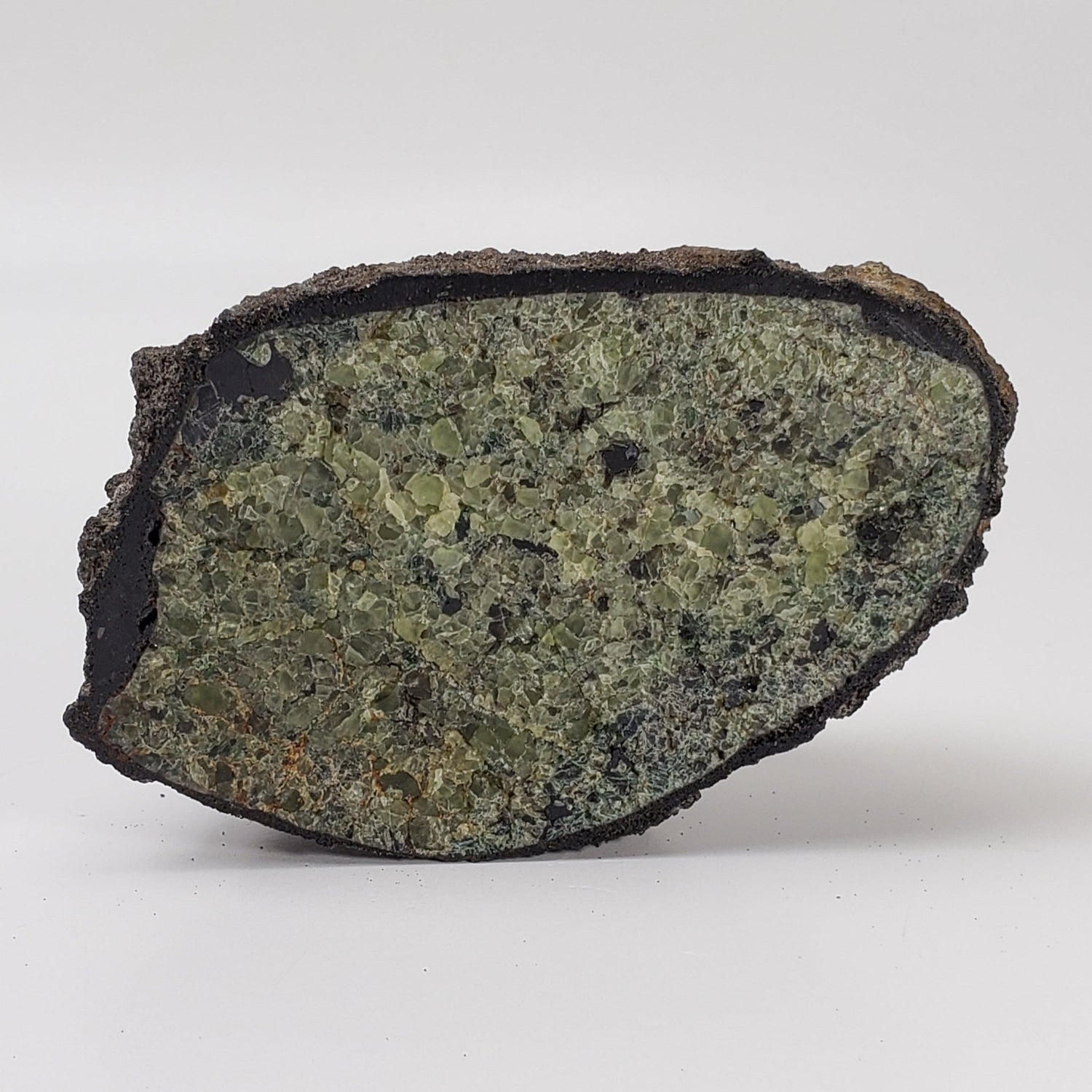
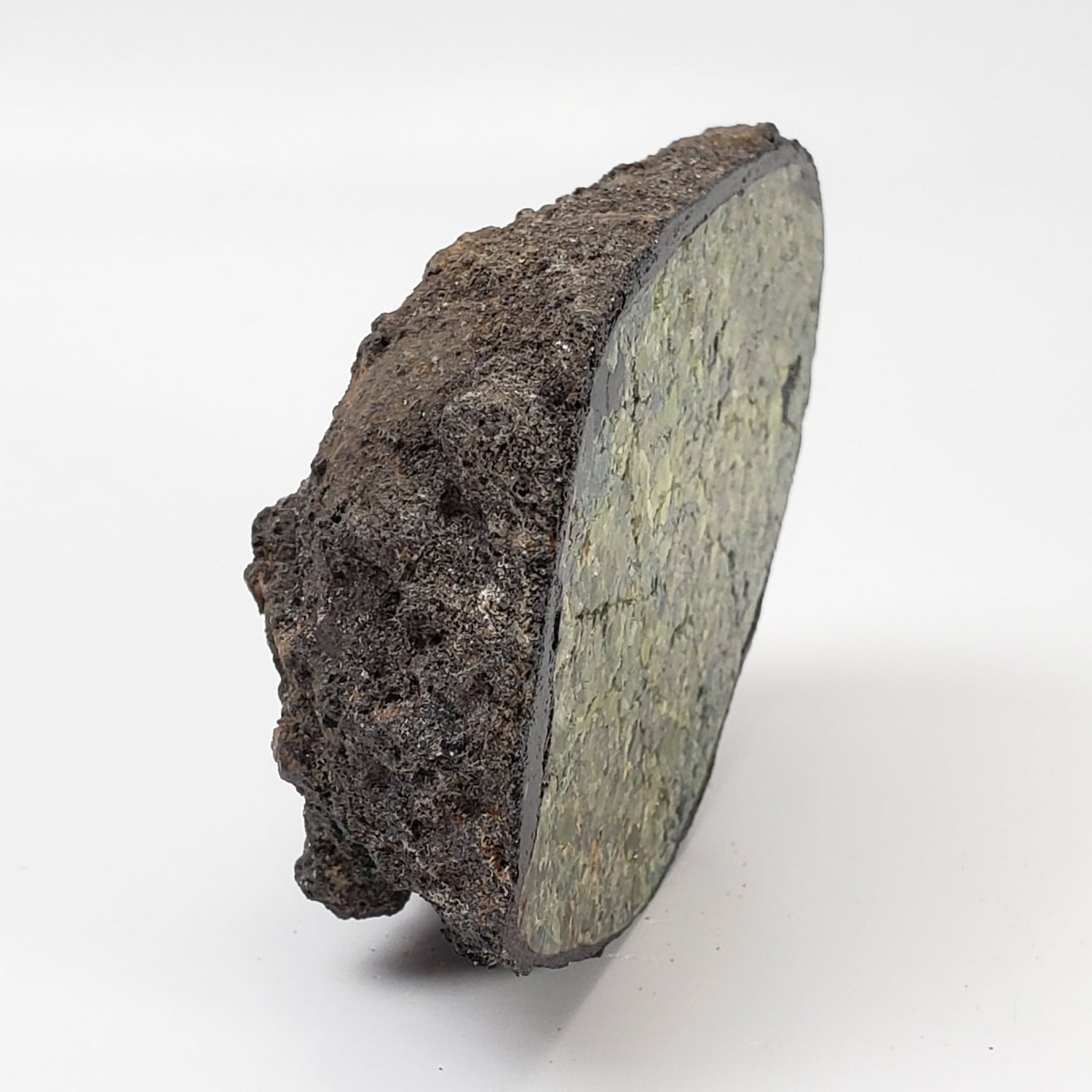
An olivine volcanic bomb is a type of volcanic rock that contains olivine crystals and has been ejected during a volcanic eruption. Olivine is a mineral that is commonly found in the Earth's mantle and is one of the first minerals to crystallize as magma cools.
Volcanic bombs are large clots of lava that are ejected from a volcano during an explosive eruption. They can vary in size, and their shapes are often streamlined due to their molten nature as they are thrown through the air. When these volcanic bombs contain olivine crystals, they are referred to as olivine volcanic bombs.
This beautiful piece is completely surrounded by a lava crust. Would be a beautiful addition to any new or existing collection. Comes with a Canagem Collection specimen card.
Name: Olivine Volcanic Bomb
Specimen Size: Cabinet-Sized
Dimensions: 88x56x33 mm / 3.5x2.2x1.3 Inches
Weight: 194.3 Grams / 6.8 Ounces
Details: Volcanic activity Mortlake, Victoria, Australia

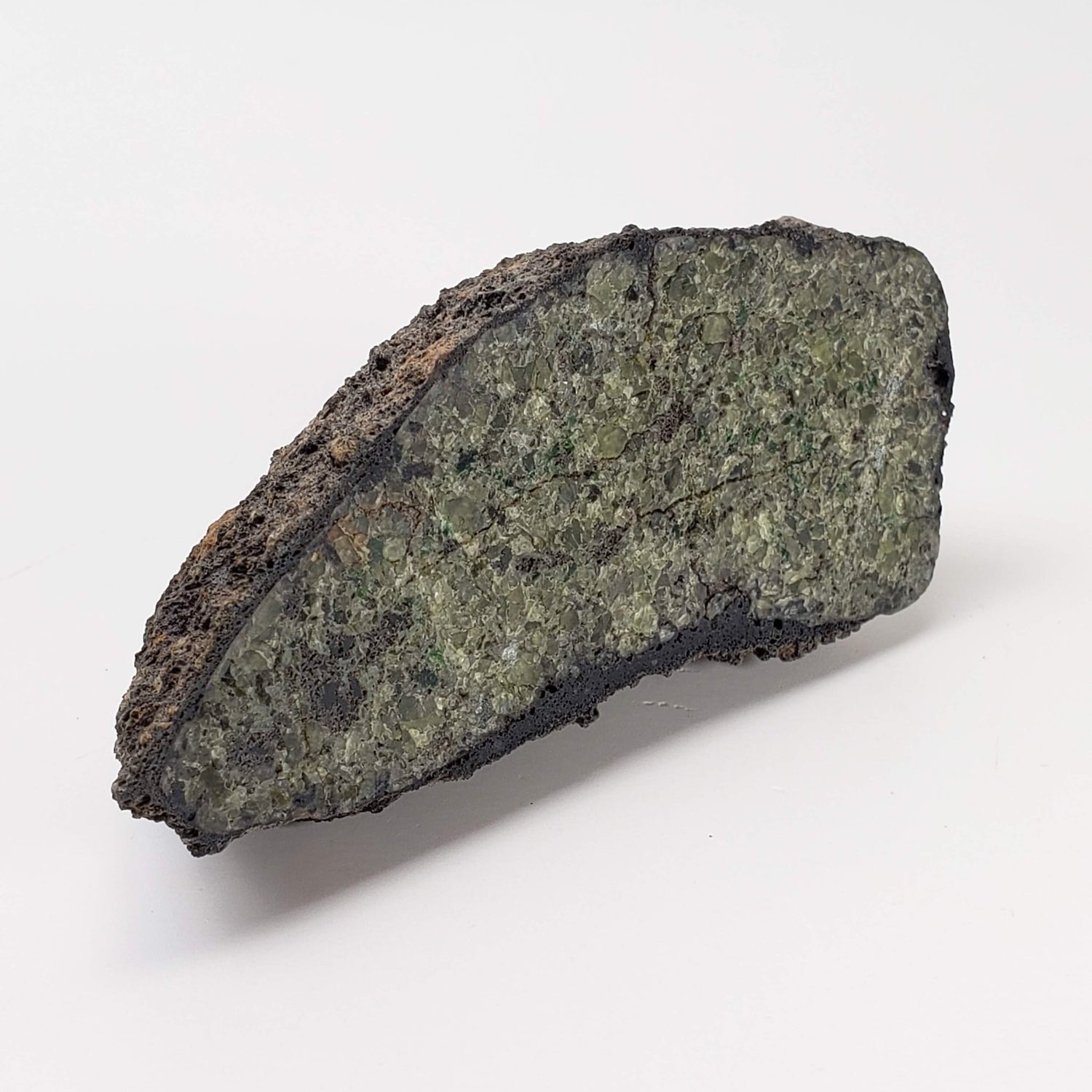
An olivine volcanic bomb is a type of volcanic rock that contains olivine crystals and has been ejected during a volcanic eruption. Olivine is a mineral that is commonly found in the Earth's mantle and is one of the first minerals to crystallize as magma cools.
Volcanic bombs are large clots of lava that are ejected from a volcano during an explosive eruption. They can vary in size, and their shapes are often streamlined due to their molten nature as they are thrown through the air. When these volcanic bombs contain olivine crystals, they are referred to as olivine volcanic bombs.
Would be a beautiful addition to any new or existing collection. Comes with a Canagem Collection specimen card.
Name: Olivine Volcanic Bomb
Specimen Size: Cabinet-Sized
Dimensions: 89x39x30 mm / 3.5x1.5x1.2 Inches
Weight: 150 Grams / 5.3 Ounces
Details: Volcanic activity Mortlake, Victoria, Australia


Quartz crystals are among the most abundant and well-known minerals on Earth. It belongs to the hexagonal crystal system, and typically forms six-sided prismatic crystals with a pointed termination. Its crystals can be colorless or exhibit a wide range of colors. The color variations are often due to the presence of impurities or trace elements during the crystal's formation. Quartz is transparent to translucent.
This is a very nice specimen of clear quartz crystals form Fisher Mountain, near Mount Ida. This beautiful crystal has excellent clarity, and the tip is in perfect condition.
Name: Quartz
Specimen Size: Miniature-Sized
Dimensions: 40x18x15 mm / 1.6x0.7x0.6 inches
Weight: 11.14 Grams / .04 Ounces
Origin: Fisher Mountain, near Mount Ida, Arkansas, USA

Canagem is proud to be professional member of The International Gem Society(IGS) the world's top resource for gem professionals, enthusiasts, and industry content.