



1573 products
Sort by:
1573 products


This is a natural raw bi-color tourmaline crystal, it is 13mm in length and has a weight of 9.4ct. This pink and green tourmaline is transparent and has not been treated in any way. It is 100% natural.
It is believed that Tourmaline can be used to repel negativity. It is said to enhance one's physical wellbeing by providing an increase in physical vitality, emotional stability, and intellectual acuity.
Product Type: Tourmaline
Specimen Size: Thumbnail-Sized
Dimensions: 13mm
Weight: 9.4ct
Origin: Africa


Pseudomorphs are mineral specimens that have the external shape of one mineral but are composed of another. The pseudomorph goethite after marcasite forms when marcasite is exposed to oxidizing conditions and starts to oxidize and break down. As the marcasite breaks down, goethite replaces it in the crystal structure, preserving the shape of the original marcasite crystal. The resulting specimen appears as a marcasite crystal, but is actually composed of goethite.
The Farafra Oasis, in the White Desert, has been known for a number of years to deliver incredible pseudomorph specimens. The pseudomorphs occur within the Cretaceous Khoman Chalk, from which the White Desert derives its name.
These specimens are remarkable for their relatively sharp marcasite crystal forms in aesthetic crystal clusters. They are in excellent condition. This collector's specimen is unique, of great quality and ready for display.
Name: Goethite After Marcasite Pseudomorph
Specimen Size: Miniature-Sized Specimen
Dimensions: 43x28x21 mm / 1.7x1.1x0.8 inches
Weight: 37.6 grams / 1.3 ounces
Origin: Found in White Desert, Farafra Oasis, Egypt


This is a must have 191.39 gram slice of Black Onaping Impact Fallback Breccia from the famous Sudbury Impact Structure in Ontario Canada. It's dimensions are 116x115x6 mm. Although not a meteorite, impactites are directly linked to them and their impacts and are probably going to be one of the rarest collection piece you'll ever own.
About 1.87 billion years ago, an object from space 9 kilometers in diameter, slammed into Canada a little north of Sudbury, Ontario creating the second largest impact structure on the earth. This impact was equivalent to a billion tons of TNT; an impact so great that it cracked the earth, in fact they still have earthquakes because of it today!
This specimen of Sudbury Black Onaping Breccia is a lithified fallback breccia composed of melt glass and country target rock fragments. This meteorite impact created a large mushroom cloud that fell back down to earth to create this breccia. "Bucky Ball Fullerine" with terrestrial carbon in the form of C-60 and C-70 is found in this type of Sudbury impact rock. Greenish-Blueish dust covered Tektites can also be found within its matrix. The Onaping forms in two layers, the first one is grey and second one is black.
The many mineral rich deposits and strange rock formations in such close proximity has attracted attention for 100's of years, long before its impact origin was known. Thomas Edison, for instance, built a lab on site and NASA Moonwalker "Gene" Cernan, who studied and collected geology samples as part of his pre-moon mission training.
Would be a beautiful addition to any new or existing collection. Comes with a Canagem Collection specimen card.


Lapis lazuli or lapis for short, is a deep-blue metamorphic rock used as a semi-precious gemstone that has been prized since antiquity for its intense color. This specimen shows deep blue with sparks of pyrite and is in great condition.
Product Type: Lapis Lazuli Rough
Specimen Size: Cabinet-Sized
Dimensions: 75x59x56 mm / 2.9x2.3x2.2 inches
Weight: 344 Grams / 12 ounces
Origin: Afghanistan

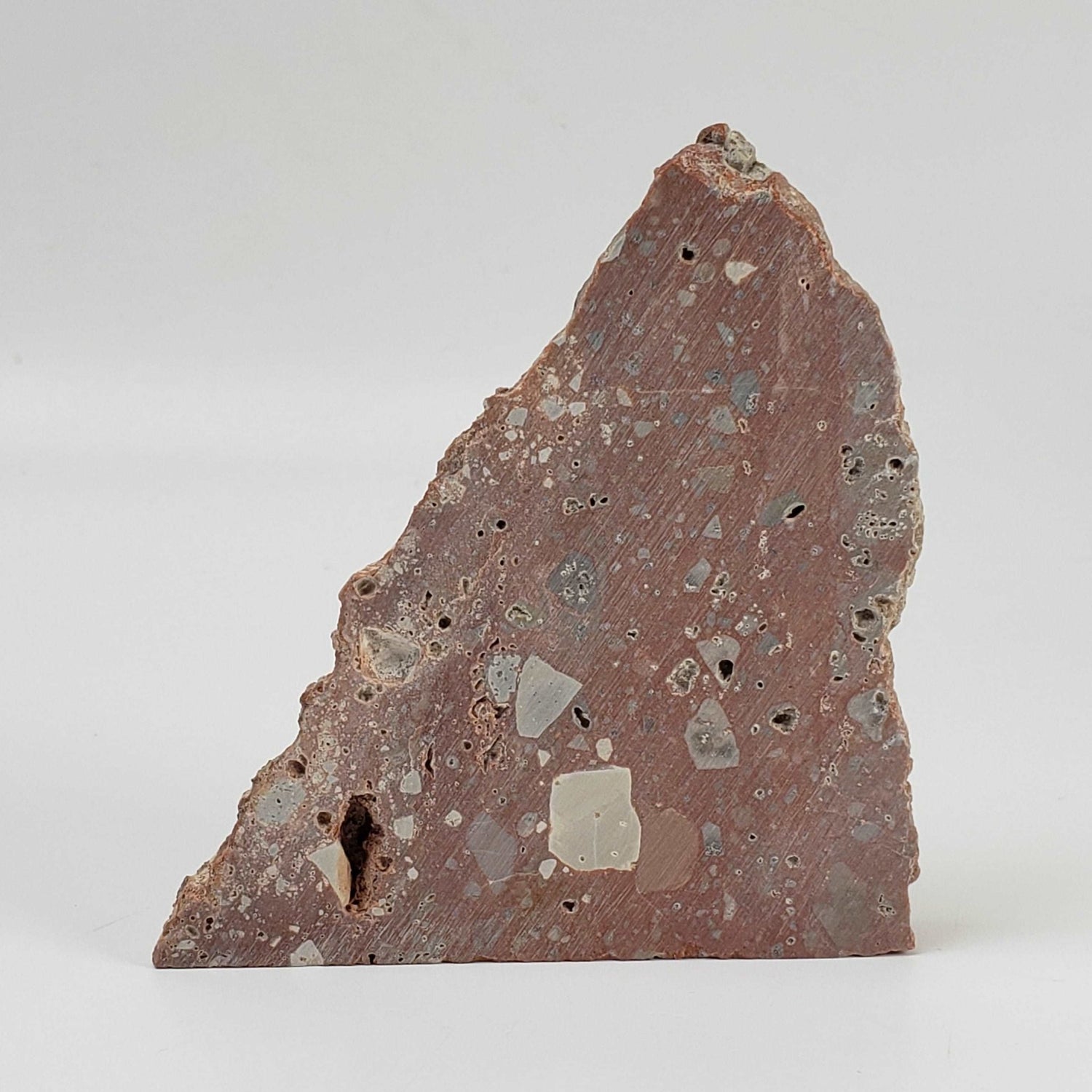
The Azuara Basal breccia refers to the impact material from the 38 million year old twin (multiple) impact structures Azuara / Rubielos de la Cerida in Northern Spain,.
This impact breccia was found on the southwestern central-uplift chain between Villarquemado and Celadas. This amazing specimen displays sharp edged rock fragments imbedded in a matrix of pulverized rocks. This beautiful and colorful slice has dimensions of 87x81x11 mm and weighs 110 grams.
Would be a beautiful addition to any new or existing collection. Comes with a Canagem Collection specimen card.


This is a superb looking fragment of the Columbus classified meteorite weighing 4.57 grams. Its dimensions are 18x15x10 mm. This rare H5 classified meteorite was found in Luna County, New Mexico USA in 1997. The total weight of the stones recovered is recorded as a minuscule 165 grams.
Here's what the finder, Michael Cottingham told us: "This is the Meteorite that started it all for me! My wife and I were out looking for meteorites on a dry lake bed in Southern New Mexico and I found one! This was a new meteorite discovery and it only took me 300 hours of searching to find my First One! The COLUMBUS Meteorite was found by me in January of 1997. It was Classified by A. Rubin at UCLA as a H5 Chondrite. It was found near Columbus, Luna County, New Mexico and the Total Known Weight is ONLY 184 grams. Very Rare indeed."
This piece is part of America's history and is 1 of 228 approved meteorites from that location. Would be a beautiful addition to any new or existing collection. Comes with a Michael Cottingham Meteorites and a Canagem Collection specimen cards.


This is a rare and fantastic 97.3 gram Libyan Desert Glass from Kuffra, Libya, with dimensions of 56x42x47 mm.
Although its exact origin is still debated, the leading theory suggests it was formed by a high-energy event, such as a meteoric impact or airburst, that melted the desert sand directly where it lay, without being ejected into the atmosphere and re-entering. This results in different physical characteristics compared to tektites. Libyan Desert Glass is found specifically in the Great Sand Sea of the Eastern Sahara, within a more localized area spanning parts of western Egypt and eastern Libya.
This piece displays extremely well and is a quality translucent specimen. It has an aesthetic shape with a beautiful wind eroded body from the years spent in the Desert. Would be a beautiful addition to any new or existing collection. Comes with a Canagem Collection specimen card.
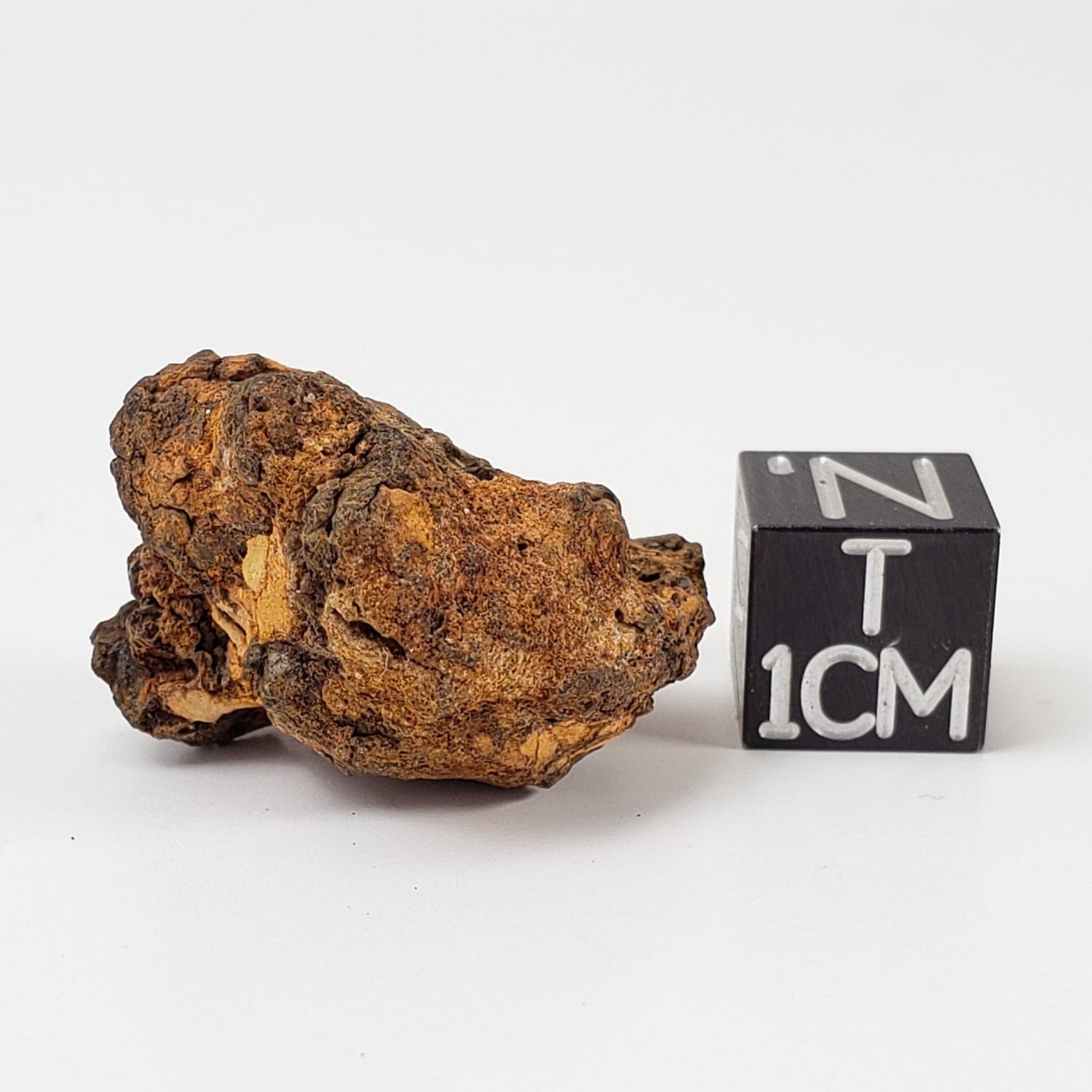
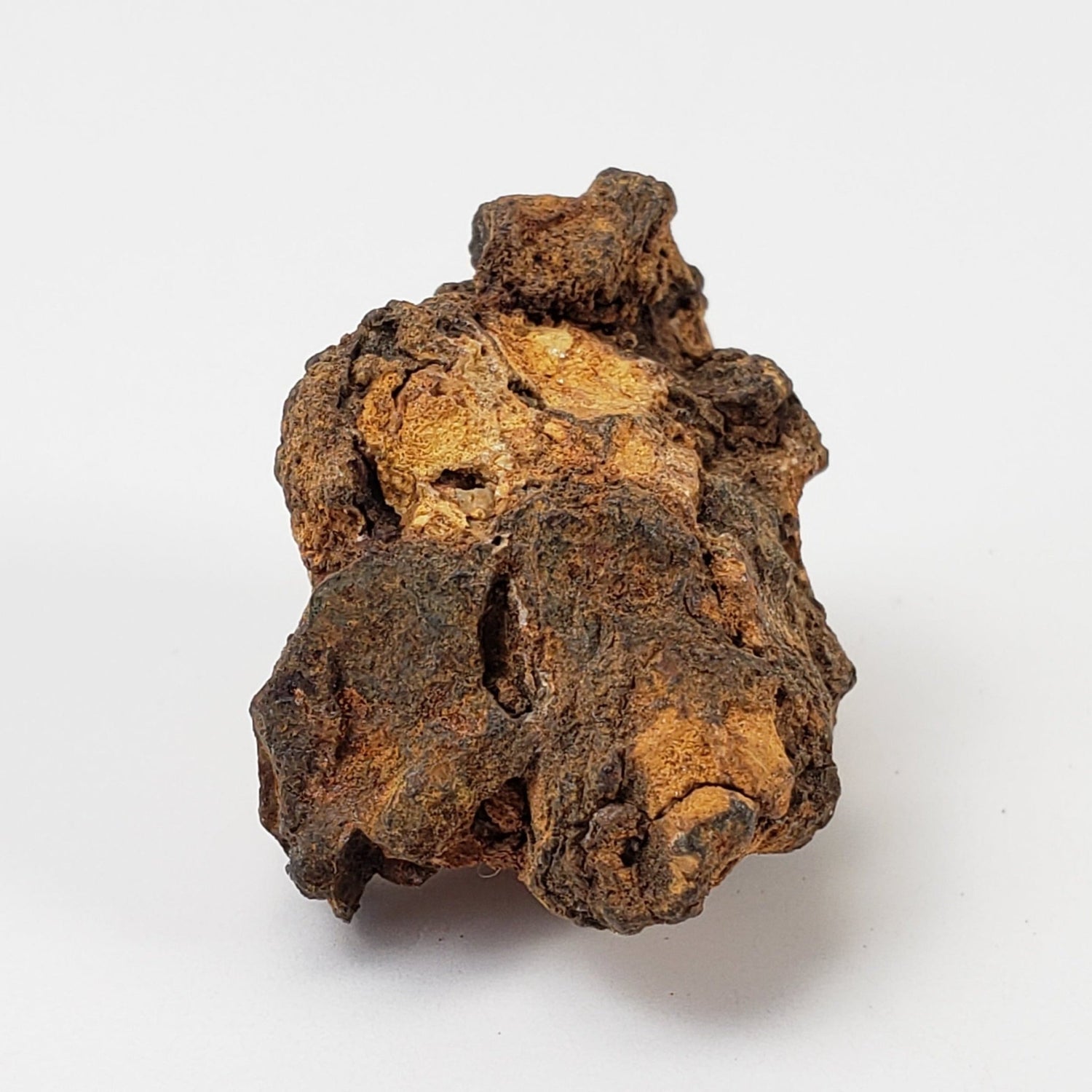
This is a fabulous 11.3 gram Sericho Pallasite Main Group meteorite, it measures 22x22x17 mm. In 2016, two brothers were searching for their camels and came across several large, dense stones west of the village of Habaswein and south of Sericho, Kenya. Though recognized as meteorites in 2016, the masses had been known to camel-herders for decades. One village elder said that as a child, he and his brothers would play on top of the stones. It is classified as an Iron Pallasite main group with low weathering and is 1 of only 68 approved meteorites classified as such, with a recovered weight of about 2.8 T.
This piece displays extremely well and is a nice size showing great features. Would be a beautiful addition to any new or existing collection. Comes with a Canagem Collection specimen card.


Here we have for you a superb looking Dhofar 020 classified meteorite weighing 49.8 grams. Its dimensions are 68x32x20 mm. Found 10 March 2000 in Dhofar, Oman, in the Arabian Peninsula this H4/5 classified chondrite has a TKW of 256 Kg with a shock stage of S4 and weathering grade of W3 by the Russian Academy of Sciences, USSR.
The following is an excerpt from Mark Bostick's review of this meteorite: "Dhofar 020 is a ordinary stone chondrite meteorite. The meteorite is high in free metal and therefore falls in the H class. S4 tells it is highly shocked. Slices of the meteorite, show veins of the cosmic impact created mineral Ringwoodite, although fractures in the stone tend to hide this some. It almost appears to me to have splinted upon impact. The meteorite falls in 4-5 petrology class, a reference to how metamorphed the meteorite is from its original state. This is judged by studying a thin section of the meteorite, most visually at the chondrules, a feature unique to stone meteorite. In a thin section under polarized light, pyroxene chondrules seem more common then their olivine pair. Still some regions in the meteorite show scattered patches of bright olivine inclusions. These are fairly rare, at least on my thin section, and most of the meteorite's olivine and pyroxene, some of the easier things to see in a thin section, appear to have went through a metamorphism, and have "melted" into the matrix and are at times undistinguishable."
This piece displays extremely well showing a beautiful crust, superb shape and good size. Would be a beautiful addition to any new or existing collection. Comes with a Canagem Collection specimen card.


Here we have for you a large 39 grams superbly shaped Indochinite Tektite from Maoming City, Guangdong Province, China. Although not a meteorite, tektite is directly linked to them or their impacts, just consider its age of around 780,000 years old.
Tektite can still be interesting because of the persistent mystery has that resisted clear explanations of their creation for generations of geologists. Dimensions are 37x34x28 mm.
This piece displays very well and is a very nice size showing multiple characteristics of its origin. Would be a beautiful addition to any new or existing collection. Comes with a Canagem Collection specimen card.

Canagem is proud to be professional member of The International Gem Society(IGS) the world's top resource for gem professionals, enthusiasts, and industry content.