



1573 products
Sort by:
1573 products


This is a natural raw bi-color tourmaline crystal, it is 10mm in length and has a weight of 3.9ct. This pink and green tourmaline is transparent and has not been treated in any way. It is 100% natural.
It is believed that Tourmaline can be used to repel negativity. It is said to enhance one's physical wellbeing by providing an increase in physical vitality, emotional stability, and intellectual acuity.
Product Type: Tourmaline
Specimen Size: Thumbnail-Sized
Dimensions: 10mm
Weight: 3.9ct
Size: 10mm
Origin: Africa


Pseudomorphs are mineral specimens that have the external shape of one mineral but are composed of another. The pseudomorph goethite after marcasite forms when marcasite is exposed to oxidizing conditions and starts to oxidize and break down. As the marcasite breaks down, goethite replaces it in the crystal structure, preserving the shape of the original marcasite crystal. The resulting specimen appears as a marcasite crystal, but is actually composed of goethite.
The Farafra Oasis, in the White Desert, has been known for a number of years to deliver incredible pseudomorph specimens. The pseudomorphs occur within the Cretaceous Khoman Chalk, from which the White Desert derives its name.
These specimens are remarkable for their relatively sharp marcasite crystal forms in aesthetic crystal clusters. They are in excellent condition. This collector's specimen is unique, of great quality and ready for display.
Name: Goethite After Marcasite Pseudomorph
Specimen Size: Miniature-Sized
Dimensions: 43x40x33 mm / 1.7x1.6x1.3 inches
Weight: 66.7 grams / 203 ounces
Origin: Found in White Desert, Farafra Oasis, Egypt
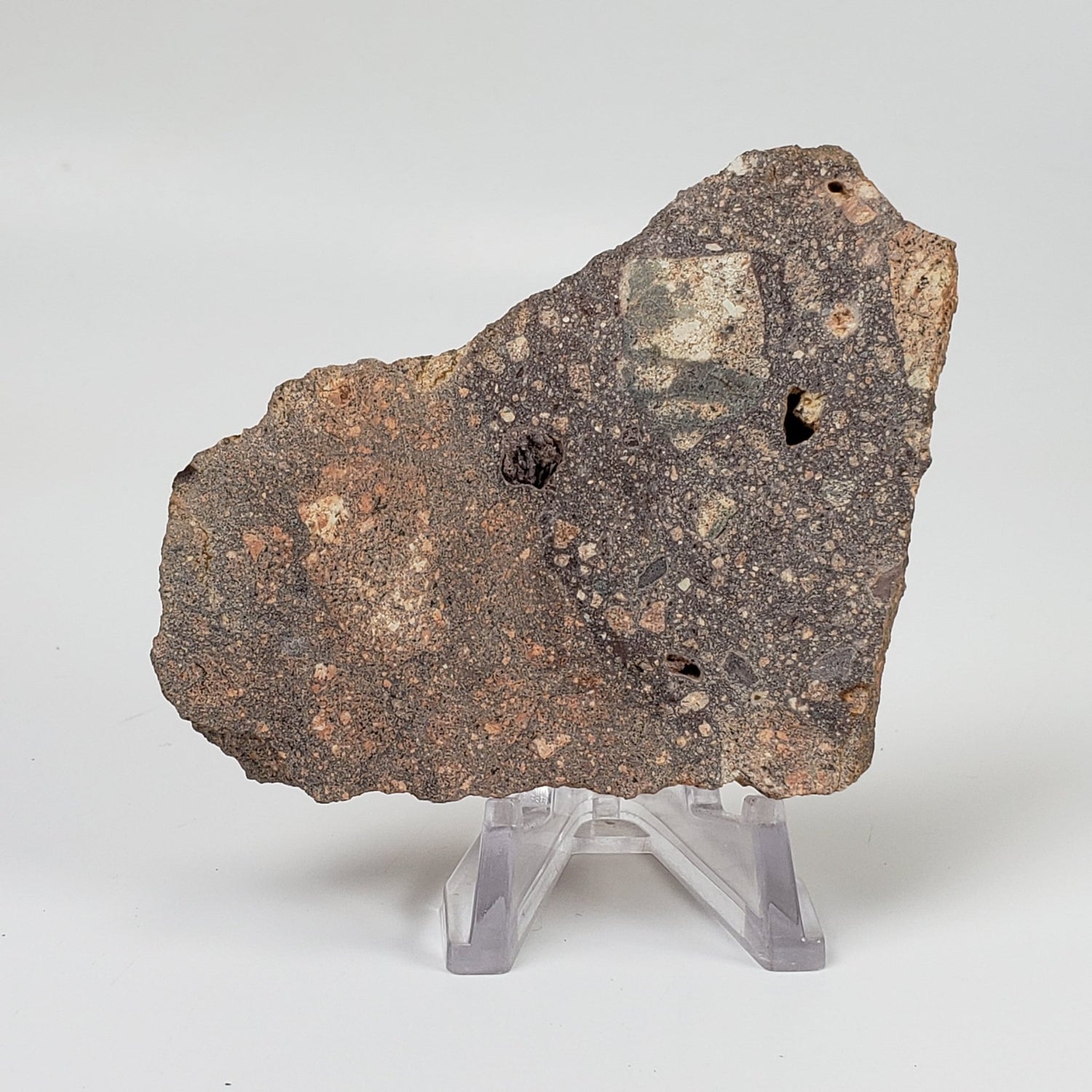
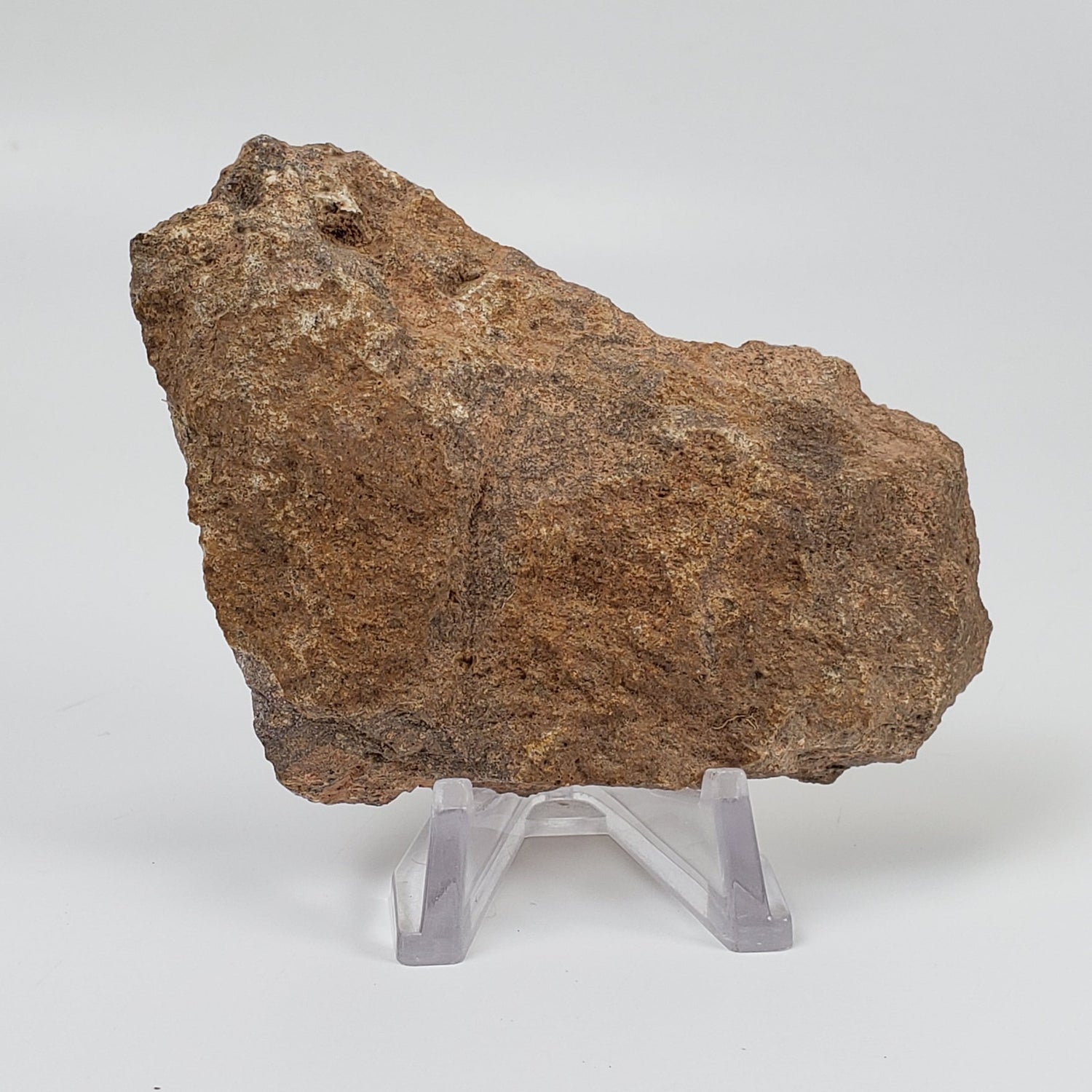
This is a must have 90.7 gram Impact Breccia also referred to as Suevite coming from the famous Rochechouart impact structure in South Western France,. Although not a meteorite, impactites are directly linked to them and their impacts and are probably going to be one of the rarest collection items you'll ever own. Impactite is a slag-like glassy object found on the surface of the earth, formed from rock melted by the impact of a meteorite.
Named after the town of Rochechouart, the Rochechouart impact structure is located on the western margin of the French Massif Central near the city of Limoges, approximately 350 km (220 mi) south of Paris. Rochechouart (population about 3800) is built with rocks created or modified by the impact (impactites).
The term impactite encompasses shock-metamorphosed target rocks, melts or suevites and mixtures of the two, as well as sedimentary rocks with significant impact-derived components and shocked mineral grains, tektites, anomalous geochemical signatures, etc. This impactite was formed 186 million years ago. This deformed rock fragments and partly molten are imbedded in a melt matrix showing typical flow structures from former melt.
This gorgeous slice displays very well with a mass of 80x65x18 mm. Would be a beautiful addition to any new or existing collection. Comes with a Canagem Collection specimen card.


This is a must have 51.4 gram Impact Breccia also referred to as Suevite coming from the famous Rochechouart impact structure in South Western France,. Although not a meteorite, impactites are directly linked to them and their impacts and are probably going to be one of the rarest collection items you'll ever own. Impactite is a slag-like glassy object found on the surface of the earth, formed from rock melted by the impact of a meteorite.
Named after the town of Rochechouart, the Rochechouart impact structure is located on the western margin of the French Massif Central near the city of Limoges, approximately 350 km (220 mi) south of Paris. Rochechouart (population about 3800) is built with rocks created or modified by the impact (impactites).
The term impactite encompasses shock-metamorphosed target rocks, melts or suevites and mixtures of the two, as well as sedimentary rocks with significant impact-derived components and shocked mineral grains, tektites, anomalous geochemical signatures, etc. This impactite was formed 186 million years ago. This deformed rock fragments and partly molten are imbedded in a melt matrix showing typical flow structures from former melt.
This gorgeous slice displays very well with a mass of 81x58x8 mm. Would be a beautiful addition to any new or existing collection. Comes with a Canagem Collection specimen card.

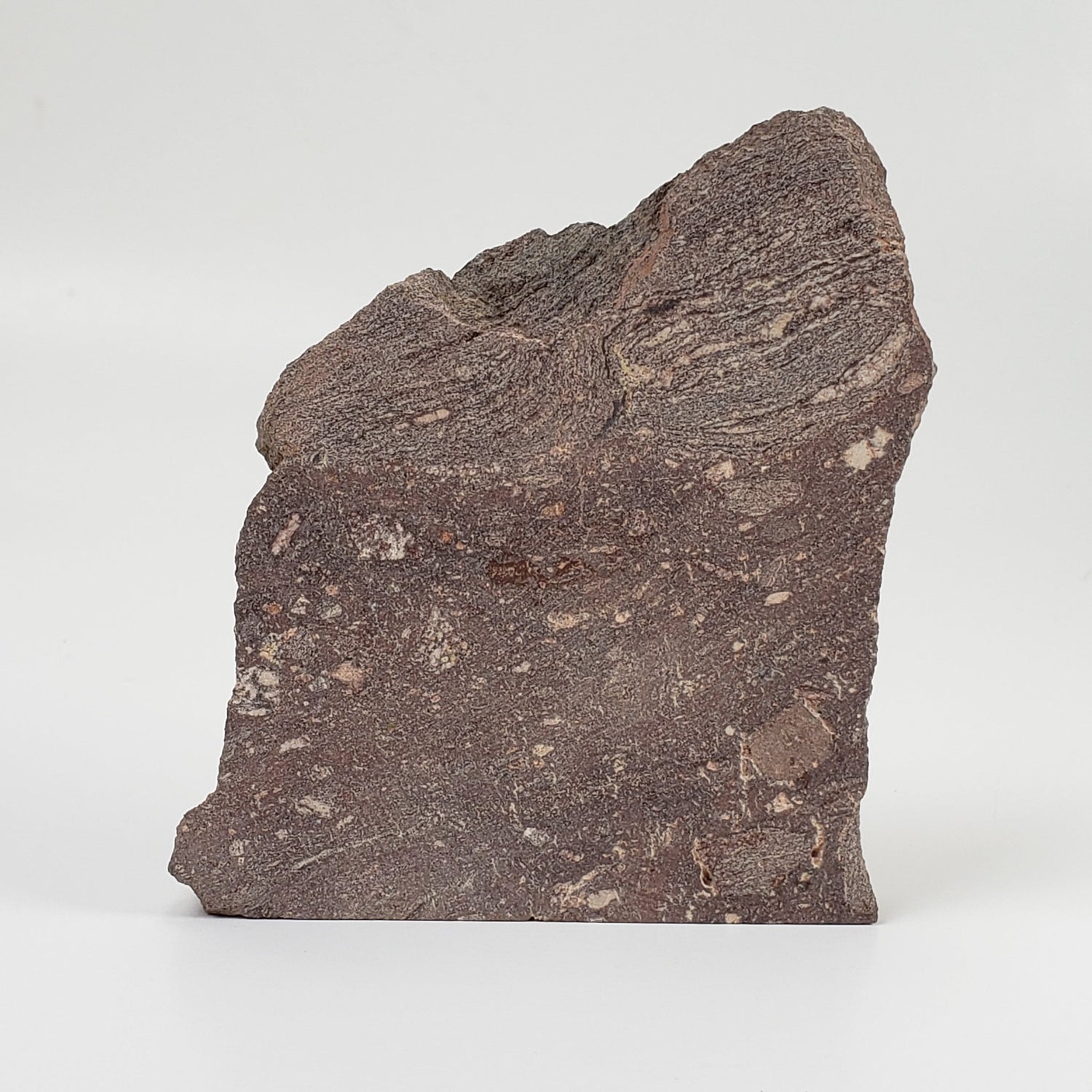
This is a must have 130 gram Impact Breccia also referred to as Suevite coming from the famous Rochechouart impact structure in South Western France,. Although not a meteorite, impactites are directly linked to them and their impacts and are probably going to be one of the rarest collection items you'll ever own. Impactite is a slag-like glassy object found on the surface of the earth, formed from rock melted by the impact of a meteorite.
Named after the town of Rochechouart, the Rochechouart impact structure is located on the western margin of the French Massif Central near the city of Limoges, approximately 350 km (220 mi) south of Paris. Rochechouart (population about 3800) is built with rocks created or modified by the impact (impactites).
The term impactite encompasses shock-metamorphosed target rocks, melts or suevites and mixtures of the two, as well as sedimentary rocks with significant impact-derived components and shocked mineral grains, tektites, anomalous geochemical signatures, etc. This impactite was formed 186 million years ago. This deformed rock fragments and partly molten are imbedded in a melt matrix showing typical flow structures from former melt.
This gorgeous slice displays very well with a mass of 90x77x10 mm. Would be a beautiful addition to any new or existing collection. Comes with a Canagem Collection specimen card.


Product Type: Nephrite
Approx Weight (per piece): 2.8ct
Size: 9.8mm
Shape: Round Cabochon
Color: Green
Clarity: Transparent with good luster
Origin: Canada
Treatment: None


This is a must have 209 gram polymict impact breccia from the Lockne Crater located approximately 21 km south of the city of Östersund in northern Sweden. It is amazingly light considering its mass of 132x63x23 mm. Although not a meteorite, impactites are directly linked to them and their impacts and are probably going to be one of the rarest collection items you'll ever own. Impactite is a slag-like glassy object found on the surface of the earth, formed from rock melted by the impact of a meteorite.
The term impactite encompasses shock-metamorphosed target rocks, melts or suevites and mixtures of the two, as well as sedimentary rocks with significant impact-derived components and shocked mineral grains, tektites, anomalous geochemical signatures, etc.
Lockne is a 7.5km-wide impact structure that formed circa 455 Ma when an L-chondritic asteroid impacted mixed sedimentary and crystalline target rocks that were under a shallow epicontinental sea (500m deep) at the time. The feature and its surrounding impactite deposits were covered by Caledonian thrust nappes that also partly folded them.
Erosion has breached much of the overthrust rocks to show the impact site. Impactites include the Loftarstone (graywacke-like arenite with carbonate grains), Lockne Breccia (polymictic but mostly limestone clasts), Resurge deposits, Ynntjämen Breccia (monomictic, matrix-supported with calcareous-argillaceous matrix) and the Tandsbyn Breccia (monomictic crystalline ejecta). This crater has been suggested to be a doublet with the nearby smaller Målingen Crater, 16 km apart.
This gorgeous large slice displays very well. It would be a beautiful addition to any new or existing collection. Comes with a Canagem Collection specimen card.


Product Type: Sapphire
Approx Weight (per piece): 1.0ct
Size: 6.5x5mm
Shape: Oval Cut
Color: Lime Green
Clarity: Clean
Origin: Africa


Product Type: Chrysoberyl
Approx Weight (per piece): 1.0ct
Size: 5.6mm
Shape: Round Cut
Color: Green
Clarity: Clean
Origin: Africa


Product Type: Zircon
Approx Weight (per piece): 3.6ct
Size: 10.5x6.0mm
Shape: Octagon Cut
Color: Orange
Clarity: Clean
Origin: Cambodia
Zircon comes in a variety of colors, including blue, yellow, green, brown, and red, and is renowned for its exceptional brilliance. It is found in many locations worldwide, including Sri Lanka, Myanmar, Cambodia, and Australia. Some of the oldest zircon crystals have been dated to be over 4 billion years old, making them among the oldest minerals on Earth.
Zircon has a hardness of 6.5 to 7.5 on the Mohs scale, making it durable enough for use in various types of jewelry. However, care should be taken to avoid sharp blows and extreme temperatures.
Zircon is associated with promoting spiritual growth, mental clarity, and prosperity. It is also thought to enhance self-confidence and provide protection.
It's important to note the distinction between natural zircon and cubic zirconia. Natural zircon is a genuine gemstone, while cubic zirconia is a synthetic material.

Canagem is proud to be professional member of The International Gem Society(IGS) the world's top resource for gem professionals, enthusiasts, and industry content.