


1508 products
Sort by:
1508 products
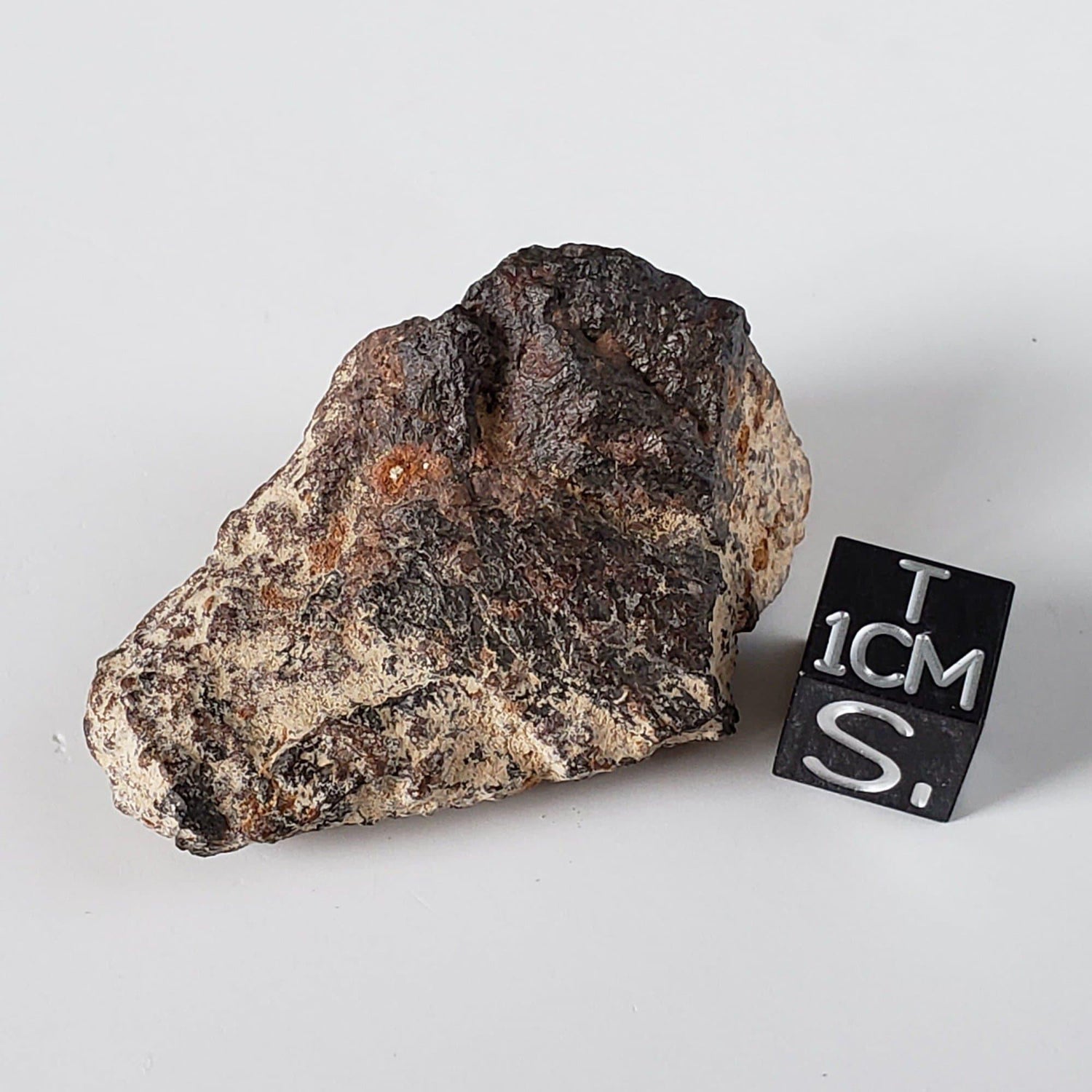
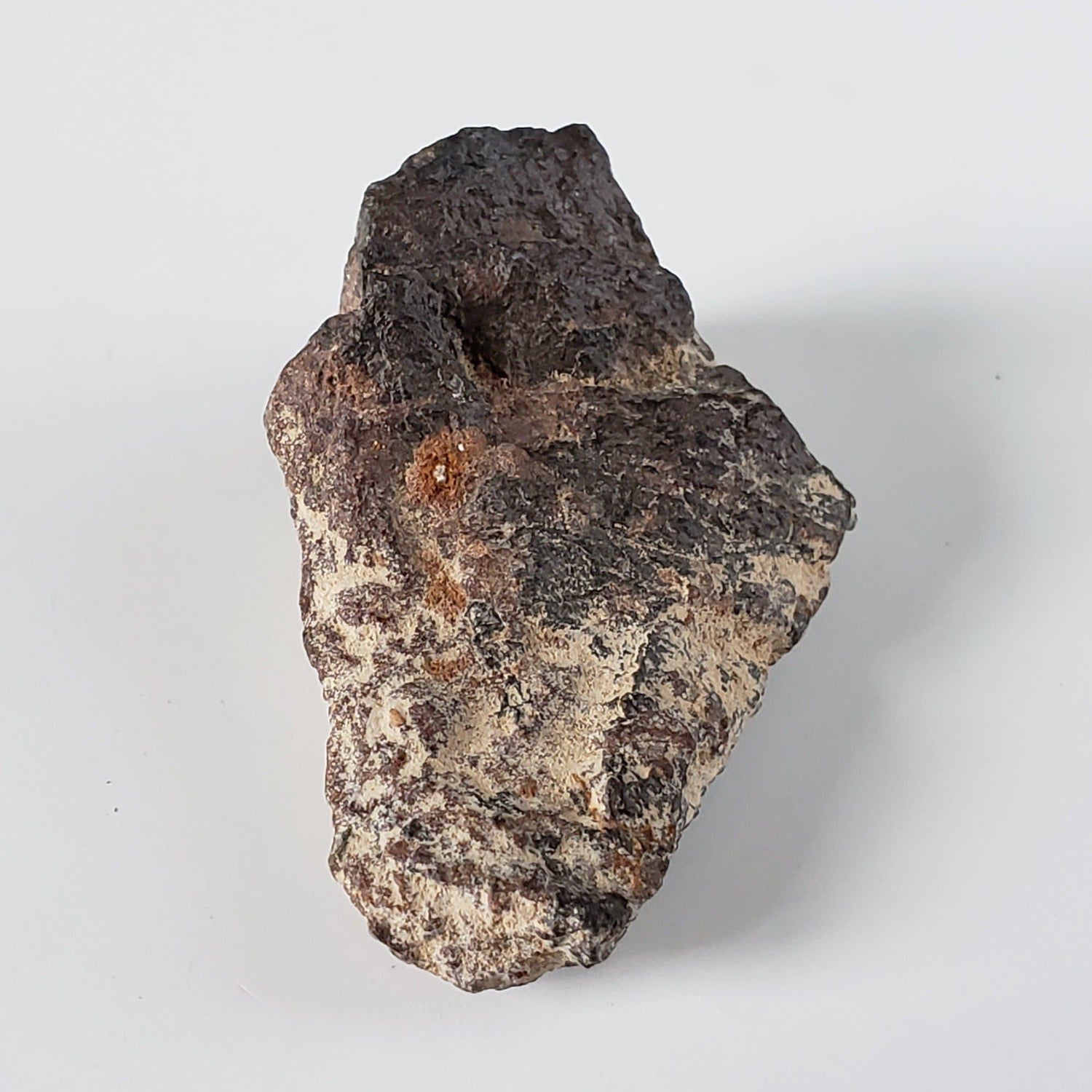
This is a fabulous Ghubara meteorite whole fragment, weighing 25.77 grams and measuring 41x29x29 mm. It was found in Oman, Southern Arabia in 1954 and is classified as an L5 Stony Black Chondrite.
This piece displays extremely well and would be a beautiful addition to any new or existing collection. Comes with a Canagem Collection specimen card.

This is an aluminum label with all the information regarding the Cole Creek, Nebraska, USA meteorite. This flat model fits nicely in a Riker type box or our own Alder wooden boxes. An excellent way of identifying and displaying your collection of meteorites.
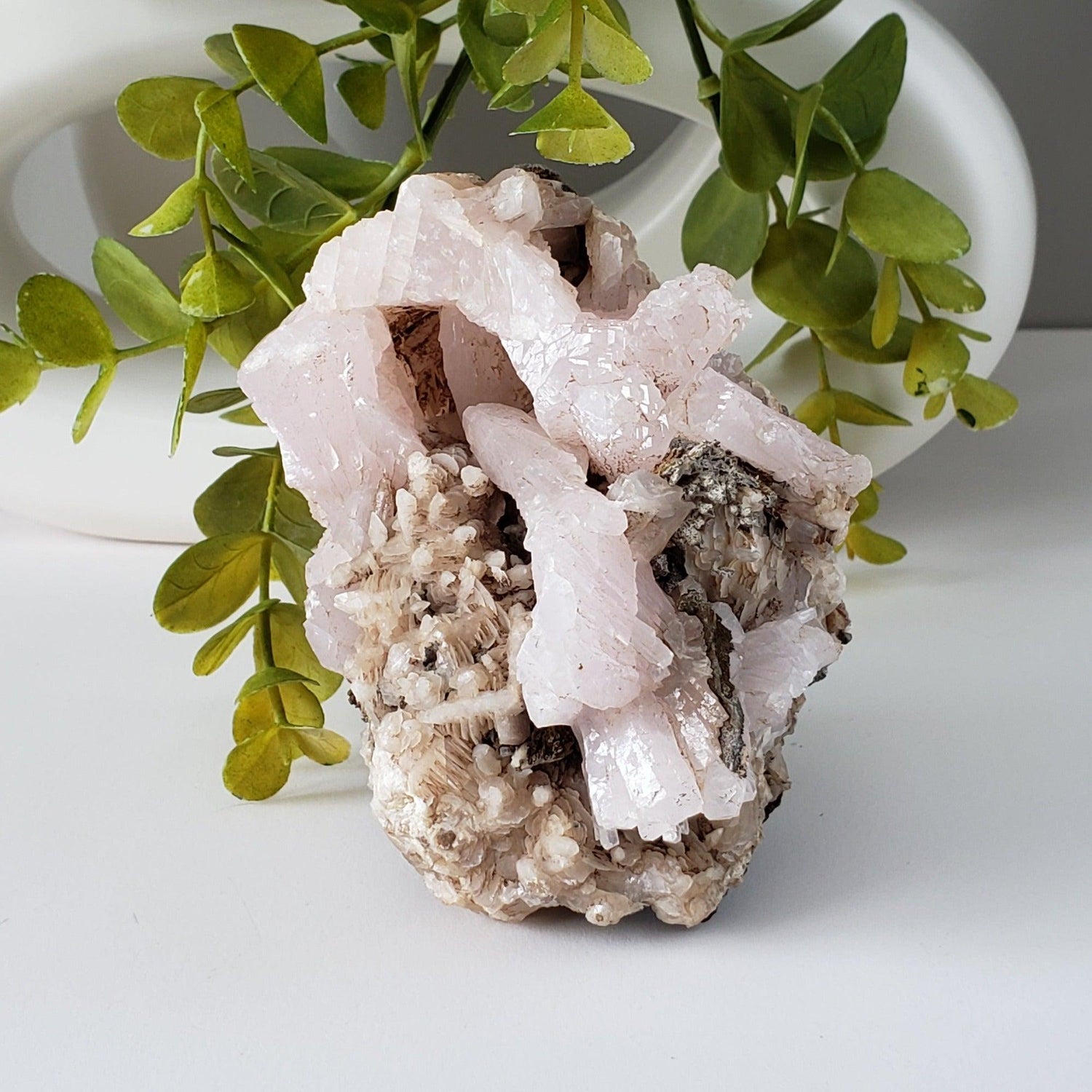
The deposit known as Dalnegorsk is mined by several different mines. The vast majority of the minerals from Dalnegorsk in various collections have no reference to the individual mines. The mines are the Brenner mine (with the Svetlana adit and Olga adit), Nikolaevsky mine, Zentralnye mine, Verkhnii mine, East Partizan, 1st Sovietsky mine and 2nd Sovietsky Mine. There are probably more mines. The name "Tjetjuche" means "valley of the wild pigs" and is the old Chinese name for Dalnegorsk and this name can be seen on old mineral labels.
Geologically Dalnegorsk is best described as a skarn, although it is not a pure skarn. Magma came into contact with limestone forming a skarn. But the difference is that metamorphic volcano-sediments are also present and ore bearing. The limestone has an age of carboniferous to jurassic and is covered with upper cretaceous to lower tertiary volcano-sedimentary rocks..
Most ores occur at the contact and in the limestone. The orogenese can be divided into four phases. Non-ore bearing skarn phase with mainly garnet and wollastonite, the skarn sulphide phase, a polymetallic phase and lower temperature final phase with mainly quartz, calcite and zeolites. In the skarn sulphide phase many boron minerals are formed as well as sulphides. Similar sulphides are formed in the 3rd phase.
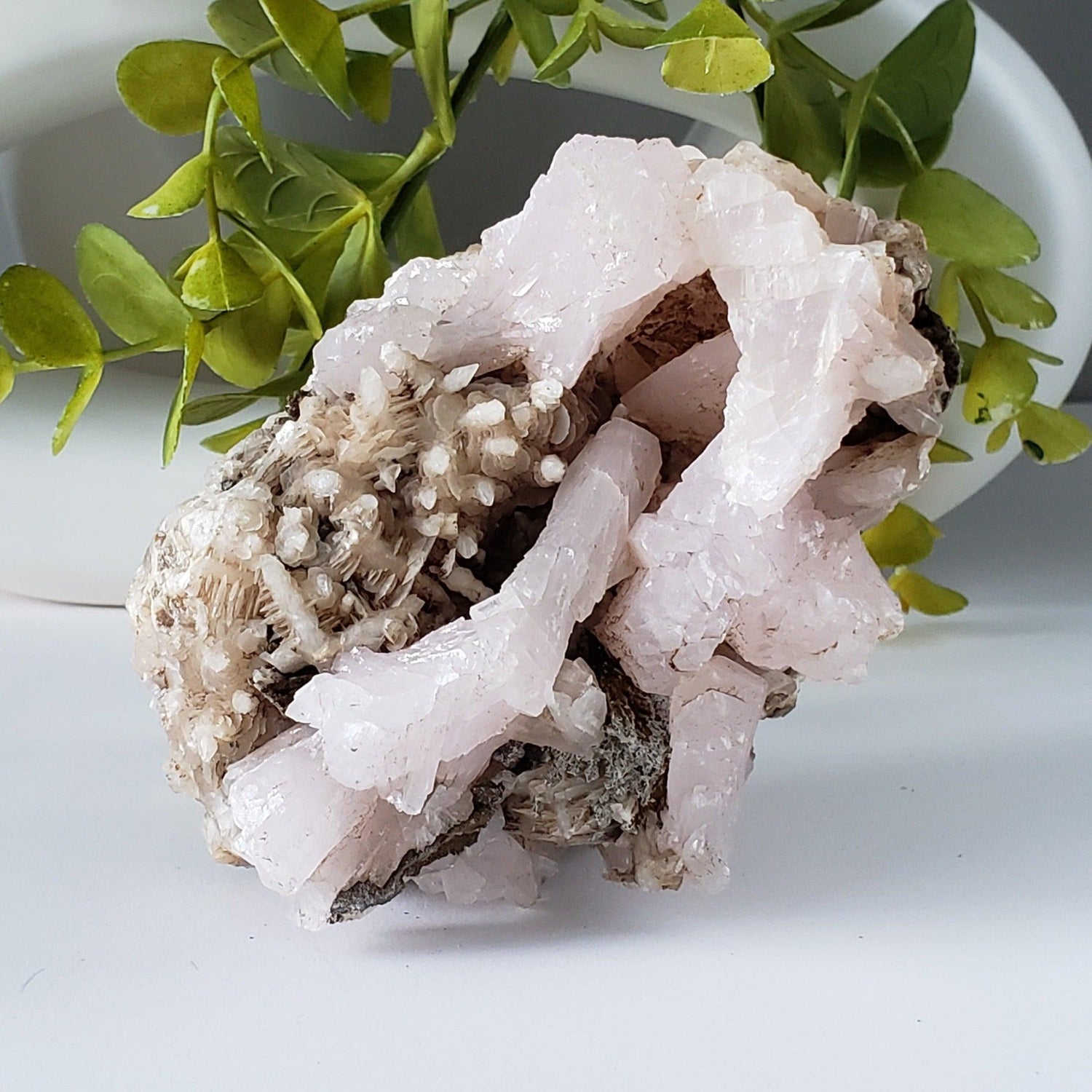
Name: Mangano Calcite Crystal
Specimen Size: Large Cabinet-Sized
Dimensions: 107 x 70 x 66 mm / 4.2x2.8x2.6 inches
Weight: 601 grams / 1 Lb 5 Ounces
Origin: 2nd Sovietsky mine, Dalnegorsk, Russia
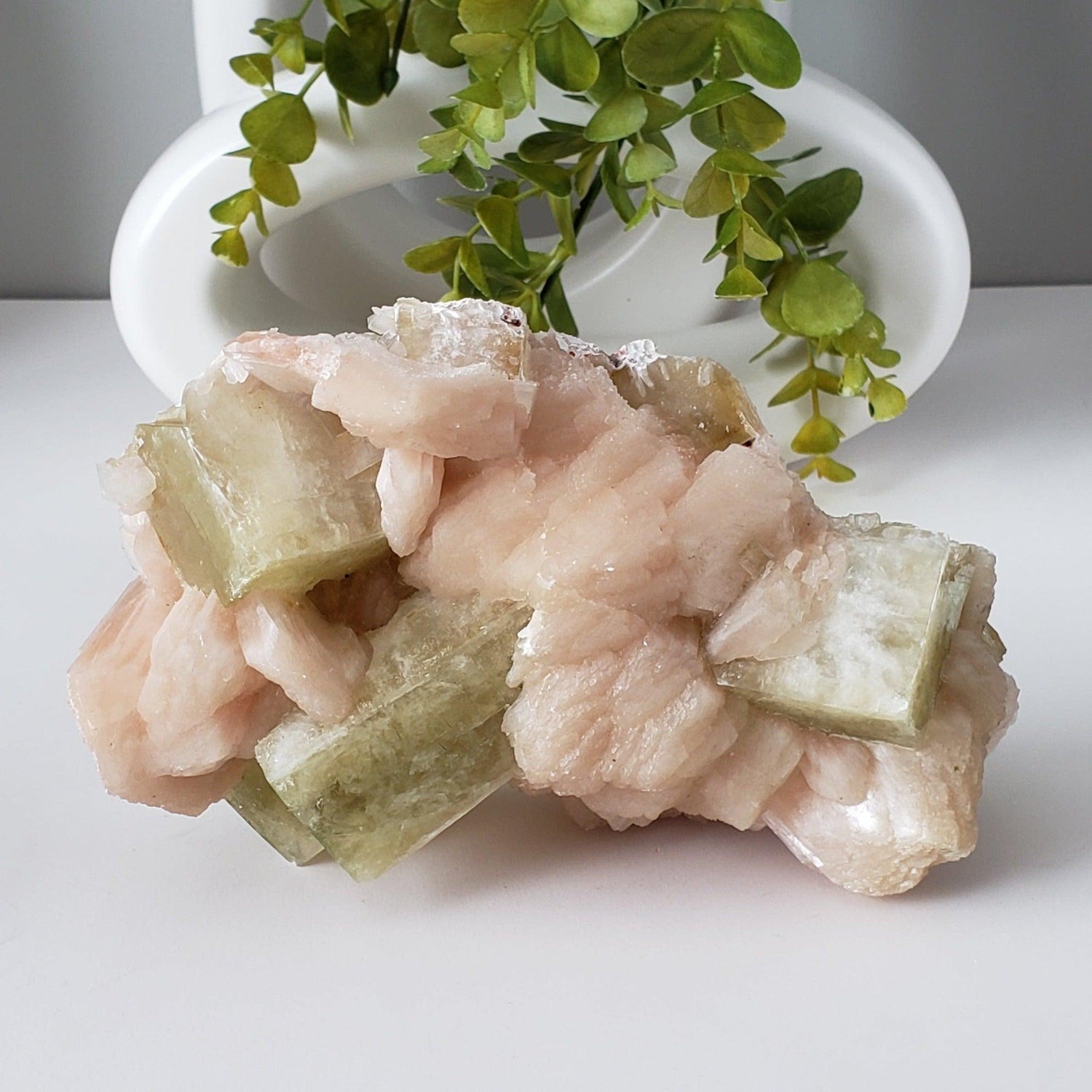
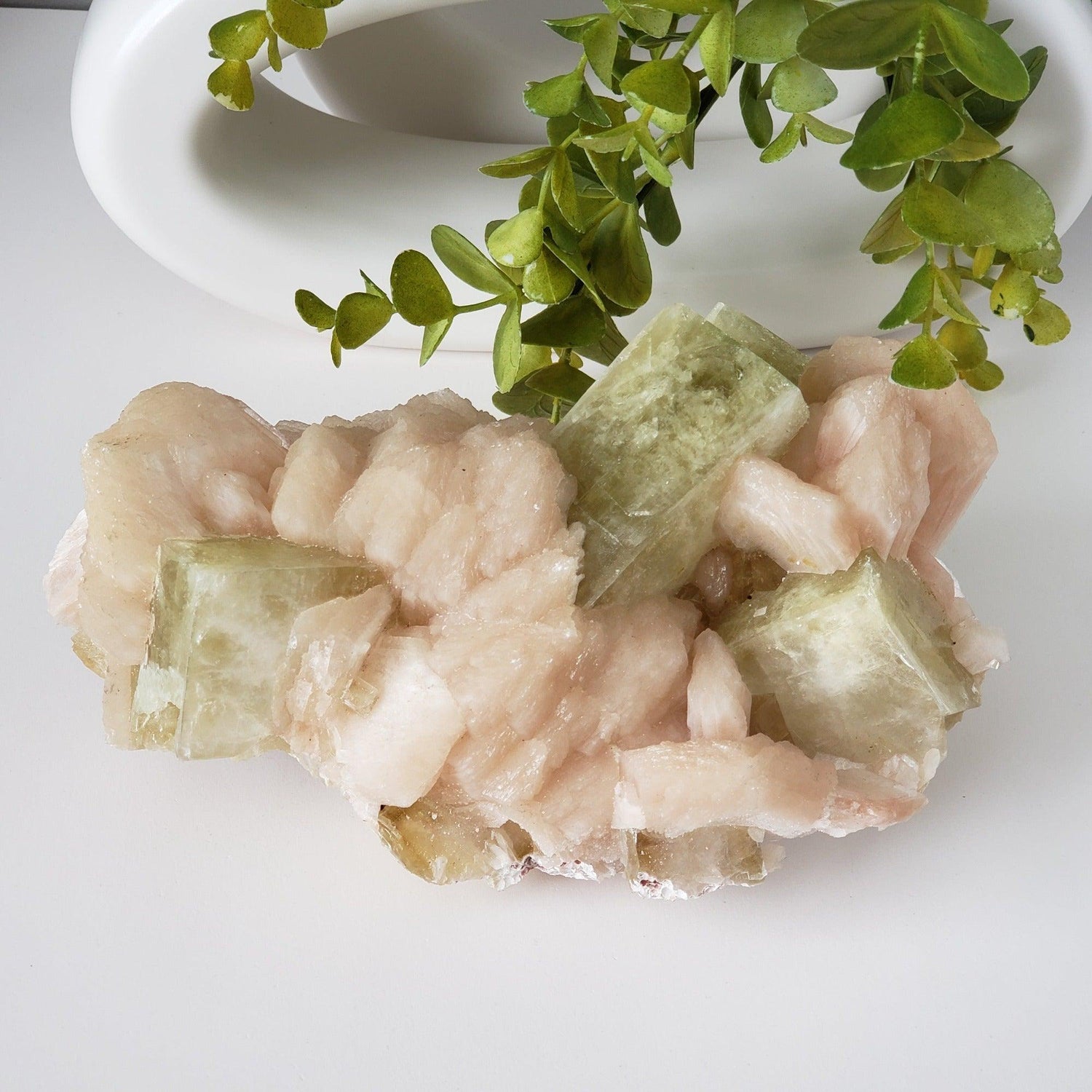
This is an incredible specimen of cubic green Apophyllite and Stilbite. The apophyllite cubes are large and well defined. It is an incredible specimen.
This combination of Apophyllite and Stilbite supports emotional balance, heart-centered connection, and mental clarity.
Stilbite is a zeolite mineral appreciated for its delicate crystal formations and pastel hues, ranging from colorless to white, yellow, pink, and peach. It forms distinctive tabular crystals with a bowtie or butterfly shape and exhibits a vitreous to pearly luster. Commonly found in cavities in volcanic rocks, stilbite is associated with other zeolite minerals. It is valued for its aesthetic appeal and is believed by some to have calming energy, supporting spiritual growth and emotional healing.
One of the distinguishing features of apophyllite is its ability to form well-defined crystals with a pyramid-like shape. These crystals often exhibit a prismatic or pseudo-cubic habit and have a vitreous luster. Apophyllite is transparent to translucent and is commonly found in colorless or white varieties, although it can also occur in shades of green, pink, yellow, or brown.
Name: Apophyllite and Stilbite Crystals
Specimen Size: Large Cabinet-Sized
Dimensions: 190x121x89 mm / 7.5x4.75x3.5 inches
Weight: 1.5 Kg / 3 lbs 5 oz
Details: Mined in Nasik, India


Deep purple is the most famous color of Fluorite, but it can also be sky blue, sea green, sunny yellow, and crystal clear. There are rarer colors of pink, reddish orange (rose) and even black. Fluorite is very attractive and in demand. It is easy to see why fluorite earns the reputation as "The Most Colorful Mineral in the World".
Because Fluorite comes in a wide range of colours, it is often said that it contains something of all other gemstones in it. According to folklore, it is the home of rainbows.
Fluorite is said to increase concentration and foster mental balance. Nicknamed the "genius stone" fluorite is believed to be excellent for study and work areas. It helps the mind stay focused on the task at hand.
Name: Fluorite
Specimen Size: Miniature-Sized
Dimensions: 48x39x37 mm / 1.9x1.5x1.5 inches
Weight: 91.42 Grams / 3.2 oz
Origin: Felix Mine, Los Angeles County, California


Here we have for you a nice looking end cut of a Sahara Desert NWA unclassified meteorite weighing 37.49 grams. Its dimensions are 35x25x27mm. This never classified North West Africa stone was found in the Sahara desert around 2000.
It's a good quality cut NWA meteorite specimens showing interesting internal structure (L5?) and somewhat attractive with a mottled interior with chondrules and metallic flakes. Some weathering shows the meteorite's time spent aging in the desert. Displays nicely with a ground and rough polished without a mirror finish.
Would be a beautiful addition to any new or existing collection. Comes with a Canagem Collection specimen card.
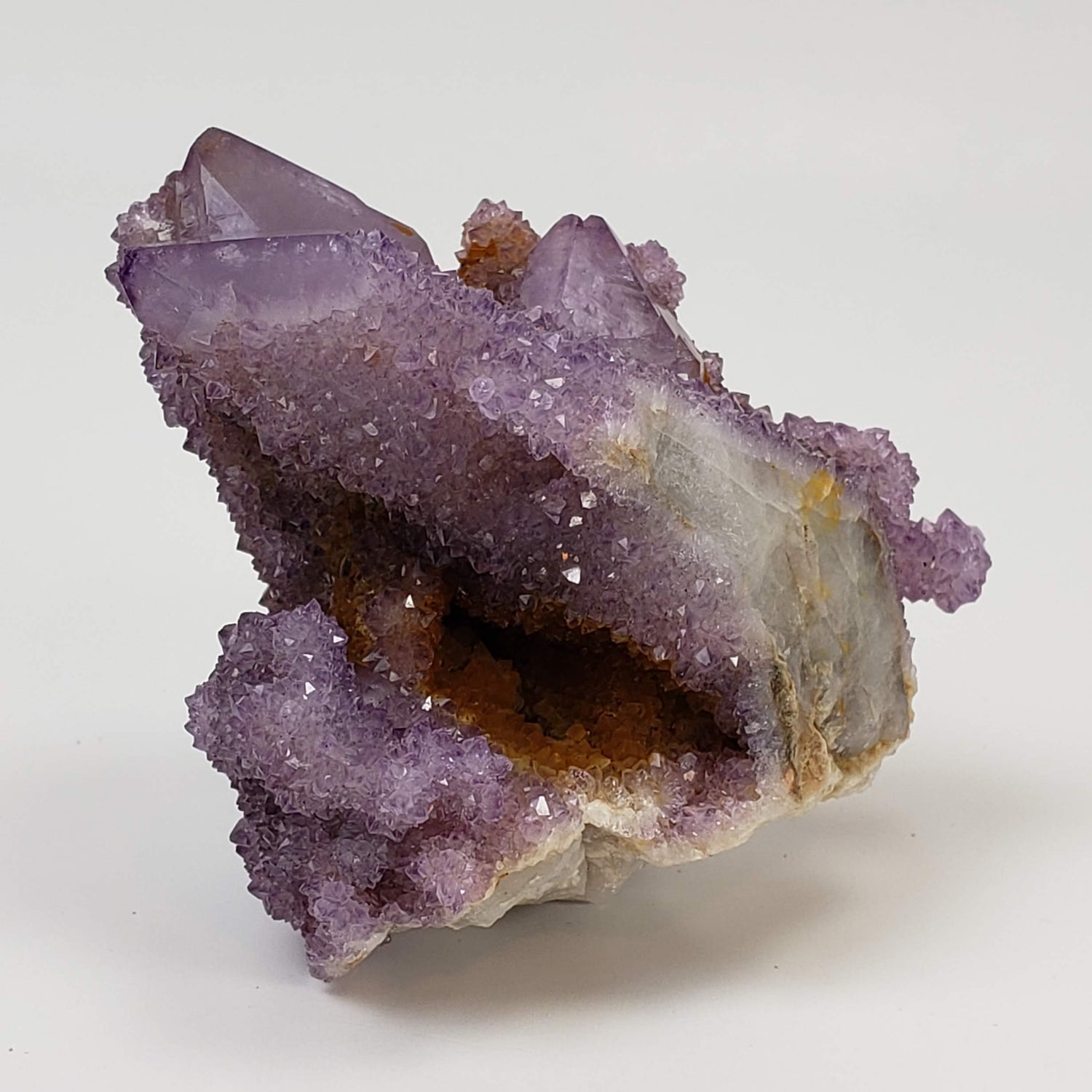
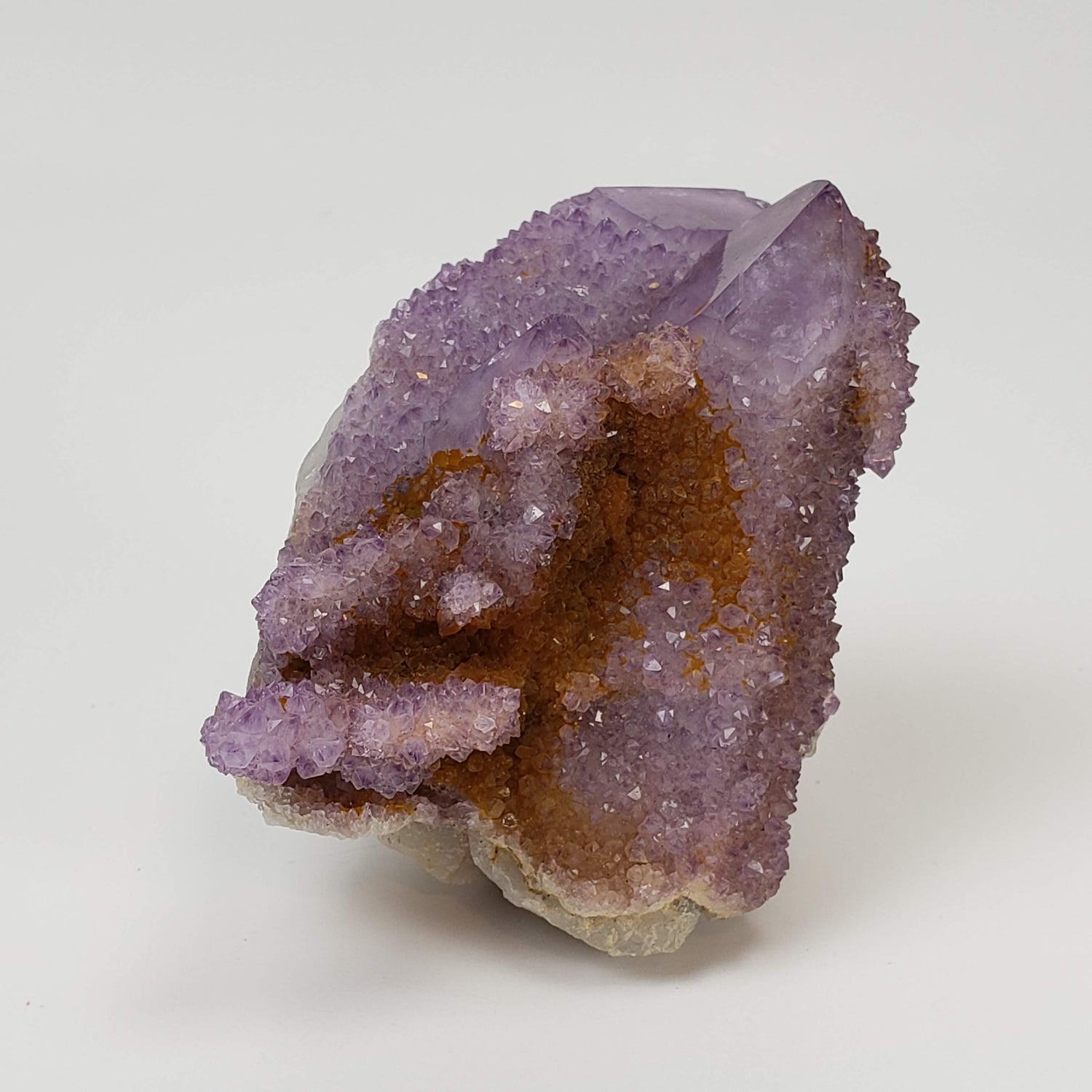
This is a beautiful self standing cluster of dark purple amethyst cactus quartz crystals. This deep color is no longer being produced from this locality, so don't miss out! None of the many tips are damaged.
Cactus Quartz is also known as Spirit Quartz, Barnacle Quartz, Pineapple Quartz or Porcupine Quartz. It is found only in South Africa and Its colors range from white, yellowish brown, lilac, purple, to grey brown.
Quartz is considered a “master healer.” It's said to amplify energy by absorbing, storing, releasing, and regulating it. It's also said to aid concentration and memory. Physically, clear crystals are claimed to help stimulate the immune system and balance out your entire body.
Quartz is also said to be a power gemstone that harmonizes and balances; enhancing energy and thoughts as well as purifying the spiritual, mental and physical. Quartz is associated with the crown chakra.
Name: Amethyst Cactus Quartz
Specimen Size: Cabinet-Sized
Dimensions: 68x51x47 mm / 2.7x2 x 1.9 inches
Weight: 157.9 grams / 5.6 ounces
Origin: Mined in Boekenhout, South Africa


Fluorite comes many colors. Deep purple (it's most famous), sky blue, sea green, sunny yellow, and crystal clear. There are rarer colors of pink, reddish orange (rose) and even black. Fluorite is very attractive and in demand. It is easy to see why fluorite earns the reputation as "The Most Colorful Mineral in the World".
Because Fluorite comes in a wide range of colours, it is often said that it contains something of all other gemstones in it. According to folklore, it is the home of rainbows.
Fluorite is said to increase concentration and foster mental balance. Nicknamed the "genius stone" fluorite is believed to be excellent for study and work areas. It helps the mind stay focused on the task at hand.
Name: Fluorite
Specimen Size: Cabinet-Sized
Dimensions: 82x41x42 mm / 3.2x1.6x1.7 inches
Weight: 153 Grams / 5.4 oz
Origin: Felix Mine, Los Angeles County, California


These are individual Northwest Africa or NWA 4293 formerly known as NQ10. An H6 chondrite found in the Sahara desert in 2005, it is one of 5854 approved meteorites classified as such. These meteorites are samples of 1 to 2 grams.
This fascinating meteorite was mainly found as small individuals and the total weight of the 100's of pieces recovered is recorded as a low 25 kg. The meteorite has a shock stage of 4 and weathering grade of 2. NWA 4293 is interesting in the way it looks as can be seen in the images. Most pieces are free of caliche, have a smooth gray surface and are small complete individuals. The unusual appearance is due to shock hardening and being sandblasted in the desert.
These micros are perfectly shaped to catch your attention and display a superb crust. You will receive one of the specimen in the picture.
The specimen comes with a Canagem specimen card. Would make a beautiful addition to any new or existing collection.


These are individual Northwest Africa or NWA 4293 formerly known as NQ10. An H6 chondrite found in the Sahara desert in 2005, it is one of 5854 approved meteorites classified as such. These meteorites are micro samples of less than 1 gram.
This fascinating meteorite was mainly found as small individuals and the total weight of the 100's of pieces recovered is recorded as a low 25 kg. The meteorite has a shock stage of 4 and weathering grade of 2. NWA 4293 is interesting in the way it looks as can be seen in the images. Most pieces are free of caliche, have a smooth gray surface and are small complete individuals. The unusual appearance is due to shock hardening and being sandblasted in the desert.
These micros are perfectly shaped to catch your attention and display a superb crust. You will receive one of the specimen in the picture.
The specimen comes with a Canagem specimen card. Would make a beautiful addition to any new or existing collection.

Canagem is proud to be professional member of The International Gem Society(IGS) the world's top resource for gem professionals, enthusiasts, and industry content.