



194 products
Sort by:
194 products
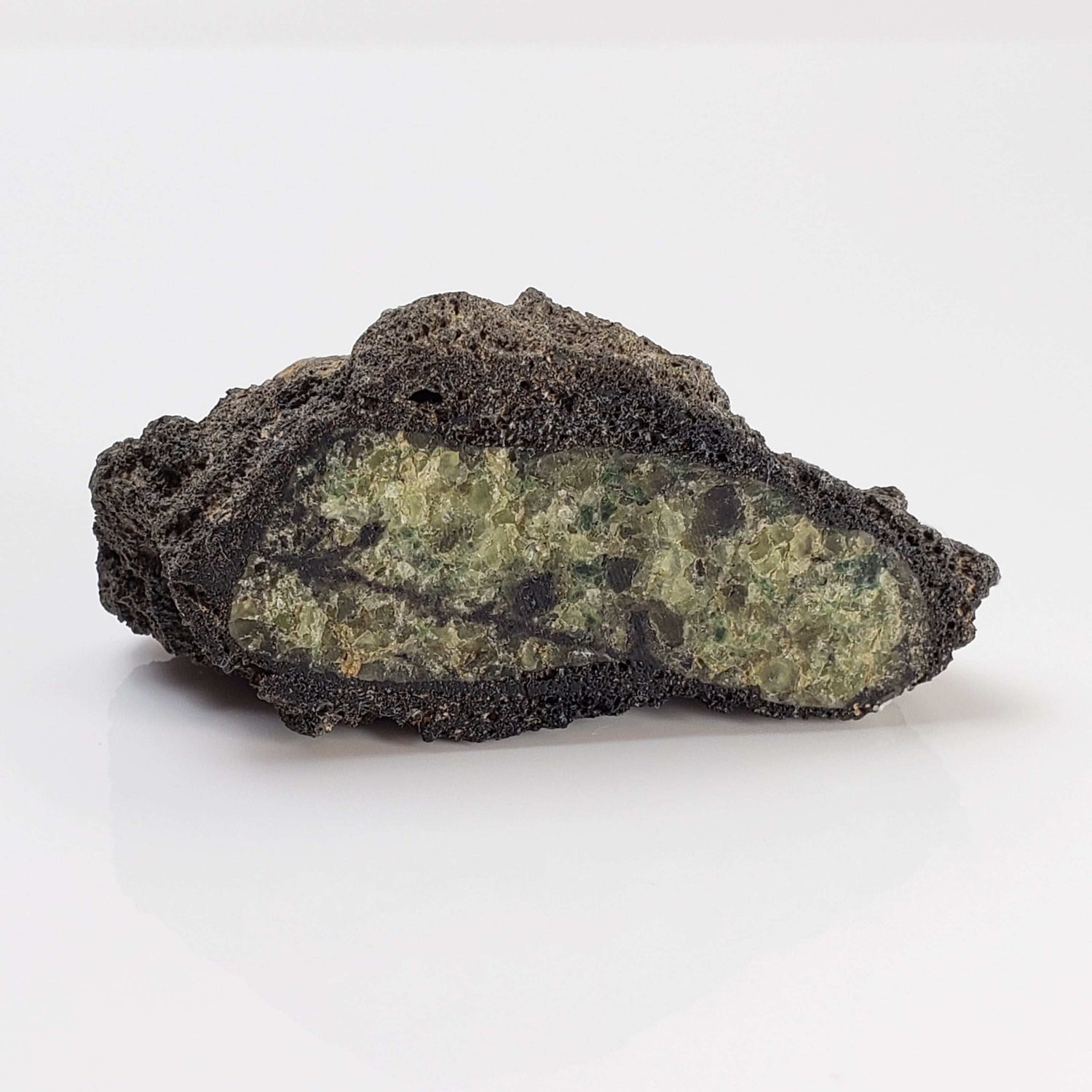
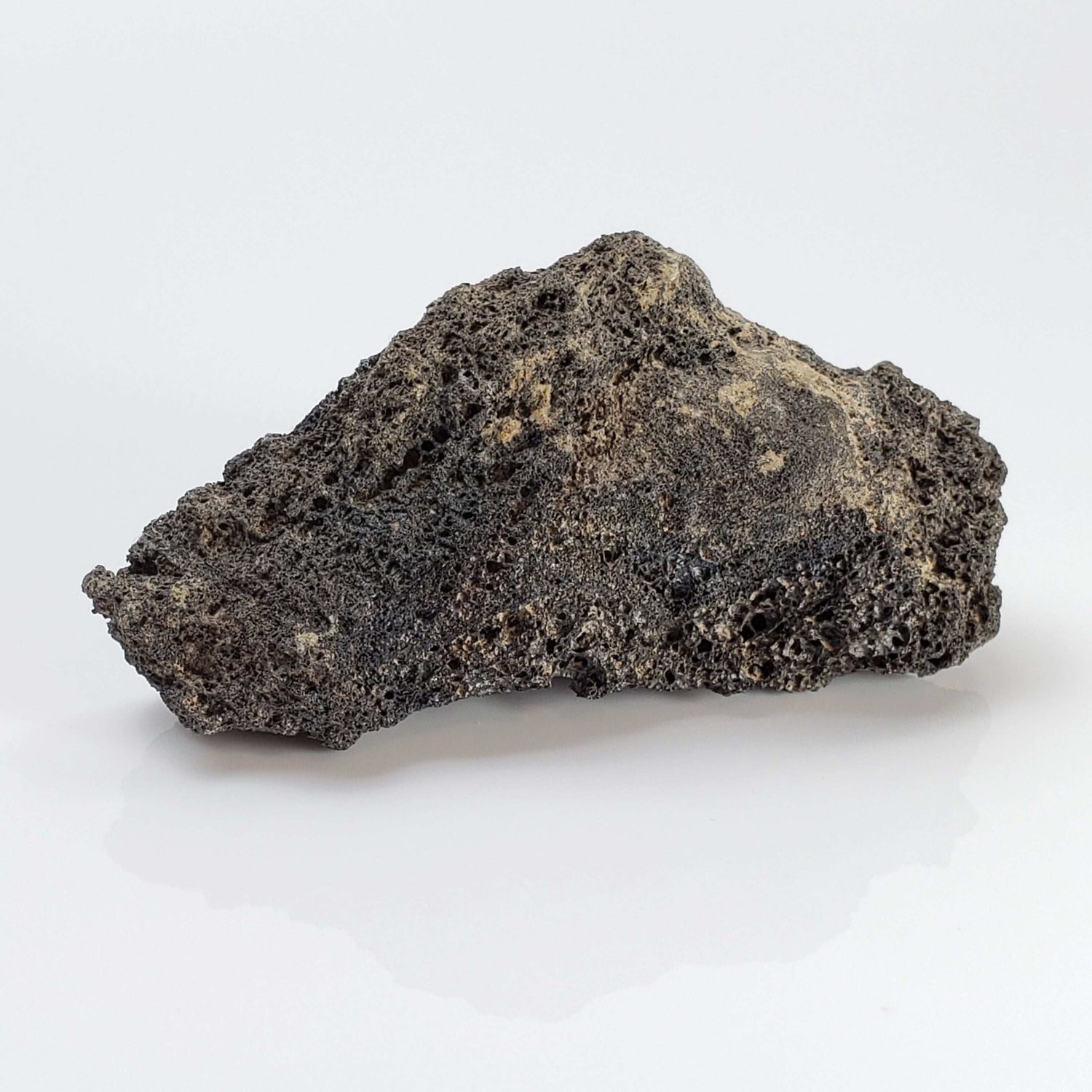
An olivine volcanic bomb is a type of volcanic rock that contains olivine crystals and has been ejected during a volcanic eruption. Olivine is a mineral that is commonly found in the Earth's mantle and is one of the first minerals to crystallize as magma cools.
Volcanic bombs are large clots of lava that are ejected from a volcano during an explosive eruption. They can vary in size, and their shapes are often streamlined due to their molten nature as they are thrown through the air. When these volcanic bombs contain olivine crystals, they are referred to as olivine volcanic bombs.
This piece has been cut to showcase the beautiful green olivine crystals. It would be a beautiful addition to any new or existing collection. Comes with a Canagem Collection specimen card.
Name: Olivine Volcanic Bomb
Specimen Size: Cabinet-Sized
Dimensions: 60x29x22 mm / 2.4x1.1x0.9 Inches
Weight: 38.4 Grams / 1.3 Ounce
Details: Volcanic activity Mortlake, Victoria, Australia


This is a great 85.2 gram Impact Melt Breccia from the Sääksjärvi crater in Finland. It is amazingly light considering its mass of 95x51x15 mm. Although not a meteorite, impactites are directly linked to them and their impacts and are probably going to be one of the rarest collection item you'll ever own. Impactite is a slag-like glassy object found on the surface of the earth, formed from rock melted by the impact of a meteorite.
The term impactite encompasses shock-metamorphosed target rocks, melts or suevites and mixtures of the two, as well as sedimentary rocks with significant impact-derived components and shocked mineral grains, tektites, anomalous geochemical signatures, etc.
Sääksjärvi is a lake in Kokemäki, Satakunta, western Finland, east of the town of Pori. The lake is notable because it overlies an impact crater. The crater is 5 kilometres (3 mi) in diameter and is completely buried under the lake and is not visible at the surface. The age of the impact structure is estimated to be about 543 ± 12 Ma (million years ago), at the boundary between the Ediacaran and Cambrian periods. There are impactite rocks in the southwestern region from the crater confirming its extraterrestrial origin. At the time of its discovery, only one impact crater (Lappajärvi) was known in Finland.
Would be a beautiful addition to any new or existing collection. Comes with a Canagem Collection specimen card.
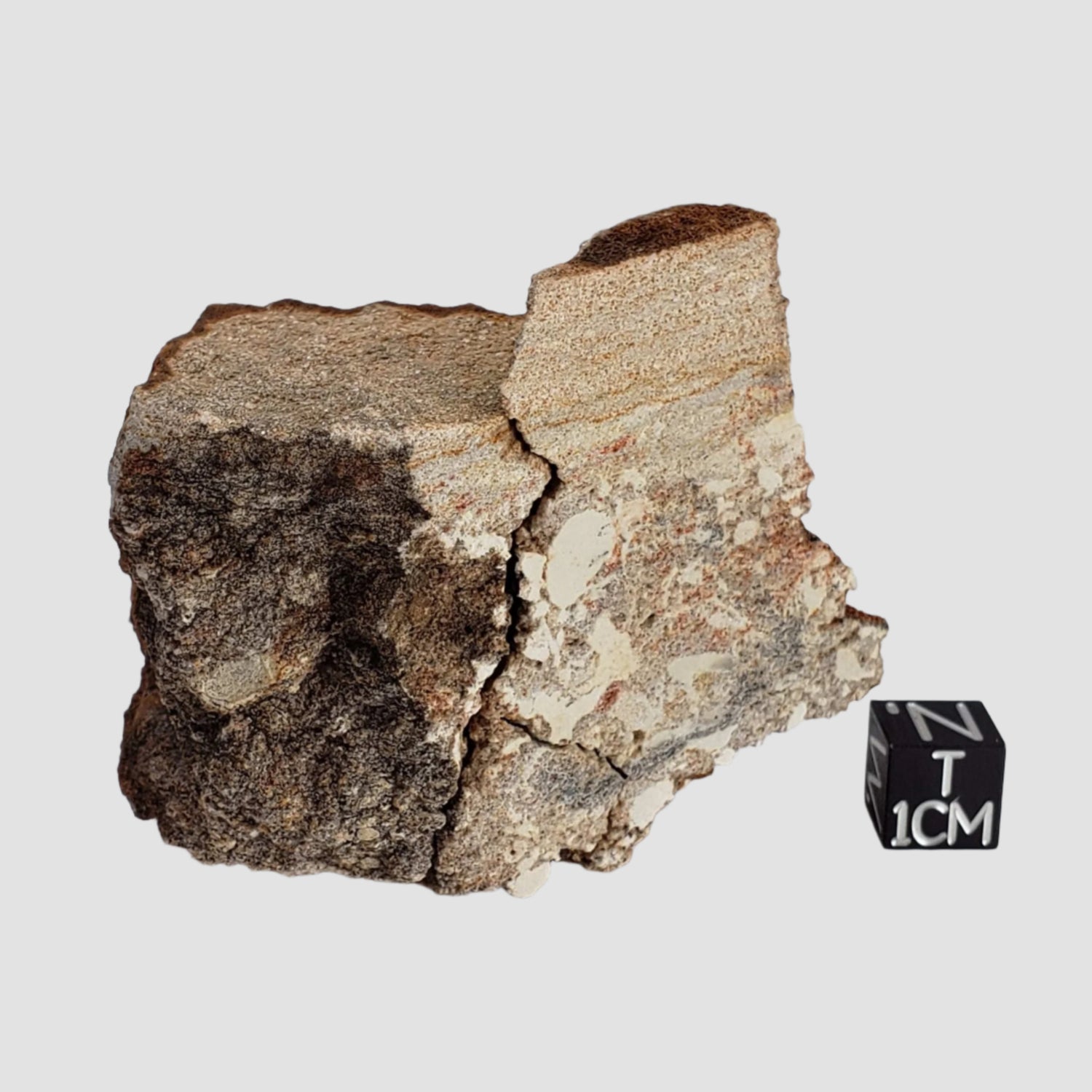
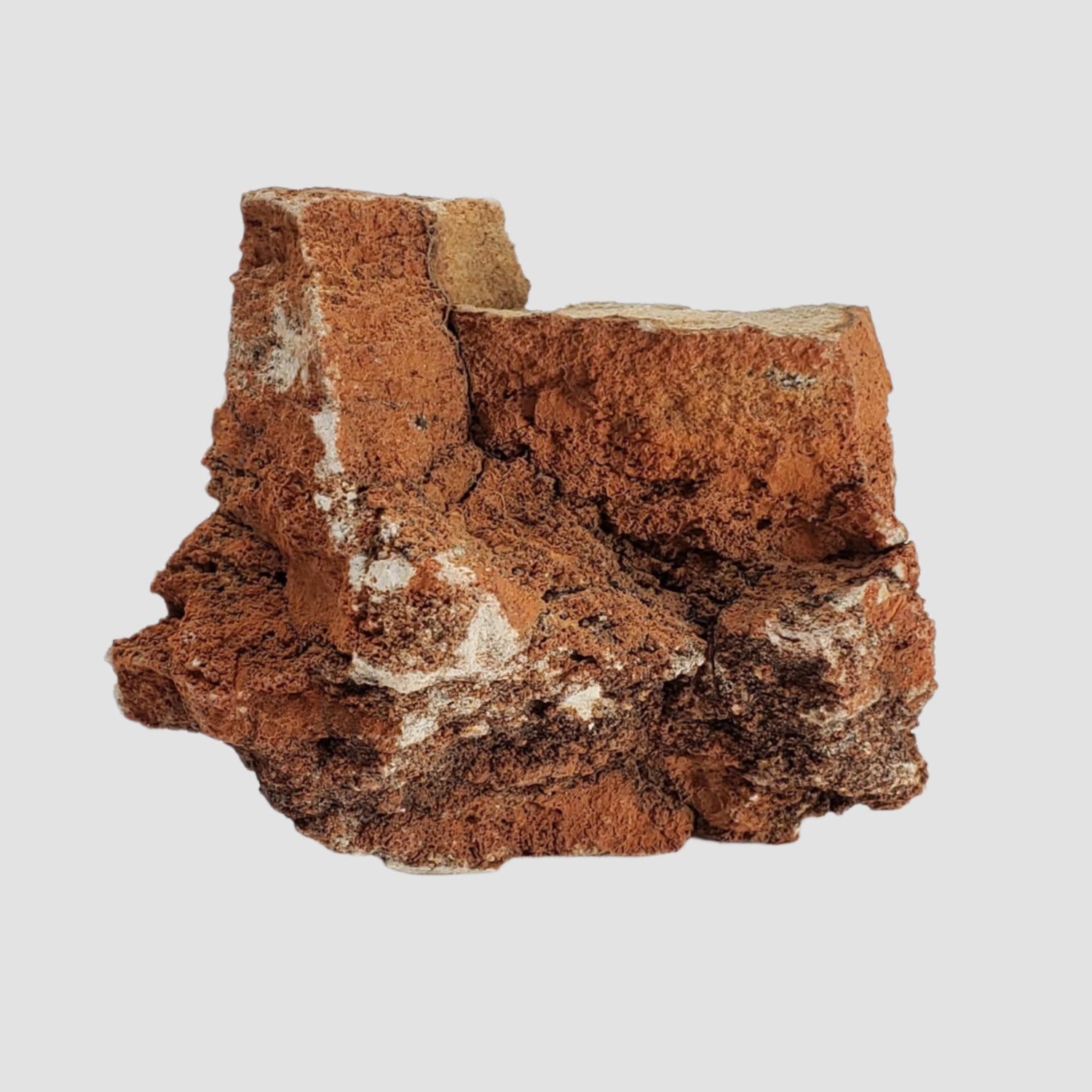
Wolfe Creek Impactite | 104.88 Grams | Impact Breccia | Closed Site | Australia
Name: Wolfe Creek [crater] This is a recognized impact crater name.
Observed fall: No
Age: <0.3 Ma
Diameter: 0.875 km
Country: Australia
Note: There is a natural fracture in the middle of the specimen which comes from the event that created it. Two parts move slightly so handle with care. Displays very well.
Here we have for you a Wolfe Creek impactite breccia specimen weighing 104.88 grams. Its dimensions are 67x53x42 mm. The exposed crater is located in Western Australia, Australia with an estimated age of < 0.3 Ma.
The impact crater is cited in the Earth Impact Database maintained by the Planetary and Space Science Centre at the University of New Brunswick, Canada. For photographs, maps, references, and other information, see the entry on the PASSC Website
These pieces are becoming difficult to acquire as the site is closed for collecting. This is a good time to get a fine specimen. Would be a beautiful addition to any new or existing collection. Comes with 2 specimen cards including a Canagem® Collection specimen card.


Product Type: Rutilated Quartz
Approx Weight (per piece): 9.3ct
Size: 15.6x12mm
Shape: Oval Cut
Color: Clear White with Golden Needles
Clarity: Transparent
Origin: Brazil
Rutilated Quartz is a beautiful variety of Quartz that contains needle-like inclusions of the mineral Rutile. These golden, coppery, or silver-colored needle inclusions create unique patterns within the Quartz.
Rutilated Quartz is thought to amplify energy, enhance clarity and intuition, facilitate spiritual connection, provide protection, and promote healing and manifestation.
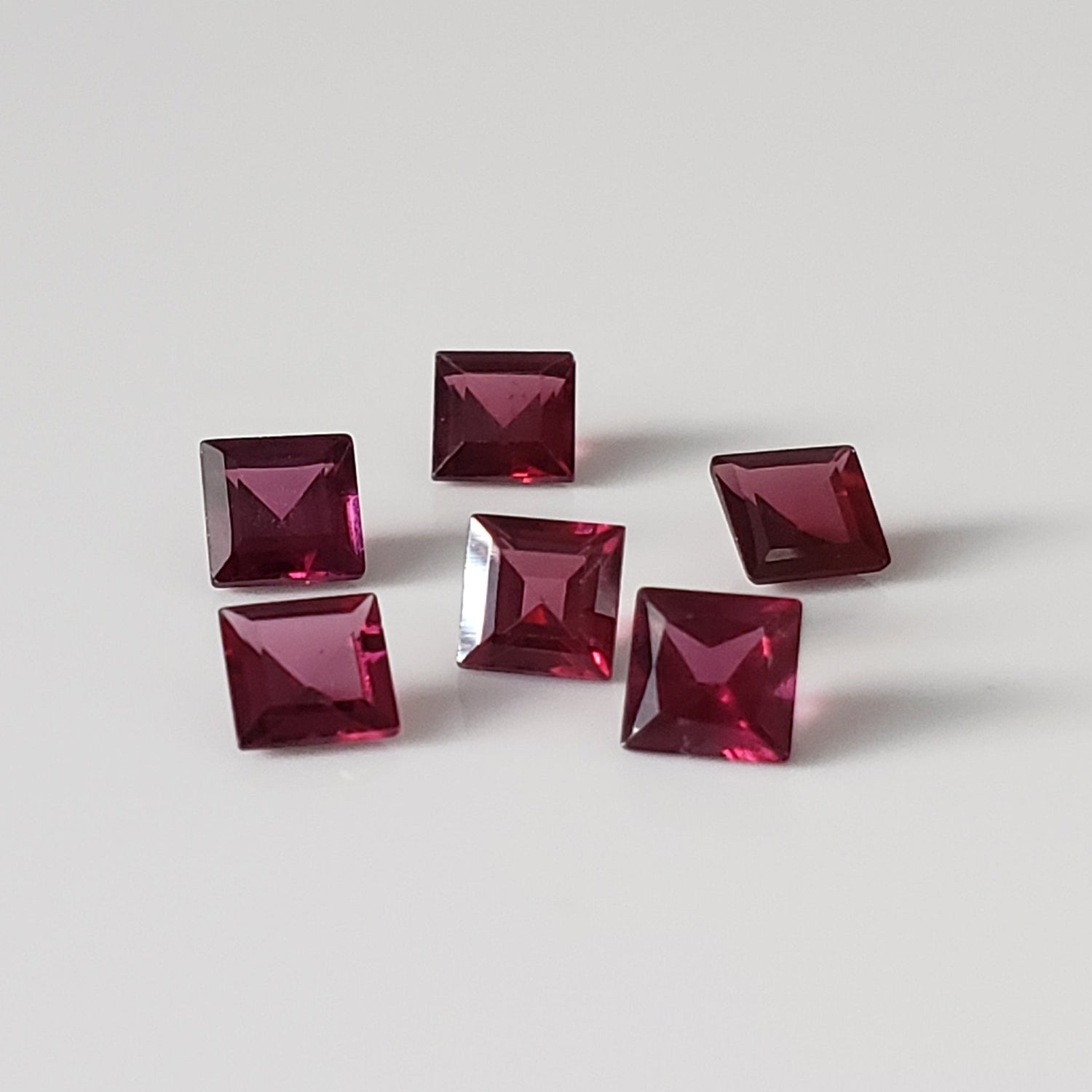
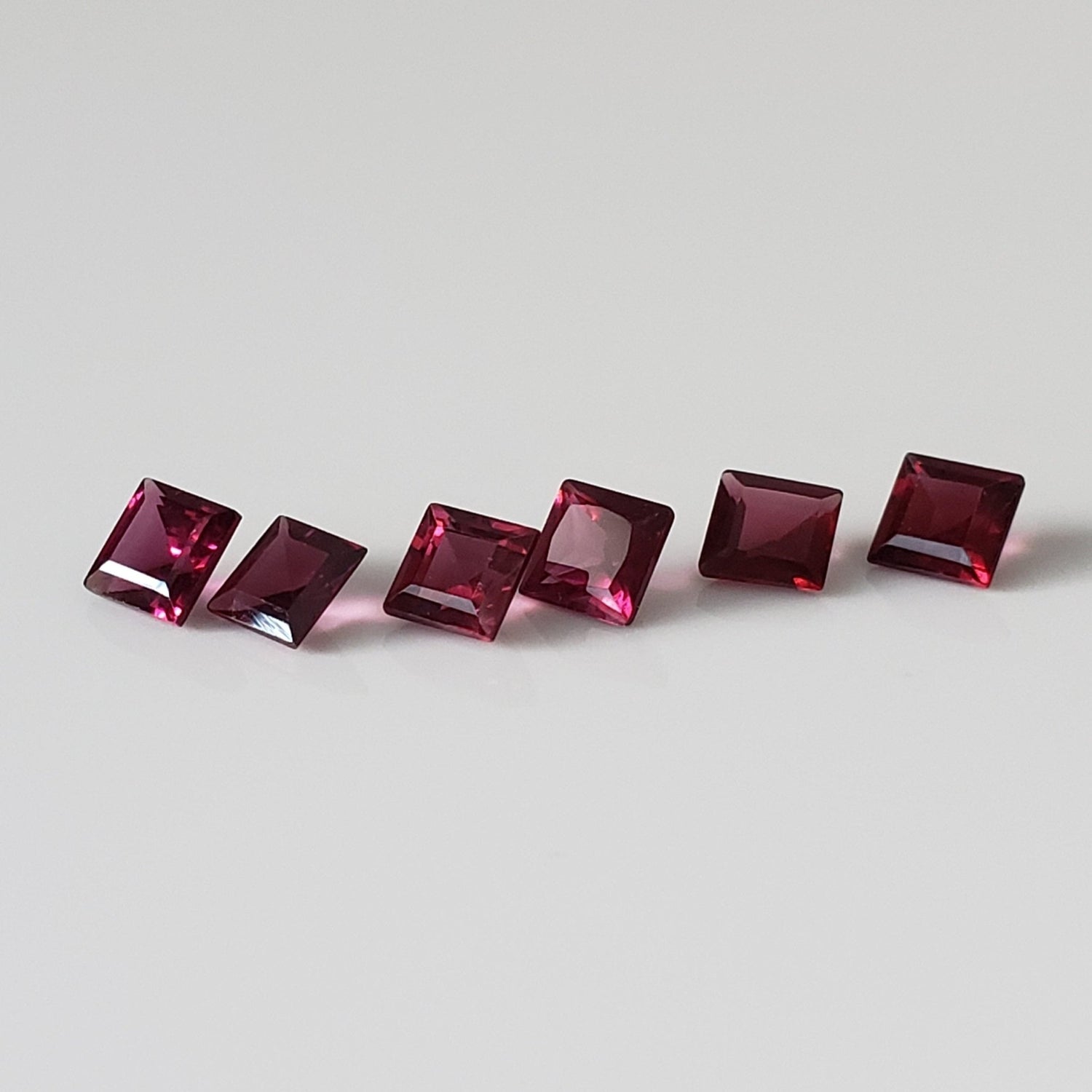
Product Type: Rhodolite Garnet
Approx Weight (per lot): 2.6tcw
Size: 3.8mm - 4.0 mm
Shape: Square Cut
Color: Reddish Purple
Clarity: Clean to the eye
Origin: Tanzania
Treatment: None


This is an outstanding specimen Impact Melt Glass, or "Flädle" glass, from the Lake Mien crater, 12 km (7.5 mi) southwest of the town of Tingsryd, Sweden. It weighs 39.8 grams and measures 54x49x20 mm. Although not a meteorite, impactites are directly linked to them and their impacts.
Impactite is a slag-like glassy object found on the surface of the earth, formed from rock melted by the impact of a meteorite. The term encompasses shock-metamorphosed target rocks, melts or suevites and mixtures of the two, as well as sedimentary rocks with significant impact-derived components and shocked mineral grains, tektites, anomalous geochemical signatures, etc.
This eroded crater is marked by a 5.5-km (3.4-mi) diameter circular lake named Lake Mien. The original crater rim is estimated to have been about 9 km in diameter before erosion. Its age is estimated to be 121.0 ± 2.3 million years (Early Cretaceous). This Suevitic breccia with clastic matrix and melt inclusions (black) and crystalline rock clasts (gray to white) is amazingly light considering its mass. It has a unique hollow sound when you tap it.
Would be a beautiful addition to any new or existing collection. Comes with a Canagem Collection specimen card.


This is a must have 506.7-gram Impact Melt Breccia, also referred to as Suevite, coming from Zipplingen and the famous Ries crater Germany. Although not a meteorite, impactites are directly linked to them and their impacts and are probably going to be one of the rarest collection items you'll ever own. Impactite is a slag-like glassy object found on the surface of the earth, formed from rock melted by the impact of a meteorite.
The term impactite encompasses shock-metamorphosed target rocks, melts or suevites and mixtures of the two, as well as sedimentary rocks with significant impact-derived components and shocked mineral grains, tektites, anomalous geochemical signatures, etc. This impactite was formed 14.5 million years ago in Malmian or Jurassic limestone when a meteorite crashed into the earth making a ~10 miles wide crater named the Ries crater in Germany. This gorgeous end piece displays very well and shows typical inclusions of glass bomb as the dark material and crystalline fragments visible throughout the specimen showing the stages of shock metamorphism.
It is amazingly light considering its mass of 130x109x37 mm. Would be a beautiful addition to any new or existing collection. Comes with a Canagem Collection specimen card.
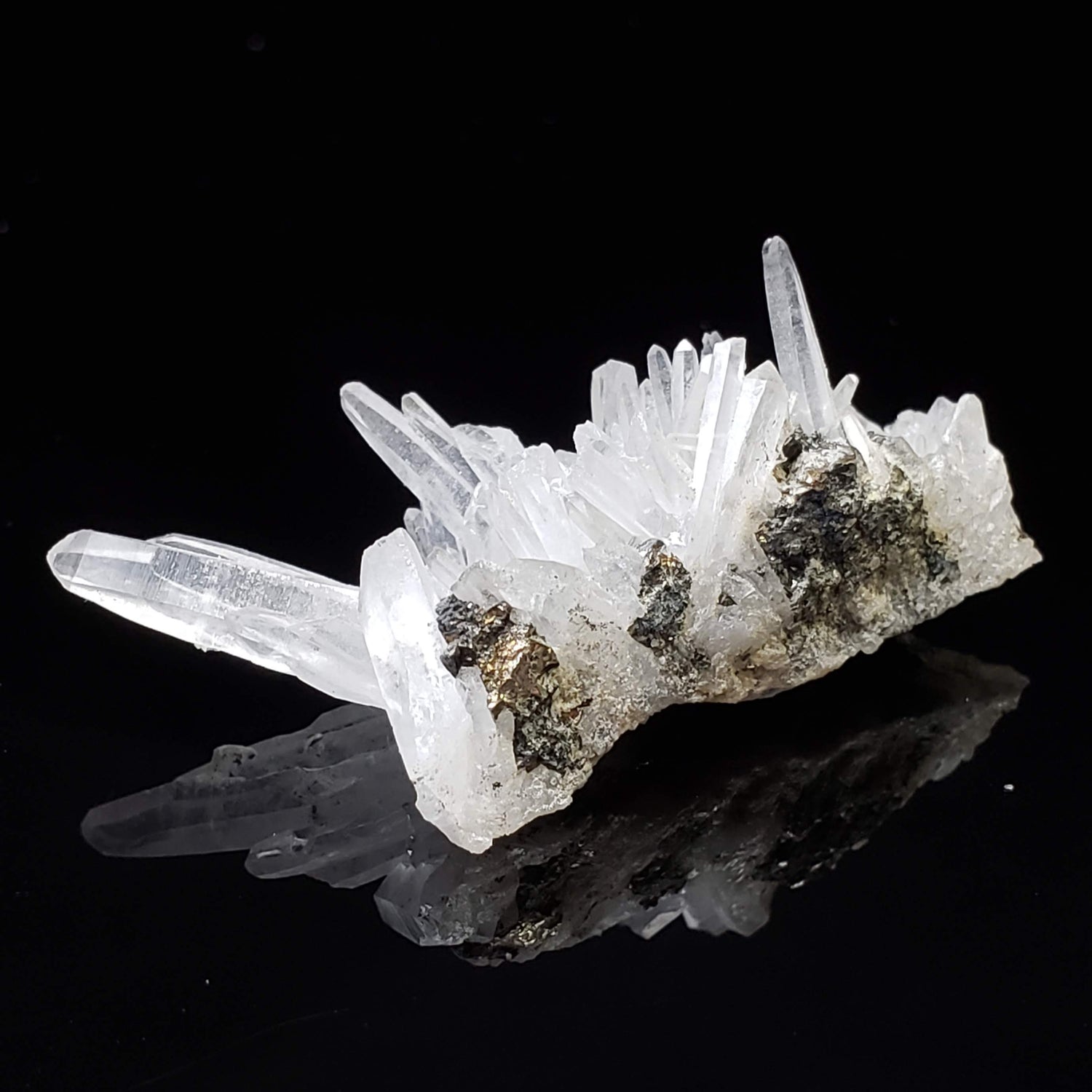
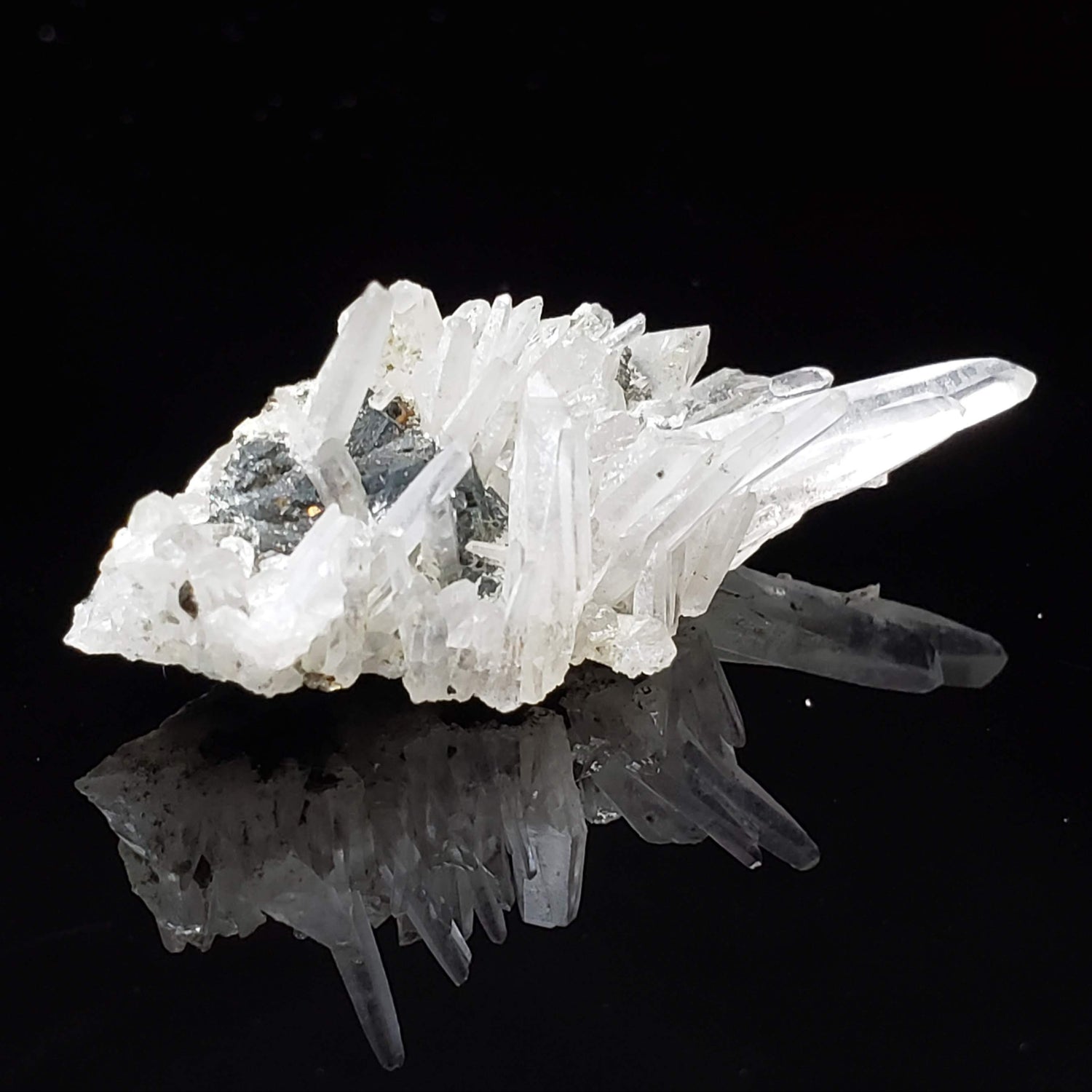
Fine crystal cluster of Quartz points surrounded by many Bornite and Pyrite crystals from the famous Leonard Mine at Butte. The nubby, matte-finish bornite crystal clusters are attractively scattered across the specimen with contrasting brassy pyrite crystals and quartz crystal points.
This top specimen is in very good condition. Would be a beautiful addition to any new or existing collection.
Name: Quartz Points, Bornite and Pyrite Crystal Cluster
Specimen Size: Miniature-Sized
Dimensions: 41x17x19 mm / 1.6x0.7x0.7 inches
Weight: 9.63 Grams / 0.3 oz
Origin: Mined in Leonard Mine, Butte Mining District, Montana USA


This is a must have 96.3 gram Impact Breccia, also referred to as Suevite, from the famous Rochechouart impact structure in South Western France, near the village of Chassenon. Although not a meteorite, impactites are directly linked to them and their impacts and are probably going to be one of the rarest collection items you'll ever own. Impactite is a slag-like glassy object found on the surface of the earth, formed from rock melted by the impact of a meteorite.
Named after the town of Rochechouart, the Rochechouart impact structure is located on the western margin of the French Massif Central near the city of Limoges, approximately 350 km (220 mi) south of Paris. Rochechouart (population about 3800) is built with rocks created or modified by the impact (impactites). Chassenon, a third of the size of Rochechouart, is also built of impactites. Impactite was used 2000 years ago for building Chassenon's monumental Roman baths of Cassinomagus.
The very fine materials (impactoclastites) are preserved forming a very fine layered horizontal deposits on top of the melt rich suevite (breccia with a debris matrix and both rock debris and melt fragments as clasts) near Chassenon.
The term impactite encompasses shock-metamorphosed target rocks, melts or suevites and mixtures of the two, as well as sedimentary rocks with significant impact-derived components and shocked mineral grains, tektites, anomalous geochemical signatures, etc. This impactite was formed 186 million years ago. This deformed rock fragments and partly molten are imbedded in a melt matrix showing typical flow structures from former melt.
This gorgeous end cut displays very well with a mass of 89x62x19 mm. Would be a beautiful addition to any new or existing collection. Comes with a Canagem Collection specimen card.
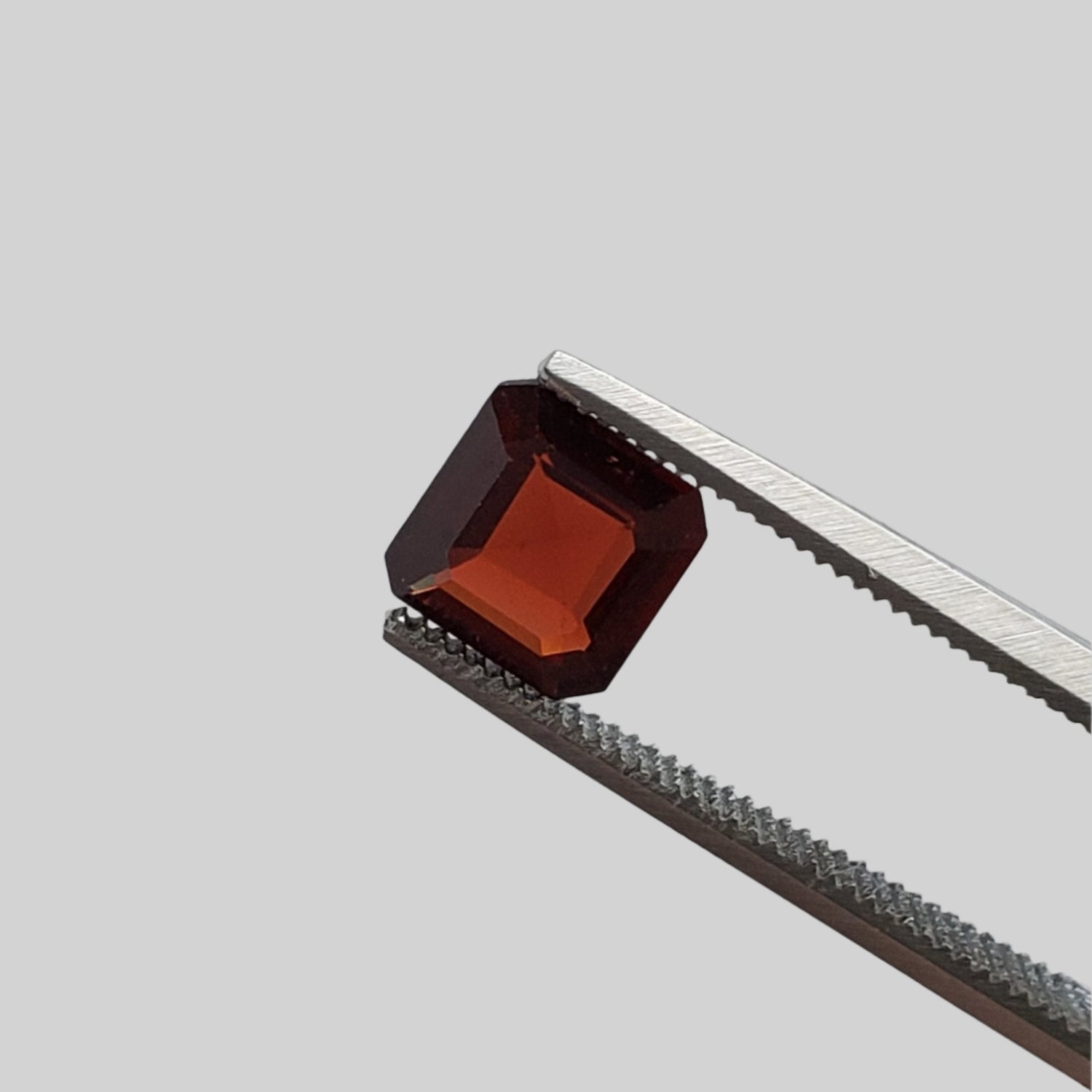
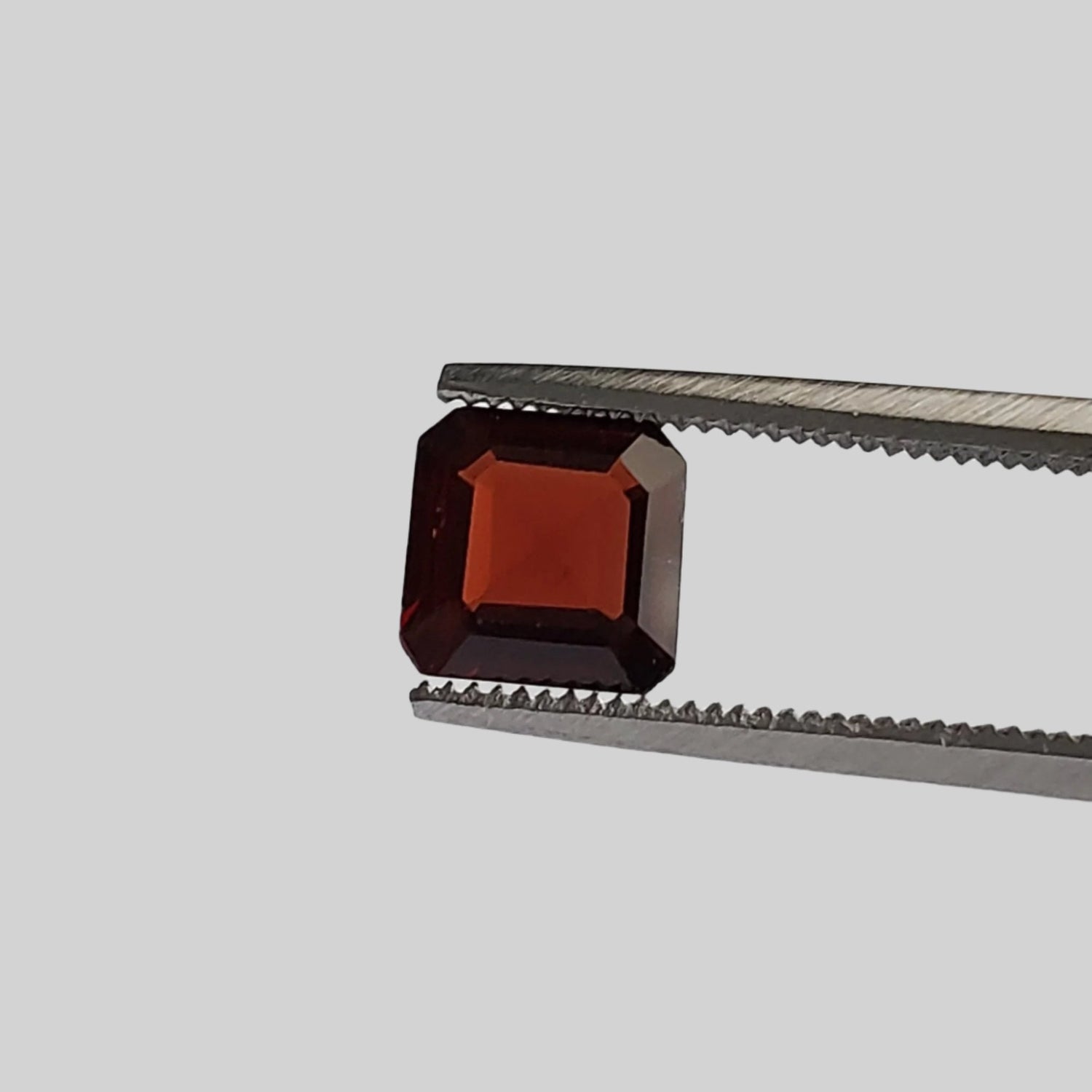
Product Type: Mozambique Garnet
Approx Weight (per piece): 1.0ct
Size: 6x6mm
Shape: Square Cut
Color: Orange Red
Clarity: Clean
Origin: Africa
Treatment: None

Canagem is proud to be professional member of The International Gem Society(IGS) the world's top resource for gem professionals, enthusiasts, and industry content.