


194 products
Sort by:
194 products


This is a must have 4.71 gram impactite from the Boltysh Crater in Ukraine. Its dimensions are 28x27x4mm. Although not a meteorite, impactites are directly linked to them and their impacts and are probably going to be one of the rarest collection pieces you'll ever own. The Boltysh impactites are important geological specimens that are recognized by the scientific community as evidence of asteroid or comet impacts on Earth.
The Boltysh crater is a well-preserved impact crater located in central Ukraine. It was formed approximately 65 million years ago during the Late Cretaceous period, around the same time as the Chicxulub impact that is thought to have caused the mass extinction of the dinosaurs. The crater is estimated to be around 24 kilometers in diameter and is one of the best-preserved impact structures in the world.
The Boltysh crater has been extensively studied by scientists because of its importance in understanding the effects of large-scale impacts on the Earth's surface and the resulting environmental changes that occur. Studies of the rocks and sediments from the crater have provided valuable insights into the processes of impact cratering, such as the formation of impact melt rocks and the creation of shock metamorphic features.
Would be a beautiful addition to any new or existing collection. Comes with a Canagem Collection specimen card.
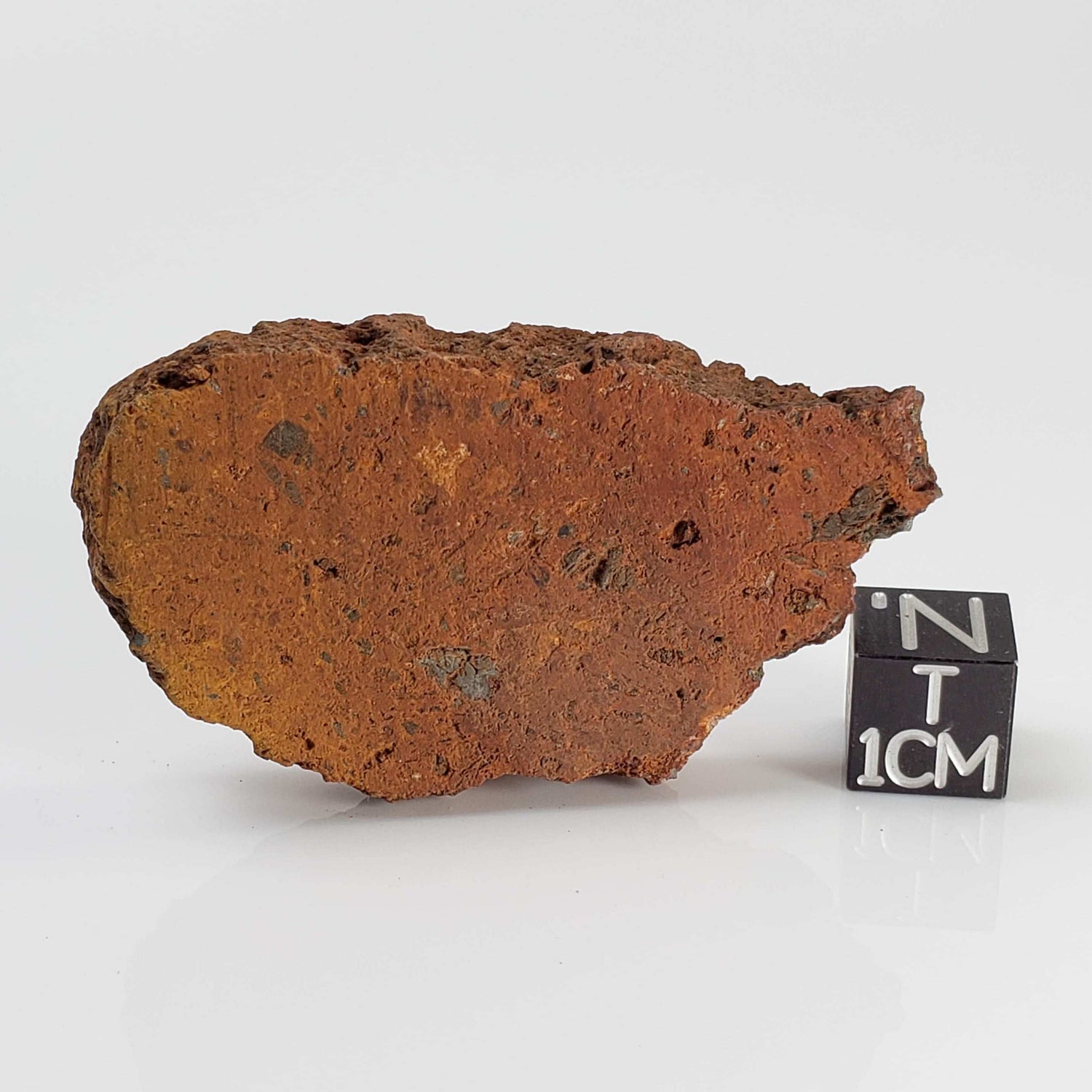
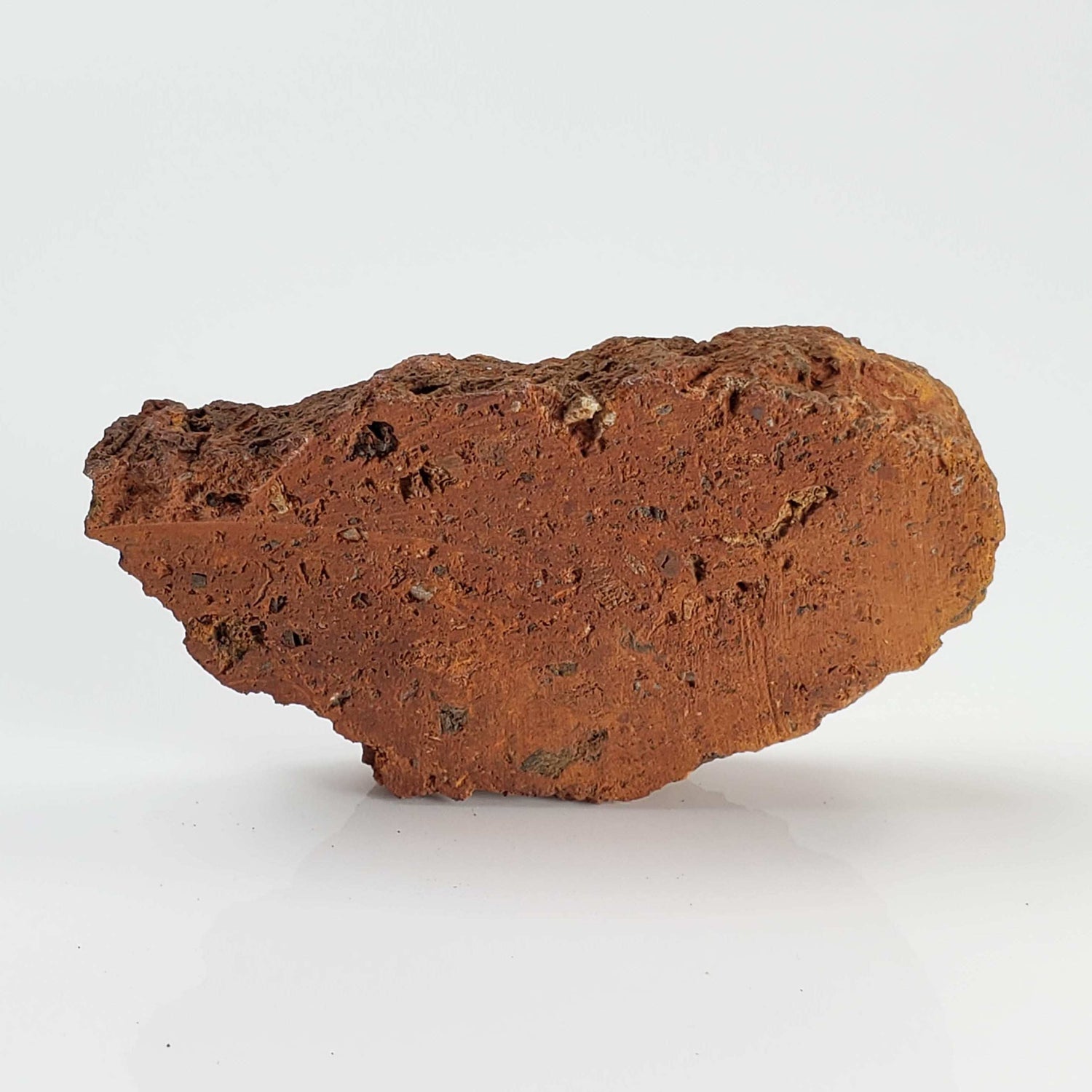
This is a must have 16.88-gram Impactite slice from the Terny Astrobleme (Ukrainian Shield) in Cherkasy Region of Ukraine. Its dimensions are 53x32x8mm. Although not a meteorite, impactites are directly linked to them and their impacts and are probably going to be one of the rarest collection pieces you'll ever own. The Terny impactites are important geological specimens that are recognized by the scientific community as evidence of asteroid or comet impacts on Earth.
The Terny astrobleme is a geological formation located in the Cherkasy region of Ukraine. It is believed to be the result of a meteorite impact that occurred approximately 65 million years ago during the Late Cretaceous period. The impact formed a crater that is estimated to be around 6 kilometers in diameter, although it is largely eroded and filled in with sediment.
It is an important geological site for studying the effects of meteorite impacts on the Earth's surface and the resulting geological processes that occur. It has been the subject of numerous scientific studies, and specimens of the impactite rocks found at the site have been collected and analyzed for their mineralogical and chemical properties.
Would be a beautiful addition to any new or existing collection. Comes with a Canagem Collection specimen card.
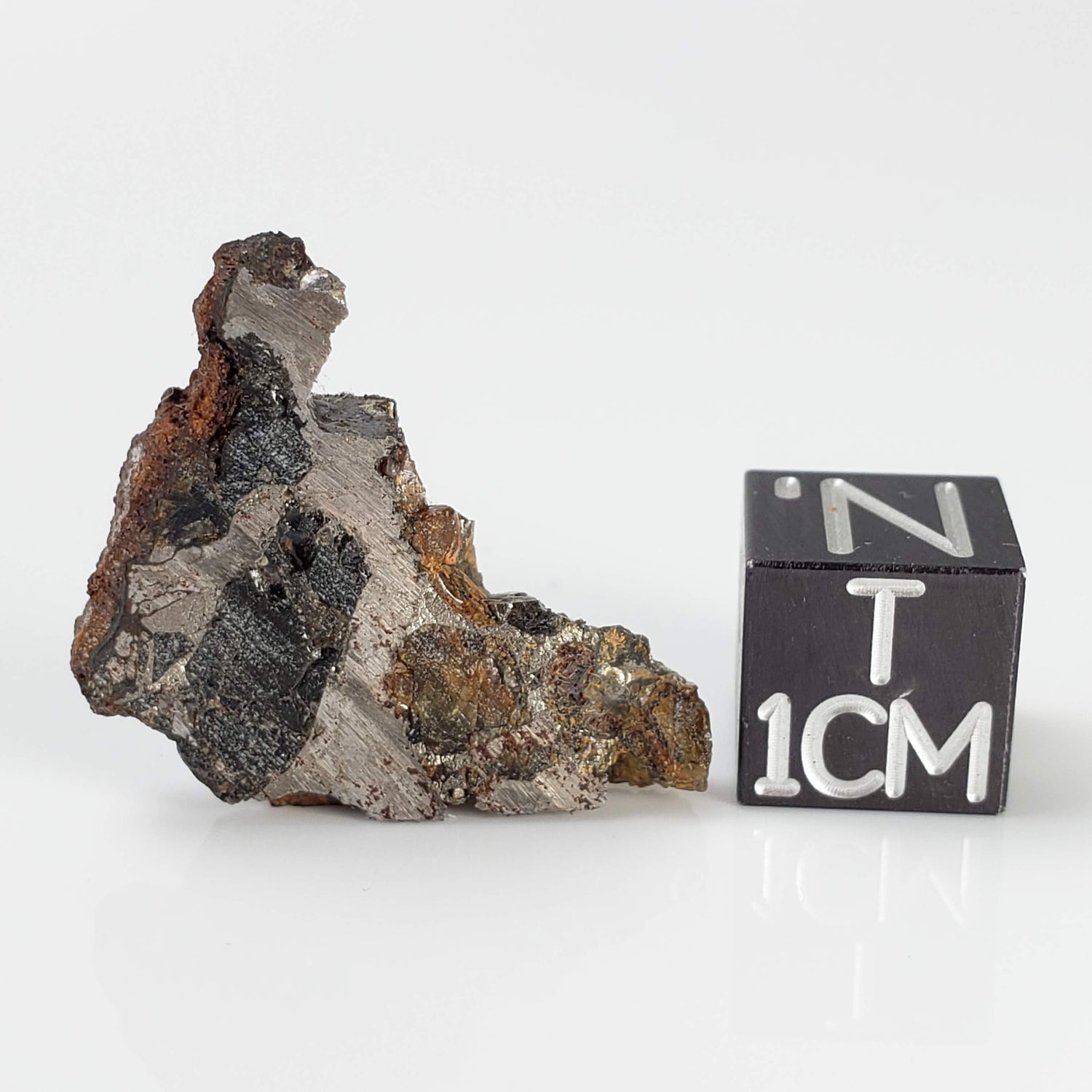
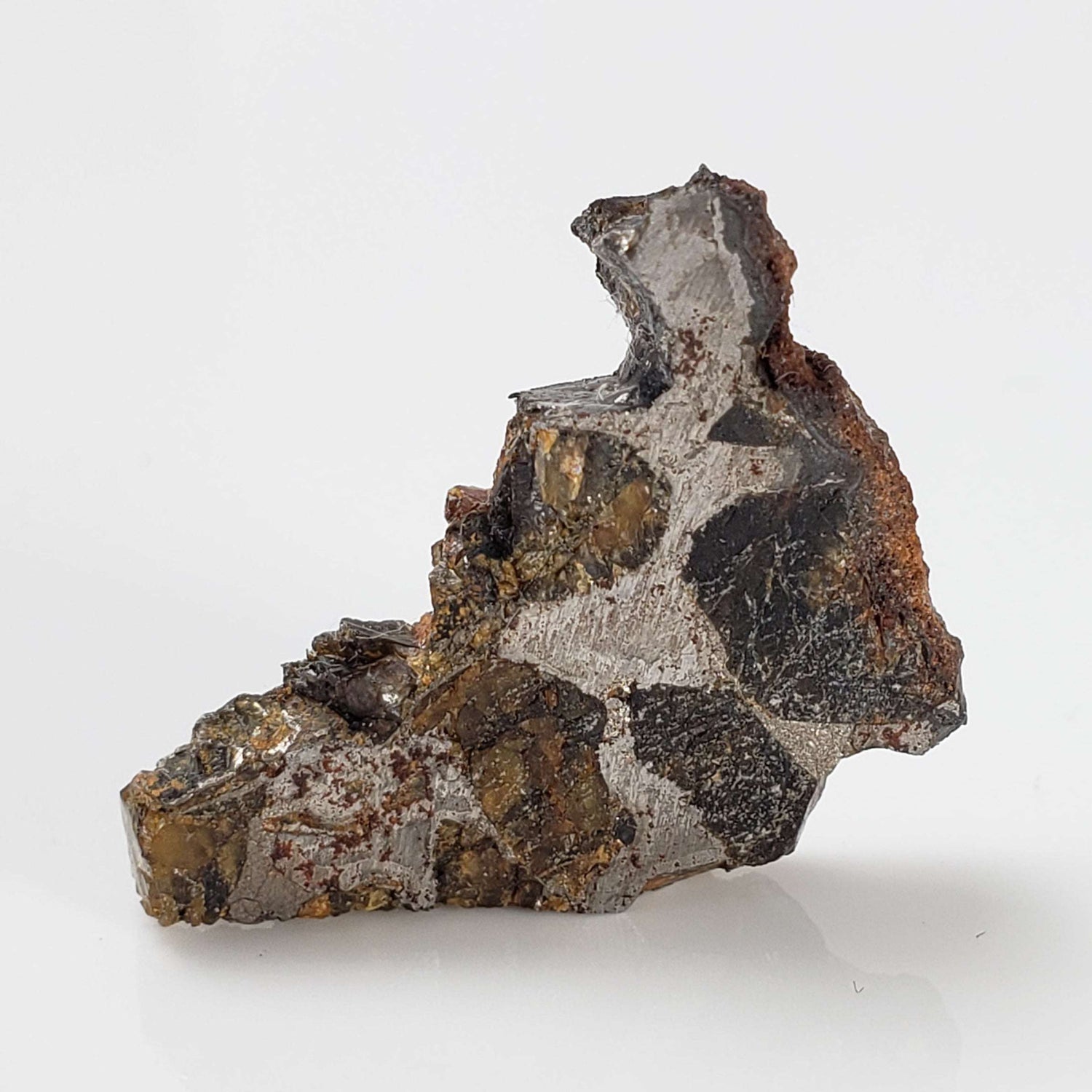
This is a nice 3.87 grams Brahin Pallasite stony iron classified meteorite part slice with dimensions 23x20x3 mm. This rare meteorite was found in Minsk, Gomel Region, Belarus in 1810 and the Total Known Weight is ~ 823 kg.
This piece displays nicely and is a desirable size showing great features. Would be a beautiful addition to any new or existing collection. Comes with a Canagem Collection specimen card.


This is a fantastic Impactite Fallback Breccia from Germany weighing 67.3 grams and measuring 75x59x10mm. Although not a meteorite, impactites and shatter cones are directly linked to them and their impacts. The Steinheim Basin today exhibits a distinct morphological depression that is ∼110 m deep and ∼3.5 km in diameter; the height of the central uplift totals to more than 140 m. The original size of the pristine crater is estimated to be ∼3.8 km with an original depth of ∼205 m.
As this drainless morphological depression was filled by lake sediments shortly after the impact, the primary crater morphology is widely preserved. The crater rim is formed by steeply inclined and intensely brecciated Upper Jurassic limestone blocks that also contain numerous shattered chert nodules, as well as some loose blocks of the host limestone. An impact breccia, referred to as the so-called ”Primäre Beckenbrekzie” (“primary basin breccia”) and interpreted as a “fallback breccia”, is known from many drillings in the Steinheim Basin.
Mainly composed of Middle to Upper Jurassic limestones, marls, mudstones, and sandstones, the impact breccia inside the morphological depression of the Steinheim Basin is overlain by lake sediments and is obviously preserved in its original thickness and position. This piece displays very well and is a very nice size showing multiple characteristics of its origin. Would make a beautiful addition to any collection.
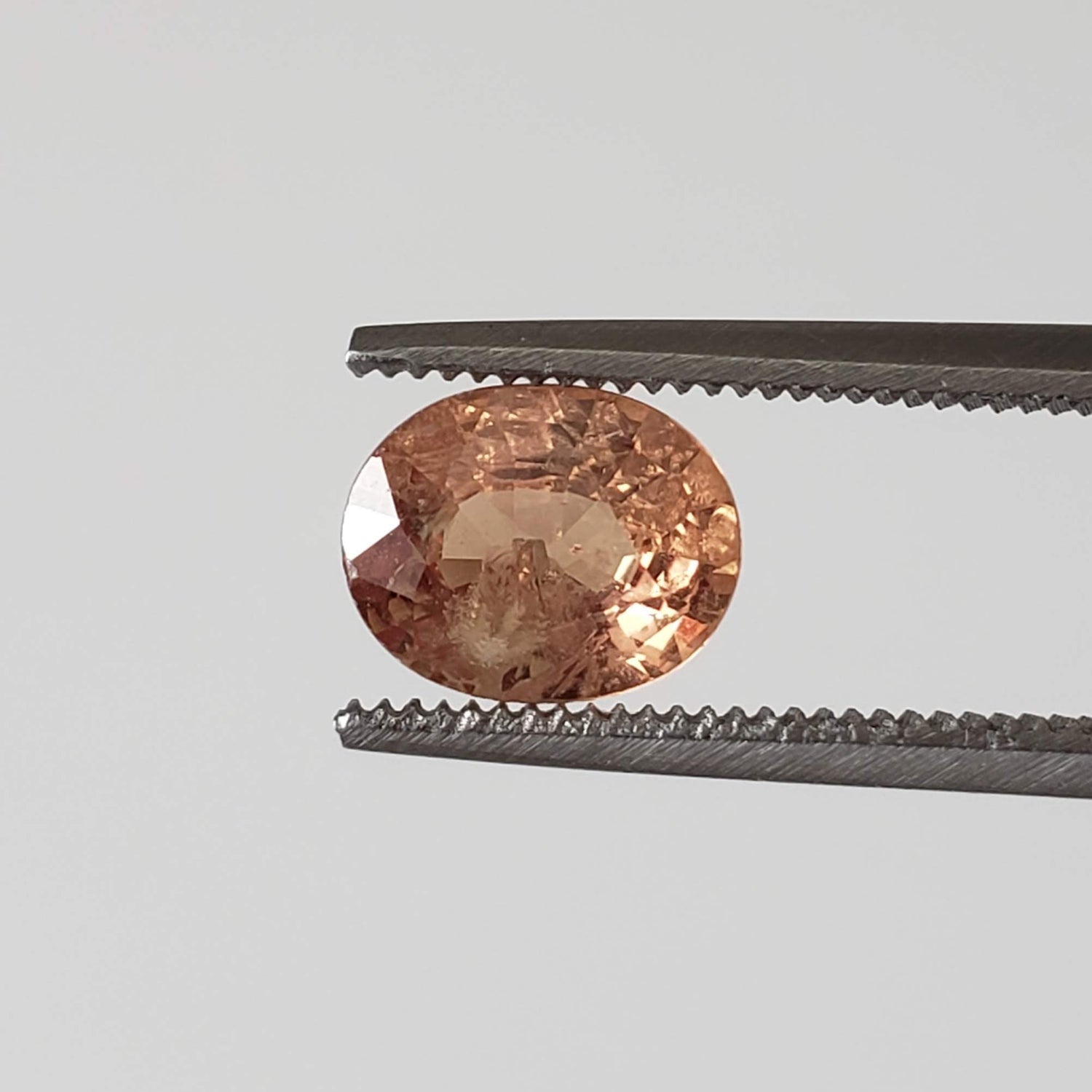
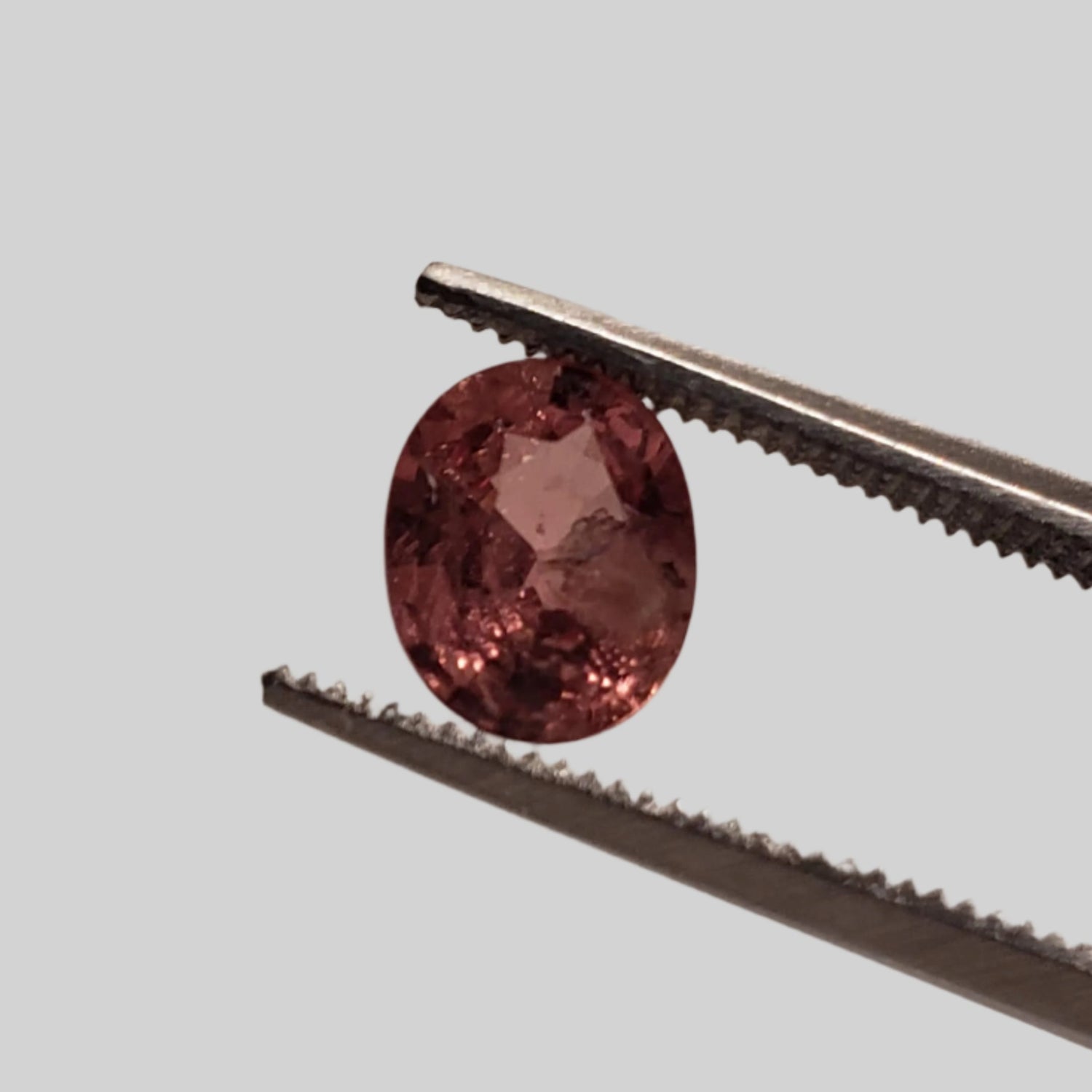
Product Type: Sapphire (Color Change)
Approx Weight (per piece): 1.2ct
Size: 7x5.6mm
Shape: Oval Cut
Color: Color Change yellow to pink
Clarity: Slight Inclusion
Origin: Africa
Color change sapphire is a fascinating variety of corundum that exhibits a noticeable shift in color under different lighting conditions. The most classic example changes from blue in daylight or fluorescent light to violet or purplish-red under incandescent light, but other combinations exist, such as green to reddish-brown or yellow to peach-pink. This natural optical phenomenon is caused by trace elements like chromium and vanadium in the crystal, which absorb and reflect light differently depending on the light source.

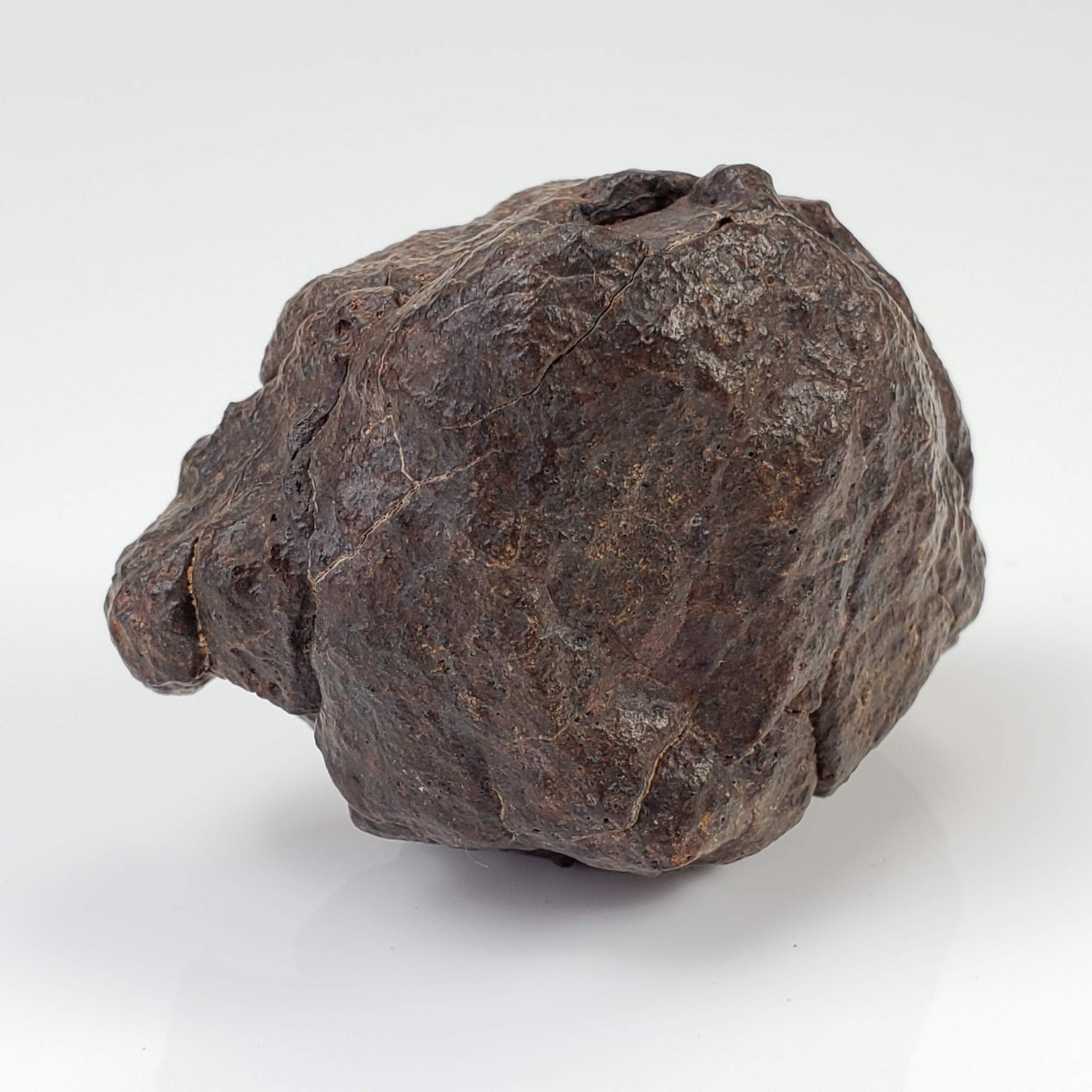
This is a nice looking individual fragment of a Sahara Desert NWA unclassified meteorite. It weighs 81.1 grams and measures 51x37x25 mm. This never classified Northwest Africa stone was found in the Sahara desert around 2000.
It's a good quality NWA meteorite individual fragment. Some weathering shows the meteorite's time spent aging in the desert. Would be a beautiful addition to any new or existing collection. Comes with a Canagem Collection specimen card.


These are perfect rosettes of metallic, lustrous molybdenite, almost completely exposed in a glassy quartz matrix crystals from Moly Hill, Abitibi-Temiscamingue, Québec, Canada. The largest of the crystals is 12x10 mm (0.5x0.4 inches). Molybdenite is commonly found as foliated masses meaning the mineral forms folia or layers, like the mineral mica. It is metallic gray, has a greasy feel, and is very soft at only 1 on Mohs' hardness scale. Its softness, metallic luster and gray color led scientists to mistakenly believe it was a lead mineral. This specimen shows the typical hexagonal layered structure of the crystal.
Some believe molybdenite is linked to intuition, transformation, and problem-solving, helping with mental clarity and adaptability. It is sometimes associated with the third eye chakra, thought to enhance insight and creative thinking.
Name: Molybdenite Crystals
Specimen Size: Miniature-Sized
Dimensions: 41x32x17 mm / 1.6x1.3x0.7 inches
Weight: 21.4 Grams / 0.7 ounces
Origin: Mined in Moly Hill, La Motte, Abitibi-Temiscamingue, Québec, Canada


This mineral combination is from a classic locality, the Newfoundland Zinc Mine, which has been closed for many years. This mine was a high grade zinc mine with very little contaminants in the ore which made it easier to mill and produced good concentrate. This site is known for beautiful mineral specimens, particularly sphalerite crystals often associated dolomite.
The sphalerite from this region typically appears as dark brown to black, resinous crystals, sometimes with red or orange undertones due to iron content. These crystals often serve as a striking backdrop for the light-colored dolomite, which forms as rhombohedral or curved aggregates on top. The contrasting colors and textures make specimens from Daniel’s Harbor highly collectible.
Very nice showy material in excellent condition and a collectors dream specimen.
Name: Dolomite on Sphalerite Crystals
Specimen Size: Miniature-Sized
Dimensions: 41x27x19 mm / 1.6x1.1x0.7 inches
Weight: 25 Grams / 0.8 Ounces
Origin: Newfoundland Zinc Mine, Daniel's Harbor, NL, Canada


Product Type: Ruby
Approx Weight (per piece): 0.06ct
Size: ~ 2.4x1.7mm (up to .2 variation)
Shape: Tapered Baguette Cut
Color: Hot Pink
Clarity: Clean
Origin: Myanmar (Burma)


This is a fantastic crusted 26.1 grams NWA (Northwest Africa) 869 L3-6 classified meteorite Individual found by Nomads in the Sahara Desert. The dimensions of the specimen are 46x24x16 mm.
NWA 869 classified meteorites can still be interesting and this one is for sure perfectly shaped to catch your attention. It displays a superb crust on most of its surface. Most samples are individual meteorites but some fragments (mostly >1 kg) also occur. In most cases the fusion crust has been polished or ablated by wind erosion. Many samples are more severely affected and show faces with deep wind erosion features. Fracture faces, formed by ground collision, show a typical gray-green color and sometimes visible brecciation (light and/or dark clasts).
Would be a beautiful addition to any new or existing collection. Comes with a Canagem Collection specimen card.

Canagem is proud to be professional member of The International Gem Society(IGS) the world's top resource for gem professionals, enthusiasts, and industry content.