



295 products
Sort by:
295 products


This is a must have 51.4 gram Impact Breccia also referred to as Suevite coming from the famous Rochechouart impact structure in South Western France,. Although not a meteorite, impactites are directly linked to them and their impacts and are probably going to be one of the rarest collection items you'll ever own. Impactite is a slag-like glassy object found on the surface of the earth, formed from rock melted by the impact of a meteorite.
Named after the town of Rochechouart, the Rochechouart impact structure is located on the western margin of the French Massif Central near the city of Limoges, approximately 350 km (220 mi) south of Paris. Rochechouart (population about 3800) is built with rocks created or modified by the impact (impactites).
The term impactite encompasses shock-metamorphosed target rocks, melts or suevites and mixtures of the two, as well as sedimentary rocks with significant impact-derived components and shocked mineral grains, tektites, anomalous geochemical signatures, etc. This impactite was formed 186 million years ago. This deformed rock fragments and partly molten are imbedded in a melt matrix showing typical flow structures from former melt.
This gorgeous slice displays very well with a mass of 81x58x8 mm. Would be a beautiful addition to any new or existing collection. Comes with a Canagem Collection specimen card.

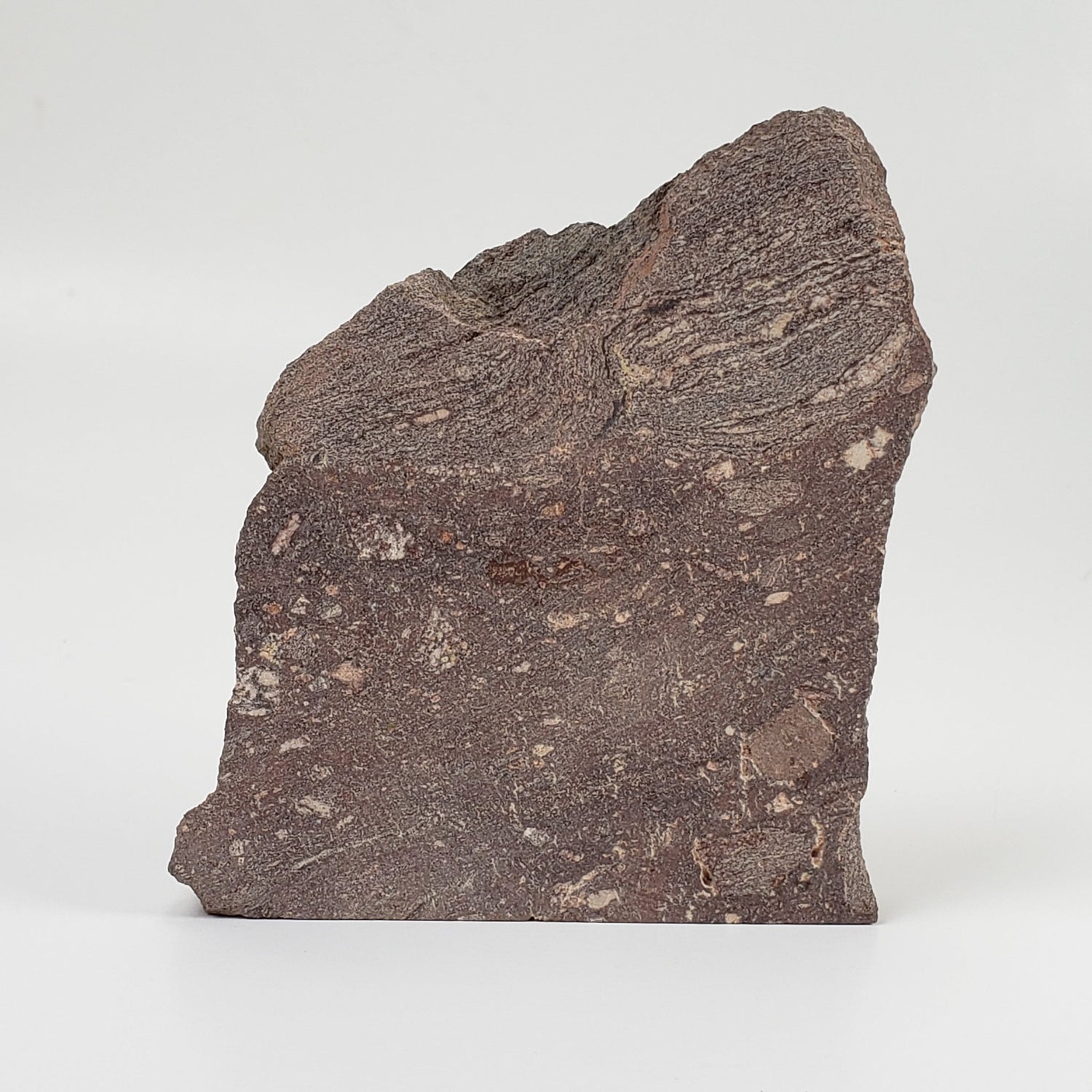
This is a must have 130 gram Impact Breccia also referred to as Suevite coming from the famous Rochechouart impact structure in South Western France,. Although not a meteorite, impactites are directly linked to them and their impacts and are probably going to be one of the rarest collection items you'll ever own. Impactite is a slag-like glassy object found on the surface of the earth, formed from rock melted by the impact of a meteorite.
Named after the town of Rochechouart, the Rochechouart impact structure is located on the western margin of the French Massif Central near the city of Limoges, approximately 350 km (220 mi) south of Paris. Rochechouart (population about 3800) is built with rocks created or modified by the impact (impactites).
The term impactite encompasses shock-metamorphosed target rocks, melts or suevites and mixtures of the two, as well as sedimentary rocks with significant impact-derived components and shocked mineral grains, tektites, anomalous geochemical signatures, etc. This impactite was formed 186 million years ago. This deformed rock fragments and partly molten are imbedded in a melt matrix showing typical flow structures from former melt.
This gorgeous slice displays very well with a mass of 90x77x10 mm. Would be a beautiful addition to any new or existing collection. Comes with a Canagem Collection specimen card.
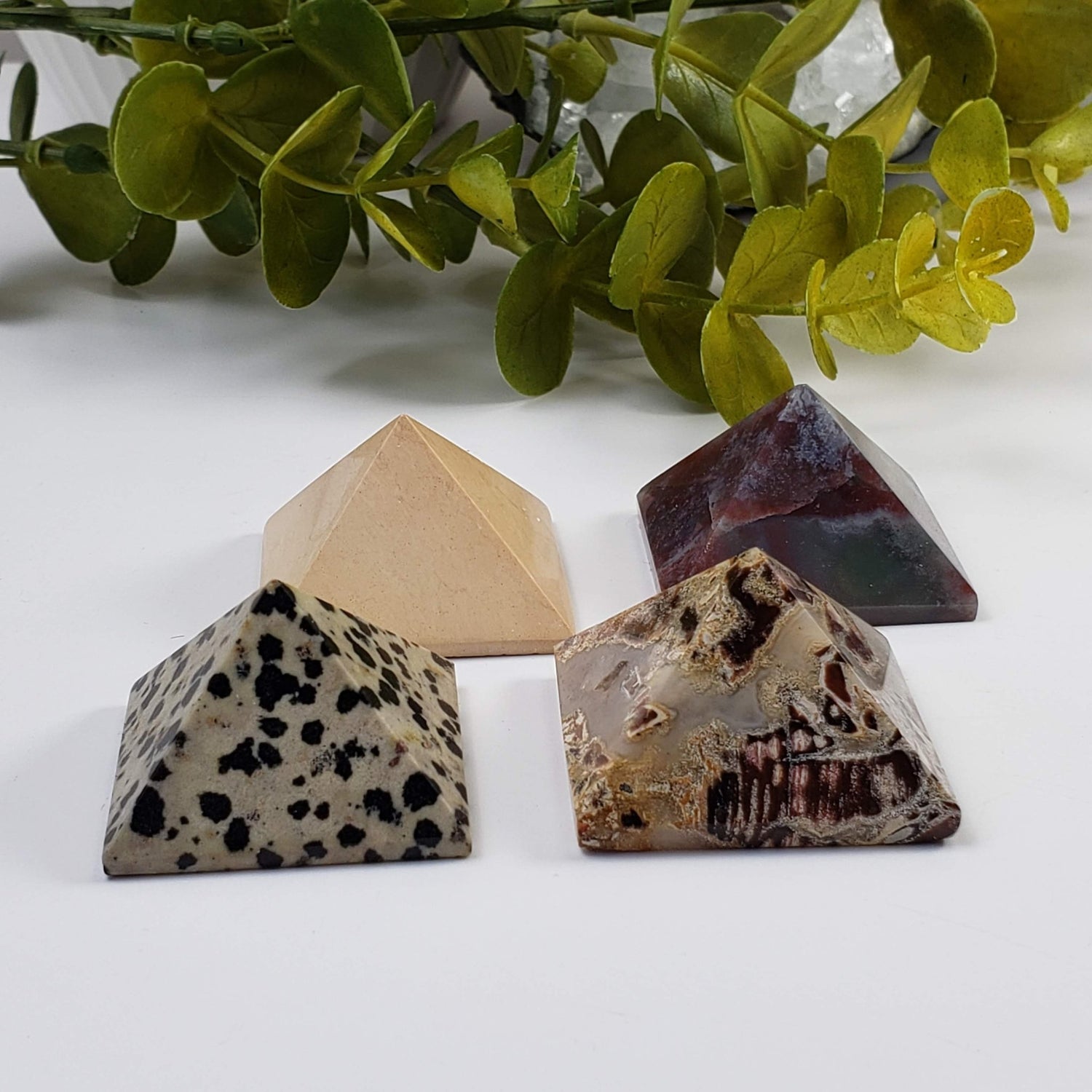
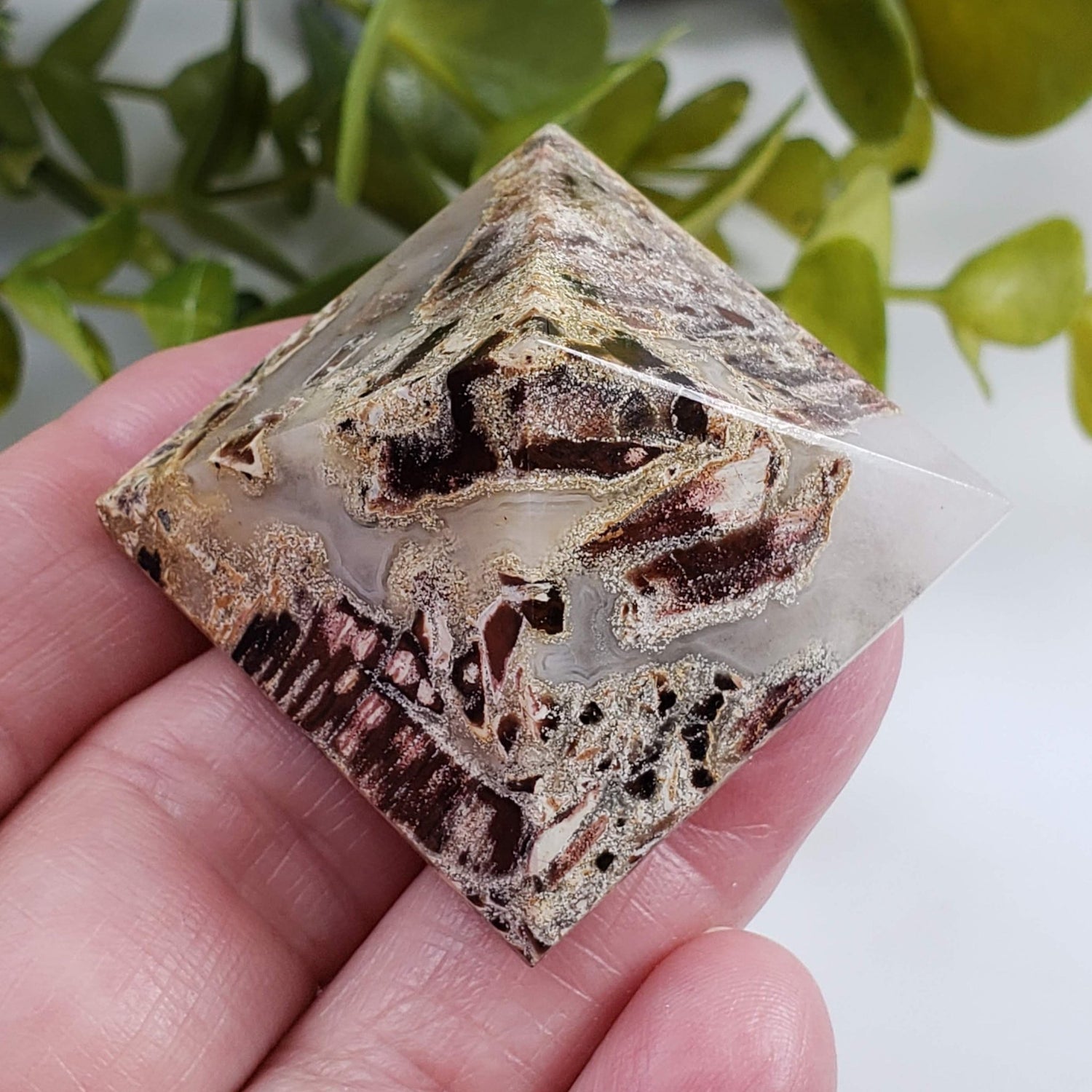
Jasper is a form of chalcedony, which is a type of microcrystalline quartz. It comes in a wide range of colors and patterns, often with unique banding, swirls, or speckles. Jasper is found all over the world and has been used for centuries in jewelry, carvings, and decorative objects due to its beauty and durability.
Beautiful colors for a set of display specimens which are perfect anywhere in your home.
Product Type: Jasper (One each of Brecciated, Dalmatian, Fancy and Desert (Sand))
Approx Weight (per lot) : 151.2 grams / 5.3 ounces
Size: 38x38x26 mm / 1.5x1.5x1.0 inches
Origin: Brazil


This is an excellent specimen of Zircon from the world renowned location that is Mount-Saint Hilaire. This beautiful crystal would be a great addition to any new or existing collection.
Name: Zircon on Analcime
Specimen Size: Miniature-Sized
Dimensions: 54x42x41 mm / 2.1x1.6x1.6 inches
Weight: 76.7 Grams / 2.7 Ounces
Origin: Mined in Mont-Saint-Hilaire, Québec, Canada


Here we have for you a superb looking Dhofar 020 classified meteorite weighing 40.3 grams. Its dimensions are 56x37x14 mm. Found 10 March 2000 in Dhofar, Oman, in the Arabian Peninsula this H4/5 classified chondrite has a TKW of 256 Kg with a shock stage of S4 and weathering grade of W3 by the Russian Academy of Sciences, USSR.
The following is an excerpt from Mark Bostick's review of this meteorite: "Dhofar 020 is a ordinary stone chondrite meteorite. The meteorite is high in free metal and therefore falls in the H class. S4 tells it is highly shocked. Slices of the meteorite, show veins of the cosmic impact created mineral Ringwoodite, although fractures in the stone tend to hide this some. It almost appears to me to have splinted upon impact. The meteorite falls in 4-5 petrology class, a reference to how metamorphed the meteorite is from its original state. This is judged by studying a thin section of the meteorite, most visually at the chondrules, a feature unique to stone meteorite. In a thin section under polarized light, pyroxene chondrules seem more common then their olivine pair. Still some regions in the meteorite show scattered patches of bright olivine inclusions. These are fairly rare, at least on my thin section, and most of the meteorite's olivine and pyroxene, some of the easier things to see in a thin section, appear to have went through a metamorphism, and have "melted" into the matrix and are at times undistinguishable."
This piece displays extremely well showing a beautiful crust, superb shape and good size. Would be a beautiful addition to any new or existing collection. Comes with a Canagem Collection specimen card.
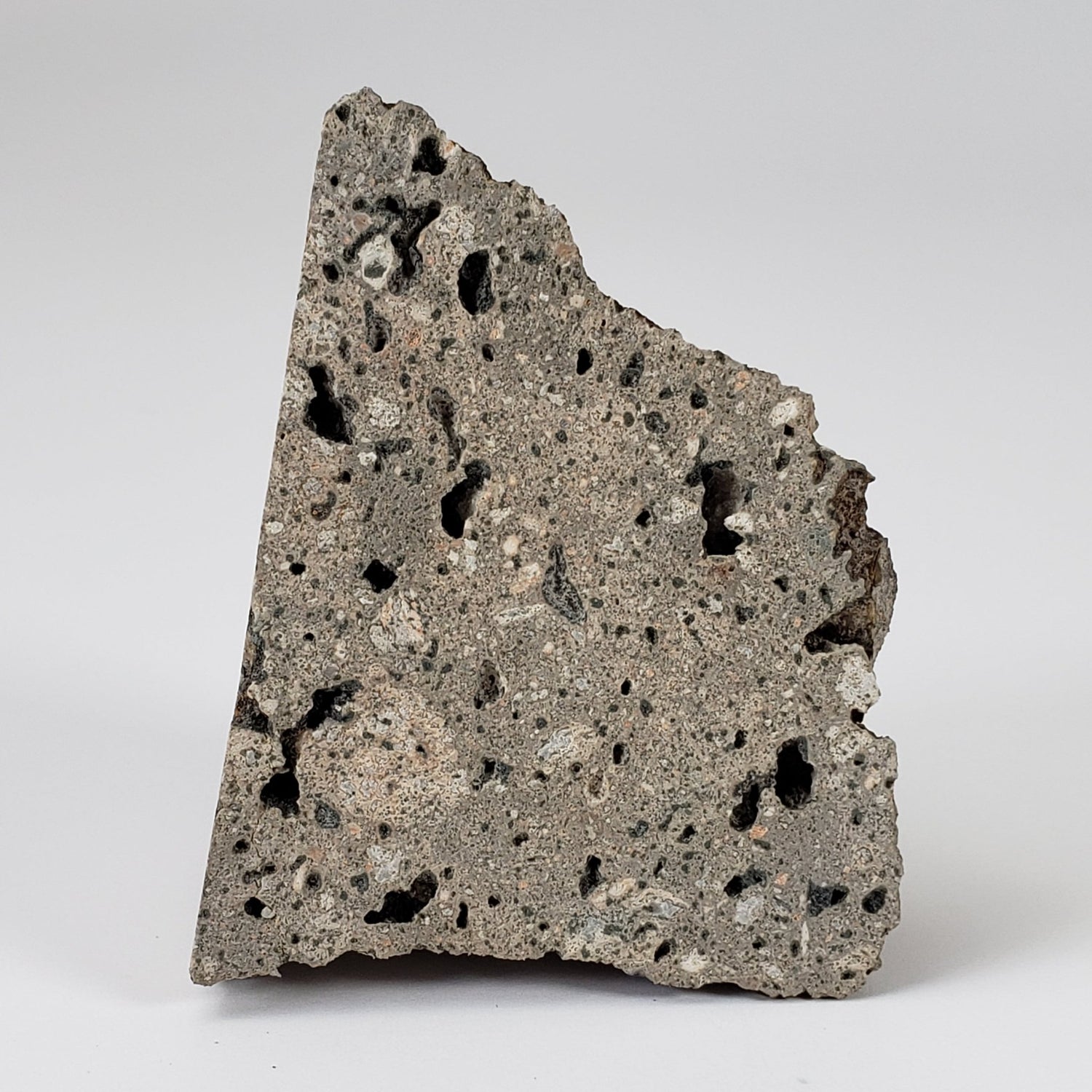
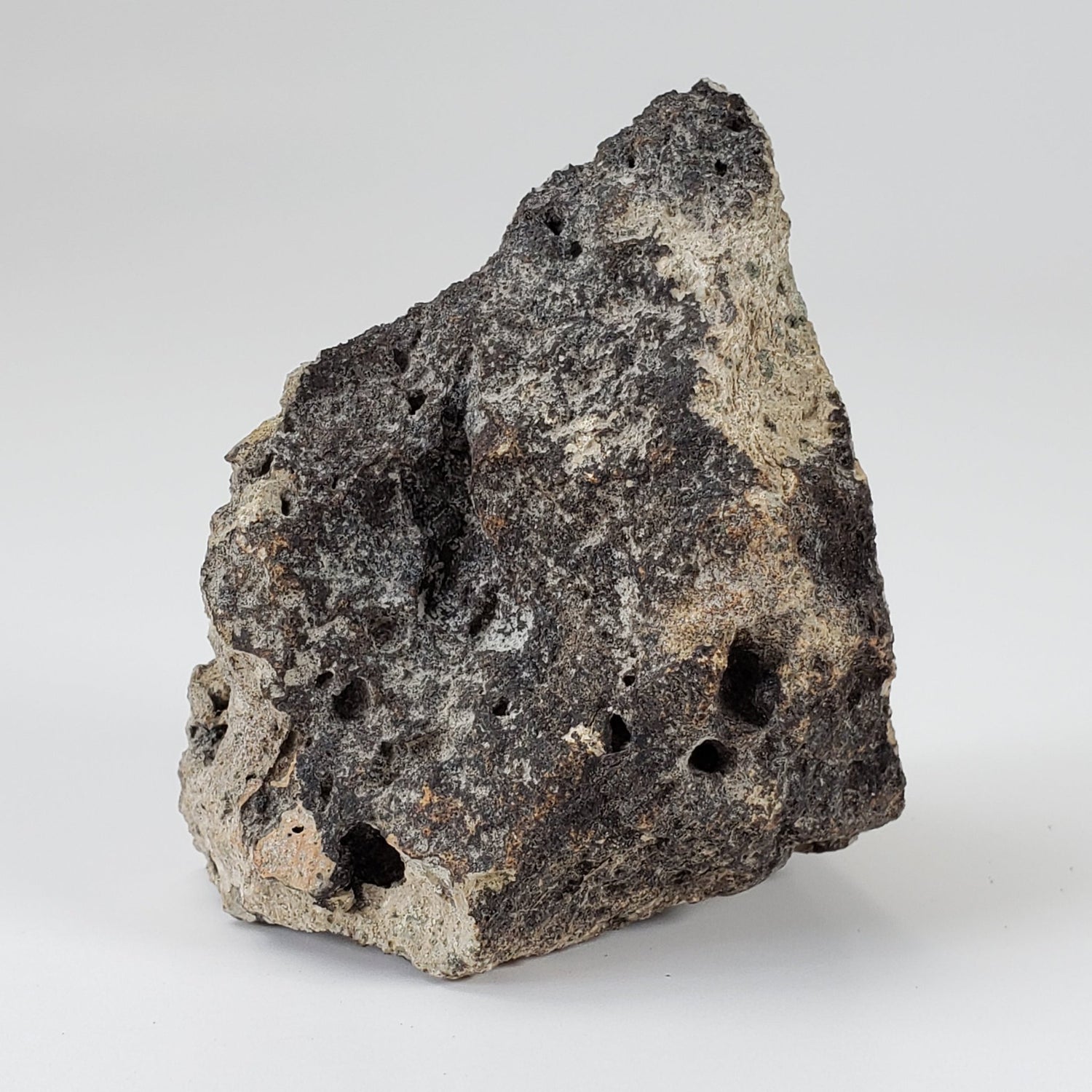
This is a great 50.7 gram Impact Melt Breccia from the Sääksjärvi crater in Finland. It is amazingly light considering its mass of 54x42x25 mm. Although not a meteorite, impactites are directly linked to them and their impacts and are probably going to be one of the rarest collection item you'll ever own. Impactite is a slag-like glassy object found on the surface of the earth, formed from rock melted by the impact of a meteorite.
The term impactite encompasses shock-metamorphosed target rocks, melts or suevites and mixtures of the two, as well as sedimentary rocks with significant impact-derived components and shocked mineral grains, tektites, anomalous geochemical signatures, etc.
Sääksjärvi is a lake in Kokemäki, Satakunta, western Finland, east of the town of Pori. The lake is notable because it overlies an impact crater. The crater is 5 kilometres (3 mi) in diameter and is completely buried under the lake and is not visible at the surface. The age of the impact structure is estimated to be about 543 ± 12 Ma (million years ago), at the boundary between the Ediacaran and Cambrian periods. There are impactite rocks in the southwestern region from the crater confirming its extraterrestrial origin. At the time of its discovery, only one impact crater (Lappajärvi) was known in Finland.
Would be a beautiful addition to any new or existing collection. Comes with a Canagem Collection specimen card.
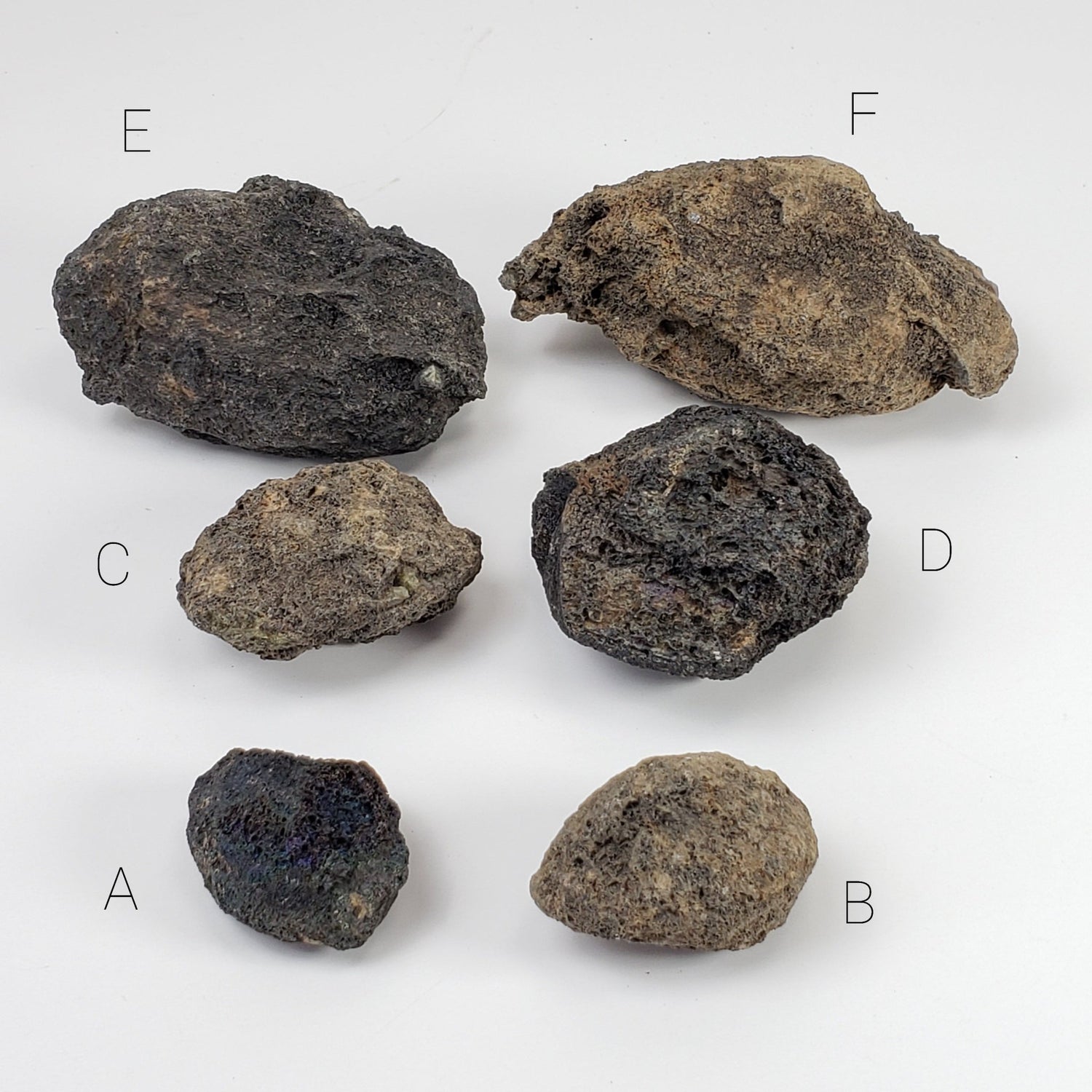
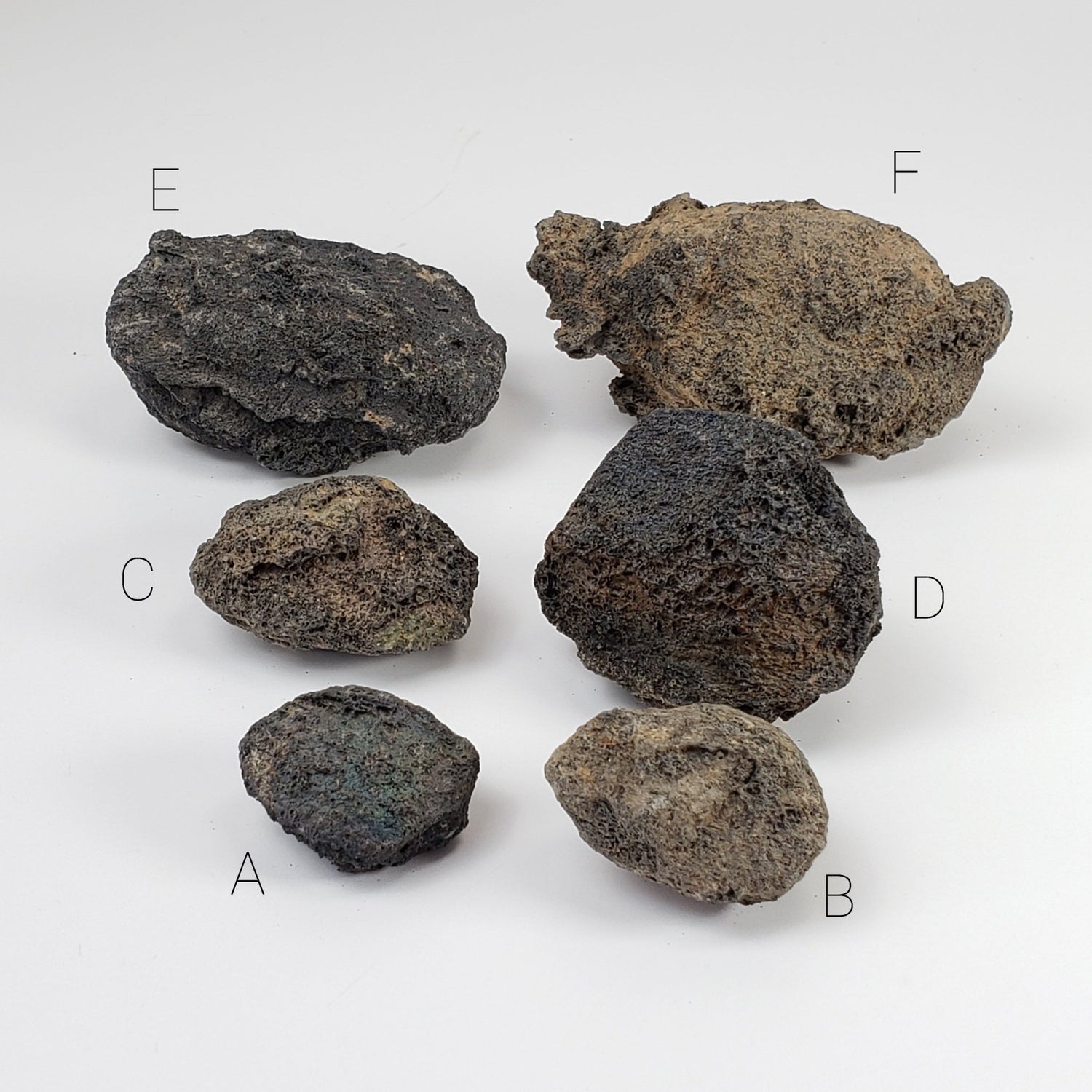
These are whole, uncut lava coated volcanic bombs from Mortlake, Victoria, Australia . The lava crust on these pieces is complete, they can be showcased as is or cut to show the interior. The lava is most likely covering green olivine crystals.
An olivine volcanic bomb is a type of volcanic rock that contains olivine crystals and has been ejected during a volcanic eruption. Olivine is a mineral that is commonly found in the Earth's mantle and is one of the first minerals to crystallize as magma cools.
Volcanic bombs are large clots of lava that are ejected from a volcano during an explosive eruption. They can vary in size, and their shapes are often streamlined due to their molten nature as they are thrown through the air. When these volcanic bombs contain olivine crystals, they are referred to as olivine volcanic bombs.
The dimensions and weight of each of these olivine bombs are as follows:
A. 32x25x17 mm / 1.3x1.0x0.7 in | 14.2 gr / 0.5 oz
B. 37x25x22 mm / 1.5x1.0x0.9 in | 23 gr / 0.8 oz
C. 43x34x21 mm / 1.7x1.3x0.8 in | 37 gr / 1.3 oz
D. 49x44x34 mm / 1.9x1.7x1.3 in | 63.6 gr / 2.2 oz
E. 66x44x33 mm / 2.6x1.7x1.3 in | 113.5 gr / 4.0 oz
F. 79x48x38 mm / 3.1x1.9x1.5 in | 145.4gr / 5.1 oz
Any of these Olivine Bombs would be a beautiful addition to any new or existing collection. Comes with a Canagem Collection specimen card.


Here's a beautiful cluster of glassy green diopside crystals from Otter Lake, Québec. The specimen is made up of about six inter grown diopside crystals with some small attached biotite mica crystals. The largest diopside is 2.5cm across x 3.5cm. This is a floater specimen and all crystals are complete. The specimen is in excellent condition. The diopside crystals are prismatic habit with complex terminations. It has a nice luster and lovely green color. Would be a beautiful addition to any new or existing collection.
Name: Green Diopside crystal
Specimen Size: Miniature-Sized
Dimensions: 32x34x32 mm / 1.2x1.3 x 1.2 inches
Weight: 31 Grams / 1.1 oz
Origin: Famous Western Québec Location, Otter Lake area, Canada
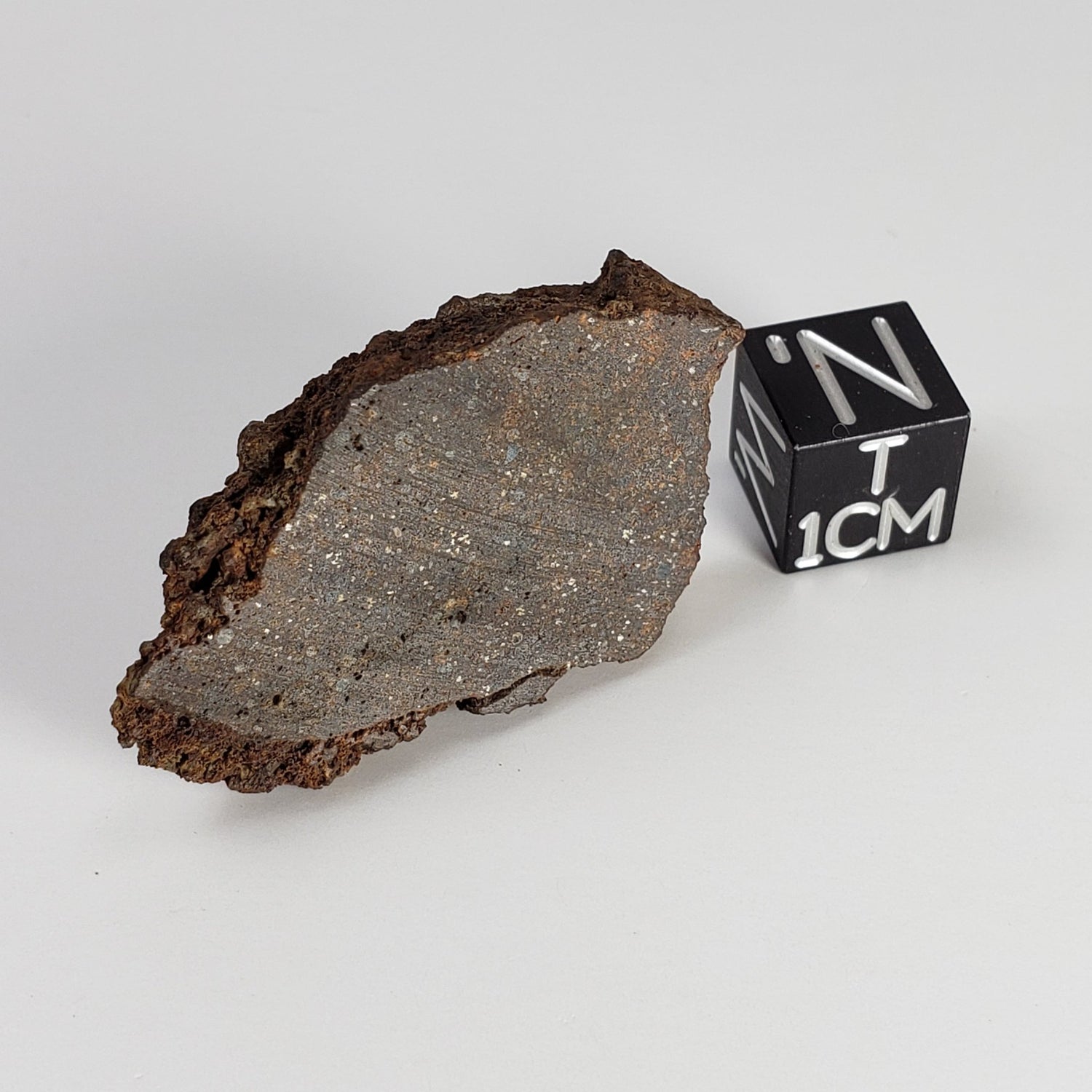
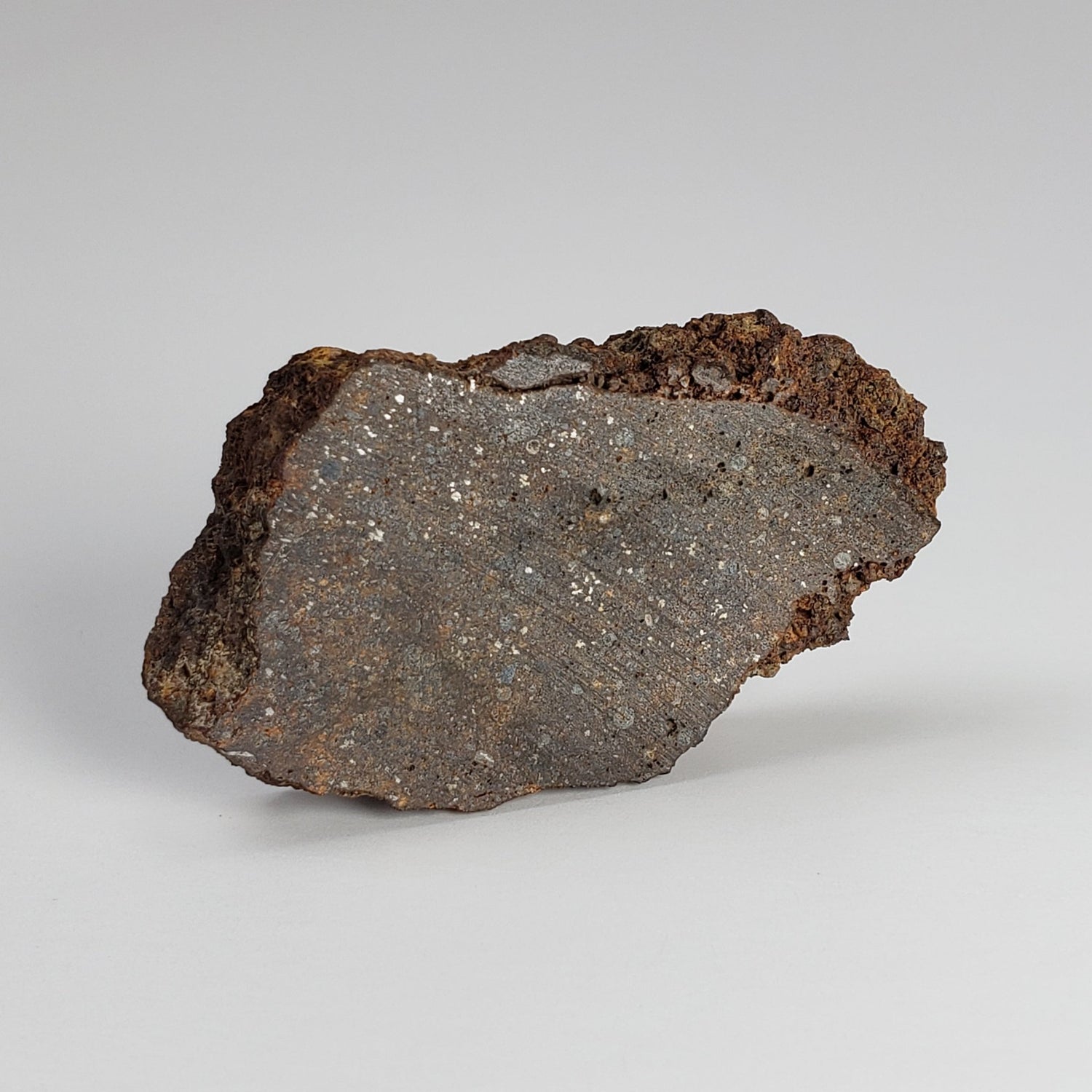
This is an incredible Korra Korrabes meteorite slice of 11.1 grams, it measures 37x22x7 mm. This gorgeous classified meteorite is an H3 Chondrite and part of a 22 kg stone plus 11 smaller pieces totaling ~18 kg that were found November 1996 in a dry river bed by a farmer who was searching for Gibeon irons.
People searching with metal detectors recovered hundreds of additional buried, more weathered pieces within 50 m of the original material since 2000 November, bringing the total mass to ~120–130 kg. The largest specimen was used in a garden wall until August 2000.
This amazing piece was professionally prepared and would be a beautiful addition to any new or existing collection. Comes with a Baitylia Meteorite Collection and a Canagem Collection specimen card.


This is a fabulous specimen of black kyanite mined in Marilac, Safira pegmatite district, Eastern Brazilian pegmatite province, Minas Gerais, Brazil. The specimen will sit perfectly flat to allow easy display in a favorable position.
Kyanite is a silicate mineral and is known to be one of the most attractive natural minerals in the world. Frequently found with lustrous bladed crystals, the intensity of color varies by location of extraction. Kyanite regularly forms fibrous, radiating crystals, as well as flattened and tabular. Some crystals form with white striations, color bands, and even multi-colored crystals, though typically found with a deep blue streak running down the middle.
Name: Kyanite Crystal
Specimen Size: Cabinet-Sized
Dimensions: 77x45x31 mm / 3.0x1.8x1.2 inches
Weight: 164 grams / 5.8 Ounces
Origin: Safira pegmatite district, Eastern Brazilian pegmatite province, Minas Gerais, Brazil

Canagem is proud to be professional member of The International Gem Society(IGS) the world's top resource for gem professionals, enthusiasts, and industry content.