



295 products
Sort by:
295 products
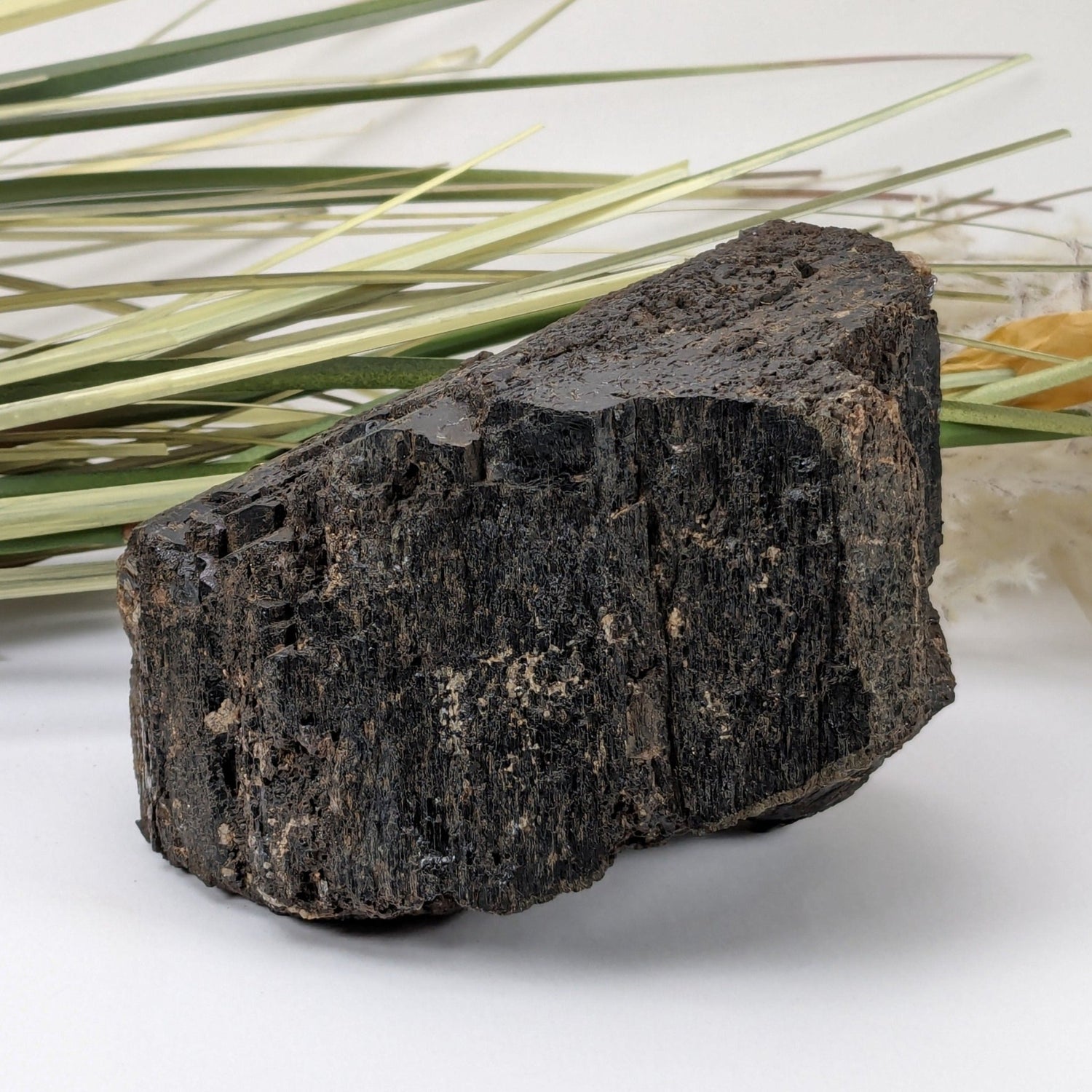
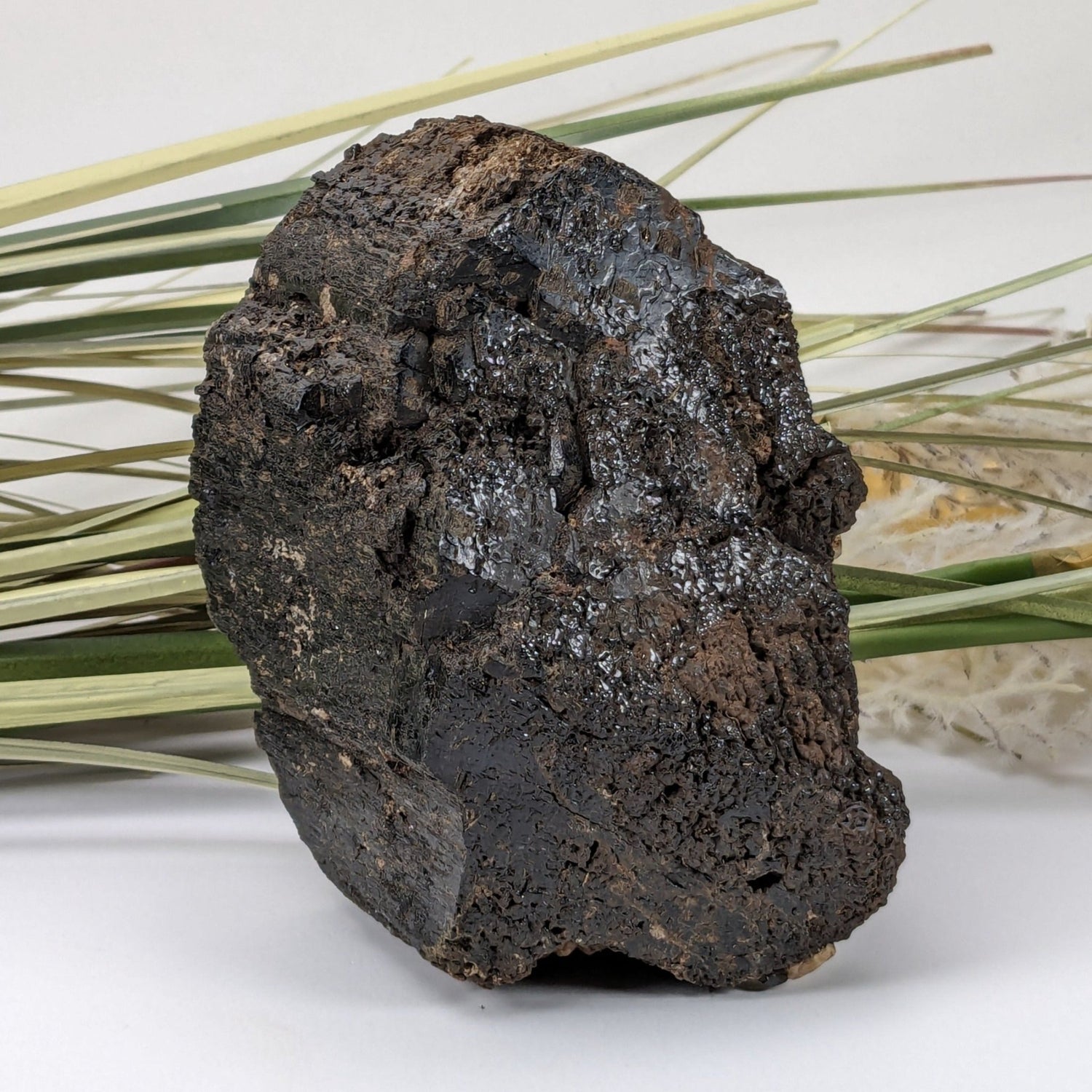
This is a large Hornblende crystal from Tory Hill, Ontario. The specimen has all crystal faces and terminations. It is a lustrous black color and in very good condition. There is also minor apatite on some of the surfaces. The specimen is in excellent condition.
Product Name: Hornblende Crystal
Specimen Size: Large Cabinet Sized
Dimensions: 106x79x76 mm / 4.2x3.1x3.0 inches
Weight: 873 Kg / 1 Lbs 15 Ounces
Origin: Tory Hill, Ontario, Canada

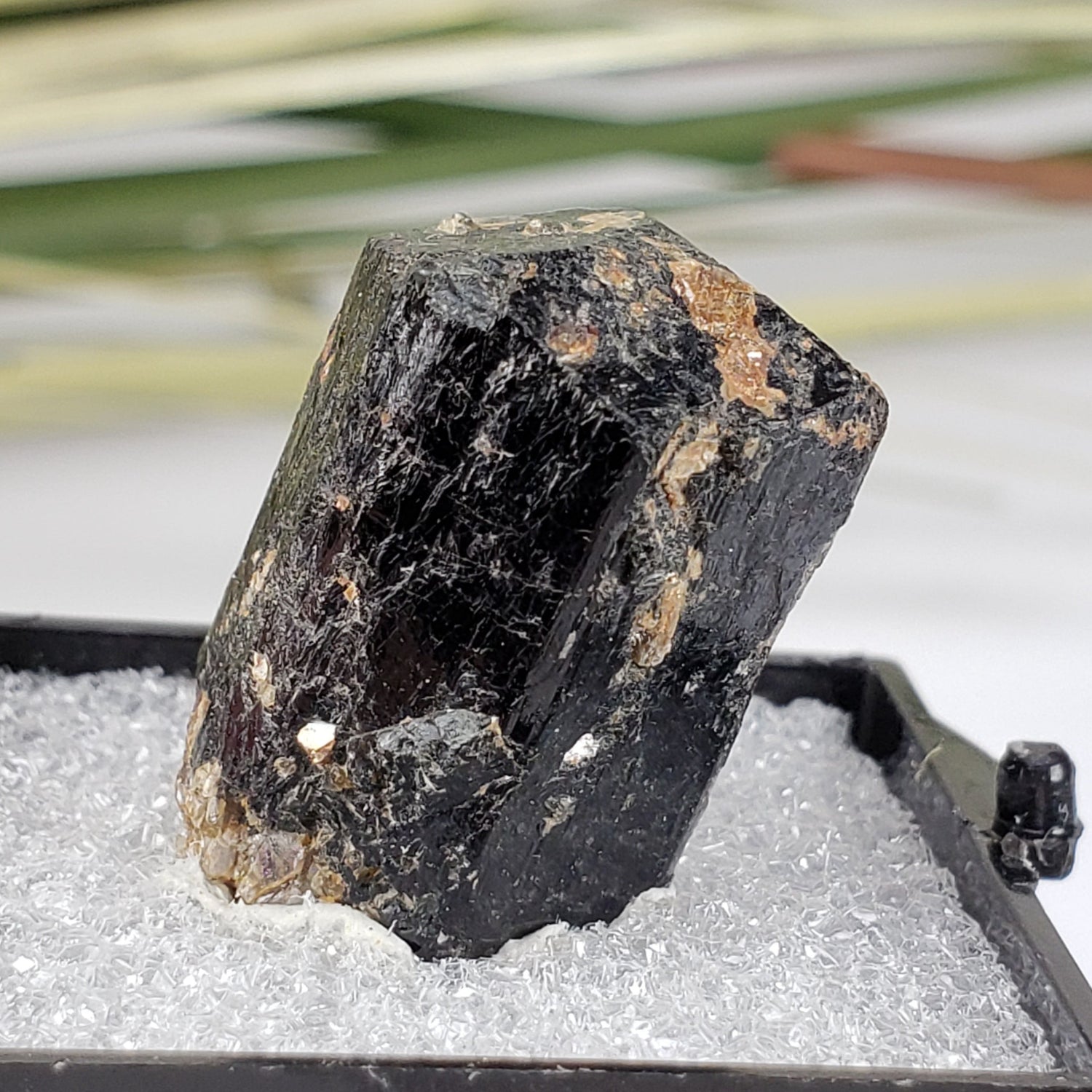
Name: Schorl Tourmaline
Specimen Size: Thumbnail-Sized
Dimensions: Specimen 20x16 mm / 0.8x0.6 inches
Specimen Box 33x33 mm / 1.3x1.3 inches
Weight: 19.5 Grams / 0.7 Ounces (including box)
Origin: Mined in Rice Mine, N. Groton, Grafton County, New Hampshire
This locality dates to the late nineteenth century and fine specimens from here are hard to obtain.


This is a superb looking slice of a Sahara Desert NWA 091 classified meteorite weighing 11.53 grams. Its dimensions are 33x26x4mm.
It is a nice dark gray color and is full of small holes (the small black specks in the pictures). It is very similar to Kimble County except a bit darker. The single piece was found in the desert in 2000 and has a total mass of only 370 grams and was classified as an L6 by UCLA. It is shock level 4 (very high) and weathering grade W2 (Low). It is highly vesiculated from a shock event.
This piece displays extremely well with its professionally finished cut face and is also a very nice size. Would be a beautiful addition to any new or existing collection. Comes with a Canagem Collection specimen card.


A pseudomorph occurs when one mineral replaces another but retains the original mineral's crystal structure. In the case of turquoise after apatite pseudomorph, turquoise replaces apatite, but it still retains apatite's crystal shape.
This process leads to a visually fascinating specimen where the exterior shape looks like apatite crystals, but the composition and color are distinctly turquoise, often with the bright blue or green shades typical of turquoise.
Name: Pseudomorph Turquoise After Apatite
Specimen Size: Thumbnail-Sized
Dimensions: Specimen 13x10 mm / 0.5x0.4 inches
Specimen Box 33x33 mm / 1.3x1.3 inches
Weight: 11.7 Grams / 0.4 Ounces (including box)
Origin: Mined in Baviacora Mine, Sonora, Mexico


This is a stunning thumbnail sized specimen of Quartz and Hydroxylherderite. There are many fully terminated quartz point, some of them surrounding the Hydroxylherderite. Some crystallized pyrite is visible on the bottom of the cluster.
Quartz crystals are among the most abundant and well-known minerals on Earth. Quartz belongs to the hexagonal crystal system. It typically forms six-sided prismatic crystals with a pointed termination. Its crystals can be colorless or exhibit a wide range of colors. The color variations are often due to the presence of impurities or trace elements during the crystal's formation. Quartz is transparent to translucent.
Hydroxylherderite is a relatively rare mineral that belongs to the phosphate mineral group. It is comes in a variety of colours: Colourless, gray, brown, pale yellow, greenish white, light blue, and purple. Notable occurrences of Hydroxylherderite include Brazil, Afghanistan, and the United States.
This specimen would be a beautiful addition to any new or existing collection.
Name: Quartz and HydroxylherderiteSpecimen Size: Thumbnail-Sized
Dimensions: 25x19 mm / 1.0x0.8 inches
Specimen Box 33x33 mm / 1.3x1.3 inches
Weight: 14.8 Grams / 0.5 Ounces (including box)
Origin: Bennet Quarry, Buckfield, Maine


This is an interesting and unusual Pyromorphite on Cerussite specimen from the Bunker Hill mine, famous for those crystal types. This Cerussite displays some nice small crystals with a section covered by Pyromorphite. A colorful and beautiful specimen. Would be a nice addition to any new or existing collection.
Name: Pyromorphite Cerussite
Specimen Size: Thumbnail-Sized
Dimensions: Specimen 35x24x17 mm / 1.4x0.9x0.7 inches
Weight: 32.5 Grams / 1.1 Ounces (including box)
Origin: Mined in Bunker Hill Mine, Kellogg Idaho

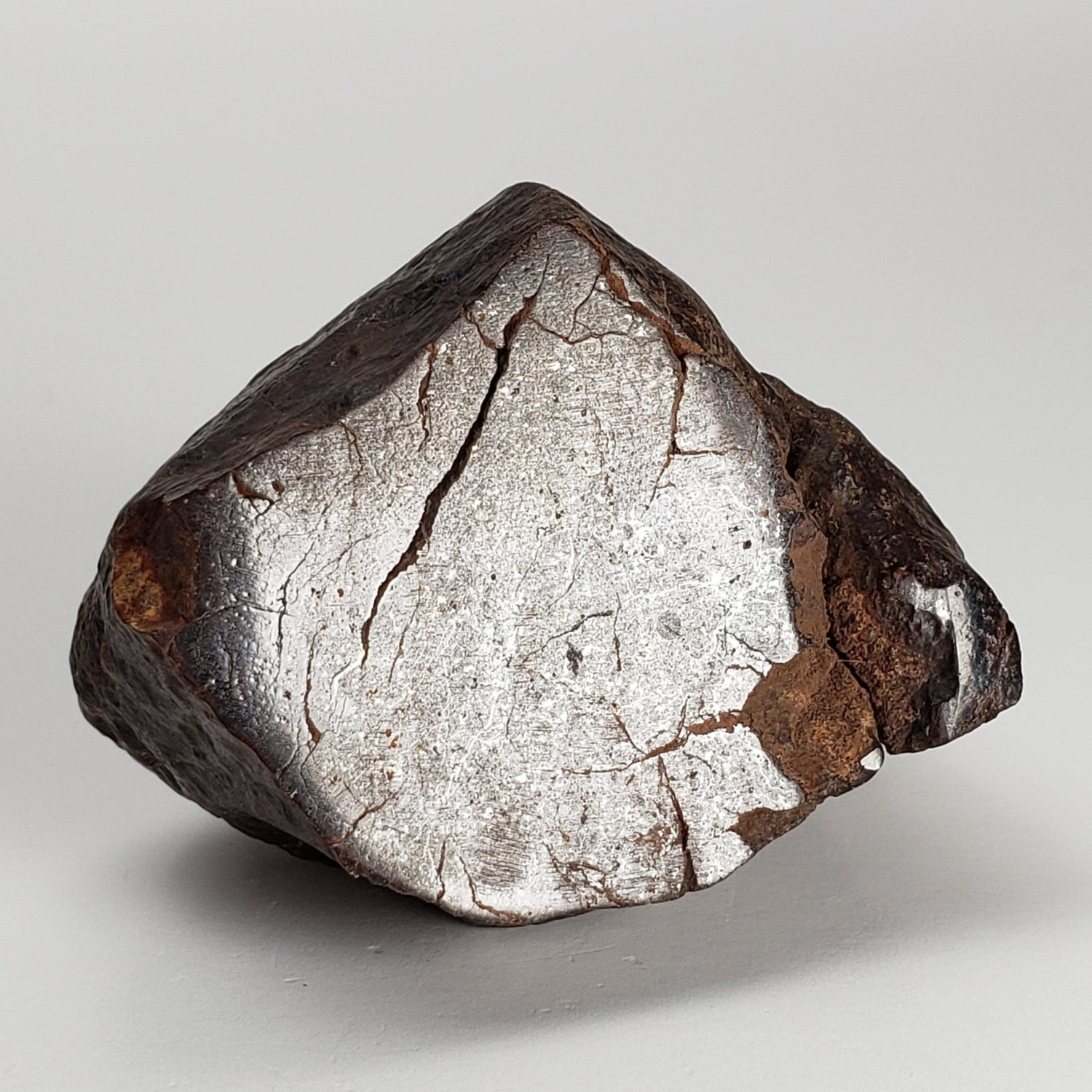
Here we have for you a nice looking end cut of a Sahara Desert NWA unclassified meteorite weighing 109.4 grams. Its dimensions are 49x40x39mm. This never classified North West Africa stone was found in the Sahara desert around 2000.
It's a good quality cut NWA meteorite specimen showing interesting internal structure (L5?) and attractive mottled interior with chondrules and metallic flakes. Some weathering shows the meteorite's time spent aging in the desert. Displays nicely with a ground and rough polished without a mirror finish.
Would be a beautiful addition to any new or existing collection. Comes with a Canagem Collection specimen card.


This is lot of small tumbled individual NWA unclassified meteorites from the Sahara Desert. Because they have been tumbled, you can clearly see the metal within the specimens. The total weight of the lot is 40.2 grams. The meteorites range in size from 22 to 32 mm. This never classified North West Africa stone was found in the Sahara desert around 2000.
These small individual specimens are great as teaching tools in the home or in the classroom, or as gifts. They can also be used for science projects and other types craft displays. Comes with a Canagem Collection specimen card.


This is a fabulous 23.2 gram Sericho Pallasite Main Group meteorite, it measures 39x28x19. In 2016, two brothers were searching for their camels and came across several large, dense stones west of the village of Habaswein and south of Sericho, Kenya. Though recognized as meteorites in 2016, the masses had been known to camel-herders for decades. One village elder said that as a child, he and his brothers would play on top of the stones. It is classified as an Iron Pallasite main group with low weathering and is 1 of only 68 approved meteorites classified as such, with a recovered weight of about 2.8 T.
This piece displays extremely well and is a nice size showing great features. Would be a beautiful addition to any new or existing collection. Comes with a Canagem Collection specimen card.


This is a complete black Sphene (or Titanite) crystal in matrix of green Diopside and white Calcite from Bancroft, Ontario. The Sphene crystal is 12 mm/0.5 inches across. This is an outstanding crystal and it is in very good condition.
Product Name: Titanite Crystal in Green Diopside matrix with Calcite
Specimen Size: Cabinet Sized
Dimensions: 75x64x65 mm / 2.9x2.5x2.6 inches
Weight: 454 Grams / 16 Ounces
Origin: Bancroft, Ontario, Canada

Canagem is proud to be professional member of The International Gem Society(IGS) the world's top resource for gem professionals, enthusiasts, and industry content.