
1611 products
Sort by:
1611 products
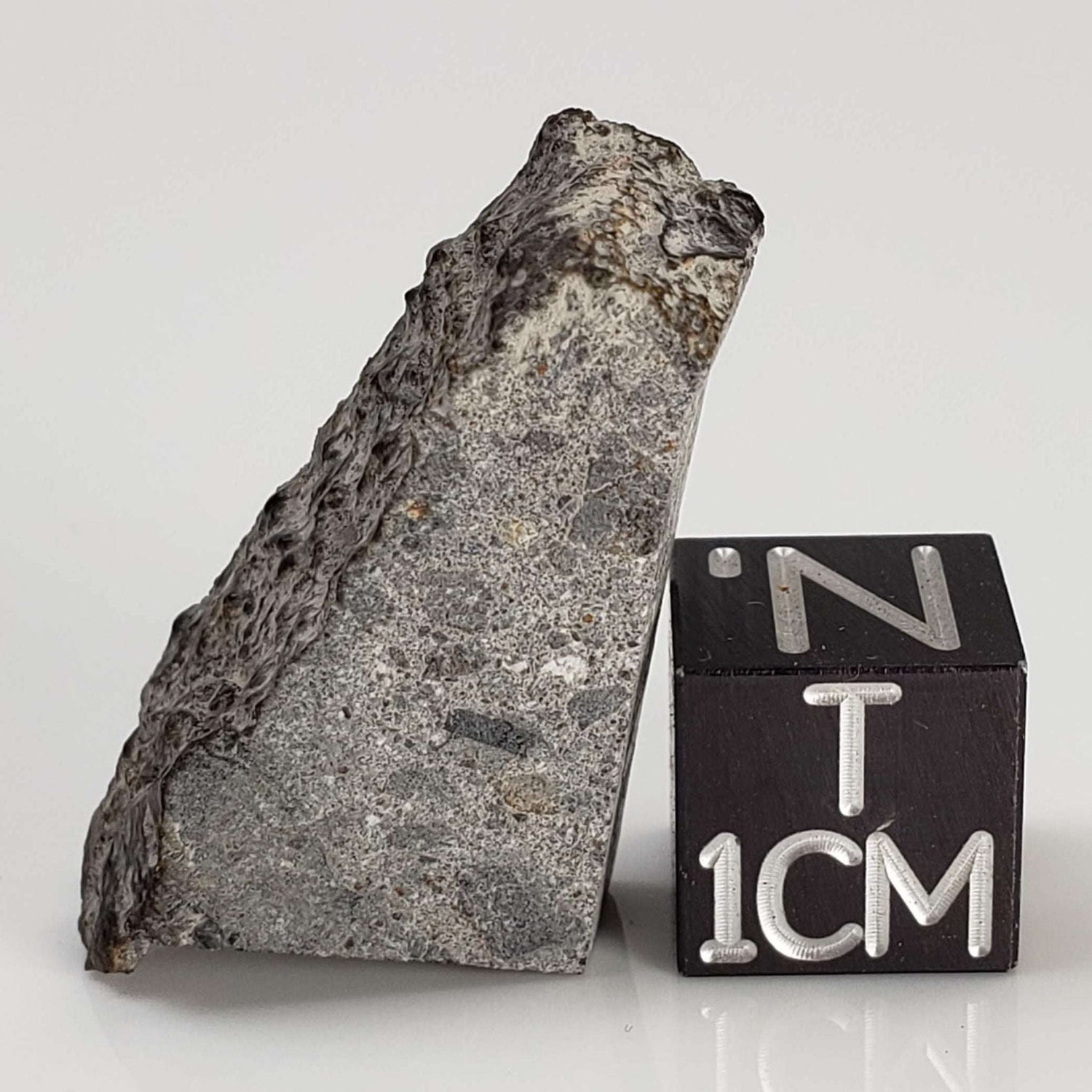
This is a must have 27.4 gram Impact Melt Rock from the Stac Fada Member Impact Structure, NW Scotland. It measures 67x37x5 mm. Although not a meteorite, impactites are directly linked to them and their impacts and are probably going to be one of the rarest collection items you'll ever own. Impactite is a slag-like glassy object found on the surface of the earth, formed from rock melted by the impact of a meteorite.
The term impactite encompasses shock-metamorphosed target rocks, melts or suevites and mixtures of the two, as well as sedimentary rocks with significant impact-derived components and shocked mineral grains, tektites, anomalous geochemical signatures, etc.
This beautiful Impact melt rock comes from the Stac Fada impact structure in Scotland. The structure has an estimated age of about 1.2Ga (1,200 Ma). The Stac Fada Member of the Precambrian Stoer Group in Scotland has previously been described as volcanic in origin. However, shocked quartz and biotite provide evidence for high-pressure shock metamorphism, while chromium isotope values and elevated abundances of platinum group metals and siderophile elements indicate addition of meteoritic material. Thus, the unit is reinterpreted as having an impact origin.
This gorgeous slice displays very well. Would be a beautiful addition to any new or existing collection. Comes with two a Canagem Collection specimen card.
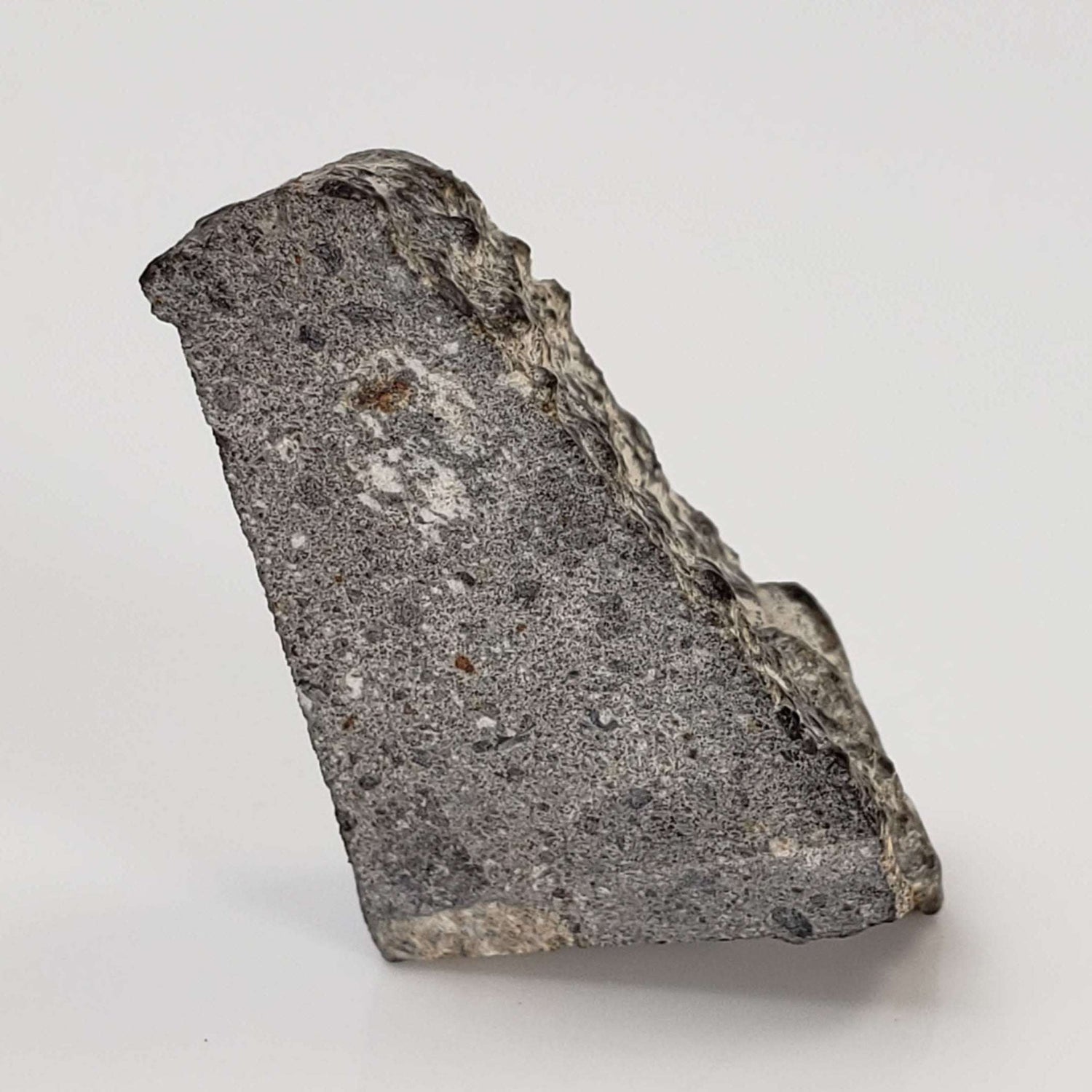
This is a fantastic Impactite Fallback Breccia from Germany weighing 52 grams and measuring 69x51x10mm. Although not a meteorite, impactites and shatter cones are directly linked to them and their impacts. The Steinheim Basin today exhibits a distinct morphological depression that is ∼110 m deep and ∼3.5 km in diameter; the height of the central uplift totals to more than 140 m. The original size of the pristine crater is estimated to be ∼3.8 km with an original depth of ∼205 m.
As this drainless morphological depression was filled by lake sediments shortly after the impact, the primary crater morphology is widely preserved. The crater rim is formed by steeply inclined and intensely brecciated Upper Jurassic limestone blocks that also contain numerous shattered chert nodules, as well as some loose blocks of the host limestone. An impact breccia, referred to as the so-called ”Primäre Beckenbrekzie” (“primary basin breccia”) and interpreted as a “fallback breccia”, is known from many drillings in the Steinheim Basin.
Mainly composed of Middle to Upper Jurassic limestones, marls, mudstones, and sandstones, the impact breccia inside the morphological depression of the Steinheim Basin is overlain by lake sediments and is obviously preserved in its original thickness and position. This piece displays very well and is a very nice size showing multiple characteristics of its origin. Would make a beautiful addition to any collection.
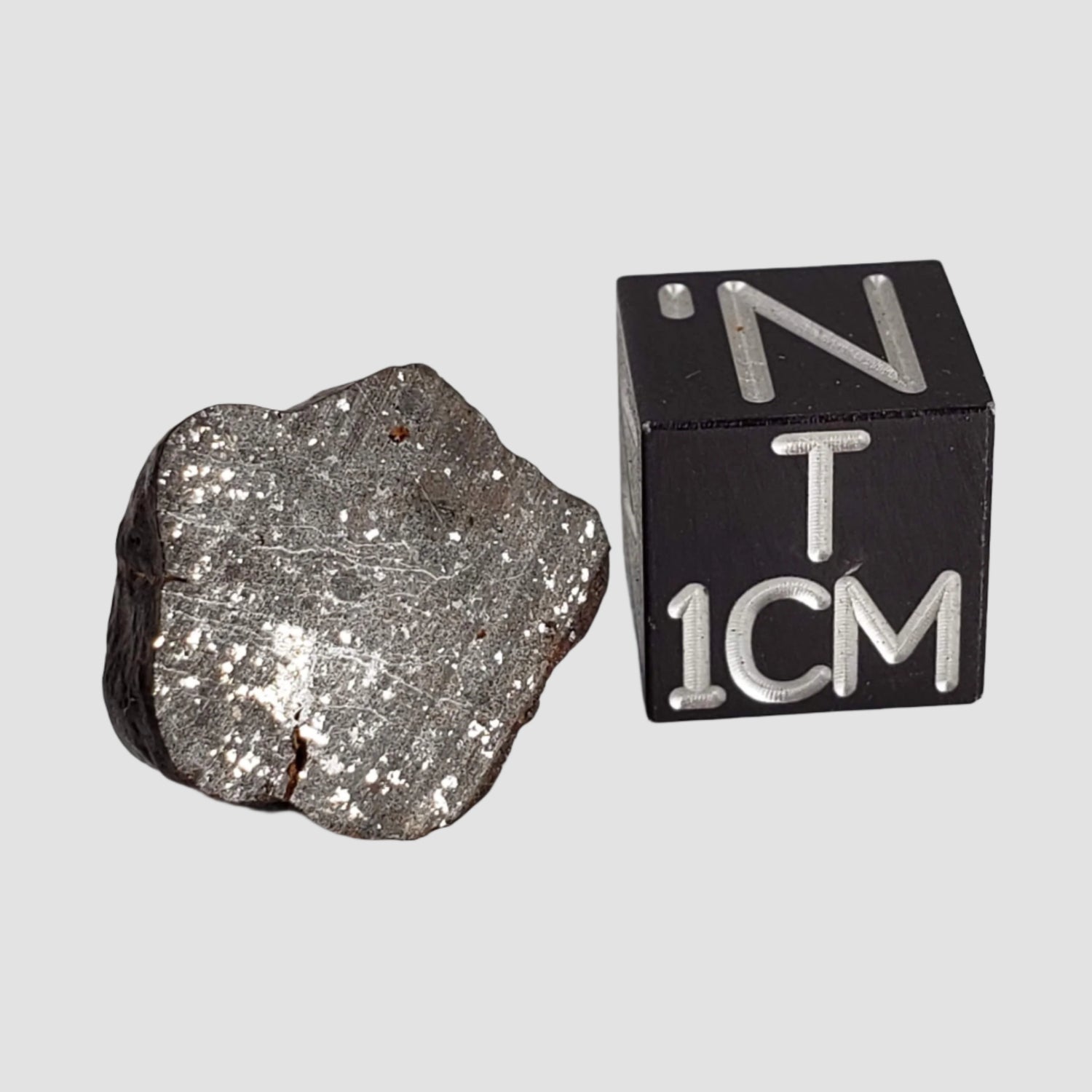
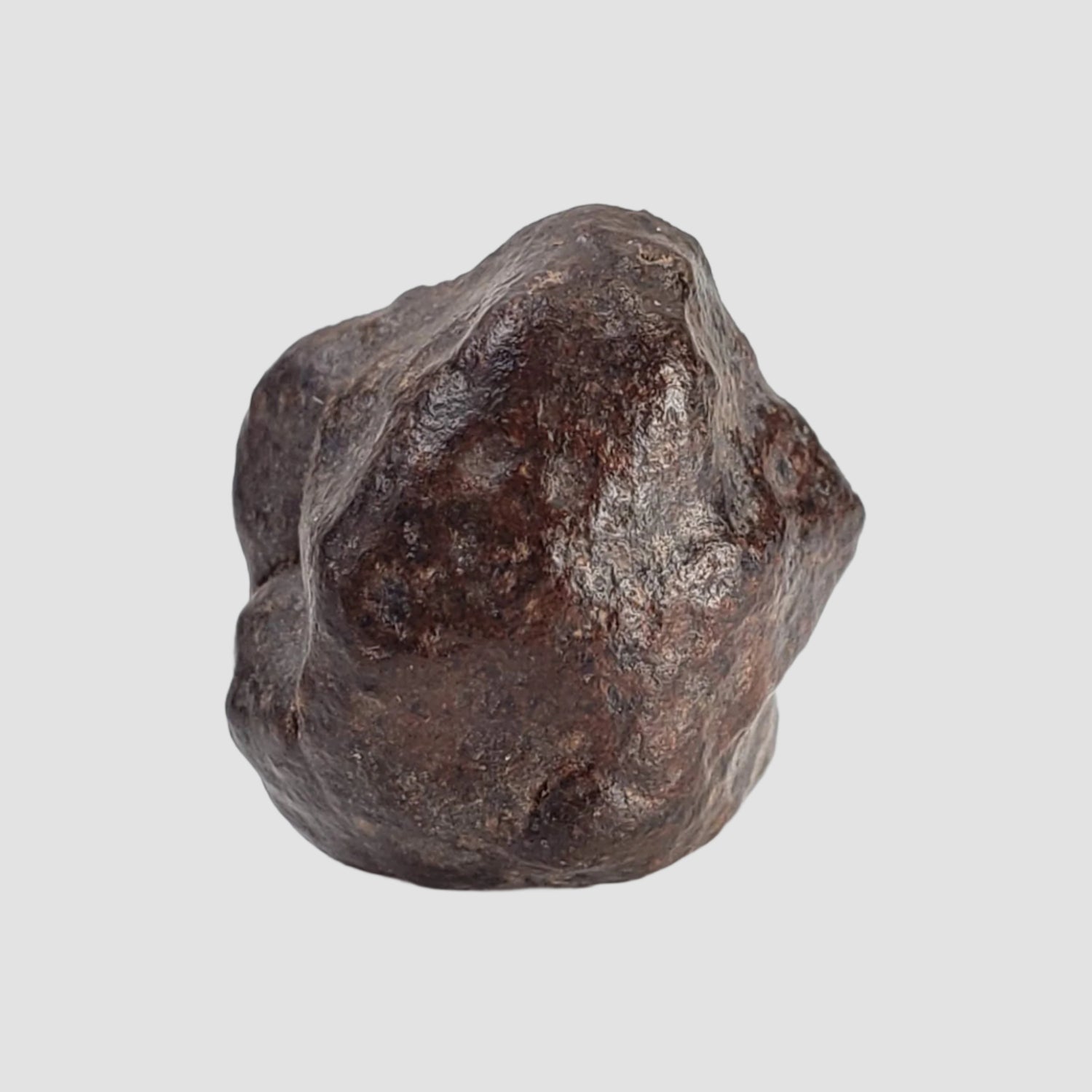
This is a must have 4.71 gram impactite from the Boltysh Crater in Ukraine. Its dimensions are 28x27x4mm. Although not a meteorite, impactites are directly linked to them and their impacts and are probably going to be one of the rarest collection pieces you'll ever own. The Boltysh impactites are important geological specimens that are recognized by the scientific community as evidence of asteroid or comet impacts on Earth.
The Boltysh crater is a well-preserved impact crater located in central Ukraine. It was formed approximately 65 million years ago during the Late Cretaceous period, around the same time as the Chicxulub impact that is thought to have caused the mass extinction of the dinosaurs. The crater is estimated to be around 24 kilometers in diameter and is one of the best-preserved impact structures in the world.
The Boltysh crater has been extensively studied by scientists because of its importance in understanding the effects of large-scale impacts on the Earth's surface and the resulting environmental changes that occur. Studies of the rocks and sediments from the crater have provided valuable insights into the processes of impact cratering, such as the formation of impact melt rocks and the creation of shock metamorphic features.
Would be a beautiful addition to any new or existing collection. Comes with a Canagem Collection specimen card.
This is a must have 16.88-gram Impactite slice from the Terny Astrobleme (Ukrainian Shield) in Cherkasy Region of Ukraine. Its dimensions are 53x32x8mm. Although not a meteorite, impactites are directly linked to them and their impacts and are probably going to be one of the rarest collection pieces you'll ever own. The Terny impactites are important geological specimens that are recognized by the scientific community as evidence of asteroid or comet impacts on Earth.
The Terny astrobleme is a geological formation located in the Cherkasy region of Ukraine. It is believed to be the result of a meteorite impact that occurred approximately 65 million years ago during the Late Cretaceous period. The impact formed a crater that is estimated to be around 6 kilometers in diameter, although it is largely eroded and filled in with sediment.
It is an important geological site for studying the effects of meteorite impacts on the Earth's surface and the resulting geological processes that occur. It has been the subject of numerous scientific studies, and specimens of the impactite rocks found at the site have been collected and analyzed for their mineralogical and chemical properties.
Would be a beautiful addition to any new or existing collection. Comes with a Canagem Collection specimen card.
Pseudomorphs are mineral specimens that have the external shape of one mineral but are composed of another. The pseudomorph goethite after marcasite forms when marcasite is exposed to oxidizing conditions and starts to oxidize and break down. As the marcasite breaks down, goethite replaces it in the crystal structure, preserving the shape of the original marcasite crystal. The resulting specimen appears as a marcasite crystal, but is actually composed of goethite.
The Farafra Oasis, in the White Desert, has been known for a number of years to deliver incredible pseudomorph specimens. The pseudomorphs occur within the Cretaceous Khoman Chalk, from which the White Desert derives its name.
This specimen is remarkable for its relatively sharp marcasite crystal form. It is in excellent condition.
Name: Goethite After Marcasite Pseudomorph
Specimen Size: Miniature-Sized Specimen
Dimensions: 40x34x35 mm / 1.6x1.3x1.4 inches
Weight: 44.4 grams / 1.6 ounces
Origin: White Desert, Farafra Oasis, Egypt
Wavellite typically forms as radiating, spherical clusters or botryoidal (grape-like) aggregates, often appearing as green, yellow, brown, or even blue clusters on a host rock. The mineral typically forms in low-grade metamorphic rocks and phosphate-rich environments, often associated with minerals like quartz, variscite, and limonite.
Wavellite is found in several locations worldwide, with Arkansas, USA being one of the most famous sources, producing well-formed green botryoidal specimens. Other notable locations include England, Bolivia, Brazil, Germany, and Australia.
It is believed wavellite is linked to clarity, insight, and emotional balance, helping to provide a broader perspective on situations. It is sometimes associated with the heart chakra, thought to encourage compassion and emotional healing.
Name: Wavellite on Matrix
Specimen Size: Miniature-Sized
Dimensions: 59x45x31 mm / 2.3x1.8x1.2 inches
Weight: 71 grams / 2.5 oz
Origin: Mauldin Mountain, Mt. Ida, Arkansas, USA
Product Type: Citrine (Madeira)
Approx Weight (per piece): 10.8ct
Size: 18x13mm
Shape: Oval Cut
Color: Golden Yellow
Clarity: Clean
Origin: Brazil
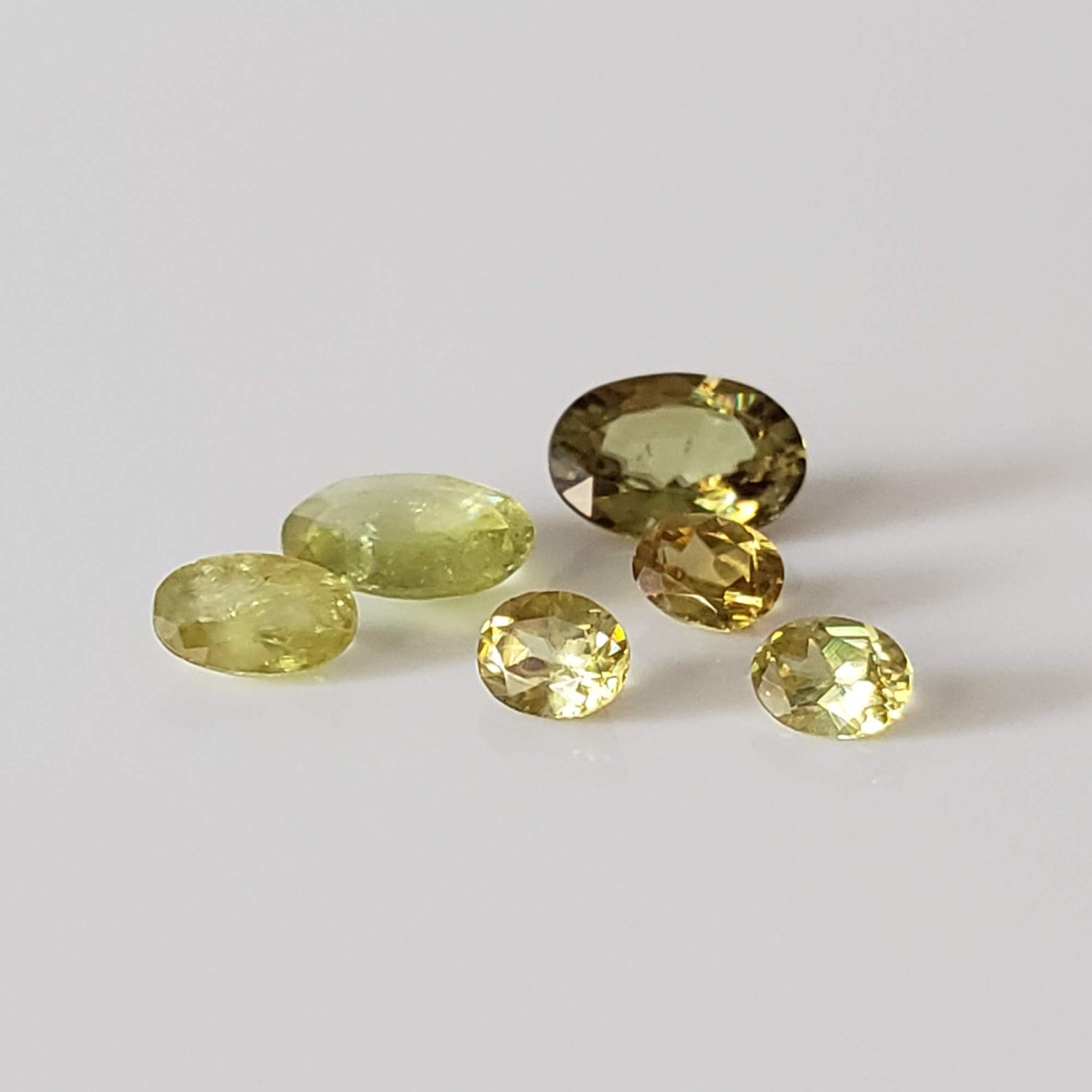
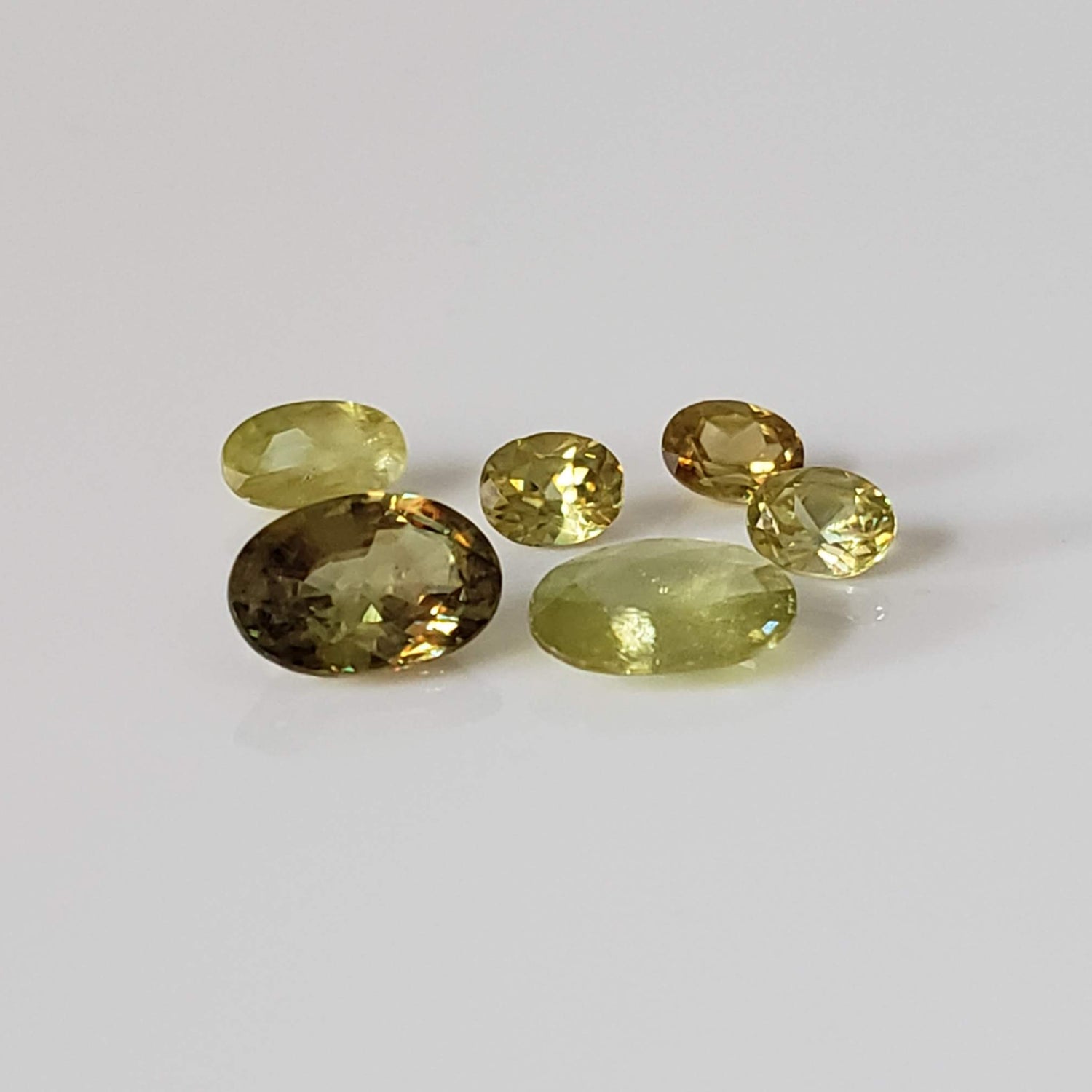
Product Type: Apatite (Olive)
Approx Weight (per piece): 2.9ct
Size: 11x7.5mm
Shape: Oval Cut
Color: Honey Green
Clarity: Clean
Origin: Africa
Apatite is a group of phosphate minerals that are commonly found in igneous, metamorphic, and sedimentary rocks. Apatite is named after the Greek word "apate," which means deceit, as it can be easily confused with other minerals due to its wide range of colors and forms. It can occur in various colors, including green, blue, yellow, brown, and violet.
Apatite is believed to possess healing properties and is associated with creativity, self-expression, and personal growth. It is thought to enhance communication skills, stimulate intellect, and promote clarity of thought.
Pyrite from Bolivia is known for forming beautiful, well-shaped crystals, often appearing as sharp cubes, pyritohedrons (12-sided shapes), or even complex, stepped growth patterns. Bolivian pyrite tends to have a bright, brassy gold color with a good metallic luster, and it’s often found in association with other minerals like quartz or galena.
Much of the pyrite from Bolivia comes from mining regions such as Potosí and Oruro, areas famous for their rich mineral deposits. While pyrite is common around the world, Bolivian specimens are valued for their attractive crystal habits, clean formations, and the quality of the material.
Pyrite is known as a stone of protection, abundance, and confidence. It is believed to shield against negative energy and promote mental clarity and willpower.
This top Bolivian specimen is in very good condition. Would be a beautiful addition to any new or existing collection.
Name: Pyrite Cluster
Specimen Size: Cabinet-Sized
Dimensions: 60x48x43 mm / 2.4x1.9x1.7 inches
Weight: 153 Grams / 5.4 oz
Origin: Canutillos Mine, Machacamarca-Colavi District, Cornelio Saavedra Province, Potosi Department, Bolivia
Kupletskite is a rare and complex titanium-bearing silicate mineral most famously found at Mont-Saint-Hilaire in Québec, Canada. It typically appears as tiny brown to reddish-brown crystals, often with a glassy or resinous luster. The crystals are usually slender and prismatic and may occur alongside other rare minerals that Mont-Saint-Hilaire is known for.
Due to its rarity and specific geological conditions needed for formation, kupletskite is primarily of interest to serious collectors and mineralogists, especially those focused on rare earth or alkaline complex minerals. It’s not commonly available in large or showy specimens, so even small, well-formed crystals are considered notable.
This beautiful and rare specimen of Kupletskite from world famous Mont-Saint-Hilaire, Québec, would be a great addition to any collection.
Name: Kupletskite
Specimen Size: Miniature-Sized
Dimensions: 30x15x15 mm / 1.2x0.6x0.6 inches
Weight: 1.63 grams / .057 oz
Origin: Mont Saint-Hilaire, Québec, Canada