



1573 products
Sort by:
1573 products


Product Type: Zircon
Approx Weight (per piece): 1.05ct
Size: 6.4x4.7mm
Shape: Pear Shape Cut
Color: Golden
Clarity: Clean
Origin: Cambodia
Zircon comes in a variety of colors, including blue, yellow, green, brown, and red, and is renowned for its exceptional brilliance. It is found in many locations worldwide, including Sri Lanka, Myanmar, Cambodia, and Australia. Some of the oldest zircon crystals have been dated to be over 4 billion years old, making them among the oldest minerals on Earth.
Zircon has a hardness of 6.5 to 7.5 on the Mohs scale, making it durable enough for use in various types of jewelry. However, care should be taken to avoid sharp blows and extreme temperatures.
Zircon is associated with promoting spiritual growth, mental clarity, and prosperity. It is also thought to enhance self-confidence and provide protection.
It's important to note the distinction between natural zircon and cubic zirconia. Natural zircon is a genuine gemstone, while cubic zirconia is a synthetic material often used as a diamond simulant.


Product Type: Olive Quartz
Approx Weight (per piece): 8.7ct
Size: 16x12mm
Shape: Oval cut
Color: Gold
Clarity: Clean
Origin: Africa


Product Type: Idocrase | Vesuvianite
Approx Weight (per piece): 0.85ct
Size: 7x5mm
Shape: Oval Cut
Color: Amazing Green
Clarity: Clean
Treatment: None
Origin: Canada


Product Type: Sapphire
Approx Weight (per piece): 0.53ct
Size: 5x3.7mm
Shape: Octagon Cut
Color: Golden
Clarity: Clean
Origin: Africa


Discover a remarkable Goniatite fossil from the Fammenian stage of the Devonian period, sourced from the Kowala Formation in Poland’s Kielce-Lagow Syncline.
This natural specimen, measuring 24 mm and weighing approximately 11.26 grams, features exquisite pyritization within its host rock, offering valuable insight into ancient marine life and exceptional preservation for collectors and researchers alike.
Although dinosaurs are the most well-known fossil life forms, pyritized fossils are also a favorite among those familiar with Paleontology (the study of the development of life on Earth) and are found in the rocks of all continents.
Name: Goniatite Fossil
Age: Fammenian (Devonian)
Location: Kowala Formation, Poland
Geological unit: Kielce-Lagow Syncline
Size: 11.26 gr / 0.4 oz
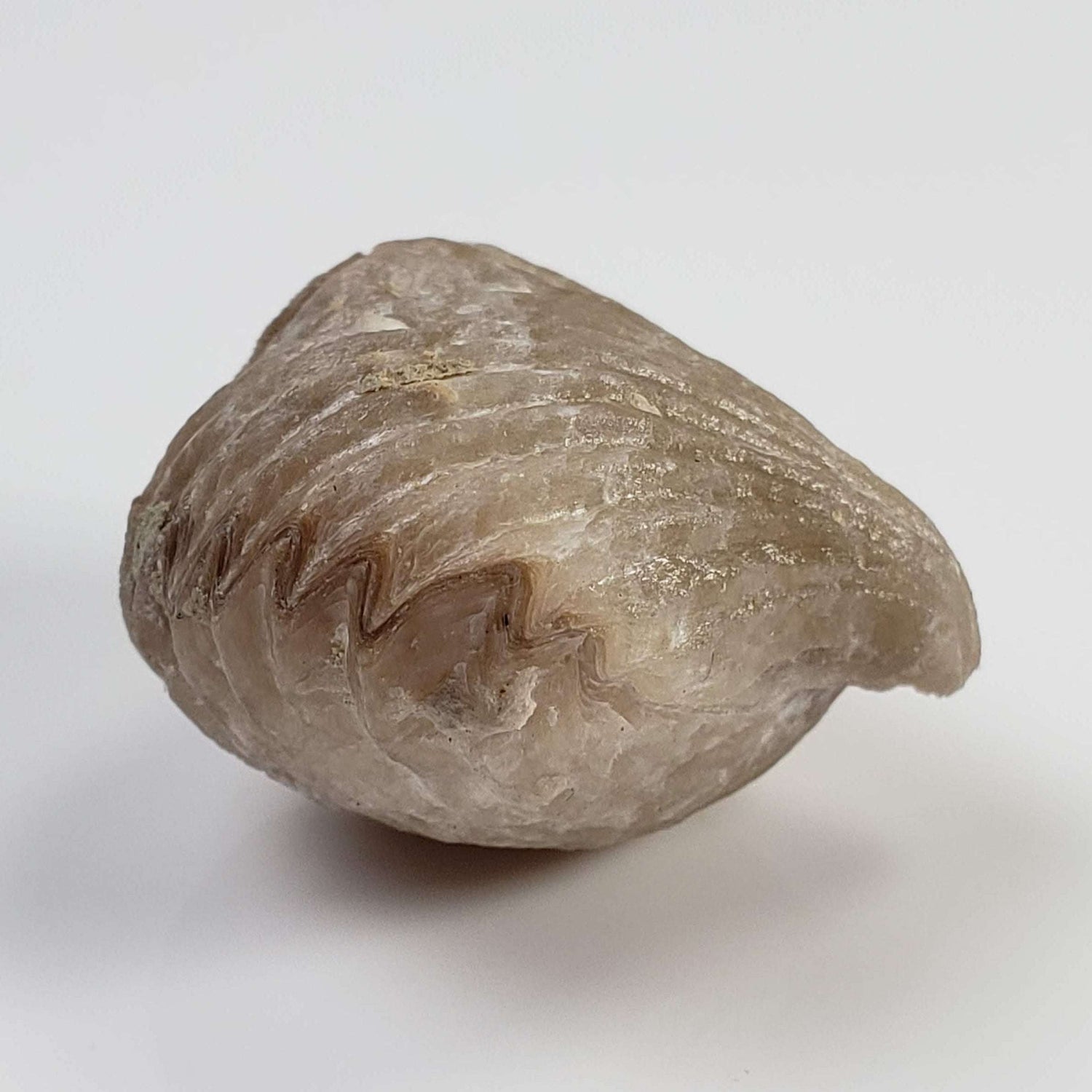
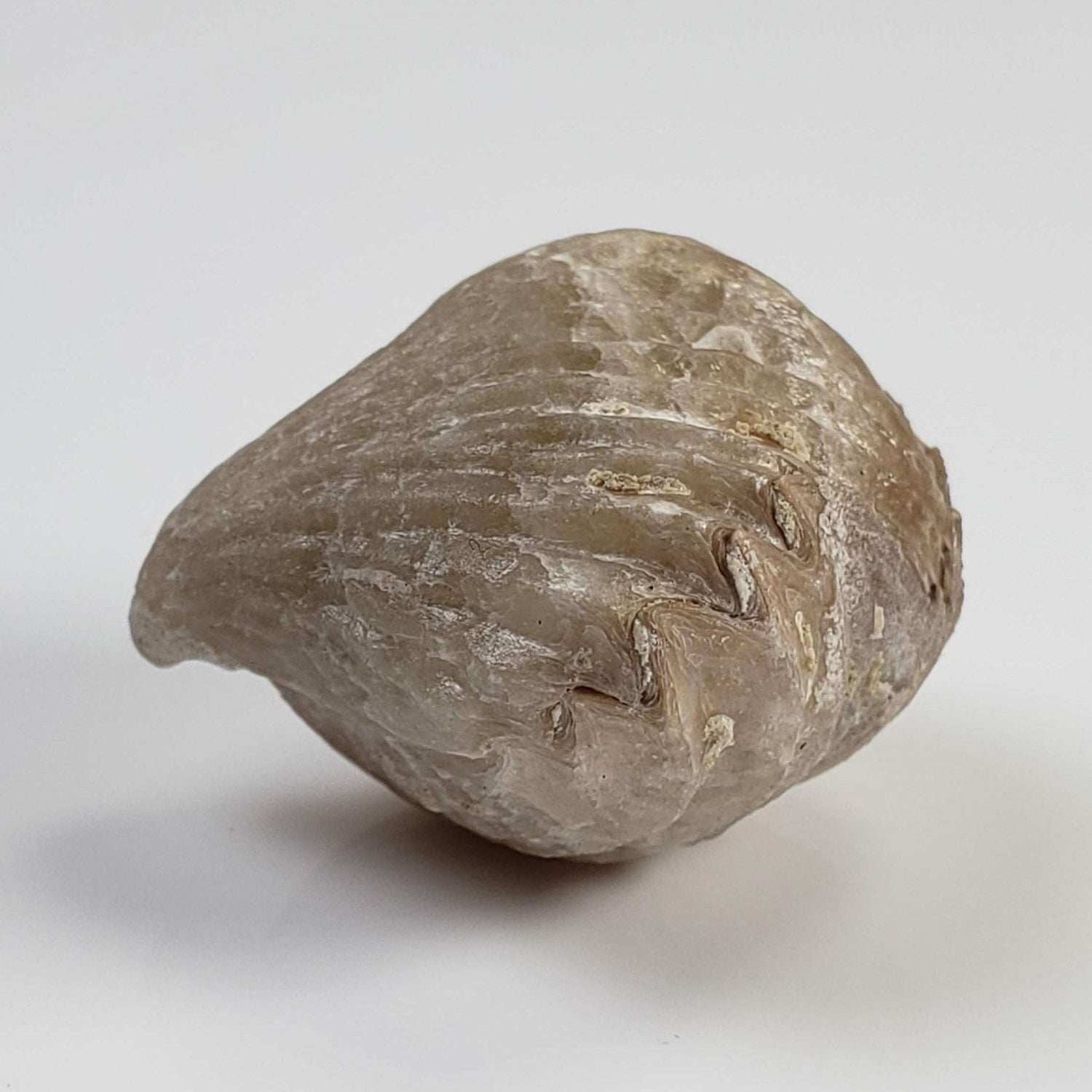
A superb example of fossilized brachiopod from Wapienno, Polanda. The high degree of preservation of the shell makes it much more special. These long articulate brachiopods are characterized by a triangular shell with a spherical profile, powerful ribs, a curved hinge line and a small umbo. The anterior margin shows a tongue like projection. Like most brachiopods, Rhynchonella was a stationary epifaunal suspension feeder.
Name: Rynchonella sp. Brachiopod
Age: Jurassic
Location: Wapienno, Poland
Dimensions: 28x24x18 mm / 1.1x0.9x0.7 inches
Weight: 12.7 grams / 0.45 oz
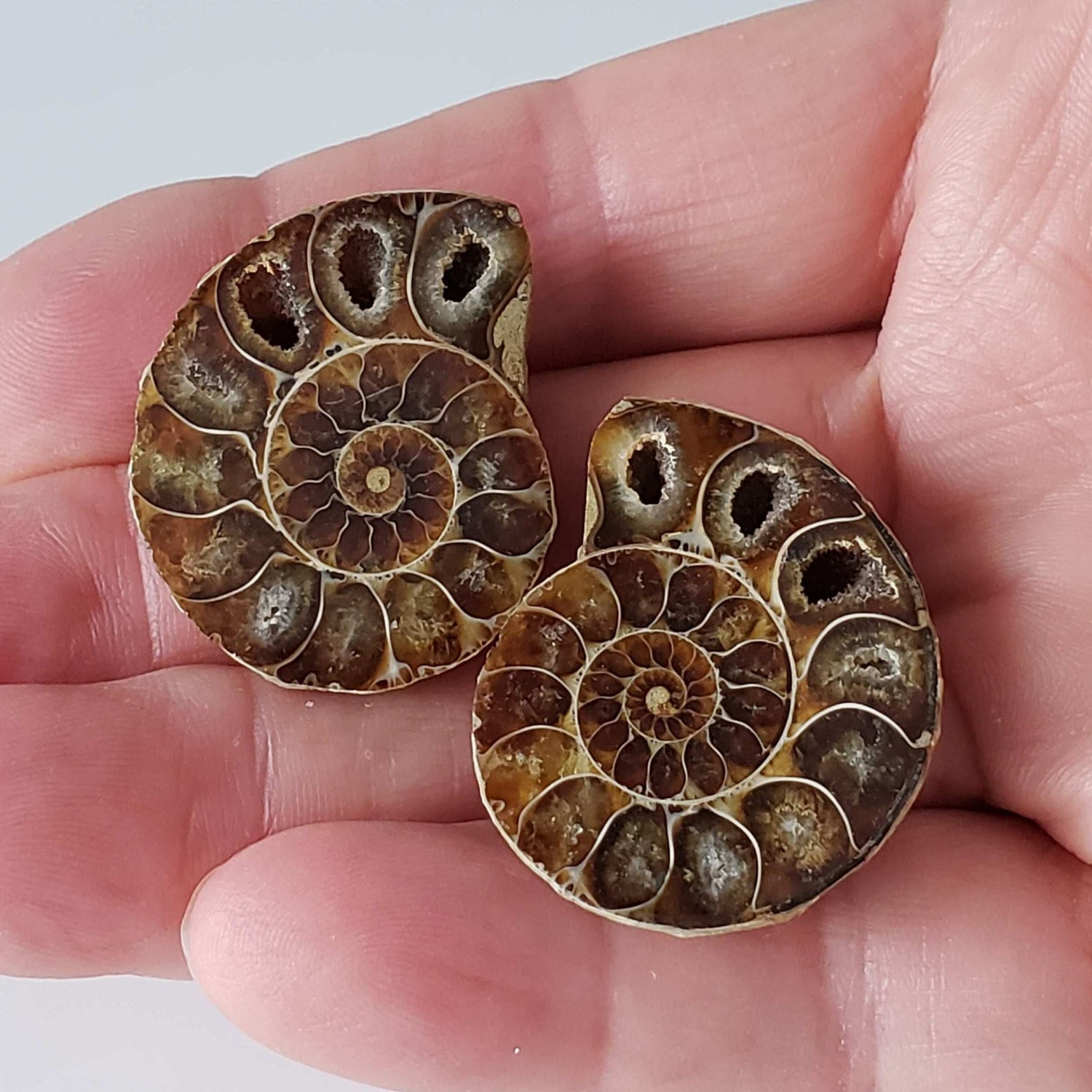
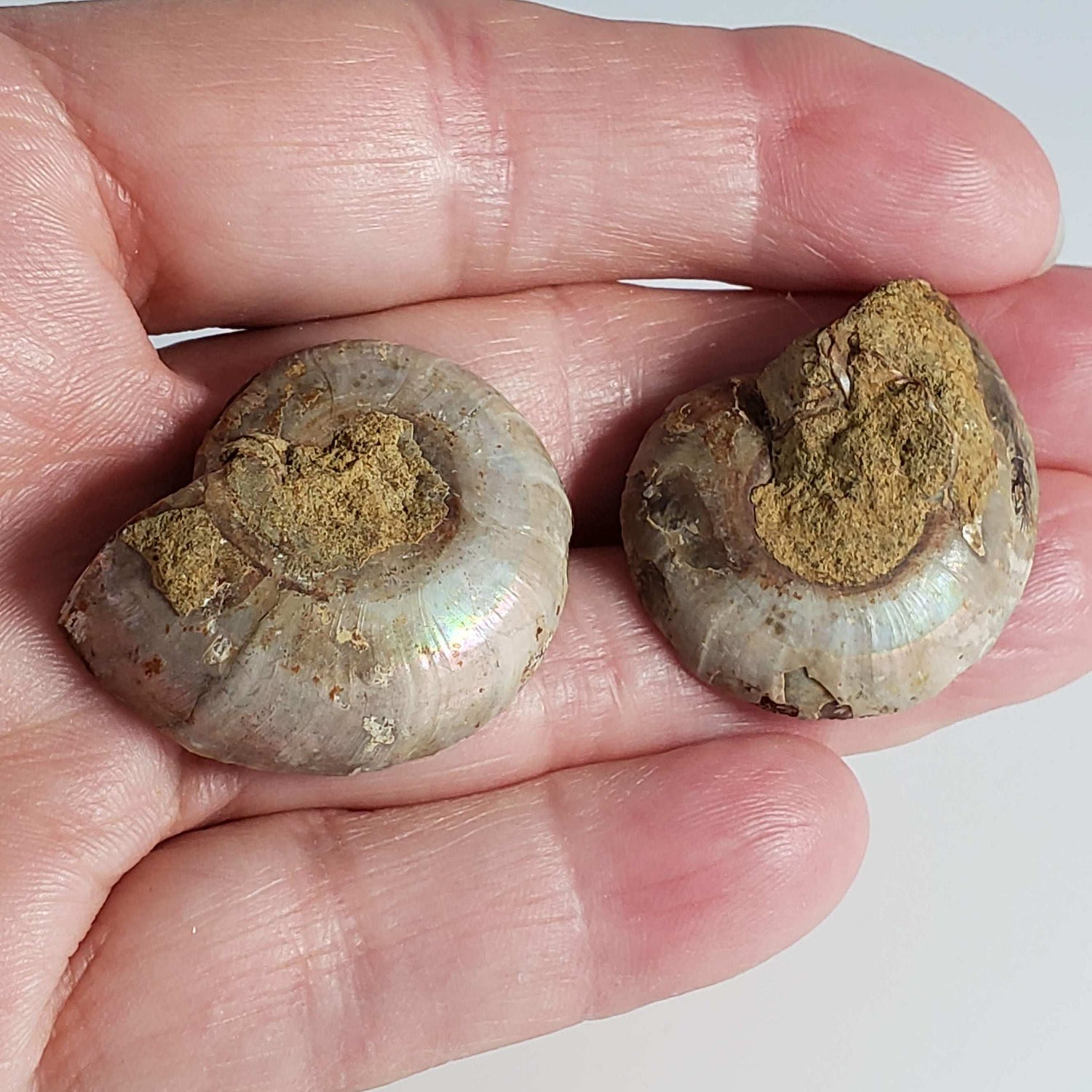
You will receive the exact matching iridescent ammonite halves pictured here. They measure 34x26mm.
This is a perfectly fossilized and highly polished natural Ammonite from Morocco, which is perfect for gift giving to a new fossil collector. Ammonites are perhaps the most widely known fossil, possessing the typically ribbed spiral-form shell. These creatures lived in the seas between 240 - 65 million years ago, when they became extinct along with the dinosaurs. They belong to a group of predators known as cephalopods, which includes their living relatives the octopus, squid, cuttlefish and nautilus. It is probably going to be one of the rarest collection item you'll ever own. These are perfect if you make jewelry and similar crafts or as a fossil collection item.


This is a great looking Northwest Africa 2865 L4 classified meteorite part end cut. It weighs 10.76 grams and measures 30x25x8 mm. This meteorite was found in the Sahara Desert in 2004 and the total recovered weight is recorded as a low 1503 grams. It has a Shock stage of 2 and a Weathering grade of 2.
This specimen comes with a Canagem Collection specimen card. Would be a beautiful addition to any new or existing collection.


This is a superb looking fragment of a Sahara Desert NWA 515 classified meteorite weighing 1.086 grams. Its dimensions are 17x9x5mm.
This meteorite was found by Berber nomads in the deserts of Africa. Hundreds of small stones, more then 20 kilograms in total, was purchased November 8th, 2000 in M'Hamid, Morocco, Africa by a group of meteorite dealers and collectors. 247 grams was donated to UCLA were it was classified by A. Rubin as an L6 Chondrite with a shock rating of 2 and a weathering grade of 3 (25% olivine). Cut pieces of this meteorite show a nice light matrix with golden hues.
Thin sections (2nd photo) show nice chondrules ranging in size from less then 1mm to 3mm. Thin sections are used in earth geology, and in meteorites to identify the minerals in them. Stone meteorites are made of mostly of olivine and pyroxene. The pyroxene is typically greyish or yellowish and the bright colored minerals scattered throughout the photo are mostly olivine.
This piece displays extremely well and would be a beautiful addition to any new or existing collection. Comes with a The Mark Bostick Collection and a Canagem Collection specimen card.


This is a great looking fresh individual Gao-Guenie H5 classified meteorite. It weighs 7.87 grams and measures 18x17x14 mm. Picked up right after the fall, It is 100% fresh fusion crusted which is the most desirable specimen state.
This H5 classified meteorite was observed falling at about 17:00 March 5, 1960 near the village of Gao in Africa. There is no total known weight recorded for this meteorite.
Would be a beautiful addition to any new or existing collection. Comes with a Canagem® Collection specimen card.

Canagem is proud to be professional member of The International Gem Society(IGS) the world's top resource for gem professionals, enthusiasts, and industry content.