



1573 products
Sort by:
1573 products


This is a grouping of NWA 2224 meteorite micros. Although still considered unclassified, this meteorite was given the provisional class of CV3 for Carbonaceous.
These micro pieces come with a small glass jar for display and protection. Would be a beautiful addition to any new or existing collection. Comes with a Canagem Collection specimen card.
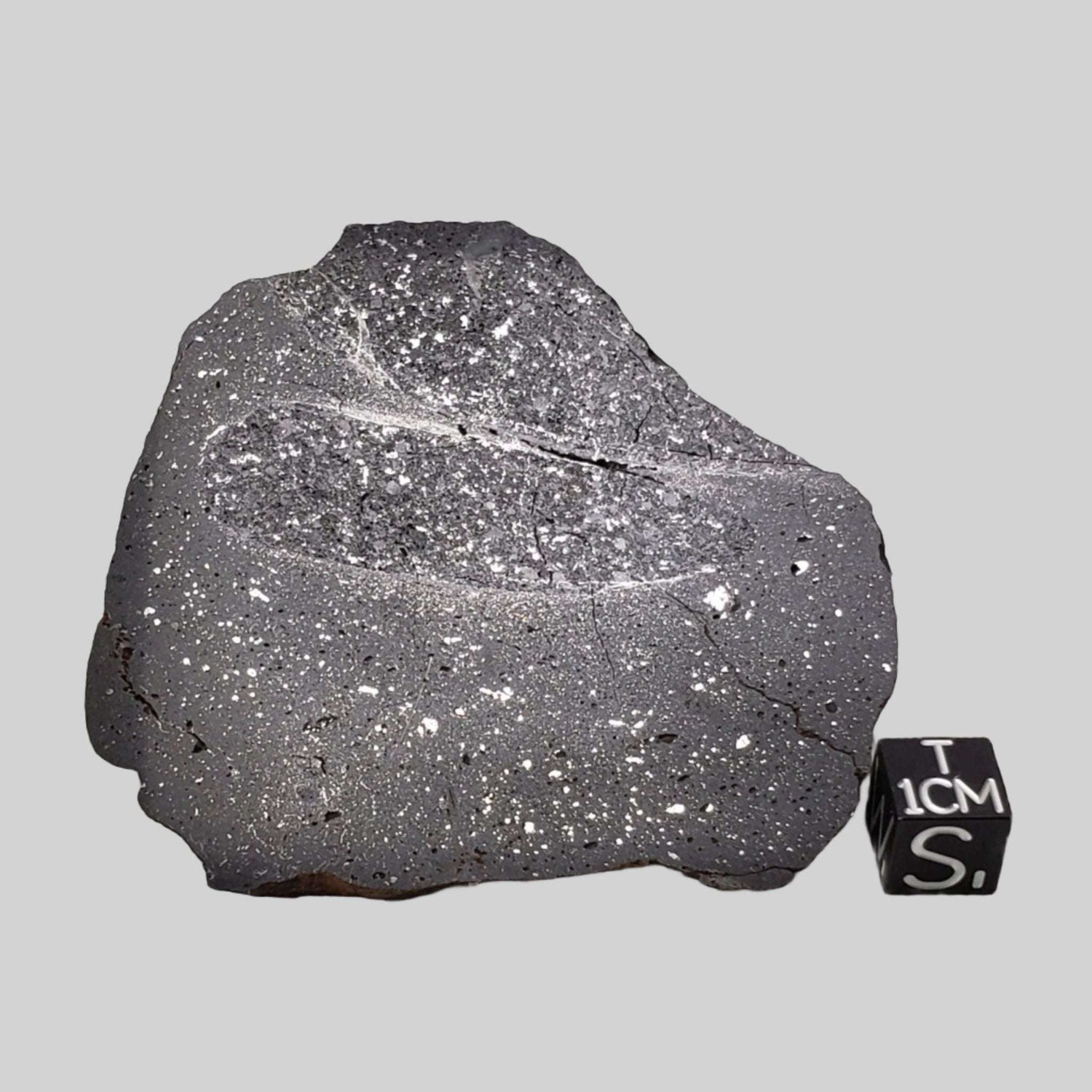
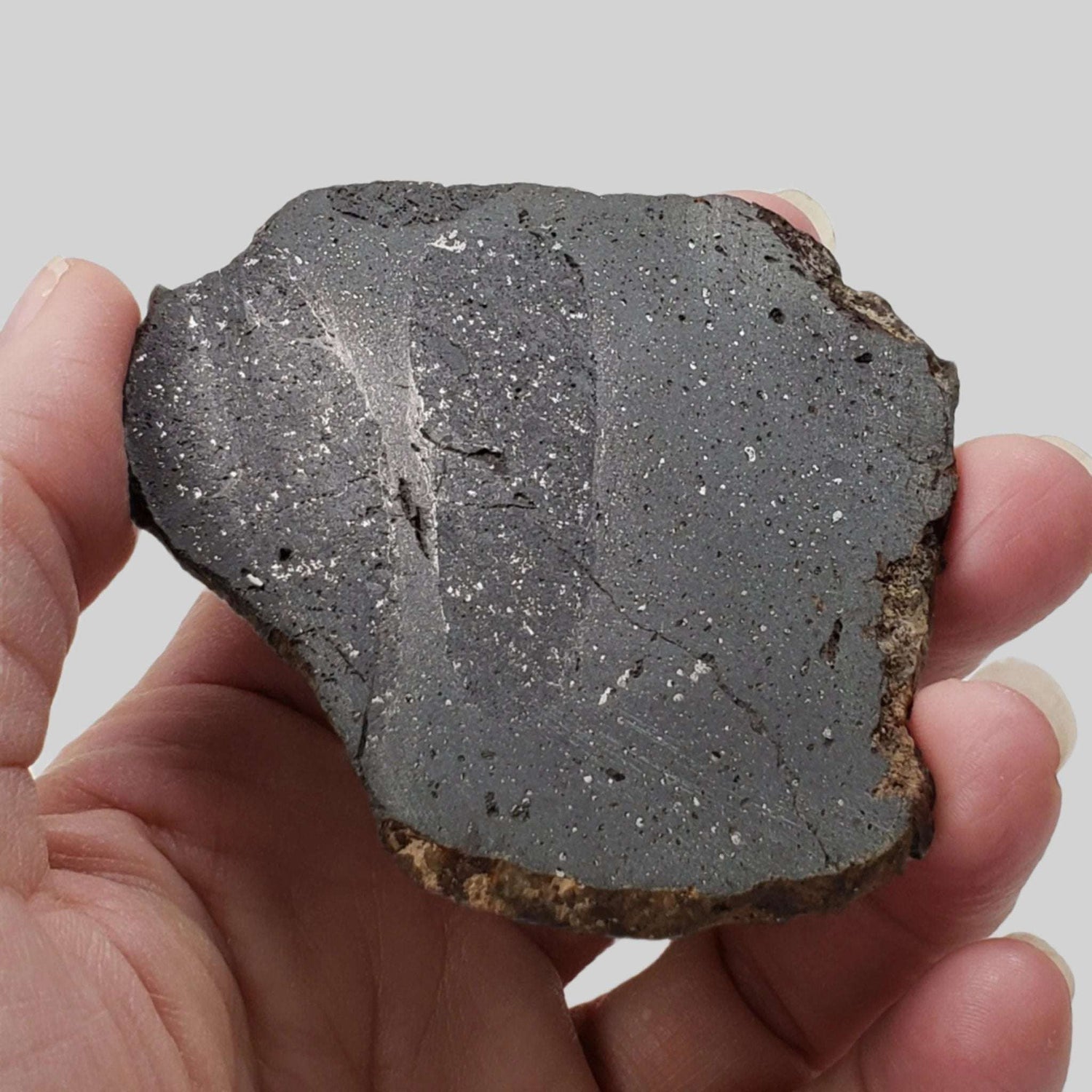
This is an incredible and professionally prepared slice of the NWA (Northwest Africa) 2902 meteorite weighing 51.05 grams and measuring 82 x 72 x 4 mm. This gorgeous and rare NWA classified meteorite is an L-related impact melt rock or Chondrite, shock-related crystallized impact melt with a total Mass of 1000 grams in many pieces and is 1 of only 44 approved meteorites classified as L-melt rock.
This 2003 find has a weathering grade of 1/2. This piece displays very well and would make an amazing addition to any collection with this unique piece. This world class specimen will come with a Canagem® Collection specimen card plus the original Certificate of Authenticity from SR Meteorites and finder Stefan Ralew of Germany. Will also be shipped in a Riker mount to protect your investment and will include a professional label and a stand.


This is a must have Impactite from the famous Terny Astrobleme, Ukrainian Shield and Crater in Ukraine. It weighs 14.33 grams and measures 42x32x9 mm. Although not a meteorite, impactites are directly linked to them and their impacts and are probably going to be one of the rarest collection pieces you'll ever own. The Terny impactites are important geological specimens that are recognized by the scientific community as evidence of asteroid or comet impacts on Earth.
The Terny astrobleme is a geological formation located in the Cherkasy region of Ukraine. It is believed to be the result of a meteorite impact that occurred approximately 65 million years ago during the Late Cretaceous period. The impact formed a crater that is estimated to be around 6 kilometers in diameter, although it is largely eroded and filled in with sediment.
The Terny astrobleme is an important geological site for studying the effects of meteorite impacts on the Earth's surface and the resulting geological processes that occur. It has been the subject of numerous scientific studies, and specimens of the impactite rocks found at the site have been collected and analyzed for their mineralogical and chemical properties.
Would be a beautiful addition to any new or existing collection. Comes with a Canagem Collection specimen card.


This is a great looking part slice of a Northwest Africa 2841 H3.9 classified meteorite. It weighs 8.0 grams and measures 30x16x6 mm. This meteorite was found in the Sahara Desert in 2004 and has a total recovered weight recorded as a very low 190 grams. It has a Shock stage of 2 and a Weathering grade of 1. Very attractive porous matrix.
The specimen comes with a Canagem Collection specimen card. Would be a beautiful addition to any new or existing collection.
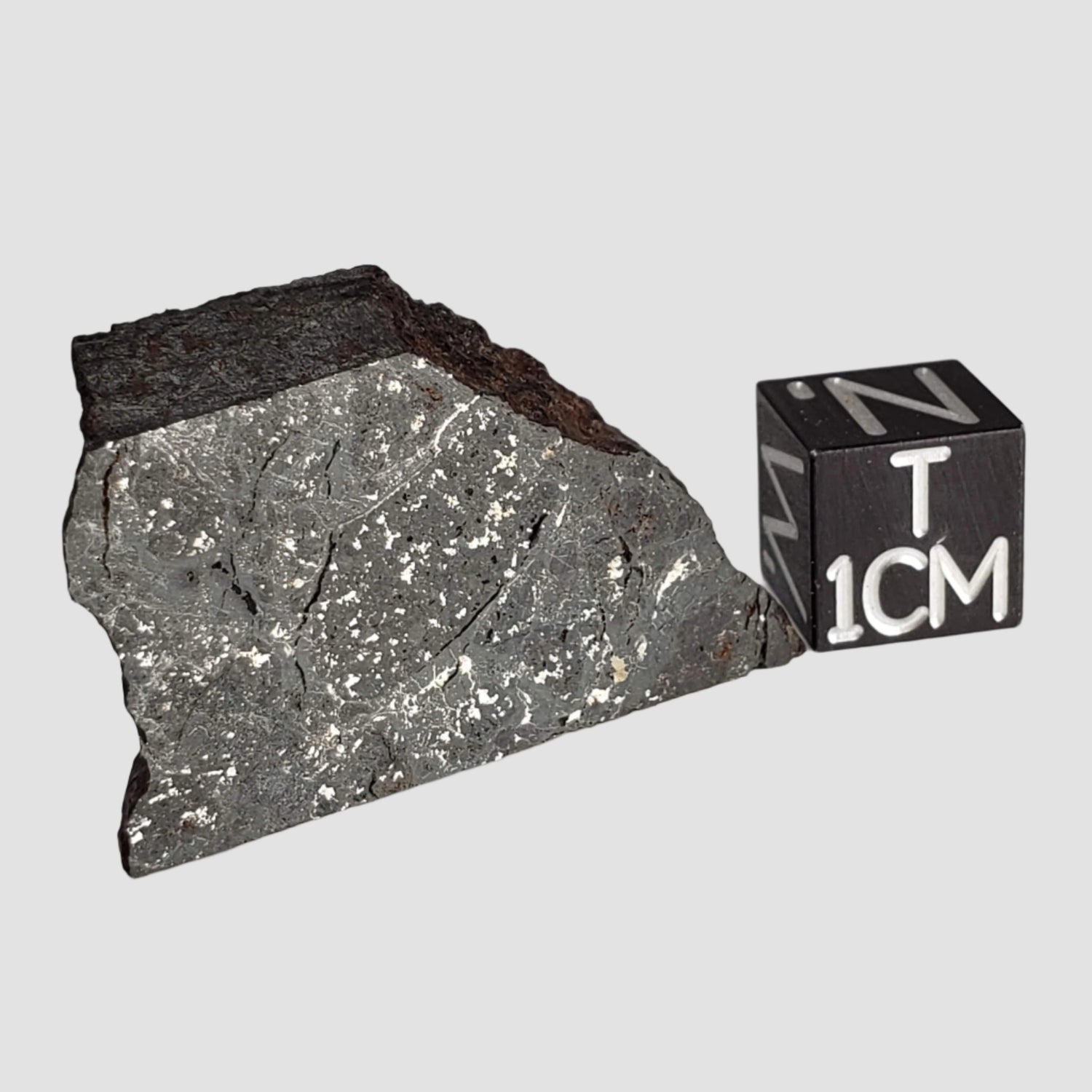
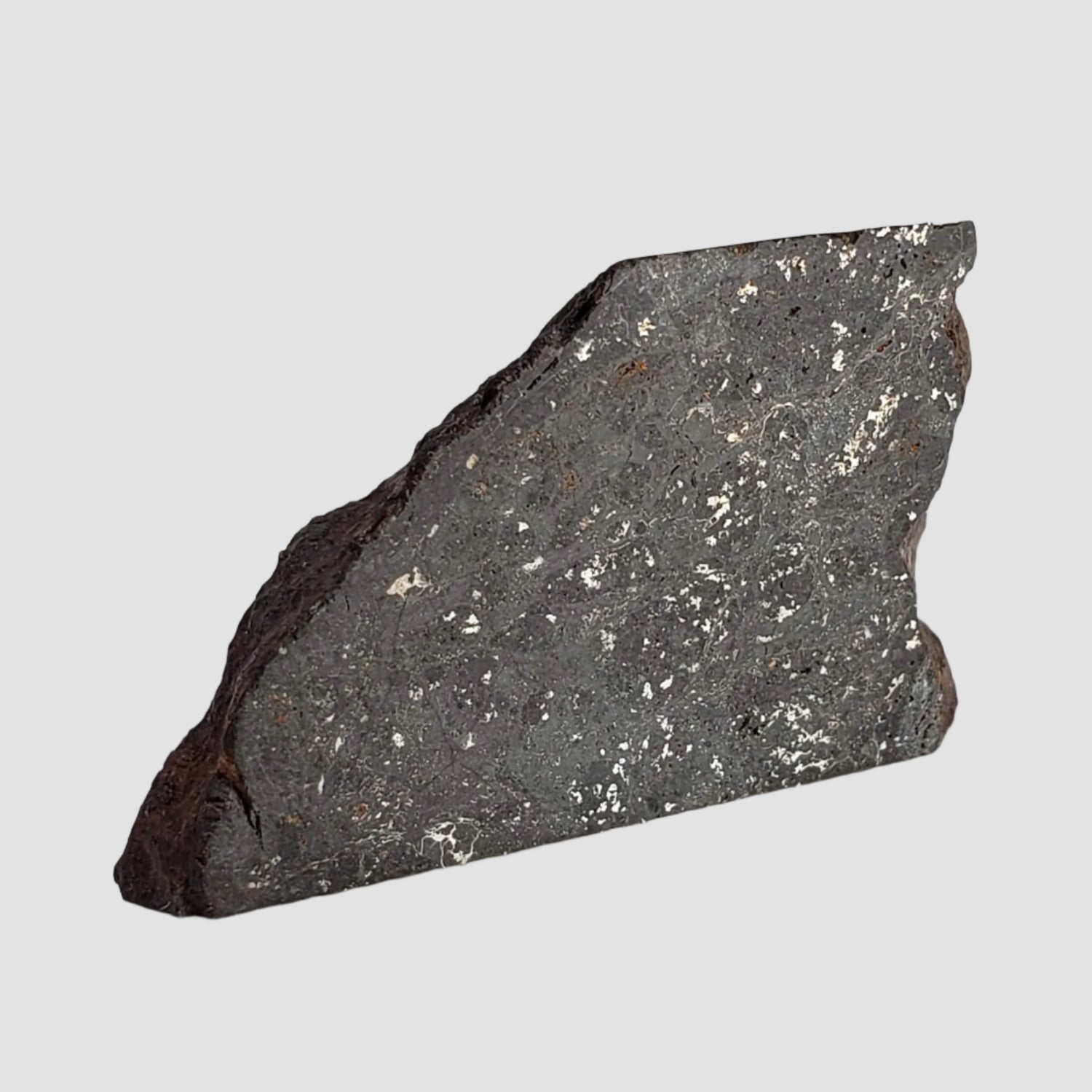
This is a great looking part slice of a Northwest Africa 2946 H3.8 classified meteorite. It weighs 9.8 grams and measures 33x21x5 mm. This meteorite was found in the Sahara Desert in 2005 and has a total recovered weight recorded as a low 149 grams. It has a Shock stage of 2 and a Weathering grade of 2. Very attractive highly shocked matrix. Nice metal in black shocked matrix.
The specimen comes with a Canagem Collection specimen card. Would be a beautiful addition to any new or existing collection.
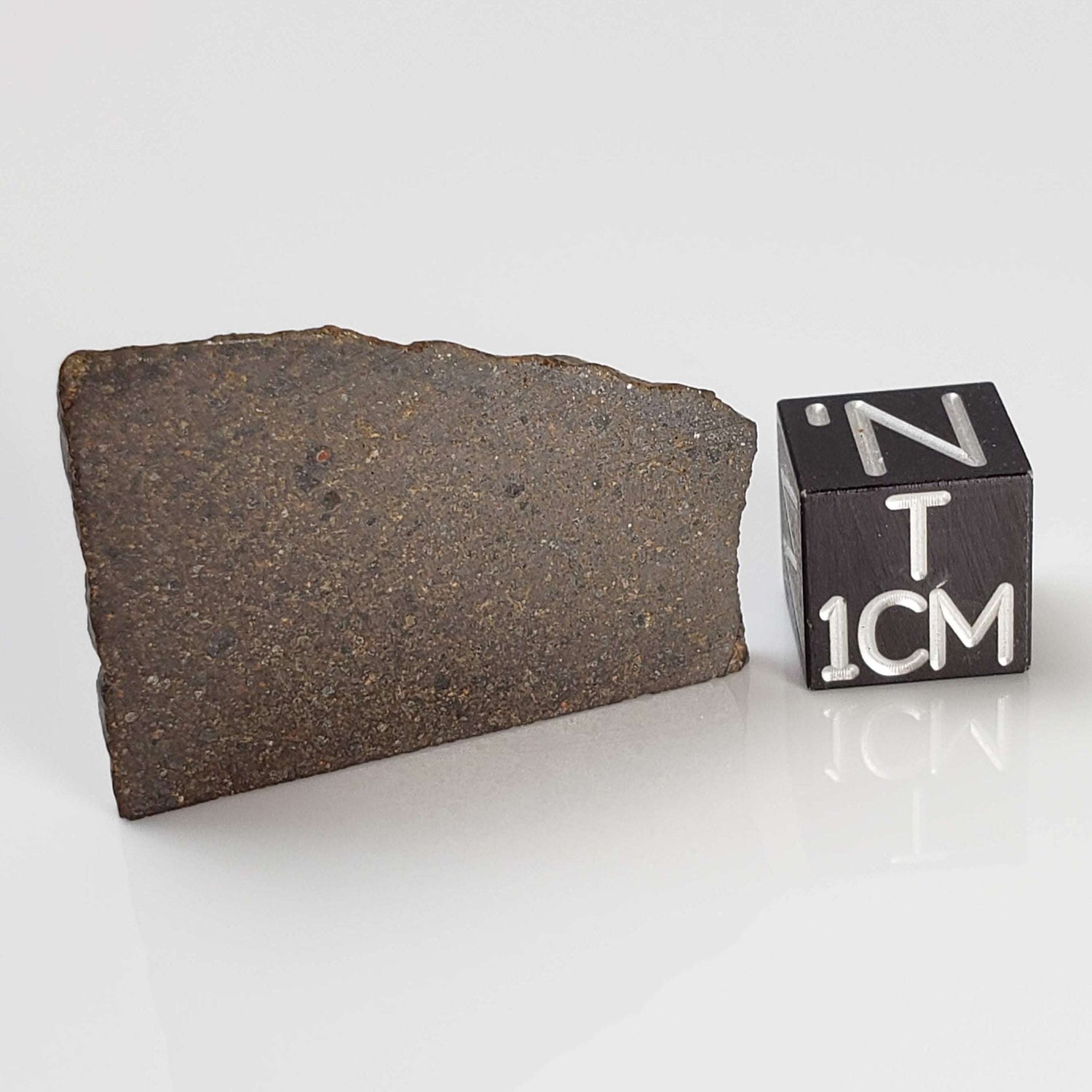
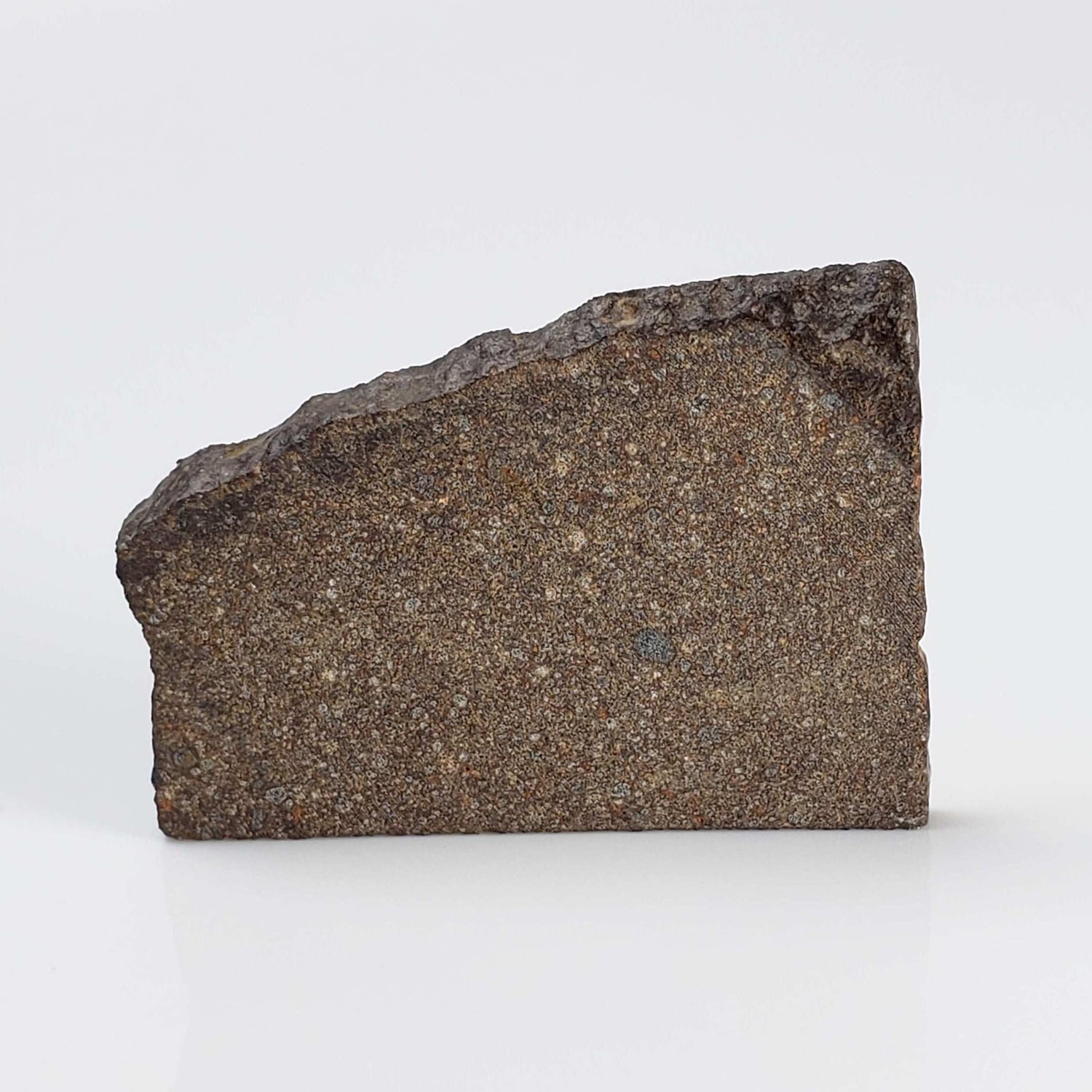
This is a superb looking part slice of Sahara Desert NWA 2663 meteorite. It weighs 3.24 grams and measures 29x21x2 mm. Although still considered unclassified, this meteorite was given the provisional class of CO3.1.
This is a great specimen with many multicolored chondrules and CAIs. It's a Ted Bunch meteorite but unfortunately this find was never fully submitted for analysis. It is a shame for this particular specimen, as it is just special.
This piece displays extremely well with its professionally finished cut face. Would be a beautiful addition to any new or existing collection. Comes with a Canagem Collection specimen card.
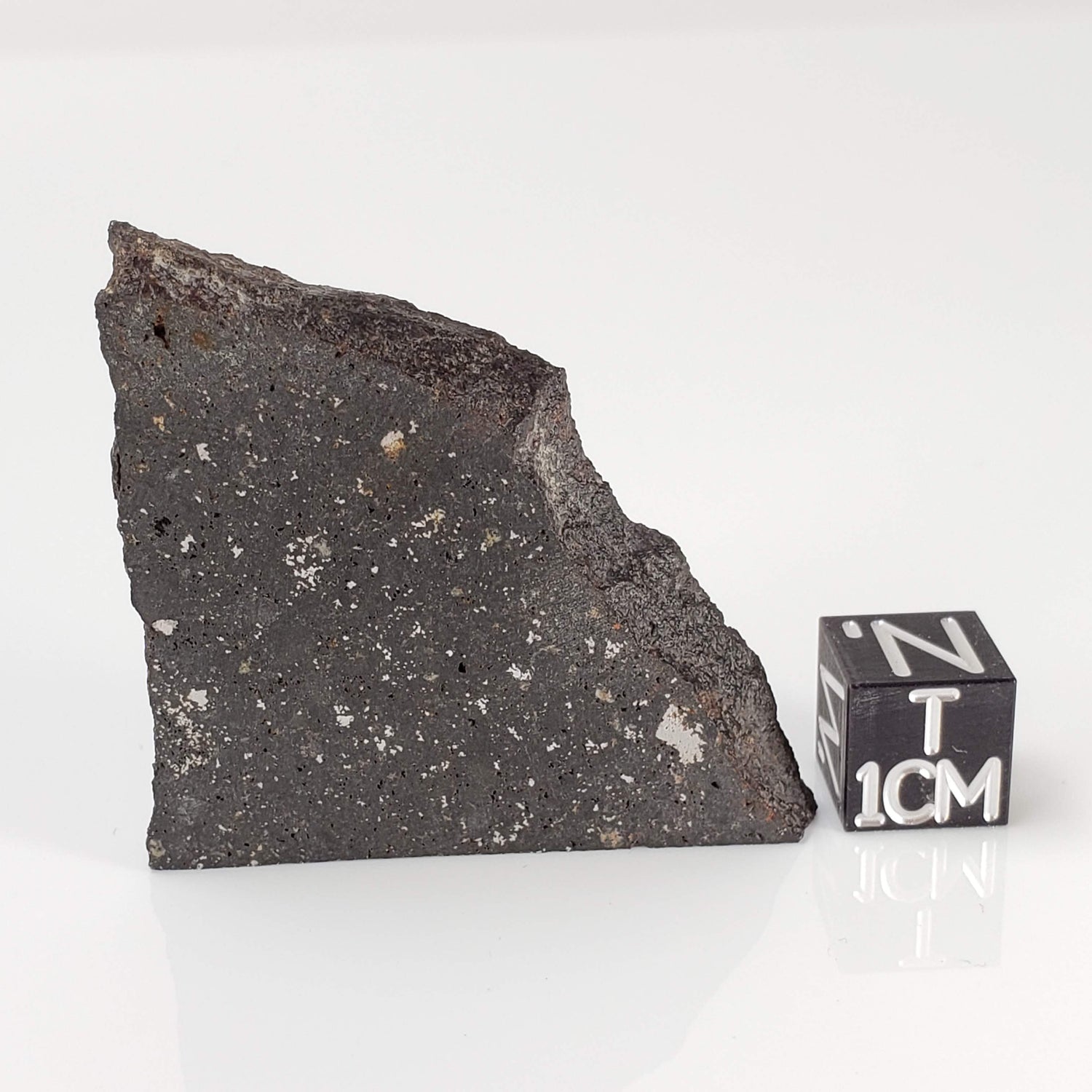

This is a superb looking slice of a Sahara Desert NWA 091 classified meteorite weighing 17.96 grams. Its dimensions are 40x39x5mm.
It is a nice dark gray color and is full of small holes (the small black specks in the pictures). It is very similar to Kimble County except a bit darker. The single piece was found in the desert in 2000 and has a total mass of only 370 grams and was classified as an L6 by UCLA. It is shock level 4 (very high) and weathering grade W2 (Low). It is highly vesiculated from a shock event.
This piece displays extremely well with its professionally finished cut face and is also a very nice size. Would be a beautiful addition to any new or existing collection. Comes with a Michael Cottingham Meteorite Collection and a Canagem Collection specimen card.
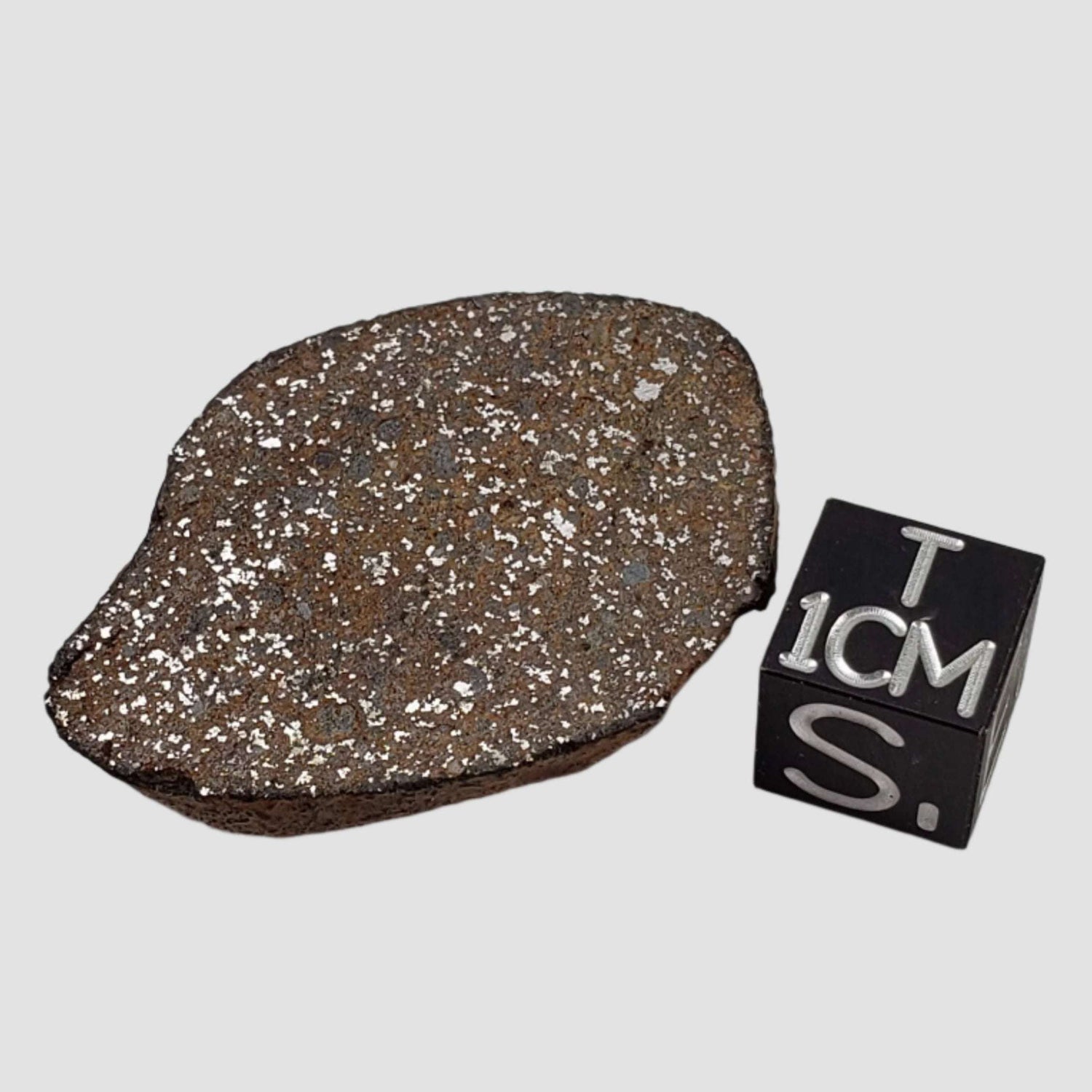
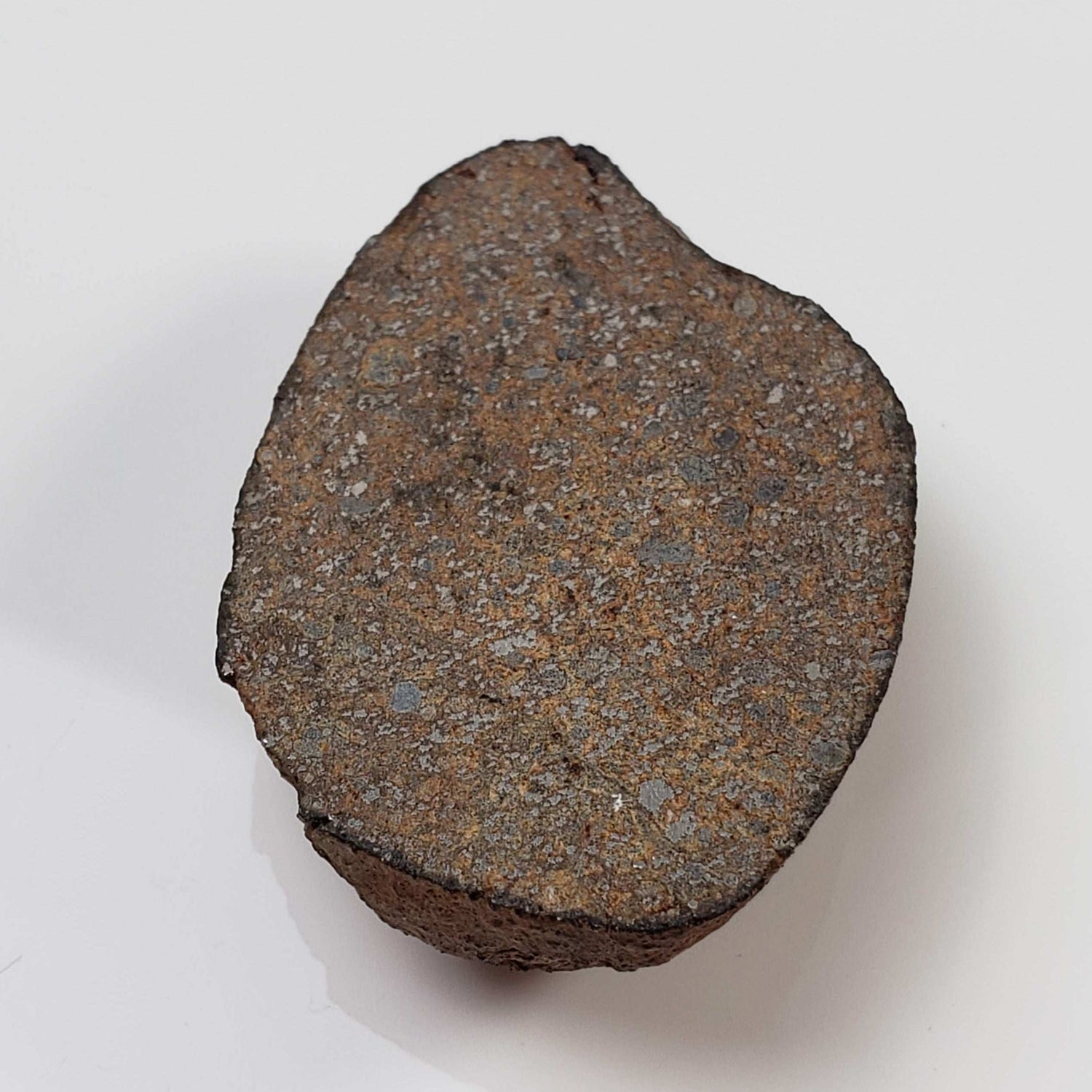
This is a great looking end cut Gao-Guenie H5 classified meteorite weighing 15.18 grams. Its dimensions are 35x25x9 mm and it has a crusted edge.
This H5 classified meteorite was observed falling at about 17:00 March 5, 1960 near the village of Gao in Africa. There is no total known weight recorded for this meteorite.
Would be a beautiful addition to any new or existing collection. Comes with an ELKK Meteorites and a Canagem Collection specimen card.
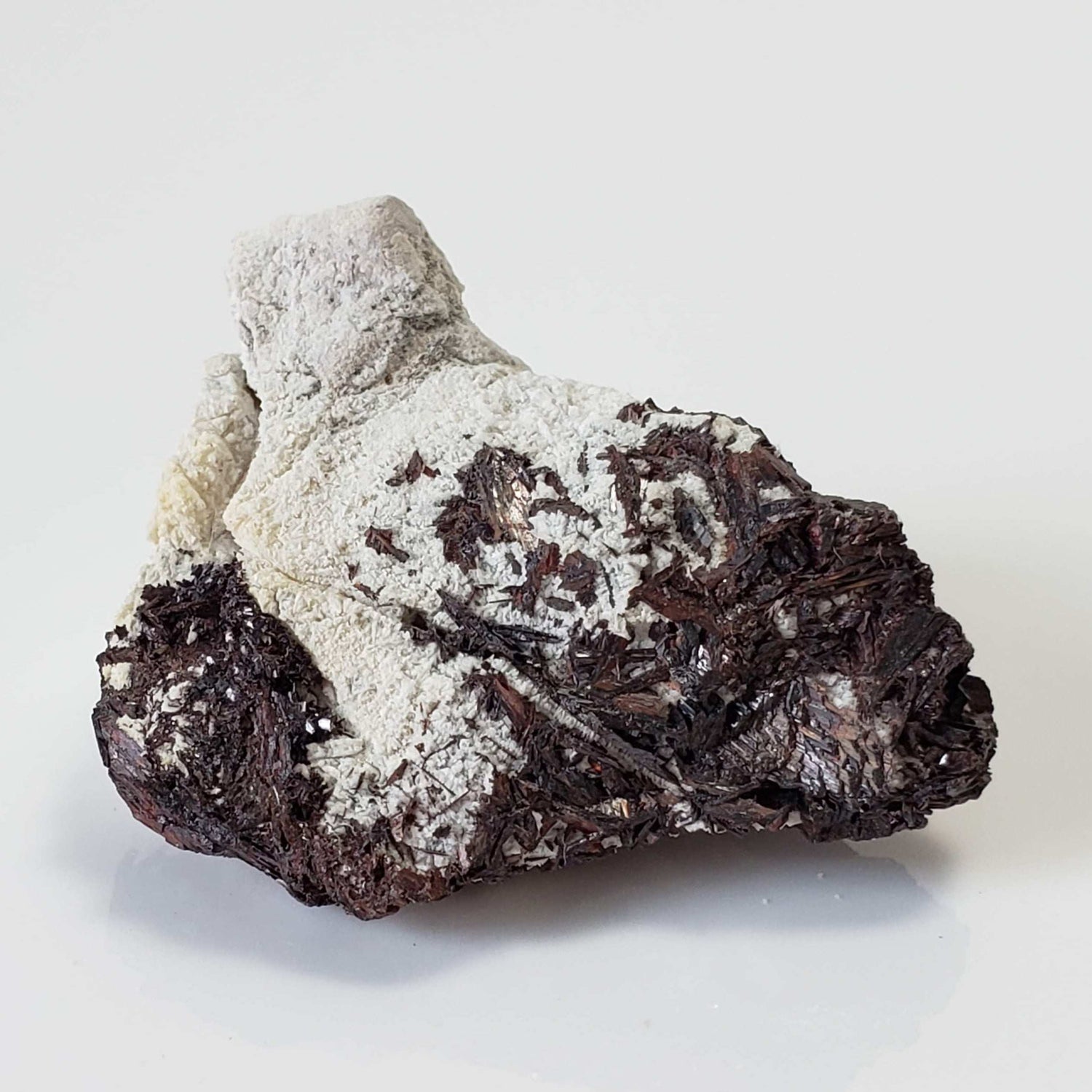

Hubnerite is a rare manganese tungstate mineral and the manganese-dominant member of the wolframite series. It typically forms dark reddish-brown to nearly black blade-like crystals with a submetallic to silky luster. This dense mineral is an important tungsten ore and is commonly found in high-temperature hydrothermal veins, often with quartz and fluorite. Specimens from Peru and Colorado are especially well known for their sharp, aesthetic crystal formations.
This specimen is in very good condition and displays very well. Make this a special specimen in your collection.
Name: Hubnerite
Specimen Size: Miniature-Sized
Dimensions: 35x24x22 mm / 1.4x0.9x0.9 inches
Weight: 18.2 Grams / .06 Ounces
Origin: Ruby Mine, San Juan Co., Colorado
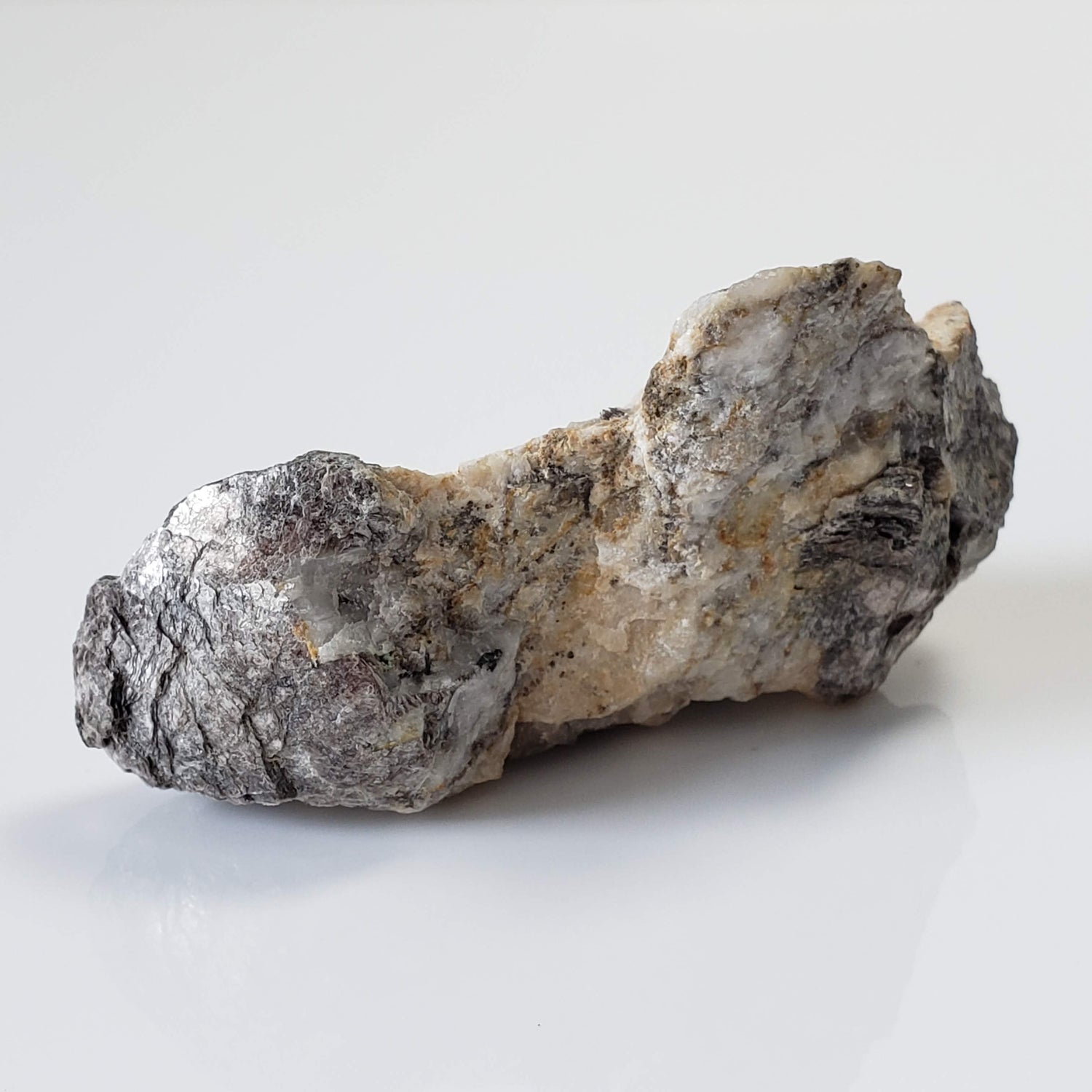
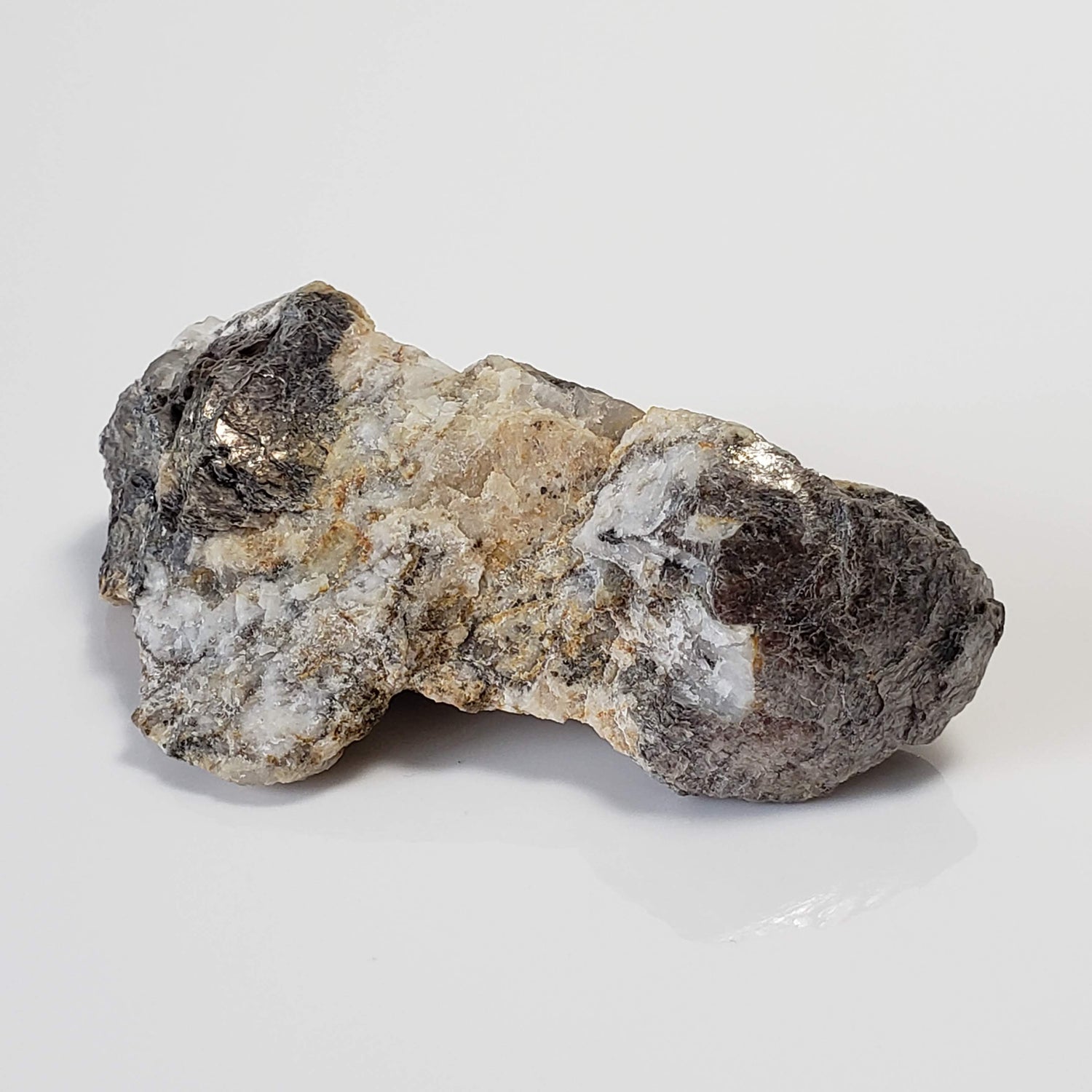
Zinnwaldite is a rare, lithium-rich mica mineral known for its dark, silvery brown to reddish-brown color. It forms in layered, sheet-like crystals and has a soft, slightly shiny surface typical of the mica group. It was first discovered in the Zinnwald area on the German–Czech border, which is where its name comes from.
Zinnwaldite is believed to promote clarity, balance, and inner strength—making it an excellent companion for decision-making, emotional resilience, and self-trust.
This specimen is in very good condition and displays very well. Make this a special specimen in your collection.
Name: Zinnwaldite
Specimen Size: Cabinet-Sized
Dimensions: 72x44x22 mm / 2.7x1.7x1.5 inches
Weight: 61.7 Grams / 2.2 Ounces
Origin: Price Lake, Florence Co., Wisconsin

Canagem is proud to be professional member of The International Gem Society(IGS) the world's top resource for gem professionals, enthusiasts, and industry content.