



199 products
Sort by:
199 products


This is a fantastic crusted 3.81 grams NWA (Northwest Africa) 869L3-6 classified meteorite Individual found by Nomads in the Sahara Desert. The dimensions of the specimen are 19x11x14 mm.
NWA 869 classified meteorites can still be interesting and this one is for sure perfectly shaped to catch your attention. It displays a superb crust on most of its surface. Most samples are individual meteorites but some fragments (mostly >1 kg) also occur. In most cases the fusion crust has been polished or ablated by wind erosion. Many samples are more severely affected and show faces with deep wind erosion features. Fracture faces, formed by ground collision, show a typical gray-green color and sometimes visible brecciation (light and/or dark clasts).
Would be a beautiful addition to any new or existing collection. Comes with a Canagem Collection specimen card.


Pseudomorphs are mineral specimens that have the external shape of one mineral but are composed of another. The pseudomorph goethite after marcasite forms when marcasite is exposed to oxidizing conditions and starts to oxidize and break down. As the marcasite breaks down, goethite replaces it in the crystal structure, preserving the shape of the original marcasite crystal. The resulting specimen appears as a marcasite crystal, but is actually composed of goethite.
The Farafra Oasis, in the White Desert, has been known for a number of years to deliver incredible pseudomorph specimens. The pseudomorphs occur within the Cretaceous Khoman Chalk, from which the White Desert derives its name.
This specimen is remarkable for its relatively sharp marcasite crystal form. It is in excellent condition.
Name: Goethite After Marcasite Pseudomorph
Specimen Size: Miniature-Sized Specimen
Dimensions: 41x34x36 mm / 1.6x1.3x1.4 inches
Weight: 76.2 grams / 2.7 ounces
Origin: White Desert, Farafra Oasis, Egypt

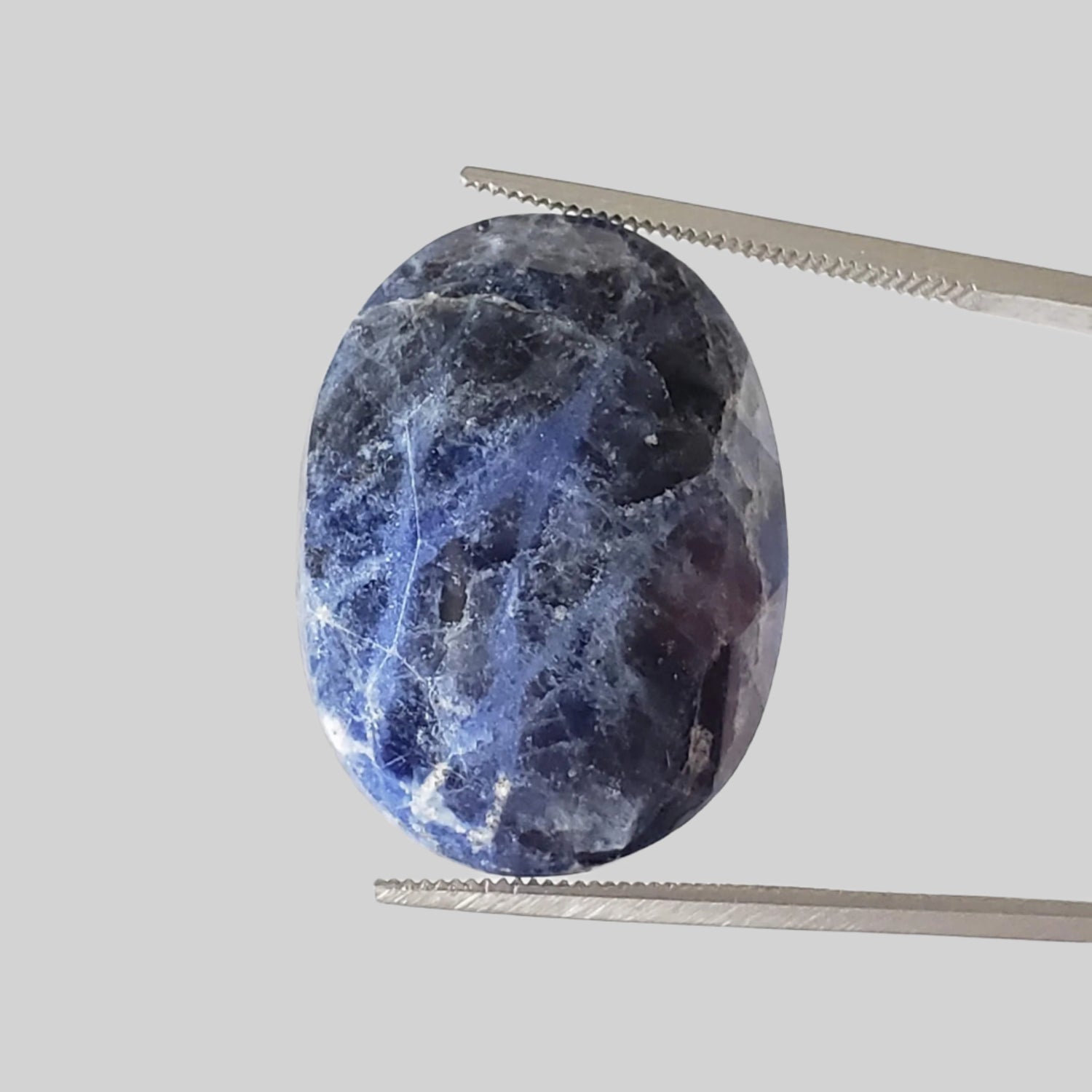
Product Type: Sodalite
Approx Weight (per piece): 16.2ct
Size: 23.3x17.3mm
Shape: Oval Facet Cabochon
Color: Navy Blue with White Patterns
Clarity: Opaque
Origin: Canada


Product Type: Labradorite
Approx Weight (per piece): 4.6ct
Size: 11mm
Shape: Round Cut - Faceted on both sides
Color: Gray with Rainbow Luster
Clarity: Transparent
Origin: Africa
Labradorite is an unusual mineral. It can display a beautiful iridescent play of colors, caused by internal fractures in the mineral that reflect light back and forth, dispersing it into different colors. This effect, known as labradorescence, gives Labradorite its appeal and fame.


Product Type: Natural Quartz Cats Eye
Approx Weight (per piece): 0.8ct
Size: 6mm
Shape: Round Cabochon
Color: Orange
Clarity: Opaque
Origin: Brazil
Treatment: Untreated
Quartz Cats Eye is a type of gemstone that exhibits an optical phenomenon called chatoyancy, which creates a luminous band resembling a cat's eye. It is caused by fibrous inclusions within the quartz that reflect light in a concentrated manner. The gemstone comes in various colors, with golden yellow to brown being the most common.
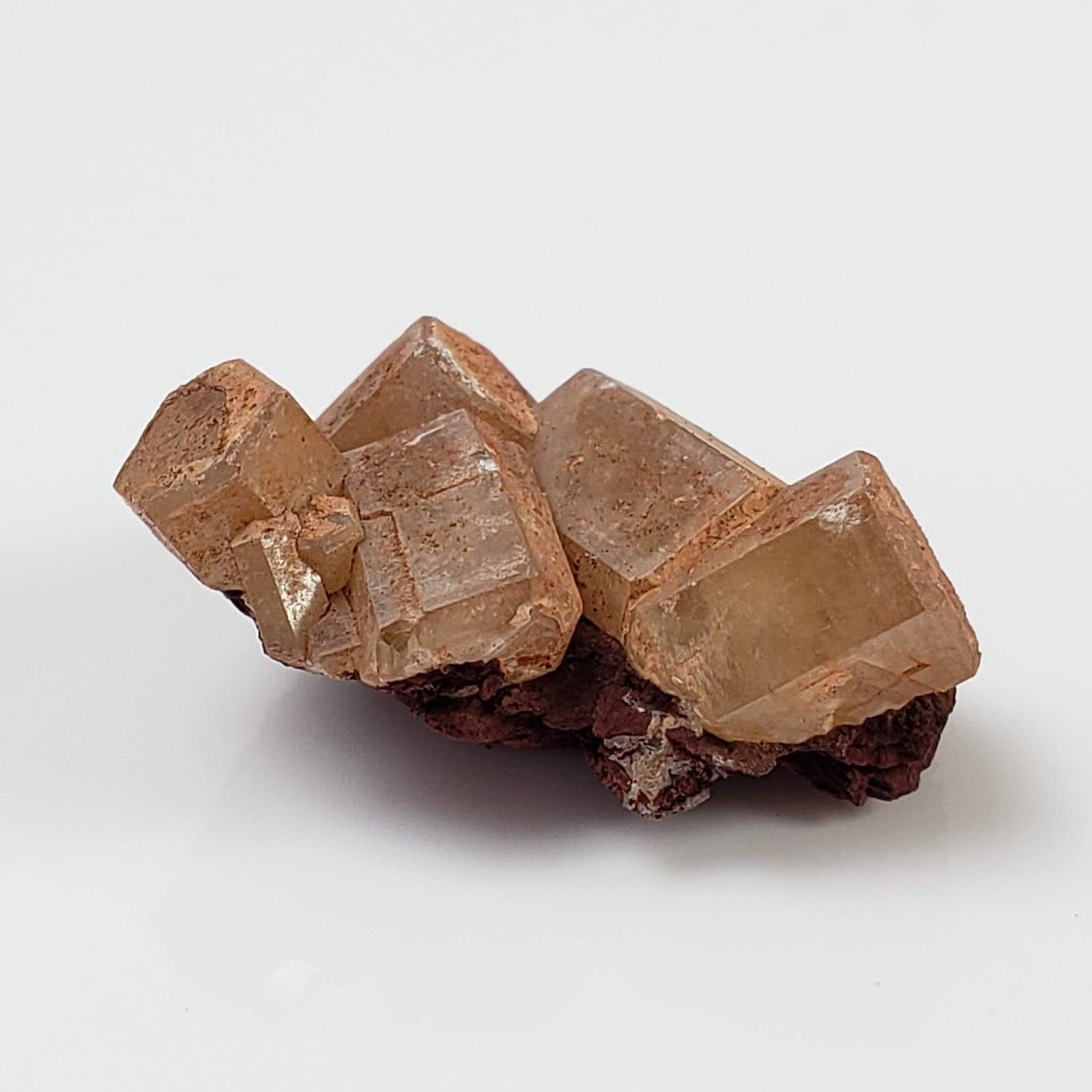
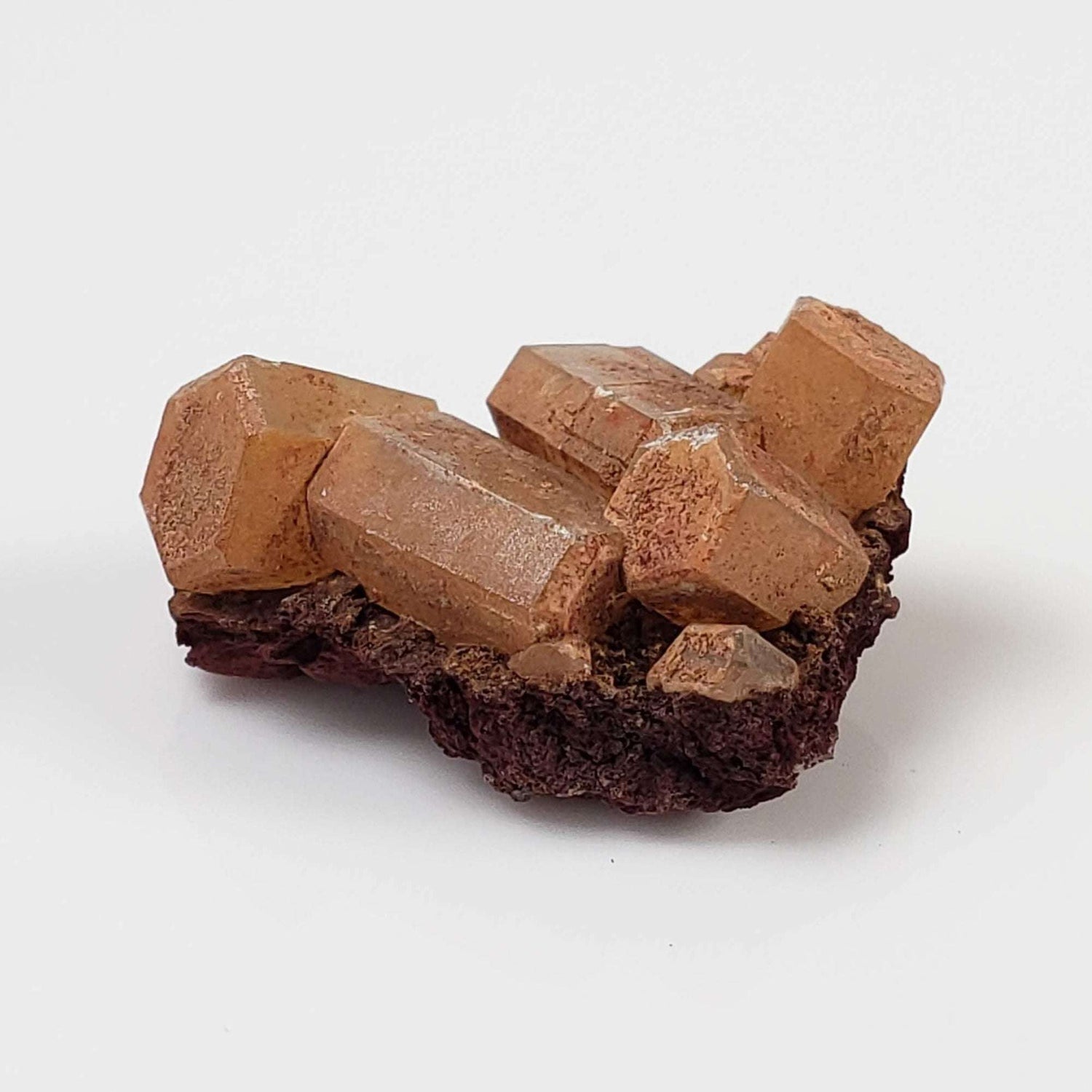
Mimetite crystals from the Mount Bonnie Mine in the Northern Territory of Australia are known for their lustrous, often iridescent, tan to yellow, and sometimes colorless or white, tabular, hexagonal crystals. It is frequently found on a gossan matrix. These specimens are considered rare and highly sought after by collectors, especially those with unusual luster or iridescent qualities. The Mount Bonnie Mine is a well-known locality for producing fine mimetite specimens, often associated with other minerals like Duftite and Coronadite
This is a delightful thumbnail from this cleaned out locality. This extremely rare specimen will come protected in its specimen display box with a Canagem Specimen Mineral Card.
Name: Mimetite Crystal
Specimen Size: Thumbnail-Sized
Dimensions: 18X12 mm / 0.7x0.5 inches
Weight: 3.69 Grams / .13 Ounces
Origin: Mined in Mount Bonnie Mine, Grove Hill, Victoria-Daly Region, Northern Territory, Australia


This is a superb looking fragment of a Sahara Desert NWA 515 classified meteorite weighing 1.086 grams. Its dimensions are 17x9x5mm.
This meteorite was found by Berber nomads in the deserts of Africa. Hundreds of small stones, more then 20 kilograms in total, was purchased November 8th, 2000 in M'Hamid, Morocco, Africa by a group of meteorite dealers and collectors. 247 grams was donated to UCLA were it was classified by A. Rubin as an L6 Chondrite with a shock rating of 2 and a weathering grade of 3 (25% olivine). Cut pieces of this meteorite show a nice light matrix with golden hues.
Thin sections (2nd photo) show nice chondrules ranging in size from less then 1mm to 3mm. Thin sections are used in earth geology, and in meteorites to identify the minerals in them. Stone meteorites are made of mostly of olivine and pyroxene. The pyroxene is typically greyish or yellowish and the bright colored minerals scattered throughout the photo are mostly olivine.
This piece displays extremely well and would be a beautiful addition to any new or existing collection. Comes with a The Mark Bostick Collection and a Canagem Collection specimen card.


This is a must have Impactite from the famous Terny Astrobleme, Ukrainian Shield and Crater in Ukraine. It weighs 14.33 grams and measures 42x32x9 mm. Although not a meteorite, impactites are directly linked to them and their impacts and are probably going to be one of the rarest collection pieces you'll ever own. The Terny impactites are important geological specimens that are recognized by the scientific community as evidence of asteroid or comet impacts on Earth.
The Terny astrobleme is a geological formation located in the Cherkasy region of Ukraine. It is believed to be the result of a meteorite impact that occurred approximately 65 million years ago during the Late Cretaceous period. The impact formed a crater that is estimated to be around 6 kilometers in diameter, although it is largely eroded and filled in with sediment.
The Terny astrobleme is an important geological site for studying the effects of meteorite impacts on the Earth's surface and the resulting geological processes that occur. It has been the subject of numerous scientific studies, and specimens of the impactite rocks found at the site have been collected and analyzed for their mineralogical and chemical properties.
Would be a beautiful addition to any new or existing collection. Comes with a Canagem Collection specimen card.
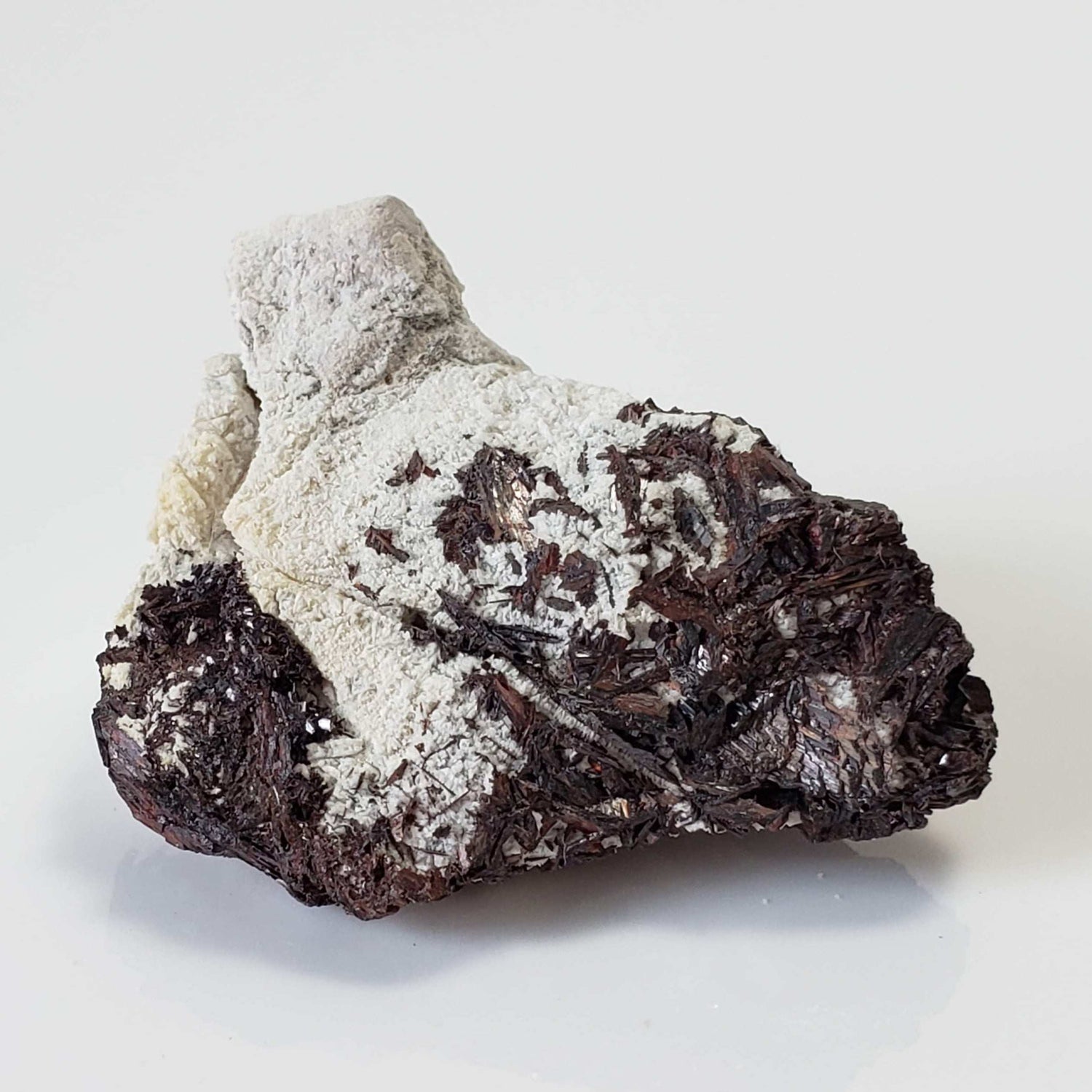

Hubnerite is a rare manganese tungstate mineral and the manganese-dominant member of the wolframite series. It typically forms dark reddish-brown to nearly black blade-like crystals with a submetallic to silky luster. This dense mineral is an important tungsten ore and is commonly found in high-temperature hydrothermal veins, often with quartz and fluorite. Specimens from Peru and Colorado are especially well known for their sharp, aesthetic crystal formations.
This specimen is in very good condition and displays very well. Make this a special specimen in your collection.
Name: Hubnerite
Specimen Size: Miniature-Sized
Dimensions: 35x24x22 mm / 1.4x0.9x0.9 inches
Weight: 18.2 Grams / .06 Ounces
Origin: Ruby Mine, San Juan Co., Colorado
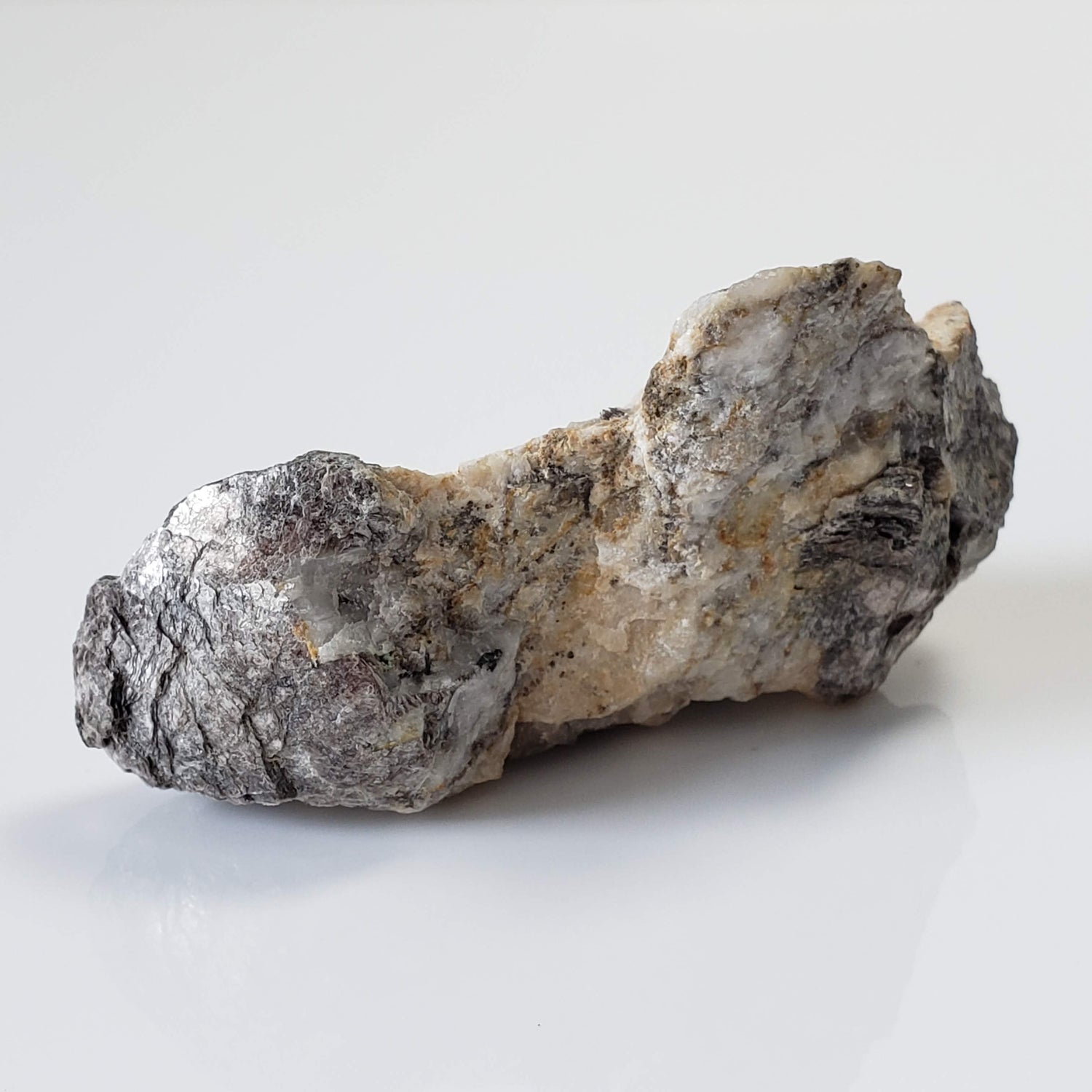
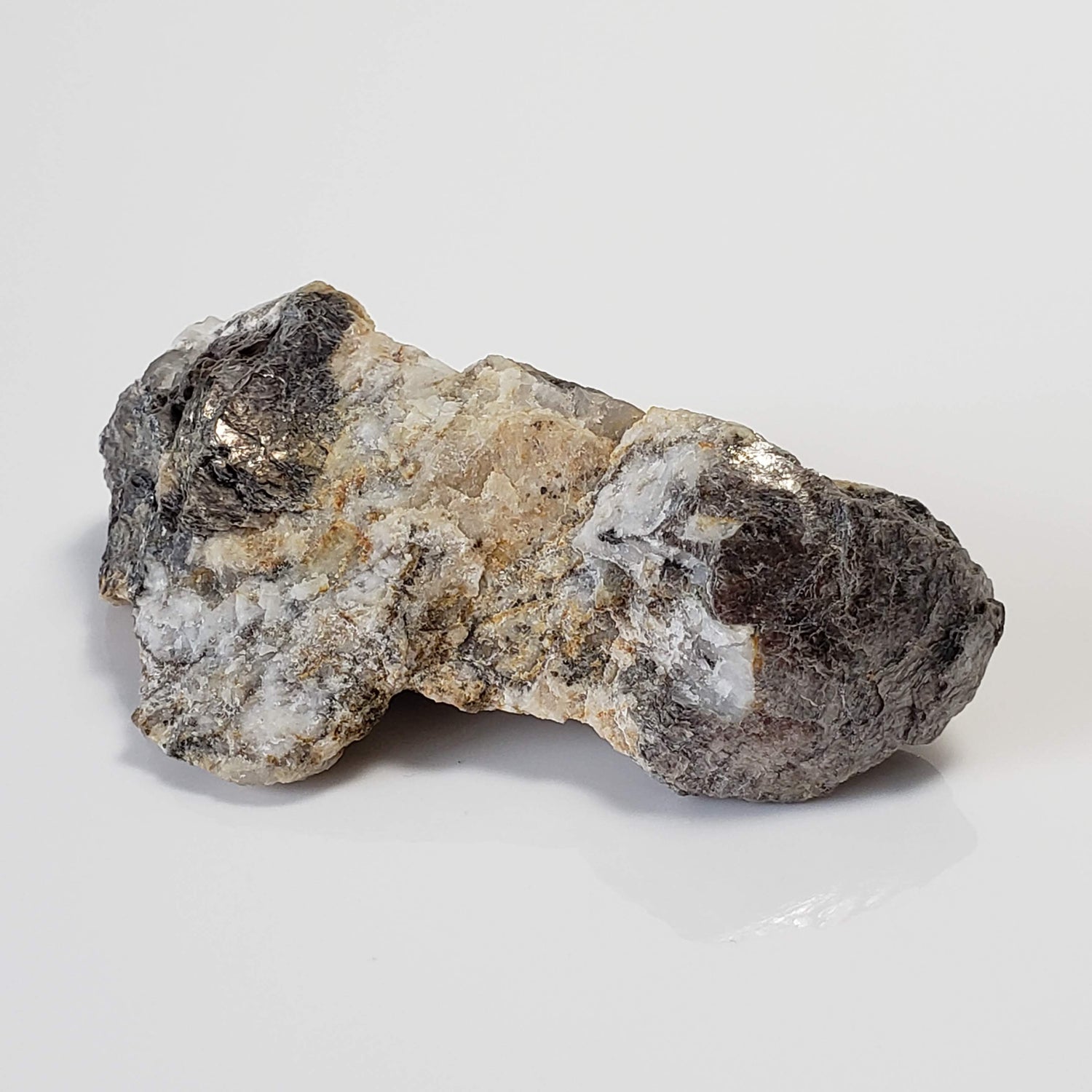
Zinnwaldite is a rare, lithium-rich mica mineral known for its dark, silvery brown to reddish-brown color. It forms in layered, sheet-like crystals and has a soft, slightly shiny surface typical of the mica group. It was first discovered in the Zinnwald area on the German–Czech border, which is where its name comes from.
Zinnwaldite is believed to promote clarity, balance, and inner strength—making it an excellent companion for decision-making, emotional resilience, and self-trust.
This specimen is in very good condition and displays very well. Make this a special specimen in your collection.
Name: Zinnwaldite
Specimen Size: Cabinet-Sized
Dimensions: 72x44x22 mm / 2.7x1.7x1.5 inches
Weight: 61.7 Grams / 2.2 Ounces
Origin: Price Lake, Florence Co., Wisconsin

Canagem is proud to be professional member of The International Gem Society(IGS) the world's top resource for gem professionals, enthusiasts, and industry content.