
Search results
605 results
Sort by:
605 results
Search results
Lapis lazuli or lapis for short, is a deep-blue metamorphic rock used as a semi-precious gemstone that has been prized since antiquity for its intense color. This specimen shows deep blue with sparks of pyrite and is in great condition.
Product Type: Lapis Lazuli Rough
Specimen Size: Cabinet-Sized
Dimensions: 75x68x35 mm / 2.9x2.7x1.4 inches
Weight: 341.6 Grams / 12 ounces
Origin: Afghanistan
This is a large sparkly cluster of beautiful pink bladed barite on a small bed of Cerussite crystals. Barite crystal formations grow in parallel sheets that almost appear fibrous. It is well-known for its great range of colors and varied crystal forms and habits.
Cerussite is commonly known as white lead and is an important ore mineral. It consists of lead carbonate which crystallizes in the orthorhombic system. Its color will vary depending on the composition and structure, with colorless, white, grey and green tinted, being the most common colors of crystals found.
Name: Barite, Cerussite Crystal Cluster
Specimen Size: Cabinet-Sized
Dimensions: 69x60x38 mm / 2.7x2.4x1.5 inches
Weight: 236.13 Grams / 8.3 Ounces
Origin: Mined in Mibladen Mining District, Midelt, Khenifra Province, Morocco
Vanadinite crystals are small, hexagonal prismatic crystals that are typically red to brownish-red in color. They have a bright luster and a transparent to translucent appearance. The crystals often form in aggregates, creating intricate and interesting formations. Vanadinite would hardly be as famous if not for the outstanding locality of Mibladen, Morocco. This locality has by far produced the most outstanding crystals of beautiful color and form.
Vanadinite is believed to enhance vitality, motivation, and manifestation, while also promoting clarity, focus, and protection from negativity.
Product Type: Vanadinite Crystal On Barite
Specimen Size: Miniature-Sized
Dimensions: 34x32x21 mm / 1.3x1.2x0.8 inches
Weight: 28.2 grams / 1.0 ounces
Origin: Mibladen, Morocco
Group of small apple-green, lustrous prismatic crystals very neat and bright, nestled in vugs, on contrasting limonite matrix. A very colorful and really beautiful specimen. Would be a beautiful addition to any new or existing collection.
Name: Pyromorphite
Specimen Size: Large Cabinet-Sized
Dimensions: 105x90x60 mm / 4.1x3.5x2.4 inches
Weight: 769 Grams / 1 lb 11 ounces
Origin: Mined in Córdoba, Spain
This is a fantastic Impactite Fallback Breccia from Germany weighing 52 grams and measuring 69x51x10mm. Although not a meteorite, impactites and shatter cones are directly linked to them and their impacts. The Steinheim Basin today exhibits a distinct morphological depression that is ∼110 m deep and ∼3.5 km in diameter; the height of the central uplift totals to more than 140 m. The original size of the pristine crater is estimated to be ∼3.8 km with an original depth of ∼205 m.
As this drainless morphological depression was filled by lake sediments shortly after the impact, the primary crater morphology is widely preserved. The crater rim is formed by steeply inclined and intensely brecciated Upper Jurassic limestone blocks that also contain numerous shattered chert nodules, as well as some loose blocks of the host limestone. An impact breccia, referred to as the so-called ”Primäre Beckenbrekzie” (“primary basin breccia”) and interpreted as a “fallback breccia”, is known from many drillings in the Steinheim Basin.
Mainly composed of Middle to Upper Jurassic limestones, marls, mudstones, and sandstones, the impact breccia inside the morphological depression of the Steinheim Basin is overlain by lake sediments and is obviously preserved in its original thickness and position. This piece displays very well and is a very nice size showing multiple characteristics of its origin. Would make a beautiful addition to any collection.
Gyrolite often forms nodular aggregates that can appear glassy, dull or even fibrous. The aggregate nodules often accompany many fine and rare minerals such as Apophyllite and Okenite plus many of the Zeolites.
Prehnite can form prismatic, tabular, or pyramidal crystals, but usually occurs in botryoidal, reniform, stalactitic, granular, or compact habits. It is usually green in colour, but may be white, colourless, yellow, or gray. It has a colourless streak. Prehnite is transparent to translucent, with a vitreous to pearly luster. Prehnite forms in cavities in basaltic lavas.
Prehnite is said to be a stone of unconditional love and the crystal to heal the healer. Placing it in the garden is believed to help make a home into a healing sanctuary and teach one how to be in harmony with nature. A good Fung Shui stone, prehnite is said to be helpful for decluttering, helping one let go of possessions no longer needed.
Name: Gyrolite on Prehnite
Specimen Size: Cabinet-Sized
Dimensions: 75x59x33 mm / 2.6x2.1x1.2 inches
Weight: 111 Grams / 3.9 Ounces
Origin: Mined in Mumbai (Bombay), India
You will receive one of the Pseudomorphs pictured.
Pseudomorphs are mineral specimens that have the external shape of one mineral but are composed of another. The pseudomorph goethite after marcasite forms when marcasite is exposed to oxidizing conditions and starts to oxidize and break down. As the marcasite breaks down, goethite replaces it in the crystal structure, preserving the shape of the original marcasite crystal. The resulting specimen appears as a marcasite crystal, but is actually composed of goethite.
The Farafra Oasis, in the White Desert, has been known for a number of years to deliver incredible pseudomorph specimens. The pseudomorphs occur within the Cretaceous Khoman Chalk, from which the White Desert derives its name.
These specimens are remarkable for their relatively sharp marcasite crystal forms in aesthetic crystal clusters. They are in excellent condition. This collector's specimen is unique, of great quality and ready for display.
Name: Goethite After Marcasite Pseudomorph
Specimen Size: Miniature-Sized Specimen
Dimensions: 23-28x20-23 mm / 0.9-1.1x0.8-0.9 inches
Weight: 17-23 grams / 0.6-0.8 ounces
Origin: Found in White Desert, Farafra Oasis, Egypt
Prehnite is a green to yellowish-green colored mineral that belongs to the phyllosilicate family. It is composed of calcium, aluminum, and silicate, with traces of iron, magnesium, and other elements. Prehnite crystals have a unique pearly luster and can form in a variety of shapes, including tabular, prismatic, and stalactitic formations.
Prehnite is believed to have a calming effect on the mind and emotions, promoting relaxation and inner peace. It is also said to be a stone of unconditional love, compassion, and healing.
Name: Prehnite and Graphite Crystal Cluster
Specimen Size: Thumbnail-Sized
Dimensions: 19-25 mm / .75 - 1.0 inches
Weight: 7.0 - 8.4 Grams / 0.2 - 0.3 Ounces
Origin: Mined in Merelani Hills, Arusha, Tanzania
Introducing our stunning Impactite Melt Rock from the Babaudus Impactite site in France. This rare and unique piece weighs 30.89 grams and measures 53x38x9 mm. It is a must-have for any collector or enthusiast.
This Babaudus Type Impact Melt Rock was formed by the intense heat and pressure of a meteorite impact. The Rochechouart Structure, where it was found, is known for producing some of the world's most beautiful and intriguing impactites.
This Impact Melt Rock is a beautiful example of the unique textures and patterns that can be found in impactites. It displays very well and would be a beautiful addition to any new or existing collection. Comes with a Canagem Collection specimen card.
Wolfe Creek Impactite | 104.88 Grams | Impact Breccia | Closed Site | Australia
Name: Wolfe Creek [crater] This is a recognized impact crater name.
Observed fall: No
Age: <0.3 Ma
Diameter: 0.875 km
Country: Australia
Note: There is a natural fracture in the middle of the specimen which comes from the event that created it. Two parts move slightly so handle with care. Displays very well.
Here we have for you a Wolfe Creek impactite breccia specimen weighing 104.88 grams. Its dimensions are 67x53x42 mm. The exposed crater is located in Western Australia, Australia with an estimated age of < 0.3 Ma.
The impact crater is cited in the Earth Impact Database maintained by the Planetary and Space Science Centre at the University of New Brunswick, Canada. For photographs, maps, references, and other information, see the entry on the PASSC Website
These pieces are becoming difficult to acquire as the site is closed for collecting. This is a good time to get a fine specimen. Would be a beautiful addition to any new or existing collection. Comes with 2 specimen cards including a Canagem® Collection specimen card.
This is an incredibly colorful and beautiful crystal specimen. The Apophyllite is deep green and contrasts beautifully with the white Scolecite. It is a large specimen and displays beautifully.
Stilbite is a zeolite mineral appreciated for its delicate crystal formations and pastel hues, ranging from colorless to white, yellow, pink, and peach. It forms distinctive tabular crystals with a bowtie or butterfly shape and exhibits a vitreous to pearly luster. Commonly found in cavities in volcanic rocks, stilbite is associated with other zeolite minerals. It is valued for its aesthetic appeal and is believed by some to have calming energy, supporting spiritual growth and emotional healing.
One of the distinguishing features of apophyllite is its ability to form well-defined crystals with a pyramid-like shape. These crystals often exhibit a prismatic or pseudo-cubic habit and have a vitreous luster. Apophyllite is transparent to translucent and is commonly found in colorless or white varieties, although it can also occur in shades of green, pink, yellow, or brown.
Scolecite forms as vertically striated, thin, prismatic crystals. Scolecite may also occur as radiating fibrous masses. The colour may be white, yellowish, or colourless. It is a transparent to translucent mineral, and it has a vitreous to silky luster.
Name: Apophyllite, Stilbite, Scolecite Crystals
Specimen Size: Large Cabinet-Sized
Dimensions: 150x110x80 mm / 5.9x4.3x3.1 inches
Weight: 1.33 KG / 2 lbs 14 oz
Details: Mined in Panvel, India
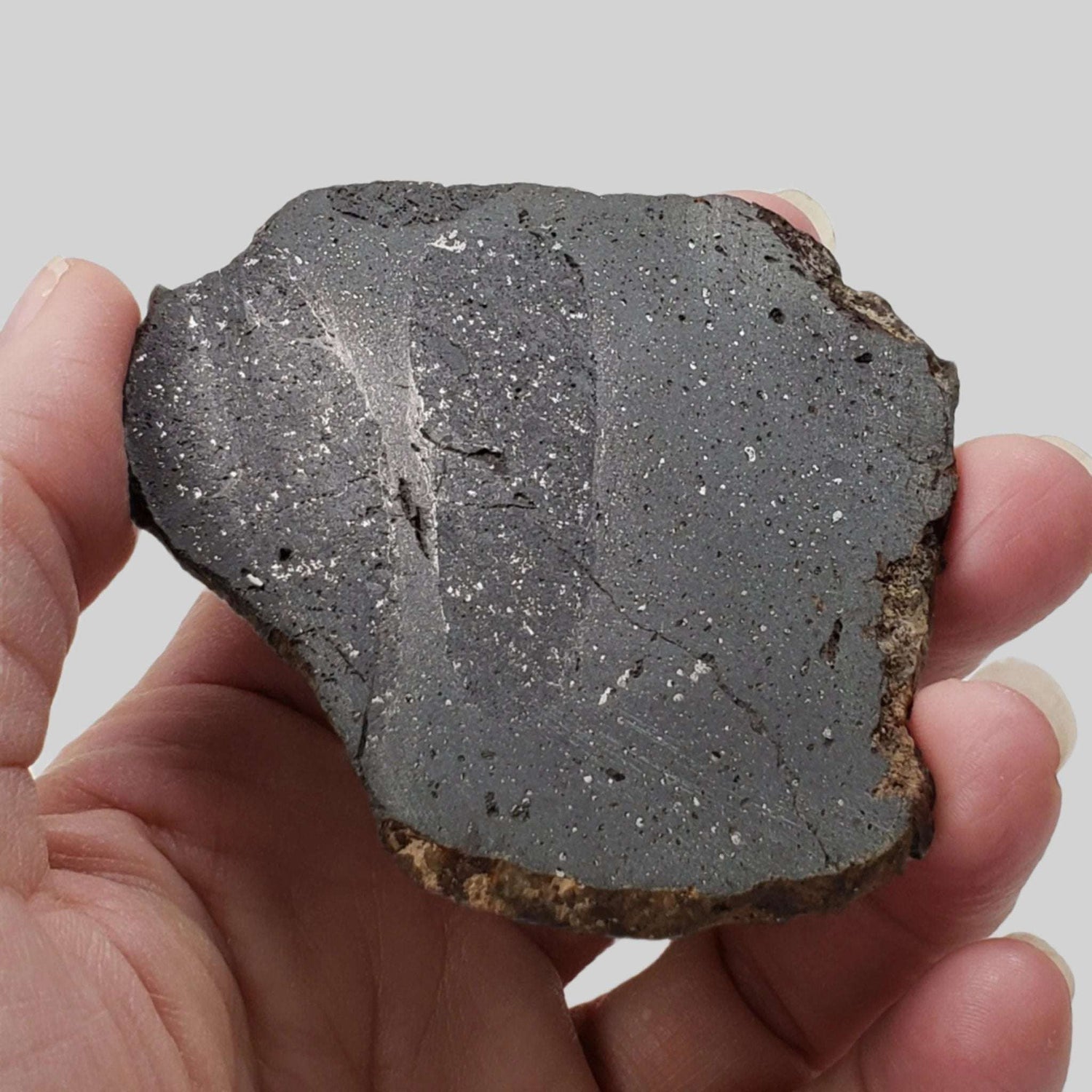
This is a superb looking Spade meteorite part slice weighing 2.1 grams and measuring 25x12x2 mm. This H6 chondrite classified meteorite was found in 2000 and has a total weight of 8.86 Kg.
This single mass of 8.86 kg was found in a grass field by Mr. J. Talbert while farming. The classification and mineralogy performed by R. Jones, UNM and A. Rubin, UCLA, determined it to be an annealed impact melt rock. It has a shock stage of S2 and a moderate weathering grade of W2.
Would be a beautiful addition to any new or existing collection. Will come with a Canagem Collection specimen card.
Gyrolite often forms nodular aggregates that can appear glassy, dull or even fibrous. The aggregate nodules often accompany many fine and rare minerals such as Apophyllite and Okenite plus many of the Zeolites.
Calcite is found throughout the world in sedimentary, metamorphic, and igneous rocks. Some geologists consider it to be a "ubiquitous mineral" - one that is found everywhere. Calcite is the principal constituent of limestone and marble.
Name: Gyrolite and Calcite on Quartz Matrix Cluster Crystal
Specimen Size: Cabinet-Sized
Dimensions: 95x57x57 mm / 3.75x2.25x2.25 inches
Weight: 240 Grams / 8.5 Ounces
Origin: Mined in Dindoshi, India
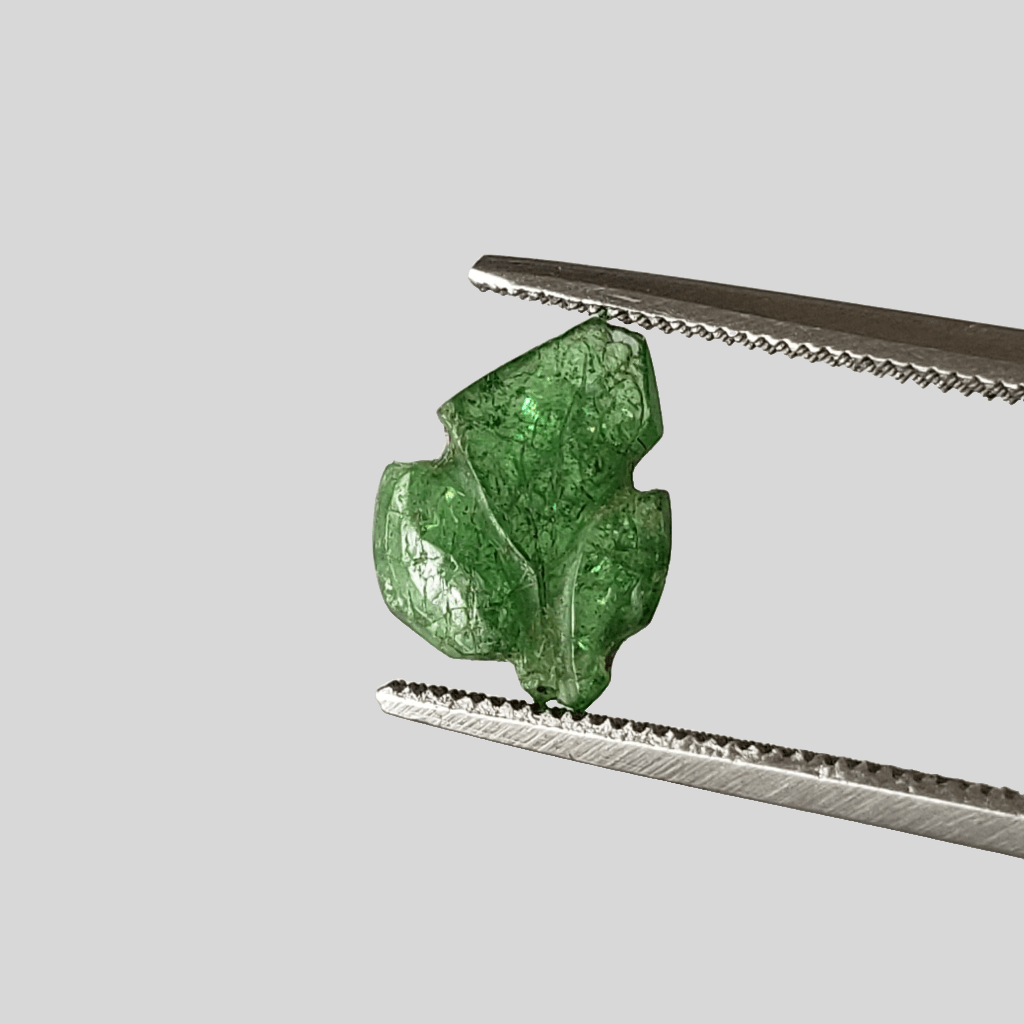
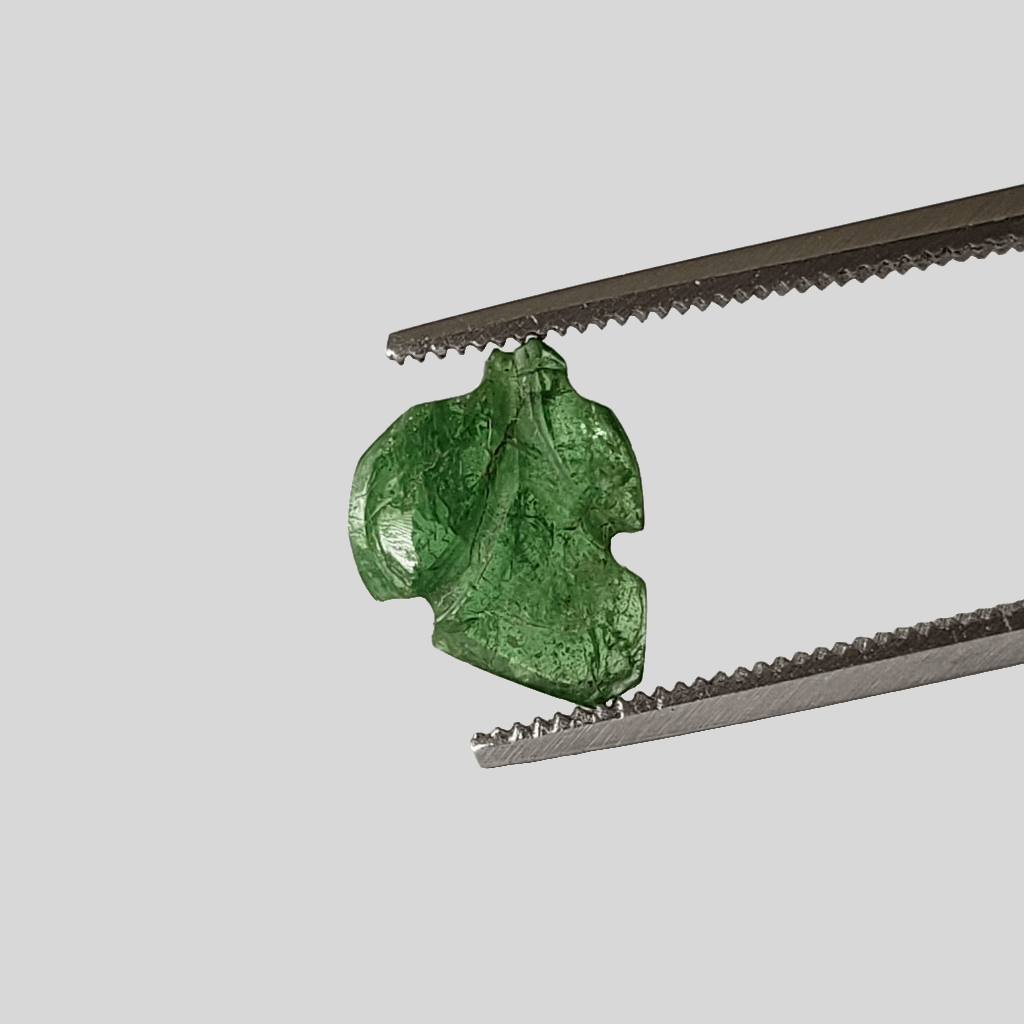
Product Type: Umbalite Garnet
Product ID: GTUM80461 (Appraisal included)
Approx Weight (per piece): 3.58ct
Size: 11.2x10.5mm
Shape: Maple Leaf shape Cut
Color: Purple Pink
Clarity: Clean
Origin: Africa
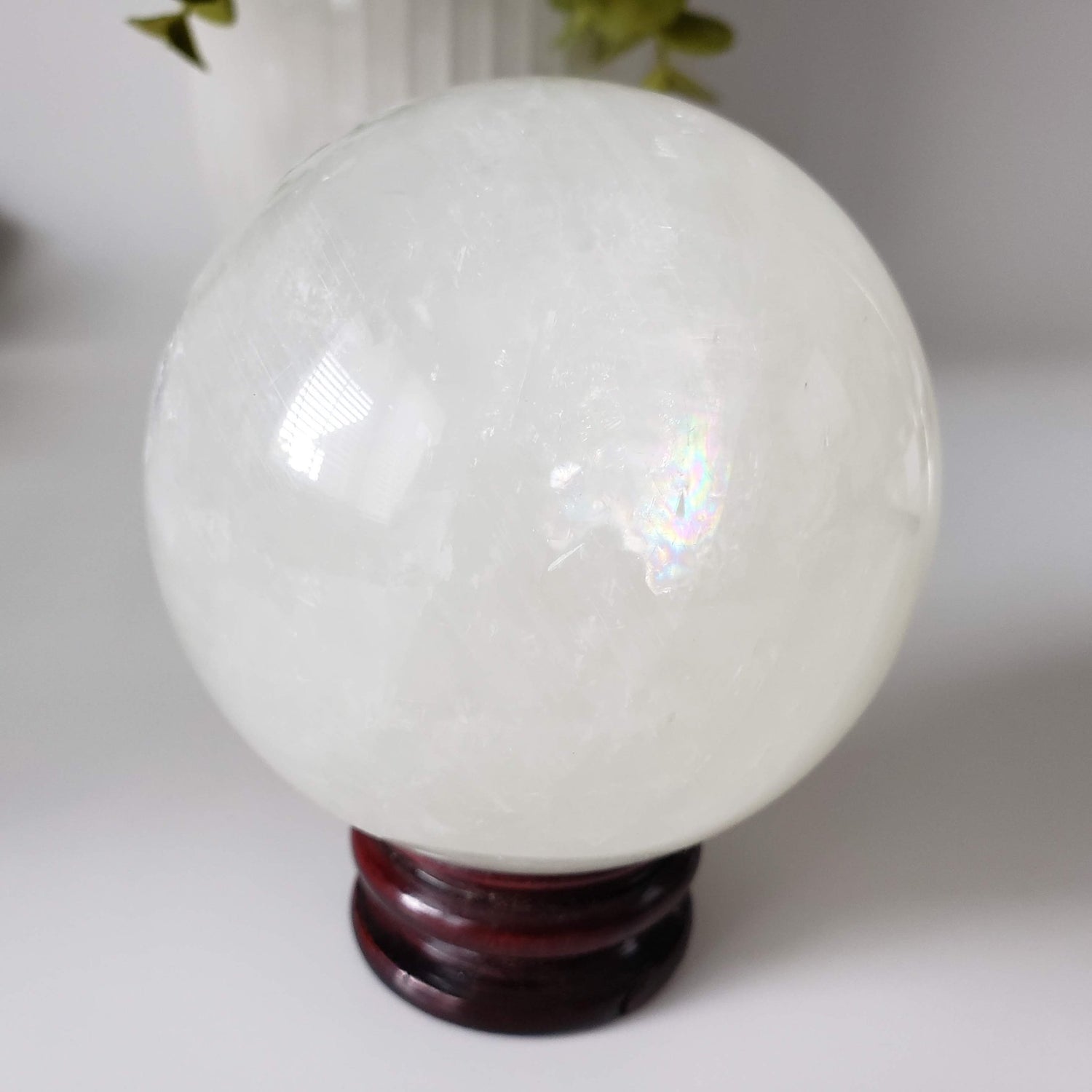
Calcite is found throughout the world in sedimentary, metamorphic, and igneous rocks. Some geologists consider it to be a "ubiquitous mineral" - one that is found everywhere. Calcite is the principal constituent of limestone and marble.
Name: Calcite Point crystal
Dimensions: 160x75 mm / 6.3x3 inches
Weight: 1.5 KG / 3.3 Lbs
Origin: China
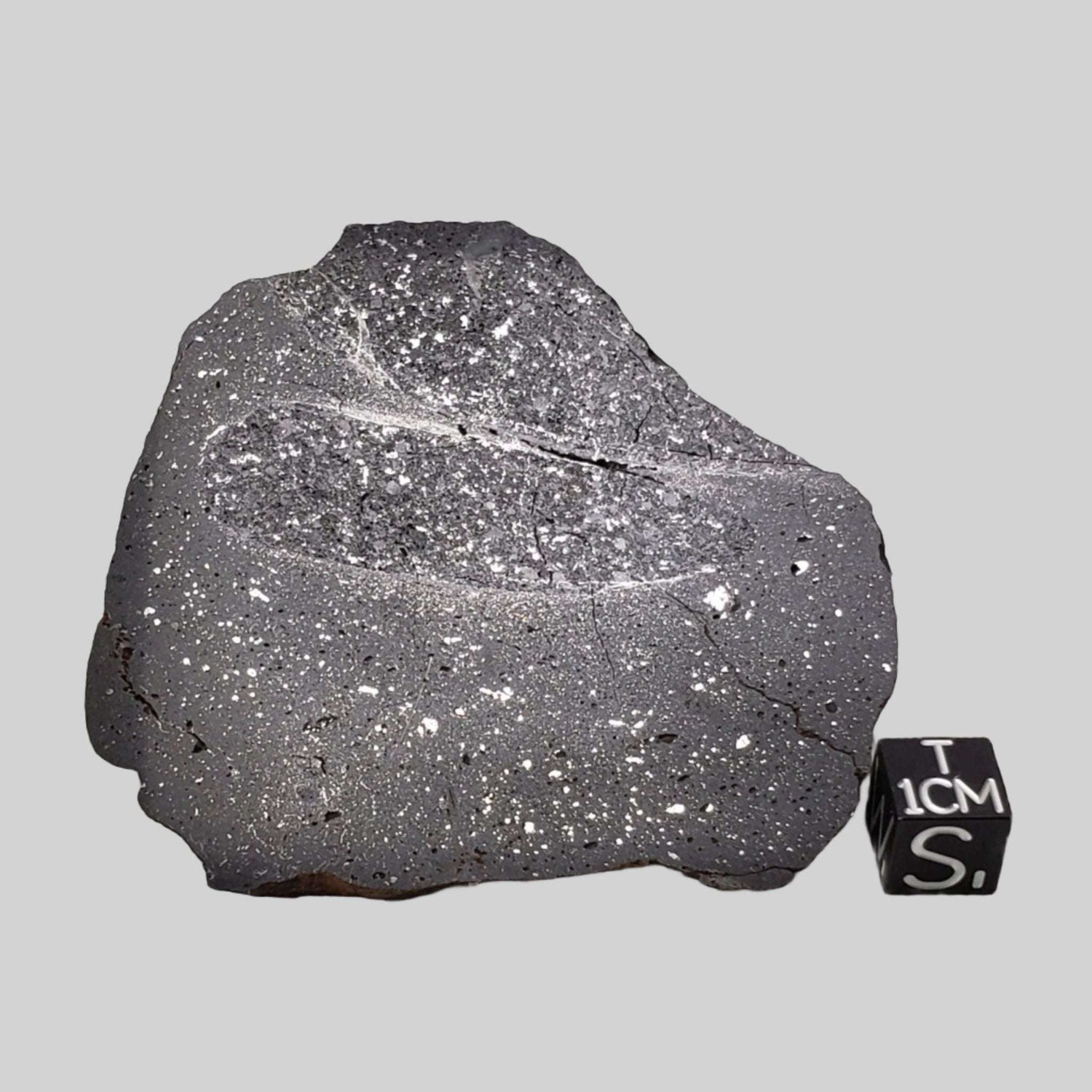
This is a superb whole specimen of the famous Northwest Africa 2965 meteorite weighing 45.89 grams and measuring 45x38x32 mm. This is a beautiful specimen from the Thomas Phillips Meteorite Collection.
This North West Africa was classified originally as an Enstatite EL6/7, then later as an EL3 and finally an EL-Melt Rock meteorite which was found along with the rest of the total mass of more than 100 Kilograms in the Algerian Desert in August 2005. This is one of the oldest meteorites on our planet in terms of terrestrial age and has been referred to as a fossil meteorite.
This Enstatite chondrite shock Level is minimal and weathering varies from 2 to 5. This piece displays extremely well and if cut would show a completely recrystallized enstatite chondrite with polygonal to irregular grain outlines. The grain size varies from 0.02 to 0.7 mm. Round, curved, blocky objects contain coarser-grained orthopyroxene than in the matrix. No relict chondrules were observed.
This hard to acquire piece displays very well with its prehistoric look. This rare and quality specimen would make an amazing addition to any new or existing collection. Comes with specimen card.
Apophyllite is a mineral known for its distinctive crystal formations, often occurring in clusters with a unique beauty. Its crystals are usually colorless or white, allowing them to be transparent or translucent. Although, some specimens may exhibit a greenish, yellowish, or pinkish tint due to the presence of impurities.
Prehnite can form prismatic, tabular, or pyramidal crystals, but usually occurs in botryoidal, reniform, stalactitic, granular, or compact habits. It is usually green in colour, but may be white, colourless, yellow, or gray. It has a colourless streak. Prehnite is transparent to translucent, with a vitreous to pearly luster. Prehnite forms in cavities in basaltic lavas.
Apophyllite is believed to promote self-reflection and authentic self-expression, helping to reduce stress, release mental blockages, and overcome anxiety by revealing truth and facilitating the release of suppressed emotions. Prehnite is considered a stone of unconditional love, known for its healing properties, especially for healers, and is thought to bring harmony to spaces, assist in decluttering, and create a healing sanctuary, particularly when used in gardens.
Name: Apophyllite and Prehnite Cluster Crystal
Specimen Size: Cabinet-Sized
Dimensions: 66x56x41 mm / 2.6x2.2x1.6 inches
Weight: 110 Grams / 3.9 Ounces
Origin: Mined in Mumbai (Bombay), India
Labradorite is an unusual mineral. It can display a beautiful iridescent play of colors, caused by internal fractures in the mineral that reflect light back and forth, dispersing it into different colors. This effect, known as labradorescence, gives Labradorite its appeal and fame.
Product Type: Labradorite
Specimen Size: Miniature-Sized
Dimensions: 48x35 mm / 1.9x1.4 inches
Weight: 88.59 grams / 3.1 ounces
Origin: Madagascar
Here we have for you a large 39 grams superbly shaped Indochinite Tektite from Maoming City, Guangdong Province, China. Although not a meteorite, tektite is directly linked to them or their impacts, just consider its age of around 780,000 years old.
Tektite can still be interesting because of the persistent mystery has that resisted clear explanations of their creation for generations of geologists. Dimensions are 37x34x28 mm.
This piece displays very well and is a very nice size showing multiple characteristics of its origin. Would be a beautiful addition to any new or existing collection. Comes with a Canagem Collection specimen card.
This is a must have 231 gram Impact Melt Glass slice from the famous Sudbury Impact Structure in Ontario Canada. Its dimensions are 123x104x9 mm. Although not a meteorite, impactites are directly linked to them and their impacts and are probably going to be one of the rarest collection pieces you'll ever own.
About 1.87 billion years ago, an object from space 9 kilometers in diameter, slammed into Canada a little north of Sudbury, Ontario creating the second largest impact structure on the earth. This impact was equivalent to a billion tons of TNT; an impact so great that it cracked the earth, in fact they still have earthquakes because of it today!
The many mineral rich deposits and strange rock formations in such close proximity has attracted attention for 100's of years, long before its impact origin was known. Thomas Edison, for instance, built a lab on site and NASA Moonwalker "Gene" Cernan, who studied and collected geology samples as part of his pre-moon mission training.
Would be a beautiful addition to any new or existing collection. Comes with Canagem Collection specimen card.