

📢 Notice to ALL Customers 📢
Search results
951 results
Search results


Product Type: Ruby
Approx Weight (per piece): 0.6ct
Size: 5.2mm
Shape: Heart Shape Cut
Color: Blood Red
Clarity: Included
Origin: Madagascar


Product Type: Tourmalinated Quartz
Approx Weight (per piece): 17.2ct
Size: 19.2x14.3mm
Shape: Octagon Cut
Color: Colorless
Clarity: Tourmalinated Clear
Origin: Brazil
Treatment: Natural - No known treatment
The appearance of Tourmalinated Quartz is characterized by clear or milky quartz with dark, thread-like, or needle-shaped inclusions of black tourmaline running through the stone. These inclusions can vary in density, giving each piece a distinct and unique appearance.
Tourmalinated Quartz is a crystal that combines the properties of Clear Quartz and Black Tourmaline. It is believed to offer strong protection by shielding against negative energies and enhancing the grounding and balancing effects of Black Tourmaline. The crystal is thought to amplify intentions and promote emotional healing. It may also support spiritual connection, chakra alignment, and provide emotional support during challenging times.


Product Type: Zircon
Approx Weight (per piece): 2.9ct
Size: 9x7.7mm
Shape: Pear Shape Cut
Color: Orange
Clarity: Clean
Origin: Vietnam
Zircon comes in a variety of colors, including blue, yellow, green, brown, and red, and is renowned for its exceptional brilliance. It is found in many locations worldwide, including Sri Lanka, Myanmar, Cambodia, and Australia. Some of the oldest zircon crystals have been dated to be over 4 billion years old, making them among the oldest minerals on Earth.
Zircon has a hardness of 6.5 to 7.5 on the Mohs scale, making it durable enough for use in various types of jewelry. However, care should be taken to avoid sharp blows and extreme temperatures.
Zircon is associated with promoting spiritual growth, mental clarity, and prosperity. It is also thought to enhance self-confidence and provide protection.
It's important to note the distinction between natural zircon and cubic zirconia. Natural zircon is a genuine natural gemstone, while cubic zirconia is a synthetic material.


Product Type: Fluorite
Approx Weight (per piece): 91.50ct
Size: 32x28 mm
Shape: Oval Cut
Color: Chrome Green
Clarity: Clean to the eye
Origin: Africa


This is a lovely fan shaped stilbite specimen. It also makes us think of a baseball glove and ball.
Stilbite is a zeolite mineral appreciated for its delicate crystal formations and pastel hues, ranging from colorless to white, yellow, pink, and peach. It forms distinctive tabular crystals with a bowtie or butterfly shape and exhibits a vitreous to pearly luster. Commonly found in cavities in volcanic rocks, stilbite is associated with other zeolite minerals. It is valued for its aesthetic appeal and is believed by some to have calming energy, supporting spiritual growth and emotional healing.
Name: Stilbite Crystal
Specimen Size: Miniature-Sized
Dimensions: 44x28x22 mm / 1.7x1.1x0.9 inches
Weight: 21 Grams / 0.8 Ounces
Origin: Mined in Mahad, India
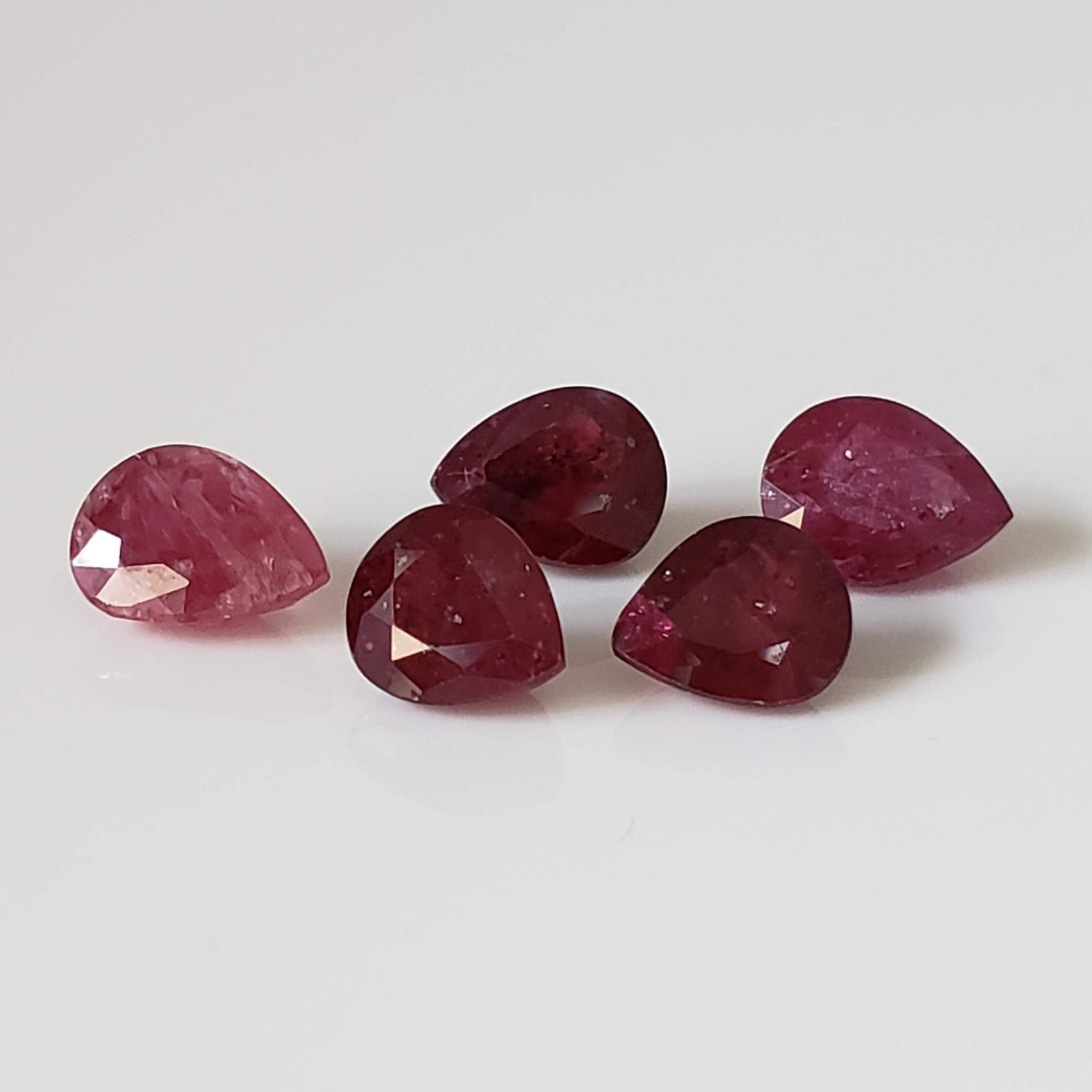
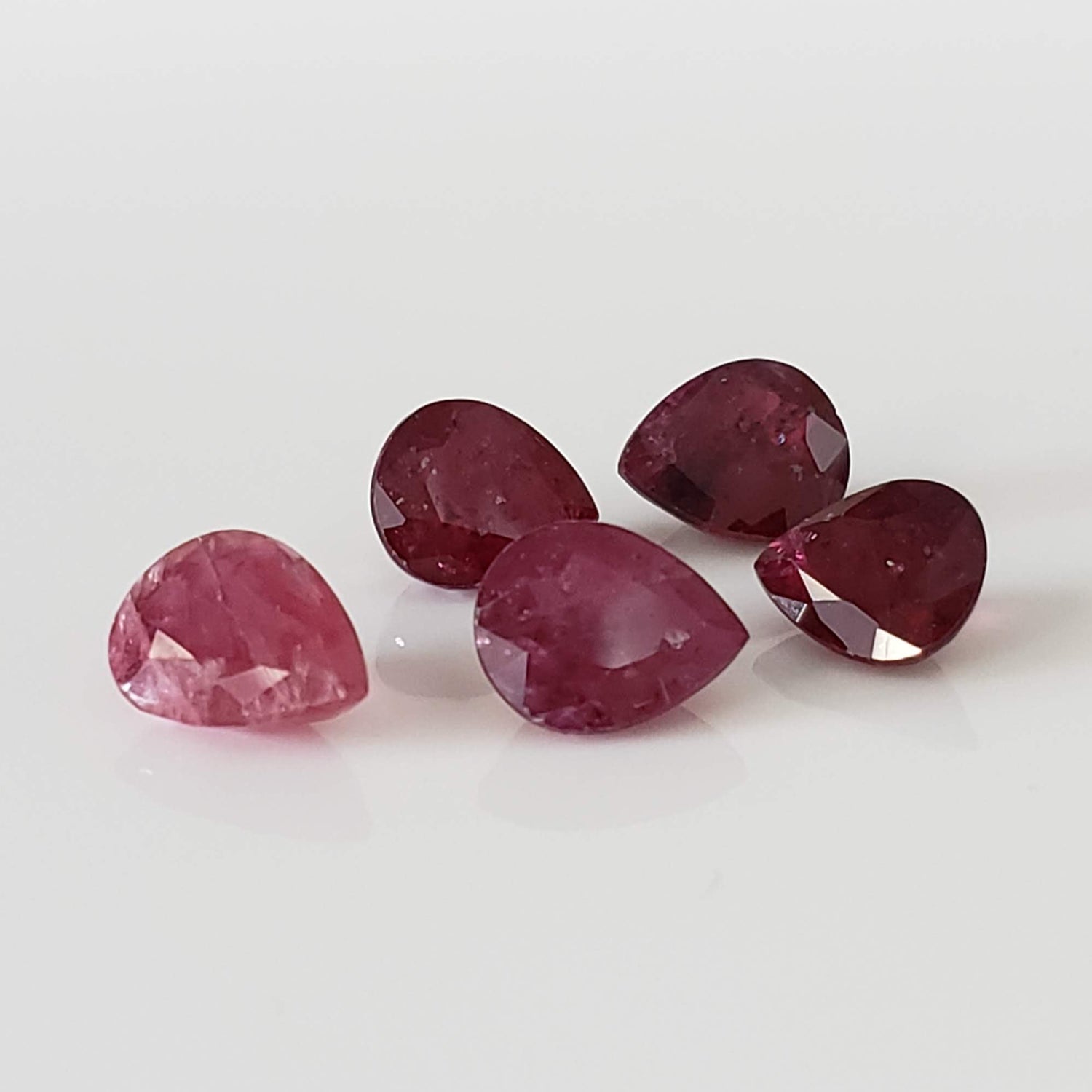
Product Type: Ruby - 5 Piece Lot
Approx Weight (per lot): 6.7tcw
Size: 6.7x5.7-8x6mm
Shape: Pear Shape Cut
Color: Various shade of Red
Clarity: SI (Slightly Included)
Origin: Madagascar


Product Type: Olive Quartz
Product ID: QZOV4518
Approx Weight (per piece): 11.21ct
Size: 18x13mm
Shape: Pear Shape cut
Color: Olive Golden Color
Clarity: Clean
Origin: Africa


Stilbite is a zeolite mineral appreciated for its delicate crystal formations and pastel hues, ranging from colorless to white, yellow, pink, and peach. It forms distinctive tabular crystals with a bowtie or butterfly shape and exhibits a vitreous to pearly luster. Commonly found in cavities in volcanic rocks, stilbite is associated with other zeolite minerals. It is valued for its aesthetic appeal and is believed by some to have calming energy, supporting spiritual growth and emotional healing.
Chalcedony is a microcrystalline Quartz found in many different colours and patterns. It has a number of crystals grouped under it many of which are very familiar, including Agate, Carnelian, Chrysoprase, Aventurine, Jasper and Onyx.
Name: Stilbite on Chalcedony Crystals
Specimen Size: Large Cabinet-Sized
Dimensions: 158x114x69 mm / 6.25x4.5x2.75 inches
Weight: 688 Grams / 1 Lbs 8 Ounces
Details: Mined in Jalgaon, India


Product Type: Tourmaline
Product ID: TONG2042
Approx Weight (per piece): 1.49ct
Size: 7x5.5mm
Shape: Baguette Cut
Color: Neon Green
Clarity: Clean
Origin: Africa
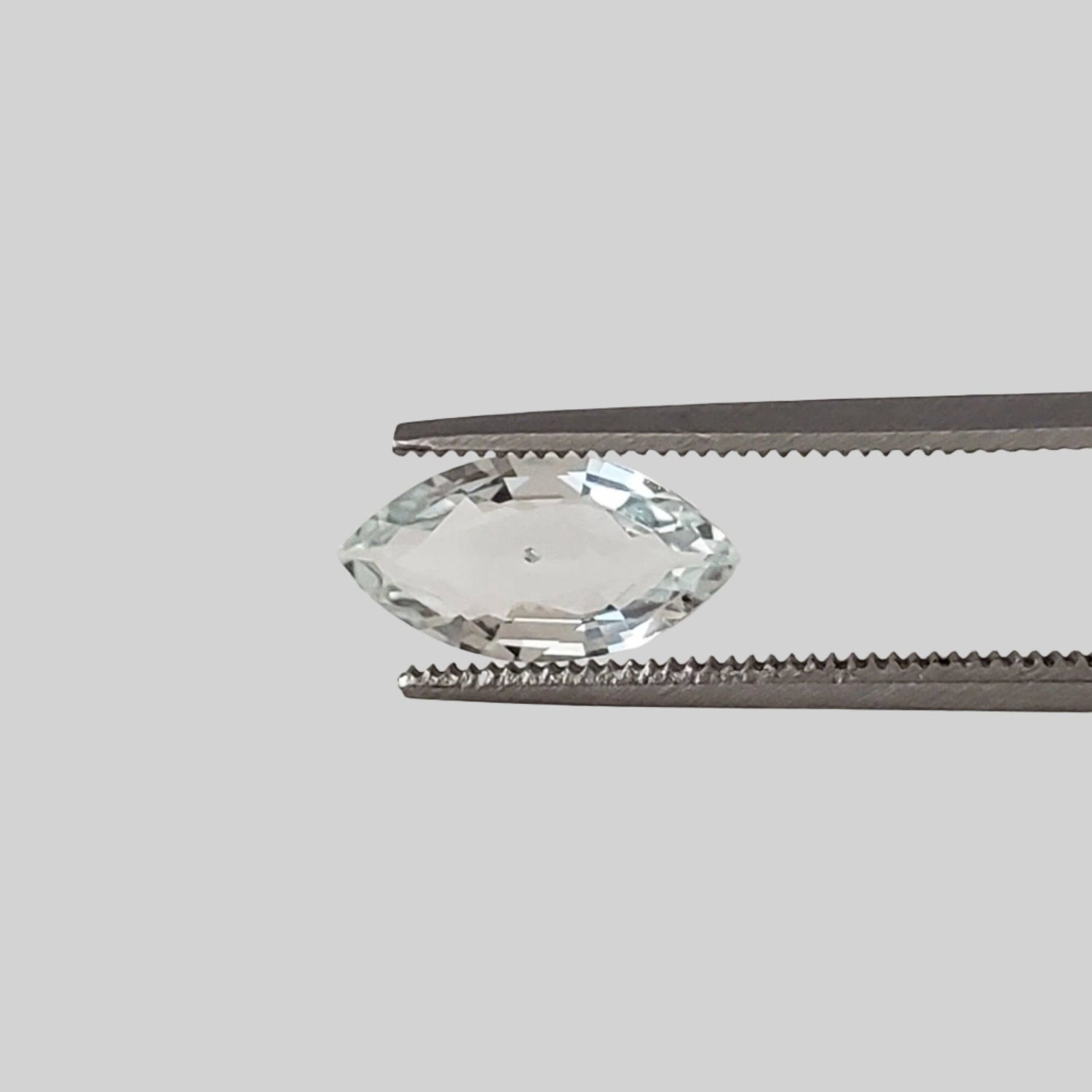

Product Type: Aquamarine
Approx Weight (per piece): 0.94ct
Size: 10.5x5.5mm
Shape: Marquise Cut
Color: Pale Aqua Blue
Clarity: Included
Origin: Africa


Product Type: Tanzanite - 11 Piece Lot
Approx Weight (per lot): 3.3tcw
Size: 2.6mm - 5.7mm-
Shape: 10 Trilliant Cut (or Trillion Cut) & 1 Pear Shape
Color: purple and pale green
Clarity: SI (Slightly Included)
Origin: Tanzania
Tanzanite is renowned for its intense blue and violet colors, but can also be golden, green, lilac and peacock (blue and green). The sole source of tanzanite is the Merelani Hills in northern Tanzania. Discovered in the 1960s, tanzanite is considered rarer than diamonds due to its single-source origin. The mines in Tanzania are exhaustible, adding to the gemstone's allure.
With a hardness of 6.5 to 7 on the Mohs scale, tanzanite is relatively soft compared to some other gemstones. As a result, it requires gentle care to prevent scratches or damage.
Tanzanite is believed to aide with spiritual awareness, insight, and communication. Some attribute it with calming energies and the ability to enhance psychic abilities.


Product Type: Sky Blue Topaz
Approx Weight (per piece): 5.72ct
Size: 10mm
Shape: Flower Shape (Half Drilled)
Color: Fine Sky Blue
Clarity: Clean
Origin: Africa


Product Type: Labradorite
Approx Weight (per piece): 4.0ct
Size: 12.3x8.3mm
Shape: Freeform cabochon
Color: Gray with Rainbow Luster
Clarity: Transparent
Origin: Africa
Labradorite is an unusual mineral. It can display a beautiful iridescent play of colors, caused by internal fractures in the mineral that reflect light back and forth, dispersing it into different colors. This effect, known as labradorescence, gives Labradorite its appeal and fame.


Product Type: Rutile Cats Eye
Approx Weight (per piece): 2.7ct
Size: 8.0mm
Shape: Round Cabochon
Color: Top White with Golden Needles
Clarity: Transparent Sharp Cats Eye
Origin: Africa
Treatment: None


Product Type: Tourmaline
Product ID: TONG9874
Approx Weight (per piece): 1.05ct
Size: 6.5x5.2mm
Shape: Baguette Cut
Color: Neon Green Blue
Clarity: Clean
Origin: Brazil


Product Type: Lemon Citrine
Approx Weight (per piece): 11ct
Size: 22x11.3mm
Shape: Marquise Cut
Color: Lemon Green
Clarity: Clean
Origin: Africa


Product Type: Zircon
Approx Weight (per piece): 1.74ct
Size: 7x5.7mm
Shape: Oval Cut
Color: Golden
Clarity: Clean to the eye
Origin: Cambodia
Treatment: None
Zircon comes in a variety of colors, including blue, yellow, green, brown, and red, and is renowned for its exceptional brilliance. It is found in many locations worldwide, including Sri Lanka, Myanmar, Cambodia, and Australia. Some of the oldest zircon crystals have been dated to be over 4 billion years old, making them among the oldest minerals on Earth.
Zircon has a hardness of 6.5 to 7.5 on the Mohs scale, making it durable enough for use in various types of jewelry. However, care should be taken to avoid sharp blows and extreme temperatures.
Zircon is associated with promoting spiritual growth, mental clarity, and prosperity. It is also thought to enhance self-confidence and provide protection.
It's important to note the distinction between natural zircon and cubic zirconia. Natural zircon is a genuine gemstone, while cubic zirconia is a synthetic material often used as a diamond simulant.


Product Type: Sapphire
Approx Weight (per piece): 0.53ct
Size: 5x4mm
Shape: Octagon Cut
Color: Golden Yellow
Clarity: Clean
Origin: Africa


These beautiful Rose Quartz stones, from Madagascar, are polished on one side. Rose quartz has been revered by ancient civilizations for its symbolic connection to love and harmony. Often referred to as the "stone of love," rose quartz is believed to attract and nurture love in all its forms, from self-love and friendship to romantic relationships. Its gentle energy is also associated with the heart chakra, promoting emotional balance, forgiveness, and compassion.
The weight and dimensions of the pieces are as follows:
A - 53x46x23 mm / 2.1x1.8x0.9 in | 80.1 gr / 2.8 oz
B - 56x40x18 mm / 2.2x1.6x0.7 in | 59.1 gr / 2.1 oz


Product Type: Tourmaline
Product ID: TONB9457
Approx Weight (per piece): 0.69ct
Size: 5.5x4mm
Shape: Baguette Cut
Color: Neon Blue
Clarity: Clean
Origin: Africa
Recently viewed products
Featured


Canagem is proud to be professional member of The International Gem Society(IGS) the world's top resource for gem professionals, enthusiasts, and industry content.