


1573 products
Sort by:
1573 products


Product Type: Sapphire
Approx Weight (per piece): 0.55ct
Size: 5.5x4mm
Shape: Oval Cut
Color: Golden
Clarity: Clean
Origin: Africa

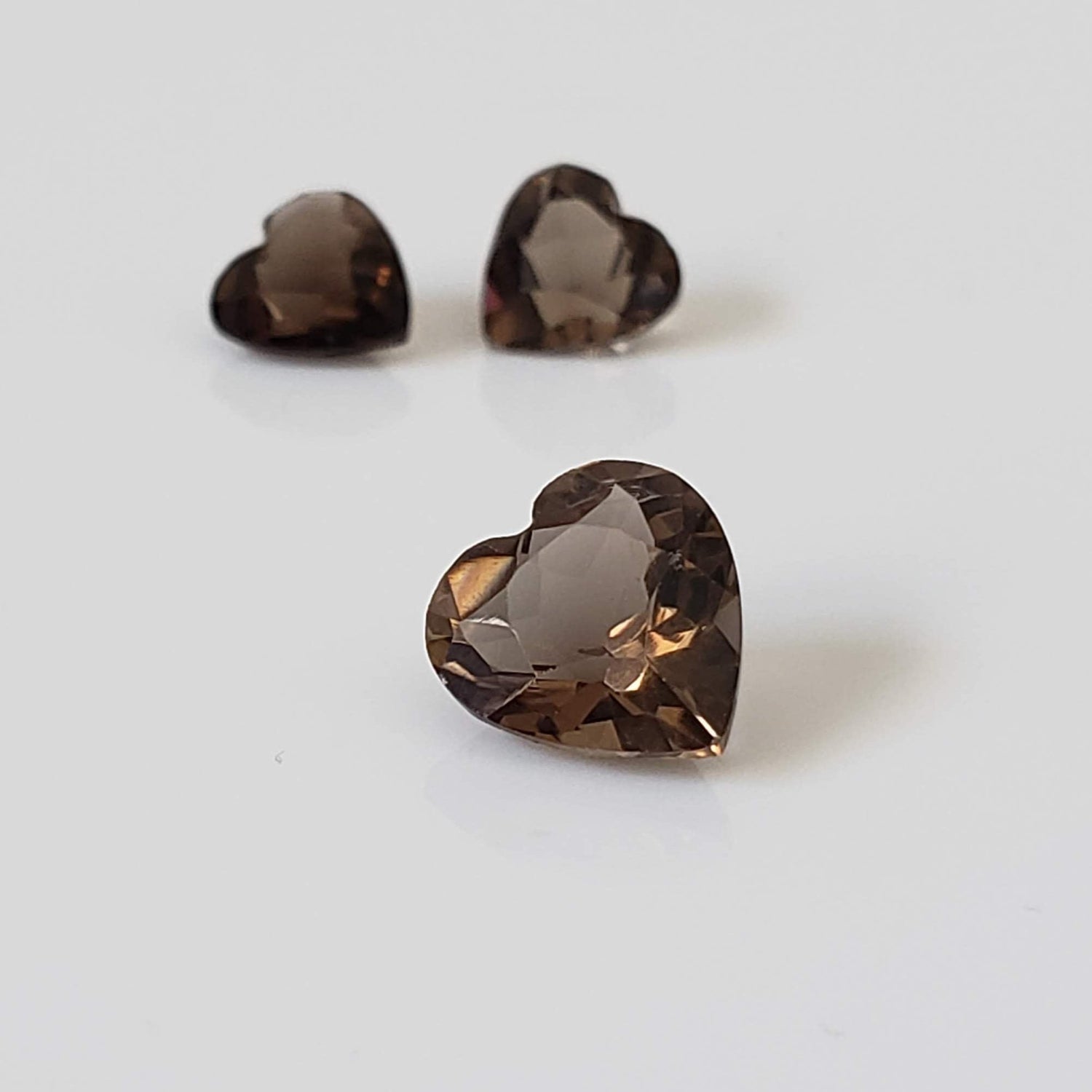
Product Type: Smoky Quartz
Approx Weight (per Lot): 3.0 tcw
Size: 6mm and 8x7.8mm
Shape: Heart Shape Cut
Color: Fine Smoky Color
Clarity: VSI (Very Slightly Included)
Origin: Brazil


Product Type: Sapphire
Approx Weight (per piece): 1.47ct
Size: 7.5x6mm
Shape: Oval Cut
Color: Canary Yellow
Clarity: Clean
Origin: Sri Lanka (Ceylon)
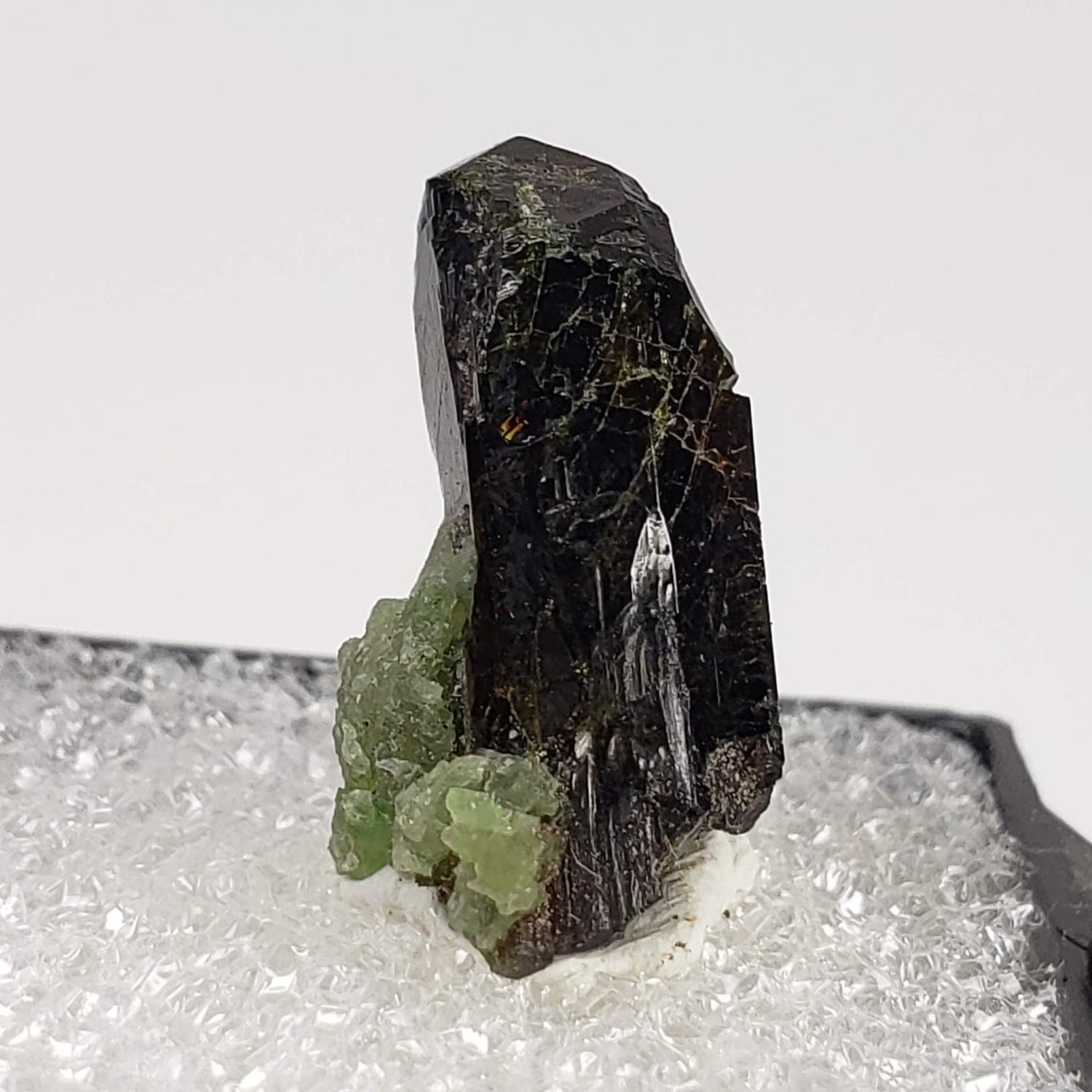
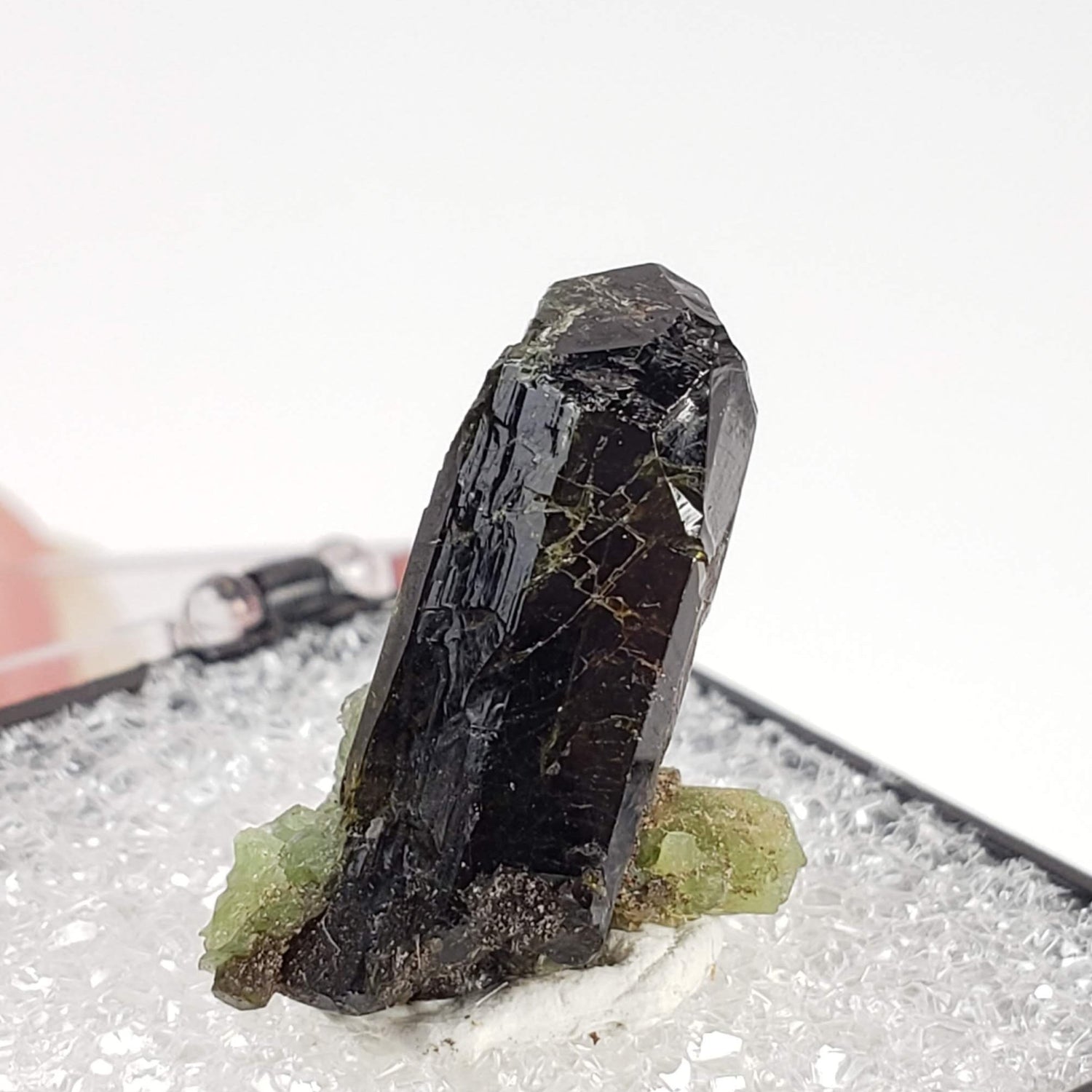
This amazing specimen of Vesuvianite was collected in the 1960's by A. Stevenson in Harcourt, Ontario, Canada. The specimen is a beautiful rich gemmy green vesuvianite crystal, and is fully terminated. This rare and premium specimen is in excellent condition. A fantastic addition to any collection!
Vesuvianite was first discovered on Mount Vesuvius in Italy in the 18th century, hence its name. It typically occurs as a green, brown, yellow, or blue-green crystal, and is often found in metamorphic and igneous rocks. The alternate name, Idocrase, is from the Greek eidos “form”, and krasis “mixture”, because Vesuvianite often appears to combine the crystal forms of other minerals. It has also been used as a gemstone.
Ex. A. Stevenson Collection and John Betts Fine Minerals NYC
Name: Vesuvianite Crystal
Specimen Size: Miniature-Sized
Dimensions: 19x8x7 mm / 0.7x0.3x0.3
Weight: 13 grams / 0.5 Ounces (including box)
Origin: Mined in Harcourt area, Harcourt Township, Dysart et al, Haliburton County, Ontario, Canada


Product Type: Smoky Quartz
Approx Weight (per piece): 0.4ct
Size: 6x4mm
Shape: Oval Cut
Color: Fine Smoky Color
Clarity: VSI (Very Slightly Included)
Origin: Brazil


Magnetite is an important iron ore, along with hematite. It is usually easily distinguished by being strongly magnetic, with black octahedral crystals. The specimen is in very good condition.
Product Name: Magnetite
Specimen Size: Cabinet-Sized
Dimensions: 70x65x66 mm / 2.7x2.5x2.6 inches
Weight: 356 grams / 12.6 Ounces
Origin: Tuna-Hästberg, Borlänge,Dalarna, Sweden


Product Type: Ruby
Approx Weight (per piece): 0.06ct
Size: ~ 2.4x1.7mm (up to .2 variation)
Shape: Tapered Baguette Cut
Color: Hot Pink
Clarity: Clean
Origin: Myanmar (Burma)


The province of Québec, particularly areas like the Mont-Saint-Hilaire region, is known for producing fine mineral specimens, including albite. In pegmatites, albite often grows alongside minerals like quartz, mica, tourmaline, and spodumene. It forms in environments with slow cooling, allowing for large and well-defined crystals.
Albite is thought to help with decision-making, problem-solving, and overcoming fears of the unknown. Many believe it promotes calmness and adaptability, helping one embrace change with confidence.
Would be a beautiful addition to any new or existing collection.
Name: Albite Crystal Cluster
Specimen Size: Cabinet-Sized
Dimensions: 70x34x29 mm / 2.7x1.3x1.1 inches
Weight: 49 Grams / 1.7 Ounces
Origin: Mined in Mont-St-Hilaire, Québec


This is a fine Stilbite, Heulandite and Chabazite specimen from the ZEC near Maniwaki, Québec, Canada. You can see sprays and radial clusters of stilbite with minor heulandite on diopside-K feldspar matrix.
Stilbite, Heulandite, and Chabazite are beautiful zeolite minerals found in the basalt and sedimentary rock formations near Maniwaki, Québec. These crystals often form in delicate, radiating clusters or blocky, tabular structures, showcasing a range of colors from soft pinks and oranges to translucent whites. Stilbite is known for its pearly luster and graceful fan-like formations, while Heulandite displays intricate, layered crystal habits. Chabazite, with its distinctive rhombohedral shape, adds variety to the mineral assemblage. Collectors and geologists appreciate these minerals not only for their aesthetic appeal but also for their fascinating crystal chemistry and association with the region’s volcanic history.
Name: Stilbite, Heulandite, and Chabazite Crystals
Specimen Size: Miniature-Sized
Dimensions: 38x34x26 mm / 1.5x1.3x1.0 inches
Weight: 27 gr / 0.9 oz
Details: Mined in Zec Bras-Coupé-Désert, Lac-Pythonga, La Vallée-de-la-Gatineau RCM, Outaouais, Québec, Canada


This is a fantastic crusted 26.1 grams NWA (Northwest Africa) 869 L3-6 classified meteorite Individual found by Nomads in the Sahara Desert. The dimensions of the specimen are 46x24x16 mm.
NWA 869 classified meteorites can still be interesting and this one is for sure perfectly shaped to catch your attention. It displays a superb crust on most of its surface. Most samples are individual meteorites but some fragments (mostly >1 kg) also occur. In most cases the fusion crust has been polished or ablated by wind erosion. Many samples are more severely affected and show faces with deep wind erosion features. Fracture faces, formed by ground collision, show a typical gray-green color and sometimes visible brecciation (light and/or dark clasts).
Would be a beautiful addition to any new or existing collection. Comes with a Canagem Collection specimen card.

Canagem is proud to be professional member of The International Gem Society(IGS) the world's top resource for gem professionals, enthusiasts, and industry content.