

209 products
Sort by:
209 products
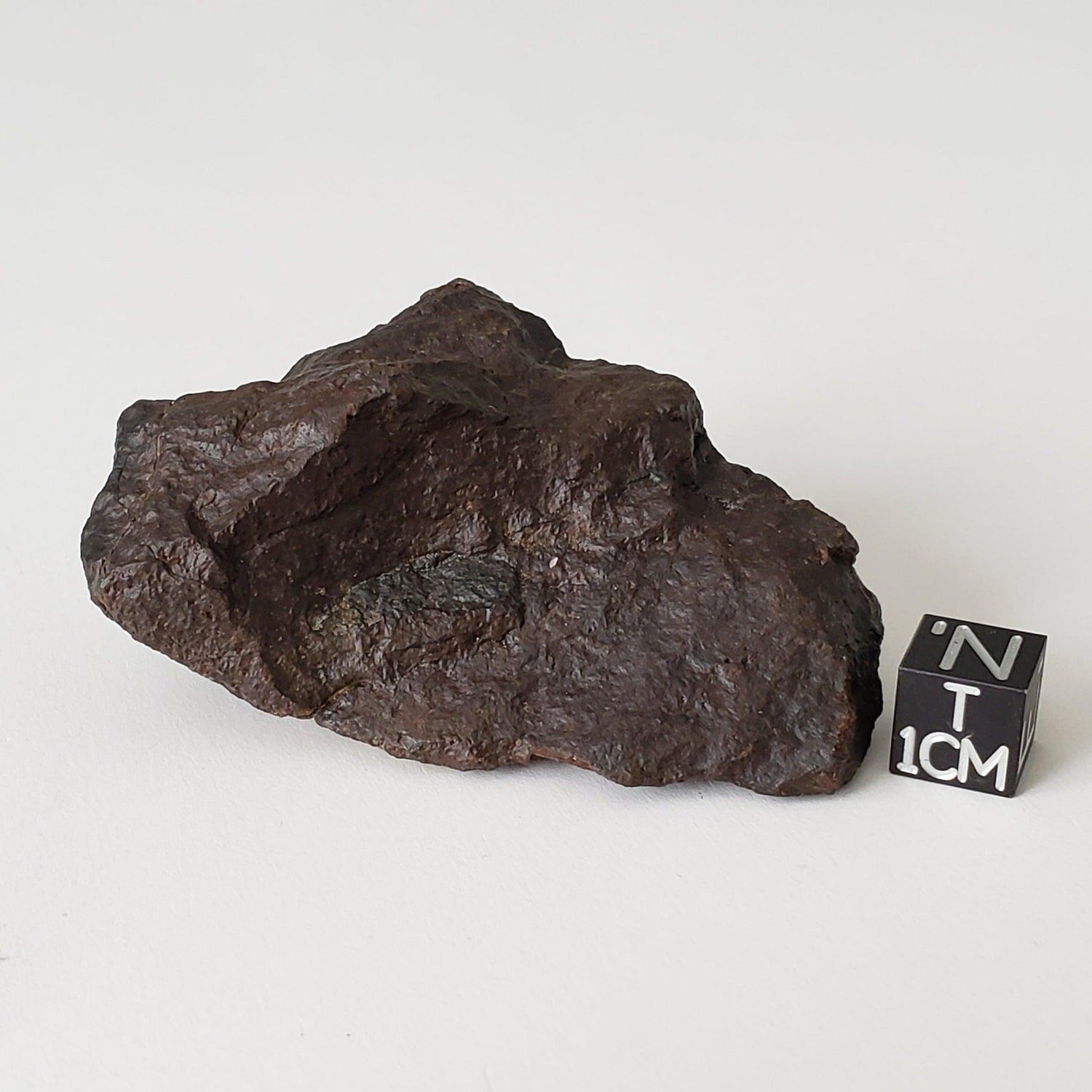
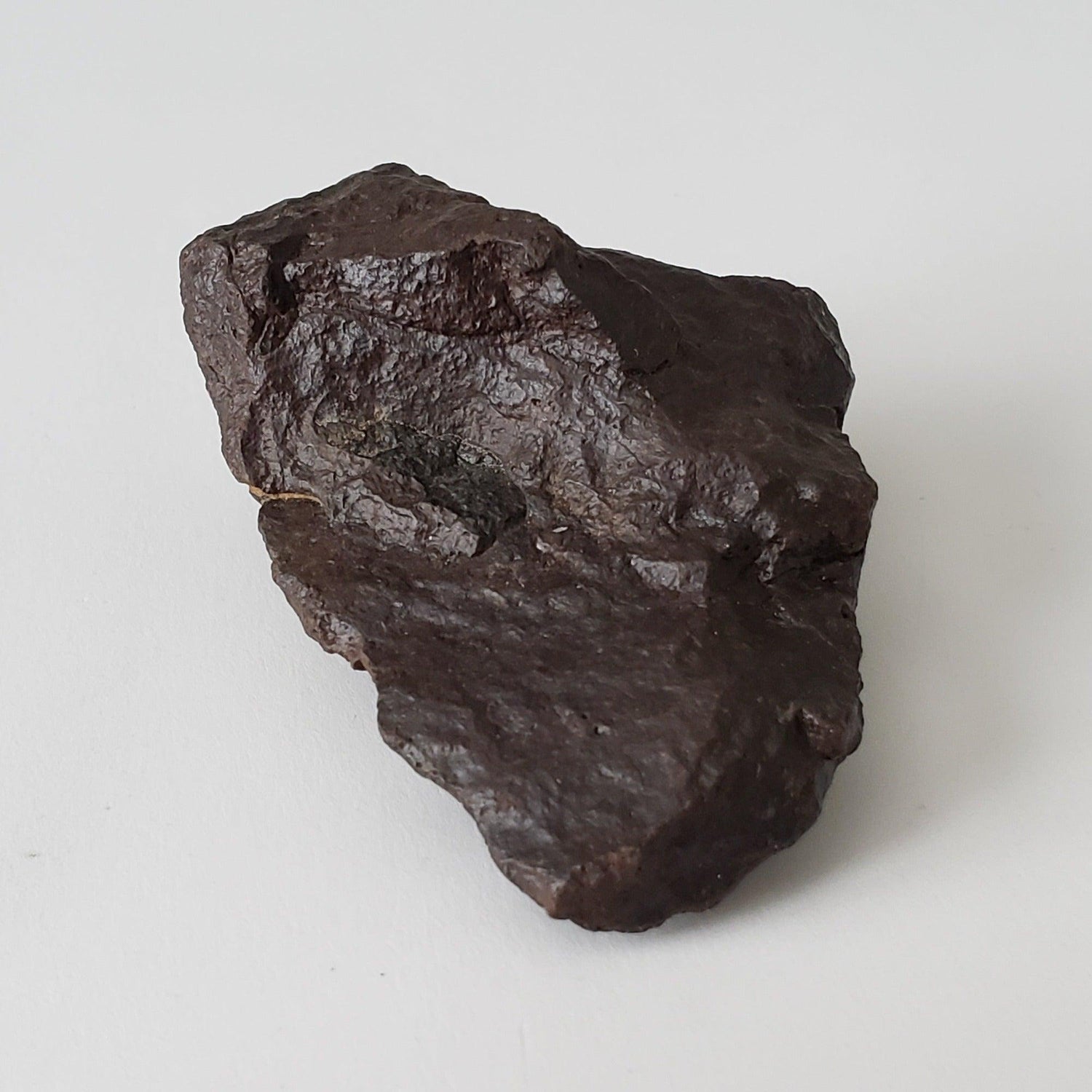
Here we have for you a superb looking Dhofar 020 classified meteorite weighing 103.75 grams. Its dimensions are 67x49x32 mm. Found 10 March 2000 in Dhofar, Oman, in the Arabian Peninsula this H4/5 classified chondrite has a TKW of 256 Kg with a shock stage of S4 and weathering grade of W3 by the Russian Academy of Sciences, USSR.
The following is an excerpt from Mark Bostick's review of this meteorite: "Dhofar 020 is a ordinary stone chondrite meteorite. The meteorite is high in free metal and therefore falls in the H class. S4 tells it is highly shocked. Slices of the meteorite, show veins of the cosmic impact created mineral Ringwoodite, although fractures in the stone tend to hide this some. It almost appears to me to have splinted upon impact. The meteorite falls in 4-5 petrology class, a reference to how metamorphed the meteorite is from its original state. This is judged by studying a thin section of the meteorite, most visually at the chondrules, a feature unique to stone meteorite. In a thin section under polarized light, pyroxene chondrules seem more common then their olivine pair. Still some regions in the meteorite show scattered patches of bright olivine inclusions. These are fairly rare, at least on my thin section, and most of the meteorite's olivine and pyroxene, some of the easier things to see in a thin section, appear to have went through a metamorphism, and have "melted" into the matrix and are at times undistinguishable."
This piece displays extremely well showing a beautiful crust, superb shape and good size. Would be a beautiful addition to any new or existing collection. Comes with a Canagem Collection specimen card.


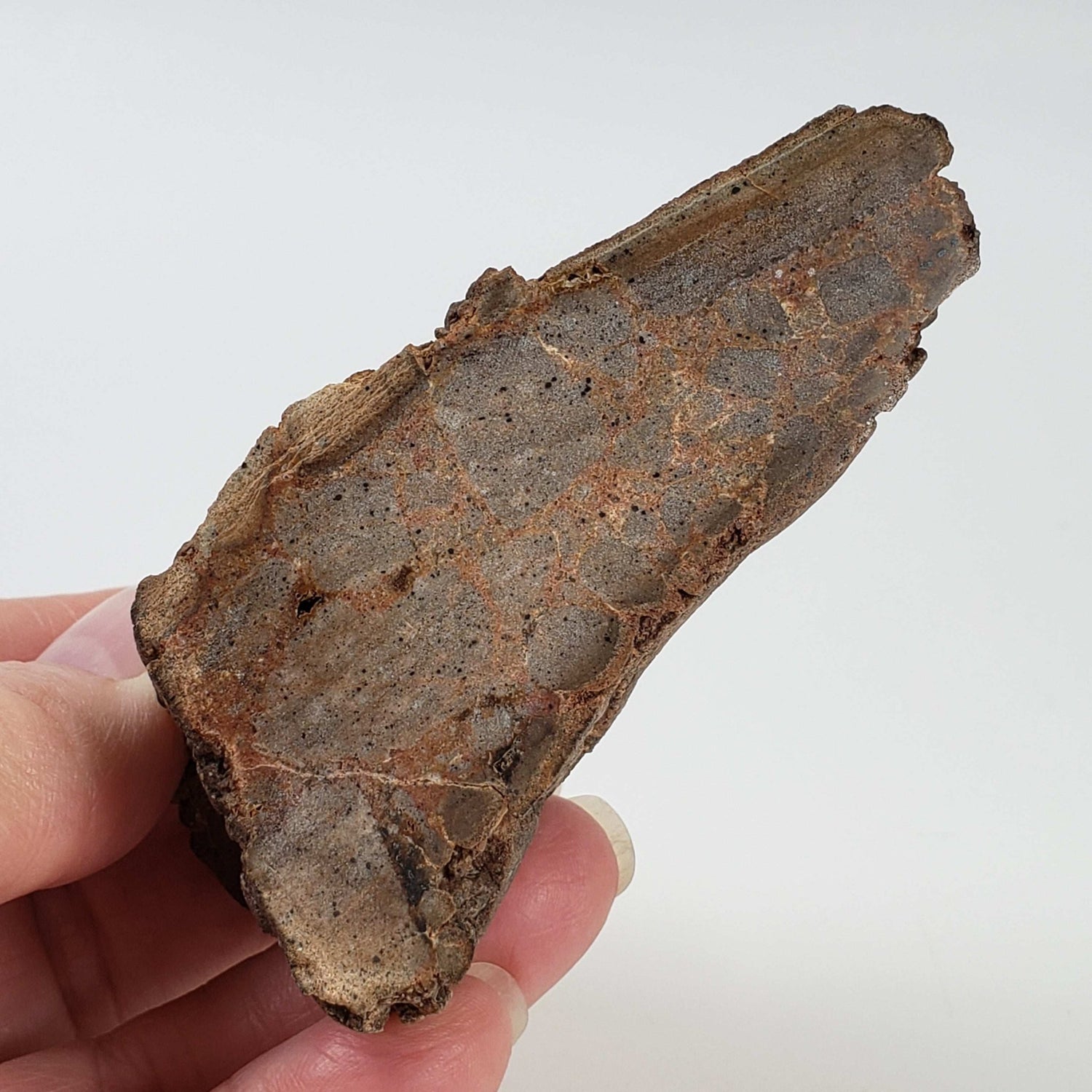
This is a must have 191.39 gram slice of Black Onaping Impact Fallback Breccia from the famous Sudbury Impact Structure in Ontario Canada. It's dimensions are 116x115x6 mm. Although not a meteorite, impactites are directly linked to them and their impacts and are probably going to be one of the rarest collection piece you'll ever own.
About 1.87 billion years ago, an object from space 9 kilometers in diameter, slammed into Canada a little north of Sudbury, Ontario creating the second largest impact structure on the earth. This impact was equivalent to a billion tons of TNT; an impact so great that it cracked the earth, in fact they still have earthquakes because of it today!
This specimen of Sudbury Black Onaping Breccia is a lithified fallback breccia composed of melt glass and country target rock fragments. This meteorite impact created a large mushroom cloud that fell back down to earth to create this breccia. "Bucky Ball Fullerine" with terrestrial carbon in the form of C-60 and C-70 is found in this type of Sudbury impact rock. Greenish-Blueish dust covered Tektites can also be found within its matrix. The Onaping forms in two layers, the first one is grey and second one is black.
The many mineral rich deposits and strange rock formations in such close proximity has attracted attention for 100's of years, long before its impact origin was known. Thomas Edison, for instance, built a lab on site and NASA Moonwalker "Gene" Cernan, who studied and collected geology samples as part of his pre-moon mission training.
Would be a beautiful addition to any new or existing collection. Comes with a Canagem Collection specimen card.

This is a great 145.8 gram Red Suevite Fallback Breccia from the Sääksjärvi crater in Finland. It has dimensions of 79x38x45 mm. Although not a meteorite, impactites are directly linked to them and their impacts and are probably going to be one of the rarest collection item you'll ever own. Impactite is a slag-like glassy object found on the surface of the earth, formed from rock melted by the impact of a meteorite.
The term impactite encompasses shock-metamorphosed target rocks, melts or suevites and mixtures of the two, as well as sedimentary rocks with significant impact-derived components and shocked mineral grains, tektites, anomalous geochemical signatures, etc.
Sääksjärvi is a lake in Kokemäki, Satakunta, western Finland, east of the town of Pori. The lake is notable because it overlies an impact crater. The crater is 5 kilometres (3 mi) in diameter and is completely buried under the lake and is not visible at the surface. The age of the impact structure is estimated to be about 543 ± 12 Ma (million years ago), at the boundary between the Ediacaran and Cambrian periods. The enormous heat and pressure at the impact explosion created an interesting melt, a Suevite, and shattered rocks and dust which fell back into the crater area becoming cemented together over the centuries. These rock formation is known as Fallback Breccia.
These are some of the best looking breccias we've found. Would be a beautiful addition to any new or existing collection. Comes with a Canagem Collection specimen card.
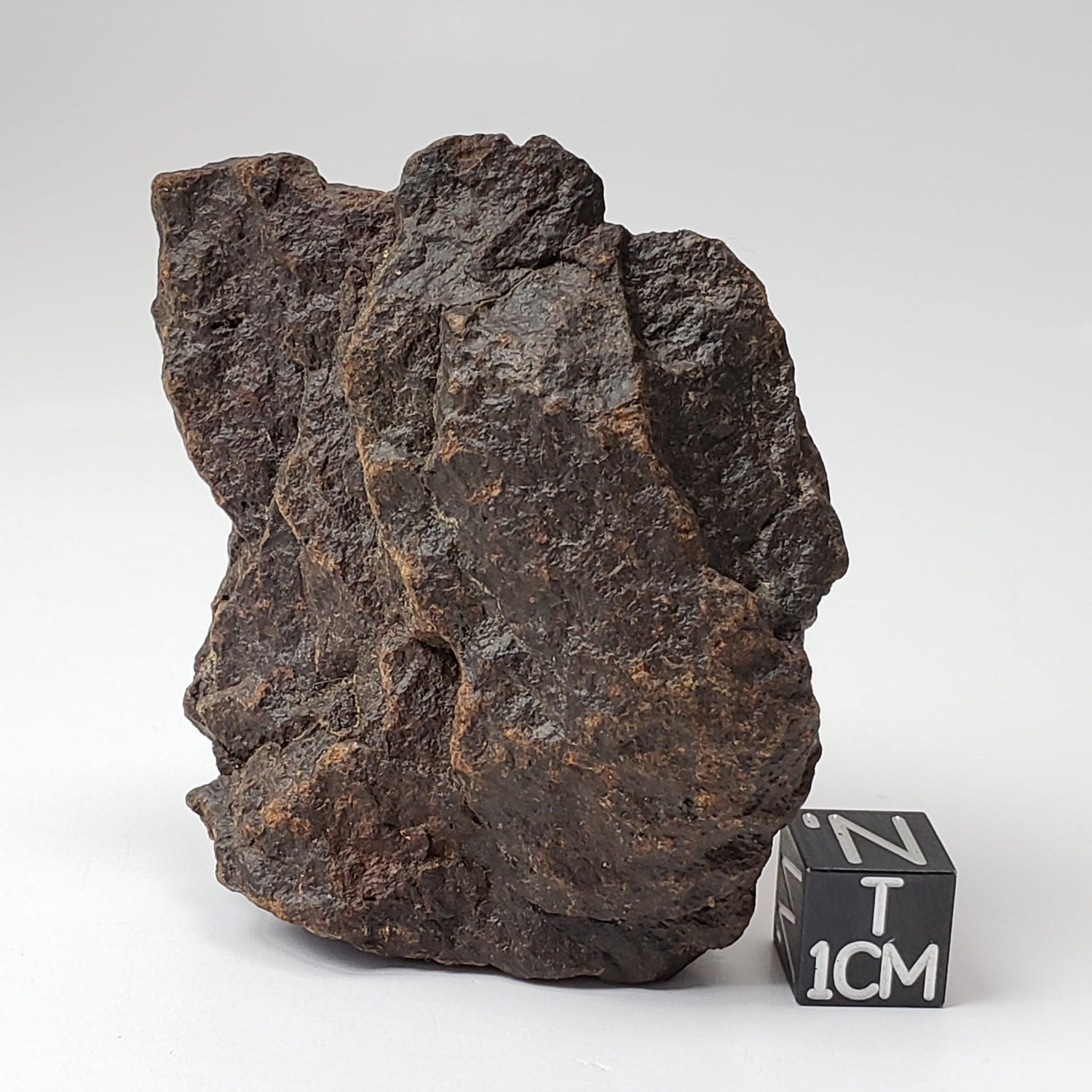

This is a superb looking Dhofar 221 classified meteorite weighing 96.4 grams. Its dimensions are 56x49x25 mm. This L5 classified meteorite was found in Zufar, Oman in 2000 and is 1 of 3003 approved meteorites classified as such. The total weight of the 100's of pieces recovered is recorded as a low 3.54 kg and the meteorite has a shock stage of 3 and weathering grade of 3.
This piece displays extremely well because of its beautiful crust, superb shape and is a good size. Would be a beautiful addition to any new or existing collection. Comes with a Canagem Collection specimen card.


Here we have for you a nice looking individual of a Sahara Desert NWA unclassified meteorite weighing 295.67 grams. Its dimensions are 91x47x60mm. This never classified North West Africa stone was found in the Sahara desert around 2000.
It's a good quality individual NWA meteorite specimen. Some weathering shows the meteorite's time spent aging in the desert. Would be a beautiful addition to any new or existing collection. Comes with a Canagem Collection specimen card.


This is a Manganite specimen from the classical or first location of discovery in Ilfeld, Nordhausen, Harz Mts, Thuringia, Germany. This collector's specimen is unique and of great quality. This specimen of Manganite is distinctive enough to show its true identity and is a beautiful and interesting specimen for display.
Manganite is an attractive and interesting mineral that is a pleasure to own over the years. This World class specimen will come with a Canagem Collection and a NetMine Minerals specimen cards.
Name: Manganite
Specimen Size: Large Cabinet-Sized
Dimensions: 120x100x68 mm / 4.7x3.9x2.7 inches
Weight: 1.2 Kg / 2 lbs 10 ounces
Origin: Mined in Ilfeld, Nordhausen, Harz Mts, Thuringia, Germany


This is a fabulous Ghubara meteorite whole fragment weighing 74 grams and measuring 46x37x24mm. This meteorite was found in Oman, Southern Arabia in 1954 and is classified as an L5 Stony Black Chondrite.
This piece displays extremely well and is a very desirable size, it would be a beautiful addition to any new or existing collection. Comes with a Canagem Collection specimen card.


Product Type: Sapphire
Product ID: SPWT1601
Approx Weight (per piece): 1.45ct
Size: 9.5x8mm
Shape: Maple Leaf Checkerboard Cut
Color: Purple White
Clarity: SI (Slightly Included)
Origin: Africa
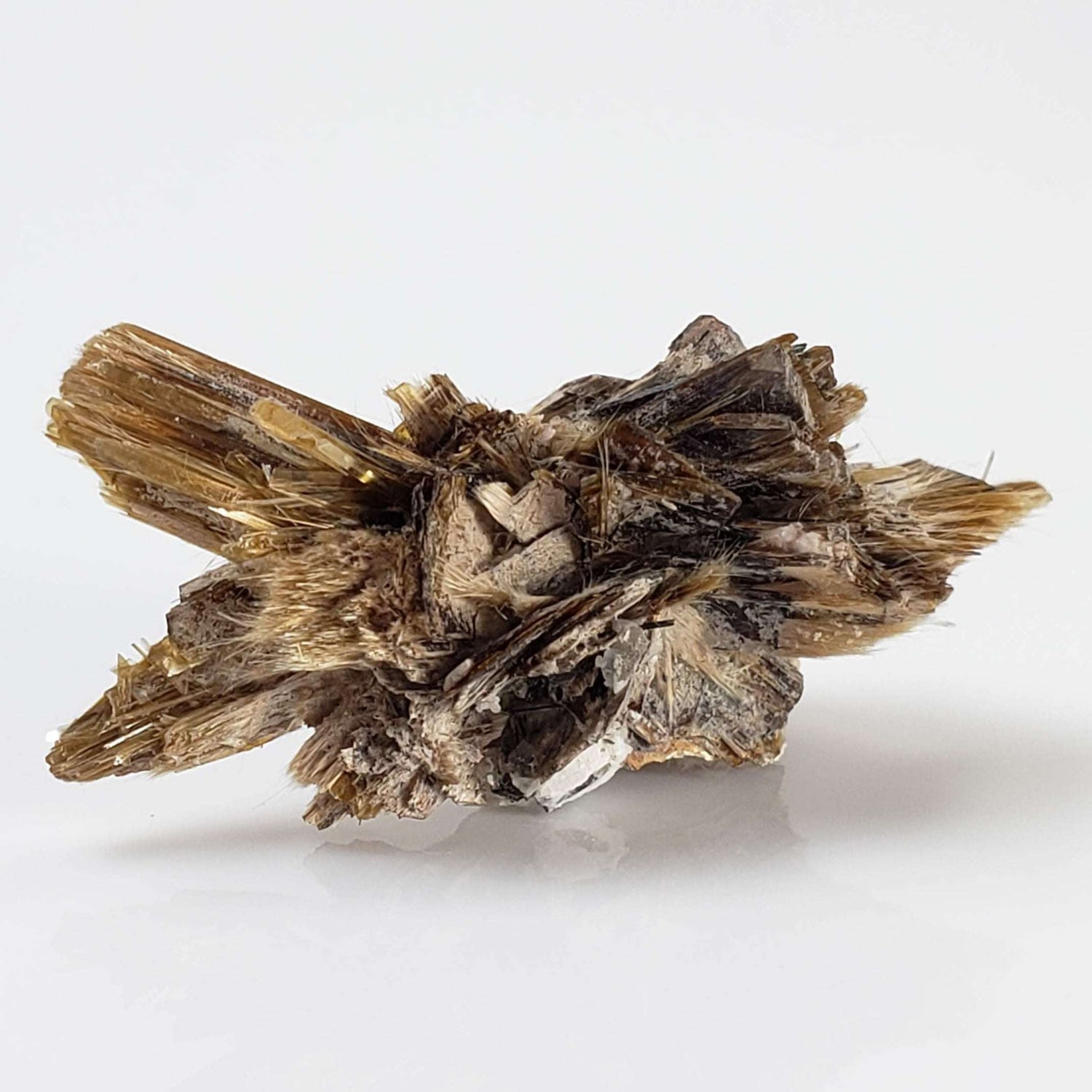
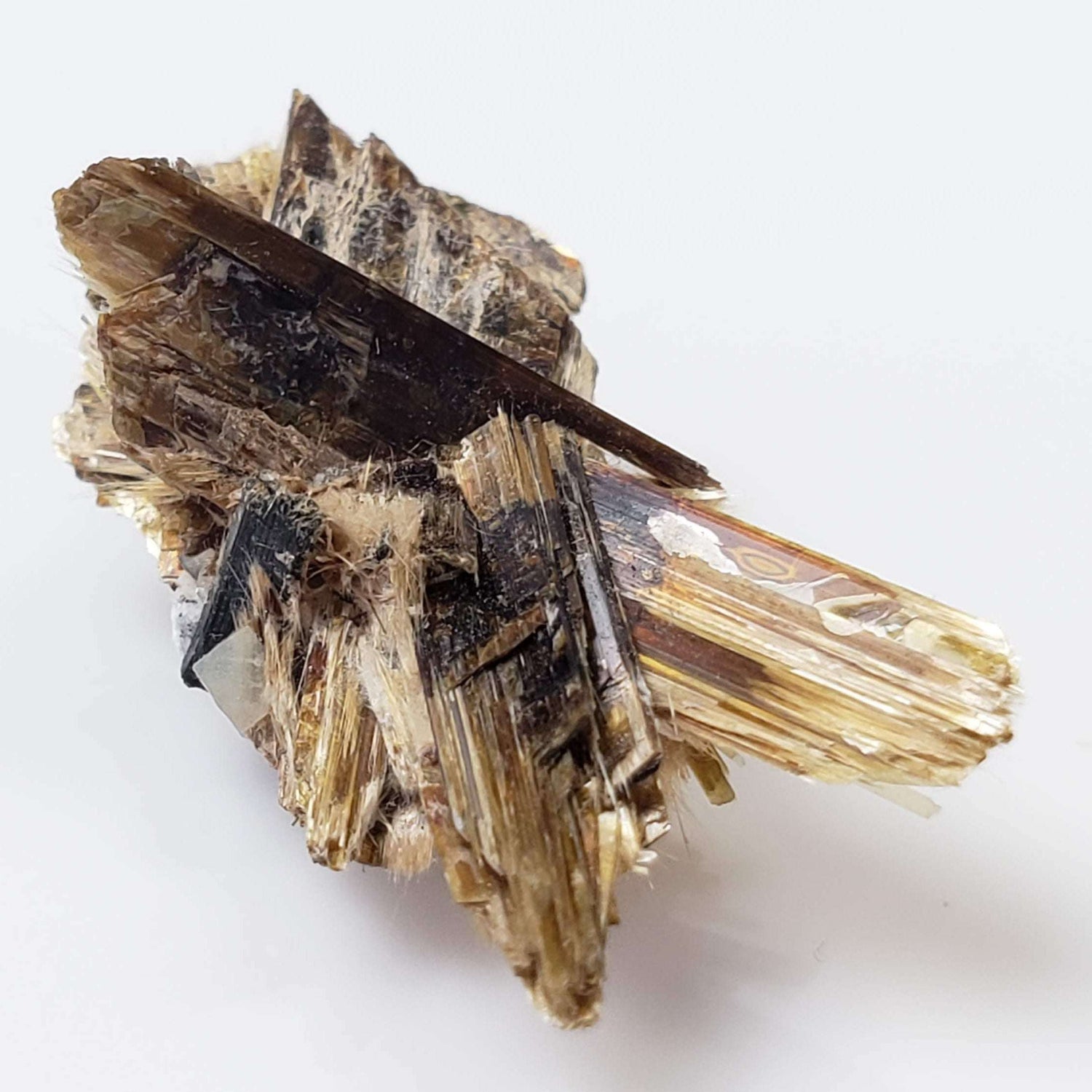
Kupletskite is a rare and complex titanium-bearing silicate mineral most famously found at Mont-Saint-Hilaire in Québec, Canada. It typically appears as tiny brown to reddish-brown crystals, often with a glassy or resinous luster. The crystals are usually slender and prismatic and may occur alongside other rare minerals that Mont-Saint-Hilaire is known for.
Due to its rarity and specific geological conditions needed for formation, kupletskite is primarily of interest to serious collectors and mineralogists, especially those focused on rare earth or alkaline complex minerals. It’s not commonly available in large or showy specimens, so even small, well-formed crystals are considered notable.
This beautiful and rare specimen of Kupletskite from world famous Mont-Saint-Hilaire, Québec, would be a great addition to any collection.
Name: Kupletskite
Specimen Size: Miniature-Sized
Dimensions: 30x15x15 mm / 1.2x0.6x0.6 inches
Weight: 1.63 grams / .057 oz
Origin: Mont Saint-Hilaire, Québec, Canada


Another beautiful specimen featuring large cubic green apophyllite with delicate scolecite.
Stilbite is a zeolite mineral appreciated for its delicate crystal formations and pastel hues, ranging from colorless to white, yellow, pink, and peach. It forms distinctive tabular crystals with a bowtie or butterfly shape and exhibits a vitreous to pearly luster. Commonly found in cavities in volcanic rocks, stilbite is associated with other zeolite minerals. It is valued for its aesthetic appeal and is believed by some to have calming energy, supporting spiritual growth and emotional healing.
One of the distinguishing features of apophyllite is its ability to form well-defined crystals with a pyramid-like shape. These crystals often exhibit a prismatic or pseudo-cubic habit and have a vitreous luster. Apophyllite is transparent to translucent and is commonly found in colorless or white varieties, although it can also occur in shades of green, pink, yellow, or brown.
Scolecite forms as vertically striated, thin, prismatic crystals. Scolecite may also occur as radiating fibrous masses. The colour may be white, yellowish, or colourless. It is a transparent to translucent mineral, and it has a vitreous to silky luster.
Name: Apophyllite, Stilbite, Scolecite Crystals
Specimen Size: Large Cabinet-Sized
Dimensions: 171x108x101 mm / 6.75x4.25x4 inches
Weight: 812 grams / 12.6 oz
Details: Mined in Nasik, India

Canagem is proud to be professional member of The International Gem Society(IGS) the world's top resource for gem professionals, enthusiasts, and industry content.